Introduction
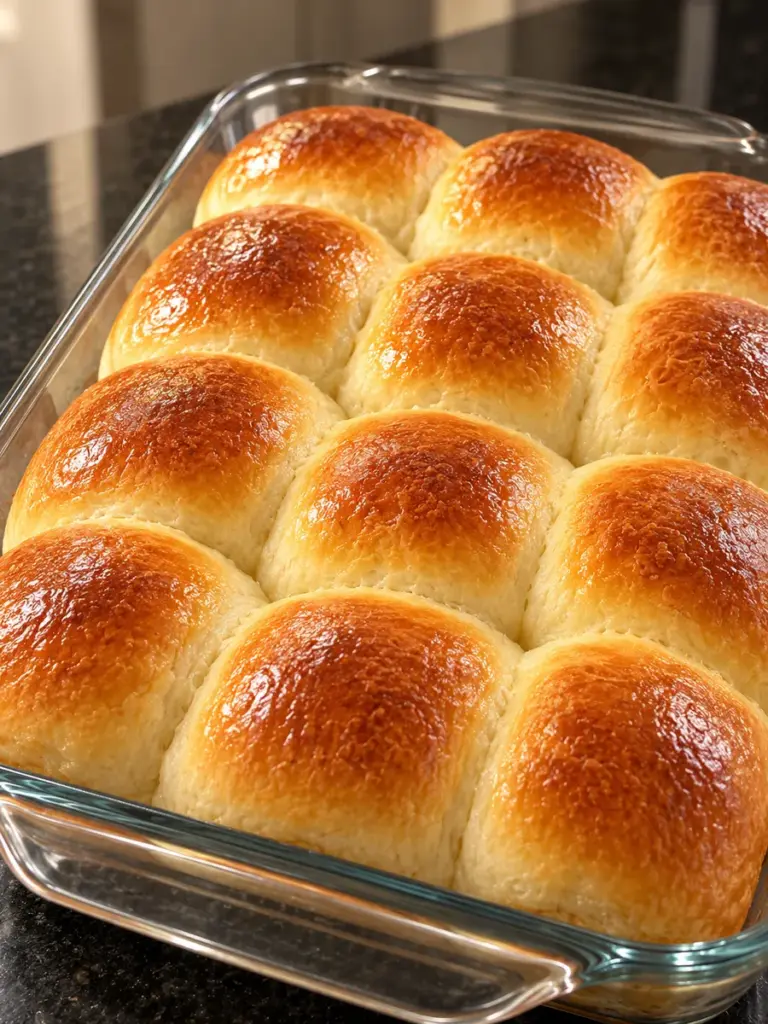
Soft & Fluffy Honey Butter Potato Dinner Rolls bring a tender, lightly sweet bread basket to the table without turning dinner into dessert. Plain mashed potato blends into the dough, while milk, egg and butter give the crumb richness. A thin honey butter finish adds shine and a little sweetness to the golden tops.
These are pull-apart rolls with soft sides, sized for passing around at a holiday meal or splitting for leftover turkey sandwiches. The dough needs patient kneading and two rises, but the actual hands-on work is manageable. Plan on about 4 hours from mixing to serving, including 35 minutes of active preparation and shaping. That schedule starts with cooked, cooled potato ready to use; a cooler kitchen may stretch the rising time. Most of the waiting is unattended, leaving room to prepare the rest of dinner while the covered dough rises.
Why You’ll Love This Recipe
Potato contributes moisture and tenderness without leaving obvious chunks or a strong potato flavor. A smooth mash disappears into the dough and keeps the finished texture pleasantly even.
Honey appears in both the dough and the finishing butter. That gives the rolls a gentle sweetness throughout, with a slightly sweeter first bite from the top.
One rectangular pan holds the whole batch. As the rolls expand together, their touching sides stay soft, making them easy to separate at the table.
The portions are substantial enough for small sandwiches but still comfortable beside a full dinner. Weighing them makes the batch bake more evenly and simplifies sharing.
Ingredients
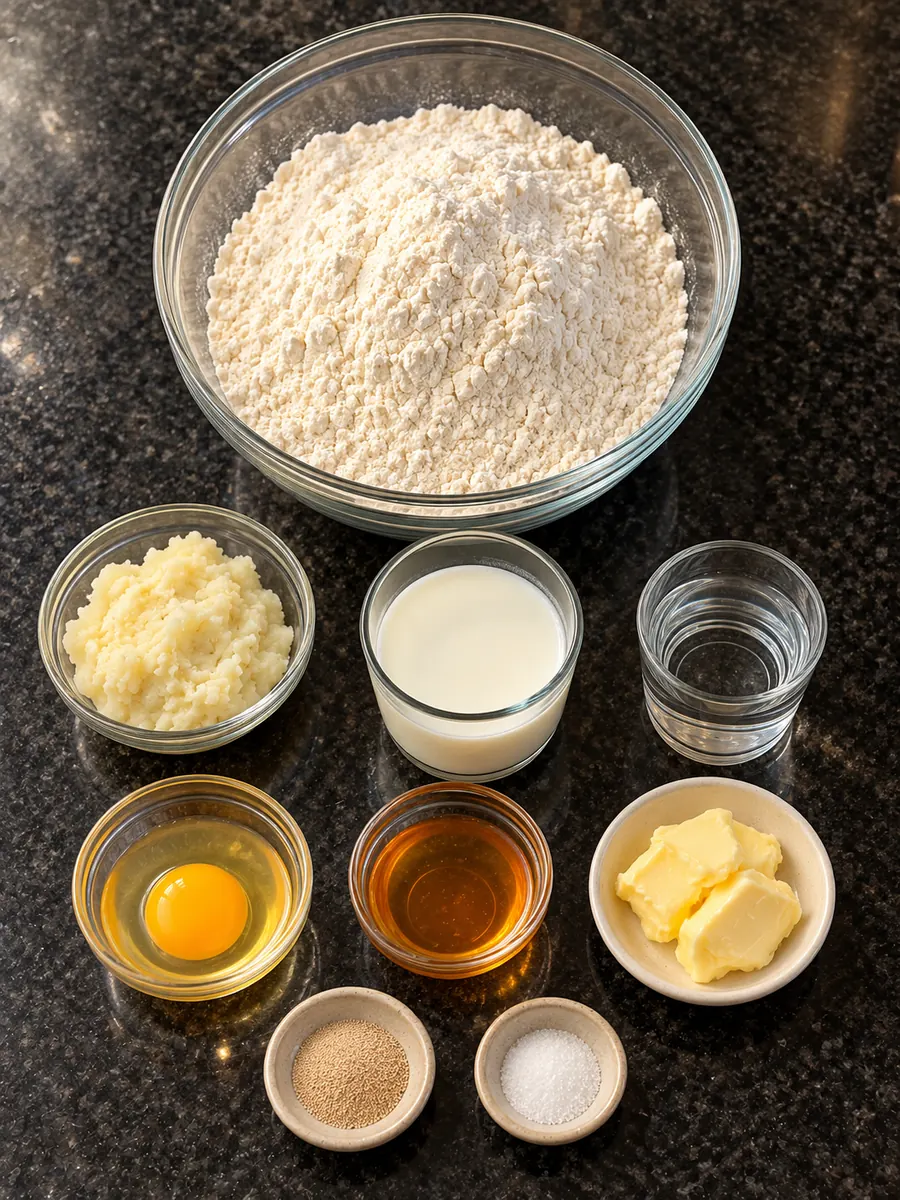
Use plain potato, weighed after cooking, draining and mashing. Soften the dough butter without melting it. Divide the honey and butter before mixing so the finishing portions stay separate. A mild honey, such as clover, lets the butter flavor come through without dominating the bread.
- 4 cups plus 2 tablespoons bread flour (500 g)
- 2/3 cup plain cooked, finely mashed russet potato, cooled (150 g)
- 1/2 cup whole milk, lukewarm (120 g)
- 1/3 cup lukewarm water (80 g)
- 1 large egg, without shell (50 g)
- 3 tablespoons honey (60 g total), divided
- 5 tablespoons unsalted butter (70 g total), divided; dough portion softened
- 2 1/4 teaspoons instant yeast (7 g)
- 1 1/2 teaspoons fine table salt (9 g)
Ingredient Notes and Substitutions
Bread flour provides useful strength in this moist, enriched dough. All-purpose flour is a cautious substitution: the rolls may spread more and the dough may feel stickier. Begin with the stated weight and assess its elasticity before considering any adjustment.
Russet potato is a practical choice because its cooked flesh mashes easily. Plain Yukon Gold potato can substitute cautiously, although moisture varies. Avoid leftover mash containing unmeasured milk, butter or salt, since those additions change this formula. Mash thoroughly with a fork or ricer, leaving no firm pieces.
Instant yeast goes directly into the flour mixture. Active dry yeast is a cautious alternative at the same weight; dissolve it in the measured water first and expect the rise to take longer. Do not add extra activation water.
Whole milk and honey influence flavor as well as texture. Lower-fat milk may produce a slightly less rich result. Replacing honey with granulated sugar requires a liquid adjustment, so it is not a straight swap here.
How to Make Soft & Fluffy Honey Butter Potato Dinner Rolls
- Line a 9-by-13-inch metal baking pan with parchment. Start with the measured cooked potato, completely cooled and free of lumps. Whisk the mashed potato, whole milk, water, egg and 40 g honey in a large mixing bowl until evenly combined. Liquids should feel barely warm.
- Add the bread flour, instant yeast and salt. Mix until no dry patches remain, scraping the bottom thoroughly. The dough will look rough and feel sticky; keep all the measured flour in the bowl rather than reserving any for shaping.
- Knead with a dough hook on low speed for 4 minutes. Add 50 g softened butter gradually, then knead for 6–8 minutes, until elastic and mostly smooth. A stretched piece should form a thin, translucent patch before tearing. Scrape down as needed.
- Cover the bowl and allow 90 minutes for the bulk rise in a comfortably warm spot. The dough should roughly double and look aerated. Begin checking earlier if your room is warm; visible expansion matters more than the clock.
- Rest the dough for 10 minutes, covered, after gently pressing out large bubbles. Divide into 15 equal pieces, approximately 74 g each. On an unfloured surface, tuck each piece underneath and cup into a ball. Arrange seam-side down in 3 rows of 5.
- Cover and allow 60 minutes for the final rise, until puffy and nearly touching. A gentle fingertip indentation should return slowly. During this rise, preheat the oven to 350°F with a rack in the center.
- Bake for 25 minutes, until golden and a center roll registers 190°F internally. Loosely tent with foil if browning quickly. Melt the remaining 20 g butter and stir in the remaining 20 g honey.
- Brush the hot rolls with the honey butter. Cool in the pan for 10 minutes, then lift onto a rack using the parchment and cool for another 10 minutes before pulling apart.
Expert Baking Tips
Weigh the cooked potato after draining and mashing. A loosely filled measuring cup can hold a different amount each time, and excess potato makes this dough harder to handle consistently.
Look for stretch as well as smoothness during kneading. Butter can make an underdeveloped dough look glossy before it has enough strength to hold the gas produced during rising.
Use a flexible scraper to gather sticky dough from the counter. Brief contact and a cupped hand help create surface tension without introducing flour that could toughen the finished rolls.
Check the final rise with a light touch near the edge of a roll. A deep poke can deflate a small piece, making the indentation harder to interpret.
Probe a center roll from the side when checking doneness. Keep the thermometer tip in the crumb, clear of the hot pan, which can give an artificially high reading.
Brush the glaze over the tops in thin passes. Distributing it across the entire batch helps prevent a few rolls from becoming saturated while others receive very little.
Common Mistakes to Avoid
Adding flour until the dough feels completely dry is an easy way to lose the tender texture. Potato dough can remain tacky after it develops strength. Give kneading time to work before deciding that stickiness means something went wrong.
Using hot mashed potato can overheat the egg and yeast mixture. Cool it fully before measuring it into the bowl. Likewise, softened butter should yield to pressure while still holding its shape; liquid butter incorporates differently.
Shaping loose pieces leaves uneven surfaces and irregular expansion. Tuck the cut edges underneath and create a smooth top, then keep the seam against the parchment. Cover waiting pieces so their surfaces do not dry out.
Pulling the rolls apart immediately releases steam from the exposed crumb and can compress the interior. The short cooling period also gives the honey butter time to settle onto the crust.
Variations and Serving Ideas
For an herb variation, add 1 tablespoon finely chopped fresh rosemary or thyme with the flour. This changes the base formula slightly and gives the sweet finish a savory companion. Chop rosemary particularly finely so its texture does not distract from the soft bread.
Serve the plain batch with roast chicken, baked ham or a bowl of bean soup. Split cooled rolls for turkey and cranberry sandwiches, or toast the cut surfaces for breakfast. Because the tops already carry honey butter, taste before adding jam or another sweet spread. For a less sweet serving option, change the finishing mixture to 20 g melted butter alone, omitting its honey.
Storage and Freezing
Let the rolls cool completely before sealing them in an airtight container. Keep at room temperature for up to 2 days. Closing the container while they are warm traps condensation and can leave the tops damp.
For longer storage, freeze the cooled rolls in a tightly sealed freezer bag for up to 2 months. Separate them first if you want to remove only a few at a time. Thaw inside the closed bag at room temperature.
To warm a thawed batch, wrap loosely in foil and heat at 300°F for 10–15 minutes. Small portions need less time. Gentle reheating softens the crumb without exposing the honey-coated tops to strong direct heat.
Frequently Asked Questions
Can I use leftover mashed potatoes?
Only if they are plain, with no added dairy, fat or salt. Rich leftover mash changes several ingredient amounts at once and makes the dough less predictable.
Will these rolls taste like potatoes?
The potato flavor should be mild. Honey, butter and the browned crust are more noticeable; the potato mainly contributes moisture and a tender texture.
Why does my dough still feel sticky?
Potato and honey both contribute to a tacky feel. Judge the dough by elasticity and its ability to stretch, rather than expecting a completely dry surface.
Can I make the rolls without a mixer?
Yes. Knead by hand, incorporating the softened butter gradually. Expect additional active time and use the same thin, stretchy dough cue to judge development.
What if the rolls rise slowly?
Give them more time in a comfortably warm place. Cool ingredients and room temperatures slow fermentation; moving ahead with dense, undersized dough produces heavier rolls.
Does the potato cooking time count?
The 4-hour schedule begins with cooked, cooled potato. Prepare it ahead, or allow extra time to cook, drain, mash and cool it before starting.
WP Tasty Recipe Card
PrintSoft & Fluffy Honey Butter Potato Dinner Rolls
- Total Time: 240 minutes
Ingredients
4 cups plus 2 tablespoons bread flour (500 g)
2/3 cup plain cooked, finely mashed russet potato, cooled (150 g)
1/2 cup whole milk, lukewarm (120 g)
1/3 cup lukewarm water (80 g)
1 large egg, without shell (50 g)
3 tablespoons honey (60 g total), divided
5 tablespoons unsalted butter (70 g total), divided; dough portion softened
2 1/4 teaspoons instant yeast (7 g)
1 1/2 teaspoons fine table salt (9 g)
Instructions
Line a 9-by-13-inch metal baking pan with parchment. Start with the measured cooked potato, completely cooled and free of lumps. Whisk the mashed potato, whole milk, water, egg and 40 g honey in a large mixing bowl until evenly combined. Liquids should feel barely warm.
Add the bread flour, instant yeast and salt. Mix until no dry patches remain, scraping the bottom thoroughly. The dough will look rough and feel sticky; keep all the measured flour in the bowl rather than reserving any for shaping.
Knead with a dough hook on low speed for 4 minutes. Add 50 g softened butter gradually, then knead for 6–8 minutes, until elastic and mostly smooth. A stretched piece should form a thin, translucent patch before tearing. Scrape down as needed.
Cover the bowl and allow 90 minutes for the bulk rise in a comfortably warm spot. The dough should roughly double and look aerated. Begin checking earlier if your room is warm; visible expansion matters more than the clock.
Rest the dough for 10 minutes, covered, after gently pressing out large bubbles. Divide into 15 equal pieces, approximately 74 g each. On an unfloured surface, tuck each piece underneath and cup into a ball. Arrange seam-side down in 3 rows of 5.
Cover and allow 60 minutes for the final rise, until puffy and nearly touching. A gentle fingertip indentation should return slowly. During this rise, preheat the oven to 350°F with a rack in the center.
Bake for 25 minutes, until golden and a center roll registers 190°F internally. Loosely tent with foil if browning quickly. Melt the remaining 20 g butter and stir in the remaining 20 g honey.
Brush the hot rolls with the honey butter. Cool in the pan for 10 minutes, then lift onto a rack using the parchment and cool for another 10 minutes before pulling apart.
- Prep Time: 35 minutes
- Cook Time: 25 minutes