Introduction
High-Protein Cottage Cheese Garlic Herb Sandwich Bread brings a savory twist to the everyday sandwich loaf. Blended cottage cheese supplies moisture and protein, Parmesan adds a rounded cheese flavor, and parsley and chives leave green flecks throughout the crumb. Garlic powder seasons each slice evenly without creating pockets of raw garlic.
Expect a soft, substantial yeast bread with enough structure for lunch sandwiches and toast. Makes 8 servings. One serving is two slices, from a loaf cut into 16 slices. Estimated 12.8 g protein per serving comes from the complete ingredient formula; brands and moisture levels vary, and this is not laboratory analysis.
Plan about 5 hours 40 minutes from starting to slicing, including 30 minutes of active preparation. Rising times are estimates, so leave some flexibility when the kitchen is cool.
Why You’ll Love This Recipe
Cottage cheese becomes part of the dough after blending, giving the loaf an even texture without obvious curds. Its moisture also means the base formula needs no added water.
Parmesan, garlic and fresh herbs make the bread useful beyond lunch. A plain toasted slice has plenty of flavor alongside scrambled eggs or a bowl of tomato soup.
The dough uses familiar grocery ingredients and instant yeast. There is no separate starter to maintain, and the mixing method fits a standard home stand mixer.
One loaf supplies eight two-slice servings. Freeze individual pairs after cooling so you can pull out a sandwich portion without thawing the entire loaf.
Ingredients
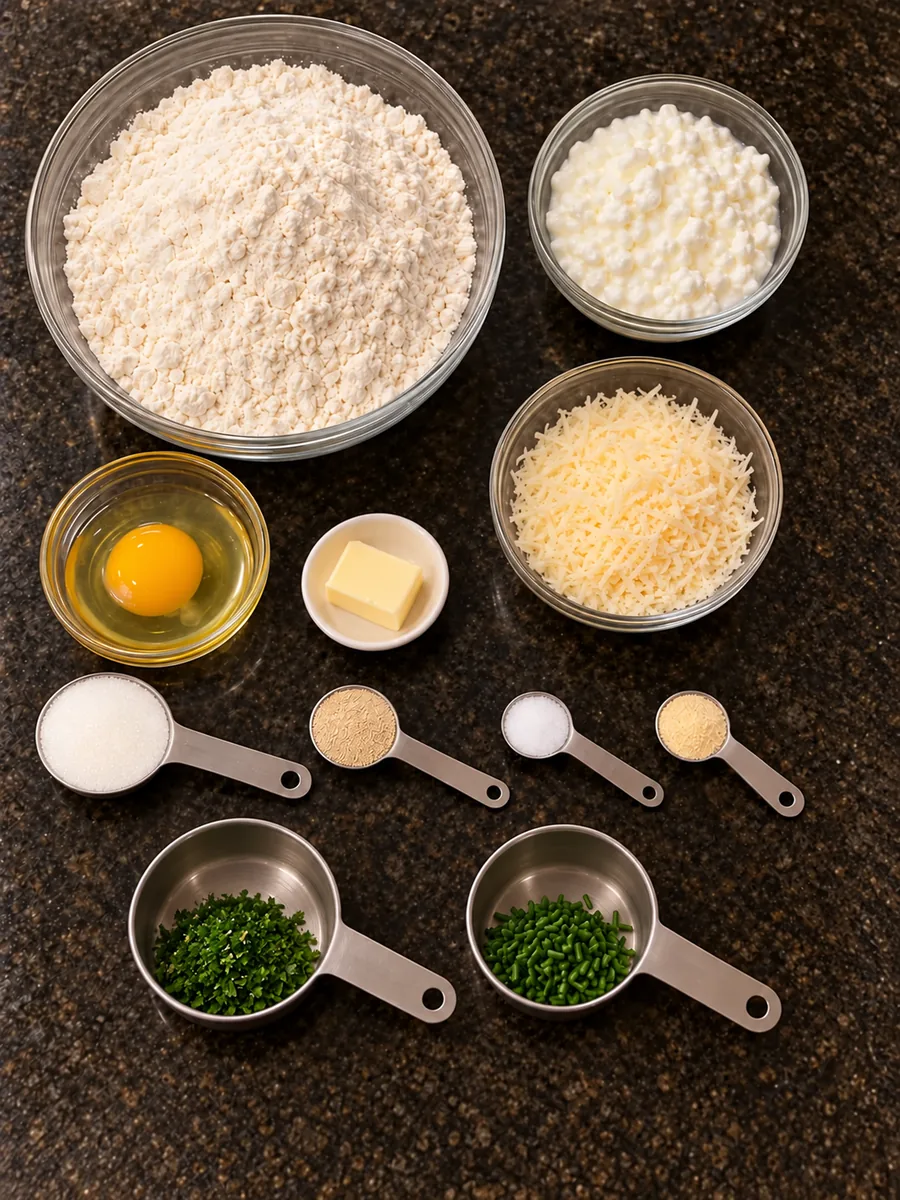
Weigh the flour and cheeses for consistency; curd size and grating affect cup measurements. Keep the cottage cheese undrained. The butter quantity covers the dough, pan and finishing, so reserve its separate portions before mixing.
- 3 cups bread flour (360 g), spooned and leveled
- 1 cup plain, undrained 1% milkfat cottage cheese (220 g)
- 1 large egg, out of the shell (50 g)
- About 2/3 cup finely grated Parmesan (60 g)
- 1 tablespoon plus 1 1/4 teaspoons unsalted butter (20 g), softened and divided
- 1 tablespoon granulated sugar (12 g)
- 2 1/4 teaspoons instant dry yeast (7 g)
- 2/3 teaspoon fine table salt (4 g)
- 1 1/3 teaspoons garlic powder (4 g)
- 2 tablespoons plus 2 teaspoons finely chopped fresh parsley (8 g)
- 2 tablespoons finely snipped fresh chives (6 g)
Ingredient Notes and Substitutions
Plain, undrained 1% milkfat cottage cheese is the specified choice. Its protein and moisture contributions are part of this formula. Switching to 2% or 4% changes water, fat and protein, so those versions need a separate formula assessment before you rely on the same texture or nutrition estimate.
Bread flour supplies the structure needed to carry the dairy ingredients. All-purpose flour may produce a softer, less resilient dough; a direct substitution is unverified and may affect both loaf height and the protein estimate. Avoid treating extra flour as a routine cure for tackiness.
Finely grate the Parmesan so it disperses through the dough. A fluffy cup of freshly grated cheese can weigh much less than tightly packed commercial grated cheese, making grams especially helpful here.
Use fresh parsley and chives as listed. Dried herbs have different concentrations and moisture levels. Garlic salt also requires reformulation because it contributes salt as well as garlic flavor.
How to Make High-Protein Cottage Cheese Garlic Herb Sandwich Bread
- Grease a 9×5-inch loaf pan with 4 g unsalted butter. Blend the cottage cheese and egg until mostly smooth, scraping down the blender. Cool ingredients are fine; refrigerator-cold ingredients may lengthen rising.
- Whisk bread flour, Parmesan, sugar, instant dry yeast, salt and garlic powder in a large bowl. Add the blended mixture, fresh parsley, fresh chives and 12 g softened unsalted butter. Stir until all flour is moistened and a shaggy dough forms.
- Knead with a dough hook on low to medium-low for 8–10 minutes, scraping as needed. Expect soft, tacky dough that gathers around the hook while lightly clinging underneath. A small piece should stretch into a thin membrane with herb-speckled edges before tearing.
- Cover the bowl and allow 90 minutes for bulk proofing at comfortable room temperature, until roughly doubled and visibly aerated. Cooler dough may need longer; judge its expansion before proceeding.
- Rest the dough for 10 minutes, covered, after gently pressing out large bubbles on a clean, unfloured counter. Pat into an 8-inch-wide rectangle, roll tightly into a log, pinch the seam and place seam-side down in the prepared pan. Keep the ends tucked underneath so the loaf fills the pan evenly.
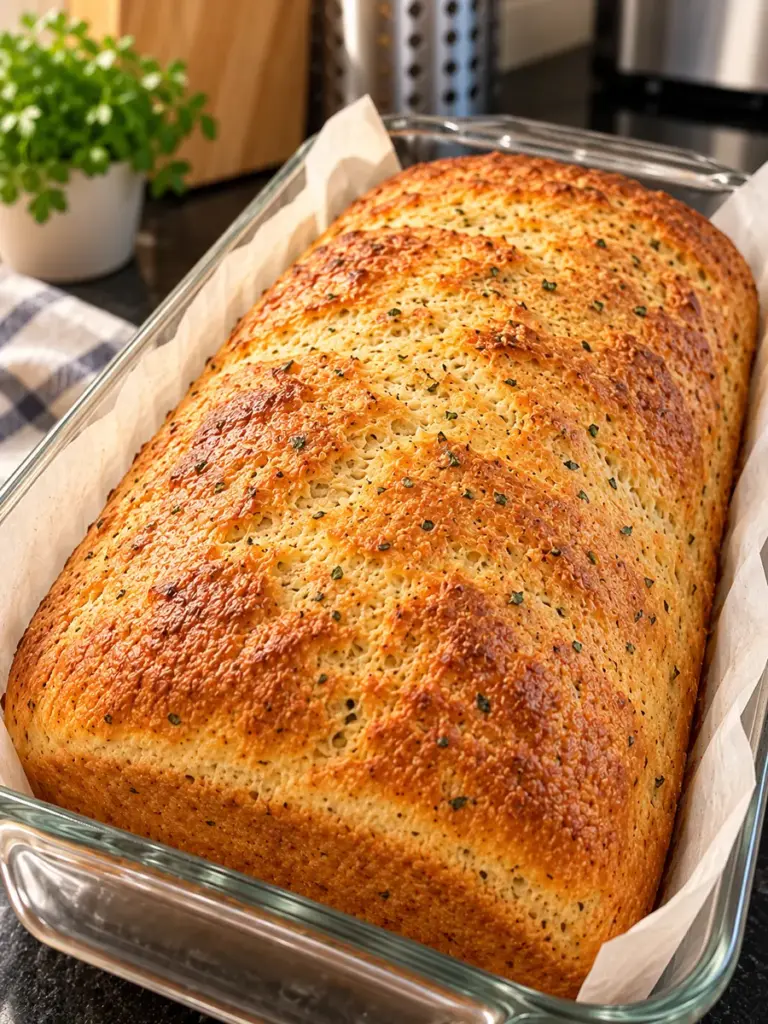
- Allow 75 minutes for the covered final proof, until the center crowns about 1 inch above the rim and a gentle fingertip dent returns slowly. During the latter part of proofing, preheat the oven to 350°F with a rack below center.
- Bake for 45 minutes, until deeply golden and the center registers 200°F. Loosely tent with foil if browning quickly. Measure through the side toward the center, avoiding contact with the pan.
- Cool in the pan for 10 minutes. Turn onto a wire rack, brush with the remaining 4 g unsalted butter and cool another 80 minutes before slicing into 16 slices.
Expert Baking Tips
Blend the cottage cheese thoroughly enough to break up larger curds. This distributes its moisture more evenly and makes the finished dough easier to assess while kneading.
Watch the dough beneath the hook. A small tacky patch is expected, while the rest should gather into a cohesive mass. Stop periodically to scrape the bowl instead of increasing speed aggressively.
Use the stretch test alongside appearance. Herbs can interrupt the edge of a stretched piece, so look for a thin central membrane rather than expecting an entirely flawless sheet.
Shape with enough tension to make a smooth outer surface. Pinching the seam closed helps the log hold together as it expands in the pan.
Start checking loaf color before the bake finishes. Dairy, egg and sugar encourage browning; a loose foil tent protects the top while the center continues cooking.
Measure the center temperature before removing the bread. A browned crust alone cannot tell you whether the moist interior has baked through, especially in a dark metal pan.
Common Mistakes to Avoid
Adding flour until the dough feels completely dry can make this loaf heavy. Cottage cheese dough remains tacky even after gluten develops. Use the specified weight and give kneading time to bring the dough together.
Following the clock without checking expansion can lead to a tight crumb or a weakened loaf. A cool dairy mixture slows fermentation. If the dough has barely grown, allow more time before shaping or baking.
Overproofing can leave the top fragile. When the dough has reached the stated height and a light dent returns slowly, have the oven ready rather than waiting for a dramatic dome.
Cutting while warm compresses the moist crumb and can make a properly baked loaf seem gummy. Let the full cooling period finish, then use a serrated knife with gentle sawing strokes.
Variations and Serving Ideas
For a turkey sandwich, pair two slices with crisp lettuce and a little mustard. The garlic and Parmesan supply enough seasoning that you can keep the filling simple. The same bread works well with sliced tomato and an omelet.
Toast slices until the edges turn crisp, then serve beside vegetable soup or a chopped salad. For grilled cheese, use moderate skillet heat so the flavorful crust does not brown before the filling warms.
A rosemary variation would change the base herb formula: replace the chives with 2 g finely chopped fresh rosemary. Its stronger flavor needs a lighter hand. Recalculate nutrition for any variation or added toppings.
Storage and Freezing
Let the loaf cool completely before enclosing it. Trapped warmth creates condensation that softens the crust and leaves the surface damp. Keep the uncut portion in a tightly closed bread bag at room temperature for up to 2 days.
For longer storage, slice and freeze promptly. Place parchment between two-slice portions if desired, then pack them in a freezer bag with excess air pressed out. Use within 2 months for best quality.
Thaw a wrapped portion at room temperature, or toast slices directly from frozen. Avoid repeatedly thawing the whole loaf to remove a few slices. If you notice mold anywhere on the bread, discard the remaining loaf rather than trimming away the visible spot.
Frequently Asked Questions
Will the bread taste like cottage cheese?
Cottage cheese contributes a mild dairy flavor. Parmesan and garlic are more prominent, while blending keeps large curds from remaining noticeable in the crumb.
Can I knead this dough by hand?
Yes, although it will feel tacky. Use a clean counter and a bench scraper to gather it. Hand kneading may require more active time than the stated mixer schedule.
Why is there no added water?
Undrained cottage cheese, egg, Parmesan, butter and fresh herbs already contribute moisture. Adding water automatically would change the intended dough consistency.
Can I use a smaller loaf pan?
Use the specified 9×5-inch pan. A smaller pan changes dough depth and proofing height, so the same visual cues and baking schedule may not apply.
How much protein is in one slice?
With 16 equal slices, each has an estimated 6.4 g protein. The stated serving is two slices, providing approximately 12.8 g.
Can I omit the Parmesan?
Omitting it changes protein, salt, moisture and dough solids. The listed nutrition estimate and intended formula would no longer apply; this omission needs redevelopment.
Should I slash the top?
No slash is needed. A smoothly shaped loaf and a complete final proof are intended to produce a rounded sandwich-bread top.
WP Tasty Recipe Card
PrintHigh-Protein Cottage Cheese Garlic Herb Sandwich Bread
- Total Time: 340 minutes
Ingredients
3 cups bread flour (360 g), spooned and leveled
1 cup plain, undrained 1% milkfat cottage cheese (220 g)
1 large egg, out of the shell (50 g)
About 2/3 cup finely grated Parmesan (60 g)
1 tablespoon plus 1 1/4 teaspoons unsalted butter (20 g), softened and divided
1 tablespoon granulated sugar (12 g)
2 1/4 teaspoons instant dry yeast (7 g)
2/3 teaspoon fine table salt (4 g)
1 1/3 teaspoons garlic powder (4 g)
2 tablespoons plus 2 teaspoons finely chopped fresh parsley (8 g)
2 tablespoons finely snipped fresh chives (6 g)
Instructions
Grease a 9×5-inch loaf pan with 4 g unsalted butter. Blend the cottage cheese and egg until mostly smooth, scraping down the blender. Cool ingredients are fine; refrigerator-cold ingredients may lengthen rising.
Whisk bread flour, Parmesan, sugar, instant dry yeast, salt and garlic powder in a large bowl. Add the blended mixture, fresh parsley, fresh chives and 12 g softened unsalted butter. Stir until all flour is moistened and a shaggy dough forms.
Knead with a dough hook on low to medium-low for 8–10 minutes, scraping as needed. Expect soft, tacky dough that gathers around the hook while lightly clinging underneath. A small piece should stretch into a thin membrane with herb-speckled edges before tearing.
Cover the bowl and allow 90 minutes for bulk proofing at comfortable room temperature, until roughly doubled and visibly aerated. Cooler dough may need longer; judge its expansion before proceeding.
Rest the dough for 10 minutes, covered, after gently pressing out large bubbles on a clean, unfloured counter. Pat into an 8-inch-wide rectangle, roll tightly into a log, pinch the seam and place seam-side down in the prepared pan. Keep the ends tucked underneath so the loaf fills the pan evenly.
Allow 75 minutes for the covered final proof, until the center crowns about 1 inch above the rim and a gentle fingertip dent returns slowly. During the latter part of proofing, preheat the oven to 350°F with a rack below center.
Bake for 45 minutes, until deeply golden and the center registers 200°F. Loosely tent with foil if browning quickly. Measure through the side toward the center, avoiding contact with the pan.
Cool in the pan for 10 minutes. Turn onto a wire rack, brush with the remaining 4 g unsalted butter and cool another 80 minutes before slicing into 16 slices.
- Prep Time: 30 minutes
- Cook Time: 45 minutes