Introduction
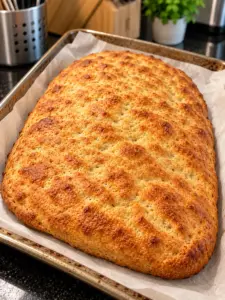
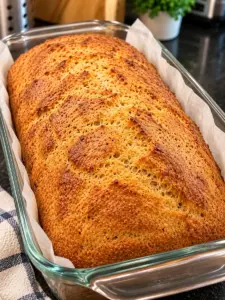
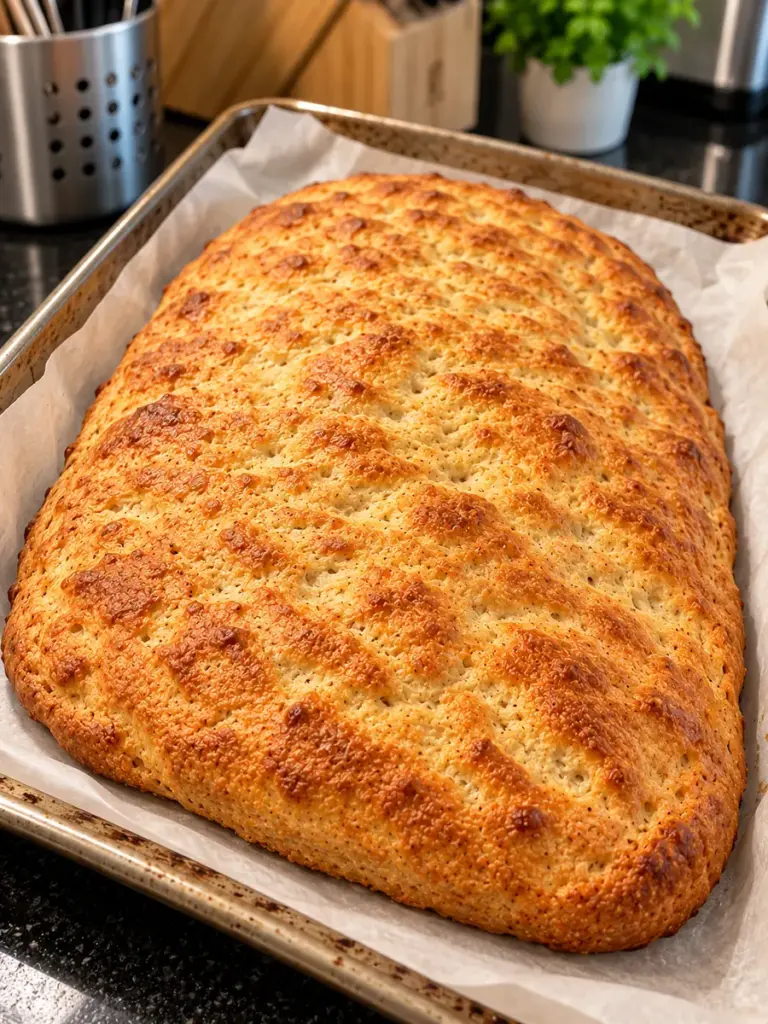
A can of beans can become something you pick up with your hands. This 3-Ingredient High-Protein Northern Bean Flatbread blends fully cooked Great Northern beans with eggs and oat flour, then bakes into a tender sheet with lightly golden edges. The flavor is mild and earthy, with a little sweetness from the oats.
Expect a soft, dense flatbread with enough structure to lift once cooled. It will not develop the stretchy chew or open pockets of a wheat dough, and it is best served in manageable rectangles.
The recipe makes 4 servings, each one rectangle. Allow about 65 minutes altogether: 20 minutes of active preparation, 30 minutes of baking, and 15 minutes of cooling. Oven preheating fits within preparation; actual baking may take longer if your beans retain extra moisture.
Why You’ll Love This Recipe
Three familiar ingredients do separate jobs: beans form the base, eggs bind it, and oat flour absorbs moisture. There is no dough development to manage, making the preparation approachable even if bread baking feels unfamiliar.
A food processor handles most of the mixing. Once the beans are smooth, the remaining work is spreading a single sheet evenly across a marked rectangle.
The whole batch bakes together. You can prepare four equal portions without standing over a skillet or tracking separate cooking times for individual pieces.
Its mild flavor keeps attention on the beans and oats. Warm pieces have softer centers, while reheated portions can develop firmer edges, giving you two useful textures from the same batch.
Ingredients
Choose the beans first, because their moisture has the greatest influence on the batter. Measure 300 g after rinsing and draining, rather than using the total weight printed on a can. Can sizes and drained yields vary.
Use a scale when possible, particularly for the oat flour. A packed measuring cup can produce a drier sheet. The cup measurements are approximations; gram weights define the formula.
These ingredients make the complete base recipe. Parchment serves as the baking liner, and no pan coating is needed.
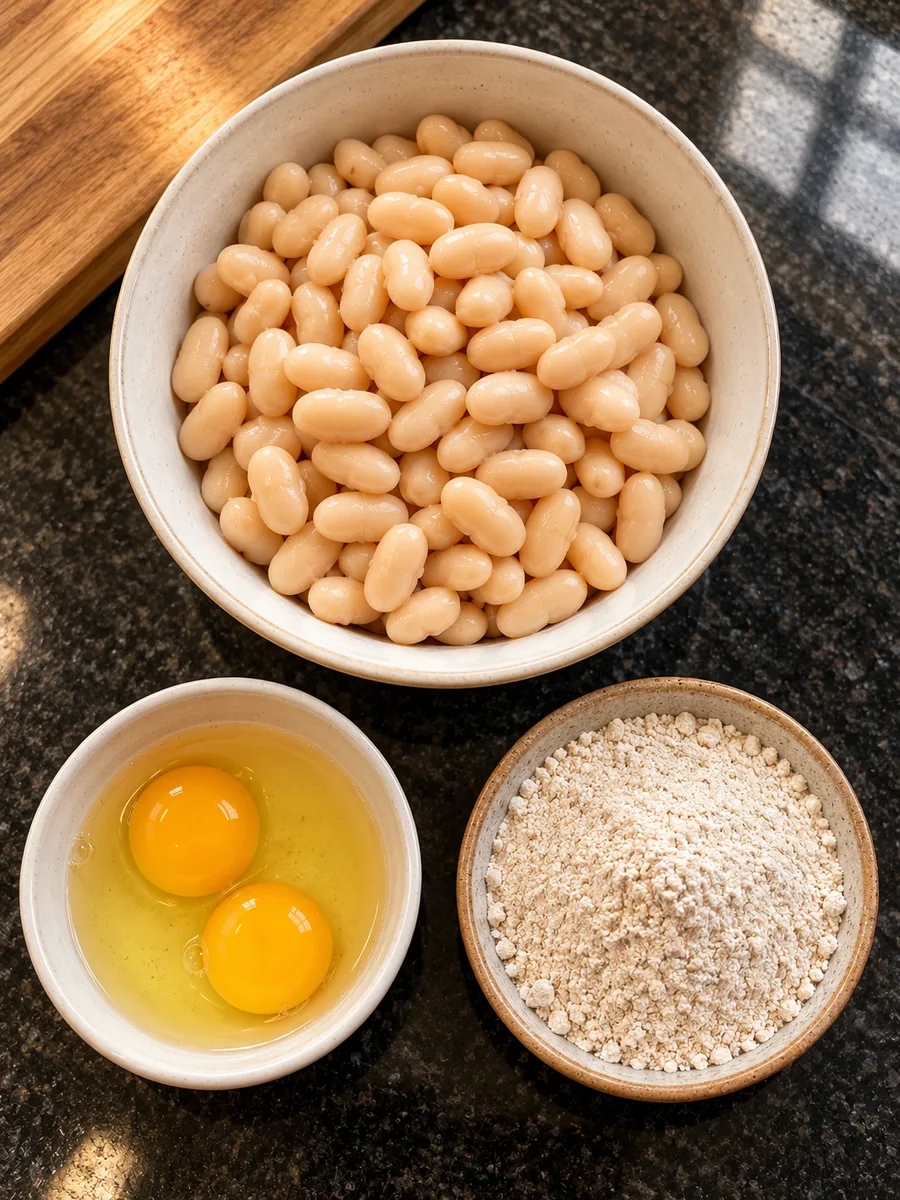
- 1 3/4 cups fully cooked unsalted Great Northern beans, rinsed and thoroughly drained (300 g)
- 2 large eggs, without shells (100 g)
- 2/3 cup finely ground oat flour, spooned and leveled (60 g)
Ingredient Notes and Substitutions
Use plain, fully cooked unsalted Great Northern beans. For canned beans, choose a label listing only beans and water. Home-cooked beans should be completely tender before draining; a bean pressed with a fork should mash easily rather than resist in the center.
The eggs provide essential binding. Measure 100 g without shells if your eggs vary substantially in size. This formula depends on their setting action, so an egg replacement would need separate development rather than a casual swap.
Finely ground oat flour incorporates more evenly than coarse oat meal. If grinding rolled oats yourself, grind them separately until powdery, then weigh the finished flour. Certified gluten-free oat flour is appropriate when avoiding gluten, provided the other ingredients and equipment also meet your needs.
The high-protein claim in the requested title has not been verified and requires human nutritional review. Beans and eggs supply protein, but no protein amount or nutritional classification is established here. Keep that distinction when describing or sharing the recipe.
How to Make 3-Ingredient High-Protein Northern Bean Flatbread
- Heat the oven to 400°F with a rack in the middle. Line a 13-by-18-inch rimmed baking sheet with parchment rated for this oven temperature. Mark a 9-by-12-inch rectangle on the underside as a spreading guide. Rinse the fully cooked Great Northern beans, drain thoroughly, then weigh 300 g. Let excess moisture drip away before weighing; use the drained beans rather than their packing liquid.
- Put the drained beans in a food processor. Add the eggs and process until creamy, stopping to scrape the bowl and underside of the blade as needed. Small flecks of bean skin are fine, but crush any visible bean pieces. Add the oat flour and pulse just until evenly incorporated. The mixture should resemble thick, spreadable hummus and hold a soft ridge from a spatula. Do not taste the raw batter. Wash hands and food-contact equipment after handling raw eggs.
- Scrape the batter onto the prepared parchment. Spread it evenly inside the rectangle, approximately 1/4 inch thick, using a flexible spatula. Keep the center and edges at similar thickness, and round off thin corners so they do not dry out ahead of the middle. Do not leave a mound in the center. Move directly to baking; this batter needs no resting or proofing.
- Bake for 30 minutes at 400°F. Begin checking at 25 minutes: the surface should look matte, the edges lightly golden, and the center firm under gentle pressure. Insert a food thermometer sideways into the center to check doneness. If the middle remains wet, continue baking until it is set. Confirm the safe internal temperature specified below before serving.
- Confirm that the center has reached an internal temperature of 165°F before cooling. Cool on the baking sheet for 5 minutes, then carefully slide the parchment and flatbread onto a wire rack for 10 minutes. Peel the parchment away gently and cut into 4 equal rectangles. Serve warm, or refrigerate promptly according to the storage directions.
Expert Baking Tips
Drain the beans in a sieve until liquid stops collecting beneath them. Shake the sieve gently rather than squeezing the beans dry; the goal is removing surface moisture while retaining their naturally moist interiors.
Scrape the food processor thoroughly before adding the oat flour. Whole bean fragments create weak spots and make spreading harder, while a smooth puree distributes the egg binder throughout the sheet.
Draw the rectangle on the underside of the parchment so pencil marks stay away from the food. A visible outline makes thickness easier to judge than spreading toward the full baking sheet edges.
Use a flexible spatula with short strokes. Push batter from thicker areas into thinner ones, and inspect the corners before baking. Feathered edges can become brittle while the center is still setting.
Check the temperature sideways through a thick central area. Keep the thermometer tip inside the flatbread rather than against the hot metal, which could give a misleading reading.
Give the finished sheet its full cooling time before peeling. The egg and oat structure firms as steam escapes, helping the underside release without tearing.
Common Mistakes to Avoid
Measuring beans before draining changes the formula. Packing liquid contributes moisture without the same amount of bean solids, leaving a looser batter that may bake unevenly. Start with the specified drained edible weight and discard the liquid.
Spreading over the entire baking sheet makes the flatbread too thin. The larger pan provides room around the marked rectangle; it does not define the size of the bread. Keep the batter within the guide for a tender center and manageable edges.
Stopping when the surface changes color can leave the middle undercooked. Use both the texture cues and the internal temperature target in the method. Conversely, chasing dark browning can dry out the edges unnecessarily. Finally, avoid pulling sharply on warm parchment: support the bread with one hand while peeling the paper back slowly with the other.
Variations and Serving Ideas
For smaller portions, cut the cooled sheet into 8 fingers instead of 4 rectangles. Two fingers still equal one serving. This shape is convenient for a lunch container and reduces the bending stress on each piece.
You can also spread the batter into four separate rectangles on the same lined sheet, maintaining approximately the same thickness. Leave space between them and begin checking earlier, since exposed edges can set sooner; each center must still reach the specified internal temperature.
Serve warm for the softest bite, or reheat uncovered for firmer edges. For a simple presentation, stack the rectangles loosely so steam can escape instead of compressing them into a damp pile.
Storage and Freezing
Refrigerate this moist bean flatbread within 2 hours of baking, or within 1 hour when the surrounding temperature exceeds 90°F. The scheduled 15-minute cooling period leaves time to portion and refrigerate it promptly. Store at 40°F or below and use within 3–4 days.
Arrange cooled pieces in a shallow airtight container, separating layers with parchment. Avoid closing a deep container around a hot stack, which traps steam and softens the surfaces.
For longer storage, freeze individual cooled portions with parchment between them, then seal in a freezer container for up to 2 months for best quality. Thaw in the refrigerator. Reheat uncovered in a 400°F oven until the center reaches an internal temperature of 165°F; the time depends on thickness and whether the portion is fully thawed.
Frequently Asked Questions
Can I use beans straight from the can?
Yes, use commercially canned, fully cooked unsalted beans with only beans and water on the label. Rinse, drain thoroughly, and measure the drained weight.
Is this flatbread flexible enough to roll?
Serve it flat. It may bend while warm, but tight rolling can cause cracks because this formula lacks a stretchy gluten network.
Why is my batter thinner than described?
Excess moisture on the beans is a likely cause. Recheck your weights and draining method. Spreading runny batter thinner produces fragile edges.
Can I change the portion size?
Yes. Cut smaller pieces after cooling, keeping their combined size equal to one quarter of the sheet for each serving.
Can I make it without a food processor?
A sturdy blender may work if it handles thick mixtures. Stop and scrape frequently, following its instructions. Avoid adding liquid to move the blades.
Why does the underside feel moist?
Beans retain moisture beneath the parchment. Rack cooling helps steam escape. A wet center needs further baking and another thermometer check.
Can I eat it cold?
Yes, after thorough cooking and safe refrigeration. It will feel firmer when cold; reheating softens the center.
WP Tasty Recipe Card
Print3-Ingredient High-Protein Northern Bean Flatbread
- Total Time: 65 minutes
Ingredients
1 3/4 cups fully cooked unsalted Great Northern beans, rinsed and thoroughly drained (300 g)
2 large eggs, without shells (100 g)
2/3 cup finely ground oat flour, spooned and leveled (60 g)
Instructions
Heat the oven to 400°F with a rack in the middle. Line a 13-by-18-inch rimmed baking sheet with parchment rated for this oven temperature. Mark a 9-by-12-inch rectangle on the underside as a spreading guide. Rinse the fully cooked Great Northern beans, drain thoroughly, then weigh 300 g. Let excess moisture drip away before weighing; use the drained beans rather than their packing liquid.
Put the drained beans in a food processor. Add the eggs and process until creamy, stopping to scrape the bowl and underside of the blade as needed. Small flecks of bean skin are fine, but crush any visible bean pieces. Add the oat flour and pulse just until evenly incorporated. The mixture should resemble thick, spreadable hummus and hold a soft ridge from a spatula. Do not taste the raw batter. Wash hands and food-contact equipment after handling raw eggs.
Scrape the batter onto the prepared parchment. Spread it evenly inside the rectangle, approximately 1/4 inch thick, using a flexible spatula. Keep the center and edges at similar thickness, and round off thin corners so they do not dry out ahead of the middle. Do not leave a mound in the center. Move directly to baking; this batter needs no resting or proofing.
Bake for 30 minutes at 400°F. Begin checking at 25 minutes: the surface should look matte, the edges lightly golden, and the center firm under gentle pressure. Insert a food thermometer sideways into the center to check doneness. If the middle remains wet, continue baking until it is set. Confirm the safe internal temperature specified below before serving.
Confirm that the center has reached an internal temperature of 165°F before cooling. Cool on the baking sheet for 5 minutes, then carefully slide the parchment and flatbread onto a wire rack for 10 minutes. Peel the parchment away gently and cut into 4 equal rectangles. Serve warm, or refrigerate promptly according to the storage directions.
- Prep Time: 20 minutes
- Cook Time: 30 minutes