
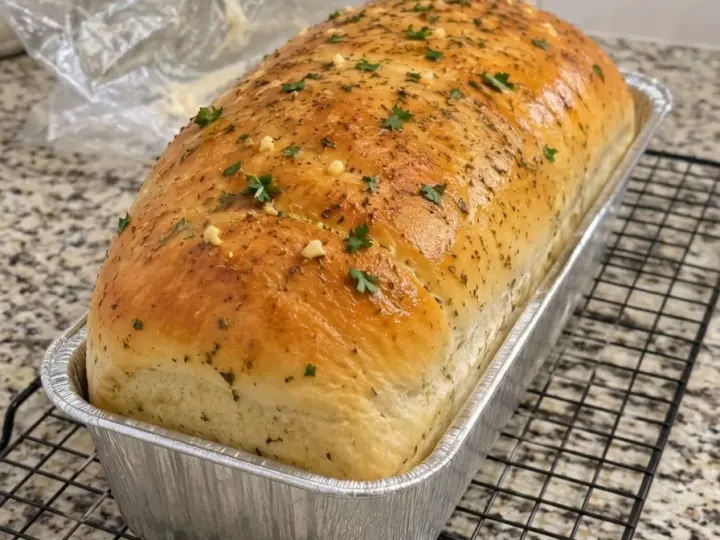
This Soft & Fluffy Garlic Herb Bread in a Bag combines a tender homemade loaf with savory garlic, Italian herbs, and a warm garlic-parsley butter finish. The center is soft and airy, the crust turns golden, and each slice has enough flavor to enjoy with nothing more than a little butter.
The mixing begins inside a sturdy zip-top bag, which helps contain loose flour during the early stages. Once the ingredients form a rough dough, you transfer it to the counter for kneading, then let it rise, shape it, and bake it in a loaf pan.
Garlic powder seasons the dough evenly, while fresh garlic gently warmed in butter gives the finished crust an aromatic topping. Dried herbs inside and fresh parsley outside create layers of flavor without complicating the method.
Serve this bread alongside spaghetti, dip it into tomato soup, or toast thick slices for a savory breakfast. It also makes flavorful grilled cheese sandwiches.
What Is Garlic Herb Bread in a Bag?
Garlic herb bread in a bag is a yeast bread that uses a resealable food-storage bag for the initial mixing instead of a bowl.
The bag makes combining the flour, water, yeast, and seasonings convenient, but the dough still needs hand kneading and two rises. Those steps develop the structure that gives the baked loaf its soft, springy interior.
This version uses all-purpose flour, olive oil, garlic powder, Italian seasoning, and dried parsley. After baking, the loaf is brushed with butter containing gently cooked fresh garlic and chopped parsley.
The result is a savory sandwich-style loaf rather than a crisp baguette or a pull-apart garlic bread. Its slices are sturdy enough for toast while remaining tender inside.
The plastic bag is only a mixing tool. It never goes into the oven.
Why You’ll Love This Recipe
No stand mixer is required. A bag handles the first mixing steps, and hand kneading finishes the dough.
The garlic flavor runs throughout. Garlic powder seasons the crumb, while fresh garlic flavors the butter topping.
It uses familiar ingredients. Flour, yeast, water, oil, and pantry seasonings form the base.
It makes one manageable loaf. The recipe fits an 8½ × 4½-inch loaf pan.
It works with many meals. Serve it with pasta, soup, roasted chicken, or salads.
It freezes well. Individual slices are easy to thaw and toast.
The method is approachable. Clear mixing stages and visible rising cues make it suitable for newer bread bakers.
Ingredient Breakdown
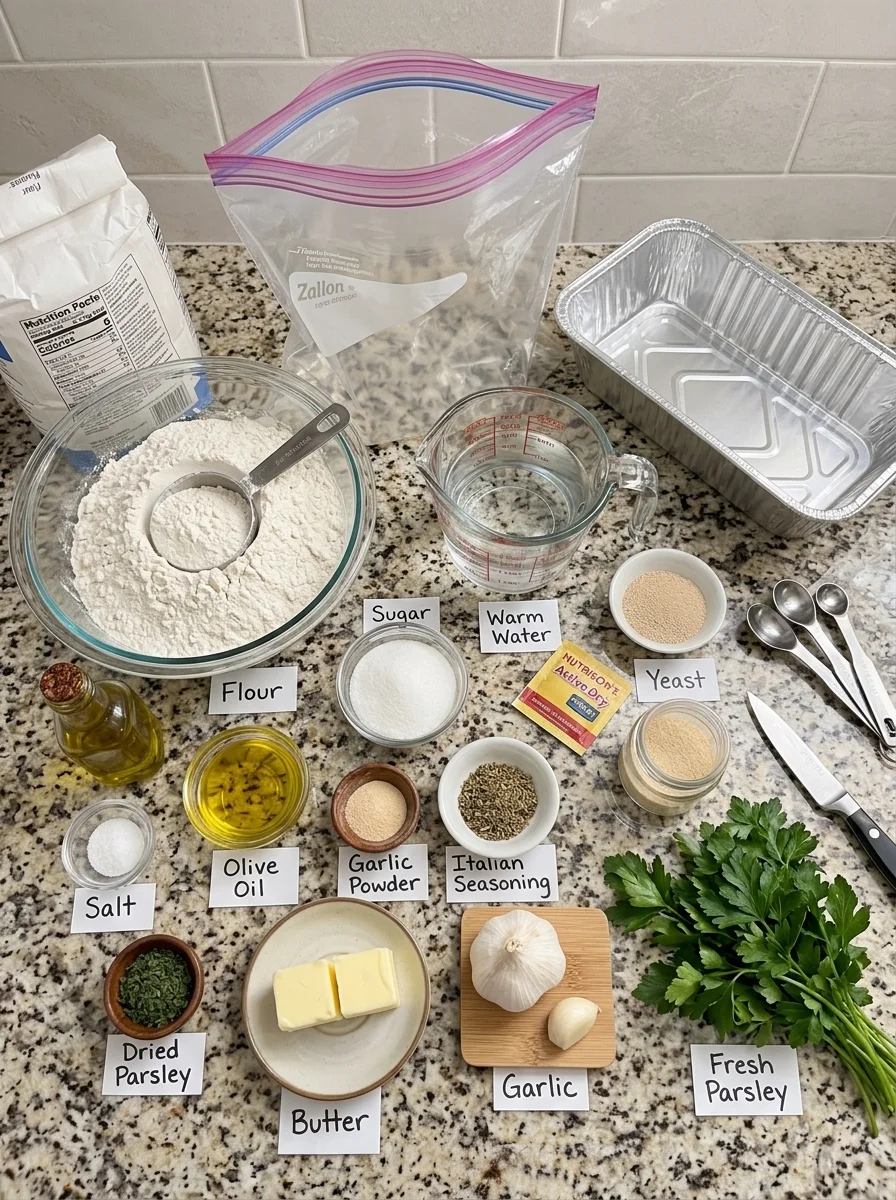
All-Purpose Flour — 3 Cups, About 360 Grams
All-purpose flour gives the loaf a soft crumb with enough structure for slicing.
For consistent results, weigh the flour. If using cups, spoon it into the measuring cup and level the top rather than scooping directly from the container.
Divide the flour into three portions of approximately 1 cup or 120 grams each for the staged mixing method.
Keep a little extra available for kneading, but add it sparingly.
Warm Water — 1 Cup
Use water at 105–110°F (40–43°C).
The water should be comfortably warm rather than hot. An instant-read thermometer is helpful because overly hot water can damage the yeast.
Active Dry Yeast — 2¼ Teaspoons
This equals one standard 7-gram packet.
The initial resting period lets you look for bubbles before continuing. Fresh yeast and an appropriate water temperature help the dough rise reliably.
Granulated Sugar — 2 Tablespoons
Sugar adds a gentle sweetness that balances the savory seasonings and helps the crust brown.
The finished bread tastes savory rather than sweet.
Olive Oil — 2 Tablespoons
Olive oil contributes tenderness and complements the garlic and herbs.
Use a mild or moderately flavored olive oil, depending on your preference.
Fine Salt — 1 Teaspoon
Salt brings out the bread’s flavor and helps regulate yeast activity.
Use fine salt for the listed measurement. Coarse salts vary in density and are not always interchangeable teaspoon for teaspoon.
Garlic Powder — 1½ Teaspoons
Garlic powder distributes evenly through the dough.
It provides consistent flavor without introducing pieces of fresh garlic into the crumb.
Dried Italian Seasoning — 1 Teaspoon
A salt-free Italian herb blend adds a combination of flavors such as oregano, basil, and thyme.
Crush it lightly between your fingers before adding to release its aroma.
Dried Parsley — 1 Teaspoon
Dried parsley adds small herb flecks throughout the loaf and complements the fresh parsley in the topping.
Garlic Herb Butter
For the finish, combine:
- 2 tablespoons unsalted butter
- 1 medium garlic clove, very finely minced
- 1 tablespoon finely chopped fresh parsley
Cook the garlic gently in the butter until fragrant. Browning it too deeply can create a bitter flavor.
Equipment You’ll Need
- One sturdy gallon-size food-storage zip-top bag
- An 8½ × 4½-inch loaf pan
- A bowl to support the bag during filling
- A lightly greased bowl for rising
- Measuring tools or a kitchen scale
- A clean work surface
- A small saucepan
- A pastry brush
- A wire cooling rack
- An instant-read thermometer, if available
Check that the bag seals securely before starting. Avoid thin bags that can split during mixing.
How to Make Soft & Fluffy Garlic Herb Bread in a Bag
Step 1: Start the Yeast Mixture
Stand the open bag inside a bowl to support it.
Add:
- 1 cup flour
- 2 tablespoons sugar
- 2¼ teaspoons active dry yeast
- 1 cup warm water
Press out excess air, seal securely, and gently squeeze until combined into a loose batter.
Let rest for 10 minutes, until small bubbles appear.
Step 2: Add Oil and Seasonings
Open the bag and add:
- 1 cup flour
- Olive oil
- Salt
- Garlic powder
- Italian seasoning
- Dried parsley
Reseal and gently massage until the flour and seasonings are incorporated.
Work the mixture away from the corners without pulling hard on the bag.
Step 3: Add the Remaining Flour
Add the final cup of flour.
Seal and work the mixture through the bag until a shaggy dough forms. It does not need to become perfectly smooth at this stage.
Step 4: Knead
Transfer the dough to a lightly floured countertop.
Knead for 6–8 minutes, folding the dough over itself, pressing forward with the heel of your hand, and turning between folds.
The dough should become smooth, elastic, and slightly tacky. Add extra flour only when necessary to prevent heavy sticking.
Step 5: Let the Dough Rise
Place the dough in a lightly greased bowl and turn once to coat.
Cover and let rise in a comfortably warm place for 45–60 minutes, or until approximately doubled.
A cool kitchen may require more time. Use the increase in size as the main guide.
Step 6: Shape the Loaf
Grease the loaf pan.
Gently deflate the dough and pat it into an approximately 8-inch-wide rectangle. Roll into a snug log, pinch the seam closed, and tuck the ends underneath.
Place seam-side down in the pan.
Step 7: Allow the Second Rise
Cover loosely and let rise for 30–45 minutes, until the center crowns approximately 1 inch above the rim.
Preheat the oven to 350°F (175°C) during the final 20 minutes.
Step 8: Bake
Remove the covering and bake for 30–35 minutes.
The loaf should be golden brown, and the center should register approximately 190–195°F (88–91°C).
If the top browns too quickly, loosely tent with foil.
Step 9: Make the Garlic Butter
Near the end of baking, melt the butter over low heat.
Add the minced garlic and cook gently for 1–2 minutes, just until fragrant. Remove from the heat and stir in the parsley.
Step 10: Finish and Cool
Brush the warm loaf with the garlic-parsley butter.
Rest in the pan for 10 minutes, then carefully transfer to a wire rack. Allow approximately 1 hour of cooling in total before slicing, longer if the center remains very warm.
Tips for Soft, Fluffy Bread
Keep the dough slightly tacky. Adding too much flour is a common cause of a heavy loaf.
Knead until elastic. The dough should feel smoother and stretch more easily than it did immediately after mixing.
Cover during both rises. This prevents a dry surface from forming.
Use gentle warmth. A warm room helps rising; direct heat can dry the dough or damage the yeast.
Watch the dough as well as the clock. Temperature and yeast activity affect rising time.
Shape into a snug log. Even tension helps produce a more consistent loaf.
Avoid overproofing. Dough that rises too far can lose strength and collapse during baking.
Cook the topping garlic gently. Low heat keeps its flavor fragrant rather than harsh or bitter.
Cool before slicing. Cutting hot bread compresses the crumb and can make the center seem gummy.
Variations to Try
Cheddar Garlic Herb Bread
Knead in ½ cup shredded sharp cheddar during the final minute or two of kneading.
Distribute it evenly before the first rise.
Rosemary Garlic Bread
Replace the Italian seasoning with 1 teaspoon finely chopped fresh rosemary.
Chop thoroughly so the leaves do not create tough pieces.
Olive Garlic Herb Bread
Add ⅓ cup finely chopped, well-drained olives near the end of kneading.
Pat them dry first and expect the dough to feel slightly softer.
Dairy-Free Version
Keep the olive-oil dough as written and replace the finishing butter with 2 tablespoons olive oil.
Warm the garlic gently in the oil, add parsley, and brush onto the loaf.
Garlic Herb Dinner Rolls
After the first rise, divide into 8 equal pieces and shape into rolls.
Place in a greased baking dish, cover, and rise until puffy. Bake at 350°F (175°C) for approximately 20–25 minutes, checking for doneness. Brush with the garlic butter.
Cheesy Garlic Toast
Toast slices of the cooled loaf, add a little mozzarella, and warm under the broiler until melted.
Watch carefully to prevent burning.
What to Serve with Garlic Herb Bread
The savory flavor pairs well with simple meals and rich sauces.
- Spaghetti with meat sauce: Use thick slices to accompany the pasta.
- Tomato soup: Toast lightly before dipping.
- Roasted chicken: Serve alongside vegetables and pan juices.
- Green salad: Add warm bread for a light lunch.
- Creamy soups: Garlic and herbs complement potato or mushroom soup.
- Grilled cheese: Pair with cheddar, mozzarella, or provolone.
- Breakfast eggs: Toast slices and serve with scrambled eggs.
For sandwiches, let the loaf cool completely so the slices hold their shape.
Storage and Freezing
Refrigerator
Because this loaf is finished with fresh garlic-parsley butter, wrap it airtight once completely cool and refrigerate for up to 3 days.
Warm or toast slices before serving to refresh the texture.
Freezer
Slice the cooled bread and separate portions with parchment.
Wrap securely or place in a freezer-safe bag, removing excess air. Freeze for up to 3 months for best quality.
Reheating
Warm slices in a skillet or toaster oven. Watch closely because the buttered surface can brown quickly.
For a larger portion, wrap loosely in foil and heat in a 300°F (150°C) oven until warmed through.
Make-Ahead Preparation
For convenient serving, bake the loaf earlier in the day and allow it to cool fully.
Freeze extra slices promptly if you do not expect to finish the bread within the refrigerated storage window.
Frequently Asked Questions
Can I use instant yeast?
Yes. Use the same amount and follow the same mixing sequence. Rising may be faster, so watch the dough’s volume.
Can I use bread flour?
Yes. Substitute the same weight. The loaf may be slightly chewier and could need a small amount of extra water if the dough feels stiff.
Why did my yeast mixture not bubble?
The yeast may be inactive, the water may have been too hot, or the mixture may be too cool. Allow a few extra minutes; if there is still no activity, restart with fresh yeast.
Can I mix everything in a bowl?
Yes. Follow the same ingredient sequence with a sturdy spoon, then knead by hand.
Can I bake it inside the bag?
No. Remove the dough from the food-storage bag before kneading, rising, shaping, and baking.
Why is my loaf dense?
Common causes include excess flour, insufficient kneading, inactive yeast, or not allowing enough rising time.
Can I add fresh garlic to the dough?
Garlic powder provides the most even result in this recipe. Use the fresh garlic in the topping as directed.
Why is the center gummy?
The bread may be underbaked or sliced while too warm. Check the internal temperature and allow adequate cooling.
Can I use a 9 × 5-inch pan?
Yes, but the loaf will be shorter. Judge the second rise by how puffy the dough looks rather than waiting for the same height above the rim.
Can I double the recipe?
Yes. Use two separate bags for mixing and divide the dough between two loaf pans. Check each loaf individually during baking.
Soft & Fluffy Garlic Herb Bread in a Bag
Description
A tender homemade yeast loaf seasoned with garlic and herbs, then finished with warm garlic-parsley butter.
- Prep time: 25 minutes
- Initial rest: 10 minutes
- Rise time: 75–105 minutes
- Cook time: 30–35 minutes
- Cooling time: Approximately 1 hour
- Total time: Approximately 3 hours 20 minutes–3 hours 55 minutes
- Yield: 1 loaf, approximately 12 slices
- Difficulty: Easy
Ingredients
Ingredients
For the bread:
- 3 cups (360 g) all-purpose flour, divided
- 1 cup (240 ml) warm water, 105–110°F (40–43°C)
- 2¼ teaspoons (7 g) active dry yeast
- 2 tablespoons (25 g) granulated sugar
- 2 tablespoons (30 ml) olive oil
- 1 teaspoon (6 g) fine salt
- 1½ teaspoons garlic powder
- 1 teaspoon dried Italian seasoning
- 1 teaspoon dried parsley
- Additional flour for kneading
- Oil for greasing
For the topping:
- 2 tablespoons (28 g) unsalted butter
- 1 medium garlic clove, very finely minced
- 1 tablespoon finely chopped fresh parsley
Instructions
Instructions
- Combine 1 cup flour, sugar, yeast, and warm water in a sturdy gallon-size zip-top bag. Seal and squeeze gently. Rest for 10 minutes.
- Add another cup flour, olive oil, salt, garlic powder, Italian seasoning, and dried parsley. Seal and mix.
- Add the remaining flour and mix until a shaggy dough forms.
- Knead on a lightly floured surface for 6–8 minutes.
- Place in a greased bowl, cover, and rise for 45–60 minutes, until doubled.
- Shape into a log and place seam-side down in a greased 8½ × 4½-inch loaf pan.
- Cover and rise for 30–45 minutes, until crowned above the rim.
- Bake at 350°F (175°C) for 30–35 minutes, until golden and the center reaches 190–195°F (88–91°C).
- Melt butter over low heat. Add garlic and cook gently for 1–2 minutes. Remove from heat and add parsley.
- Brush the warm loaf with garlic butter.
- Rest in the pan for 10 minutes, then transfer to a rack. Cool before slicing.