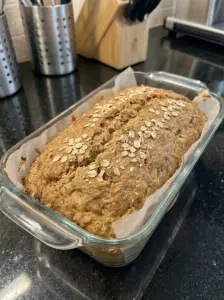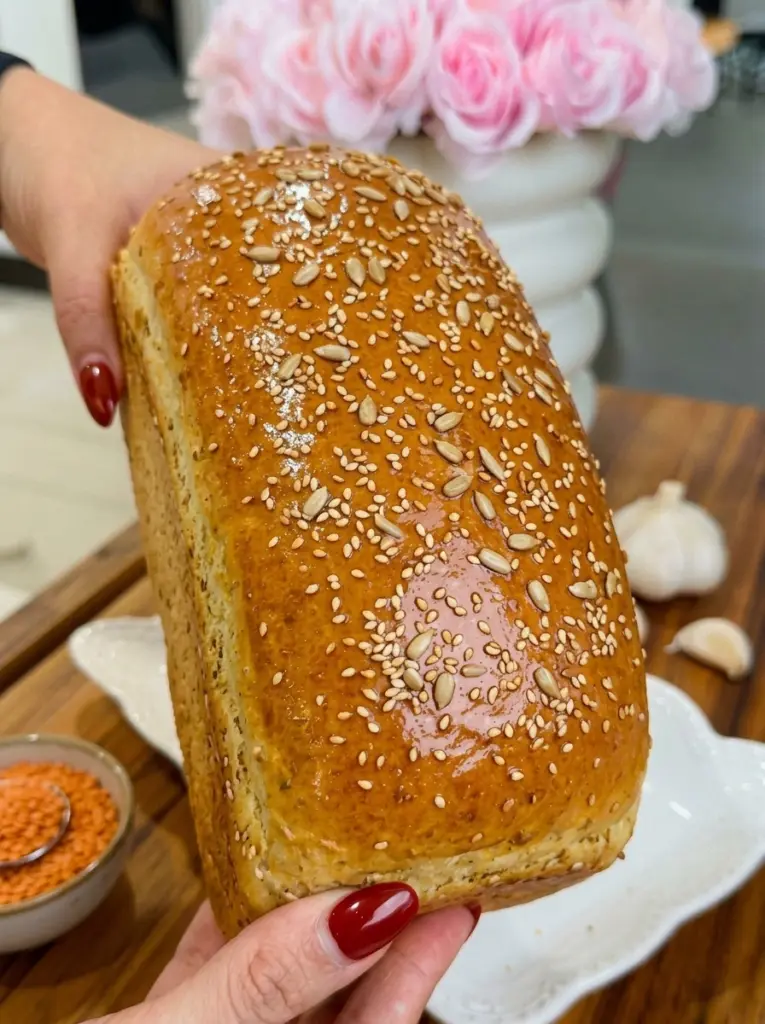
This Simple Blender Lentil Bread is hearty, wholesome, flourless, and surprisingly easy to prepare. Made with soaked red lentils and just a handful of simple ingredients, it blends into a smooth batter and bakes into a tender, lightly nutty loaf that’s perfect for toast, sandwiches, breakfast, or serving alongside soups and stews.
If you’ve been looking for an easy homemade bread that skips traditional flour, yeast, kneading, and rising, this Simple Blender Lentil Bread is definitely worth trying. Instead of flour forming the base of the loaf, dry red lentils are soaked until softened and then blended with fresh water, olive oil, baking powder, and salt.
The result is a smooth lentil batter that goes directly into a loaf pan and bakes until firm and lightly golden. Once completely cooled, the bread develops a satisfying, sliceable texture with a mild, slightly nutty flavor that works beautifully with both simple spreads and savory toppings.
It’s especially convenient because there’s no complicated bread-making technique involved. The lentils require several hours of soaking, but the actual hands-on preparation takes only about 10 minutes. Your blender does nearly all the work.
Let’s dive into everything you need to know to make this easy, wholesome blender lentil bread at home.
Why You’ll Love This Simple Blender Lentil Bread
There’s plenty to love about this easy lentil loaf:
Made with simple ingredients. Red lentils, water, olive oil, baking powder, and salt form the basic recipe.
No traditional flour required. The soaked red lentils become the foundation of the bread, making this a naturally flourless recipe.
No yeast or kneading. There’s no yeast activation, dough kneading, or lengthy proofing process.
Easy blender preparation. Once the lentils have soaked, simply drain, blend, pour, and bake.
Plant-based and satisfying. Lentils provide plant-based protein and fiber, making this bread a hearty addition to breakfast or lunch.
Versatile flavor. Its mild, lightly nutty flavor works well with avocado, hummus, eggs, nut butter, sandwich fillings, soups, and stews.
Great for meal prep. The loaf can be refrigerated for several days or sliced and frozen for longer storage.
Easy to customize. Herbs, spices, seeds, and seasonings can easily be incorporated to create different versions.
Ingredients You’ll Need
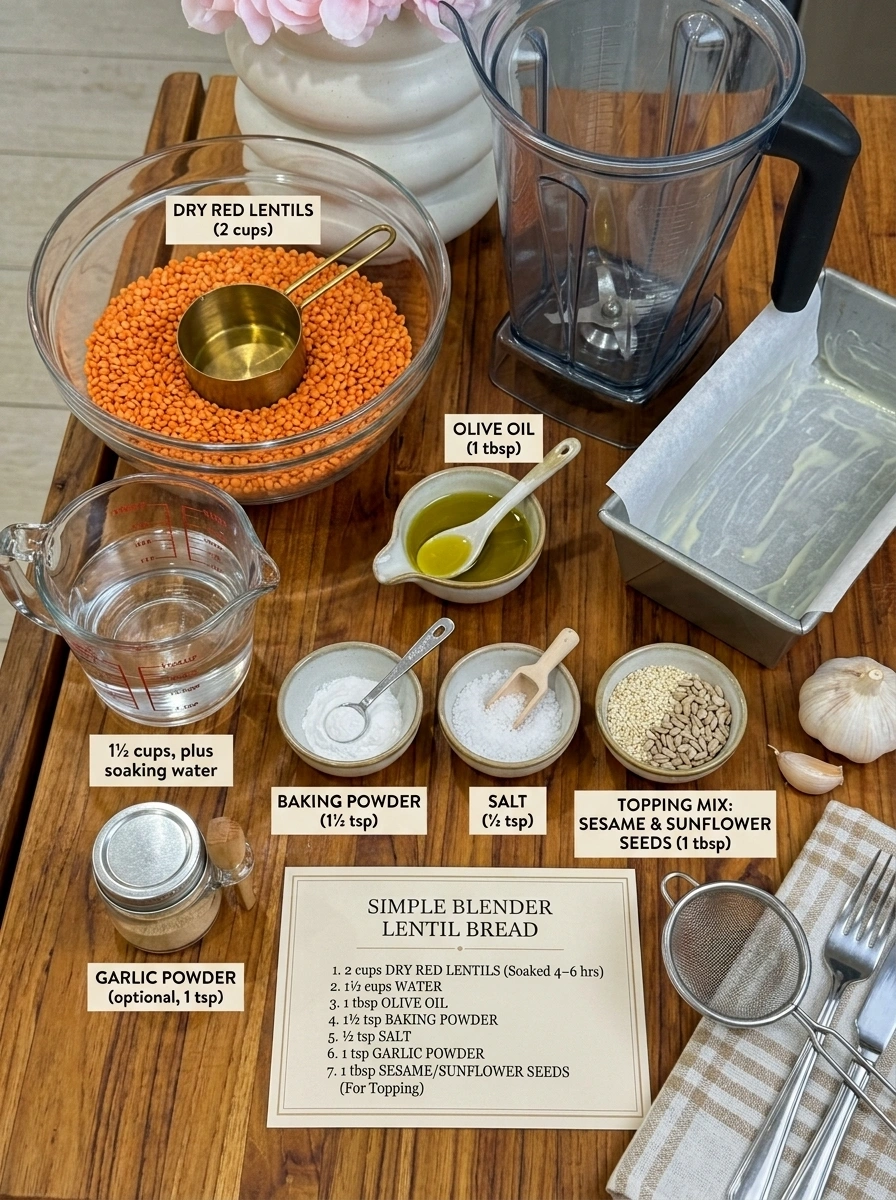
Here’s a closer look at the simple ingredients that go into this blender lentil bread and why each one matters.
- 2 cups dry red lentils — Form the base of the bread. After soaking, the softened lentils blend into a creamy batter and provide the loaf with its hearty texture and mild nutty flavor.
- 1½ cups water, plus more for soaking — Water softens the lentils during soaking, while fresh water added during blending creates the proper batter consistency.
- 1 tablespoon olive oil — Adds moisture and a little richness while contributing to the tender texture.
- 1½ teaspoons baking powder — Provides leavening and helps prevent the loaf from becoming excessively heavy.
- ½ teaspoon salt — Enhances the natural flavor of the lentils and balances the loaf.
- 1 teaspoon garlic powder, optional — Adds a savory garlic note that’s especially good when making the bread for sandwiches, avocado toast, or serving alongside soups.
- 1 tablespoon sesame seeds or sunflower seeds, optional — Create an attractive topping while adding subtle nuttiness and texture.
How to Make Simple Blender Lentil Bread
Most of the total preparation time is hands-off soaking and baking. Once the lentils have softened, the batter comes together quickly.
Step 1: Soak the Lentils
Place 2 cups of dry red lentils in a large bowl and cover them generously with water.
Allow the lentils to soak for 4–6 hours or overnight.
The lentils will absorb water and soften considerably during this time. This makes them much easier to blend into the creamy consistency needed for the bread.
Step 2: Drain and Rinse
After soaking, drain the lentils completely.
Rinse them very well under fresh water and allow the excess liquid to drain away.
The 1½ cups of water used for blending should be fresh water, not the lentil soaking liquid.
Step 3: Blend Everything
Transfer the soaked and drained lentils to a high-speed blender.
Add 1½ cups fresh water, olive oil, baking powder, salt, and optional garlic powder.
Blend until completely smooth and creamy.
Take your time with this step. A thoroughly blended batter helps produce a more uniform texture in the finished bread.
Step 4: Prepare the Loaf Pan
Preheat the oven to 375°F (190°C).
Line an 8×4-inch or 9×5-inch loaf pan with parchment paper and lightly grease it.
Leaving some parchment extending above the sides can make removing the baked loaf easier.
Step 5: Fill the Pan
Pour the smooth lentil batter into the prepared loaf pan.
Gently tap the pan against the countertop a few times to help release any large trapped air bubbles.
If desired, sprinkle sesame seeds, sunflower seeds, or your preferred seed topping evenly over the surface.
Step 6: Bake
Bake the lentil bread for 45–55 minutes, or until the center feels firm and the top is lightly golden.
Insert a toothpick into the center of the loaf to test it. It should come out mostly clean when the bread is ready.
Step 7: Cool in the Pan
Remove the loaf from the oven and allow it to rest in the pan for 10–15 minutes.
Then carefully lift or turn the bread out and transfer it to a wire cooling rack.
Step 8: Cool Completely
Allow the loaf to cool completely before slicing.
This step is particularly important with lentil bread because the interior continues setting as it cools. Cutting the bread while it’s still very warm can result in a softer, less stable crumb.
Step 9: Slice and Enjoy
Once completely cooled, cut the loaf into approximately 10–12 slices.
Enjoy it fresh or toast the slices until the edges are crisp and golden.
Serve with avocado, hummus, eggs, butter, nut butter, or your favorite sandwich fillings.
Recipe Notes
Soaking matters: Soaking the dry red lentils for at least 4–6 hours softens them enough to blend into a creamy batter.
Use fresh blending water: Drain and rinse the soaked lentils thoroughly, then use the specified amount of fresh water when making the batter.
Blend until completely smooth: A well-blended batter produces a more uniform and pleasant bread texture.
Don’t slice too early: The loaf continues setting as it cools. Allowing it to cool completely is essential for cleaner slices and a better texture.
Choose the right pan: An 8×4-inch pan will generally produce a taller loaf, while a 9×5-inch pan will create a slightly wider, shorter loaf.
Flavor variations: Rosemary, oregano, cumin, black pepper, dried onion, or chili flakes can be added to customize the flavor.
Seed options: Pumpkin seeds, sesame seeds, flaxseeds, or sunflower seeds can all make delicious toppings.
For toast: Cut the loaf into slightly thicker slices and toast until the exterior becomes crisp and golden.
Make ahead: Bake and cool the loaf ahead of time, then refrigerate it for convenient breakfasts and lunches.
How to Serve Simple Blender Lentil Bread
This bread has a mild enough flavor to work with many different toppings and meals.
- Top toasted slices with mashed avocado and sea salt
- Spread with hummus or roasted garlic
- Add eggs and sautéed vegetables for breakfast
- Use as the base for sandwiches and veggie melts
- Spread with peanut or almond butter
- Serve alongside hearty soups and stews
- Pair with curries for a satisfying side
- Top with sliced tomatoes, herbs, and avocado
- Toast and serve with butter or olive oil
- Use for an open-faced vegetable sandwich
Because lentil bread has a hearty texture, slightly thicker slices work particularly well when toasted.
Tips for the Best Blender Lentil Bread
Don’t skip the soaking period. Dry lentils won’t blend into the same smooth batter. Give them at least 4–6 hours to properly hydrate and soften.
Rinse thoroughly after soaking. Drain away the soaking water and rinse the softened lentils well before blending.
Use a powerful blender when possible. A high-speed blender makes it easier to break down the soaked lentils into a completely creamy batter.
Blend longer than you think you need to. If you can still see noticeable lentil pieces, continue blending. A smoother batter generally creates a more uniform loaf.
Prepare the pan carefully. Parchment paper and a light coating of grease make removing the finished bread significantly easier.
Don’t overfill a small loaf pan. Use the recommended 8×4-inch or 9×5-inch loaf pan so the batter has sufficient room to bake properly.
Check the center before removing it from the oven. The surface may appear finished before the middle is fully set. Look for a firm center and use the toothpick test.
Cool it completely. This is one of the most important steps. The interior becomes firmer and easier to slice as the loaf reaches room temperature.
Toast for a different texture. If you prefer crisp bread, toast individual slices until the surfaces become golden.
Freeze it already sliced. Freezing individual slices makes it much easier to remove exactly what you need without thawing the entire loaf.
Storage Information
Allow the lentil bread to cool completely before storing it.
Place the bread in an airtight container and refrigerate for up to 4–5 days.
For longer storage, slice the loaf first and place small pieces of parchment paper between the slices to prevent them from sticking together.
Freeze the sliced bread in a freezer-safe container or bag for up to 2 months.
Individual slices can be removed as needed and toasted directly from frozen, making this bread especially convenient for meal prep.
Frequently Asked Questions
Do I have to soak the red lentils first?
Yes. Soaking for 4–6 hours or overnight softens the lentils so they can be blended into the smooth batter needed for this bread.
Should I use the lentil soaking water in the batter?
No. Drain and rinse the soaked lentils thoroughly, then use 1½ cups of fresh water when blending the batter.
Do I need to cook the lentils before blending them?
No. The recipe uses dry red lentils that are soaked until softened but not cooked before blending. They cook as the loaf bakes.
Does this lentil bread contain flour?
No traditional flour is included in this recipe. The soaked and blended red lentils form the base of the loaf.
Does lentil bread need yeast?
No. This recipe uses baking powder for leavening, so there’s no yeast, proofing, or rising period required.
Why should I let the bread cool completely before slicing?
The interior continues to firm and set as the loaf cools. Slicing it too early can result in a softer or more fragile interior.
Can I add herbs and seasonings?
Absolutely. Rosemary, oregano, cumin, black pepper, dried onion, chili flakes, and other savory seasonings can be added according to your preference.
What seeds can I put on top?
Sesame, sunflower, pumpkin, and flaxseeds all work well. You can use one variety or combine several.
Is this bread good for sandwiches?
Yes. Once completely cooled and sliced, the bread can be used for sandwiches, open-faced toast, and veggie melts. Toasting the slices first can provide additional structure and crispness.
Can I freeze Simple Blender Lentil Bread?
Yes. For convenience, slice the completely cooled loaf before freezing and place parchment between individual slices. Freeze for up to 2 months and toast slices directly from frozen as needed.
Recipe Card
Recipe: Simple Blender Lentil Bread
Prep Time: 10 minutes
Soaking Time: 4–6 hours
Bake Time: 45–55 minutes
Initial Cooling Time: 10–15 minutes in the pan, plus complete cooling
Total Time: About 5–7 hours including soaking
Servings: 10–12 slices
Oven Temperature: 375°F (190°C)
Loaf Pan: 8×4-inch or 9×5-inch
This Simple Blender Lentil Bread proves that homemade bread doesn’t have to involve yeast, traditional flour, complicated kneading, or hours of active preparation. Soaked red lentils transform into a smooth batter that bakes into a hearty, tender loaf with a pleasantly mild and lightly nutty flavor.
Keep the basic version simple or customize it with garlic, rosemary, oregano, spices, or your favorite seeds. Once sliced, it’s incredibly versatile—toast it for breakfast with avocado and eggs, spread it with hummus, turn it into a sandwich, or serve it alongside a warming bowl of soup or curry.
Bake one loaf for the week, slice and refrigerate or freeze it, and you’ll have an easy plant-based bread ready whenever you need a quick breakfast, snack, or savory side.
Print
Simple Blender Lentil Bread
Ingredients
Here’s a closer look at the simple ingredients that go into this blender lentil bread and why each one matters.
- 2 cups dry red lentils — Form the base of the bread. After soaking, the softened lentils blend into a creamy batter and provide the loaf with its hearty texture and mild nutty flavor.
- 1½ cups water, plus more for soaking — Water softens the lentils during soaking, while fresh water added during blending creates the proper batter consistency.
- 1 tablespoon olive oil — Adds moisture and a little richness while contributing to the tender texture.
- 1½ teaspoons baking powder — Provides leavening and helps prevent the loaf from becoming excessively heavy.
- ½ teaspoon salt — Enhances the natural flavor of the lentils and balances the loaf.
- 1 teaspoon garlic powder, optional — Adds a savory garlic note that’s especially good when making the bread for sandwiches, avocado toast, or serving alongside soups.
- 1 tablespoon sesame seeds or sunflower seeds, optional — Create an attractive topping while adding subtle nuttiness and texture.
Instructions
Most of the total preparation time is hands-off soaking and baking. Once the lentils have softened, the batter comes together quickly.
Step 1: Soak the Lentils
Place 2 cups of dry red lentils in a large bowl and cover them generously with water.
Allow the lentils to soak for 4–6 hours or overnight.
The lentils will absorb water and soften considerably during this time. This makes them much easier to blend into the creamy consistency needed for the bread.
Step 2: Drain and Rinse
After soaking, drain the lentils completely.
Rinse them very well under fresh water and allow the excess liquid to drain away.
The 1½ cups of water used for blending should be fresh water, not the lentil soaking liquid.
Step 3: Blend Everything
Transfer the soaked and drained lentils to a high-speed blender.
Add 1½ cups fresh water, olive oil, baking powder, salt, and optional garlic powder.
Blend until completely smooth and creamy.
Take your time with this step. A thoroughly blended batter helps produce a more uniform texture in the finished bread.
Step 4: Prepare the Loaf Pan
Preheat the oven to 375°F (190°C).
Line an 8×4-inch or 9×5-inch loaf pan with parchment paper and lightly grease it.
Leaving some parchment extending above the sides can make removing the baked loaf easier.
Step 5: Fill the Pan
Pour the smooth lentil batter into the prepared loaf pan.
Gently tap the pan against the countertop a few times to help release any large trapped air bubbles.
If desired, sprinkle sesame seeds, sunflower seeds, or your preferred seed topping evenly over the surface.
Step 6: Bake
Bake the lentil bread for 45–55 minutes, or until the center feels firm and the top is lightly golden.
Insert a toothpick into the center of the loaf to test it. It should come out mostly clean when the bread is ready.
Step 7: Cool in the Pan
Remove the loaf from the oven and allow it to rest in the pan for 10–15 minutes.
Then carefully lift or turn the bread out and transfer it to a wire cooling rack.
Step 8: Cool Completely
Allow the loaf to cool completely before slicing.
This step is particularly important with lentil bread because the interior continues setting as it cools. Cutting the bread while it’s still very warm can result in a softer, less stable crumb.
Step 9: Slice and Enjoy
Once completely cooled, cut the loaf into approximately 10–12 slices.
Enjoy it fresh or toast the slices until the edges are crisp and golden.
Serve with avocado, hummus, eggs, butter, nut butter, or your favorite sandwich fillings.