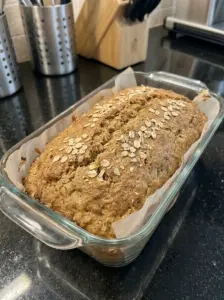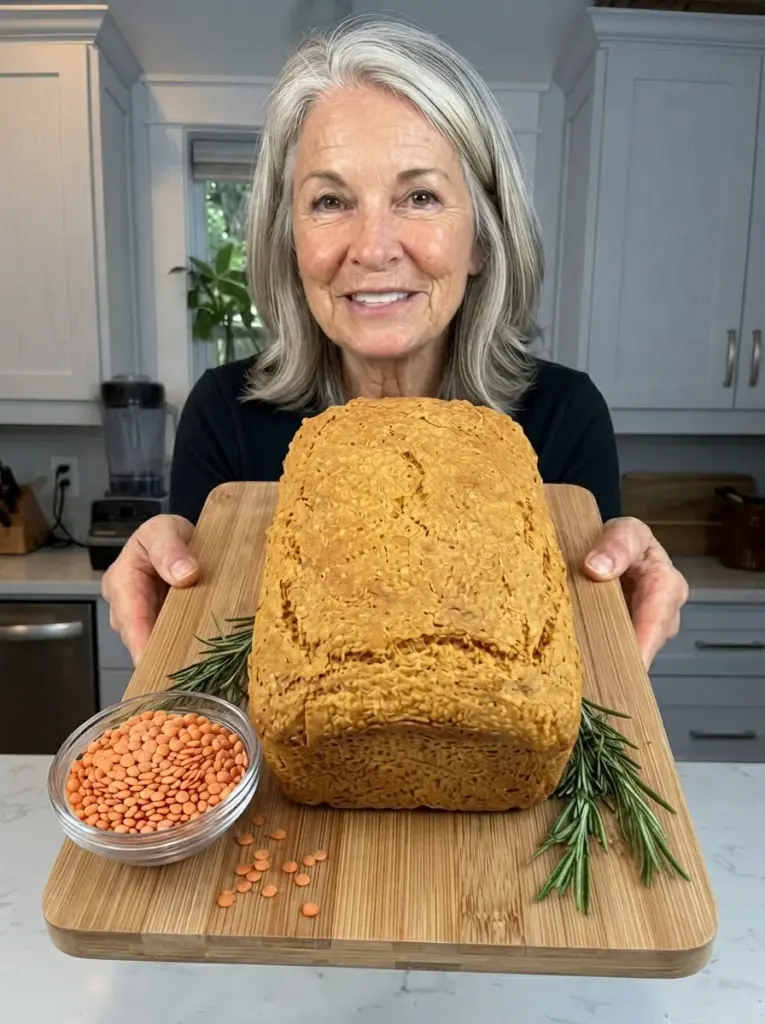
This 3-Ingredient Red Lentil Sandwich Bread uses soaked red lentils, eggs, and baking powder to make a small, flourless loaf. There is no yeast, kneading, or long dough fermentation. Once the lentils are soaked and drained, a blender turns the ingredients into a thick batter ready for the oven.
The finished bread has a mild lentil flavor and a moist, close crumb. It is especially useful toasted with avocado, cheese, eggs, or your favorite sandwich filling. Cooling fully helps the loaf firm enough to cut without compressing its center.
Expect a hearty flourless bread rather than the airy, stretchy texture of a wheat sandwich loaf. Eggs provide binding and structure, while baking powder gives some lift. The loaf can rise during baking and settle a little as it cools without becoming a failure.
This suggested formula was developed from the supplied title and has not been kitchen-tested. It uses eggs and baking powder as the second and third ingredients. A lentil-water-salt loaf is a different formula and should not be assumed to have the same structure or baking instructions.
Recipe Overview
- Yield: 1 small loaf
- Pan: Approximately 8 × 4 inches
- Servings: 8 slices
- Active preparation: About 10–15 minutes
- Soaking: About 6–8 hours in the refrigerator, or overnight
- Baking: About 40–55 minutes
- Pan rest: 10–15 minutes
- Further cooling: About 1 hour, or until fully cool
- Total: Plan on approximately 8–10 hours including soaking and cooling; an overnight soak is convenient
- Oven: 350°F
Soaking is a preparation step, not a fermentation step. The lentils remain refrigerated during soaking, and the blended batter is baked promptly afterward.
Ingredients
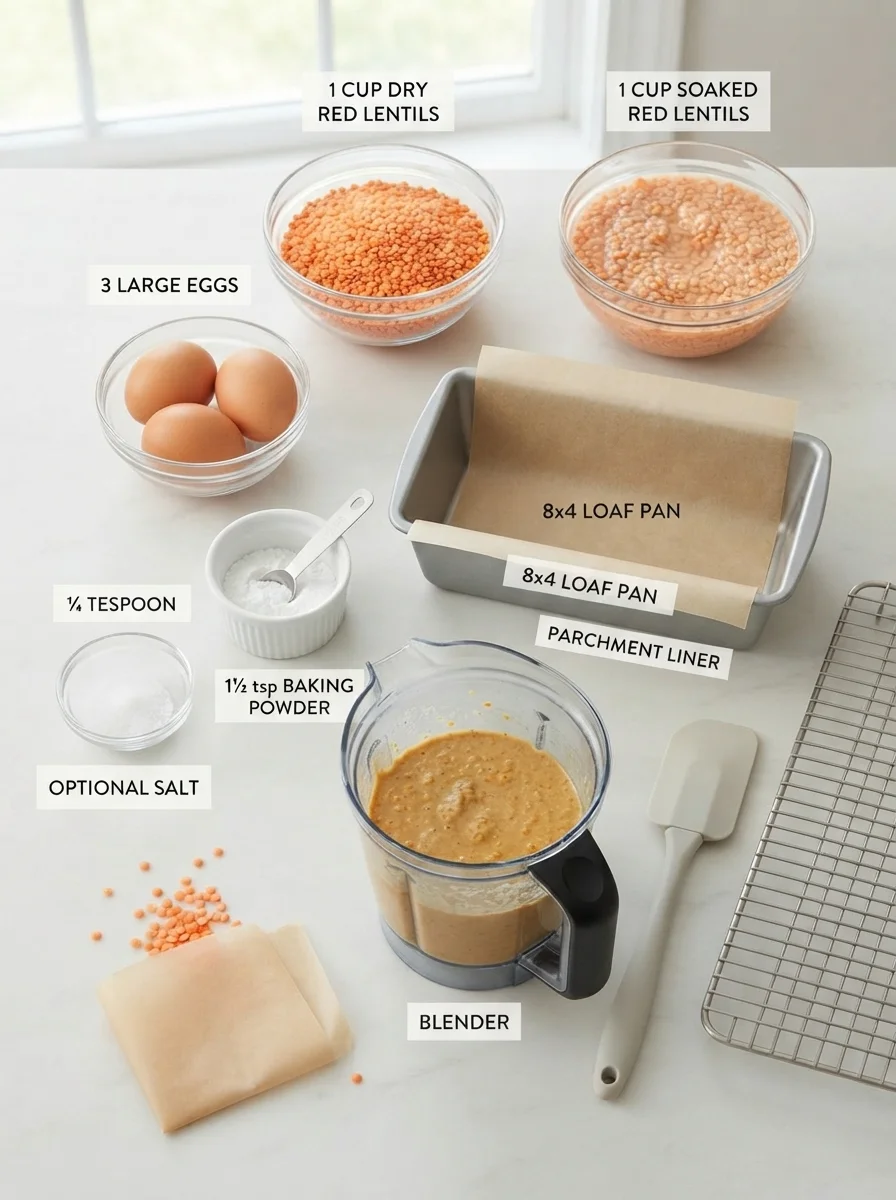
- 1 cup dry split red lentils
- 3 large eggs
- 1½ teaspoons baking powder
Water for rinsing and soaking is discarded rather than measured into the batter. Line the pan with parchment to avoid needing grease as an additional ingredient.
A pinch of salt is an optional fourth ingredient. The plain three-ingredient loaf has a restrained flavor, which can be useful with strongly flavored toppings but may taste bland by itself.
Why These Ingredients Are Used
Soaked red lentils soften enough to blend into a smooth batter. They supply starch, fiber, and protein, but they do not develop the stretchy gluten network that gives wheat bread its elasticity.
Eggs help the blended mixture set into a cohesive loaf. Baking powder creates gas during mixing and baking, supporting a little rise. Neither ingredient makes the result identical to a yeast bread.
This structure makes the bread more suitable for modest slices than for very thin, flexible sandwich bread. Toasting helps firm the surface and brings out a nutty flavor.
Choosing the Lentils
Use dry split red lentils, which often look orange before cooking. They are usually sold without their outer skins and become softer and paler as they hydrate.
Whole brown, green, or black lentils are not direct substitutes. Their skins, soaking behavior, flavor, and blending texture differ. Canned lentils also contain a different amount of moisture and cannot simply replace the measured dry lentils.
Sort through the lentils before rinsing and remove any debris. Choose a fresh package without an unusual odor or signs of moisture damage.
Egg and Baking Powder Notes
Large eggs give the intended starting point for liquid and binding. Smaller eggs may leave a thicker batter; much larger eggs may produce a looser mixture and a more egg-forward texture.
An egg-free substitution needs separate development. Replacing the eggs with water, yogurt, or flax mixture changes the structure substantially and is not an equal exchange in this formula.
Use baking powder, not baking soda. Check that it is within its usable period and store it dry. If you need gluten-free bread, verify that the baking powder is suitable as well as checking the lentils and your preparation equipment.
Equipment
Use a bowl for soaking, a fine-mesh strainer, a blender or food processor capable of processing soaked lentils, an approximately 8 × 4-inch loaf pan, parchment, a spatula, and a wire rack.
A smaller blender jar may process this quantity more effectively than a very large one. Follow the appliance’s loading instructions and stop before scraping around the blades.
A thermometer can provide an additional baking cue, but the appearance of the center and the absence of wet batter still matter. Temperature alone does not establish that a loaf has the sliceability or texture you want.
How to Make Red Lentil Sandwich Bread
1. Rinse and Soak
Place the dry lentils in a fine-mesh strainer and rinse under cool running water. Transfer to a bowl and cover generously with cold water, allowing room for expansion.
Cover and refrigerate for about 6–8 hours or overnight. The lentils should become swollen and easy to crush between your fingers. Older lentils may soften differently, so check their condition rather than treating the soaking time as an absolute guarantee.
Keep soaking refrigerated rather than leaving the bowl in a warm kitchen. Do not taste raw lentils or raw batter to assess readiness.
2. Drain Thoroughly
Drain the soaking water and rinse the lentils again. Leave them in the strainer for several minutes, shaking gently to remove excess water.
The batter uses the moisture absorbed during soaking and the eggs. Water left pooling among the lentils adds unmeasured liquid and can make the center wetter.
Measure the lentils dry at the beginning, not after soaking. One cup of hydrated lentils is a different quantity from the full soaked yield of one cup dry.
3. Prepare the Oven and Pan
Heat the oven to 350°F. Line the loaf pan with parchment, leaving enough overhang to lift the bread after its initial rest.
An 8 × 4-inch pan gives a small loaf. A 9 × 5-inch pan spreads the batter thinner and may bake faster, while a smaller, deeper pan can take longer to set in the middle.
4. Blend the Lentils and Eggs
Add the drained lentils and eggs to the blender in the order recommended for your appliance. Blend until very smooth, stopping to scrape as needed.
Look for a thick, cohesive batter without visible intact lentils. A grainy mixture generally produces a coarser crumb, so give this stage enough attention.
If the machine struggles, stop and redistribute the batter. Do not automatically pour in water. A food processor or smaller blender container may handle the mixture better than thinning it heavily.
The intended batter is thick but spreads with a spatula. Since the formula is untested, major deviations in consistency are a reason to reassess draining and egg size rather than adding large amounts of liquid or extra dry lentils.
5. Add Baking Powder
Sprinkle in the baking powder and blend briefly to distribute evenly. Scrape the sides so no powder pockets remain.
Add optional salt at this stage if using it. Once the baking powder is incorporated, transfer the batter to the pan and bake rather than leaving it standing for an extended period.
6. Fill the Pan
Scrape the batter into the lined pan and smooth the surface. Tap lightly once or twice to settle large air pockets.
The batter will not fill the pan, and it is not expected to rise to the height of a standard wheat sandwich loaf. A small, even layer is appropriate for this quantity.
7. Bake Until the Center Is Set
Bake for about 40–55 minutes, beginning to check around 40 minutes. The top should look lightly golden, the sides should appear set, and the center should not wobble like liquid.
A toothpick inserted near the middle should come out without wet batter. A few moist crumbs are different from raw paste. A center temperature around 200–205°F can be an additional baking cue for this loaf, but continue to assess its structure.
If the top colors before the interior is ready, tent loosely with foil and continue in short intervals. Yogurt is not part of this formula, and the texture should not be judged against a separate yogurt bread recipe.
8. Rest and Cool
Let the bread rest in the pan for 10–15 minutes, then lift onto a wire rack. Loosen the parchment around the sides so moisture can escape.
Cool for about another hour or until no longer warm in the center. Slicing too soon can compress the moist crumb and make an otherwise set loaf appear gummy.
Do not seal it while it is still steaming. At the same time, do not leave this moist egg-and-lentil loaf on the counter for an extended cooling period; refrigerate promptly after cooling.
9. Slice and Toast
Cut into eight slices with a serrated knife using a gentle sawing motion. Support the loaf with your other hand without pressing down hard.
For a firmer surface, toast before adding toppings. A toaster oven is convenient for delicate slices because they are less likely to break off inside a deep slot toaster.
Tips for a Better Loaf
Drain consistently. The amount of water clinging to soaked lentils can change the batter more than you might expect.
Blend thoroughly before adding the baking powder. This lets you work on smoothness without spending unnecessary time blending after leavening is added.
Use the correct pan size and accept a modest loaf height. A low profile does not automatically mean the baking powder failed.
Cool before evaluating. The warm center will be softer than the fully cooled slice, and chilling can make it easier to handle for sandwiches.
Toast for the most useful breakfast texture. A light toasting dries the surface slightly while keeping the middle tender.
Troubleshooting
| Problem | Likely reason | Adjustment |
|---|---|---|
| Batter is grainy | Lentils not soft enough or insufficient blending | Soak until softened and blend thoroughly. |
| Center remains wet | Excess soaking water, deep pan, or incomplete baking | Drain well and continue baking until set. |
| Loaf rises then settles | Limited structure in flourless batter | Expect some settling; verify that the center is fully baked. |
| Slices break apart | Early slicing or coarse batter | Cool fully and blend more smoothly next time. |
| Bread tastes bland | Only three mild ingredients | Add optional salt or flavorful toppings. |
| Texture is eggy | Eggs are a major structural ingredient | Serve toasted with savory toppings; do not remove eggs without reformulating. |
| Top browns too quickly | Oven heat or rack position | Use a central rack and tent loosely. |
| Loaf is shorter than expected | Small batter quantity and no gluten structure | Use the stated pan and expect a small, close-crumb loaf. |
A persistently wet, paste-like interior after full cooling is not the intended texture. Do not explain every underbaked result as normal moisture.
Flavor Variations
Salted Everyday Loaf
Add about ¼ teaspoon fine salt as a fourth ingredient. This makes the plain bread more savory without changing the core blending method.
Garlic Herb
Add a small pinch of garlic powder and dried herbs with the baking powder. Keep the amounts modest at first, since the loaf is small.
Seeded Top
Sprinkle a little sesame or other seed mixture over the batter before baking. Seeds add flavor, calories, and potential allergens and may brown before the loaf finishes.
Savory Toast
Keep the batter plain and add cheese, tomato, or avocado after toasting. This gives variety without changing the loaf’s moisture balance.
Large additions such as mashed banana, grated zucchini, or a cup of cheese substantially change the formula. They are not assumed to work without further testing.
Serving Ideas
For breakfast, toast a slice and add an egg, cottage cheese, or nut butter. For lunch, use two modest slices with a filling that is not overly wet.
The loaf can be served alongside soup, but it will not have the chewy, tearable structure of a wheat baguette. Use a fork or thicker slice if dipping causes it to break.
For a sweeter option, top with jam or berries rather than expecting the plain batter to taste like banana bread. The base contains no added sweetener.
Make-Ahead Planning
Soak the lentils in the refrigerator overnight, then drain, blend, and bake the next day. This separates the passive preparation from the active work.
Bake the loaf the evening before breakfast if you prefer. Cool promptly and refrigerate, then slice or toast the next morning. Chilled slices are often easier to handle.
Do not blend the egg batter and leave it at room temperature while running errands or waiting for the oven. Preheat first and bake promptly after mixing.
Storage and Freezing
For this moist, unvalidated egg-and-lentil loaf, refrigerate after cooling rather than treating it as a shelf-stable bread. Keep room-temperature handling within 2 hours, or 1 hour above 90°F.
Store in an airtight container at 40°F or below for up to 4 days. Let steam escape before sealing, without extending counter cooling for hours.
Slice the cooled loaf and freeze with parchment between slices in a freezer-safe bag for up to 2 months for best quality. Thaw in the refrigerator or warm appropriate slices from frozen in a toaster oven.
A brief skillet warm-up also works. Microwaving leaves a softer texture and can make egg-based slices rubbery if prolonged.
Keep perishable toppings separate until serving. If mold develops, discard the loaf rather than cutting around the visible area.
Nutrition Estimate
For eight slices, a rough estimate is approximately 100–120 calories and 7–9 grams of protein per slice, based on one cup dry red lentils and three large eggs. Exact values vary with the dry lentil measurement and slice size.
These are illustrative estimates rather than a calculated nutrition label. Toppings are additional. The bread contains lentil carbohydrates and is not keto or carbohydrate-free.
It provides plant protein from lentils and additional protein from eggs, but it is not vegan. A slice is a modest portion rather than a complete high-protein meal by itself.
Frequently Asked Questions
Is this the lentil-water-salt recipe?
No. This version uses dry red lentils, eggs, and baking powder. A water-and-salt formula has different structural challenges and cannot use the same expectations or instructions.
Can I use cooked or canned lentils?
Not as a direct substitution. Their moisture content and texture differ from soaked, drained dry red lentils. This formula is written for the latter.
Do I need to cook the lentils before blending?
No separate boiling step is included. The soaked lentils are blended and then baked thoroughly as part of the loaf. Do not taste the raw batter.
Can I skip soaking?
No. Soaking softens the lentils for blending and establishes the batter’s moisture. Dry lentils added directly would change the recipe substantially.
Can I use green lentils?
They are not an equal substitute. Their skins and texture can produce a coarser loaf and may need a different preparation.
Is it gluten-free?
It can be when the lentils, baking powder, and preparation environment meet gluten-free requirements. Check labels and avoid cross-contact.
Can I make it without eggs?
Eggs are central to this version. Use a separately developed egg-free recipe rather than replacing them casually with water.
Is it like white sandwich bread?
No. It is a small, moist, close-crumb flourless loaf. Cooling and toasting make it useful for toppings and modest sandwiches, but it does not have white bread’s stretch or airiness.
Recipe Card
3-Ingredient Red Lentil Sandwich Bread
A small flourless loaf made with soaked red lentils, eggs, and baking powder.
Yield: 1 small loaf, 8 slices
Pan: Approximately 8 × 4 inches
Prep: 10–15 minutes
Soak: 6–8 hours refrigerated or overnight
Bake: 40–55 minutes
Cooling: About 1–1¼ hours including pan rest
Oven: 350°F
Ingredients
- 1 cup dry split red lentils
- 3 large eggs
- 1½ teaspoons baking powder
Water is used for rinsing and soaking, then discarded. Optional salt is a fourth ingredient.
Instructions
- Sort and rinse lentils. Cover generously with cold water and refrigerate 6–8 hours or overnight until softened.
- Drain, rinse again, and drain thoroughly for several minutes. Do not add the soaking water to the batter.
- Heat oven to 350°F. Line an approximately 8 × 4-inch pan with parchment.
- Blend drained lentils and eggs until very smooth, stopping to scrape safely. Add baking powder and blend briefly to distribute.
- Scrape into the pan and smooth. Bake 40–55 minutes, or longer as needed, until the center is set and a toothpick has no wet batter. Tent if the top browns early.
- Rest in the pan 10–15 minutes. Lift to a rack and cool completely, about another hour, before slicing.
- Cut into 8 slices and toast if desired. Refrigerate promptly after cooling.
Storage: Refrigerate airtight up to 4 days. Freeze slices up to 2 months for best quality. Avoid extended room-temperature storage.
Estimated nutrition: About 100–120 calories and 7–9 grams protein per slice before toppings; ingredients and portions vary.
Development note: Suggested formula, not kitchen-tested. Expect a compact, moist loaf rather than airy wheat sandwich bread.

3-Inegredient Red Lntil Sandwich Bread
Description
A small flourless loaf made with soaked red lentils, eggs, and baking powder.
Yield: 1 small loaf, 8 slices
Pan: Approximately 8 × 4 inches
Prep: 10–15 minutes
Soak: 6–8 hours refrigerated or overnight
Bake: 40–55 minutes
Cooling: About 1–1¼ hours including pan rest
Oven: 350°F
Ingredients
- 1 cup dry split red lentils
- 3 large eggs
- 1½ teaspoons baking powder
Water is used for rinsing and soaking, then discarded. Optional salt is a fourth ingredient.
Instructions
- Sort and rinse lentils. Cover generously with cold water and refrigerate 6–8 hours or overnight until softened.
- Drain, rinse again, and drain thoroughly for several minutes. Do not add the soaking water to the batter.
- Heat oven to 350°F. Line an approximately 8 × 4-inch pan with parchment.
- Blend drained lentils and eggs until very smooth, stopping to scrape safely. Add baking powder and blend briefly to distribute.
- Scrape into the pan and smooth. Bake 40–55 minutes, or longer as needed, until the center is set and a toothpick has no wet batter. Tent if the top browns early.
- Rest in the pan 10–15 minutes. Lift to a rack and cool completely, about another hour, before slicing.
- Cut into 8 slices and toast if desired. Refrigerate promptly after cooling.
Storage: Refrigerate airtight up to 4 days. Freeze slices up to 2 months for best quality. Avoid extended room-temperature storage.
Estimated nutrition: About 100–120 calories and 7–9 grams protein per slice before toppings; ingredients and portions vary.
Development note: Suggested formula, not kitchen-tested. Expect a compact, moist loaf rather than airy wheat sandwich bread.