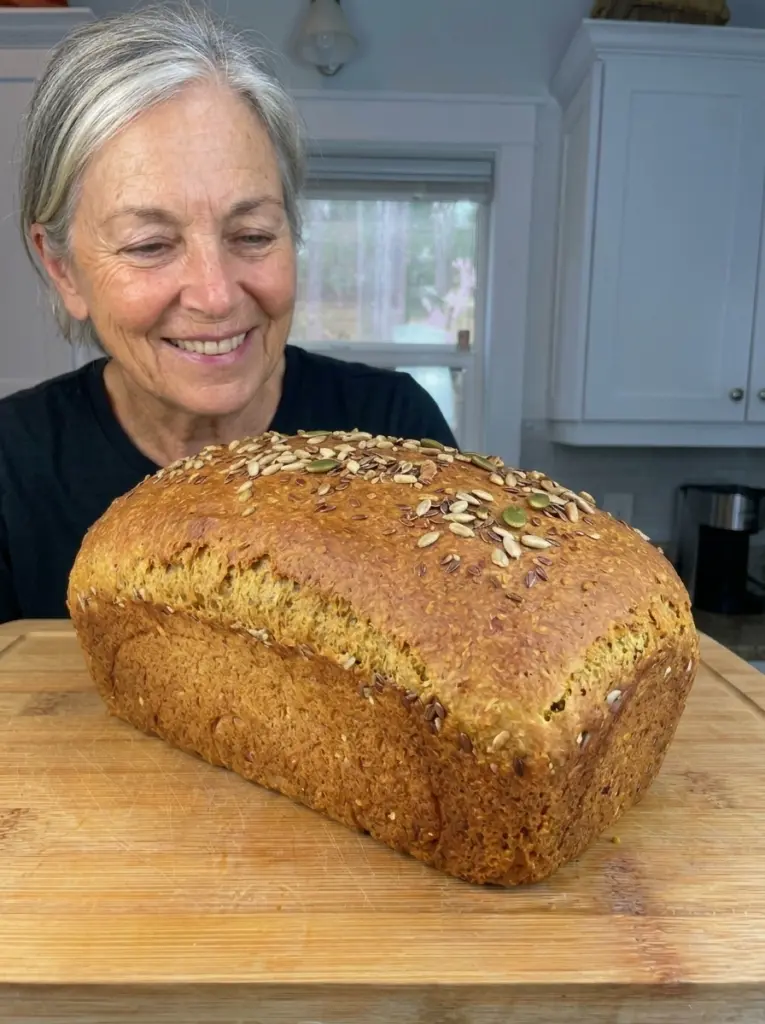
This Simple 3-Ingredient Lentil Bread is hearty, tender, naturally flourless, and incredibly easy to make with just red lentils, water, and baking powder. There’s no yeast, traditional flour, kneading, or proofing required—just soak, blend, pour, and bake.
If you’ve been looking for a simple alternative to traditional homemade bread, this red lentil loaf is worth trying. Dry red lentils are soaked until softened, then blended with fresh water into a smooth, creamy batter. Baking powder provides the lift needed to keep the finished loaf from becoming excessively dense.
The result is a satisfying bread with a mild, earthy lentil flavor and tender interior. It’s particularly delicious toasted, when the outside develops crisp edges while the center stays soft and warm.
With only three basic ingredients, it’s also an excellent blank canvas. Keep it completely simple or add herbs, spices, seeds, or cheese when you want a more savory loaf.
Let’s dive into everything you need to know to make this easy 3-Ingredient Lentil Bread at home.
Why You’ll Love This 3-Ingredient Lentil Bread
Only three ingredients. The basic recipe requires nothing more than red lentils, water, and baking powder.
No traditional flour. Whole soaked lentils form the base of the batter, so there’s no wheat flour required.
No yeast required. Baking powder provides the leavening, eliminating yeast activation and rising time.
No kneading. Everything gets blended into a pourable batter and transferred directly to the loaf pan.
Simple preparation. Most of the total recipe time is hands-off soaking and baking.
Great toasted. Toasting gives the bread a crisp exterior while warming its tender center.
Easy to customize. Garlic, rosemary, Italian seasoning, seeds, Parmesan, or cheddar can turn the basic recipe into a savory variation.
Freezer-friendly. Freeze individual slices and toast them whenever you need a quick breakfast or snack.
Ingredients You’ll Need
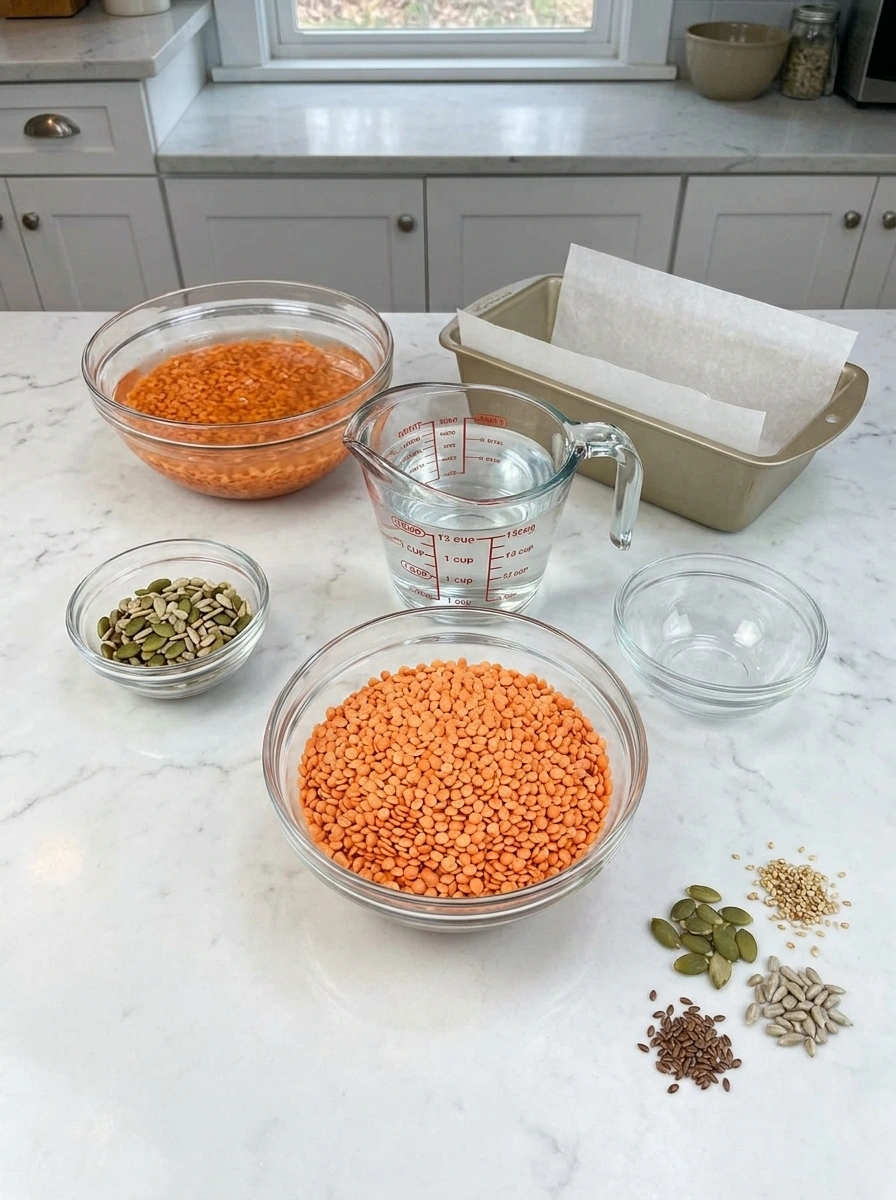
You need just three ingredients for the basic recipe:
- 1½ cups dry red lentils — The foundation of the bread. Red lentils soften easily during soaking and blend into a relatively smooth batter.
- 1 cup water — Fresh water helps transform the soaked lentils into the proper batter consistency. This is separate from the water used for soaking.
- 1½ teaspoons baking powder — Provides leavening and helps prevent the lentil loaf from becoming overly dense.
That’s it—no traditional flour, yeast, oil, or eggs are required for the basic recipe.
How to Make Simple 3-Ingredient Lentil Bread
Step 1: Soak the Red Lentils
Place 1½ cups dry red lentils in a large bowl.
Cover them generously with cool water, making sure there’s plenty of extra water because the lentils will absorb some as they hydrate.
Let the lentils soak for 4–6 hours, or preferably overnight.
Soaking softens the lentils so they can be blended into a smooth bread batter.
Step 2: Drain and Rinse
Pour the soaked lentils into a fine-mesh strainer.
Rinse thoroughly under cool running water and allow them to drain for several minutes.
Don’t rush this step. Excess soaking water can make the finished batter thinner than intended.
Step 3: Blend the Lentils
Transfer the drained lentils to a high-speed blender.
Add 1 cup fresh water.
Blend for approximately 1–2 minutes, stopping occasionally to scrape down the sides of the blender.
Continue until the mixture becomes very smooth and creamy with no obvious pieces of lentil remaining.
Step 4: Add the Baking Powder
Add 1½ teaspoons baking powder to the blender.
Blend for another 10–15 seconds, just long enough to distribute the baking powder throughout the batter.
Avoid unnecessarily blending for a long time after adding the leavening.
Step 5: Prepare the Loaf Pan
Preheat your oven to 375°F (190°C).
Lightly grease an 8½ × 4½-inch loaf pan, then line it with parchment paper.
Leaving some parchment extending above the sides can make removing the baked loaf easier.
Step 6: Fill the Pan
Pour the lentil batter into the prepared loaf pan.
Use a spatula to smooth the surface into an even layer.
If you’re adding seeds to the top, sprinkle them over the batter now.
Step 7: Bake
Bake for approximately 35–45 minutes.
The finished loaf should be lightly golden on top and feel firm in the center.
Insert a toothpick into the middle. It should come out mostly clean without wet batter attached.
If the center still appears wet, continue baking and check again after a few minutes.
Step 8: Cool in the Pan
Remove the loaf from the oven and let it rest in the pan for approximately 10–15 minutes.
This allows the structure to begin setting before you remove it.
Step 9: Cool Completely
Carefully lift or turn the loaf out of the pan and transfer it to a wire rack.
Allow it to cool completely before slicing.
This is especially important with flourless lentil bread because the interior continues to firm as it cools.
Step 10: Slice and Serve
Once completely cool, slice the bread using a sharp serrated knife.
Enjoy it as-is or toast the slices until the exterior becomes lightly crisp and the center is warm.
Recipe Notes
Use red lentils: Red lentils soften readily and blend more smoothly than many other lentil varieties.
Soaking matters: Don’t use the dry lentils straight from the package. They need several hours to hydrate before blending.
Drain thoroughly: The 1 cup of fresh water is calculated separately from the soaking liquid, so allowing the soaked lentils to drain well helps maintain the intended consistency.
Blend until smooth: A smooth batter creates a more cohesive loaf.
Don’t omit the baking powder: With no yeast or eggs in this basic recipe, baking powder is important for providing lift.
Cool completely: The interior may seem too soft if the loaf is sliced while hot.
Use the recommended pan: An 8½ × 4½-inch loaf pan helps give the bread an appropriate shape and thickness.
Expect lentil bread texture: This is a flourless lentil loaf rather than conventional wheat sandwich bread, so expect a heartier texture.
How to Serve 3-Ingredient Lentil Bread
Its simple flavor makes this bread easy to pair with both savory and mildly sweet toppings.
- Top with mashed avocado and black pepper
- Serve with scrambled, fried, or poached eggs
- Toast and spread with butter
- Add cream cheese and fresh herbs
- Spread with hummus
- Top with cottage cheese and tomatoes
- Serve with nut or seed butter
- Use for simple open-faced sandwiches
- Pair with vegetable soup
- Serve alongside lentil or bean soup
- Pair with a fresh salad
- Toast and drizzle with olive oil
For the best texture, try lightly toasting leftover slices before serving.
Flavor Variations
Garlic Herb Lentil Bread
Add garlic powder, dried oregano, Italian seasoning, rosemary, or black pepper to the batter.
Seeded Lentil Bread
Sprinkle sesame seeds, pumpkin seeds, sunflower seeds, or flax seeds over the surface before baking.
Parmesan Lentil Bread
Fold finely grated Parmesan into the batter for a salty, savory variation.
Cheddar Lentil Bread
Add finely shredded cheddar for a richer, cheesy loaf.
Everything Seasoning Lentil Bread
Sprinkle everything bagel seasoning generously over the top just before baking.
Spicy Lentil Bread
Add red pepper flakes, smoked paprika, cayenne, or finely chopped jalapeño.
Tips for the Best Lentil Bread
Give the lentils enough soaking time. Properly hydrated lentils are significantly easier to blend.
Use fresh water in the batter. Discard the soaking water, rinse the lentils, and use the measured fresh water called for in the recipe.
Drain before blending. Too much residual water can result in an unnecessarily loose batter.
Use a powerful blender. A high-speed blender makes achieving a creamy texture much easier.
Scrape the blender as needed. Lentil pieces can collect around the sides, so stop and scrape them down before continuing.
Blend before adding the baking powder. Get the lentils completely smooth first, then briefly blend in the leavening.
Check the center before removing the loaf. The exterior may look finished before the center has completely set.
Be patient during cooling. Cooling is an important part of developing the finished texture.
Toast the slices. If you prefer a firmer bread texture, toasting is particularly effective with lentil bread.
Storage Information
Allow the bread to cool completely before storing it.
Place the slices in an airtight container and refrigerate for up to 4 days.
Because this is a moist, flourless lentil loaf, refrigeration is preferable to leaving it at room temperature for several days.
For longer storage, slice the cooled loaf and place the individual pieces in an airtight freezer bag or freezer-safe container.
Freeze for up to 2 months.
Individual slices can be thawed before serving or reheated in a toaster or toaster oven until warm and lightly crisp.
Separating the slices with small pieces of parchment before freezing can make it easier to remove only the amount you need.
Frequently Asked Questions
Do I need to cook the red lentils before making the bread?
No. The lentils are soaked rather than boiled. After soaking for 4–6 hours or overnight, they’re drained, rinsed, and blended directly into the batter.
Can I skip soaking the lentils?
No. Soaking is an important part of this recipe because it hydrates and softens the lentils enough to blend smoothly.
Why should I drain the lentils so thoroughly?
The recipe already includes a measured cup of fresh water. Excess soaking liquid can make the batter too thin and alter the finished texture.
Does this bread need yeast?
No. Baking powder provides the leavening, so there’s no yeast, proofing, or rising period.
Does this recipe contain flour?
No traditional flour is used. The structure comes primarily from the soaked and blended red lentils.
Is this lentil bread gluten-free?
The three basic ingredients are naturally gluten-free. If you’re preparing it for someone who must strictly avoid gluten, verify that the baking powder is labeled or otherwise confirmed gluten-free and that your ingredients and equipment have not been exposed to problematic cross-contact.
Why did my lentil bread turn out too wet?
Possible causes include not draining the soaked lentils thoroughly, adding too much water, underbaking the center, or slicing the bread before it had completely cooled.
Why should the bread cool completely before slicing?
The interior continues setting during cooling. Cutting into it while hot can produce slices that seem overly moist or fragile.
Can I add seeds?
Absolutely. Sesame, sunflower, pumpkin, and flax seeds can be sprinkled over the top before baking.
Can I make it savory?
Yes. Garlic powder, rosemary, oregano, Italian seasoning, black pepper, Parmesan, cheddar, and other savory additions can easily customize the basic loaf.
Recipe Card
Recipe: Simple 3-Ingredient Lentil Bread 🫘🍞
Prep Time: 10 minutes
Soaking Time: 4–6 hours or overnight
Cook Time: 35–45 minutes
Cooling Time: About 10–15 minutes in the pan, plus complete cooling
Total Time: About 5 hours 55 minutes using the minimum soaking time
Servings: 8–10 slices
Oven Temperature: 375°F (190°C)
Loaf Pan: 8½ × 4½ inches
Method: Soak, blend, and bake
This Simple 3-Ingredient Lentil Bread shows just how much you can do with a handful of basic ingredients. Soaked red lentils create the foundation, water turns them into a smooth batter, and baking powder provides the lift—all without traditional flour, yeast, eggs, or kneading.
Keep the loaf completely simple or use it as a base for your favorite seasonings, herbs, seeds, and cheeses. Once cooled and sliced, it’s especially delicious toasted and topped with avocado, eggs, hummus, cream cheese, nut butter, or your favorite sandwich ingredients.
With minimal hands-on preparation and freezer-friendly slices, this easy red lentil bread is a practical homemade option to keep on hand for breakfast, lunch, snacks, or alongside soups and salads.
Simple 3-Ingredient Lentil Bread
- Author: Luna
Ingredients
You need just three ingredients for the basic recipe:
- 1½ cups dry red lentils — The foundation of the bread. Red lentils soften easily during soaking and blend into a relatively smooth batter.
- 1 cup water — Fresh water helps transform the soaked lentils into the proper batter consistency. This is separate from the water used for soaking.
- 1½ teaspoons baking powder — Provides leavening and helps prevent the lentil loaf from becoming overly dense.
That’s it—no traditional flour, yeast, oil, or eggs are required for the basic recipe.
Instructions
Place 1½ cups dry red lentils in a large bowl.
Cover them generously with cool water, making sure there’s plenty of extra water because the lentils will absorb some as they hydrate.
Let the lentils soak for 4–6 hours, or preferably overnight.
Soaking softens the lentils so they can be blended into a smooth bread batter.
Pour the soaked lentils into a fine-mesh strainer.
Rinse thoroughly under cool running water and allow them to drain for several minutes.
Don’t rush this step. Excess soaking water can make the finished batter thinner than intended.
Transfer the drained lentils to a high-speed blender.
Add 1 cup fresh water.
Blend for approximately 1–2 minutes, stopping occasionally to scrape down the sides of the blender.
Continue until the mixture becomes very smooth and creamy with no obvious pieces of lentil remaining.
Add 1½ teaspoons baking powder to the blender.
Blend for another 10–15 seconds, just long enough to distribute the baking powder throughout the batter.
Avoid unnecessarily blending for a long time after adding the leavening.
Preheat your oven to 375°F (190°C).
Lightly grease an 8½ × 4½-inch loaf pan, then line it with parchment paper.
Leaving some parchment extending above the sides can make removing the baked loaf easier.
Pour the lentil batter into the prepared loaf pan.
Use a spatula to smooth the surface into an even layer.
If you’re adding seeds to the top, sprinkle them over the batter now.
Bake for approximately 35–45 minutes.
The finished loaf should be lightly golden on top and feel firm in the center.
Insert a toothpick into the middle. It should come out mostly clean without wet batter attached.
If the center still appears wet, continue baking and check again after a few minutes.
Remove the loaf from the oven and let it rest in the pan for approximately 10–15 minutes.
This allows the structure to begin setting before you remove it.
Carefully lift or turn the loaf out of the pan and transfer it to a wire rack.
Allow it to cool completely before slicing.
This is especially important with flourless lentil bread because the interior continues to firm as it cools.
Once completely cool, slice the bread using a sharp serrated knife.
Enjoy it as-is or toast the slices until the exterior becomes lightly crisp and the center is warm.