
Introduction
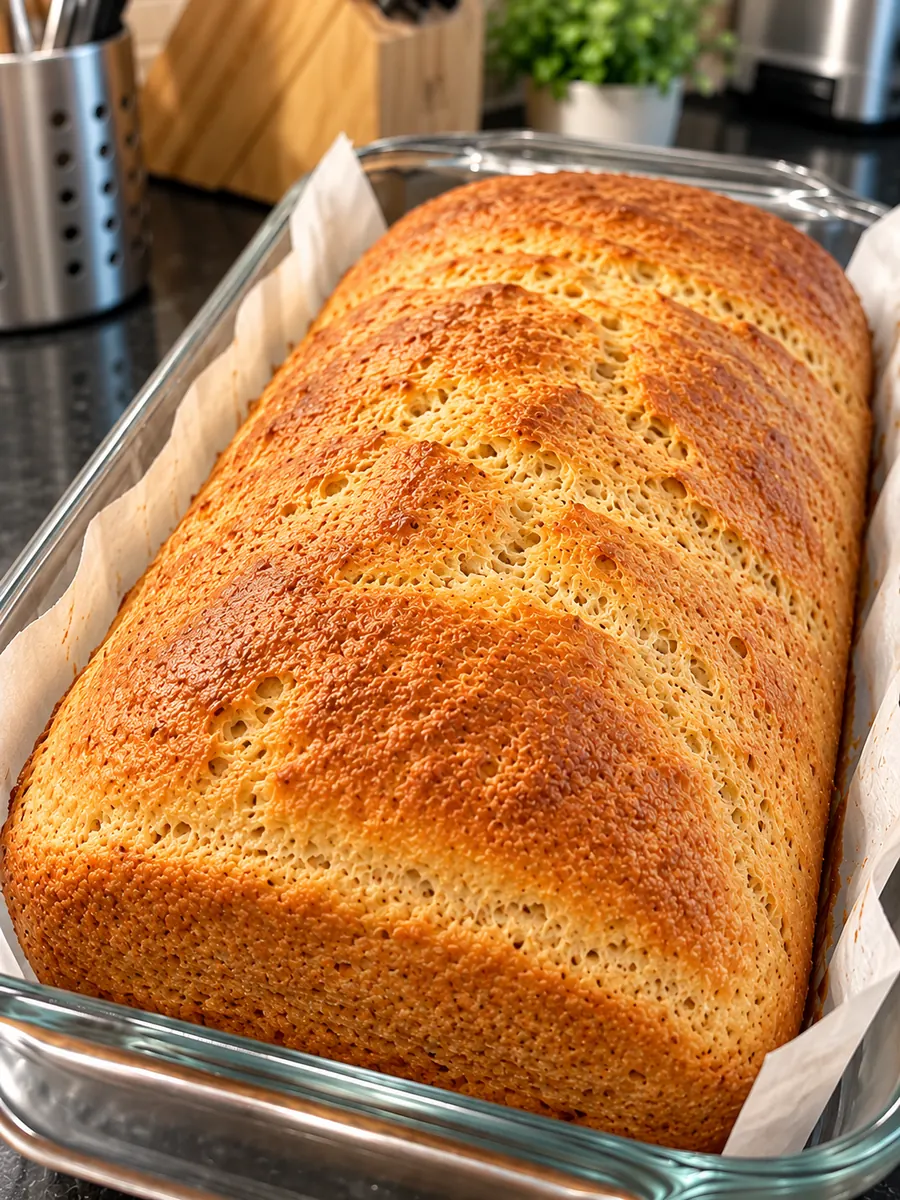
A loaf made from beans needs a different set of expectations from a yeast loaf. This 3-Ingredient High-Protein Navy Bean Sandwich Bread combines smooth navy bean puree, eggs, and oat flour into a compact bread with a moist interior and a gently browned crust. Expect firm slices, a mild bean flavor, and very little rise.
The eggs bind the mixture while the oat flour absorbs moisture, making this a practical approach to a small sandwich loaf without kneading. Thin, fully cooled slices are the most useful size for handling and reheating.
The high-protein claim in the requested title has not been verified and requires human nutritional review. Beans and eggs supply protein, but no protein amount is asserted here. The recipe makes 8 servings, with 2 slices per serving.
Why You’ll Love This Recipe
Three distinct ingredients keep shopping straightforward. Each serves a structural purpose, so the short list still provides moisture, binding, and enough absorbent starch for a dense loaf.
There is no fermentation schedule to manage. Once the beans are drained and pureed, the batter goes directly into its lined pan and then into the oven.
The mild flavor suits people who enjoy beans but prefer a smoother texture. Processing thoroughly removes whole-bean pockets that could make individual slices fragile.
A small loaf gives you manageable portions for refrigerated meals. Cutting 16 slices also makes it easy to freeze pairs and thaw only what you plan to use.
Ingredients
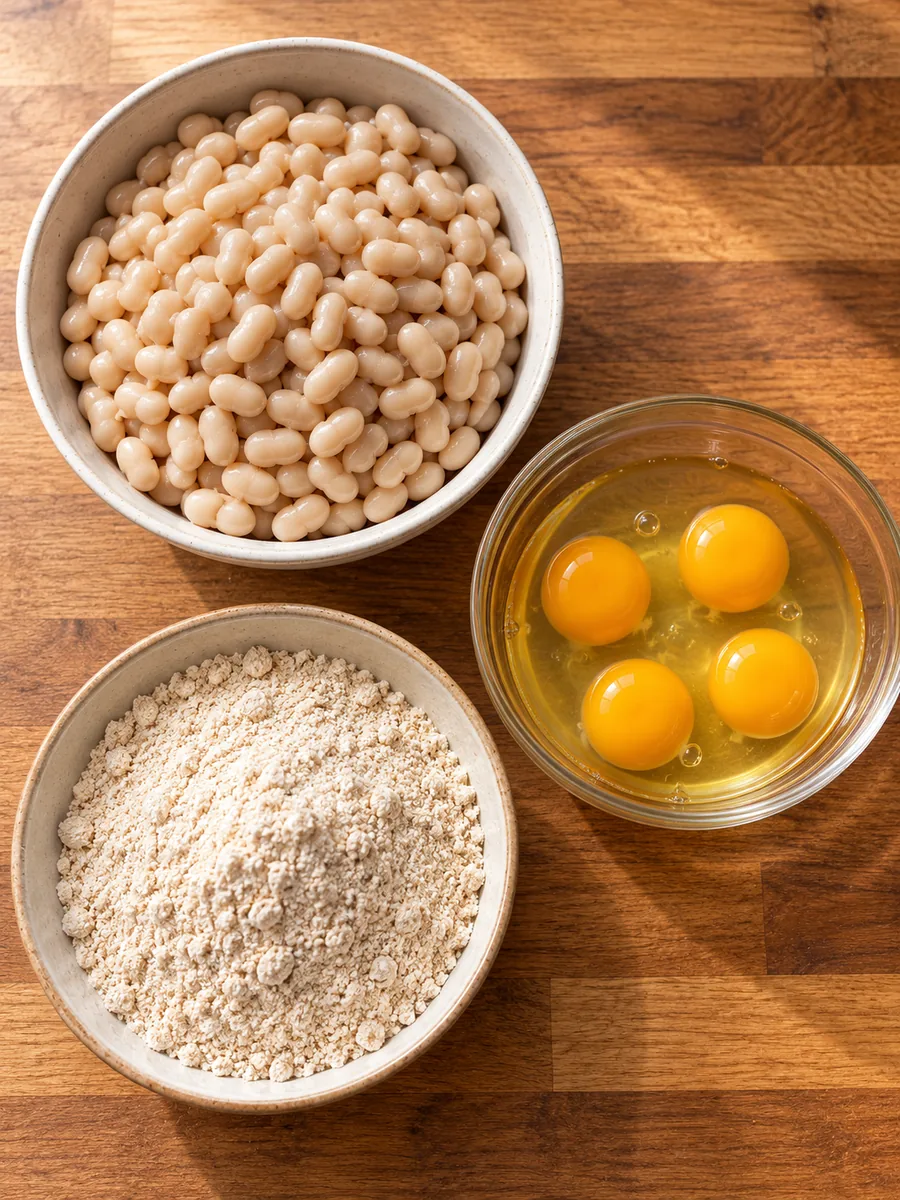
Choose plain navy beans that are already fully cooked. Commercially canned unsalted beans are convenient; the label should list only beans and water. Can sizes and drained yields vary, so buy enough to reach the measured drained weight rather than relying on a fixed number of cans.
Weighing is helpful for oat flour because cup measurements change with grind and packing. The egg weight refers to the edible contents, without shells. These three ingredients make the complete batter; the parchment handles release from the pan. Start with ingredients that are cool or at ordinary room temperature, rather than beans still hot from cooking.
- 3 cups fully cooked unsalted navy beans, rinsed and thoroughly drained (480 g)
- 4 large eggs, without shells (200 g)
- 1 3/4 cups finely ground oat flour, spooned and leveled (160 g)
Ingredient Notes and Substitutions
Navy beans should mash readily between your fingers before mixing. Firm, undercooked beans will leave gritty pieces and will not become properly cooked simply because they are baked inside a loaf. If cooking beans yourself, fully cook them separately, cool promptly, and drain before measuring.
Use finely milled oat flour for the most even crumb. Coarse homemade flour may leave visible particles and absorb moisture differently. If grinding oats yourself, grind thoroughly and weigh the finished flour; volume alone is a less dependable guide.
Keep the eggs in this formula. Their setting action is central to the loaf, and omitting them would require a different binding system. No egg replacement is established here.
A cautious swap from navy beans to fully cooked unsalted great northern beans may change moisture and texture. That would also change the recipe’s named bean. Retain the same drained weight, but treat the result as a separate variation needing assessment rather than a guaranteed equivalent.
How to Make 3-Ingredient High-Protein Navy Bean Sandwich Bread
- Heat the oven to 375°F with a rack in the center. Line an 8 1/2-by-4 1/2-inch metal loaf pan with parchment rated for this temperature, covering the bottom and long sides and leaving lifting handles. Rinse the fully cooked navy beans, drain thoroughly, and weigh 480 g after draining. Spread them briefly on a clean towel to remove clinging droplets; do not squeeze them dry.
- Place the drained beans in a food processor with the eggs. Process until smooth, stopping to scrape the bowl and blade area as needed. Small flecks of bean skin are fine, but eliminate whole beans and visible egg streaks. The mixture should resemble a thick, smooth puree. Do not taste the raw mixture. Wash hands and food-contact equipment after handling raw eggs.
- Transfer the puree to a mixing bowl. Fold in the oat flour with a sturdy spatula until evenly incorporated, scraping across the bottom so no dry pockets remain. Expect a thick, scoopable batter that holds soft ridges and slowly settles. It will not form an elastic dough. Scrape it into the prepared pan and smooth the surface, pressing gently into the corners. No kneading or proofing is needed.
- Bake for 60 minutes, checking at 50 minutes. The top should look dry and feel firm, and the center must reach 200°F on an instant-read thermometer inserted into the middle without touching the pan. This center temperature also exceeds the minimum needed to cook the eggs safely. If the top darkens early, tent loosely with foil. Expect modest expansion and a low, dense loaf.
- Cool in the pan for 10 minutes. Using the parchment handles, carefully lift the loaf onto a wire rack, remove the parchment, and cool for another 50 minutes before slicing. In surroundings above 90°F, complete this second cooling stage in the refrigerator. Cut into 16 slices for 8 servings of 2 slices each, then refrigerate promptly in a covered container.
Expert Baking Tips
Drain consistently. A few droplets are harmless, but water pooling beneath the beans changes the batter. Weigh after rinsing and draining, and remove surface droplets before processing.
Scrape the processor carefully. Bean paste can collect beneath the blade or along the sides while the upper mixture looks smooth. Stop the machine before reaching into the bowl.
Read the batter before transferring it. It should mound softly and spread under a spatula. A freely pouring mixture suggests unusually wet beans or a measurement error worth checking.
Use the specified metal pan. Its dimensions keep the batter at a manageable depth. A significantly smaller pan can leave a thick center that takes longer to set.
Check the middle with a thermometer. A browned top does not establish that the center is cooked, especially in a moist puree-based loaf. Avoid measuring against the hot pan.
Let the crumb firm before cutting. Support the loaf on a board and use a sharp serrated knife with gentle strokes. Pressing straight down can compress even a properly baked slice.
Common Mistakes to Avoid
Expecting a tall dome leads to disappointment. There is no yeast or chemical leavener in this batter. Eggs may provide a little expansion, but the finished bread should remain compact, with closer spacing between the top and bottom crusts than conventional sandwich bread.
Adding liquid because the batter looks thick can undermine the structure. The beans and eggs already contribute substantial moisture. First check that the puree is smooth and that the oat flour was weighed correctly.
Cutting immediately after baking can make a sound loaf look gummy. Steam and a still-soft interior encourage smearing along the knife. Use the full cooling period, then assess a thin slice.
Wrapping a warm loaf tightly traps condensation against the crust. Let steam escape on the rack, while still meeting the refrigeration deadline. A wet surface is also a reason to replace damp wrapping before storage.
Variations and Serving Ideas
For smaller pieces, cut the cooled loaf lengthwise once, then slice each half crosswise. The compact pieces are easier to lift and work well when you want a modest portion alongside a meal.
For a firmer surface, arrange chilled slices on a bare oven-safe tray and reheat at 375°F until their centers reach 165°F. Watch closely because thin edges dry before the middle heats through.
You can also cut thicker slices for eating with a fork. Keep the total yield at 8 servings by dividing the loaf into 8 equal pieces instead of 16. Changing slice thickness changes handling and reheating time, rather than the underlying formula.
Storage and Freezing
Treat this as a moist cooked bean and egg dish. Refrigerate within 2 hours of baking, or within 1 hour above 90°F. Store at 40°F or below and use within 3–4 days. If the room is very warm, move the loaf into the refrigerator before the rack-cooling period ends.
Once chilled, place slices in a covered container. Separate layers with parchment if needed, and avoid crushing the loaf beneath heavier foods. Refrigeration will make the texture firmer.
For longer storage, freeze cooled slices in pairs in freezer-safe packaging for up to 2 months for best quality. Thaw in the refrigerator. Reheat leftovers to 165°F in the center, checking thicker pieces individually; surface warmth alone is not a reliable guide.
Frequently Asked Questions
Does this rise like regular sandwich bread?
No. It is a dense batter loaf with modest expansion. The eggs set the structure, while oat flour helps absorb moisture. Expect a low profile and close crumb.
Can I use dried navy beans?
Yes, after fully cooking them separately. Cool, rinse if needed, drain, and weigh 480 g of edible cooked beans. Dried or merely soaked beans cannot go directly into this batter.
Why is the center sticky?
Possible causes include excess bean moisture, underbaking, or slicing while warm. Check the baking temperature and cooling schedule before changing ingredient amounts. A moist crumb should still hold together.
Is the high-protein description confirmed?
No. It is the requested working title. The claim requires human nutritional review, and this recipe does not provide a verified protein amount.
How long does the recipe take?
Allow about 2 hours 20 minutes: 20 minutes active preparation, 60 minutes baking, and 60 minutes cooling. Preheating overlaps preparation. Oven performance may affect the actual baking time.
Can I leave it on the counter overnight?
No. Refrigerate within the stated deadline and keep at 40°F or below. Its moist bean and egg composition calls for refrigerated storage.
WP Tasty Recipe Card
Print3-Ingredient High-Protein Navy Bean Sandwich Bread
- Total Time: 140 minutes
Ingredients
3 cups fully cooked unsalted navy beans, rinsed and thoroughly drained (480 g)
4 large eggs, without shells (200 g)
1 3/4 cups finely ground oat flour, spooned and leveled (160 g)
Instructions
Heat the oven to 375°F with a rack in the center. Line an 8 1/2-by-4 1/2-inch metal loaf pan with parchment rated for this temperature, covering the bottom and long sides and leaving lifting handles. Rinse the fully cooked navy beans, drain thoroughly, and weigh 480 g after draining. Spread them briefly on a clean towel to remove clinging droplets; do not squeeze them dry.
Place the drained beans in a food processor with the eggs. Process until smooth, stopping to scrape the bowl and blade area as needed. Small flecks of bean skin are fine, but eliminate whole beans and visible egg streaks. The mixture should resemble a thick, smooth puree. Do not taste the raw mixture. Wash hands and food-contact equipment after handling raw eggs.
Transfer the puree to a mixing bowl. Fold in the oat flour with a sturdy spatula until evenly incorporated, scraping across the bottom so no dry pockets remain. Expect a thick, scoopable batter that holds soft ridges and slowly settles. It will not form an elastic dough. Scrape it into the prepared pan and smooth the surface, pressing gently into the corners. No kneading or proofing is needed.
Bake for 60 minutes, checking at 50 minutes. The top should look dry and feel firm, and the center must reach 200°F on an instant-read thermometer inserted into the middle without touching the pan. This center temperature also exceeds the minimum needed to cook the eggs safely. If the top darkens early, tent loosely with foil. Expect modest expansion and a low, dense loaf.
Cool in the pan for 10 minutes. Using the parchment handles, carefully lift the loaf onto a wire rack, remove the parchment, and cool for another 50 minutes before slicing. In surroundings above 90°F, complete this second cooling stage in the refrigerator. Cut into 16 slices for 8 servings of 2 slices each, then refrigerate promptly in a covered container.
- Prep Time: 20 minutes
- Cook Time: 60 minutes