
Introduction
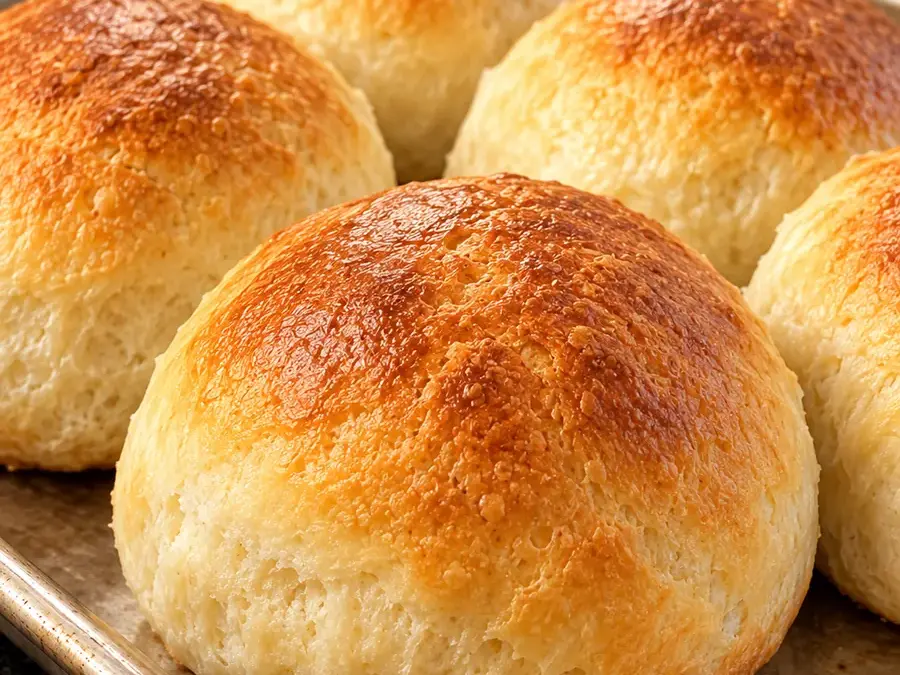
These 3-Ingredient Fluffy Greek Yogurt Bread Rolls turn a short shopping list into six rounded rolls with lightly golden tops and tender centers. Purchased prepared self-rising flour supplies structure and leavening, thick Greek yogurt brings moisture and a gentle tang, and a whole egg helps the dough hold together.
Expect softly rustic surfaces and a close crumb with small air pockets. Here, fluffy describes a tender, aerated quick bread texture. The rolls have enough body to split once their centers have had time to settle, with a soft interior beneath the thin crust.
Allow about 65 minutes from measuring through initial cooling, including 20 minutes of active preparation. Preheating overlaps preparation. Yogurt thickness, portion height, and oven performance can shift the finishing time, so leave a little flexibility around that estimate.
Why You’ll Love This Recipe
Three purchased ingredients do several jobs. The prepared flour includes its leavening and salt, while yogurt and egg contribute the moisture and structure that bring the dough together.
A bowl and spatula handle the mixing. Brief shaping keeps the process approachable, especially when you use a scraper to lift the tacky dough instead of repeatedly squeezing it.
Six individual portions bake together on one roomy sheet. Their separate shapes make it easy to check the largest roll and rotate the sheet if your oven browns unevenly.
The modest yield is convenient for freezing. Wrap cooled rolls individually so you can thaw a single portion without repeatedly opening and warming the entire batch.
Ingredients
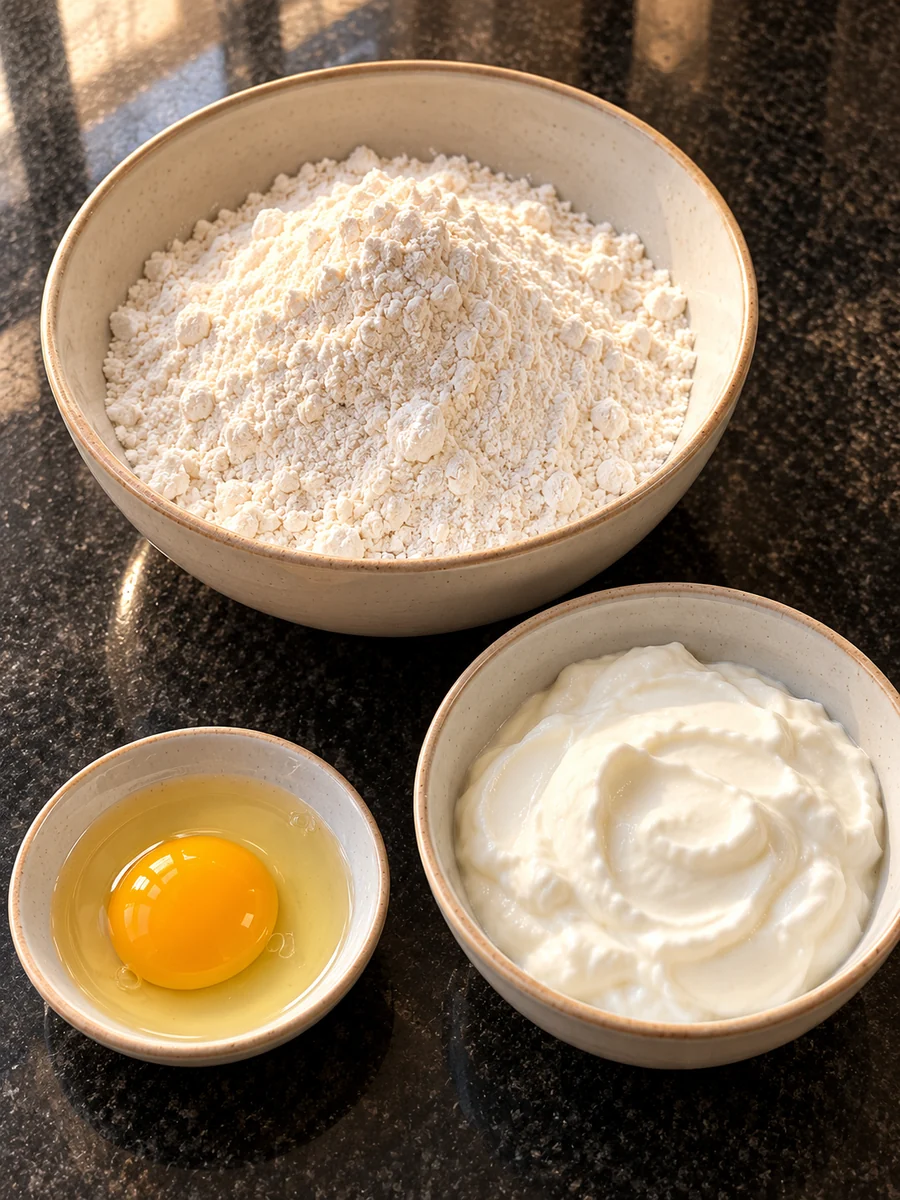
Read the flour label before beginning: this formula uses purchased prepared self-rising flour containing wheat flour, leavening, and salt. Plain thick Greek yogurt should hold a soft scoop after stirring. Measure the whole egg without its shell so the dough receives the intended amount.
A scale helps because each measurement has a noticeable effect in this short formula. Firmly packed flour can make the mixture dry and difficult to gather. For volume measurements, loosen the flour, spoon it into the cup, and level the top. Take the shaping allowance from the measured total rather than reaching into the bag again.
- 2 1/2 cups purchased prepared self-rising flour, spooned and leveled (300 g), divided: 290 g for dough and 10 g for shaping
- 1 cup plain thick whole-milk Greek yogurt (240 g)
- 1 large whole egg, without shell (50 g)
Ingredient Notes and Substitutions
Self-rising flour is a purchased prepared ingredient containing wheat flour, leavening, and salt. Those components are disclosed here rather than treated as plain flour. Its composition varies among manufacturers, so the estimated wheat-flour contribution is approximate. Check the package date and keep the flour tightly closed and dry.
Choose plain whole-milk Greek yogurt with a thick, spoonable consistency. Stir separated liquid back into the container before measuring so the portion represents the whole product. Scooping only the watery layer or only the firm yogurt beneath it changes how the dough handles.
A large whole egg generally contributes about 50 g without its shell. Weigh it if your eggs vary substantially in size. That small check helps prevent an unexpectedly loose mixture, especially when the yogurt is already relatively soft.
No substitutions are specified. Changes in yogurt concentration or prepared-flour composition can affect spreading, tenderness, and lift. Use the stated ingredient identities and record the brands if you want to compare future batches.
How to Make 3-Ingredient Fluffy Greek Yogurt Bread Rolls
- Preheat the oven to 375°F with a rack in the middle. Line a 13-by-18-inch rimmed baking sheet with ungreased parchment rated for this temperature. Measure the self-rising flour, reserving 10 g, approximately 1 tablespoon plus 1 teaspoon, for shaping. Put the remaining 290 g in a large bowl. Set out a spatula, bench scraper, and scale before mixing so the dough can move promptly into the oven.
- Whisk the Greek yogurt and whole egg in a separate bowl until evenly blended. Scrape into the flour and fold gently, reaching underneath to collect dry pockets. Stop when a shaggy, tacky dough forms. It should hold a mound rather than pour, with some unevenness remaining on its surface. Press loose crumbs into the dough with the spatula instead of kneading vigorously. Do not taste raw dough. Wash hands and food-contact equipment after handling raw egg.
- Allow 0 minutes of bench rest; shape immediately. Scatter all 10 g reserved flour over a clean work surface and the dough. Divide into six portions, approximately 98 g each, incorporating loose flour into the portions. Gently tuck each piece’s edges underneath to make a rounded mound about 3 inches wide. Lift sticky edges with the scraper and keep handling brief. Place seam down on the parchment with at least 2 inches between rolls.
- Bake for 25 minutes at 375°F, until lightly golden with set bases and a center temperature of 200°F. Insert an instant-read thermometer through the side into the thickest part of a middle roll. If necessary, continue baking until that temperature is reached; judge the center rather than relying on surface color alone.
- Cool on the baking sheet for 5 minutes, then transfer to a wire rack for another 15 minutes. This 20-minute cooling period lets steam escape and the crumb settle before splitting. Makes six rolls; one serving is one roll.
Expert Baking Tips
Inspect the yogurt after stirring. It should retain soft ridges rather than immediately flatten into a puddle. This visual check helps identify a consistency mismatch before the ingredients are combined.
Fold underneath the dough with a flexible spatula. Dry flour often hides against the bottom of the bowl; gathering it deliberately prevents streaks without prolonged mixing or forceful kneading.
Spread the reserved flour thinly over the work area and dough. A concentrated patch can leave one portion heavily coated while another remains sticky. Gather loose flour as you divide.
Match height as well as weight. Equal portions can bake differently if one is tall and narrow. Keep the rounded mounds similar so the center-temperature check represents the batch.
Start with a cool baking sheet and an already heated oven. A hot sheet begins setting the bottoms during shaping, while an underheated oven gives the dough more opportunity to spread.
Keep the cooling rack uncovered. Air circulating beneath the rolls releases moisture from their bases. Sealing them while warm traps that moisture and can leave the surfaces sticky.
Common Mistakes to Avoid
Using the wrong flour changes the recipe immediately. Confirm that the package says self-rising and contains leavening and salt. A stale or poorly stored package may also produce less lift than expected.
Working toward a perfectly smooth dough encourages excessive handling. Small creases are normal for these quick rolls. Once the mixture holds together, use a few gentle tucks to round each portion.
Adding unmeasured flour to eliminate every trace of stickiness changes the balance. Use only the reserved amount, and let the scraper help with lifting. A lightly tacky surface is the intended consistency.
Trusting surface color alone can leave an underdone center. Check the thickest roll through its side. If the tops darken before the center reaches the stated temperature, shield them loosely with foil while baking continues.
Variations and Serving Ideas
For a lower profile, gently pat the six portions into disks about 1 inch thick. Begin checking their centers a few minutes earlier because the shorter distance to the middle can reduce baking time.
For rustic shapes, divide with a scraper and round only the sharpest corners. Keep the pieces compact and similarly tall; thin projections can become dry before the centers finish.
Serve after the initial cooling period for a warm center, or cool completely before splitting horizontally for a cleaner cut. Tear along the natural crumb lines when smaller pieces are useful. These presentation changes preserve the same three purchased ingredients and six-roll yield.
Storage and Freezing
Let the rolls cool completely before placing them in an airtight container. Residual warmth creates condensation and can soften the surfaces. Keep at room temperature for up to one day, or refrigerate for up to three days.
For longer storage, wrap each cooled roll and place the portions in a freezer container for up to two months. Date the container and arrange the rolls without crushing their rounded tops.
Thaw a wrapped roll overnight in the refrigerator. Remove its wrapping, loosely enclose in foil, and warm at 300°F for approximately 10–15 minutes, until warmed through. Check early if reheating a split roll, since exposed crumb dries more quickly than an intact center.
Frequently Asked Questions
What gives these rolls their lift?
The leavening already present in purchased prepared self-rising flour raises the dough during baking. Expect a tender, closely aerated quick bread crumb with small pockets rather than long strands.
How sticky should the dough feel?
Expect tackiness and a slightly shaggy surface. The dough should remain in a mound when gathered. A mixture that flows across the bowl suggests thin yogurt or an inaccurate measurement.
Do the shaped rolls need to rise?
Bake promptly after shaping. There is no proofing stage. Waiting for visible expansion at room temperature adds unnecessary delay and can use some early leavening activity before baking.
Why did my rolls spread outward?
Loose yogurt, excess egg, or flattened portions can encourage spreading. Check ingredient weights and yogurt consistency, then shape compact mounds of similar height without pressing the centers down.
Are these high-protein rolls?
Yogurt and egg supply protein, but a high-protein claim is unverified. Complete documented values for the specified prepared flour and yogurt are unavailable, so protein per serving cannot be calculated reliably.
What center temperature should I check?
Aim for 200°F in the thickest roll, measuring through its side. This checks crumb doneness and exceeds the 160°F minimum for cooked egg dishes. Keep the probe away from the sheet.
Why does the crumb smear when sliced?
A hot center remains delicate. Allow the full cooling period and use a serrated knife with light pressure.
WP Tasty Recipe Card
Print3-Ingredient Fluffy Greek Yogurt Bread Rolls
- Total Time: 65 minutes
Ingredients
2 1/2 cups purchased prepared self-rising flour, spooned and leveled (300 g), divided: 290 g for dough and 10 g for shaping
1 cup plain thick whole-milk Greek yogurt (240 g)
1 large whole egg, without shell (50 g)
Instructions
Preheat the oven to 375°F with a rack in the middle. Line a 13-by-18-inch rimmed baking sheet with ungreased parchment rated for this temperature. Measure the self-rising flour, reserving 10 g, approximately 1 tablespoon plus 1 teaspoon, for shaping. Put the remaining 290 g in a large bowl. Set out a spatula, bench scraper, and scale before mixing so the dough can move promptly into the oven.
Whisk the Greek yogurt and whole egg in a separate bowl until evenly blended. Scrape into the flour and fold gently, reaching underneath to collect dry pockets. Stop when a shaggy, tacky dough forms. It should hold a mound rather than pour, with some unevenness remaining on its surface. Press loose crumbs into the dough with the spatula instead of kneading vigorously. Do not taste raw dough. Wash hands and food-contact equipment after handling raw egg.
Allow 0 minutes of bench rest; shape immediately. Scatter all 10 g reserved flour over a clean work surface and the dough. Divide into six portions, approximately 98 g each, incorporating loose flour into the portions. Gently tuck each piece’s edges underneath to make a rounded mound about 3 inches wide. Lift sticky edges with the scraper and keep handling brief. Place seam down on the parchment with at least 2 inches between rolls.
Bake for 25 minutes at 375°F, until lightly golden with set bases and a center temperature of 200°F. Insert an instant-read thermometer through the side into the thickest part of a middle roll. If necessary, continue baking until that temperature is reached; judge the center rather than relying on surface color alone.
Cool on the baking sheet for 5 minutes, then transfer to a wire rack for another 15 minutes. This 20-minute cooling period lets steam escape and the crumb settle before splitting. Makes six rolls; one serving is one roll.
- Prep Time: 20 minutes
- Cook Time: 25 minutes