
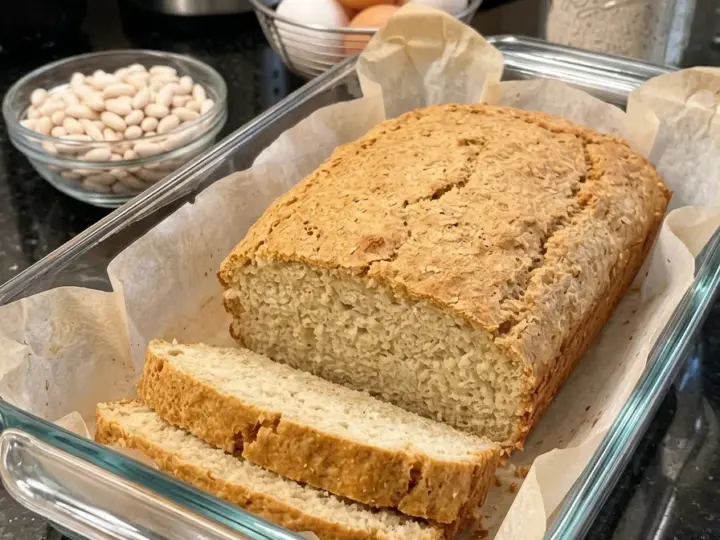
White kidney beans, eggs, and oat flour come together in this simple, yeast-free loaf. The beans create a moist base, eggs bind the mixture, and oat flour gives the bread enough structure to slice after cooling. Everything mixes in a food processor, making it a practical option when you want a hearty homemade loaf without kneading or rising time.
White kidney beans are also commonly sold as cannellini beans. Their mild flavor works well in a plain loaf, though a subtle bean taste remains. Toasted slices are especially useful for savory toppings such as avocado, cream cheese, sliced tomato, or a cooked egg.
Expect a compact, tender bread rather than a tall, airy sandwich loaf. With no yeast or baking powder, the three-ingredient formula does not develop a traditional bread crumb. Cooling completely is an important part of getting slices that hold together.
Recipe note: This original recipe has not been independently tested. Bean moisture, oat-flour grind, and pan dimensions affect baking time and texture. The title describes a protein-containing bean-and-egg loaf, not a verified regulatory nutrition claim. Estimated protein is approximately 7–9 grams per slice when divided into ten portions, depending on the ingredients.
Why You’ll Like This Recipe
- Only three main ingredients are needed.
- Canned, fully cooked beans make preparation convenient.
- No yeast, kneading, or proofing is required.
- A food processor handles most of the mixing.
- Cooled slices can be refrigerated or frozen for later meals.
Recipe at a Glance
- Prep time: Approximately 15 minutes
- Batter rest: 10 minutes
- Bake time: Approximately 50–65 minutes, or longer if needed
- Cooling: About 2 hours, until completely cool
- Total time: About 3 hours 15 minutes to 3 hours 30 minutes
- Yield: 1 compact loaf, approximately 10 slices
- Pan: An 8 1/2 × 4 1/2-inch metal loaf pan
- Oven: 375°F
Ingredients
- 3 cups fully cooked, unsalted white kidney beans (cannellini beans), rinsed and thoroughly drained, approximately 17 ounces drained
- 4 large eggs, without shells
- 1 3/4 cups finely ground oat flour, spooned and leveled, approximately 6 ounces
Use the approximate weights if available because packed beans and oat flour vary by volume. Canned bean labels usually state the weight including liquid, so you may need more than two standard cans to obtain the listed drained amount. Measure after draining rather than using the unopened can weight.
Ingredient Notes
Fully Cooked White Kidney Beans
Use canned cannellini beans or beans that have already been fully cooked using an appropriate method. This recipe is not intended for raw, merely soaked, or partly cooked kidney beans. The loaf’s oven bake should not be used as a substitute for properly cooking dried kidney beans first.
Rinse canned beans and drain very thoroughly. Let them stand in a colander, shake off trapped water, and pat gently with a clean towel. The beans should remain moist inside but should not carry a pool of rinse water into the processor.
Unsalted beans keep the flavor neutral. Salted canned beans may be used as a variation, but their seasoning and sodium will differ. The plain three-ingredient version can taste mild, which makes toppings particularly useful.
Eggs
Four large eggs provide binding and structure. Use large rather than extra-large eggs for a more consistent liquid quantity. Blend with the beans until smooth, but do not try to whip the mixture into a large foam.
Eggs help the loaf set during baking; they do not guarantee a fluffy yeast-bread texture. Expect a moist, close crumb with some natural expansion rather than a dramatic rise.
Oat Flour
Use finely ground oat flour, not whole rolled oats added directly to the batter. Fine flour distributes more evenly and gives a smoother result. Coarse homemade oat meal can leave a rougher texture and absorb liquid differently.
Oat flour weights vary substantially by grind and brand. The approximate 6-ounce amount is the intended starting point for this untested formula. If using cups, spoon lightly and level rather than packing the flour down.
If gluten avoidance is medically important, choose certified gluten-free oat flour and check all other ingredients. Oats are not automatically free from cross-contact.
What This Bread Is—and What It Isn’t
This is a blended bean-and-oat loaf bound with eggs. It can be sliced and toasted once set, but it does not behave like dough made from wheat flour and yeast. There is no gluten network to trap gas in the same way, and there is no added baking powder.
The finished bread should be modest in height, moist, and fairly dense. A slightly beany flavor is normal. It is most useful as a hearty toast or small open-faced sandwich base, rather than as a direct replacement for a fluffy commercial white loaf.
Because there are only three ingredients, the recipe does not include salt, oil, or flavorings. Those can be optional additions, but they would change the ingredient count. You can keep the loaf plain and add flavor through toppings instead.
Equipment and Pan Preparation
Use a food processor, a mixing bowl, a spatula, a metal loaf pan, parchment paper, and a wire rack. A high-powered blender may work, but thick bean puree can be difficult to circulate without extra liquid. A food processor is generally easier for this type of mixture.
Line the bottom and long sides of the pan with parchment, leaving overhang for lifting. Use parchment rated for the baking temperature. The liner is a pan-preparation material rather than a food ingredient and helps avoid needing oil in the three-ingredient batter.
A thermometer can help assess the center, but it should be used with visual and toothpick checks. A cooked egg-safe temperature alone does not mean a moist loaf has baked enough to slice cleanly.
How to Make White Kidney Bean Bread
1. Heat the Oven
Preheat to 375°F with a rack near the center. Prepare the loaf pan with parchment. Allow the oven to finish preheating before the batter goes in.
2. Drain the Beans Thoroughly
Rinse the fully cooked beans, drain in a colander, and remove excess surface water. Measure the drained beans. Do not include can liquid or rinse water in the quantity.
The puree relies on a reasonably consistent moisture level. A very wet batch can bake slowly and remain gummy, while beans dried until crumbly may produce a stiff mixture.
3. Blend Beans and Eggs
Add beans and eggs to the food processor. Process until as smooth as practical, stopping and scraping the sides as needed. Check underneath the blade area for unblended bean pieces.
Do not add milk or water simply to help the machine. Stop it, reposition the mixture with a spatula, and process again. Extra liquid changes the formula and can make the center difficult to set.
4. Incorporate the Oat Flour
Transfer the puree to a bowl and fold in the oat flour until no dry pockets remain. Alternatively, pulse briefly in the processor if it has enough capacity, then scrape thoroughly.
The batter should be thick and scoopable, not a liquid you can pour freely. It will not form a stretchy kneadable dough.
5. Rest the Batter
Let stand for 10 minutes so the oats absorb moisture. The mixture should become more cohesive. Use this pause before deciding whether the texture is unusual.
If the batter remains very watery, recheck the ingredient quantities and bean drainage. Avoid repeatedly adding large amounts of flour; that produces a different recipe and can make the loaf heavy.
6. Fill the Pan
Spoon into the prepared pan and spread into the corners. Smooth the top and gently tap once or twice to settle large gaps. Do not pack the batter down forcefully.
The loaf will not double in the oven. Its starting shape and pan size have a significant effect on the final height.
7. Bake Until Set
Bake for approximately 50–65 minutes, beginning checks near 50 minutes. The surface should look dry and lightly golden, the middle should feel set, and a toothpick should come out without wet batter. Moist crumbs are different from a coating of raw puree.
If the top browns early, tent loosely with foil and continue in short increments. The center may approach about 200–205°F when adequately baked, but temperature alone does not guarantee a good crumb. Use all the doneness cues together.
If the center is still wet at the end of the range, keep baking rather than removing it solely because the timer has finished. Pan material and bean moisture can change the time considerably.
8. Cool Completely
Rest in the pan for about 15 minutes. Lift carefully using the parchment and place on a wire rack. Support the loaf as you move it because it is more fragile while hot.
Allow approximately 2 hours, or until completely cool, before slicing. If the room is very warm, manage cooling and refrigeration promptly rather than leaving a moist loaf out indefinitely. Do not seal while steaming, which traps condensation.
9. Slice and Toast
Cut into approximately ten slices with a sharp knife, using gentle strokes. Toast lightly for firmer edges, supporting delicate slices if needed. A toaster oven or skillet can be easier than a slot toaster for a fragile first batch.
Serve with your preferred toppings. The plain bread is mild, so a savory spread or cooked egg can make it more enjoyable.
Tips for Better Slices
Measure Drained Beans
The weight printed on a can includes liquid. Relying on can weight rather than measuring drained beans can leave you short of the intended amount.
Blend Thoroughly
Large bean pieces interrupt the crumb and can create softer pockets. Scrape and process until the puree is even before adding oat flour.
Use Fine Oat Flour
A fine grind gives a more consistent structure than coarse oats. Homemade flour may behave differently, so expect variation if using it.
Cool Before Cutting
The loaf firms substantially as it cools. Cutting hot bread can make the interior look gummy and cause slices to collapse. Cooling is part of the recipe, not an optional presentation step.
Toast Gently
Toasting improves the edges and can make the texture more useful for toppings. It does not turn a dense bean loaf into an airy yeast bread, but it adds a pleasant contrast.
Serving Ideas
For savory toast, add mashed avocado, sliced tomato, cream cheese, hummus, or a cooked egg. A little salt and pepper on the topping can season the meal without changing the three-ingredient loaf itself.
For a small open-faced sandwich, use a fully cooled, toasted slice with cooked chicken, turkey, or roasted vegetables. Avoid heavy wet fillings that can overwhelm the bread’s delicate structure.
For a sweeter option, try nut butter and fruit or a thin layer of jam. The mild bean flavor may be more noticeable with some sweet toppings, so start with a small serving to see what you enjoy.
Serve a modest slice with soup or salad if you prefer it as a side. Its dense texture makes smaller portions more useful than very thick slabs.
Optional Variations
Seasoned Loaf
A little salt and dried herbs can give the batter a more savory flavor. These are additional ingredients, so the result is no longer strictly the three-ingredient version. Start modestly and do not change the main liquid balance.
Garlic Toast Finish
Toast a baked slice and add a little garlic butter just before serving. This keeps flavor additions out of the base formula and lets you customize individual portions.
Different White Beans
Other fully cooked white beans may give a similar concept, but their moisture and starch differ. Cannellini beans are the intended choice here. Do not assume every substitution produces the same baking time or protein content.
Smaller Portions
You can slice the cooled loaf more thinly if it holds well. Increasing the slice count reduces protein and calories per slice without changing the full batch. Use the actual number of portions when calculating nutrition.
Storage and Reheating
Refrigerator: Treat this as a moist bean-and-egg loaf. Cool promptly and refrigerate in an airtight container at 40°F or below. Use within 3–4 days. Avoid long room-temperature storage simply because it is called bread.
Freezer: Freeze cooled slices with parchment between them in a freezer-safe bag for up to 2 months for best quality. Remove excess air and label the date.
Reheating: Thaw in the refrigerator or warm a suitable thin slice from frozen in a toaster oven. Toast until warmed and lightly firm at the edges. Avoid over-microwaving, which can make egg-based bread rubbery.
Handling: Use clean utensils and keep perishable sandwich fillings separate until serving. Refrigerating the loaf does not restore the usable life of beans or eggs that were already old or poorly handled.
Troubleshooting
The Middle Is Gummy
Possible causes include wet beans, insufficient baking, an overly deep pan, or slicing too soon. Continue baking until set and cool fully. A browned top alone does not prove the interior is ready.
The Loaf Barely Rose
That is expected to some extent. There is no yeast or baking powder. The eggs supply structure and limited expansion, not the lift of a traditional sandwich loaf.
Slices Fall Apart
The loaf may still be warm or underbaked, or the ingredient proportions may differ from the intended amounts. Cool completely and use supported slices for toast. Do not expect hot bean bread to hold like a cooled wheat loaf.
The Flavor Is Too Plain
The base contains no salt or seasoning. Use flavorful toppings, or make an explicitly seasoned variation next time. A short ingredient list involves a flavor tradeoff.
The Batter Is Too Thick to Blend
Process beans and eggs before adding flour. Stop and scrape the machine rather than adding extra liquid automatically. A food processor is generally more manageable than a narrow blender jar.
Frequently Asked Questions
Are White Kidney Beans the Same as Cannellini Beans?
Cannellini is the common name used for white kidney beans in many stores. Check that the product is fully cooked if using canned beans and measure after draining.
Can I Use Soaked Dried Beans?
No. Soaking alone does not make kidney beans ready for this recipe. Use fully cooked beans; the loaf bake is not a substitute for proper dried-bean preparation.
Is This a Fluffy Sandwich Bread?
No. It is a compact, moist bean-and-oat loaf. It may be useful for small sandwiches after cooling and toasting, but it does not have a conventional yeast-bread crumb.
Can I Replace Oat Flour With Almond Flour?
Not as a direct substitution. Almond flour has a different fat content and structure and may not bind the puree the same way. A separate developed formula would be preferable.
Can I Make It Egg-Free?
The eggs are a major structural ingredient. An egg-free replacement has not been developed for this recipe, so flax or other substitutes should not be assumed equivalent.
Is It Low Carb?
No low-carb claim is made. Beans and oats contain carbohydrates, even though they also contribute protein and fiber. Calculate from the ingredients if following a carbohydrate target.
How Much Protein Is in a Slice?
With common ingredient values, the batch may provide approximately 70–90 grams of protein, or about 7–9 grams in each of ten slices. Product differences and portion size change that estimate. This is not a verified nutrition analysis or a guarantee that the loaf qualifies for a regulated high-protein claim.
How Many Calories Are in a Slice?
A rough estimate may be around 140–180 calories for a tenth of the loaf, depending on the beans and oat flour. Use the actual drained bean weight and package labels for a closer calculation. Toppings are additional.
Print
3-Ingredient High-Protein White Kidney Bean Bread
Description
Prep time: 15 minutes
Rest: 10 minutes
Bake: Approximately 50–65 minutes, or as needed
Cool: About 2 hours, until completely cool
Yield: 1 compact loaf, approximately 10 slices
Ingredients
- 3 cups fully cooked unsalted white kidney beans (cannellini), rinsed and thoroughly drained, approximately 17 ounces drained
- 4 large eggs
- 1 3/4 cups finely ground oat flour, spooned and leveled, approximately 6 ounces
Instructions
- Preheat oven to 375°F. Line an 8 1/2 × 4 1/2-inch metal loaf pan with parchment.
- Drain fully cooked beans thoroughly and measure after draining. Do not use raw or merely soaked kidney beans.
- Process beans and eggs until smooth, scraping as needed. Do not add water to help blending.
- Fold in oat flour until combined. Rest 10 minutes; the batter should be thick and scoopable.
- Spread into the pan and smooth. Bake 50–65 minutes or longer if needed, until the center is set and a toothpick has no wet batter. Tent if the top browns early.
- Rest in the pan 15 minutes, transfer carefully to a rack, and cool completely before cutting, approximately 2 hours.
- Slice into ten portions and toast gently if desired.
Storage: Refrigerate promptly at 40°F or below for 3–4 days, or freeze separated slices for up to 2 months for quality. This is a moist bean-and-egg loaf, not a plain room-temperature sandwich bread.
Texture and nutrition: Expect a dense, tender loaf rather than an airy yeast bread. Estimated protein is approximately 7–9 grams per tenth of the batch, varying with ingredients. The recipe is untested.