
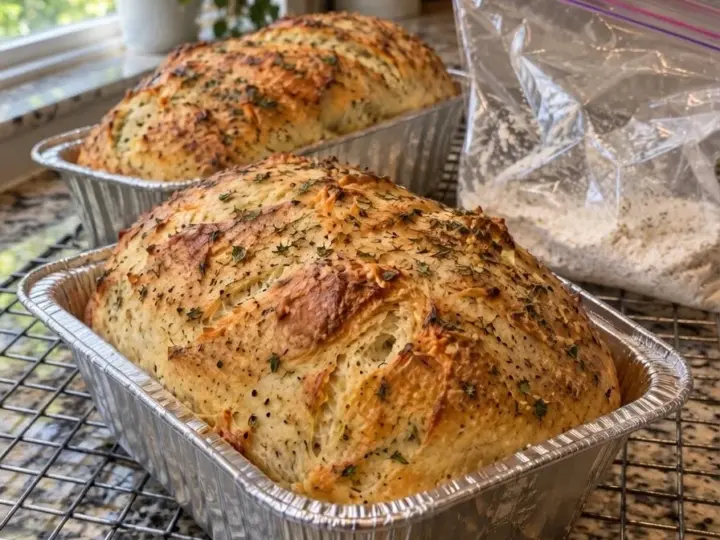
This Parmesan Herb Bread in a Bag bakes into two golden loaves with a soft, savory crumb. Finely grated Parmesan, dried parsley, and oregano go right into the dough, so every slice has a little cheese and herb flavor. A final sprinkle of Parmesan browns on top as the loaves bake.
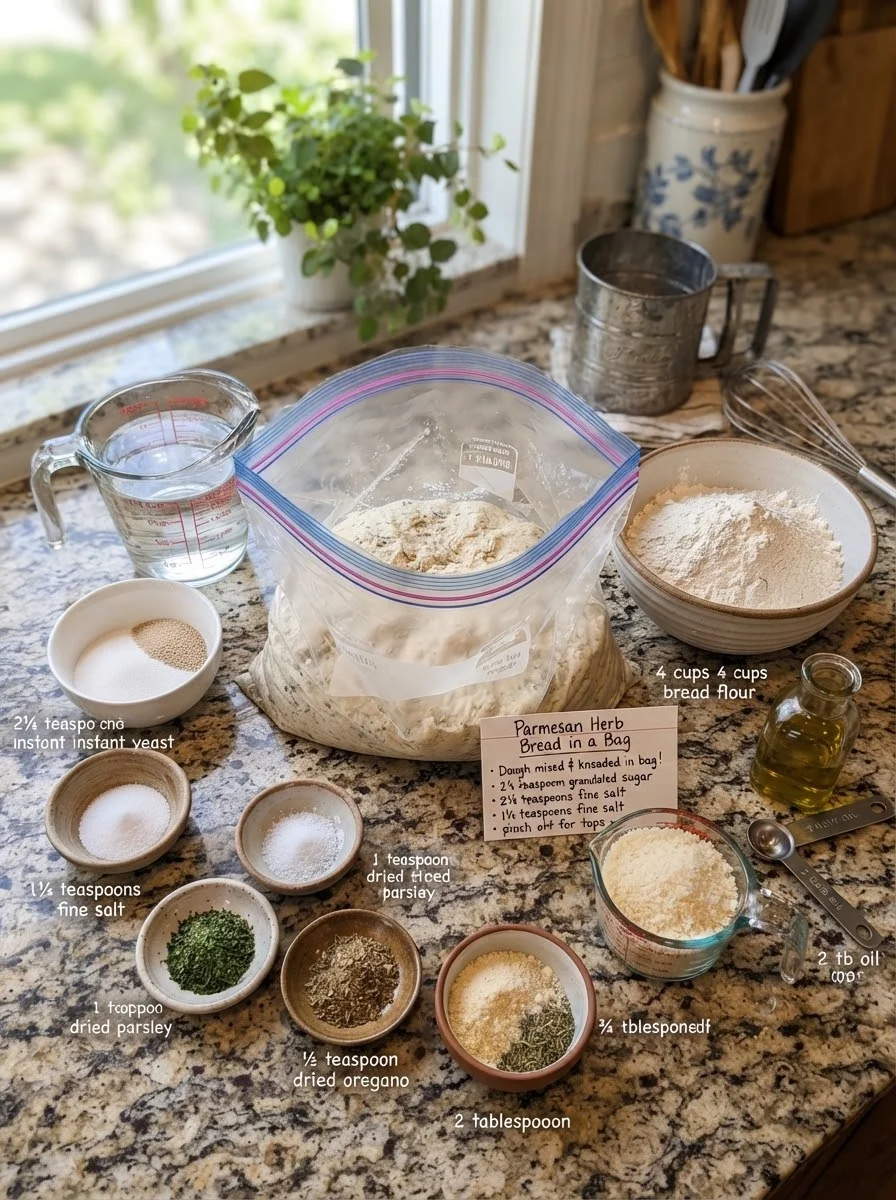
Mix and knead the dough through a sturdy zip-top bag, then let it rise in the same bag with the seal slightly open. All that’s left is to shape the two loaves and let them rise in their pans. Serve the bread with tomato soup, use it for grilled cheese, or toast a slice and rub it with a cut garlic clove.
Why You’ll Love This Parmesan Herb Bread
- Mix and knead in one bag. The bag contains the flour while you work the dough and doubles as a container for the first rise.
- Parmesan inside and out. Finely grated cheese flavors the crumb, and the extra sprinkle on top gives the crust a toasted finish.
- Two small loaves. Serve one with dinner and save the other for sandwiches or the freezer.
- Simple cues for both rises. Look for the dough to roughly double in the bag, then let the shaped loaves rise close to the tops of their pans.
Ingredients
For the Dough
- 1½ cups (355 g) warm water, about 105–110°F (40–43°C)
- 1 tablespoon granulated sugar
- 2¼ teaspoons instant yeast
- 4 cups (500 g) bread flour, divided, plus a little for shaping or adjusting the dough as needed
- 1¼ teaspoons fine salt
- 1 teaspoon dried parsley
- ½ teaspoon dried oregano
- ¾ cup (75 g) finely grated Parmesan
- 2 tablespoons olive oil
For the Topping
- 2 tablespoons finely grated Parmesan
- A pinch of dried parsley or oregano
Ingredient Notes
Bread flour. Bread flour helps the dough become stretchy enough to trap air as it rises. Use the 500 g weight if you have a scale, since flour can pack into a measuring cup.
Instant yeast. One standard ¼-ounce packet contains about 2¼ teaspoons. The warm water and sugar should produce a few bubbles or a little foam after five minutes. If the mixture looks unchanged and you’re unsure how fresh the yeast is, give it a few more minutes before adding the flour.
Parmesan. Finely grate it so it spreads evenly through the dough. Use the same fine grate for the topping so it clings to the loaves and browns evenly.
Dried herbs. Parsley adds a mild herbal note, while oregano gives the loaf a stronger savory flavor. Keep the topping to a pinch so the herbs don’t overwhelm the toasted cheese.
Olive oil. It helps soften the crumb and adds flavor. Use extra-virgin olive oil for a more noticeable olive flavor or mild olive oil for a subtler loaf.
Substitutions & Variations
- Parmesan rosemary bread. Replace the dried oregano with ½ teaspoon dried rosemary, crushed finely between your fingers.
- Garlic Parmesan bread. Add ½ teaspoon garlic powder with the flour and dried herbs.
- Parmesan basil bread. Replace the oregano with ½ teaspoon dried basil and sprinkle a little extra on top.
- All-purpose flour version. Use 500 g of all-purpose flour. Hold back a tablespoon or two of water at first and add it if the dough feels stiff. The baked crumb may be slightly less chewy.
Kitchen Equipment
- Sturdy 1-gallon zip-top freezer bag
- Large bowl to support the bag during mixing and rising
- Two 8-by-4-inch metal loaf pans
- Bench scraper or knife for dividing the dough
- Wire cooling rack
- Instant-read thermometer and serrated bread knife
How to Make Parmesan Herb Bread in a Bag
Stand the bag in a bowl while adding ingredients, then lay it flat on the counter for kneading. Once the dough is smooth, loosen the seal slightly to give it room to expand during the first rise.
Step-by-Step Instructions
1. Mix the water, sugar, and yeast. Combine the warm water, sugar, and instant yeast in a clean gallon zip-top bag. Seal it, leaving a little air inside, and gently swish to dissolve the sugar. Let the mixture stand for 5 minutes, until lightly foamy.
2. Add the flour, herbs, and Parmesan. Add 2 cups (250 g) of bread flour, the salt, parsley, oregano, ¾ cup Parmesan, and olive oil. Reseal the bag and press the ingredients together through the plastic. Add the remaining 2 cups (250 g) of flour and work it in until no dry patches remain.
3. Knead in the bag. With the bag sealed and a little air left inside, press the dough away from you with your palms, fold it back through the bag, and repeat for 6 to 8 minutes. It should become smoother and more elastic. A little tackiness is fine. If the dough is still very wet and smears across the bag, knead in extra flour 1 tablespoon at a time.
4. Let the dough rise. Loosen the seal slightly and set the bag in a bowl. Leave it in a warm, draft-free spot for 60 to 75 minutes, until the dough has roughly doubled. Give it more time if your kitchen is cool.
5. Shape and top the loaves. Grease two 8-by-4-inch loaf pans. Turn the dough onto a lightly floured surface and divide it in half. Pat each half into a small rectangle, roll it into a snug log that fits the pan, and pinch the seam closed. Set the logs seam-side down in the pans. Divide the remaining 2 tablespoons Parmesan between the tops and sprinkle with a pinch of dried herbs.
6. Proof and bake. Cover the pans loosely and let the loaves rise for 30 to 45 minutes, until puffy and near the tops of the pans. Toward the end of the rise, preheat the oven to 375°F (190°C). Bake for 22 to 28 minutes, until deeply golden and the centers reach about 190°F (88°C). If the Parmesan browns before the bread is done, loosely tent the pans with foil.
7. Cool before slicing. Let the loaves rest in their pans for 5 minutes, then turn them out onto a wire rack. Cool on the rack for at least 30 minutes before slicing.
Expert Tips for the Best Results
- Use a sturdy freezer bag. Set it on the counter while kneading so your palms press against a flat surface and there’s less strain on the zipper.
- Knead before adding extra flour. The dough may look rough and sticky at first. Give it time to smooth out before adjusting it.
- Divide the dough evenly. If you have a scale, weigh the two portions so both loaves finish baking at about the same time.
- Check the bread beneath the topping. Parmesan can brown before the center is baked. Insert the thermometer through the side of a loaf to check the crumb.
Common Mistakes to Avoid
Adding all the flour at once. Mixing half first makes it easier to work out lumps and reach any dry flour tucked in the corners of the bag.
Keeping the bag fully sealed during the first rise. Open the zipper slightly and keep the bag upright in a bowl so the dough has room to expand.
Rushing the final proof. Wait until the dough looks puffy and approaches the pan rims. If it’s still low in the pans, give it more time.
Cutting the loaves too early. The soft crumb can compress under the knife. Let the loaves rest on a rack before slicing with a gentle sawing motion.
How to Serve Parmesan Herb Bread
Serve thick slices with softened butter or a small bowl of olive oil and cracked black pepper. For garlic toast, toast the slices and rub one side with a cut garlic clove while they’re warm. The bread also works well for grilled cheese, turkey sandwiches, or toasted crostini.
What to Serve With Parmesan Herb Bread
Pair it with tomato soup, creamy mushroom soup, baked pasta, or a chopped Italian salad. Serve it alongside roast chicken to soak up the pan juices, or put it on an antipasto board with marinated olives, artichoke hearts, and feta.
Make-Ahead Instructions
Bake the loaves up to 1 day ahead. Cool them completely, then wrap them and leave them whole until serving. For warm bread at dinner, wrap a loaf loosely in foil and warm it just before slicing.
Storage Instructions
Room temperature. Keep the fully cooled bread in a sealed bread bag or airtight container for up to 3 days for best texture.
Freezing. Freeze whole loaves tightly wrapped or freeze slices with parchment between them for up to 2 months for best quality. Thaw a whole loaf at room temperature while still wrapped.
Reheating. Toast individual slices straight from the freezer. To warm a thawed mini loaf, wrap it loosely in foil and heat at 300°F for 10 to 15 minutes, until warm in the center.
Frequently Asked Questions
Does the bread bake in the bag?
The bag is for mixing, kneading, and the first rise. Shape the dough and transfer it to metal loaf pans for the final rise and baking.
Can I mix the dough in a bowl?
Yes. Add the ingredients in the same order, stir until a shaggy dough forms, and knead by hand until smooth and elastic.
Why is my dough taking longer to rise?
A cool kitchen can slow the rise. Wait until the dough has roughly doubled in the bag and the shaped loaves look puffy. Use those cues alongside the time ranges.
Why is my Parmesan topping getting dark?
Finely grated cheese can brown quickly. If the topping is already golden but the center needs more time, loosely cover the pans with foil and finish baking.
Final Recipe Summary
Mix bread flour, yeast, Parmesan, herbs, and olive oil in a zip-top bag. Knead through the bag and let the dough double. Shape two loaves, top with extra Parmesan and herbs, and give them a second rise before baking until golden.
Print
Parmesan Herb Bread in a Bag
Description
| Recipe details | Time or yield |
|---|---|
| Active prep | About 25 minutes |
| Rise time | 1½ to 2 hours |
| Bake time | 22 to 28 minutes |
| Cooling time | At least 35 minutes, including the pan rest |
| Total time | About 2 hours 50 minutes to 3 hours 30 minutes |
| Yield | 2 small loaves, about 12 slices total |
Ingredients
For the Dough
- 1½ cups (355 g) warm water, about 105–110°F (40–43°C)
- 1 tablespoon granulated sugar
- 2¼ teaspoons instant yeast
- 4 cups (500 g) bread flour, divided, plus a little for shaping or adjusting the dough as needed
- 1¼ teaspoons fine salt
- 1 teaspoon dried parsley
- ½ teaspoon dried oregano
- ¾ cup (75 g) finely grated Parmesan
- 2 tablespoons olive oil
For the Topping
- 2 tablespoons finely grated Parmesan
- A pinch of dried parsley or oregano
Instructions
1. Mix the water, sugar, and yeast. Combine the warm water, sugar, and instant yeast in a clean gallon zip-top bag. Seal it, leaving a little air inside, and gently swish to dissolve the sugar. Let the mixture stand for 5 minutes, until lightly foamy.
2. Add the flour, herbs, and Parmesan. Add 2 cups (250 g) of bread flour, the salt, parsley, oregano, ¾ cup Parmesan, and olive oil. Reseal the bag and press the ingredients together through the plastic. Add the remaining 2 cups (250 g) of flour and work it in until no dry patches remain.
3. Knead in the bag. With the bag sealed and a little air left inside, press the dough away from you with your palms, fold it back through the bag, and repeat for 6 to 8 minutes. It should become smoother and more elastic. A little tackiness is fine. If the dough is still very wet and smears across the bag, knead in extra flour 1 tablespoon at a time.
4. Let the dough rise. Loosen the seal slightly and set the bag in a bowl. Leave it in a warm, draft-free spot for 60 to 75 minutes, until the dough has roughly doubled. Give it more time if your kitchen is cool.
5. Shape and top the loaves. Grease two 8-by-4-inch loaf pans. Turn the dough onto a lightly floured surface and divide it in half. Pat each half into a small rectangle, roll it into a snug log that fits the pan, and pinch the seam closed. Set the logs seam-side down in the pans. Divide the remaining 2 tablespoons Parmesan between the tops and sprinkle with a pinch of dried herbs.
6. Proof and bake. Cover the pans loosely and let the loaves rise for 30 to 45 minutes, until puffy and near the tops of the pans. Toward the end of the rise, preheat the oven to 375°F (190°C). Bake for 22 to 28 minutes, until deeply golden and the centers reach about 190°F (88°C). If the Parmesan browns before the bread is done, loosely tent the pans with foil.
7. Cool before slicing. Let the loaves rest in their pans for 5 minutes, then turn them out onto a wire rack. Cool on the rack for at least 30 minutes before slicing.