Introduction
High-Protein Cottage Cheese Cheddar Rosemary Bagel Bread brings the savory appeal of a cheese bagel to a loaf you can slice for breakfast or lunch. Bread flour supplies chew, blended cottage cheese adds moisture, and sharp cheddar gives the crumb little savory pockets. Fresh rosemary keeps the dairy richness from feeling heavy.
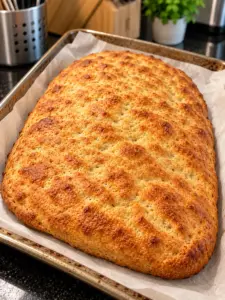
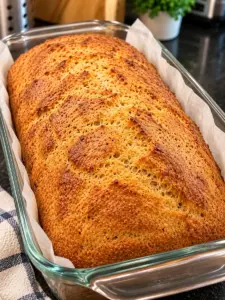
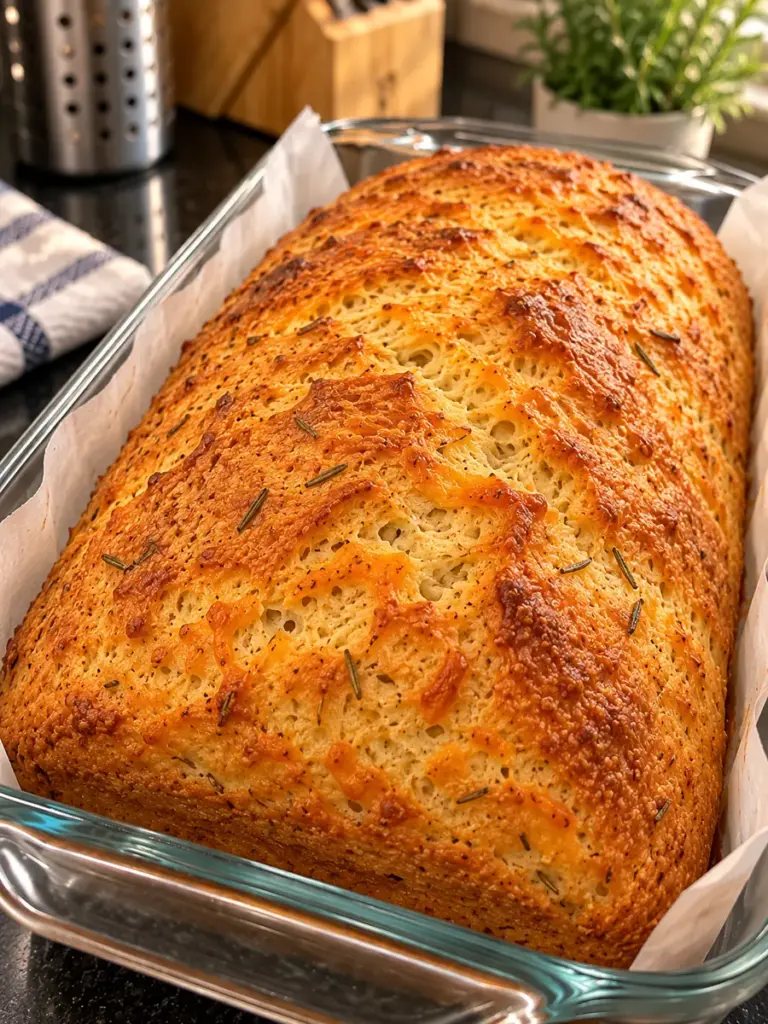
Expect a close, springy crumb with a browned cheese top and enough structure for the toaster. The bagel connection is its chew and savory character; the loaf follows a straightforward yeast-bread method.
Makes 8 servings; one serving is two slices. Plan on about 5 hours 25 minutes from mixing through cooling, including 30 minutes of active preparation. That serial schedule uses the longer planned stages, with oven preheating overlapping the final rise. Dough temperature and room conditions can shift the proofing time.
Why You’ll Love This Recipe
The protein comes from ordinary ingredients: bread flour, cottage cheese, egg whites, cheddar, and yeast. Estimated 13.5 g protein per serving, based on reference ingredient values.
Sharp cheddar contributes flavor throughout the loaf, while a smaller portion on top creates a browned crust. You get cheese in the bread without relying entirely on a thick topping.
Blending the cottage cheese distributes its curds through the dough. That makes shaping easier and gives each slice a more consistent texture.
One loaf provides 16 slices for 8 practical servings. Freeze paired slices so a serving is ready for toast, an egg sandwich, or a quick soup accompaniment.
Ingredients
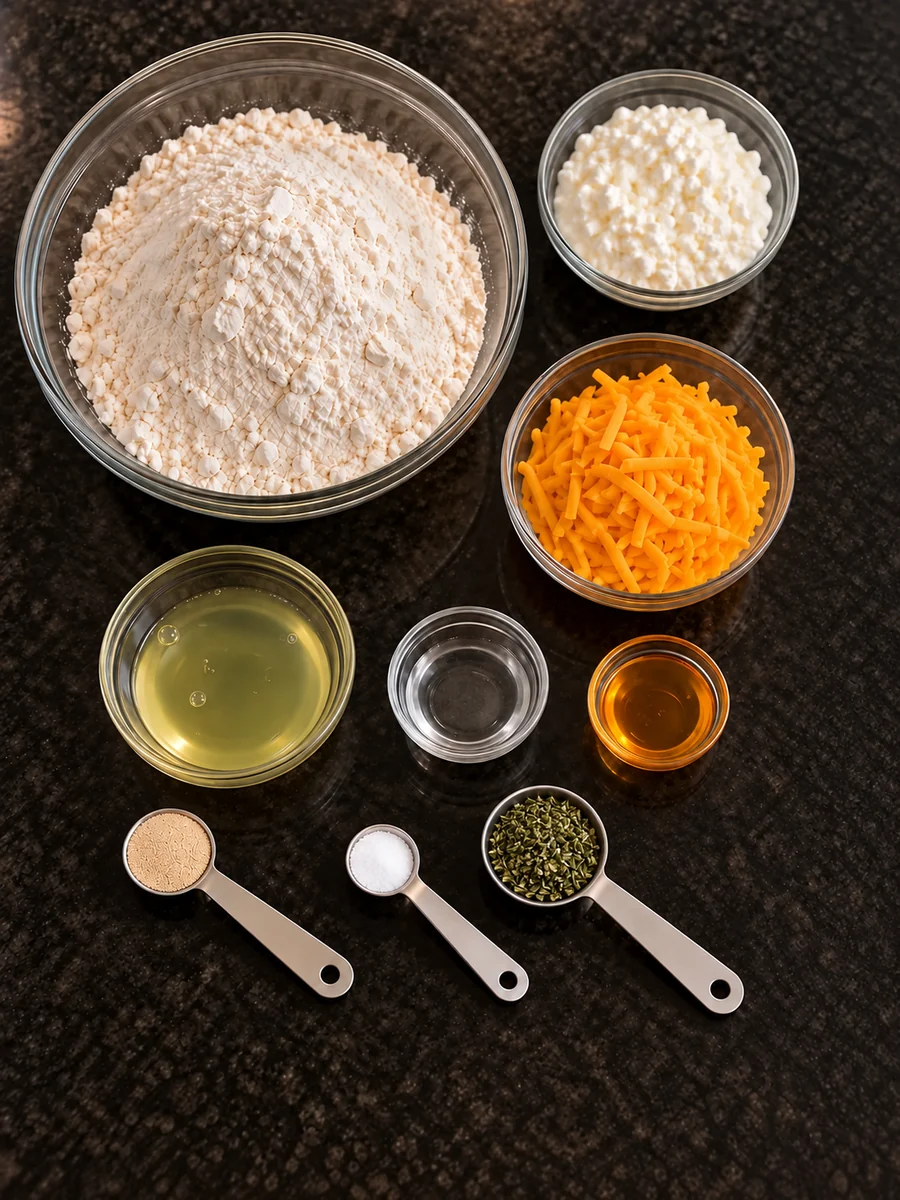
Measure the flour and cottage cheese by weight. Their volume changes with packing, curd size, and liquid in the spoon. The small amount of added water is intentional because the dairy and egg whites supply most of the moisture.
Divide the cheddar before beginning: 85 g goes into the dough, and 25 g finishes the top.
- 3 1/3 cups bread flour, spooned and leveled (400 g)
- About 7/8 cup plain, undrained 1% milkfat cottage cheese (200 g)
- 2 large egg whites (66 g)
- About 1 cup freshly shredded sharp cheddar (110 g), divided
- 1 tablespoon plus 2 teaspoons lukewarm water (25 g)
- 1 tablespoon honey (20 g)
- 2 1/4 teaspoons instant dry yeast (7 g)
- 2/3 teaspoon fine table salt (4 g)
- 2 tablespoons finely chopped fresh rosemary leaves (4 g)
Ingredient Notes and Substitutions
Choose plain, undrained 1% milkfat cottage cheese. Stir the container before weighing so the curds and liquid are evenly represented. This formula accounts for that specific dairy ingredient; draining it changes the moisture balance.
Bread flour supports the chewy texture and the weight of the cheese. All-purpose flour is a cautious substitution because its lower protein may produce a softer, less resilient loaf. Avoid adding extra flour simply because the dough initially feels sticky.
Freshly shredded sharp cheddar distributes readily through the dough. Mild cheddar can replace it by equal weight, but the flavor will be gentler. Different cheeses also vary in moisture, fat, and salt, so broader cheese substitutions need formula review.
Use fresh rosemary leaves, stripped from their woody stems and chopped finely. Large needles are unpleasant in a sandwich slice. The egg whites provide moisture as well as protein; replacing them with whole eggs changes both the fat level and the dough’s behavior.
How to Make High-Protein Cottage Cheese Cheddar Rosemary Bagel Bread
- Line a 9×5-inch loaf pan with parchment, covering the bottom and long sides. Blend the cottage cheese, egg whites, water, and honey until mostly smooth. Use lukewarm water and avoid heating the mixture; it should feel neutral or barely warm.
- Whisk the bread flour, instant dry yeast, and salt in a large bowl. Add the blended mixture and stir firmly until no dry flour remains. Expect a substantial, tacky dough rather than a pourable batter.
- Knead with a stand mixer and dough hook on low speed for 8–10 minutes, until elastic and smoother. Add 85 g cheddar and the fresh rosemary; knead briefly to distribute. The dough should hold a rounded mound while clinging slightly to your fingers.
- Cover the bowl and allow 90 minutes for bulk proofing in a comfortably warm spot. Look for a puffy dough, roughly doubled, with small bubbles along the bowl. A cooler kitchen may require additional time beyond this planning estimate.
- Allow 10 minutes for a covered bench rest after gently pressing out large bubbles on a clean, unfloured counter. Pat into an 8-inch-wide rectangle, roll into a snug log, and pinch the seam closed. Place seam down in the pan. This bagel-inspired loaf is baked directly, without boiling.
- Allow 60 minutes for the final proof, loosely covered, until the center rises about 1 inch above the rim and a gentle indentation returns slowly. During this proof, preheat the oven to 375°F. Uncover and scatter the remaining 25 g cheddar over the top.
- Bake for 45 minutes at 375°F on the lower-middle rack, until deeply golden and the center reaches 200°F. Loosely tent with foil if the cheese darkens early. Insert the thermometer from the side into the central crumb, avoiding visible cheese pockets.
- Cool in the pan for 10 minutes, then lift out, remove the parchment, and cool on a wire rack for 80 minutes before slicing. Cut into 16 slices. Makes 8 servings; one serving is two slices.
Expert Baking Tips
Blend the wet ingredients before they meet the flour. A mostly smooth mixture spreads the cottage cheese through the dough and prevents isolated wet curds from making the finished crumb look uneven.
Judge gluten development before adding the cheddar. Stretch a small piece gently: it should lengthen before tearing, although this dairy-rich dough need not form a perfectly transparent sheet.
Keep the dough tacky. A dough scraper helps lift it from the counter without adding flour, which would change the carefully limited liquid-to-flour balance and make the loaf heavier.
Use the pan dimensions as written. A narrower pan changes the height and may leave the center baking longer while the cheese topping continues to darken.
Cover the rising loaf loosely enough to allow expansion. A cover pressed onto the dough can stick to the surface and pull away some of its structure when removed.
Check the middle of the crumb with a thermometer. A browned cheese cap can develop before the center is ready, so color alone is an unreliable finish cue.
Common Mistakes to Avoid
Pouring off the cottage-cheese liquid makes the dough unexpectedly stiff. Stir the container thoroughly, then weigh the entire ingredient as supplied. Conversely, taking mostly liquid from an unstirred container gives an inconsistent mixture.
Adding the cheddar at the beginning can make it harder to judge whether the dough has developed strength. Knead the base dough first, then incorporate the cheese and rosemary only until evenly distributed.
Letting the final rise continue until the dough looks fragile can cause a weak crown. Watch for a rounded top and a slow response to a light fingertip indentation, rather than waiting for a dramatic rise.
Slicing while the loaf is hot compresses the moist crumb and can leave a gummy-looking band. Complete the cooling period even if the crust already feels comfortable to touch.
Variations and Serving Ideas
For breakfast, toast a serving and add scrambled eggs or a sliced hard-boiled egg. The rosemary also pairs well with sautéed mushrooms, while the cheddar makes a simple tomato sandwich feel substantial.
For lunch, use thinly sliced turkey and crisp lettuce, or serve warm toast beside tomato soup. Keep moist fillings modest so the close crumb stays pleasantly chewy.
For an optional variation, replace the rosemary with an equal weight of finely chopped fresh chives. This changes the base formula and gives a milder onion flavor. Avoid adding a generous handful of wet vegetables directly to the dough; they introduce moisture that the original proportions do not account for.
Storage and Freezing
Let the loaf finish cooling before packaging so trapped steam does not soften the crust excessively. Keep it tightly wrapped in the refrigerator for up to 4 days, and toast slices to refresh their texture. Refrigeration can firm bread, but works conveniently for this moist cheese loaf.
For longer storage, separate the cooled loaf into 2-slice servings. Wrap each serving tightly, place in a freezer bag, press out excess air, and freeze for up to 2 months for best quality.
Toast individual frozen slices directly, using a second gentle cycle if needed. For softer bread, thaw a wrapped serving in the refrigerator, then warm briefly. Discard the entire loaf if mold appears.
Frequently Asked Questions
Is this a traditional bagel?
It is a bagel-inspired yeast loaf with a chewy crumb and savory cheese flavor. It receives no boiling step and will have a softer crust than a traditional boiled bagel.
How much protein does a serving contain?
Estimated 13.5 g protein per serving, or about 6.8 g per slice. One serving is two slices. Brands and moisture vary; this estimate is not laboratory analysis or certification of a regulated nutrient claim.
Will the bread taste like cottage cheese?
The cottage cheese contributes a mild dairy flavor. Sharp cheddar and rosemary are more prominent, while blending reduces obvious curds in the finished slices.
Can I use 2% cottage cheese?
Treat that as a cautious substitution requiring review. It has different protein, fat, and moisture contributions, so the stated nutrition estimate applies specifically to the listed 1% cottage cheese.
Why is there so little added water?
Cottage cheese, egg whites, cheddar, and honey already contribute water. The dough should feel tacky and cohesive after kneading; a large splash of extra water would change its consistency.
Can I make bagel rings instead?
This formula and baking schedule are developed for one loaf pan. Individual rings would need separate shaping, proofing, and baking guidance, particularly if you wanted a boiling step.
WP Tasty Recipe Card
PrintHigh-Protein Cottage Cheese Cheddar Rosemary Bagel Bread
- Total Time: 325 minutes
Ingredients
3 1/3 cups bread flour, spooned and leveled (400 g)
About 7/8 cup plain, undrained 1% milkfat cottage cheese (200 g)
2 large egg whites (66 g)
About 1 cup freshly shredded sharp cheddar (110 g), divided
1 tablespoon plus 2 teaspoons lukewarm water (25 g)
1 tablespoon honey (20 g)
2 1/4 teaspoons instant dry yeast (7 g)
2/3 teaspoon fine table salt (4 g)
2 tablespoons finely chopped fresh rosemary leaves (4 g)
Instructions
Line a 9×5-inch loaf pan with parchment, covering the bottom and long sides. Blend the cottage cheese, egg whites, water, and honey until mostly smooth. Use lukewarm water and avoid heating the mixture; it should feel neutral or barely warm.
Whisk the bread flour, instant dry yeast, and salt in a large bowl. Add the blended mixture and stir firmly until no dry flour remains. Expect a substantial, tacky dough rather than a pourable batter.
Knead with a stand mixer and dough hook on low speed for 8–10 minutes, until elastic and smoother. Add 85 g cheddar and the fresh rosemary; knead briefly to distribute. The dough should hold a rounded mound while clinging slightly to your fingers.
Cover the bowl and allow 90 minutes for bulk proofing in a comfortably warm spot. Look for a puffy dough, roughly doubled, with small bubbles along the bowl. A cooler kitchen may require additional time beyond this planning estimate.
Allow 10 minutes for a covered bench rest after gently pressing out large bubbles on a clean, unfloured counter. Pat into an 8-inch-wide rectangle, roll into a snug log, and pinch the seam closed. Place seam down in the pan. This bagel-inspired loaf is baked directly, without boiling.
Allow 60 minutes for the final proof, loosely covered, until the center rises about 1 inch above the rim and a gentle indentation returns slowly. During this proof, preheat the oven to 375°F. Uncover and scatter the remaining 25 g cheddar over the top.
Bake for 45 minutes at 375°F on the lower-middle rack, until deeply golden and the center reaches 200°F. Loosely tent with foil if the cheese darkens early. Insert the thermometer from the side into the central crumb, avoiding visible cheese pockets.
Cool in the pan for 10 minutes, then lift out, remove the parchment, and cool on a wire rack for 80 minutes before slicing. Cut into 16 slices. Makes 8 servings; one serving is two slices.
- Prep Time: 30 minutes
- Cook Time: 45 minutes