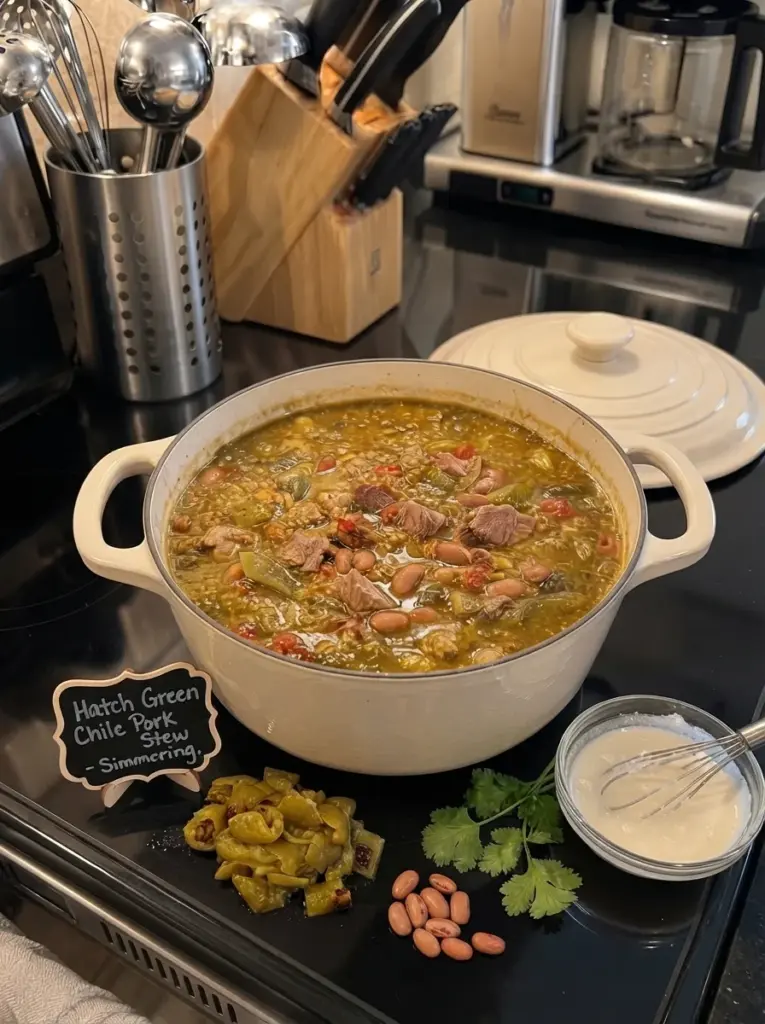
Hatch Green Chile Pork & Pinto Bean Tamale Stew combines tender pork shoulder, roasted green chiles, pinto beans, and tomatoes in a savory broth lightly thickened with masa harina. The masa brings a gentle corn flavor that recalls tamales, while the beans make each bowl hearty without needing a heavy cream or cheese base.
This is a slow-simmered stew with a simple finishing sequence. Brown the pork, build the roasted chile broth, and let the meat become tender before adding canned beans. A small masa slurry goes in near the end, followed by cilantro and lime to taste.
The chiles are the central flavor, so their heat level matters as much as their quantity. Mild roasted Hatch chiles give a generous green chile presence without making the pot overwhelmingly hot. If your chiles are hot, use less to start and add more only after tasting the cooked broth.
Serve with warm tortillas, diced onion, or a small sprinkle of cheese. The stew is substantial enough to stand alone, and it reheats well for another meal.
Recipe Overview
- Yield: About 6 generous or 8 smaller servings
- Active preparation: About 25–35 minutes using prepared roasted chiles
- Pork simmer: About 1½–2 hours, sometimes longer
- Beans and masa finish: About 25–35 minutes
- Total: Approximately 2½–3¼ hours, allowing extra time for firm pork
- Texture: Hearty but spoonable, with a lightly thickened broth
This article expands the supplied recipe with heat-management options and texture cues. It has not been independently kitchen-tested for this article. Pork tenderness, pot width, chile moisture, and broth reduction affect the timing and yield.
What “Tamale Stew” Means Here
This recipe does not contain wrapped tamales or masa dumplings. Instead, a small amount of masa harina thickens the broth and adds a familiar nixtamalized corn flavor.
Two tablespoons create a subtle effect. Expect a gently thickened stew rather than a dense porridge or a bowl of tamale filling. If you prefer a stronger corn flavor, adjust cautiously after the original slurry has fully cooked rather than adding a large amount of dry masa directly to the pot.
The dish is New Mexico-inspired, with roasted green chiles at its center. It is not presented as the single traditional preparation used throughout the region.
Ingredients
Pork and Stew Base
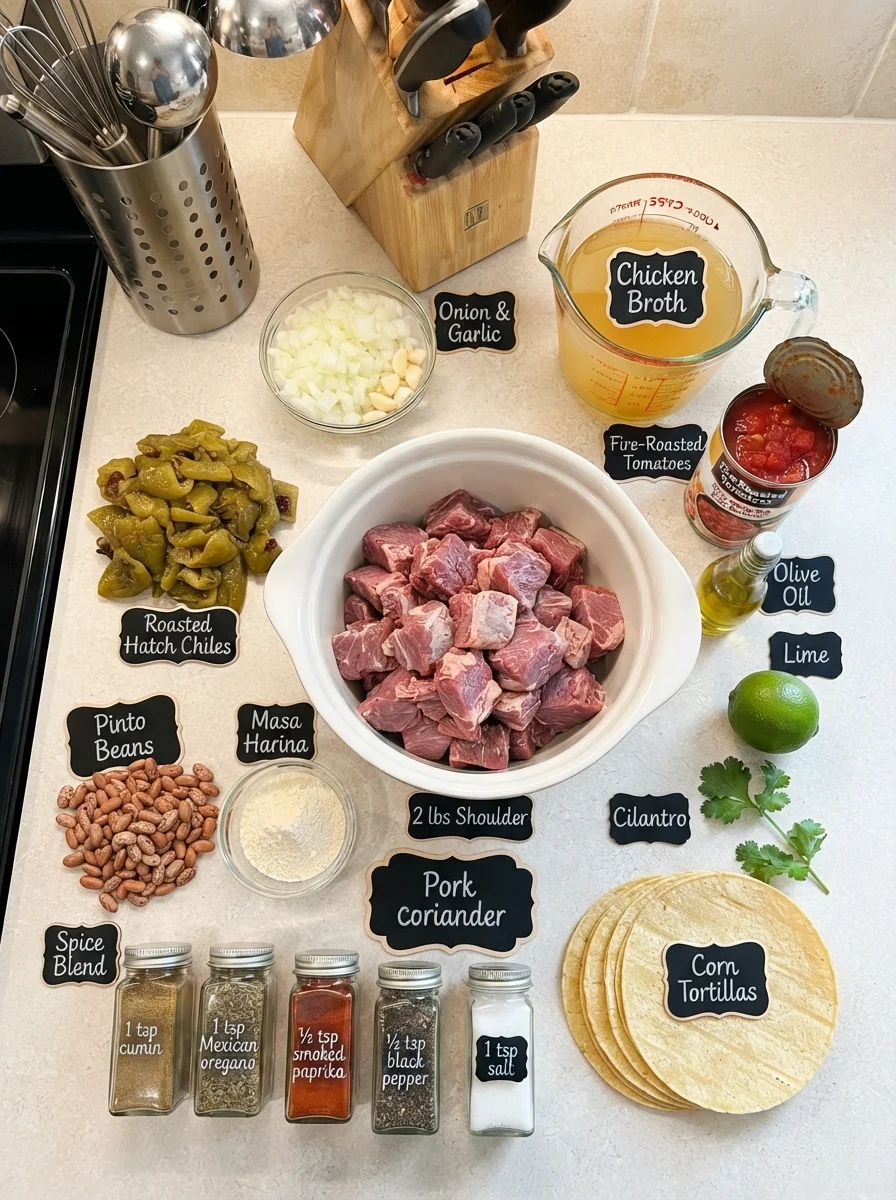
- 2 pounds boneless pork shoulder, cut into approximately 1-inch cubes
- 1 tablespoon olive oil, plus a little more only if needed
- 1 medium yellow onion, diced
- 4 garlic cloves, minced
- 2 cups roasted mild Hatch green chiles, peeled, seeded as desired, and chopped; use less initially for hotter chiles
- 2 cans pinto beans, 15 ounces each, drained and rinsed
- 4 cups low-sodium chicken broth, plus more as needed
- 1 can fire-roasted diced tomatoes, 14.5 ounces, drained slightly
- 1 teaspoon ground cumin
- 1 teaspoon dried Mexican oregano
- ½ teaspoon smoked paprika
- ½ teaspoon ground coriander
- ½ teaspoon black pepper
- Up to 1 teaspoon fine salt, divided and adjusted to taste
Masa Finish
- 2 tablespoons masa harina
- ¼ cup cool water
Fresh Finish
- Up to 1 tablespoon fresh lime juice, to taste
- ¼ cup chopped fresh cilantro
Optional serving additions include warm tortillas, diced white onion, shredded cheese, sour cream, or cornbread. They are not included in the base nutrition estimate.
Ingredient Notes
Pork Shoulder
Shoulder is the preferred cut for this long, moist cooking method. Trim large exterior fat deposits and obvious tough pieces while keeping some marbling.
Cut fairly evenly so the cubes soften at a similar rate. The pork should yield easily to a fork before the beans go in. If it is still firm or rubbery at the suggested time, it needs more simmering.
Pork loin and tenderloin are leaner and are not direct substitutes for the same schedule. They can dry out during the long cooking intended to soften shoulder.
Roasted Hatch Green Chiles
The measured 2 cups refers to prepared roasted chile flesh after peeling and chopping, not two cups of whole raw peppers. Mild chiles are the intended starting point for that generous quantity.
For medium or hot chiles, begin with about ½–1 cup and reserve the rest. Add more during cooking if desired. This changes the intensity of the chile flavor as well as the heat, so another option is mixing a small quantity of hot chiles with mild ones.
Frozen roasted chiles are convenient; thaw them in the refrigerator. Canned roasted green chiles also work, although flavor, salt, and texture differ. Measure the prepared chiles rather than assuming every can size equals a cup.
If using chiles sold outside the Hatch designation, describe them by their actual type. They can make a good stew without being labeled Hatch.
Pinto Beans
Use fully cooked canned beans, drained and rinsed. They only need enough time to heat and absorb some broth flavor, which is why they are added after the pork becomes tender.
Home-cooked pinto beans can be used if already fully cooked. Dry beans cannot be added at the same stage and expected to soften in 15–20 minutes.
Masa Harina
Use masa harina intended for tortillas or tamales. Ordinary cornmeal and cornstarch are different ingredients and do not give the same texture or flavor.
Whisking it with cool water helps disperse it before it enters the hot stew. The slurry may settle while standing, so stir again just before pouring.
Broth and Tomatoes
Low-sodium broth gives you more room to season after reduction. Slightly draining the tomatoes keeps some juice while avoiding an unpredictable amount of extra liquid.
Four cups of broth is a starting amount. Add more if the pot reduces too far or if you prefer a looser stew. The meat should not cook in a nearly dry pot.
Equipment
Use a heavy 5- to 6-quart Dutch oven or soup pot with a lid, a plate for browned pork, a small bowl for the slurry, and a sturdy spoon.
A wide pot browns meat well but can lose liquid faster than a narrower one. Partially covering the stew helps control evaporation while allowing some concentration.
Use a fork to assess tenderness and an instant-read thermometer to check reheated portions. Keep raw-meat tools separate from utensils used for tasting and serving.
How to Make the Stew
1. Prepare the Chiles and Pork
If your chiles are already roasted, peeled, and chopped, measure and set them aside. If starting with raw peppers, allow extra time to roast, steam briefly in a covered bowl, peel loose skins, and remove stems before chopping.
Pat the pork dry. Season with about ½ teaspoon salt and the black pepper. Reserve the cumin, oregano, paprika, and coriander for the aromatic stage so the ground spices are less likely to scorch during batch browning.
2. Brown the Pork in Batches
Heat the oil in the pot over medium-high heat. Add a single uncrowded layer of pork and brown on several sides, about 5–7 minutes per batch.
Transfer to a plate and continue with the remaining meat, adding a little oil only if needed. The pork does not need to be cooked through at this stage.
Look for golden-brown residue in the pot rather than blackened patches. Lower the heat if the residue begins burning; burnt spices or meat drippings can make the whole stew taste bitter.
3. Sauté Onion, Garlic, and Spices
Reduce the heat to medium. Add the onion and cook for 4–5 minutes, stirring, until softened. A small splash of measured broth can help loosen browned bits if the pan is dry.
Add garlic, cumin, oregano, smoked paprika, and coriander. Stir for about 30 seconds until fragrant. Keep the garlic moving and do not leave the spices against a dry, hot surface.
4. Add Chiles and Tomatoes
Stir in the prepared green chiles and slightly drained tomatoes. Cook for about 2–3 minutes, scraping the bottom of the pot.
If using hot chiles, begin with the smaller quantity described above. You can add more later; reducing heat after the entire amount has simmered in the pot is much harder.
5. Build and Simmer the Stew
Return the pork and accumulated juices to the pot. Add the 4 cups broth and stir.
Bring just to a gentle boil, then lower the heat to maintain a quiet simmer. Partially cover and cook for about 1½–2 hours, checking occasionally and stirring along the bottom.
Add warm broth or water if the liquid reduces too far. Avoid a rapid boil, which concentrates the broth quickly and can leave the pork less pleasant in texture.
6. Check Tenderness Before Adding Beans
Remove a piece of pork with a clean utensil and test with a fork. It should yield easily, not spring back with a rubbery resistance.
If the pork is not tender, continue simmering and check again periodically. The temperature required for food safety is not the same as the longer cooking needed for shoulder’s stew-like tenderness.
Wait to add the beans until this stage is complete. Canned beans left in the pot for the entire pork simmer can split and break down.
7. Add the Pinto Beans
Fold in the drained beans and simmer gently for about 15–20 minutes. Stir carefully so they remain mostly intact.
Assess the broth level before adding the masa. If it is already thick from reduction and beans, add a little broth so the slurry does not make it overly dense.
8. Mix and Add the Masa Slurry
Whisk 2 tablespoons masa harina with ¼ cup cool water until smooth. Stir again immediately before using.
Pour it slowly into the gently simmering stew while stirring. Continue simmering for about 10 minutes, stirring occasionally along the bottom, until the masa is hydrated and the broth has a lightly thickened texture without a raw, powdery taste.
Do not sprinkle dry masa directly over the surface; small lumps can form before it disperses. If the stew needs more body after the first addition has cooked, mix a separate small slurry rather than dumping in another large amount.
9. Adjust the Finish
Taste the cooked stew and add remaining salt as needed. Chiles, canned beans, tomatoes, and broth may already provide enough.
Stir in cilantro. Add lime juice gradually, beginning with a teaspoon and using up to a tablespoon if it improves the flavor. Tomatoes already contribute acidity, so the full amount is optional.
If the stew is too thick, loosen with warm broth. If too thin, mash a few beans or simmer uncovered briefly, checking salt and acidity as it reduces.
10. Serve
Ladle into bowls and distribute pork and beans evenly. Offer diced onion, lime wedges, and optional cheese separately.
Serve warm tortillas or cornbread alongside if desired. A cornbread topping makes a heartier bowl but is an additional ingredient, not necessary for the masa flavor in the stew.
Tips for the Best Texture
Keep browning and tenderizing separate in your mind. Browning creates flavor; the later simmer makes shoulder tender. A deeply browned cube can still need a long time in broth.
Monitor evaporation. Different pots and lid positions change how much liquid remains after two hours. Add liquid before the bottom begins catching rather than waiting until the stew looks dry.
Use the masa sparingly. Its role is a gentle thickening and corn flavor, not turning the broth into a paste. Beans can also add body when a few are mashed.
Season late. Salt becomes more concentrated as broth reduces, and toppings such as cheese add another salty element.
Give the finished stew a few minutes off the heat before tasting a final spoonful. Very hot food can make it harder to judge seasoning clearly, but do not leave the pot out for an extended period.
Troubleshooting
| Problem | Possible cause | Adjustment |
|---|---|---|
| Pork is tough | Shoulder needs longer moist cooking | Continue gently before adding beans. |
| Beans are falling apart | Added too early or stirred forcefully | Add cooked beans after pork is tender and fold gently. |
| Masa forms lumps | Dry powder added directly to hot liquid | Whisk a cool slurry and pour slowly while stirring. |
| Stew becomes too thick | Reduction plus masa absorption | Add warm broth gradually. |
| Flavor is too hot | Chiles were hotter than expected | Serve smaller portions with mild sides; use milder chiles next time. |
| Broth tastes salty | Salted ingredients concentrated | Use low-sodium broth and season near the end. |
| Stew tastes gritty | Wrong corn product or insufficient cooking | Use masa harina and allow the slurry to hydrate fully. |
| Surface is oily | Shoulder released extra fat | Skim gently, or chill and remove firm surface fat before reheating. |
Variations
Mild Green Chile Version
Use mild roasted chiles and offer hot chile sauce separately. Removing seeds alone is not a guarantee of low heat because the pepper’s flesh and membranes can also carry heat.
Extra Corn Flavor
After the original slurry has cooked, add another small slurry made with 1 tablespoon masa and 2 tablespoons cool water if desired. Simmer again and reassess. More masa changes the texture, so add incrementally.
Corn and Pinto Bean Stew
Add about ½–1 cup corn near the end of the bean stage and heat through. This adds sweetness and carbohydrates and increases the yield slightly.
Cheesy Finish
Sprinkle a little Monterey Jack over individual bowls. Keeping cheese out of the main pot makes freezing and reheating simpler and lets each person control the richness.
Brothier Caldo-Style Bowl
Add extra broth near the end and keep the masa at the original amount or use less. This produces a looser soup rather than the intended lightly thickened stew.
Serving Ideas
Serve with warm corn tortillas for a corn-forward meal or flour tortillas if preferred. A fresh cabbage slaw gives crunch against the soft pork and beans.
For a topping tray, offer cilantro, diced white onion, lime wedges, and a small bowl of shredded cheese. Sour cream can soften the perception of heat in an individual serving, but it does not remove the chiles from the pot.
The stew already contains meat and beans, so it can be served without another substantial side. Rice or cornbread are optional for larger appetites and add to the base nutrition.
Make-Ahead Guidance
Roast and prepare chiles a day ahead, then refrigerate in a covered container. Keep thawed pork refrigerated until you are ready to cook.
The entire stew can be made a day ahead. It usually thickens after chilling as masa and beans absorb more liquid. Add broth during reheating until the texture is back where you want it.
For especially intact beans, cook the pork base ahead without beans or masa. Refrigerate promptly, reheat thoroughly, then add the beans and slurry during the final preparation.
Keep fresh garnishes separate until serving. Repeated cooking dulls cilantro’s fresh flavor and softens raw onion.
Storage and Reheating
Refrigerate leftovers within 2 hours, or within 1 hour if temperatures exceed 90°F. Divide into shallow airtight containers rather than leaving a large pot on the counter until completely cold.
Store at 40°F or below for 3–4 days. Label the containers with the cooking date. Preparing a new garnish later does not extend the stew’s storage period.
Freeze in meal-size containers for up to 3 months for best quality. Leave room for expansion and thaw in the refrigerator. Masa-thickened broth may need stirring and additional liquid after thawing.
Reheat gently on the stovetop, stirring along the bottom and adding a splash of broth as needed. Bring the stew to 165°F throughout. For microwave reheating, cover appropriately, stir partway through, and check several areas.
Do not use a slow cooker’s WARM setting to reheat cold leftovers. Reheat first using a suitable method, then transfer to hot-holding equipment if needed.
Nutrition Estimate
At six generous servings, a broad estimate is approximately 400–520 calories and 30–38 grams of protein per serving, before tortillas, cornbread, cheese, or sour cream. At eight smaller servings, the amount per portion is roughly three-quarters of that estimate.
These are illustrative figures, not a calculated nutrition label. Pork shoulder fat content, trimming, the amount of fat skimmed, canned bean yield, and actual portion size all affect the result.
The recipe is not low-carb simply because it contains pork and green chiles; beans, tomatoes, and masa contribute carbohydrates. For gluten-free preparation, choose suitable masa, broth, canned ingredients, and seasonings, and check accompaniments separately.
Frequently Asked Questions
Can I use canned roasted green chiles?
Yes. Measure the prepared chopped chiles and choose a heat level you enjoy. Their flavor may differ from freshly roasted Hatch chiles, and salt content varies by brand.
Can I use dried pinto beans?
Cook them fully before adding them at the bean stage. This recipe does not provide the soaking, liquid, and cooking adjustments needed to cook dry beans directly with the pork.
Is cornmeal the same as masa harina?
No. Masa harina is made from nixtamalized corn and behaves differently in a slurry. Ordinary cornmeal does not provide the same flavor or smooth thickening.
Can I add the beans at the beginning?
Canned beans are already cooked. Adding them late helps preserve their shape while the pork gets the longer simmer it needs.
Does the stew contain actual tamales?
No. The name refers to the masa flavor. There are no wrapped tamales or dumplings in this version.
Can I make it in a slow cooker?
The stated method is stovetop. A slow-cooker version needs different timing and liquid management, so do not copy the stovetop schedule directly. Beans and masa would still be finishing ingredients in a separately developed version.
Why did it thicken overnight?
Masa and beans continue absorbing liquid during storage. Add broth while reheating and stir gently until the consistency is right.
Can I double it?
Use a pot with adequate room and brown the pork in more batches. A larger volume can take longer to return to a simmer. Continue to use pork tenderness as the guide.
Recipe Card
Hatch Green Chile Pork & Pinto Bean Tamale Stew
Tender pork shoulder, roasted green chiles, and pinto beans in a lightly masa-thickened broth.
Servings: 6 generous or 8 smaller
Prep: 25–35 minutes using prepared chiles
Pork simmer: About 1½–2 hours or longer until tender
Finish: 25–35 minutes
Total: Approximately 2½–3¼ hours
Ingredients
- 2 pounds boneless pork shoulder, in 1-inch cubes
- 1 tablespoon olive oil, plus more only if needed
- 1 medium yellow onion, diced
- 4 garlic cloves, minced
- 2 cups prepared roasted mild Hatch green chiles, chopped; start with less for hot chiles
- 2 cans pinto beans, 15 ounces each, drained and rinsed
- 4 cups low-sodium chicken broth, plus more as needed
- 1 can fire-roasted diced tomatoes, 14.5 ounces, slightly drained
- 1 teaspoon cumin
- 1 teaspoon dried Mexican oregano
- ½ teaspoon smoked paprika
- ½ teaspoon ground coriander
- ½ teaspoon black pepper
- Up to 1 teaspoon fine salt, divided, to taste
- 2 tablespoons masa harina
- ¼ cup cool water
- Up to 1 tablespoon lime juice, to taste
- ¼ cup chopped cilantro
Instructions
- Pat pork dry. Season with about half the salt and the black pepper. Brown in oil in uncrowded batches, about 5–7 minutes per batch. Transfer to a plate.
- Sauté onion over medium heat for 4–5 minutes. Add garlic, cumin, oregano, paprika, and coriander for 30 seconds.
- Stir in chiles and tomatoes. Cook 2–3 minutes, loosening browned bits. Return pork and juices, then add broth.
- Bring just to a boil, reduce heat, and simmer partially covered for about 1½–2 hours or longer until pork yields easily to a fork. Add liquid as needed.
- Fold in beans and simmer gently for 15–20 minutes.
- Whisk masa with cool water. Stir again and pour slowly into the simmering stew while stirring. Cook about 10 minutes until lightly thickened and the masa is fully hydrated.
- Adjust salt. Stir in cilantro and add lime gradually to taste. Serve with optional toppings and tortillas.
Storage: Refrigerate promptly for 3–4 days. Freeze up to 3 months for best quality. Reheat to 165°F, adding broth as needed.
Estimated nutrition: About 400–520 calories per serving at six servings before accompaniments. Ingredients and portion size vary.
Recipe note: The tamale-inspired flavor comes from masa harina, not wrapped tamales. Tender pork and late-added beans are the main texture cues.

Hatch Green Chile Pork & Pinto Bean Tamale Stew
Description
Tender pork shoulder, roasted green chiles, and pinto beans in a lightly masa-thickened broth.
Servings: 6 generous or 8 smaller
Prep: 25–35 minutes using prepared chiles
Pork simmer: About 1½–2 hours or longer until tender
Finish: 25–35 minutes
Total: Approximately 2½–3¼ hours
Ingredients
- 2 pounds boneless pork shoulder, in 1-inch cubes
- 1 tablespoon olive oil, plus more only if needed
- 1 medium yellow onion, diced
- 4 garlic cloves, minced
- 2 cups prepared roasted mild Hatch green chiles, chopped; start with less for hot chiles
- 2 cans pinto beans, 15 ounces each, drained and rinsed
- 4 cups low-sodium chicken broth, plus more as needed
- 1 can fire-roasted diced tomatoes, 14.5 ounces, slightly drained
- 1 teaspoon cumin
- 1 teaspoon dried Mexican oregano
- ½ teaspoon smoked paprika
- ½ teaspoon ground coriander
- ½ teaspoon black pepper
- Up to 1 teaspoon fine salt, divided, to taste
- 2 tablespoons masa harina
- ¼ cup cool water
- Up to 1 tablespoon lime juice, to taste
- ¼ cup chopped cilantro
Instructions
- Pat pork dry. Season with about half the salt and the black pepper. Brown in oil in uncrowded batches, about 5–7 minutes per batch. Transfer to a plate.
- Sauté onion over medium heat for 4–5 minutes. Add garlic, cumin, oregano, paprika, and coriander for 30 seconds.
- Stir in chiles and tomatoes. Cook 2–3 minutes, loosening browned bits. Return pork and juices, then add broth.
- Bring just to a boil, reduce heat, and simmer partially covered for about 1½–2 hours or longer until pork yields easily to a fork. Add liquid as needed.
- Fold in beans and simmer gently for 15–20 minutes.
- Whisk masa with cool water. Stir again and pour slowly into the simmering stew while stirring. Cook about 10 minutes until lightly thickened and the masa is fully hydrated.
- Adjust salt. Stir in cilantro and add lime gradually to taste. Serve with optional toppings and tortillas.
Storage: Refrigerate promptly for 3–4 days. Freeze up to 3 months for best quality. Reheat to 165°F, adding broth as needed.
Estimated nutrition: About 400–520 calories per serving at six servings before accompaniments. Ingredients and portion size vary.
Recipe note: The tamale-inspired flavor comes from masa harina, not wrapped tamales. Tender pork and late-added beans are the main texture cues.