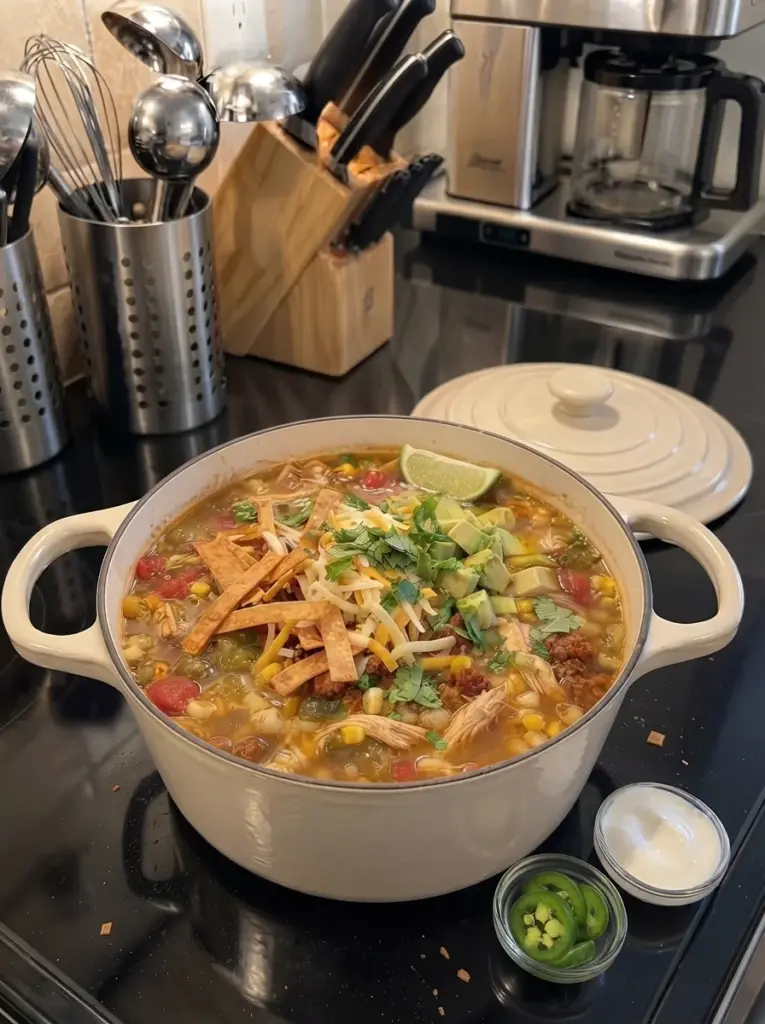
Hatch Green Chile Chicken & Chorizo Tortilla Caldo brings together shredded chicken, savory Mexican chorizo, green chiles, hominy, and corn in a tomato-rich broth. Crispy tortilla strips add crunch at the table, while lime and cilantro brighten the rich meat and chile flavors. It is a hearty soup that feels especially welcome on a cool evening.
Starting with cooked chicken makes the preparation manageable. The chorizo cooks first, leaving flavorful drippings for the onion and poblano peppers. A short simmer blends the broth with the tomatoes, green chiles, and spices before the soup is finished with lime. Set out cheese, avocado, and tortilla strips so everyone can garnish their own bowl.
This is a Southwestern-inspired home recipe, rather than a claim to one traditional regional caldo. It combines several familiar ingredients in a generous, broth-based main course. The heat can be mild or bold depending on your chorizo and green chiles, so taste as you cook.
Recipe note: This supplied recipe has not been independently tested. Chorizo brands vary in fat, seasoning, and moisture, and green chile heat varies considerably. Use the cooking cues below, check meat temperatures, and adjust salt after the broth has simmered.
Why You’ll Love This Caldo
- Cooked shredded chicken saves preparation time.
- Mexican chorizo seasons the broth with savory chile flavor.
- Hominy and corn add contrasting textures.
- Tortilla strips provide a crisp finish without thickening the entire pot.
- The soup base can be made ahead and frozen separately from toppings.
Recipe at a Glance
- Prep time: About 20 minutes
- Cook time: Approximately 40 minutes
- Total time: About 1 hour when the tortilla strips bake during soup preparation
- Servings: 6
- Category: Soup, main course
- Cuisine: Southwestern-inspired Mexican-American
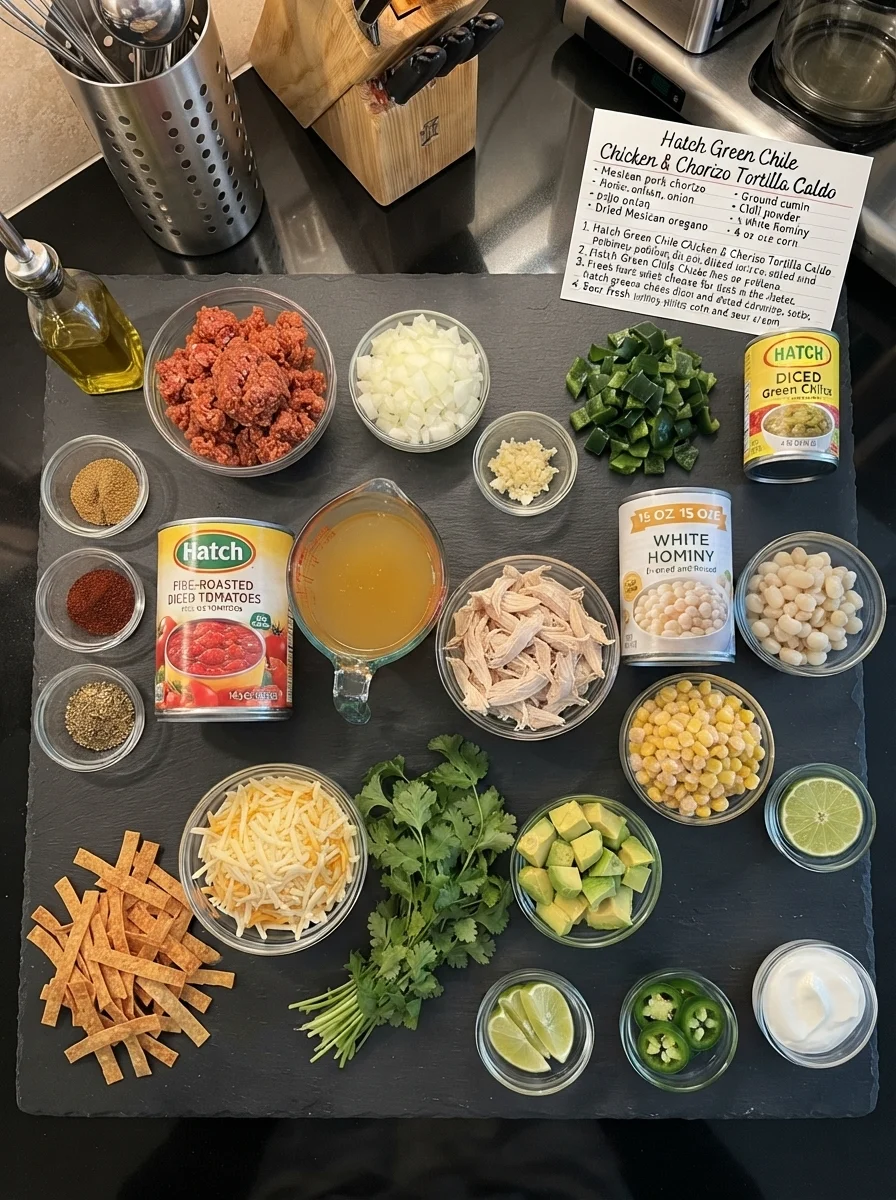
Ingredients
For the Caldo
- 1 tablespoon olive oil, only if needed
- 8 ounces Mexican pork chorizo, casings removed if applicable
- 1 medium yellow onion, diced
- 3 garlic cloves, minced
- 2 poblano peppers, seeded and diced
- 1 can (4 ounces) diced Hatch green chiles
- 1 teaspoon ground cumin
- 1 teaspoon chili powder
- 1/2 teaspoon dried Mexican oregano
- 1 can (14.5 ounces) fire-roasted diced tomatoes, with juices
- 6 cups chicken broth
- 3 cups cooked shredded chicken
- 1 can (15 ounces) white hominy, drained and rinsed
- 1 cup frozen corn, or drained canned corn
- 1 tablespoon fresh lime juice
- Salt and black pepper, to taste
For Serving
- 4–6 corn tortillas, cut into thin strips
- 1 tablespoon olive oil for the tortilla strips
- 1/2 cup shredded Monterey Jack cheese
- Chopped fresh cilantro
- Diced avocado
- Lime wedges
- Sliced jalapeños, optional
- Sour cream, optional
Ingredient Notes
Mexican Pork Chorizo
Use fresh Mexican-style pork chorizo that is intended to be cooked and crumbled. It differs from firm, cured Spanish-style chorizo, which does not break down in the same way or season the broth identically. Read the package so you know which product you are using.
Some fresh chorizos release a considerable amount of fat. Drain excess after cooking, leaving about a tablespoon for the vegetables. Add the optional oil only if the pot looks dry. Keeping all the rendered fat can make the broth feel greasy, especially once the soup cools slightly in the bowl.
Fresh pork chorizo should be thoroughly cooked to 160°F. Color alone is not a dependable check because the seasonings can keep the meat red. Use the package guidance and a food thermometer where practical rather than relying only on the suggested minutes.
Cooked Shredded Chicken
Plain cooked chicken, leftover roast chicken, or rotisserie chicken can work. Remove bones and skin, then shred into bite-sized pieces. Very salty or heavily seasoned chicken may affect the broth, so hold back added salt until the end.
Use properly refrigerated cooked chicken within its remaining storage period. Adding older leftovers to a new soup does not reset their storage clock. If you plan to keep the caldo several days, freshly cooked chicken is the simplest option.
Poblano Peppers
The supplied method uses raw diced poblanos sautéed with the onion. They add a fresh, earthy green pepper flavor. Remove the stems, seeds, and pale inner ribs, and cut them into small pieces so they soften during cooking.
If you prefer roasted poblano flavor, blister and peel them separately, then add the chopped roasted flesh with the canned green chiles. That is an optional variation and adds preparation time. Poblanos are often mild, but individual peppers can be hotter.
Hatch Green Chiles
A small can of diced roasted Hatch green chiles provides green chile flavor without additional roasting. Choose mild, medium, or hot according to your preference. If the label does not specify Hatch, other diced roasted green chiles can still work, though the flavor will differ.
Four ounces gives a supporting chile note rather than a strongly green-chile-dominant broth. You can add more after tasting, but keep in mind that chorizo already brings its own chile seasoning.
Hominy
Use canned, cooked white hominy, drained and rinsed. Its plump, chewy kernels provide a different texture from the sweet corn. Dried hominy is not a direct replacement because it needs separate preparation and substantially longer cooking.
Corn and Tomatoes
Frozen corn can go straight into the simmering broth. Drain canned corn before measuring so the packing liquid does not dilute the soup. Fire-roasted tomatoes add a roasted note; ordinary diced tomatoes can be used for a less smoky result. Include the tomato juices.
Broth and Seasonings
Low-sodium broth gives more room to adjust salt because chorizo, cooked chicken, cheese, and tortilla toppings can all contribute sodium. Cumin, chili powder, and oregano reinforce the savory broth, but they should not overwhelm the chorizo.
Mexican oregano has a different character from Mediterranean oregano. If substituting, start with the same small amount and adjust after tasting. Chili powder blends vary in heat and salt, so check the label.
How to Make Hatch Green Chile Chicken & Chorizo Tortilla Caldo
1. Bake the Tortilla Strips
Preheat the oven to 400°F. Toss the thin tortilla strips with 1 tablespoon olive oil and arrange in a single layer on a baking sheet. Bake for about 8–12 minutes, turning once, until golden and crisp.
Watch closely near the end, since thin pieces can brown quickly. If the strips are crowded, divide them between two pans or bake in batches. Let them cool on the pan, then keep dry while the soup finishes.
2. Cook the Chorizo
Place a large Dutch oven or soup pot over medium heat. Add the chorizo and break it into small crumbles with a spoon or spatula. Cook for approximately 5–7 minutes, or as needed to cook thoroughly to 160°F, following the package instructions.
Carefully drain excess fat, leaving about 1 tablespoon in the pot. If the chorizo is lean and the pan is dry, add some or all of the optional olive oil. Do not add oil automatically before seeing how much fat the sausage releases.
3. Soften the Vegetables
Add the diced onion and poblanos to the cooked chorizo. Cook for 4–5 minutes, stirring, until they begin to soften. They will continue cooking in the broth. Add the garlic and stir for about 30 seconds, keeping it from browning heavily.
4. Add Green Chiles and Spices
Stir in the diced Hatch green chiles, cumin, chili powder, and oregano. Cook for about 1 minute, stirring to distribute the spices through the meat and vegetables. If the bottom of the pot begins to catch, reduce the heat and add a small splash of broth.
5. Build the Broth
Pour in the tomatoes with their juices and the chicken broth. Scrape the bottom of the pot to release flavorful browned bits. Bring to a gentle boil, then lower the heat to a steady simmer.
6. Add Chicken, Hominy, and Corn
Stir in the cooked shredded chicken, drained hominy, and corn. Simmer uncovered for 20–25 minutes, stirring occasionally, until the vegetables are tender, the flavors have blended, and the chicken is heated through to 165°F.
Keep the simmer gentle. A rolling boil can reduce the broth rapidly and make the shredded chicken less tender. If the soup becomes too concentrated, add a little broth or water and taste again.
7. Finish With Lime
Stir in the lime juice. Taste the broth and add salt and pepper gradually. If it already has enough salt from the chorizo and broth, there may be no need to add more.
A little extra lime can brighten a rich batch, but add it in small amounts. Offer wedges at the table so guests can adjust their own bowls.
8. Garnish and Serve
Ladle the caldo into bowls. Add tortilla strips, a small amount of Monterey Jack, cilantro, and avocado. Offer optional jalapeños and sour cream separately.
Add the tortilla strips immediately before eating so they stay crisp. Keep the toppings out of the main pot if you plan to store leftovers.
Tips for a Balanced Broth
Drain Excess Chorizo Fat
The drippings help cook the vegetables, but you do not need all of them. Leaving roughly a tablespoon gives flavor without an overly oily finish. If you make the soup ahead, a little chilled surface fat can also be removed before reheating.
Season After Simmering
The salt level changes as ingredients combine and liquid evaporates. Taste near the end, then consider the cheese and tortilla toppings before adding salt. An extra salty topping can make a well-seasoned broth seem too salty in the finished bowl.
Keep a Gentle Simmer
This soup needs time for flavor blending, not a vigorous boil. Moderate heat preserves the chicken texture and prevents the broth from reducing too quickly. Stir occasionally so the hominy and meat do not settle on the bottom.
Keep the Crunch Separate
Tortilla strips soften in broth, which can be pleasant in a small amount but changes the soup during storage. Add them only to individual portions. Keep extra strips dry and replace them if they become stale.
Taste the Heat Before Adding More
Chorizo and Hatch chiles both vary in spice level. Add optional jalapeño at the table rather than making the entire pot hotter before you know how it tastes. A mild broth can still have plenty of flavor.
Variations
Roasted Poblano Version
Broil the whole poblanos until blistered, cover briefly to steam, then peel, seed, and chop. Sauté the onion alone and add the roasted poblanos with the Hatch chiles. This gives a deeper roasted pepper flavor and requires extra preparation time.
More Green Chile Flavor
Add another small amount of diced roasted green chile after tasting the base. Start gradually, especially with hot chiles. If increasing the chile significantly, you may want less chili powder so the green chile remains distinct.
Potato Addition
Add a small quantity of peeled, bite-sized potato cubes with the broth. Simmer until fully tender before finishing with lime. The cooking time and broth needs may increase, and the yield will be larger.
Different Fully Cooked Beans
If you do not have hominy, a drained can of pinto or white beans can make a hearty alternative. The texture and flavor will be different, since beans are not a direct match for hominy’s chew. Use canned or separately cooked beans rather than dried beans.
Turkey Chorizo
Fresh turkey chorizo can work if you enjoy its seasoning. It may release less fat, making the optional oil more useful. Follow the package and cook ground poultry chorizo to 165°F rather than the pork temperature.
Less Rich Bowls
Use modest cheese and sour cream toppings, and add extra cilantro and lime instead. Drain chorizo fat carefully. The broth will still carry the sausage’s seasoning even with lighter garnishes.
Serving Ideas
This caldo is substantial enough for dinner on its own. A small green salad or a few warm corn tortillas make simple accompaniments. If serving rice, keep the portion modest because the soup already contains hominy and corn.
For a gathering, arrange cheese, cilantro, avocado, lime, jalapeños, and tortilla strips in separate bowls. Cut avocado close to serving, and keep dairy toppings chilled until needed. Set out smaller amounts and replenish rather than leaving all the toppings on the table for a long period.
A wide soup bowl gives guests room to add garnishes. Start with a few strips, then let them add more as they eat. This preserves the contrast between crisp tortillas and the hot broth.
Make-Ahead and Storage
Make ahead: Prepare the soup a day before serving if convenient. Cool promptly in shallow containers and refrigerate. Reheat thoroughly, then add fresh lime or cilantro as desired. Prepare the crunchy toppings separately.
Refrigerator: Store at 40°F or below in covered containers for 3–4 days, counting from the preparation date and considering the remaining safe storage period of any leftover cooked chicken used. Refrigerate within 2 hours of cooking, or within 1 hour if the surrounding temperature exceeds 90°F.
Freezer: Freeze the soup without cheese, sour cream, avocado, cilantro, or tortilla strips for up to 3 months for best quality. Leave space for expansion. Thaw in the refrigerator before reheating.
Reheating: Warm in a saucepan over medium-low heat, stirring occasionally, until the soup reaches 165°F. Add broth if it has thickened. Do not use a slow cooker’s WARM setting to reheat cold soup.
Tortilla strips: Cool completely before sealing in a dry airtight container. For best crunch, prepare on the day of serving or shortly ahead. Moisture trapped in the container makes them soft; a brief oven refresh can help if they have only lost crispness.
Troubleshooting
Why Is My Broth Greasy?
The chorizo may have released more fat than expected. Drain it after browning, leaving enough for the vegetables. For a finished batch, skim excess surface fat carefully or chill and remove the firm fat before reheating.
Why Is It Too Spicy?
The sausage or chiles may be hotter than expected. A little additional unsalted broth and unseasoned chicken or hominy can dilute the heat, though the yield changes. Sour cream and avocado in individual bowls can soften the eating experience. Use milder products next time.
Why Is It Too Salty?
Chorizo, broth, cooked chicken, and toppings can all supply salt. Add unsalted broth in small amounts if needed, and skip salty toppings. Avoid adding more seasoning blends until you have checked their salt content.
Why Are My Tortilla Strips Chewy?
They may be crowded, underbaked, or stored before cooling. Bake in one layer and let them become crisp before removing. Keep them separate from soup steam and add only when serving.
Why Is My Chicken Dry?
The cooked chicken may have simmered too vigorously or too long. Use a gentle simmer and avoid extended reduction after the chicken goes in. Chicken thighs tend to be more forgiving than breasts, but either can become dry if overcooked.
Frequently Asked Questions
Is Mexican Chorizo the Same as Spanish Chorizo?
No. Fresh Mexican-style chorizo is generally cooked and crumbled, while cured Spanish-style chorizo is usually firm and sliced. This recipe uses the fresh pork style. Read the package and follow its cooking instructions.
Can I Use Raw Chicken Instead?
You would need to cook it fully in the broth or separately before shredding. The supplied timing assumes cooked chicken, so do not simply add raw pieces at the final stage. Check raw poultry for 165°F in the thickest part before shredding.
Can I Leave Out the Hominy?
Yes. The soup will have fewer hearty kernels and a somewhat lighter texture. Add beans if desired, or leave the rest of the recipe unchanged and expect a different yield.
Do I Have to Roast the Poblanos?
No. The main method sautés diced raw poblanos. Roasting is an optional flavor variation, not a requirement. Cook the diced peppers until tender during the sauté and simmer stages.
Is It Gluten-Free?
It may be if the chorizo, broth, seasoning blends, and tortillas meet your requirements. Check all packaged labels. Corn tortillas are not automatically a guarantee if cross-contact or added ingredients matter for you.
How Many Calories Are in a Serving?
The supplied estimate is approximately 450 calories per serving, including tortilla strips but excluding optional toppings. That is not verified nutrition data. Chorizo fat content, chicken cut, tortilla size, cheese, and retained drippings all affect the number. Use your actual labels and divide the batch into six portions for a closer estimate.
Print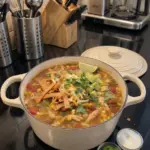
Hatch Green Chile Chicken & Chorizo Tortilla Caldo
Description
Prep time: 20 minutes
Cook time: About 40 minutes
Total time: About 1 hour
Servings: 6
Ingredients
Caldo
- 1 tablespoon olive oil, only if needed
- 8 ounces fresh Mexican pork chorizo
- 1 medium onion, diced
- 3 garlic cloves, minced
- 2 poblano peppers, seeded and diced
- 1 can (4 ounces) diced Hatch green chiles
- 1 teaspoon cumin
- 1 teaspoon chili powder
- 1/2 teaspoon dried Mexican oregano
- 1 can (14.5 ounces) fire-roasted diced tomatoes, with juices
- 6 cups chicken broth
- 3 cups cooked shredded chicken
- 1 can (15 ounces) white hominy, drained and rinsed
- 1 cup frozen corn or drained canned corn
- 1 tablespoon lime juice
- Salt and black pepper, to taste
Serving
- 4–6 corn tortillas, cut into thin strips
- 1 tablespoon olive oil
- 1/2 cup shredded Monterey Jack
- Cilantro, avocado, and lime wedges
- Jalapeños and sour cream, optional
Instructions
- Heat the oven to 400°F. Toss tortilla strips with 1 tablespoon oil and bake in a single layer for 8–12 minutes, turning once, until crisp. Set aside.
- Cook chorizo in a large pot over medium heat, crumbling, until thoroughly cooked to 160°F, following package guidance. Drain excess fat, leaving about 1 tablespoon. Add oil only if needed.
- Add onion and poblanos. Cook 4–5 minutes, then add garlic for 30 seconds. Stir in green chiles and spices for 1 minute.
- Add tomatoes and broth, scraping browned bits from the pot. Bring to a gentle boil.
- Add cooked chicken, hominy, and corn. Simmer gently, uncovered, for 20–25 minutes, until vegetables are tender and chicken is heated through to 165°F.
- Add lime juice and season to taste. Serve with tortilla strips and fresh toppings in individual bowls.
Storage: Refrigerate promptly in shallow containers for 3–4 days, taking the age of any leftover chicken into account. Freeze without toppings for up to 3 months for quality. Reheat to 165°F and add crisp tortilla strips just before eating.