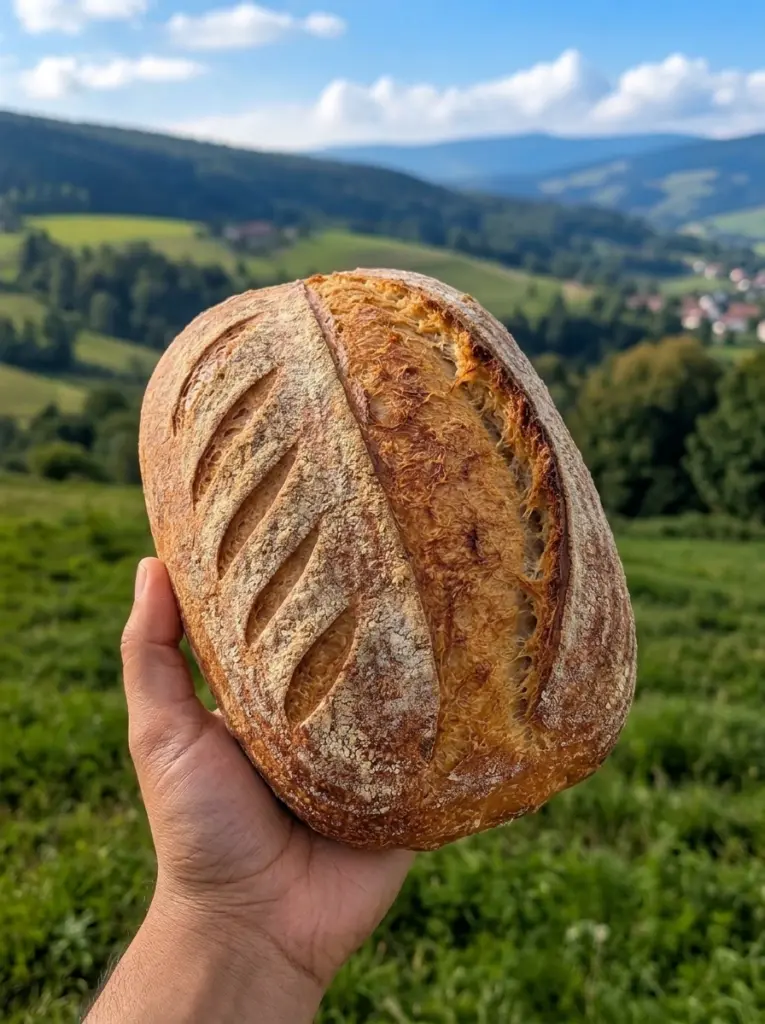
This French Loaf Bread is crusty, light, and made with just six simple ingredients. An easy homemade bread recipe with a golden crust and soft, airy interior!
If you’ve been wanting to bake your own French bread at home but assumed it required complicated techniques or special equipment, this French Loaf Bread recipe proves otherwise. Made with just six simple ingredients—water, sugar, yeast, oil, flour, and salt—this recipe delivers a classic, crusty loaf with a light, airy interior using straightforward coil folds instead of traditional kneading. The result is a beautifully golden, homemade French loaf that’s perfect for slicing, dipping, or serving alongside any meal.
This recipe is approachable even for those newer to bread baking, relying on a simple no-knead method and a relatively short rise time compared to many artisan bread recipes. With just a few hours from start to finish, you can have a warm, crusty loaf of French bread fresh from your own oven.
Let’s walk through everything you need to know to make this simple, crusty French loaf at home.
Why You’ll Love This French Loaf Bread
There’s so much to love about this simple, classic bread recipe:
Just six simple ingredients. With water, sugar, yeast, oil, flour, and salt, this recipe proves that great bread doesn’t require a long ingredient list.
No traditional kneading required. This recipe uses coil folds rather than intensive kneading, making it approachable even for beginner bakers.
Classic French bread texture. This loaf delivers a crusty, golden exterior with a light, airy interior, just like the French bread you’d find at a bakery.
Relatively quick process. With about 2 hours of rising time and around 25 minutes of baking, this bread comes together in an afternoon.
Versatile and classic. This bread works beautifully as a side, a sandwich base, or simply sliced and served warm with butter.
A great introduction to bread baking. The straightforward method makes this recipe an excellent starting point for anyone new to homemade bread.
Ingredients You’ll Need
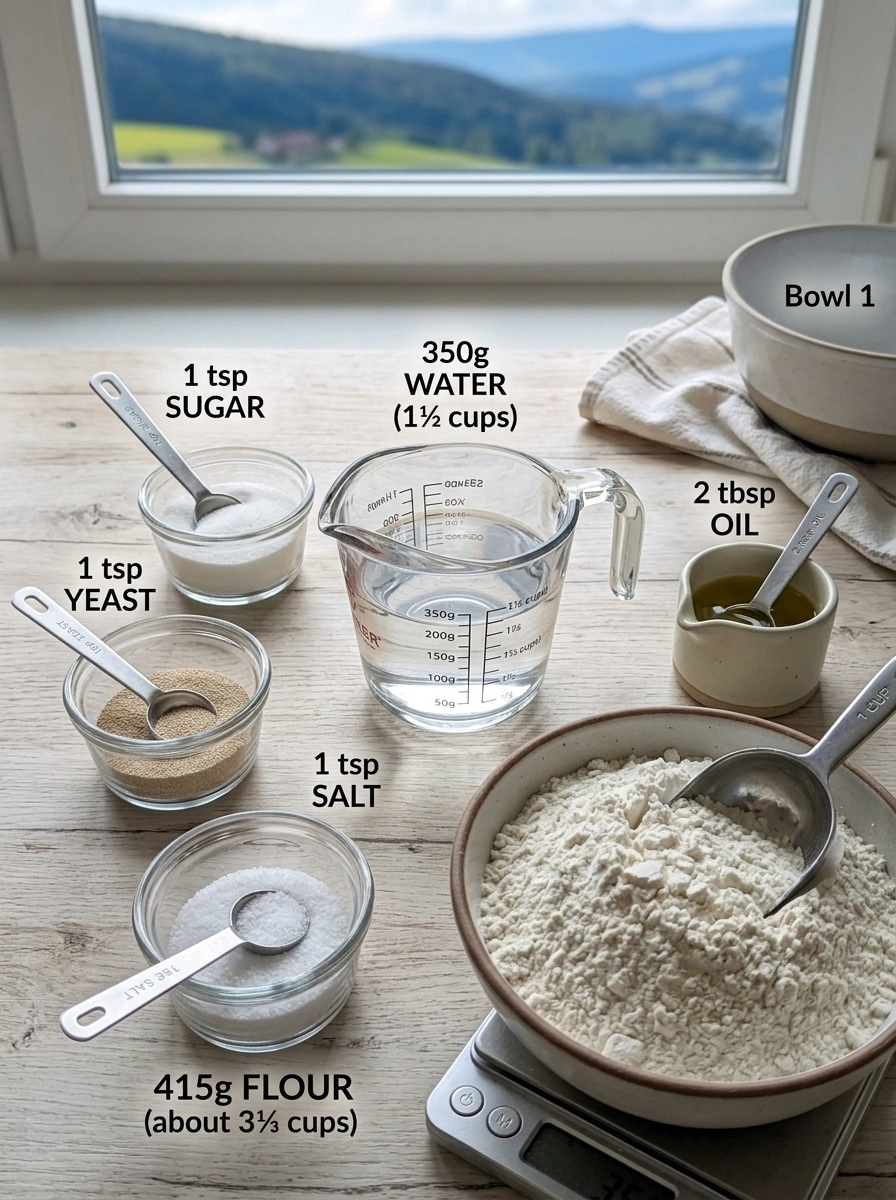
Here’s a breakdown of what goes into this simple, crusty French loaf and why each ingredient matters.
- 350 g water (1½ cups) — Hydrates the flour and activates the yeast, forming the base of the dough.
- 1 tsp sugar — Helps feed the yeast, supporting a good rise.
- 1 tsp yeast — The leavening agent that gives this bread its rise and airy texture.
- 2 tbsp oil — Adds richness and helps create a tender crumb.
- 415 g flour (about 3⅓ cups) — Forms the structure of the bread, providing the base for that classic French loaf texture.
- 1 tsp salt — Essential for flavor, salt also helps strengthen the dough and regulate the yeast’s activity.
How to Make French Loaf Bread
This recipe comes together in a few simple stages. Here’s exactly how to make it.
Step 1: Mix the Dough
In a large bowl, combine the water, sugar, and yeast. Stir in the oil, then add the flour and mix until a sticky dough forms. Add the salt and do one set of coil folds until the dough starts to come together. Cover and let it rest for 20 minutes.
Step 2: Fold and Rise
Do another set of coil folds, then cover and let the dough rise for about 2 hours, or until doubled in size.
Step 3: Shape the Loaf
Lightly flour your work surface and transfer the dough onto it. Fold the dough in from the sides to shape it, then carefully pick it up and place it onto a baking tray lined with parchment paper. Cover and let it rest for 14 minutes.
Step 4: Score and Bake
Score the top with a sharp knife and bake in a preheated 460°F (238°C) oven for 10 minutes. Lower the temperature to 360°F (182°C) and continue baking for 15 minutes.
What Are Coil Folds?
Coil folds are a gentle dough-strengthening technique often used as an alternative to traditional kneading, especially popular in no-knead and high-hydration bread recipes. Rather than pressing and stretching the dough repeatedly on a work surface, coil folds involve lifting the center of the dough and letting the ends fold underneath themselves, gently building strength and structure without overworking the dough. This method is particularly useful for wetter, stickier doughs like this French loaf, since it requires minimal handling.
Tips for the Best French Loaf Bread
Let the dough rise until truly doubled. Rising times can vary based on your kitchen’s temperature, so look for the dough to appear visibly doubled in size rather than relying solely on the suggested time.
Score the loaf confidently. A clean, decisive score with a sharp knife helps the bread expand properly in the oven and gives it that classic French bread appearance.
Preheat the oven fully. Starting with a fully preheated oven at the higher initial temperature helps create a good rise and a crisp, golden crust before lowering the temperature to finish baking.
Don’t skip the short rest after shaping. Allowing the shaped loaf to rest for 14 minutes before baking helps it relax and rise slightly, contributing to a better final texture.
Use parchment paper for easy handling. Lining your baking tray with parchment makes it much easier to transfer the shaped dough without deflating it.
Let the bread cool before slicing. Allowing the loaf to cool slightly after baking helps the crumb set properly, making it easier to slice cleanly.
Serving Ideas for French Loaf Bread
This classic, crusty bread is wonderfully versatile. Try serving it:
- Warm with butter
- Alongside soups and stews
- With olive oil for dipping
- As a base for sandwiches
- Sliced for bruschetta
- With cheese and charcuterie
- Alongside pasta dishes
- Toasted with garlic butter
- With homemade jam
- As a side for salads
Storage Information
Store the completely cooled French loaf in a bread bag or wrapped in a clean kitchen towel at room temperature for about 2 days. For longer storage, slice the loaf and freeze it, allowing individual slices to be toasted directly from the freezer whenever needed.
Frequently Asked Questions
Do I need a stand mixer for this recipe? No, this recipe is designed to be made using coil folds by hand rather than a stand mixer, making it accessible without special equipment.
Why does the oven temperature change during baking? Starting at a higher temperature helps the bread rise well and develop a crisp, golden crust, while lowering the temperature partway through baking helps the interior finish cooking through without over-browning the crust.
How do I know when the dough has risen enough? Look for the dough to appear visibly doubled in size rather than relying solely on the suggested rise time, since factors like kitchen temperature can affect rising speed.
Can I add ingredients like herbs or cheese to this dough? Yes, this simple dough can be customized with mix-ins like dried herbs, garlic, or shredded cheese, added during the initial mixing or folding stages.
Why is my crust not as crisp as I’d like? A crisp crust relies on a properly preheated oven and adequate baking time at the higher initial temperature. Make sure your oven is fully preheated before baking for the best results.
Can I freeze this bread? Yes, slicing the loaf and freezing individual portions is a great way to extend its shelf life, and slices can be toasted directly from frozen.
Recipe Summary
Rise Time: Approximately 2 hours 34 minutes total (including bulk rise and final rest) Bake Time: 25 minutes total
This French Loaf Bread delivers a classic, crusty, bakery-style loaf using just six simple ingredients and a straightforward no-knead method. Whether served warm with butter, alongside a bowl of soup, or as the base for a sandwich, this approachable recipe is a wonderful way to bring homemade French bread into your regular baking rotation.
Bake a loaf today, and enjoy the simple pleasure of warm, crusty, homemade French bread!

French Loaf Bread
Ingredients
Here’s a breakdown of what goes into this simple, crusty French loaf and why each ingredient matters.
- 350 g water (1½ cups) — Hydrates the flour and activates the yeast, forming the base of the dough.
- 1 tsp sugar — Helps feed the yeast, supporting a good rise.
- 1 tsp yeast — The leavening agent that gives this bread its rise and airy texture.
- 2 tbsp oil — Adds richness and helps create a tender crumb.
- 415 g flour (about 3⅓ cups) — Forms the structure of the bread, providing the base for that classic French loaf texture.
- 1 tsp salt — Essential for flavor, salt also helps strengthen the dough and regulate the yeast’s activity.
Instructions
This recipe comes together in a few simple stages. Here’s exactly how to make it.
In a large bowl, combine the water, sugar, and yeast. Stir in the oil, then add the flour and mix until a sticky dough forms. Add the salt and do one set of coil folds until the dough starts to come together. Cover and let it rest for 20 minutes.
Do another set of coil folds, then cover and let the dough rise for about 2 hours, or until doubled in size.
Lightly flour your work surface and transfer the dough onto it. Fold the dough in from the sides to shape it, then carefully pick it up and place it onto a baking tray lined with parchment paper. Cover and let it rest for 14 minutes.
Score the top with a sharp knife and bake in a preheated 460°F (238°C) oven for 10 minutes. Lower the temperature to 360°F (182°C) and continue baking for 15 minutes.