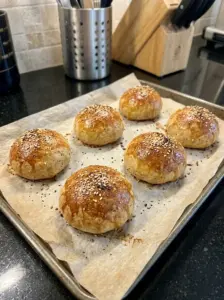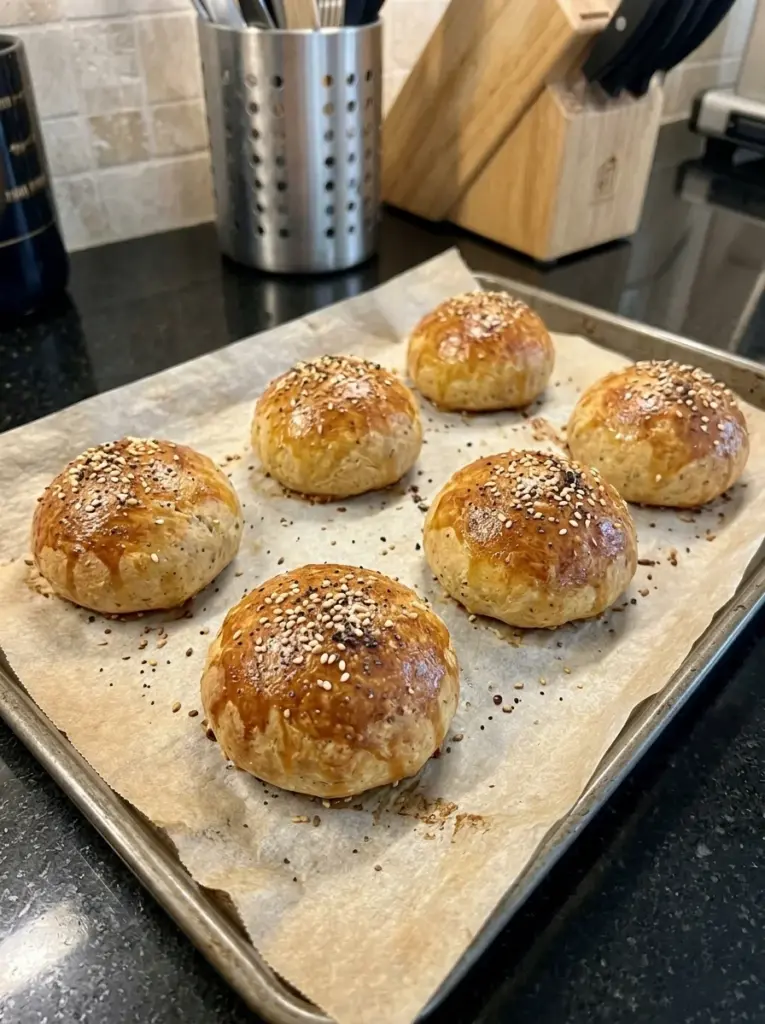
Thick Greek yogurt, self-rising flour, and an egg come together in these simple homemade bread rolls. The yogurt adds a gentle tang and moisture, while the self-rising flour helps the rolls puff in the oven without yeast. A little beaten egg goes into the dough, with the rest brushed over the tops for a golden finish.
There is no yeast-proofing period or mixer required. Stir the dough, let it rest briefly so the flour can absorb moisture, then shape into six small rounds and bake. The result is a tender, fairly close-textured roll that is especially pleasant warm or lightly toasted.
These are quick bread rolls rather than traditional yeast rolls. Expect a slightly denser, biscuit-like crumb, not a stretchy, airy bakery bun. Greek yogurt boosts the protein compared with an otherwise similar plain quick dough, but each small roll contains a modest amount; the exact total depends on your yogurt and flour.
Recipe at a Glance
- Prep time: About 10 minutes
- Dough rest: 5 minutes
- Bake time: About 22–28 minutes
- Cooling time: 10 minutes for warm serving; longer before sandwich slicing
- Total time: About 45–55 minutes
- Yield: 6 small rolls
- Equipment: Mixing bowl, fork, spatula, pastry brush, and baking sheet
This suggested formula was developed from the dish title and has not been kitchen-tested. Greek yogurt varies significantly in thickness, so use the dough cues below rather than adding a large quantity of extra flour automatically.
Why You’ll Love These Rolls
- Three main ingredients: Yogurt, self-rising flour, and egg form the dough and finish.
- No yeast rise: Baking powder in the flour provides the lift.
- Easy mixing: A bowl and spoon are enough.
- A small batch: Six rolls are convenient for a meal or a few sandwiches.
- Flexible serving: Pair with soup, toast for breakfast, or use for small filled rolls.
- Straightforward preparation: A brief rest makes the soft dough easier to portion.
What Kind of Rolls Are These?
These rolls use self-rising flour rather than yeast. That flour already contains baking powder and salt, which is why the ingredient list can stay short.
The egg is divided between the dough and the tops. Mixing a small amount into the dough adds richness and structure; reserving the rest gives a glossy finish without adding a fourth main ingredient.
This is a wheat-based recipe. The yogurt does not make it gluten-free, and the flour means it should not automatically be labeled low-carb. The title’s protein emphasis comes from using Greek yogurt, not from protein powder or an unusually large amount of protein in a single small roll.
Ingredients
- 1 cup plain, thick Greek yogurt
- 1½ cups self-rising flour, spooned and leveled, plus a little of the same flour for shaping if needed
- 1 large egg, beaten and divided
Use parchment paper on the baking sheet to avoid needing oil for the pan.
Ingredient Notes
Greek yogurt: Use a thick, strained plain yogurt. Pour off any liquid sitting on top before measuring. Nonfat, low-fat, or full-fat yogurt can be used, but protein content, richness, and moisture differ. Regular unstrained yogurt is usually too loose for the same proportions.
Self-rising flour: This is essential to the three-ingredient version because it combines flour, leavening, and salt. Check the package and use a product intended for this purpose. Plain all-purpose flour alone will not provide the required lift. Flour brands and storage age affect performance, so use a fresh product.
Egg: Beat it in a small bowl until the white and yolk are evenly combined. Measure 2 tablespoons into the yogurt and reserve the rest for brushing. Keeping the amount added to the dough consistent is more useful than dividing by eye.
Extra shaping flour: Use the same flour sparingly. A sticky dough often needs a short rest and lightly floured hands rather than several extra spoonfuls of flour mixed through it.
How to Make Greek Yogurt Bread Rolls
1. Prepare the Oven and Tray
Heat the oven to 375°F and line a baking sheet with parchment rated for that temperature. Set the tray aside while mixing.
Beat the egg in a small bowl. Keep a clean brush ready for the reserved portion, and discard any unused egg wash after brushing.
2. Combine Yogurt and Egg
Add the yogurt to a medium bowl and stir until smooth. Mix in 2 tablespoons of beaten egg. Reserve the remaining egg for the tops.
This small addition enriches the dough without adding the full egg’s moisture to the bowl.
3. Add the Flour
Stir in the self-rising flour with a spoon or spatula until a shaggy, soft dough forms. Scrape the bottom so no dry pockets remain.
Let stand for 5 minutes. The flour will absorb moisture and the dough may become easier to handle. It should be soft and slightly sticky, not pourable and not dry or crumbly.
If it is still too wet to gather, add flour one tablespoon at a time, stopping as soon as it can be portioned. If it is dry, press and fold gently to bring it together; a teaspoon of additional yogurt can help if genuinely needed.
4. Portion and Shape
Lightly flour your hands and a small area of the work surface. Gather the dough gently, then divide into six equal portions.
Shape each into a rounded mound about 2½ inches wide, keeping the handling brief. Place on the tray with about 2 inches between rolls. Avoid pressing them into very flat discs or repeatedly kneading for a perfectly smooth surface.
The rolls may look rustic. That is preferable to incorporating excessive flour merely to remove every bit of stickiness.
5. Brush the Tops
Brush a thin layer of reserved beaten egg over each roll. Let excess egg drip off the brush first so it does not pool around the bases.
The egg wash encourages color, but the rolls should still be checked for a set interior rather than judged only by their shiny tops.
6. Bake
Bake for about 22–28 minutes, until puffed and golden. Begin checking near the earlier end, since roll size and yogurt moisture affect timing.
The centers should no longer look like wet dough. If using a thermometer, around 195–205°F is a useful texture guide for a fully set bread-like center, along with the appearance and feel of the rolls. A little moist crumb is different from raw sticky dough.
If the tops brown too quickly, tent loosely with foil and continue baking. Very large rolls need longer, which is why dividing evenly helps.
7. Rest Before Serving
Leave on the baking sheet for about 5 minutes, then transfer to a rack. Allow another 5–10 minutes before serving warm.
For sandwich slicing, let them cool more completely so the crumb has time to firm. Use a serrated knife and avoid pressing down hard.
Tips for a Tender Crumb
Start with thick yogurt. Thin yogurt forces more flour into the formula and changes both yield and texture.
Measure flour lightly. Packed cups can produce dry rolls before you have even begun shaping.
Give the rest time to work. Assess the dough after five minutes instead of adding flour immediately.
Handle gently. These do not need a yeast-dough kneading session. Mix enough to combine and shape without repeated working.
Keep the portions similar. Even rolls bake more predictably than a tray with several different sizes.
Expect a quick-bread texture. These are tender, substantial rolls rather than feather-light yeast buns. Toasting suits their close crumb particularly well.
Troubleshooting
| Problem | Likely cause | Helpful adjustment |
|---|---|---|
| Dough is very wet | Thin yogurt or excess egg added | Rest briefly, then add flour a tablespoon at a time only as needed. |
| Dough is dry | Packed flour or unusually thick yogurt | Add a teaspoon of yogurt and gather gently. |
| Rolls are dense | Too much flour, excessive handling, or weak leavening | Measure lightly, handle briefly, and use fresh self-rising flour. |
| Centers seem gummy | Underbaking or cutting while hot | Bake until set and allow cooling before slicing. |
| Tops brown too early | Egg wash coloring before center sets | Tent loosely and continue baking. |
| Rolls spread widely | Dough too loose or portions flattened | Use thick yogurt and shape as mounds rather than discs. |
| Rolls rise unevenly | Unequal portions or uneven shaping | Divide consistently and leave space on the tray. |
Variations
The base recipe uses three ingredients. The following additions are optional variations and increase that count.
Everything-Seasoned Tops
Sprinkle a little everything bagel seasoning over the egg-washed tops. Use a light hand because the self-rising flour already contains salt.
Sesame Rolls
Add sesame seeds after brushing with egg. They stick more readily to the wet surface and give a toasted finish.
Cheddar Version
Fold a small amount of shredded cheddar into the dough. Cheese changes moisture, salt, and browning, so start modestly and check the centers carefully.
Herb Rolls
Add a small pinch of dried oregano or thyme with the flour. Keep the amount restrained so it complements rather than dominates the yogurt flavor.
Smaller Dinner Rolls
Divide into eight smaller portions and begin checking earlier. Their bake time will differ from the six-roll version; use set centers and golden tops as cues.
What to Serve with Them
Serve warm alongside soup, stew, or a salad. A thin spread of butter is pleasant, though it is an optional serving addition rather than part of the three-ingredient dough.
For breakfast, split and toast a cooled roll, then add an egg, cottage cheese, or your preferred spread. For lunch, fill with chicken, turkey, tuna salad, or roasted vegetables.
These are small rolls, so keep sandwich fillings proportionate. Light toasting strengthens the cut surfaces and adds contrast to creamy fillings.
Storage and Freezing
For convenient short-term storage, cool the rolls, place in a covered container, and refrigerate for up to 4 days. Let steam escape before sealing so the surfaces do not become damp. The crumb will firm as it chills and is often more pleasant after warming or toasting.
Freeze fully cooled rolls in a freezer-safe bag for up to 2 months for best quality. Wrap individually if you want to remove one at a time. Thaw in the refrigerator or warm gently from frozen, allowing extra time for the center.
If adding meat, egg salad, or another perishable filling, store the assembled sandwich according to that filling’s requirements. Do not rely on the plain roll’s storage guidance for a filled sandwich.
Reheating
Warm thawed rolls in a 300°F oven for about 8–12 minutes, checking the center and covering loosely if the crust becomes too firm. Smaller rolls may need less time.
Split and toast for a crisper surface, or microwave briefly for a softer result. Extended microwaving can make the crumb chewy, so use short intervals and eat soon after warming.
Frequently Asked Questions
Are these truly three ingredients?
The basic recipe uses Greek yogurt, self-rising flour, and one egg. Self-rising flour is a prepared blend containing flour, leavening, and salt. Optional toppings and sandwich fillings add more ingredients.
Can I use all-purpose flour?
Not on its own. For an alternative, combine 1½ cups all-purpose flour with 2¼ teaspoons baking powder and about ¼ teaspoon fine salt. This is a separate homemade flour blend and increases the ingredient count; results may differ from packaged self-rising flour.
Can I leave off the egg wash?
Yes, while still adding the measured 2 tablespoons of beaten egg to the dough. The unbrushed tops will be less glossy. Discard the unused raw egg rather than adding it to the dough at the last moment.
Can I omit the egg entirely?
That changes both structure and moisture. A two-ingredient flour-and-yogurt roll is a different formula and should not be assumed to behave identically to this one.
Can I use regular yogurt?
Regular yogurt is usually thinner. Thick Greek yogurt is the intended ingredient, and substituting a looser product may require considerably more flour.
Why are my rolls more like biscuits than yeast buns?
Baking powder lifts the dough quickly, but it does not create the same structure or fermented flavor as yeast. A closer, tender crumb is expected.
How much protein is in each roll?
As an illustration, if the yogurt supplies about 20–24 grams per cup and the flour about 18–21 grams for the measured amount, the dough and light egg wash may give roughly 7–9 grams per roll when divided into six. Products differ, and not all the reserved egg is necessarily used. Calculate from your labels for a more precise value. These are modest protein portions, not 20-gram protein buns.
Can I double the recipe?
Yes. Mix in a large bowl and use two trays if needed. Keep roll size consistent and allow space between them. If baking two trays together, follow your oven’s guidance and rotate if necessary for even color.
Recipe Card
3-Ingredient High-Protein Greek Yogurt Bread Rolls
Small no-yeast rolls made with thick Greek yogurt, self-rising flour, and a divided egg for the dough and golden tops.
Prep: 10 minutes | Rest: 5 minutes | Bake: 22–28 minutes | Cool: About 10 minutes
Total: About 45–55 minutes | Yield: 6 small rolls
Ingredients
- 1 cup thick plain Greek yogurt
- 1½ cups self-rising flour, spooned and leveled, plus a little for shaping if needed
- 1 large egg, beaten and divided
Instructions
- Heat the oven to 375°F and line a baking sheet with parchment.
- Stir yogurt with 2 tablespoons beaten egg. Reserve the remaining egg for brushing.
- Stir in flour until a soft, shaggy dough forms. Let rest for 5 minutes.
- Adjust only if necessary with a little flour or a teaspoon of yogurt. Divide into six portions with lightly floured hands.
- Shape rounded mounds about 2½ inches wide and arrange with space between them.
- Brush lightly with reserved egg, discarding any unused wash.
- Bake for 22–28 minutes, until puffed, golden, and set in the center. Tent with foil if the tops color too quickly.
- Rest briefly on the tray, then transfer to a rack. Serve warm after about 10 minutes of cooling, or cool fully before sandwich slicing.
Notes
- This suggested formula has not been kitchen-tested.
- Use thick Greek yogurt and self-rising flour; plain flour alone will not provide lift.
- Expect a close, quick-bread crumb rather than an airy yeast-bread texture.
- Refrigerate cooled rolls for up to 4 days or freeze for up to 2 months for best quality.
- Approximate nutrition: about 140–175 calories and 7–9 grams protein per roll, depending on yogurt, flour, egg wash used, and added shaping flour. Calculate from the actual ingredients for greater precision.
Final Thoughts
Thick yogurt, lightly measured flour, and gentle handling keep these rolls simple to prepare. Let the dough rest before adjusting it, bake the centers thoroughly, and cool before slicing for sandwiches. They make a practical small batch when you want warm homemade rolls without waiting for yeast dough to rise.

3-Ingredient High-Protein Greek Yogurt Bread Rolls
Ingredients
- 1 cup thick plain Greek yogurt
- 1½ cups self-rising flour, spooned and leveled, plus a little for shaping if needed
- 1 large egg, beaten and divided
Instructions
- Heat the oven to 375°F and line a baking sheet with parchment.
- Stir yogurt with 2 tablespoons beaten egg. Reserve the remaining egg for brushing.
- Stir in flour until a soft, shaggy dough forms. Let rest for 5 minutes.
- Adjust only if necessary with a little flour or a teaspoon of yogurt. Divide into six portions with lightly floured hands.
- Shape rounded mounds about 2½ inches wide and arrange with space between them.
- Brush lightly with reserved egg, discarding any unused wash.
- Bake for 22–28 minutes, until puffed, golden, and set in the center. Tent with foil if the tops color too quickly.
- Rest briefly on the tray, then transfer to a rack. Serve warm after about 10 minutes of cooling, or cool fully before sandwich slicing.