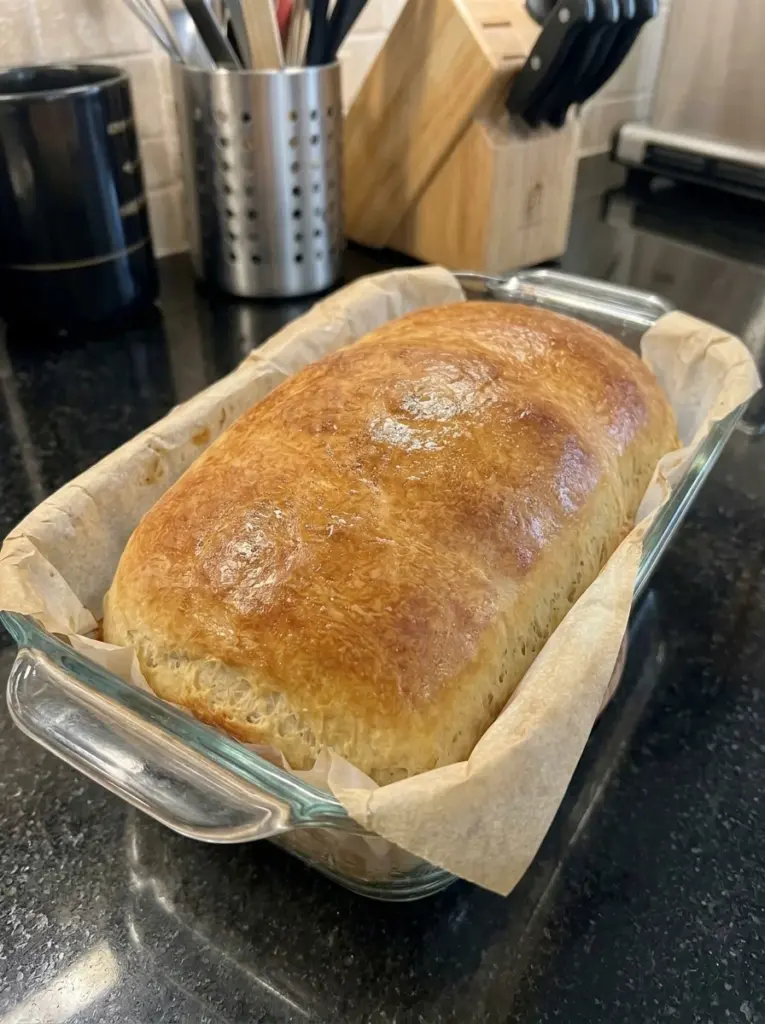
A little mashed potato gives this homemade sandwich loaf a tender crumb and a comforting, lightly buttery flavor. Soft & Fluffy No-Knead Potato Bread is made with a bowl and a sturdy spoon, then gently shaped into a loaf after its first rise. There is no stand mixer or traditional kneading session required.
The dough is deliberately soft and sticky. Thorough mixing and time to rest help it become more cohesive, while the potato adds moisture to the finished bread. The loaf is suited to toast, sandwiches, or a simple slice with butter and jam.
For a consistent result, use plain mashed potato without added butter, milk, or seasoning. Rich leftover dinner mash can contain very different amounts of liquid and fat, which makes it harder to predict how this dough will behave.
Recipe at a Glance
- Hands-on preparation: About 20 minutes with prepared potato
- First rise: About 60–90 minutes
- Second rise: About 35–60 minutes
- Bake time: About 35–45 minutes
- Cooling time: About 1–1½ hours
- Total time: About 3½–5 hours, including cooling
- Additional preparation: About 25–35 minutes to cook and cool potato if needed
- Yield: One 9 × 5-inch loaf, about 12 slices
- Equipment: Mixing bowl, sturdy spoon, spatula or dough scraper, loaf pan, and wire rack
This is a suggested formula developed from the dish title and has not been kitchen-tested. Potato moisture, flour measurement, and room temperature affect the dough, so follow the texture and rising cues rather than the timing alone.
Why You’ll Love This Bread
- A tender potato-enriched crumb: Plain mashed potato adds moisture and softness.
- No mixer needed: Mix firmly with a spoon and shape gently by hand.
- Simple ingredients: Flour, yeast, milk, butter, and a small amount of potato make the dough.
- Useful for everyday meals: Serve as toast, sandwich bread, or a buttered side.
- Freezer-friendly slices: Freeze part of the cooled loaf for another day.
- A soft crust option: A light butter brushing after baking gives the crust a tender finish.
What Is No-Knead Potato Bread?
Potato bread is wheat bread enriched with cooked potato. The potato does not replace the flour or make the loaf gluten-free. Its starch and moisture influence the crumb, creating a different result from a plain flour-and-water loaf.
This version uses instant yeast and two rising periods. No-knead means you skip repeated hand kneading, but you still need to stir the dough thoroughly and shape it before its final rise.
Expect a soft sandwich-style loaf rather than a crusty artisan bread. It may not have the highly elastic, shreddable crumb of a thoroughly kneaded enriched dough, and its height will depend on shaping, proofing, and flour choice.
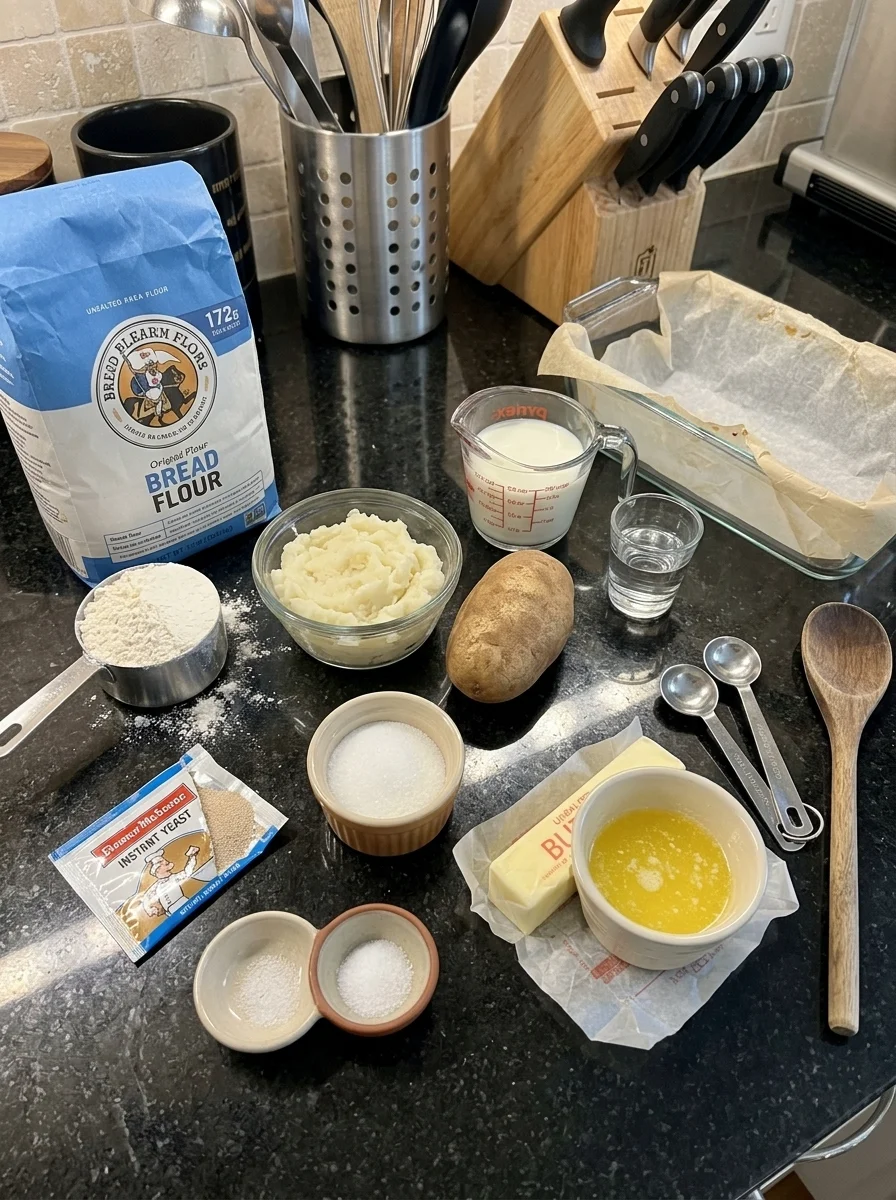
Ingredients
For the Dough
- 3¼ cups bread flour or all-purpose flour, spooned and leveled, plus a little for shaping
- ½ cup plain mashed potato, cooled to room temperature and firmly measured
- ¾ cup whole milk, lukewarm
- ¼ cup water, lukewarm, plus a little more only if needed
- 2¼ teaspoons instant yeast, one standard packet
- 2 tablespoons granulated sugar
- 1¼ teaspoons fine salt
- 3 tablespoons unsalted butter, melted and slightly cooled
Optional Finish
- 1 tablespoon melted butter, for brushing after baking
- A little butter or cooking spray, for greasing the pan
Ingredient Notes
Potato: A floury potato such as a russet is a useful starting point. Peel, cut into chunks, simmer until tender, and drain thoroughly. Return briefly to the warm, empty pan off the heat so surface moisture can evaporate, then mash until smooth. Cool before measuring. Use plain potato, not mash containing cream, cheese, garlic, or other additions.
Flour: Bread flour provides a little more structure and chew; all-purpose flour can give a softer result. Both absorb moisture differently. Spoon flour into the measuring cup and level it rather than packing it in. A heavily scooped cup can make the dough unnecessarily firm.
Milk and water: The milk enriches the loaf, while water helps keep the liquid balance manageable. Use lukewarm liquid, roughly 90–100°F, or follow your yeast manufacturer’s guidance. The potato should not be hot when it meets the yeast.
Instant yeast: Mix directly into the ingredients; there is no required separate proofing step. Check freshness and storage instructions. Active dry yeast can be used according to its package directions, with possible changes in rising time.
Sugar: Two tablespoons provide a gentle sweetness and help the loaf brown. It should work with savory fillings as well as sweet toppings.
Salt: Fine salt distributes evenly through the dough. Coarse salts vary in volume, so an equal spoonful may not provide the same saltiness.
Butter: Melt and cool until just warm. Very hot butter can affect yeast activity. The optional finishing tablespoon is additional to the three tablespoons in the dough.
Preparing the Potato
Cook a small peeled potato, or enough to give you ½ cup of smooth mash. The exact number of potatoes is less useful than the measured final amount because their size and moisture vary.
Drain very well and mash without adding liquid. Break up lumps before cooling; large chunks are harder to distribute through the dough. Measure the mash once cool, pressing it into the cup without leaving large air pockets.
If you prepare the potato ahead, refrigerate it promptly in a covered container. Let the measured portion lose its refrigerator chill before mixing, or expect the dough to take longer to rise. Do not leave cooked potato out for an extended period simply to warm it.
Instant potato flakes are not a direct dry substitute for the same volume of cooked mash. Their water needs differ. This formula is written for prepared, plain mashed potato.
How to Make No-Knead Potato Bread
1. Combine the Potato and Liquids
Place the cooled mashed potato in a large mixing bowl. Stir in the milk and water until the mash is loosened and mostly evenly dispersed. Add the sugar, instant yeast, and cooled melted butter.
Small soft potato flecks are acceptable, but break up obvious lumps before adding flour.
2. Add Flour and Salt
Add the flour and salt. Stir firmly with a sturdy spoon until no dry flour remains, scraping the bottom and sides. Continue mixing for about 1–2 minutes to form a cohesive mass.
The dough should be soft, thick, and sticky. It should not pour like batter, but it also should not feel dry or easy to knead without any sticking.
If dry flour remains and the dough will not come together, add water one teaspoon at a time. If the dough seems unusually loose, let it rest for 10 minutes before deciding whether it needs a tablespoon of flour. Potato moisture makes small adjustments more useful than large additions.
3. Let the Dough Rise
Cover the bowl to prevent a dry surface from forming. Let stand in a mildly warm, draft-free place for about 60–90 minutes, or until roughly doubled.
A cool dough may need longer. Use its visible expansion rather than the clock alone. Avoid placing the bowl against a heater or in a hot oven, which can warm it unevenly and make proofing harder to judge.
4. Prepare the Pan and Shape
Grease a 9 × 5-inch loaf pan. Lightly flour the work surface and your hands, then ease the dough out with a scraper.
Gently pat into a rectangle with a short side about as wide as the pan. Roll into a log, pinch the seam, and place seam-side down in the pan. Use the scraper to help lift sticky edges rather than incorporating handfuls of extra flour.
The shaping does not need to be perfect. Aim for an even log without aggressively pressing out every air bubble.
5. Allow the Second Rise
Cover loosely and let rise for about 35–60 minutes, until visibly puffy and approaching the pan rim. Depending on your pan and dough, the center may rise slightly higher.
A gentle fingertip press should leave an indentation that returns slowly partway. If the dough springs back immediately, allow a little more time. If it looks fragile and begins to sink, bake promptly and handle gently.
Meanwhile, heat the oven to 350°F with a rack near the center.
6. Bake
Bake for about 35–45 minutes, checking toward the earlier end. The top should be golden and the loaf should have a set structure. If the top colors too quickly, tent loosely with foil and continue baking.
An instant-read thermometer inserted into the center should read approximately 195–205°F as a doneness guide. Use the temperature along with the loaf’s structure rather than relying on crust color alone. A potato-enriched loaf can look browned before the interior has finished setting.
7. Cool on a Rack
Brush with the optional finishing butter while hot. Let rest in the pan for about 10 minutes, then turn out carefully onto a wire rack.
Allow about 1–1½ hours to cool, or until the center no longer feels warm. Slicing too soon can compress the crumb and make it seem gummy even when the loaf has baked properly.
Cut with a serrated knife using a gentle sawing motion. Warm individual slices afterward if you prefer warm bread.
Tips for a Soft, Sliceable Loaf
Keep the potato measured. Extra mash changes both moisture and structure. Do not add the rest of a potato just because a small amount remains.
Mix thoroughly. No-knead dough still needs all the flour hydrated and the potato evenly dispersed.
Resist excess flour. Soft dough is expected. A scraper and lightly floured hands make shaping easier without turning the loaf heavy.
Judge both rises visually. Room and ingredient temperature change the schedule. The second rise matters for a lighter crumb, but letting it go too far can weaken the loaf.
Check the center. Browning alone is not enough to determine doneness, especially with milk and sugar in the dough.
Cool completely before storing. Wrapping warm bread traps steam and can create a damp surface.
Troubleshooting
| Problem | Likely cause | Helpful adjustment |
|---|---|---|
| Dough is too sticky to lift neatly | Soft dough or moist potato | Rest briefly, use a scraper, and flour hands lightly before adding more flour. |
| Dough is stiff | Packed flour or dry mash | Add water a teaspoon at a time during mixing. |
| Rise takes longer than expected | Cool ingredients or room | Give more time in a mildly warm spot and check yeast freshness next time. |
| Loaf is dense | Excess flour, limited rise, or weak structure | Measure carefully, mix thoroughly, and allow visible expansion. |
| Center is gummy | Underbaking, excess potato, or early slicing | Check doneness and cool fully; keep mash at the measured amount. |
| Top sinks | Overproofing or an unset center | Watch the second rise and verify baking doneness. |
| Top browns before center finishes | Enriched dough browning quickly | Tent with foil and continue baking. |
| Crust feels damp | Bread stayed in the pan or was wrapped warm | Turn out after the short rest and cool on a rack. |
Variations
Lightly Herbed Potato Bread
Add a small amount of dried rosemary or thyme with the flour. Keep the quantity restrained so the loaf remains useful for sandwiches.
Sesame-Topped Loaf
Brush the risen dough lightly with milk and sprinkle with sesame seeds before baking. Apply gently to avoid deflating the dough. The milk and seeds are additional ingredients.
Garlic Butter Serving Style
Toast slices and brush with a little prepared garlic butter just before eating. This gives a garlic-bread option without changing the dough formula.
Potato Dinner Rolls
Divide the dough into small portions and arrange in a greased baking dish with room to expand. Proof until puffy and bake at 350°F, beginning to check substantially earlier than the full loaf. Roll size and pan spacing determine the final baking time.
Whole-Wheat Experiment
A small partial substitution can give a heartier loaf, but whole-wheat flour absorbs liquid differently and may reduce the lightness. Replacing all the flour is not a direct equivalent to this formula.
Ways to Serve Potato Bread
Use fully cooled slices for turkey sandwiches, grilled cheese, or peanut butter and jam. The tender crumb also works well toasted with eggs or a spoonful of fruit preserves.
For dinner, serve slices alongside soup or stew. Day-old bread can be toasted, cut into croutons, or used in French toast if the slices are sturdy enough to absorb the custard.
Because this is a soft loaf, use a gentle hand when adding substantial sandwich fillings. Slightly toasted slices provide more support and a pleasant contrast to creamy fillings.
Storage and Freezing
Once completely cool, keep the plain loaf in a bread bag or airtight container for up to 2–3 days in a cool, dry kitchen. Humidity and warmth affect storage life; freeze sooner if you will not finish it.
Refrigeration can speed staling, so freezing is generally a more useful choice for longer storage. Slice the loaf, wrap portions well, and freeze in a freezer-safe bag for up to 2 months for best quality.
Thaw wrapped slices at room temperature or toast directly from frozen. A toaster oven is helpful if delicate slices are difficult to remove from an upright toaster. Warm only the amount you plan to eat to avoid drying the rest of the loaf.
Discard the loaf if mold appears rather than cutting away only the visible spot. Store bread with perishable fillings according to the filling’s requirements, not the plain loaf guidance.
Frequently Asked Questions
Can I use leftover mashed potatoes?
Only if they are plain and appropriately stored. Mash containing milk, butter, cheese, or seasonings changes the formula. Starting with freshly prepared plain mash gives you more control over the result.
Can I use potato cooking water?
Plain, unsalted potato cooking water can replace the measured quarter cup of water after cooling to lukewarm. Its starch content varies, so the dough may behave slightly differently. Do not use strongly salted or seasoned cooking liquid.
Is potato bread gluten-free?
No. This recipe is made primarily with wheat flour. Potato adds moisture and flavor but does not replace the flour or remove gluten.
Why is the dough so sticky?
The recipe uses a soft dough and moisture-rich potato. Stickiness alone does not mean it needs more flour. Give the flour time to hydrate and use a scraper for shaping.
Can I use active dry yeast?
Follow your product’s directions for dissolving or adding it. Use part of the measured liquid if a separate dissolving step is needed. Rising time may differ from instant yeast.
Can I make it dairy-free?
Unsweetened plant milk and a suitable dairy-free butter alternative can be tried, but flavor, moisture, and browning may change. The base recipe is written for whole milk and butter.
Does it taste strongly of potato?
With half a cup of plain mash, the potato is intended mainly to influence tenderness. Expect a mild enriched-bread flavor rather than the taste of seasoned mashed potatoes.
How many calories are in a slice?
Using typical ingredient values, the loaf may contain roughly 2,000–2,150 calories before the optional finishing butter. Cut into twelve slices, that is approximately 165–180 calories per slice. These are estimates; flour measurement, potato moisture, and ingredient brands change the result.
Recipe Card
Soft & Fluffy No-Knead Potato Bread
A soft yeast-raised sandwich loaf enriched with plain mashed potato, milk, and butter, mixed with a spoon and gently shaped by hand.
Prep: 20 minutes | Rise: 1 hour 35 minutes–2½ hours | Bake: 35–45 minutes | Cool: 1–1½ hours
Total: About 3½–5 hours with prepared potato
Yield: One 9 × 5-inch loaf, about 12 slices
Ingredients
- 3¼ cups bread flour or all-purpose flour, spooned and leveled
- ½ cup plain mashed potato, cooled and firmly measured
- ¾ cup lukewarm whole milk
- ¼ cup lukewarm water, plus small adjustments if needed
- 2¼ teaspoons instant yeast
- 2 tablespoons granulated sugar
- 1¼ teaspoons fine salt
- 3 tablespoons unsalted butter, melted and slightly cooled
- Extra flour, for shaping
- Butter or cooking spray, for the pan
- 1 tablespoon melted butter, optional, for finishing
Instructions
- Stir the potato with milk and water until mostly evenly dispersed. Add yeast, sugar, and cooled melted butter.
- Add flour and salt. Stir until no dry flour remains, then mix firmly for about 1–2 minutes. The dough should be cohesive, soft, and sticky.
- Cover and let rise for about 60–90 minutes, until roughly doubled, allowing more time if needed.
- Grease a 9 × 5-inch loaf pan. Turn dough onto a lightly floured surface, pat into a rectangle, roll into a log, and place seam-side down in the pan.
- Cover loosely and let rise for about 35–60 minutes, until puffy and approaching the rim. Preheat the oven to 350°F.
- Bake for 35–45 minutes, tenting with foil if needed. The center should be set and read approximately 195–205°F as a doneness guide.
- Brush with optional butter. Rest in the pan for 10 minutes, then transfer to a rack and cool fully before slicing.
Notes
- This suggested formula has not been kitchen-tested.
- Use plain mash without added milk, butter, or seasoning. Allow additional time if cooking potato specifically for the recipe.
- Adjust flour and water cautiously; potato moisture varies.
- Rising times are estimates. Watch the dough rather than the clock alone.
- Store cooled bread wrapped for up to 2–3 days in a cool kitchen or freeze slices for up to 2 months for best quality.
- Estimated calories: about 165–180 per twelfth of the loaf before optional finishing butter. Calculate from your ingredients for greater precision.
Final Thoughts
Plain, well-drained potato and a soft dough are the starting points for this loaf. Mix thoroughly, allow both rises to develop, and let the baked bread cool before slicing. With those details in place, this potato-enriched bread can become a useful loaf for toast, sandwiches, and buttered slices alongside dinner.
Print
Soft & Fluffy No-Knead Potato Bread
- Total Time: About 3½–5 hours with prepared potato
Ingredients
- 3¼ cups bread flour or all-purpose flour, spooned and leveled
- ½ cup plain mashed potato, cooled and firmly measured
- ¾ cup lukewarm whole milk
- ¼ cup lukewarm water, plus small adjustments if needed
- 2¼ teaspoons instant yeast
- 2 tablespoons granulated sugar
- 1¼ teaspoons fine salt
- 3 tablespoons unsalted butter, melted and slightly cooled
- Extra flour, for shaping
- Butter or cooking spray, for the pan
- 1 tablespoon melted butter, optional, for finishing
Instructions
- Stir the potato with milk and water until mostly evenly dispersed. Add yeast, sugar, and cooled melted butter.
- Add flour and salt. Stir until no dry flour remains, then mix firmly for about 1–2 minutes. The dough should be cohesive, soft, and sticky.
- Cover and let rise for about 60–90 minutes, until roughly doubled, allowing more time if needed.
- Grease a 9 × 5-inch loaf pan. Turn dough onto a lightly floured surface, pat into a rectangle, roll into a log, and place seam-side down in the pan.
- Cover loosely and let rise for about 35–60 minutes, until puffy and approaching the rim. Preheat the oven to 350°F.
- Bake for 35–45 minutes, tenting with foil if needed. The center should be set and read approximately 195–205°F as a doneness guide.
- Brush with optional butter. Rest in the pan for 10 minutes, then transfer to a rack and cool fully before slicing.
- Prep Time: 20 minutes | Rise: 1 hour 35 minutes–2½ hours | Bake: 35–45 minutes | Cool: 1–1½ hours