
Introduction
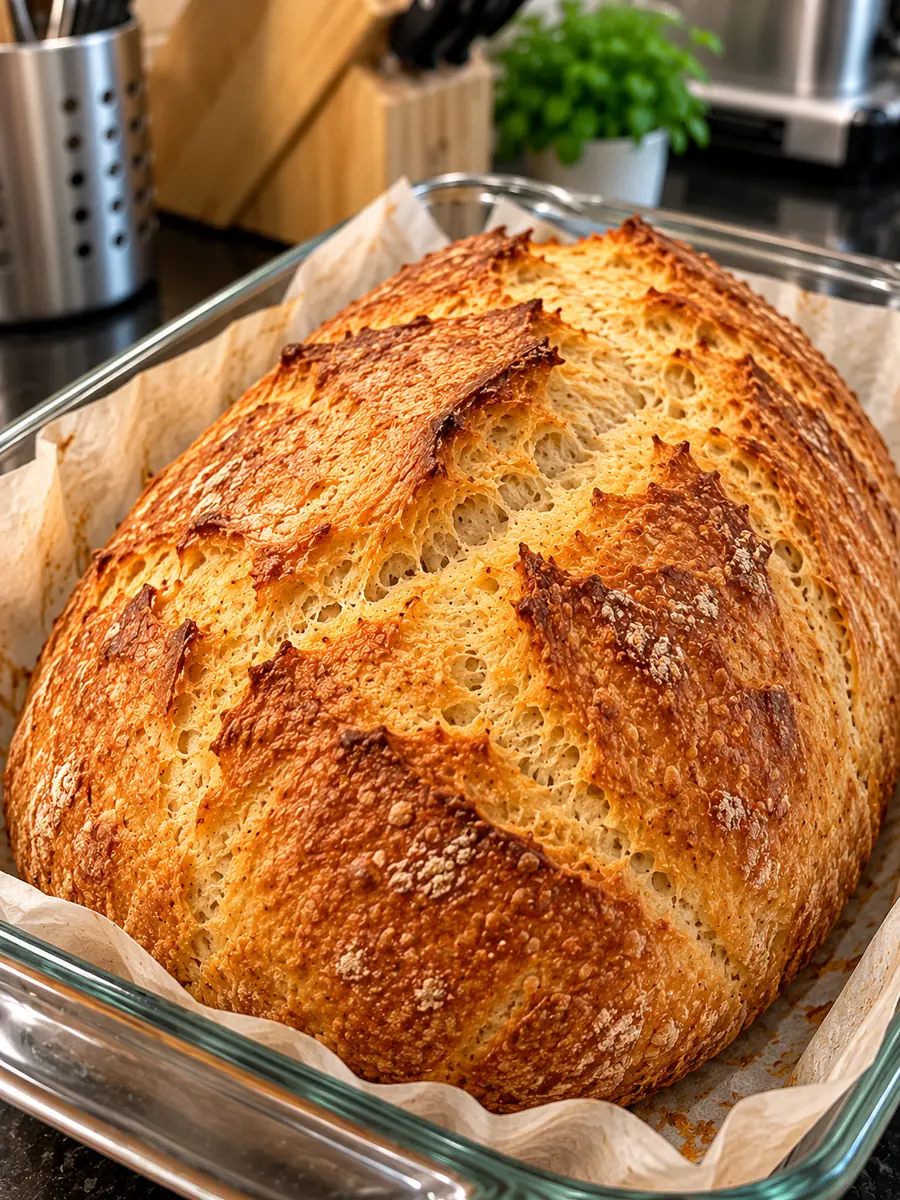
Crusty No-Knead Italian Bread turns four everyday ingredients into a round loaf with a crackly shell, a chewy interior, and plenty of character. A long overnight rise develops the dough while you leave it alone, and a covered Dutch oven traps the loaf’s own steam during the first part of baking.
This is an Italian-style table bread suited to soups, pasta dinners, and thick toast. Expect an irregular crumb with modest holes rather than the very large openings of ciabatta. The dough feels sticky at first, but folding and gentle shaping make it manageable.
Plan on about 21 hours and 55 minutes using the longer rise estimate, including cooling, with roughly 20 minutes of active preparation. Most of that schedule is unattended; room temperature and the dough’s appearance determine when you move forward.
Why You’ll Love This Recipe
The ingredient list stays short: flour, water, salt, and yeast. There is no starter to maintain, and the small yeast quantity suits an overnight schedule without adding a separate preferment.
A sturdy spoon handles the mixing. The long rest allows the flour to hydrate and the dough to develop structure with very little handling afterward.
The Dutch oven creates a humid baking space around the loaf. Removing its lid later lets the surface brown and firm into a substantial crust.
One round loaf makes 12 generous slices. Serve some with dinner, then freeze the remainder in portions that can go directly into the toaster.
Ingredients
Weigh the flour when possible. The dough contains 500 grams; reserve the remaining 20 grams for shaping. Keeping that portion separate helps prevent adding enough extra flour to make the loaf dry.
Cool room-temperature water supports the slow rise. Fine sea salt distributes readily, and instant yeast mixes directly into the flour. The measured list includes everything needed for the base loaf. Parchment provides the nonstick surface without greasing the pot.
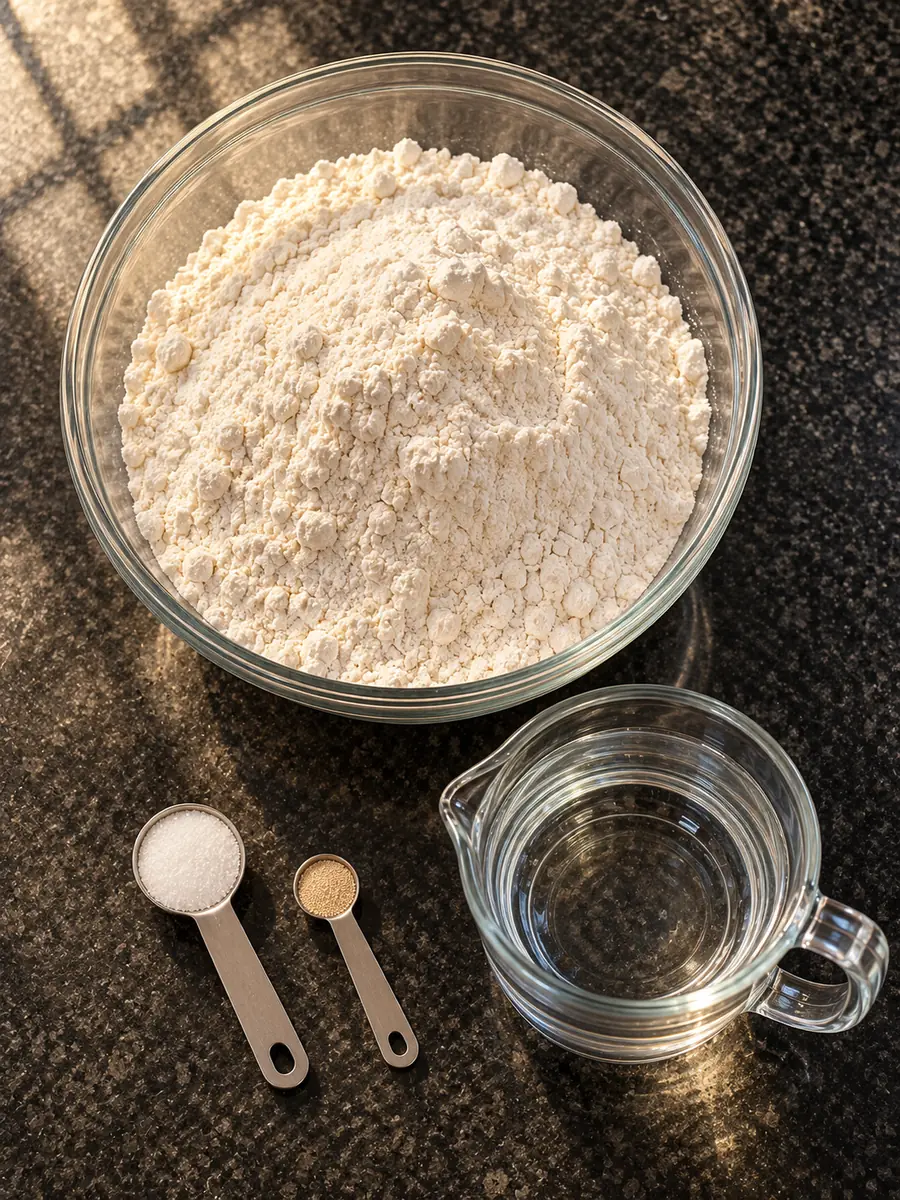
- 4 cups plus 2 tablespoons bread flour (520 g), divided: 500 g for dough and 20 g for shaping
- 1 1/2 cups plus 1 tablespoon water (375 g), at cool room temperature
- 1 3/4 teaspoons fine sea salt (10 g)
- 1/4 teaspoon instant yeast (1 g)
Ingredient Notes and Substitutions
Bread flour gives this wet dough useful strength and a pleasantly chewy bite. Its protein content varies between brands, so the mixed dough may look slightly looser or firmer even when weighed accurately. Keep the formula unchanged initially and judge it after the flour has hydrated.
All-purpose flour is a cautious substitute by weight. It may produce a softer, more spreading dough and a less chewy loaf. Hold back 15 grams of the water initially, adding it only if needed to moisten all the flour; this changes the base formula.
Active dry yeast can be substituted cautiously at the same weight. Dissolve it in a small portion of the measured water before mixing, and expect the rise to vary. Avoid substituting an entire packet for the small quantity specified.
If using kosher salt, weigh 10 grams rather than matching the teaspoon measure. Crystal sizes differ considerably. Substantial whole-wheat substitutions require separate hydration and handling adjustments and are outside this base method.
How to Make Crusty No-Knead Italian Bread
- In a large bowl, whisk 500 g bread flour, fine sea salt, and instant yeast. Add the water and stir firmly with a sturdy spoon, scraping the bottom until no dry pockets remain. The dough should be sticky, shaggy, and too soft for ordinary hand kneading. Cover the bowl tightly.
- Allow 18 hours for bulk proofing at 65–70°F; start checking after 12 hours. The dough is ready when substantially expanded, dotted with bubbles, and webbed underneath when lifted with a spatula. Its top may flatten slightly, but it should retain visible bubbles rather than collapse into a thin puddle.
- Allow 20 minutes for the bench rest. Distribute the 20 g reserved bread flour over the work surface, dough, and your hands. Scrape out the dough, fold its edges inward, and cover with the inverted bowl for the rest. Then gently tuck the edges underneath into a round and place seam-side down on oven-safe parchment.
- Allow 60 minutes for the final proof, loosely covered with the inverted bowl. The round should look puffier and slowly recover from a gentle fingertip press. During the last 30 minutes, preheat the oven and a covered 5- to 6-quart Dutch oven, approximately 10 inches across inside, to 450°F. Remove the bowl before loading. Use a pot, lid, and knob rated for this temperature; preheat empty only if the manufacturer explicitly permits it. If empty preheating is prohibited, choose suitable cookware for this method.
- Bake for 45 minutes total at 450°F: 30 minutes covered, then 15 minutes uncovered. Immediately before loading, slash the top about 1/2 inch deep. Carefully lower the loaf into the hot pot using the parchment. The finished crust should be deeply golden, with a center temperature of 208°F. Use dry oven mitts, set the hot lid on a heatproof surface, and lift it away from your face to release steam. Use parchment rated for 450°F and trim excess paper.
- Cool for 90 minutes on a wire rack before slicing. Lift the loaf from the pot promptly, remove the parchment, and leave the bread uncovered so steam can escape. Cut with a serrated knife. Makes 12 servings, each one substantial slice, from one round loaf.
Expert Baking Tips
Choose a bowl with room for substantial expansion. A clear container makes the bubbles along the sides easier to see, while a tight cover keeps the dough’s surface from drying overnight.
Watch the dough more closely in a warm kitchen. If it reaches the described bubbly, expanded stage early, proceed with shaping instead of waiting for the longest estimate.
Use a dough scraper to lift sticky edges from the counter. Scraping preserves the dough’s shape and uses the allotted flour more efficiently than repeatedly coating your hands.
Select parchment rated for 450°F and trim away long overhanging corners. Keep it clear of heating elements, and follow the parchment manufacturer’s instructions for covered-pot baking.
Check that the pot, lid, and knob are rated for 450°F and empty preheating. Handle the lid with dry oven mitts; its appearance gives no indication of how hot it remains.
Aim for a deliberate, shallow slash with a sharp blade. A cut provides an opening for expansion, while repeated sawing can drag the soft dough and flatten its upper surface.
Common Mistakes to Avoid
Adding flour until the dough feels dry and easy to knead changes the loaf. This dough is supposed to cling to the spoon. Use the measured shaping flour and a scraper rather than trying to turn it into a firm sandwich-bread dough.
Treating the overnight window as a fixed deadline can lead to overfermentation. A very warm spot may push the dough past its best shaping stage. Look for expansion and bubbles, and avoid placing the bowl beside a heater or in a warm oven.
Pressing aggressively during shaping removes gas that the long rise created. Fold only enough to gather the dough and form a round; a perfectly taut surface is unnecessary.
Slicing while the center is hot can leave a compressed, tacky-looking crumb. Give the loaf its full rack cooling time, even when the crust already feels cool enough to touch.
Variations and Serving Ideas
For a rosemary variation, add 1 tablespoon finely chopped fresh rosemary during mixing. This is an addition to the base formula; distribute it through the flour so the flavor reaches the whole loaf.
For a briny version, fold in 1/2 cup well-drained, chopped olives during shaping. Pat them dry first and expect a slightly heavier loaf with pockets around the pieces. These additions change the dough and may affect proofing.
Serve plain slices alongside minestrone, tomato soup, or saucy beans. Toast leftover slices for bruschetta, or rub warm toast with a cut garlic clove and finish with olive oil at the table. Keep those serving additions separate from the bread formula.
Storage and Freezing
Once completely cool, keep the loaf cut-side down on a board for the remainder of the day. For overnight storage, place it in a paper bag or loosely wrap it in a clean towel. The exposed crust stays firmer, although the crumb gradually loses moisture.
For storage beyond two days, slice and freeze the bread in an airtight freezer bag for up to two months. Separate portions before freezing so you can remove only what you need. Refrigeration tends to make ordinary bread stale faster.
Toast frozen slices directly, checking as they warm because thickness affects the time needed. For unfrozen slices, toast just before serving. Refresh only the portion you plan to eat; repeated warming dries the crumb.
Frequently Asked Questions
Does no-knead mean I never handle the dough?
You still mix thoroughly and fold during shaping. The name means there is no extended kneading session; hydration and the long fermentation do much of the structural work.
Why is there so little yeast?
The dough has many hours to ferment. Adding much more yeast can make it rise too quickly for the overnight schedule and leave it difficult to shape.
Can I use a smaller Dutch oven?
A 5- to 6-quart pot gives this loaf room to expand. A much smaller vessel may restrict its shape. Check the interior dimensions and heat rating before starting.
Should I add water to the hot pot?
No. The covered pot captures moisture released by the dough. Added water is unnecessary for this method and can splash when it contacts the preheated vessel.
Why did my loaf spread?
Possible causes include overfermentation, weaker flour, or rough handling. Review the dough’s condition before shaping and use the full preheat so baking begins promptly after loading.
Will the crust stay crisp overnight?
It usually softens as moisture moves outward from the crumb. Loose storage helps, and toasting individual slices can restore some crispness before serving.
WP Tasty Recipe Card
PrintCrusty No-Knead Italian Bread
- Total Time: 1315 minutes
Ingredients
4 cups plus 2 tablespoons bread flour (520 g), divided: 500 g for dough and 20 g for shaping
1 1/2 cups plus 1 tablespoon water (375 g), at cool room temperature
1 3/4 teaspoons fine sea salt (10 g)
1/4 teaspoon instant yeast (1 g)
Instructions
In a large bowl, whisk 500 g bread flour, fine sea salt, and instant yeast. Add the water and stir firmly with a sturdy spoon, scraping the bottom until no dry pockets remain. The dough should be sticky, shaggy, and too soft for ordinary hand kneading. Cover the bowl tightly.
Allow 18 hours for bulk proofing at 65–70°F; start checking after 12 hours. The dough is ready when substantially expanded, dotted with bubbles, and webbed underneath when lifted with a spatula. Its top may flatten slightly, but it should retain visible bubbles rather than collapse into a thin puddle.
Allow 20 minutes for the bench rest. Distribute the 20 g reserved bread flour over the work surface, dough, and your hands. Scrape out the dough, fold its edges inward, and cover with the inverted bowl for the rest. Then gently tuck the edges underneath into a round and place seam-side down on oven-safe parchment.
Allow 60 minutes for the final proof, loosely covered with the inverted bowl. The round should look puffier and slowly recover from a gentle fingertip press. During the last 30 minutes, preheat the oven and a covered 5- to 6-quart Dutch oven, approximately 10 inches across inside, to 450°F. Remove the bowl before loading. Use a pot, lid, and knob rated for this temperature; preheat empty only if the manufacturer explicitly permits it. If empty preheating is prohibited, choose suitable cookware for this method.
Bake for 45 minutes total at 450°F: 30 minutes covered, then 15 minutes uncovered. Immediately before loading, slash the top about 1/2 inch deep. Carefully lower the loaf into the hot pot using the parchment. The finished crust should be deeply golden, with a center temperature of 208°F. Use dry oven mitts, set the hot lid on a heatproof surface, and lift it away from your face to release steam. Use parchment rated for 450°F and trim excess paper.
Cool for 90 minutes on a wire rack before slicing. Lift the loaf from the pot promptly, remove the parchment, and leave the bread uncovered so steam can escape. Cut with a serrated knife. Makes 12 servings, each one substantial slice, from one round loaf.
- Prep Time: 20 minutes
- Cook Time: 45 minutes