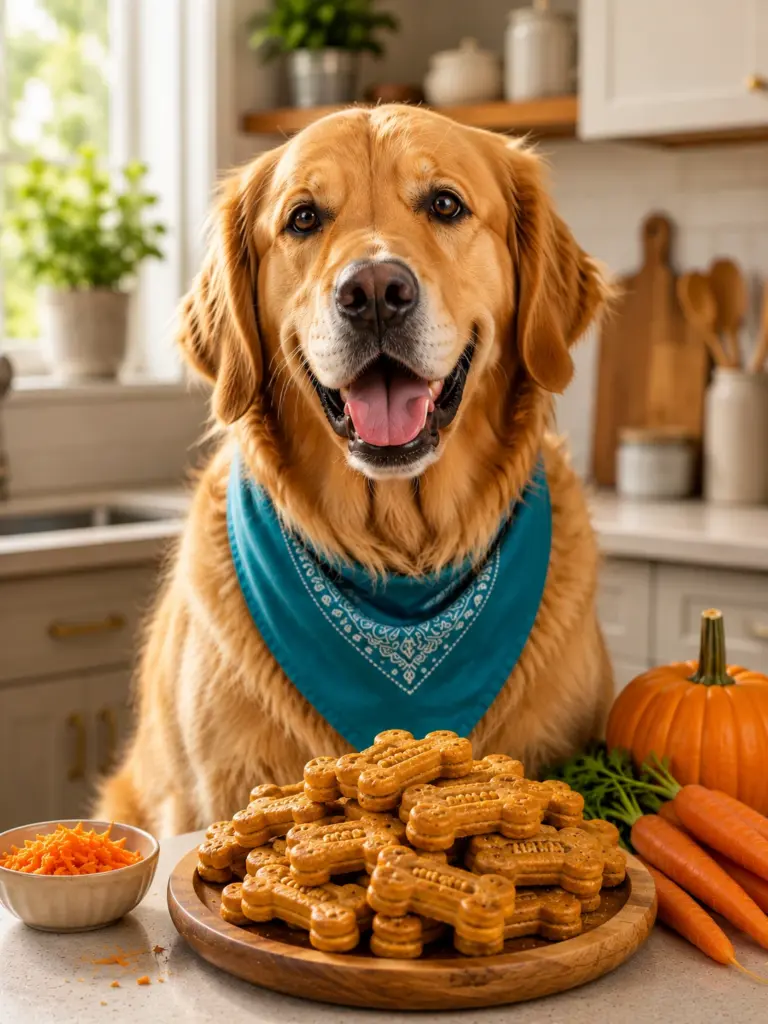
Carrot Pumpkin Dog Treats: Easy Homemade Baked Recipe
1. Introduction: The Homemade Dog Treat Revolution
Carrot Pumpkin Dog Treats represent one of the absolute best ways to show your beloved canine companion just how much you care while actively taking full control over their nutritional health. Every single day, thousands of pet parents across the globe are stepping away from ultra-processed commercial store-bought snacks filled with chemical preservatives, synthetic dyes, mystery meat by-products, and excessive sodium. Instead, thoughtful dog owners are discovering the pure joy and immense health benefits of baking fresh, wholesome treats right in their own home kitchens.
When you prepare homemade treats using human-grade whole foods like sweet organic carrots, smooth pure pumpkin puree, whole grain oats, and natural peanut butter, you know precisely what is going into your dog’s body. There are zero hidden artificial additives, zero toxic fillers, and zero compromises on safety. This comprehensive master guide will take you step-by-step through the scientific dietary benefits, veterinarian safety protocols, equipment prep, step-by-step baking directions, exact portion guidelines, and long-term storage masterclass for creating the ultimate baked Carrot Pumpkin Dog Treats.
Whether you share your home with a energetic Golden Retriever, a tiny Chihuahua, or an active German Shepherd, these baked vegetable bites deliver an unbeatable combination of rich aroma, golden color, satisfying crunch, and irresistible flavor. Your dog will love the natural sweetness of fresh carrots paired with nutty peanut butter, while you will enjoy peace of mind knowing you are feeding them clean, vitamin-dense nutrition.
2. In-Depth Canine Nutritional Science Breakdown
Understanding canine nutrition is the cornerstone of responsible pet parenting. When we look closely at the ingredient profile of these baked carrot pumpkin snacks, each ingredient serves a specific biological and physiological purpose in supporting your dog’s health.
Pure Pumpkin Puree: Nature’s Gastrointestinal Regulator
Pure pumpkin is widely regarded by holistic veterinarians and animal nutritionists as a superfood for dogs. Pumpkin is exceptionally rich in soluble dietary fiber, which absorbs water as it moves through the intestinal tract. This unique property makes pumpkin an effective natural remedy for both mild constipation and loose stool. The soluble fiber forms a soothing gel-like substance that coats the gut lining and feeds beneficial intestinal probiotics.
Beyond fiber, pumpkin is loaded with Vitamin A (in the form of beta-carotene), Vitamin C, Vitamin E, potassium, and iron. Beta-carotene is a potent antioxidant that neutralizes harmful free radicals, protects cellular integrity, and supports optimal visual acuity, particularly night vision and retinal function in aging dogs.
Shredded Carrots: Dental and Antioxidant Powerhouse
Carrots are low in calories and virtually fat-free, making them an ideal functional ingredient for weight management. Rich in phytonutrients, carrots provide an abundant supply of lutein and beta-carotene, which protect cellular structures from oxidative stress. Incorporating finely shredded fresh carrots into baked treats adds essential dietary fiber that aids in regular bowel movements and supports healthy blood sugar regulation.
Furthermore, the natural fiber structure of carrots provides gentle mechanical action during chewing, which helps reduce minor surface plaque accumulation on teeth and massages gum tissue to promote oral hygiene.
Whole Oat Flour: Gentle, Slow-Burn Energy
Whole oats and oat flour serve as a fantastic alternative to traditional refined wheat flour, especially for dogs with sensitivity to gluten. Oats contain high amounts of soluble fiber known as beta-glucan, which plays a major role in regulating blood cholesterol levels and stabilizing blood glucose spikes after eating. Oat flour provides a steady, slow-burning source of complex carbohydrates that keeps dogs feeling satiated and energized throughout the day without causing rapid insulin spikes.
Natural Peanut Butter: Palatability and Healthy Fatty Acids
Peanut butter is not only an irresistible flavor enhancer for dogs, but it also contributes high-quality plant proteins and essential fatty acids, including linoleic acid. These healthy monounsaturated and polyunsaturated fats support skin barrier function, promote a shiny and soft fur coat, and assist in the absorption of fat-soluble vitamins like A, D, E, and K.
Organic Whole Eggs: Complete Protein Matrix
Eggs are considered the gold standard of bioavailability when evaluating dietary protein. They contain all essential amino acids required by dogs for muscle repair, enzyme production, tissue synthesis, and immune defense. Eggs also provide biotin, riboflavin, selenium, and cobalamin (Vitamin B12), ensuring complete biological value in every single bite.
3. Veterinarian Safety Standards & Critical Ingredient Checklist
While baking for your pet is fun and rewarding, safety must always remain your top priority. Before gathering your ingredients, review these strict veterinarian safety rules to ensure your treats are 100% safe.
The Lethal Danger of Xylitol and Birch Sugar
Always examine the ingredient label of your peanut butter with extreme vigilance. Manufacturers frequently use Xylitol (which may also be listed as Birch Sugar, Wood Sugar, or E967) as a natural low-calorie sweetener in peanut butters and nut spreads. Xylitol is extremely toxic to dogs. Even tiny amounts cause a rapid, massive release of insulin from the dog’s pancreas, resulting in severe hypoglycemia (dangerously low blood sugar), seizures, liver failure, and death within hours. Ensure your peanut butter contains strictly one or two ingredients: peanuts and optionally a pinch of salt.
Selecting the Right Pumpkin
Always purchase 100% pure canned pumpkin puree or cook fresh pumpkin from scratch. Never use canned pumpkin pie filling or pumpkin pie mix. Pumpkin pie mix contains added sugars, milk products, and spices such as nutmeg, which contains dangerous toxins (myristicin) that can cause hallucinations, elevated heart rate, and severe abdominal pain in dogs.
Dairy and Grain Sensitivities
If your dog has a known sensitivity to grains or dairy, this recipe is naturally dairy-free and can be made 100% grain-free simply by replacing oat flour with coconut flour or chickpea flour. When making flour swaps, adjust liquid ratios accordingly as alternative flours absorb moisture differently.
The 10 Percent Caloric Rule
Even healthy, nutrient-rich treats must be fed in moderation. According to veterinary guidelines, treats should never account for more than 10% of a dog’s total daily caloric allotment. The remaining 90% must come from a complete and balanced nutritionally complete dog food diet.
4. Kitchen Equipment & Meal Prep Essentials
To make your baking process seamless and quick, assemble the following standard kitchen equipment before starting:
• Large Mixing Bowl: For combining wet and dry ingredients.
• Fine Box Grater or Food Processor: To finely shred fresh raw carrots.
• Wire Whisk and Sturdy Wooden Spoon: For smooth blending and dough folding.
• Standard Measuring Cups and Spoons: For precise ingredient ratios.
• Heavy-Duty Baking Sheet: For even heat distribution.
• Parchment Paper or Silicone Baking Mat: Prevents sticking without oil coating.
• Wire Cooling Rack: Essential for allowing moisture to evaporate after baking so treats stay crisp.
• Small Cookie Cutters (Optional): Bone, paw print, or circle shapes add a fun aesthetic.
5. Complete Master Recipe: Ingredients & Step-by-Step Directions
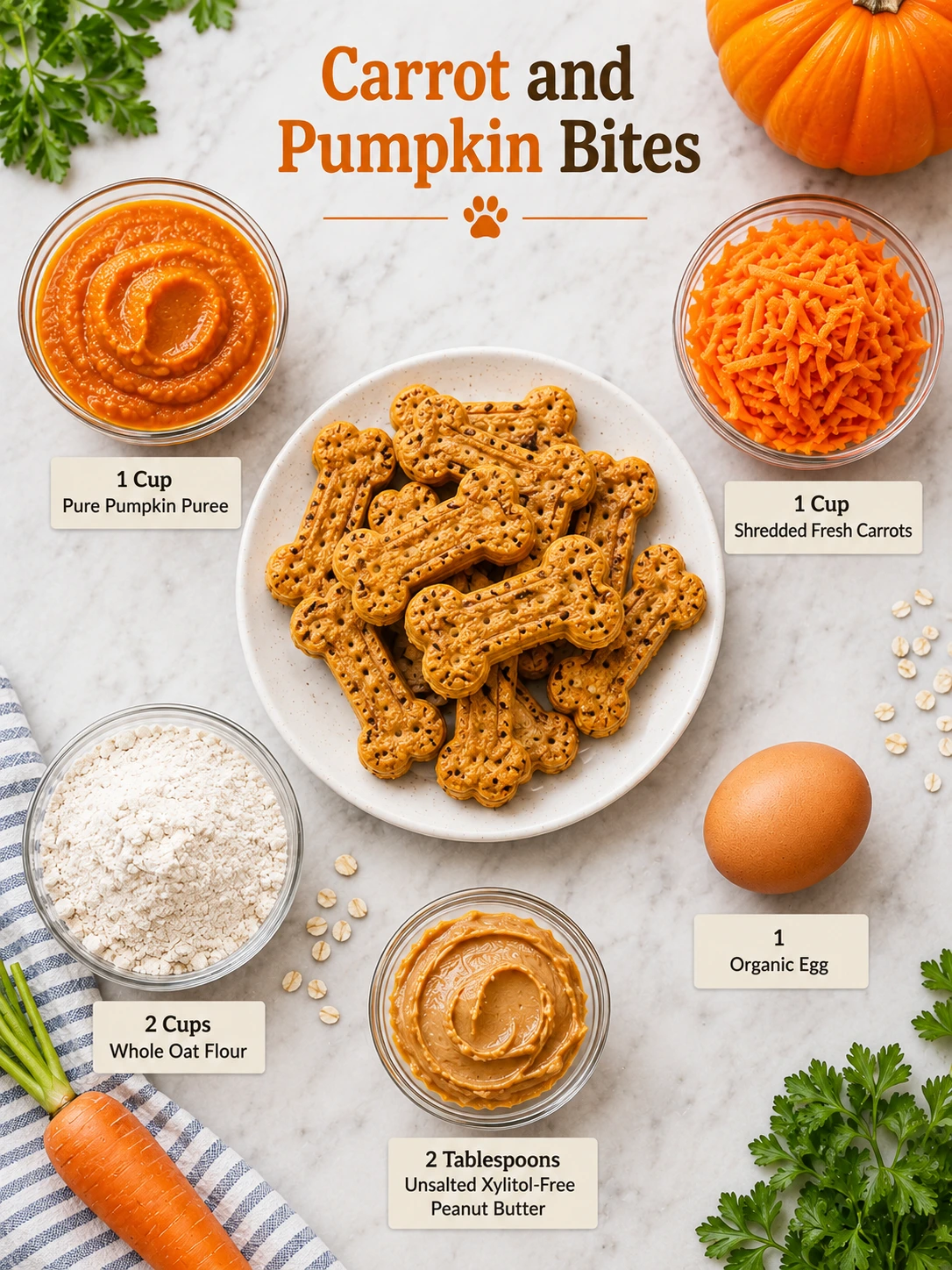
Preparation Time: 15 Minutes
Baking Time: 25 Minutes
Total Time: 40 Minutes
Yield: 24 Bite-Sized Dog Treats
Ingredients List:
• 1 Cup (240g) Pure Pumpkin Puree (100% pure pumpkin, unseasoned)
• 1 Cup (110g) Freshly Shredded Carrots (finely grated)
• 2.5 Cups (250g) Whole Oat Flour (or ground rolled oats)
• 2 Tablespoons (32g) All-Natural Unsalted Peanut Butter (strictly xylitol-free)
• 1 Large Organic Egg (beaten)
• 2-3 Tablespoons Water (only if needed to bind dough)
Step-by-Step Directions:
1. Preheat Oven and Line Tray
Preheat your home oven to 350 degrees Fahrenheit (175 degrees Celsius). Line a large, flat baking sheet with unbleached parchment paper or a food-safe silicone baking liner. Set aside.
2. Blend Wet Ingredients
In your large mixing bowl, combine 1 cup of pure pumpkin puree, 1 cup of finely shredded fresh carrots, 2 tablespoons of natural xylitol-free peanut butter, and 1 beaten egg. Using a wire whisk or wooden spoon, mix vigorously until all ingredients are completely unified into a smooth, fragrant orange mixture.
3. Incorporate Oat Flour
Gradually pour the 2.5 cups of oat flour into the wet mixture, stirring continuously. As the mixture thickens into a firm dough, use your clean hands to gently knead the dough inside the bowl until it pulls away cleanly from the edges. If the dough feels sticky, add 1 additional tablespoon of oat flour. If it crumbles, knead in 1 tablespoon of water.
4. Roll and Shape Treats
Lightly dust your work surface with a pinch of oat flour. Roll out the dough using a rolling pin to approximately one-quarter inch thickness. Use small bone-shaped cookie cutters, paw cutters, or simply cut the dough into uniform 1-inch squares using a sharp knife. Alternatively, roll small portions of dough between your palms to make 1-inch balls and press flat with a fork.
5. Bake to Golden Perfection
Place the cut dough pieces onto your lined baking sheet, leaving roughly half an inch of space between each piece. Transfer to the center rack of your preheated oven and bake for 22 to 25 minutes. The bottoms should turn lightly golden and the treats should feel firm when gently pressed.
6. Crisp and Cool
For an extra crisp texture that aids in cleaning teeth, turn off the oven at the 25-minute mark and crack the oven door open slightly, allowing the treats to dry out inside for an additional 10 minutes. Remove the treats from the oven and place them onto a wire cooling rack until completely cooled to room temperature.
6. Dietary Customizations & Allergy Substitutions
Every dog has unique metabolic needs and dietary tolerances. Here is how you can customize this master recipe for special dietary needs:
Grain-Free Alternative
Replace the 2.5 cups of oat flour with 2 cups of chickpea flour (garbanzo bean flour) or 1.5 cups of coconut flour combined with an extra egg. Coconut flour absorbs significantly more liquid than oat flour, so add warm water one tablespoon at a time until a workable dough consistency is reached.
Low-Fat Version for Pancreatitis Management
If your dog has a history of acute or chronic pancreatitis or requires a strict low-fat diet, completely eliminate the peanut butter. Replace the peanut butter with 2 tablespoons of unsweetened applesauce or extra pumpkin puree to maintain moisture balance without adding unnecessary dietary fat.
Protein Booster
For working dogs, athletic breeds, or undernourished rescues, add 2 tablespoons of hemp seed heart meal or unflavored, plain bone broth powder into the dry mix to boost clean amino acid content.
7. Dog Weight & Breed-Specific Daily Portion Guide
To help you maintain your dog’s ideal body condition score, use this detailed feeding chart based on weight class. Always adjust overall kibble portions if feeding multiple treats in a single day.
Toy Dog Breeds (Under 10 lbs / 4.5 kg)
Examples: Chihuahua, Pomeranian, Yorkshire Terrier
• Daily Maximum Portion: Half (1/2) treat per day
• Caloric Impact: ~12 kcal
Small Dog Breeds (10 to 25 lbs / 4.5 to 11.3 kg)
Examples: French Bulldog, Beagle, Cavalier King Charles Spaniel
• Daily Maximum Portion: 1 whole treat per day
• Caloric Impact: ~25 kcal
Medium Dog Breeds (25 to 50 lbs / 11.3 to 22.7 kg)
Examples: Australian Shepherd, Border Collie, Cocker Spaniel
• Daily Maximum Portion: 2 treats per day
• Caloric Impact: ~50 kcal
Large Dog Breeds (50 to 85 lbs / 22.7 to 38.5 kg)
Examples: Golden Retriever, Labrador Retriever, German Shepherd
• Daily Maximum Portion: 3 to 4 treats per day
• Caloric Impact: ~75-100 kcal
Giant Dog Breeds (Over 85 lbs / 38.5 kg)
Examples: Great Dane, Mastiff, Bernese Mountain Dog
• Daily Maximum Portion: 4 to 5 treats per day
• Caloric Impact: ~100-125 kcal
8. Optimal Storage, Freezing & Shelf-Life Maximization
Because these homemade treats contain zero artificial chemical preservatives or synthetic antimicrobials, proper storage techniques are essential to maintain freshness and prevent mold growth.
Room Temperature Storage
Store fully cooled treats in an open-topped ceramic cookie jar or a breathable paper bag on your counter for up to 3 to 4 days. Avoid airtight containers at room temperature if treats contain any lingering moisture, as trapped humidity speeds up mold formation.
Refrigeration Protocol (Best Method for Daily Use)
Place fully cooled treats into a clean glass airtight container lined with a dry paper towel to absorb ambient moisture. Keep in the main compartment of your refrigerator for up to 14 days.
Freezer Storage Masterclass (Best for Long-Term Prep)
For long-term storage, arrange the baked treats in a single layer on a baking sheet and freeze for 1 hour until rock solid. Transfer the frozen treats into a heavy-duty freezer zip bag or vacuum-sealed pouch. Freeze for up to 90 days. Thaw individual treats at room temperature for 15 minutes before serving to your dog.
9. Frequently Asked Questions (FAQ)
Question 1: Can puppies eat these Carrot Pumpkin Dog Treats?
Answer: Yes! Puppies over 8 weeks of age who have successfully transitioned to solid food can safely enjoy these treats. For smaller puppies, break the treats into small, bite-sized training pieces to prevent choking risks.
Question 2: Are these treats safe for diabetic dogs?
Answer: Yes, in small quantities. Pumpkin and carrots have a low glycemic load and are rich in complex fiber, which slows down glucose absorption. However, consult your veterinarian to factor the carbohydrates into your diabetic dog’s strict insulin and meal schedule.
Question 3: Why are my baked treats soft instead of crunchy?
Answer: Soft treats occur when internal moisture remains trapped inside after baking. To fix this, return the treats to your oven at 250 degrees Fahrenheit (120 degrees Celsius) for an extra 15 to 20 minutes, then let them cool completely inside the turned-off oven.
Question 4: Can I use raw pumpkin instead of canned puree?
Answer: Raw pumpkin is difficult for dogs to digest and can cause upset stomach. If using fresh pumpkin, skin it, remove seeds, steam or roast until soft, and purée thoroughly before using in this recipe.
Question 5: Can I substitute oat flour with all-purpose white flour?
Answer: While all-purpose white flour is not toxic, it is heavily processed and stripped of natural fiber and nutrients. Whole oat flour, brown rice flour, or whole wheat flour are much healthier options for canine nutrition.
Question 6: How do I know if the peanut butter I bought is safe?
Answer: Check the ingredient deck on the back of the jar carefully. Safe peanut butter should list only peanuts (and optionally salt). If you see Xylitol, Birch Sugar, or artificial sweeteners, do not buy or feed it to your pet.
Question 7: My dog has a sensitive stomach. Will pumpkin help?
Answer: Absolutely. Pumpkin is renowned for regulating canine digestion. The soluble fiber adds bulk to stool and absorbs excess moisture during digestive distress, promoting firm and healthy bowel movements.
Question 8: Can humans eat these baked treats too?
Answer: Yes! All ingredients used in this recipe are 100% human-grade. They are unsweetened and somewhat dense compared to human cookies, but completely safe and wholesome for human consumption.
10. Conclusion & Final Pet Parenting Takeaways
Baking homemade Carrot Pumpkin Dog Treats is a wonderfully rewarding experience that directly contributes to your dog’s long-term health, happiness, and longevity. By replacing commercial, processed treats with clean, organic whole foods like beta-carotene-rich carrots, digestive-friendly pumpkin, nourishing oat flour, and protein-packed peanut butter, you give your furry family member the clean nutrition they deserve.
Remember to keep safety first by verifying that your peanut butter is completely free of toxic Xylitol, adhering to proper daily portion limits based on your dog’s weight, and storing your freshly baked treats properly in the refrigerator or freezer. Enjoy the process, enjoy the wonderful baking aroma in your kitchen, and watch your happy pup wag their tail with pure delight for every single crispy bite!
Print

Carrot and Pumpkin Bites
Ingredients
1. **1 cup (240g)** Pure Pumpkin Puree — *(Ensure 100% pure canned pumpkin with no added sugar, spices, or xylitol.)* — 🐾 *Benefit: High in soluble fiber, beta-carotene, and potassium to regulate digestion and support gut health.*
2. **1 cup (110g)** Freshly Shredded Carrots — *(Fine finely shredded or grated raw organic carrots.)* — 🐾 *Benefit: Low-calorie crunch packed with beta-carotene, antioxidants, and essential fiber for dental and eye health.*
3. **2.5 cups (250g)** Rolled Oat Flour — *(Can blend whole rolled oats in a blender until fine.)* — 🐾 *Benefit: Gluten-friendly, easily digestible carbohydrate providing slow-release energy and dietary fiber.*
4. **2 tablespoons (32g)** Unsalted Natural Peanut Butter — *(Must be 100% xylitol-free and palm-oil free.)* — 🐾 *Benefit: Provides healthy fats, plant protein, and niacin for coat shine and palatability.*
5. **1 large** Organic Egg — *(Lightly beaten before mixing.)* — 🐾 *Benefit: Complete protein source providing essential amino acids, fatty acids, and selenium.*
Instructions
Step 1: Oven Preheating & Baking Prep
Preheat your oven to 350°F (175°C) and line a large baking sheet with unbleached parchment paper or a non-stick silicone baking mat.
> 💡 **Pro Tip:** Using silicone mats prevents sticking without needing to add extra fats or oils.
Step 2: Wet Ingredients Integration
In a large mixing bowl, combine the pure pumpkin puree, shredded carrots, xylitol-free peanut butter, and beaten egg. Whisk thoroughly until smooth and evenly blended.
> 💡 **Pro Tip:** Ensure the peanut butter is at room temperature so it incorporates smoothly with the cold ingredients.
Step 3: Dough Formation
Gradually add the oat flour into the wet mixture, stirring continuously with a wooden spoon or spatula until a firm, non-sticky dough forms.
> 💡 **Pro Tip:** If the dough feels too wet, add an extra tablespoon of oat flour. If too dry, add a teaspoon of water.
Step 4: Portioning & Shaping
Roll the dough into bite-sized balls (about 1 inch in diameter) or press into small bone-shaped molds. Arrange them evenly on the prepared baking sheet.
> 💡 **Pro Tip:** Flatten each ball slightly with a fork to ensure even baking across all pieces.
Step 5: Baking to Perfection
Bake in the preheated oven for 22 to 25 minutes until the edges are golden brown and the treats are firm to the touch.
> 💡 **Pro Tip:** For an extra crunchy texture that helps scrape plaque off teeth, turn off the oven and let them cool inside for 10 extra minutes.
Step 6: Cooling & Canine Serving
Remove from the oven and transfer the treats to a wire cooling rack. Allow them to cool completely to room temperature before serving to your dog.
> 💡 **Pro Tip:** Never serve warm treats directly from the oven as dogs can burn their tongues.
Daily Weight & Breed Portion Guidelines
– **Toy & Small Dogs (< 20 lbs):** 1/2 to 1 bite daily (5-15 lbs)
– **Medium Dogs (20 – 50 lbs):** 1 to 2 bites daily (25-50 lbs)
– **Large & Giant Dogs (50+ lbs):** 2 to 4 bites daily (50-100+ lbs, including Golden Retrievers)
– 🩺 *Veterinary Note: Treats should never exceed 10% of your dog’s daily caloric intake. Consult your vet before introducing new homemade foods if your dog has pancreatitis or food sensitivities.*
Storage & Shelf-Life
– **Refrigerator:** Store in an airtight glass container lined with a paper towel for up to 14 days.
– **Freezer:** Freeze in a single layer before transferring to a freezer-safe bag for up to 3 months.
– **Shelf-Life:** 14 days refrigerated or 90 days frozen.