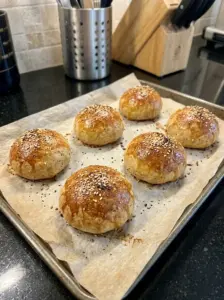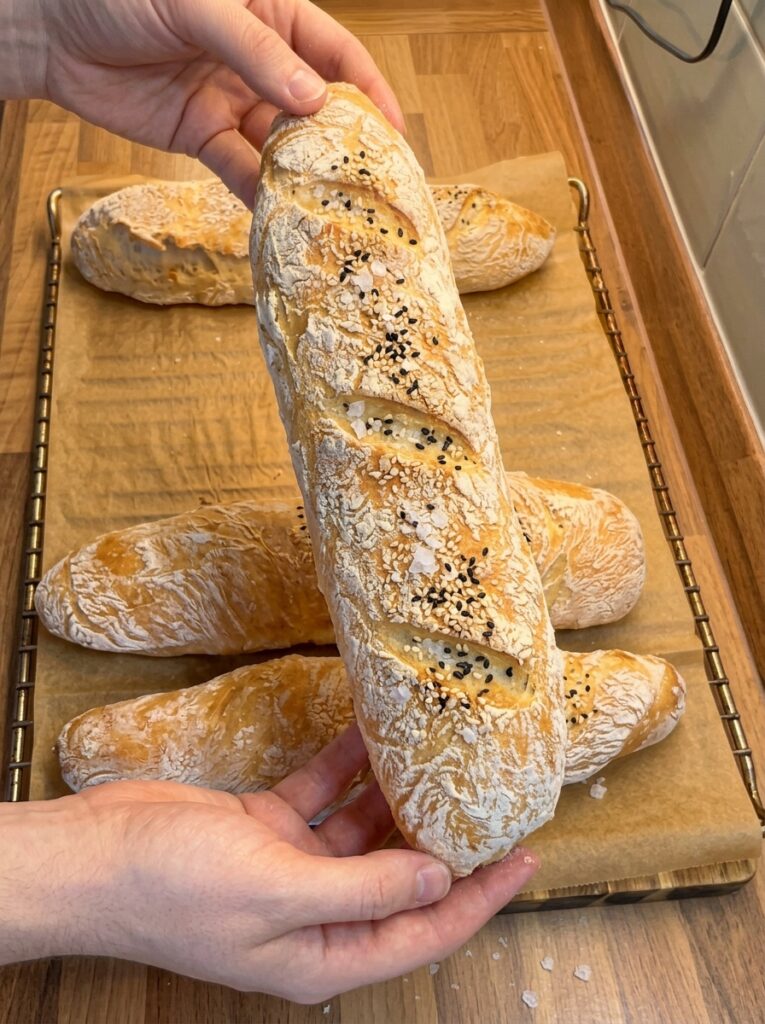
This 10-Minute Baguette is the perfect shortcut when you’re craving warm, homemade-style bread but don’t have hours to wait for traditional yeast dough to rise. Made with a simple combination of flour, Greek yogurt, baking powder, and baking soda, these quick baguettes can be mixed and shaped in about 10 minutes before going straight into the oven.
Unlike a traditional French baguette, there’s no yeast, lengthy fermentation, or proofing time required. Greek yogurt provides moisture, richness, and a subtle tang, while baking powder and baking soda provide the lift. The result is a beautifully golden exterior with a soft, tender center that’s somewhere between quick bread and a classic baguette.
These easy baguettes are perfect for garlic bread, sandwiches, bruschetta, soups, pasta dinners, cheese boards, or simply serving warm with butter or olive oil.
One important thing to remember: the “10-minute” refers to the preparation time, not the total recipe time. The baguettes still need approximately 20–25 minutes in the oven to bake properly.
Why You’ll Love This 10-Minute Baguette
There’s plenty to love about this fast homemade bread:
Ready for the oven in about 10 minutes. Mix, gently work, divide, shape, and bake—there’s no lengthy waiting period.
No yeast required. Baking powder and baking soda provide the leavening, eliminating traditional yeast fermentation.
No proofing. Once shaped, these baguettes can go directly into the hot oven.
Simple everyday ingredients. Flour, Greek yogurt, olive oil, and a few pantry staples form the entire basic dough.
Soft and tender inside. Greek yogurt keeps the crumb moist and gives the bread a pleasantly tender texture.
Easy to customize. Parmesan, cheddar, rosemary, olives, garlic, or everything bagel seasoning can quickly transform the basic recipe.
Perfect for busy dinners. You can start making the bread while preparing dinner and have warm baguettes on the table shortly afterward.
Ingredients You’ll Need
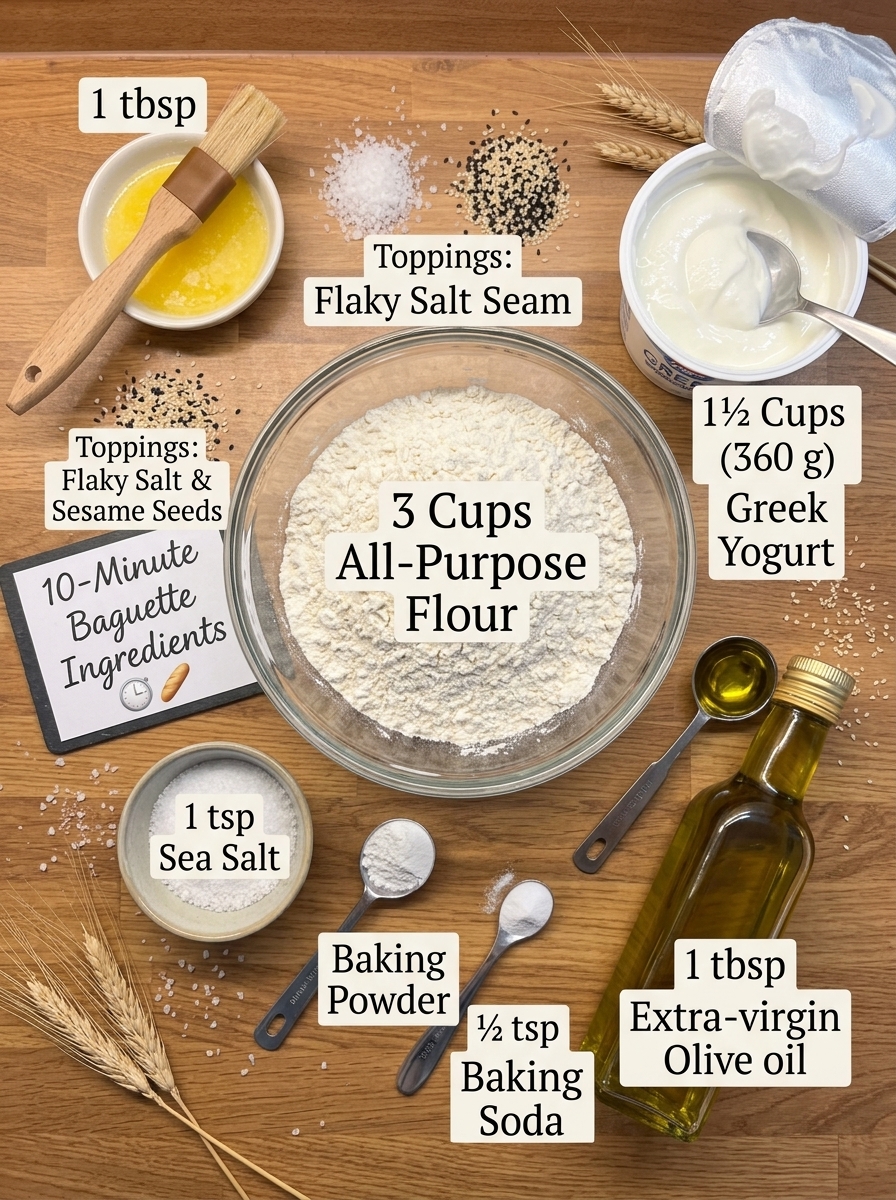
Here’s everything you’ll need to make these quick, no-yeast baguettes.
For the Dough
- 3 cups (360 g) all-purpose flour — Provides the main structure for the baguettes while keeping the interior relatively tender.
- 1 tbsp baking powder — Provides most of the lift without requiring yeast or fermentation.
- ½ tsp baking soda — Works particularly well with the acidity in Greek yogurt and provides additional leavening.
- 1 tsp fine sea salt — Seasons the dough and prevents the bread from tasting flat.
- 1½ cups (360 g) plain Greek yogurt — Provides moisture, richness, acidity, and tenderness while helping bind the dough together.
- 1 tbsp extra-virgin olive oil — Adds moisture and subtle richness to the quick dough.
For the Top
- 1 tbsp olive oil or melted butter — Helps the exterior develop additional flavor and golden color.
- Flaky sea salt, optional — Adds a lightly crunchy, salty finish.
- Sesame seeds, optional — Adds subtle nuttiness and texture to the tops.
How to Make 10-Minute Baguette
Because this is a quick bread rather than a traditional yeast baguette, the process moves quickly. Have your oven preheated before mixing the dough so the baguettes can be baked immediately after shaping.
Step 1: Preheat the Oven 🔥
Preheat your oven to 425°F (220°C).
Line a large baking sheet with parchment paper.
Unlike yeast dough, there’s no fermentation period to wait through, so you want the oven fully heated by the time you’ve finished shaping.
Step 2: Combine the Dry Ingredients
Add the all-purpose flour, baking powder, baking soda, and fine sea salt to a large mixing bowl.
Whisk thoroughly until everything is evenly distributed.
Even distribution is especially important for the leavening ingredients so the baguettes rise consistently.
Step 3: Add the Greek Yogurt
Add the plain Greek yogurt and extra-virgin olive oil to the dry ingredients.
Begin mixing with a sturdy spoon.
As the mixture becomes thicker and shaggy, use your hands to gently bring the dough together.
The finished dough should feel soft and slightly tacky while still being firm enough to shape.
Don’t immediately add more flour just because it feels slightly sticky.
Step 4: Gently Work the Dough
Transfer the dough to a lightly floured work surface.
Gently fold the dough over itself several times for approximately 30–60 seconds.
You aren’t trying to knead this dough the way you would a traditional yeast bread.
The goal is simply to bring everything together into a cohesive dough.
Overworking can develop too much gluten and make the finished quick baguettes tougher rather than tender.
Step 5: Divide the Dough
Divide the dough into 3 approximately equal portions for standard-sized quick baguettes.
For smaller individual or mini baguettes, divide it into 5–6 pieces instead.
Try to keep the portions similar in size so they bake at approximately the same rate.
Step 6: Shape the Baguettes 🥖
Working with one portion at a time, gently roll and stretch the dough into a long loaf approximately 10–12 inches in length.
Slightly taper the ends to create a baguette-inspired shape.
Avoid pressing or rolling excessively.
Transfer each shaped baguette to the parchment-lined baking sheet, leaving enough space between them for expansion.
Step 7: Score and Finish the Tops
Using a very sharp knife, make approximately 3–4 shallow diagonal cuts across the top of each baguette.
Brush the surface lightly with olive oil or melted butter.
If desired, sprinkle with flaky sea salt, sesame seeds, or another favorite topping.
Step 8: Bake
Place the baguettes into the preheated 425°F (220°C) oven.
Bake for approximately 20–25 minutes, or until the exterior is nicely golden and the centers are cooked through.
If they’re fully cooked but you’d like a deeper golden exterior, allow them to bake for another few minutes while watching closely.
Step 9: Cool Slightly
Transfer the baked baguettes to a wire cooling rack.
Allow them to cool for approximately 10 minutes.
These quick baguettes are especially enjoyable served slightly warm, when the exterior is fresh and the center remains soft and tender.
Garlic Butter Baguette Version 🧄🧈
These quick baguettes are particularly well suited to homemade garlic bread.
Combine:
- 3 tbsp melted butter
- 2 garlic cloves, finely minced
- 1 tbsp fresh parsley, finely chopped
- Pinch of salt
Brush the garlic butter generously over the freshly baked baguettes.
Return them to the oven for approximately 2–3 minutes, just long enough for the garlic butter to soak into the warm bread and become aromatic.
Serve immediately.
Easy Flavor Variations
Parmesan Baguette: Add ½ cup finely grated Parmesan directly to the dough for extra savory flavor.
Cheddar Baguette: Fold shredded sharp cheddar into the dough before shaping.
Rosemary Sea Salt: Add finely chopped fresh rosemary to the dough and sprinkle flaky sea salt over the tops before baking.
Everything Baguette: Sprinkle everything bagel seasoning generously over the oil- or butter-brushed baguettes.
Olive Baguette: Fold chopped, thoroughly drained and dried olives into the dough.
Garlic Herb: Add a small amount of garlic powder and dried Italian herbs to the dry ingredients.
Cheesy Garlic: Add Parmesan to the dough, then finish the freshly baked baguettes with the garlic butter mixture.
How to Serve 10-Minute Baguette
These quick baguettes can easily accompany breakfast, lunch, dinner, or appetizers:
- Garlic bread — Brush generously with garlic butter and briefly return to the oven.
- Mini sandwiches — Slice lengthwise and add your favorite meats, cheeses, or vegetables.
- Bruschetta — Toast slices and top with tomatoes, basil, garlic, and olive oil.
- With soup — Serve warm alongside tomato, vegetable, chicken, or creamy soups.
- With pasta — An easy bread option for spaghetti, lasagna, Alfredo, or baked pasta.
- With chicken dinners — Serve alongside roasted, baked, or grilled chicken.
- Dipped in olive oil — Pair warm pieces with good extra-virgin olive oil and herbs.
- On cheese boards — Slice into smaller pieces and serve alongside cheese, spreads, and dips.
- For breakfast sandwiches — Fill with eggs, cheese, avocado, or other favorite breakfast ingredients.
- Warm with butter — The simplest way to enjoy them straight from the oven.
Tips for the Best 10-Minute Baguette
Preheat the oven before making the dough. Since there’s no proofing period, the baguettes should be ready for baking almost immediately after they’re shaped.
Measure the flour carefully. Too much flour can quickly turn a soft quick bread into something heavy and dry.
Keep the dough slightly tacky. Resist the temptation to keep adding flour until the dough feels completely dry.
Use thick Greek yogurt. Greek yogurt provides both moisture and structure while its acidity works with the baking soda.
Don’t aggressively knead the dough. This isn’t traditional yeast bread. About 30–60 seconds of gentle folding is enough to bring the dough together.
Shape gently. Excessive handling can produce a denser finished crumb.
Don’t skip the scoring. Shallow cuts provide controlled expansion while also creating the familiar baguette-inspired appearance.
Bake until properly golden. A pale exterior won’t have the same flavor or texture.
Serve slightly warm. These baguettes are particularly good shortly after baking.
Traditional Baguette vs. 10-Minute Baguette
It’s important to understand that this quick recipe isn’t intended to duplicate a traditional French baguette exactly.
A traditional baguette relies on yeast fermentation, gluten development, careful shaping, proofing, high hydration, and often steam during baking. Those techniques help produce its characteristic chewy crumb, irregular air pockets, and thin, crisp crust.
This 10-Minute Baguette takes a completely different approach.
Instead of yeast, it uses baking powder and baking soda. Greek yogurt supplies moisture and acidity while helping create a soft, tender interior.
That means you should expect the crumb to be softer, tighter, and somewhat more quick-bread or biscuit-like than an authentic fermented baguette.
That’s not a mistake—it’s the trade-off that allows you to prepare the dough in approximately 10 minutes without waiting for fermentation or proofing.
If you want classic baguette texture, make a traditional yeast baguette. If you want homemade bread on the table quickly, this version is designed for exactly that.
Storage Information
These quick baguettes are best enjoyed fresh on the day they’re baked, particularly while they’re still slightly warm.
Once completely cooled, store leftovers in an airtight container or tightly wrapped at room temperature for approximately 1–2 days.
To refresh the baguettes, warm them briefly in the oven before serving.
For longer storage, allow the bread to cool completely and freeze it well wrapped. You can freeze whole baguettes or individual portions depending on how you plan to serve them.
Avoid refrigerating the bread when possible, as refrigeration can accelerate staling.
Frequently Asked Questions
Does this baguette really take only 10 minutes?
The preparation takes approximately 10 minutes. The baguettes still require approximately 20–25 minutes in the oven, plus a short cooling period before serving.
Does this recipe use yeast?
No. Baking powder and baking soda provide the leavening, so there’s no traditional yeast fermentation or proofing period.
Will this taste exactly like a French baguette?
No. Traditional baguettes develop their characteristic chewy, open crumb through yeast fermentation and a very different bread-making process. This shortcut version has a softer, more tender, slightly biscuit-like crumb.
Why does the recipe use Greek yogurt?
Greek yogurt provides moisture and richness while its acidity works with the baking soda. It also helps create a soft, tender dough without yeast.
Why is my dough sticky?
A little tackiness is normal. Adding too much flour to eliminate all stickiness can make the finished baguettes dry and heavy.
Can I use regular yogurt instead of Greek yogurt?
This recipe is formulated around the thicker consistency of Greek yogurt. Regular yogurt contains more moisture and may make the dough considerably softer, so it isn’t a direct one-to-one substitute without adjustments.
Should I knead the dough?
Only very lightly. Gently folding the dough for approximately 30–60 seconds is enough. Aggressive kneading can make this quick bread tougher.
Can I make mini baguettes?
Yes. Instead of dividing the dough into three portions, divide it into approximately 5–6 pieces and shape smaller baguettes. Because they’re smaller, begin checking them earlier during baking.
Can I turn these into garlic baguettes?
Absolutely. Brush the freshly baked bread with melted butter, minced garlic, parsley, and salt, then return it to the oven for another 2–3 minutes.
Can I freeze these baguettes?
Yes. Cool them completely before freezing. Reheat in the oven when you’re ready to serve them for the best texture.
Recipe Card
Prep Time: Approximately 10 minutes
Bake Time: 20–25 minutes
Cooling Time: Approximately 10 minutes
Total Time: Approximately 40–45 minutes
Yield: 3 baguettes or 5–6 mini baguettes
Oven Temperature: 425°F (220°C)
Leavening: Baking powder + baking soda
Yeast: None
Proofing Time: None
This 10-Minute Baguette is all about convenience. Instead of waiting hours for yeast fermentation and proofing, a quick Greek yogurt dough lets you have freshly baked homemade-style bread on the table with only about 10 minutes of hands-on preparation.
Keep the dough slightly tacky, handle it gently, and resist adding unnecessary flour. Those simple details help preserve the soft, tender interior that makes this shortcut bread work so well.
Whether you turn it into garlic bread, bruschetta, sandwiches, or a warm side for soup and pasta, it’s an easy recipe to keep around for those times when you want fresh bread but don’t want to spend the entire afternoon making it.
Print
10-Minute Baguette
Ingredients
Here’s everything you’ll need to make these quick, no-yeast baguettes.
For the Dough
- 3 cups (360 g) all-purpose flour — Provides the main structure for the baguettes while keeping the interior relatively tender.
- 1 tbsp baking powder — Provides most of the lift without requiring yeast or fermentation.
- ½ tsp baking soda — Works particularly well with the acidity in Greek yogurt and provides additional leavening.
- 1 tsp fine sea salt — Seasons the dough and prevents the bread from tasting flat.
- 1½ cups (360 g) plain Greek yogurt — Provides moisture, richness, acidity, and tenderness while helping bind the dough together.
- 1 tbsp extra-virgin olive oil — Adds moisture and subtle richness to the quick dough.
For the Top
- 1 tbsp olive oil or melted butter — Helps the exterior develop additional flavor and golden color.
- Flaky sea salt, optional — Adds a lightly crunchy, salty finish.
- Sesame seeds, optional — Adds subtle nuttiness and texture to the tops.
Instructions
Because this is a quick bread rather than a traditional yeast baguette, the process moves quickly. Have your oven preheated before mixing the dough so the baguettes can be baked immediately after shaping.
Preheat your oven to 425°F (220°C).
Line a large baking sheet with parchment paper.
Unlike yeast dough, there’s no fermentation period to wait through, so you want the oven fully heated by the time you’ve finished shaping.
Add the all-purpose flour, baking powder, baking soda, and fine sea salt to a large mixing bowl.
Whisk thoroughly until everything is evenly distributed.
Even distribution is especially important for the leavening ingredients so the baguettes rise consistently.
Add the plain Greek yogurt and extra-virgin olive oil to the dry ingredients.
Begin mixing with a sturdy spoon.
As the mixture becomes thicker and shaggy, use your hands to gently bring the dough together.
The finished dough should feel soft and slightly tacky while still being firm enough to shape.
Don’t immediately add more flour just because it feels slightly sticky.
Transfer the dough to a lightly floured work surface.
Gently fold the dough over itself several times for approximately 30–60 seconds.
You aren’t trying to knead this dough the way you would a traditional yeast bread.
The goal is simply to bring everything together into a cohesive dough.
Overworking can develop too much gluten and make the finished quick baguettes tougher rather than tender.
Divide the dough into 3 approximately equal portions for standard-sized quick baguettes.
For smaller individual or mini baguettes, divide it into 5–6 pieces instead.
Try to keep the portions similar in size so they bake at approximately the same rate.
Working with one portion at a time, gently roll and stretch the dough into a long loaf approximately 10–12 inches in length.
Slightly taper the ends to create a baguette-inspired shape.
Avoid pressing or rolling excessively.
Transfer each shaped baguette to the parchment-lined baking sheet, leaving enough space between them for expansion.
Using a very sharp knife, make approximately 3–4 shallow diagonal cuts across the top of each baguette.
Brush the surface lightly with olive oil or melted butter.
If desired, sprinkle with flaky sea salt, sesame seeds, or another favorite topping.
Place the baguettes into the preheated 425°F (220°C) oven.
Bake for approximately 20–25 minutes, or until the exterior is nicely golden and the centers are cooked through.
If they’re fully cooked but you’d like a deeper golden exterior, allow them to bake for another few minutes while watching closely.
Transfer the baked baguettes to a wire cooling rack.
Allow them to cool for approximately 10 minutes.
These quick baguettes are especially enjoyable served slightly warm, when the exterior is fresh and the center remains soft and tender.