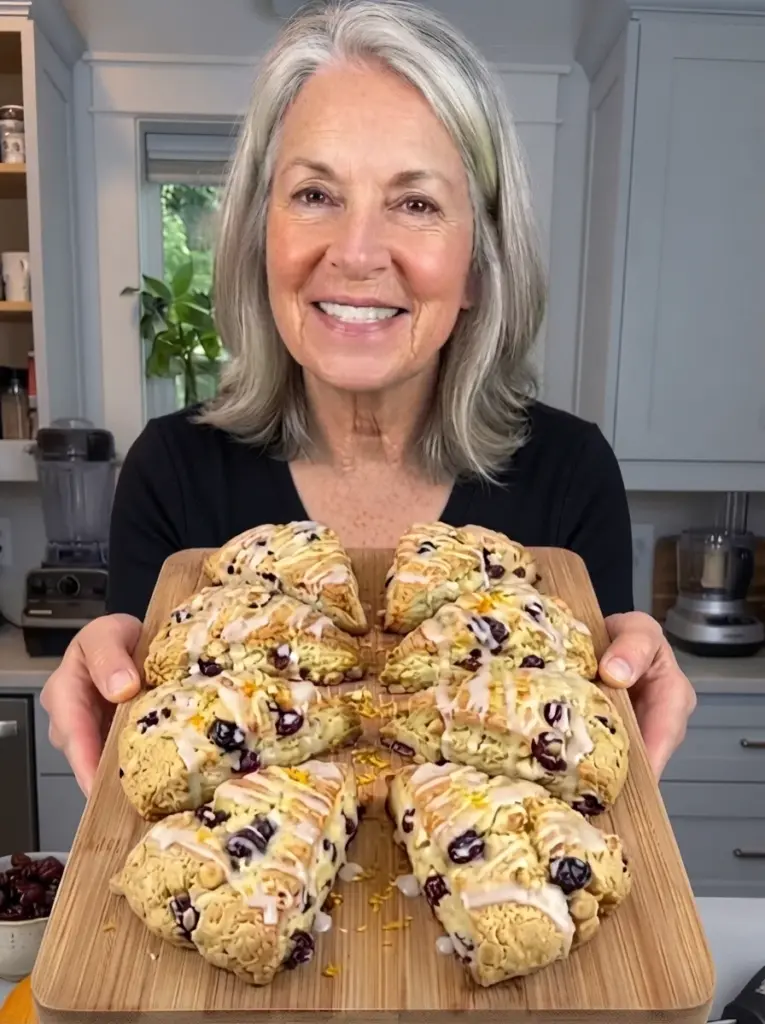
Orange Cranberry White Chocolate Scones combine fragrant orange zest, chewy dried cranberries, and sweet white chocolate in a buttery, tender pastry. Their golden edges give way to a soft center, while the tart berries balance the richness of the chocolate.
An optional orange glaze adds a bright finish, but the scones are flavorful enough to serve plain. Enjoy them with coffee, add them to a brunch spread, or bake a batch for a holiday breakfast.
The method is straightforward: rub orange zest into sugar, cut cold butter into the flour mixture, add the liquid, and gently shape the dough. A short chill helps the wedges hold their shape before baking.
This is a suggested recipe formula and has not been kitchen-tested. Flour absorption, cream thickness, and oven performance vary, so use the dough and baking cues alongside the estimated times.
Recipe at a Glance
- Yield: 8 large wedge scones
- Preparation: Approximately 20 minutes
- Chilling: 20 minutes
- Baking: Approximately 18–24 minutes
- Cooling before glazing: Approximately 20–30 minutes
- Total: Approximately 1¼–1½ hours, including cooling
- Oven: 400°F
- Method: Baking sheet
Why You’ll Love These Scones
- Bright citrus flavor: Orange zest perfumes the dough without adding excess liquid.
- A balance of sweet and tart: Cranberries complement the white chocolate.
- Tender texture: Cold butter and gentle handling keep the crumb from becoming tough.
- No mixer required: A bowl, pastry cutter or fingertips, and spatula are enough.
- Flexible finish: Serve plain or add a light orange glaze.
What Kind of Scones Are These?
These are American-style wedge scones with dried fruit and white chocolate mixed into the dough. Expect a lightly crisp exterior and a tender, somewhat crumbly center, rather than a stretchy bread texture.
They are richer and sweeter than a plain scone served with jam. The white chocolate supplies plenty of sweetness, so the dough uses a moderate amount of sugar and the glaze remains optional.
Cold butter creates small pockets within the dough. Gentle mixing preserves those pieces, while a brief chill helps prevent the butter from softening too much before the scones reach the oven.
Ingredients
For the Scones
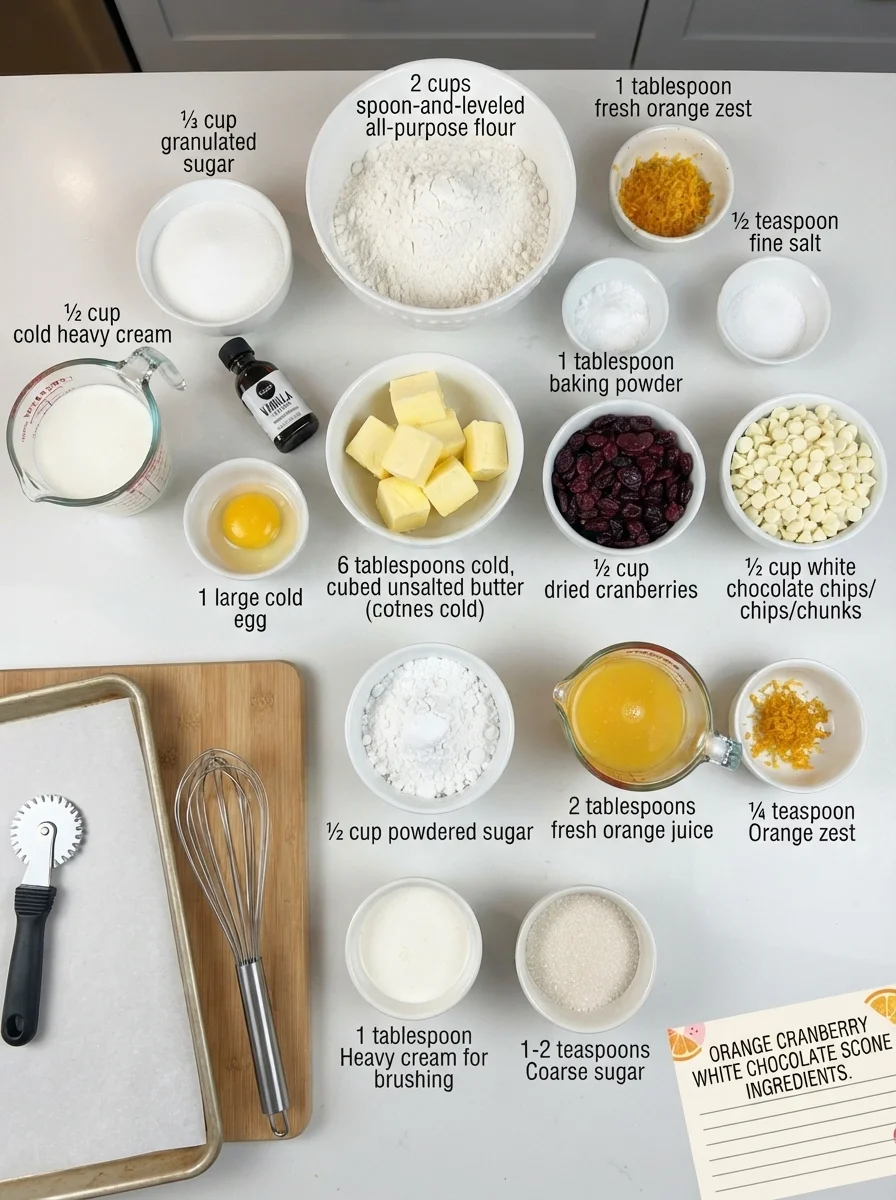
- 2 cups all-purpose flour, spooned and leveled, plus a little for shaping
- ⅓ cup granulated sugar
- 1 tablespoon finely grated orange zest, from approximately 1–2 oranges
- 1 tablespoon baking powder
- ½ teaspoon fine salt
- 6 tablespoons cold unsalted butter, cut into small cubes
- ½ cup dried cranberries
- ½ cup white chocolate chips or small chopped white chocolate pieces
- ½ cup cold heavy cream, plus 1–2 tablespoons only if needed
- 1 large egg, cold
- 1 teaspoon vanilla extract
For the Tops
- 1 tablespoon heavy cream
- 1–2 teaspoons coarse sugar, optional
Optional Orange Glaze
- ½ cup powdered sugar
- 1–2 tablespoons fresh orange juice, added gradually
- ¼ teaspoon finely grated orange zest, optional
The zest gives the dough its main orange flavor. Orange juice is used in the optional glaze rather than added freely to the dough.
Ingredient Notes
All-Purpose Flour
Measure lightly: fluff the flour, spoon it into the cup, and level the top. Scooping from a compacted bag can add extra flour and make the dough dry.
Self-rising flour is not an identical substitute because this recipe already includes baking powder and salt. Whole wheat and gluten-free versions need their own adjustments.
Orange Zest
Zest the oranges before juicing. Remove only the colored outer peel; the white pith beneath it can taste bitter.
Rubbing zest into sugar releases fragrant oils and helps distribute the flavor. Orange extract has a different concentration and is not a tablespoon-for-tablespoon replacement.
Cold Butter
Keep the butter cold until needed. Small visible pieces in the mixed dough are desirable; a completely smooth, greasy mixture suggests the butter has become too warm.
If your kitchen is warm, chill the bowl briefly during preparation. You can also grate very cold butter, but work quickly so the shreds do not soften in your hands.
Dried Cranberries
Dried cranberries provide the intended chewy texture. Many are sweetened, which contributes to the finished sweetness.
Chop especially large pieces so they distribute evenly. This formula does not require soaking them. Fresh or frozen cranberries add substantially different moisture and tartness and should not be treated as an identical swap.
White Chocolate
Use white chocolate chips or chopped pieces small enough to distribute throughout the wedges. Large chunks can protrude and brown at the edges.
White baking chips and cocoa-butter-based white chocolate differ in flavor and melting behavior. Choose a product you enjoy, and check the label if that distinction matters to you.
Cream and Egg
Heavy cream adds moisture and richness. Milk is thinner and lower in fat, so using it changes the intended texture.
The egg helps bind the dough. Whisk it with the cream so it distributes without requiring extra mixing once the wet and dry ingredients meet.
Equipment
Use a large bowl, small bowl or measuring jug, whisk, pastry cutter or fork, spatula, bench scraper or sharp knife, baking sheet, and parchment paper. A wire rack is useful for cooling.
Leave enough space on the baking sheet for eight wedges to expand. If necessary, use two trays and monitor their browning separately.
How to Make Orange Cranberry White Chocolate Scones
1. Prepare the Pan and Ingredients
Line a baking sheet with parchment. Keep the butter, cream, and egg cold while measuring the dry ingredients.
If your refrigerator cannot accommodate the baking sheet, plan to chill the shaped dough on a smaller parchment-lined tray before transferring it.
2. Rub the Zest into the Sugar
Place the sugar and orange zest in the large bowl. Rub together with your fingertips until the sugar smells strongly of orange and looks slightly moistened.
Add the flour, baking powder, and salt, then whisk thoroughly.
3. Cut in the Butter
Add the cold butter cubes. Use a pastry cutter, fork, or quick fingertip motions to work them into the flour until the mixture resembles coarse crumbs with some pea-sized pieces remaining.
Do not continue until all the butter disappears. If it starts feeling soft or greasy, refrigerate the mixture briefly before continuing.
4. Add Cranberries and Chocolate
Toss the dried cranberries and white chocolate through the flour mixture. Coating them lightly helps distribute them before liquid is added.
5. Add the Wet Ingredients
Whisk the ½ cup cream, egg, and vanilla in the smaller bowl. Pour into the flour mixture and fold with a spatula.
Stop when the dough forms moist clumps. It may look rough, with a few loose crumbs. Press a small amount together: if it holds, it may not need more liquid.
If substantial dry flour remains and the mixture will not hold together, add extra cream a teaspoon at a time, up to the suggested allowance as needed. Avoid turning it into sticky batter.
6. Shape Gently
Turn onto a lightly floured surface. Bring the dough together with gentle pressing and one or two folds rather than extended kneading.
Pat into a round approximately 7–8 inches across and about 1 inch thick. Keep the thickness fairly even so the wedges bake consistently.
A rough edge is fine. Repeatedly working the dough to make a perfect circle can toughen it and warm the butter.
7. Cut and Chill
Cut into eight wedges with a sharp knife or bench scraper. Press straight down rather than sawing back and forth.
Arrange on the prepared sheet with approximately 2 inches between wedges. Refrigerate for 20 minutes.
During chilling, preheat the oven to 400°F with a rack near the center.
8. Brush and Bake
Lightly brush the tops with the tablespoon of cream. Sprinkle with optional coarse sugar, avoiding a heavy coating.
Bake for approximately 18–24 minutes, until the tops and edges are golden and the centers are set. Check toward the earlier end of the range, since shape, pan color, and oven performance affect timing.
If the exterior colors before the middle is baked, tent loosely with foil and continue as needed. A test scone should have a baked crumb without raw dough in the center; melted white chocolate may look moist, so inspect carefully.
9. Cool
Rest on the sheet for approximately 5 minutes, then transfer to a rack. Serve slightly warm without glaze, or cool for approximately 20–30 minutes before glazing.
Hot scones make glaze melt and run rather than settle on top.
10. Glaze If Desired
Whisk powdered sugar with 1 tablespoon orange juice and optional zest. Add more juice a little at a time until thick but drizzleable. You may not need the full amount.
Drizzle over cooled scones and let stand briefly for the surface to set. A thin drizzle adds citrus sweetness without completely covering the pastry.
Tips for Tender Scones
Keep the fat cold. Cold butter is easier to preserve in distinct pieces.
Measure flour lightly. Excess flour makes it harder to bring the dough together without adding too much cream.
Check before adding liquid. Rough clumps may hold together when pressed even if the bowl looks crumbly.
Handle briefly. Scone dough does not need the kneading used for yeast bread.
Keep the round evenly thick. Thin tips and thick centers bake at different speeds.
Chill before baking. This helps the shaped wedges stay firmer as the oven heats.
Glaze after cooling. Warm pastry absorbs or melts the glaze.
Troubleshooting
| Problem | Possible cause | What to try |
|---|---|---|
| Dough will not hold together | Packed flour or insufficient liquid | Press a sample first, then add cream in small increments. |
| Dough is sticky and soft | Too much liquid or warm butter | Chill briefly and use a light dusting of flour for shaping. |
| Scones spread widely | Warm dough or excess liquid | Keep ingredients cold and chill shaped wedges. |
| Texture is tough | Overmixing or repeated kneading | Fold and press only until cohesive. |
| Centers are raw | Thick shapes or exterior browning too quickly | Keep thickness even and continue baking under a loose foil tent if needed. |
| Scones seem dry | Excess flour or overbaking | Measure lightly and check near the earlier baking time. |
| Glaze disappears | Applied while too warm or too thin | Cool longer and thicken the glaze with powdered sugar. |
Variations
More Orange Aroma
Add a little extra zest to the glaze rather than pouring additional juice into the dough. This boosts aroma without loosening the scone mixture.
Dark Chocolate Version
Replace the white chocolate with an equal amount of dark chocolate pieces. The result will be less sweet and more chocolate-forward.
Cranberry Pecan
Add a small amount of chopped pecans while reducing some of the white chocolate if you want to keep the dough from becoming overloaded. Nuts change nutrition and allergen considerations.
Mini Scones
Divide the dough into two smaller rounds and cut each into six wedges. Smaller scones bake faster, so begin checking well before the large-scone timing.
Without Glaze
Serve plain or use only the optional coarse sugar. White chocolate and dried cranberries already provide sweetness.
These variations are suggestions and have not been independently kitchen-tested.
Serving Suggestions
Serve with coffee or tea for breakfast or an afternoon break. For brunch, pair with eggs, fresh fruit, and plain yogurt to offer options beyond sweet pastries.
They are also useful on a holiday breakfast tray. Bake close to serving when possible, or refresh unglazed scones gently in the oven.
If serving butter, offer it separately rather than assuming the already-rich scones need it. The glaze is optional for the same reason.
Storage and Reheating
Room Temperature
Cool completely before storing in an airtight container for approximately 1–2 days in a cool, dry kitchen. They are best on the day of baking and soften during storage.
Do not trap steam by sealing them warm. Warm or humid conditions shorten keeping quality; freeze extra portions sooner if needed.
Freezer
Wrap cooled scones individually and freeze in a freezer-safe container for up to 2 months for best quality. Unglazed scones are easier to refresh without melting a sugar coating.
Reheating
Warm thawed, unglazed scones in a 300°F oven for approximately 8–10 minutes, checking to avoid drying them. Let cool slightly before adding glaze.
A microwave can soften a portion quickly, but it will not restore the lightly crisp exterior. Use brief intervals to avoid overheating.
Preparing Ahead
Measure dry ingredients and prepare mix-ins in advance, keeping the butter and liquids separate and chilled. The stated method includes a short final chill, not a tested overnight holding schedule.
For reliable planning with this suggested formula, bake, cool, and freeze ahead rather than assuming a much longer dough rest has the same result.
Frequently Asked Questions
Can I use fresh cranberries?
They add more moisture and a sharper flavor than dried cranberries. A fresh-cranberry version needs its own adjustments rather than an assumed equal swap.
Do dried cranberries need soaking?
No soaking is included here. If your fruit is exceptionally hard, choosing a fresher package avoids introducing unmeasured soaking liquid.
Can I replace cream with milk?
Milk has a different fat and water balance. It may produce a less rich texture, so it is not an identical replacement for this formula.
Can I skip the egg?
The egg contributes liquid and structure. An egg-free version requires an adjusted recipe.
Why not add orange juice to the dough?
Zest gives strong orange aroma without substantial liquid. The juice is reserved for the glaze so it does not complicate the dough’s moisture balance.
Can I make them less sweet?
Start by omitting the glaze and coarse sugar. Reducing the dough sugar also changes browning and texture, so keep the base as written for a first attempt.
Do I need a pastry cutter?
No. A fork or quick fingertip work can incorporate the butter. Work efficiently and chill if the mixture becomes warm.
How do I know they are done around melted chocolate?
Look for a set, baked crumb rather than requiring every moist-looking spot to disappear. Test a spot away from chocolate if uncertain.
Recipe Card: Orange Cranberry White Chocolate Scones
Yield: 8 large scones
Preparation: 20 minutes
Chilling: 20 minutes
Baking: 18–24 minutes
Cooling before glaze: 20–30 minutes
Total: Approximately 1¼–1½ hours
Oven: 400°F
Ingredients
- 2 cups all-purpose flour, spooned and leveled
- ⅓ cup sugar
- 1 tablespoon orange zest
- 1 tablespoon baking powder
- ½ teaspoon fine salt
- 6 tablespoons cold unsalted butter, cubed
- ½ cup dried cranberries
- ½ cup white chocolate chips or small pieces
- ½ cup cold heavy cream, plus 1–2 tablespoons only if needed
- 1 large egg
- 1 teaspoon vanilla
- 1 tablespoon cream for brushing
- 1–2 teaspoons coarse sugar, optional
Optional glaze: ½ cup powdered sugar, 1–2 tablespoons orange juice, and ¼ teaspoon zest if desired.
Instructions
- Rub zest into sugar. Whisk in flour, baking powder, and salt.
- Cut in cold butter until coarse crumbs and some pea-sized pieces remain.
- Toss in cranberries and chocolate.
- Whisk ½ cup cream, egg, and vanilla. Fold into the dry mixture until moist clumps form. Add extra cream by the teaspoon only if needed to bring together.
- Gently press into a 7–8-inch round about 1 inch thick. Cut into eight wedges.
- Arrange on a parchment-lined baking sheet and chill for 20 minutes. Preheat the oven to 400°F.
- Brush tops with cream and add optional sugar. Bake for approximately 18–24 minutes, until golden and baked through.
- Rest briefly on the tray, then cool on a rack.
- If glazing, whisk the glaze ingredients, adding juice gradually. Drizzle over cooled scones.
Approximate Nutrition
For eight scones, estimate 350–390 calories per scone before glaze, depending on chocolate, cranberries, and cream adjustments. Using the full glaze adds approximately 30 calories per scone. Values are approximate ingredient-based estimates, not verified nutrition values; brands and portions affect the result.
Notes
- This suggested formula has not been kitchen-tested.
- Keep butter cold and dough handling brief.
- Dried cranberries are the intended fruit.
- Additional cream is an adjustment, not an automatic addition.
- Cool before glazing and freeze extras unglazed when practical.
Final Thoughts
Orange zest, tart cranberries, and white chocolate create a flavorful scone without a complicated method. Cold ingredients, gentle handling, and a short chill help the wedges bake with tender centers and golden edges. Serve plain while slightly warm, or cool and finish with a light orange drizzle.
Print
Orange Cranberry White Chocolate Scones
Description
Yield: 8 large scones
Preparation: 20 minutes
Chilling: 20 minutes
Baking: 18–24 minutes
Cooling before glaze: 20–30 minutes
Total: Approximately 1¼–1½ hours
Oven: 400°F
Ingredients
- 2 cups all-purpose flour, spooned and leveled
- ⅓ cup sugar
- 1 tablespoon orange zest
- 1 tablespoon baking powder
- ½ teaspoon fine salt
- 6 tablespoons cold unsalted butter, cubed
- ½ cup dried cranberries
- ½ cup white chocolate chips or small pieces
- ½ cup cold heavy cream, plus 1–2 tablespoons only if needed
- 1 large egg
- 1 teaspoon vanilla
- 1 tablespoon cream for brushing
- 1–2 teaspoons coarse sugar, optional
Optional glaze: ½ cup powdered sugar, 1–2 tablespoons orange juice, and ¼ teaspoon zest if desired.
Instructions
- Rub zest into sugar. Whisk in flour, baking powder, and salt.
- Cut in cold butter until coarse crumbs and some pea-sized pieces remain.
- Toss in cranberries and chocolate.
- Whisk ½ cup cream, egg, and vanilla. Fold into the dry mixture until moist clumps form. Add extra cream by the teaspoon only if needed to bring together.
- Gently press into a 7–8-inch round about 1 inch thick. Cut into eight wedges.
- Arrange on a parchment-lined baking sheet and chill for 20 minutes. Preheat the oven to 400°F.
- Brush tops with cream and add optional sugar. Bake for approximately 18–24 minutes, until golden and baked through.
- Rest briefly on the tray, then cool on a rack.
- If glazing, whisk the glaze ingredients, adding juice gradually. Drizzle over cooled scones.