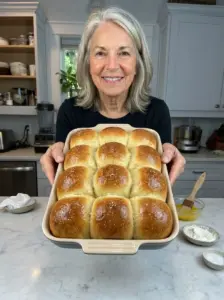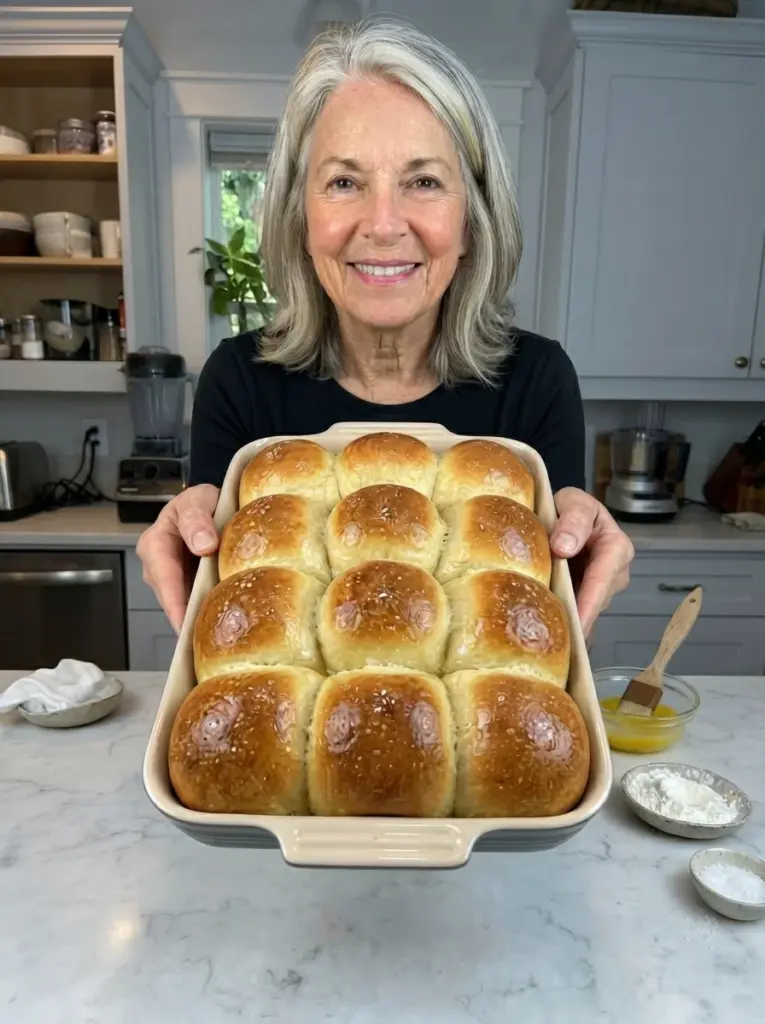
Soft & Buttery Homemade Potato Rolls are tender dinner rolls made with mashed potato, milk, butter, and a little sugar. They bake together in one pan, with golden tops and soft sides that pull apart for serving. A light brush of melted butter adds a rich finish while the rolls are still warm.
The mashed potato helps the dough retain moisture and gives the baked rolls a tender crumb. Their mild flavor pairs well with roast chicken, soups, stews, and holiday dinners, and leftover rolls make useful small sandwiches.
This version uses yeast and a brief kneading step to develop a smooth, elastic dough. Give it time for two rises, and follow its appearance rather than relying entirely on the clock.
This is a suggested recipe formula and has not been kitchen-tested. Potato moisture, flour absorption, and room temperature vary, so use the texture and rise cues alongside the estimated times.
Recipe at a Glance
- Yield: 12 dinner rolls
- Pan: 9 × 13-inch baking pan
- Active preparation: Approximately 25 minutes using prepared mashed potato
- First rise: Approximately 60–90 minutes
- Second rise: Approximately 35–60 minutes
- Baking: Approximately 22–28 minutes
- Brief cooling: 10–15 minutes
- Total: Approximately 2¾–3¾ hours with prepared potato
- Oven temperature: 375°F
If starting with raw potatoes, allow approximately 25–35 additional minutes for cooking, mashing, and cooling. A cold kitchen can extend both rises.
Why You’ll Love These Potato Rolls
- A tender center: Plain mashed potato enriches the dough’s texture without a strong potato flavor.
- Buttery finish: Butter in the dough and brushed on top adds richness.
- A practical batch: Twelve rolls fit in a standard baking pan.
- Easy serving: Bake close together for soft pull-apart sides.
- Useful leftovers: Split for small sandwiches or freeze for another meal.
What Does Potato Do in Bread Dough?
Mashed potato contributes starch and moisture to the dough. In this enriched roll, it helps produce a soft crumb and a tender bite.
The potato does not replace all the flour. Wheat flour still provides the gluten structure needed to hold the rising dough, while yeast supplies the lift. Milk, egg, and butter add further richness.
These are baked yeast rolls, not potato biscuits or fried potato cakes. They need fermentation time and enough kneading to become cohesive, but the dough should stay softer and a little tackier than a dry bread dough.
Ingredients
For the Dough
- ¾ cup plain mashed potato, smooth and cooled to room temperature or barely lukewarm
- ½ cup whole milk, lukewarm
- 1 large egg, at room temperature
- 3 tablespoons granulated sugar
- 2¼ teaspoons instant yeast, or 1 standard packet
- 1¼ teaspoons fine salt
- 4 tablespoons unsalted butter, melted and cooled until just warm
- 3 cups all-purpose flour, spooned and leveled, plus up to approximately ¼ cup more only if needed
For the Pan and Finish
- A little softened butter, for greasing the pan
- 2 tablespoons unsalted butter, melted, for brushing after baking
The additional flour is an adjustment allowance rather than an amount to add automatically. Start with the measured 3 cups and evaluate after mixing and a short rest.
Ingredient Notes
Plain Mashed Potato
Use smooth mashed potato made without added milk, cream, butter, or seasoning. Russet or Yukon Gold potatoes are suitable starting choices. Measure the mash after cooking, draining, and mashing.
Leftover seasoned mashed potatoes vary too much in liquid, salt, and fat to behave identically. Garlic mash or a very creamy holiday mash will change the flavor and consistency substantially.
If starting from raw potatoes, cook a little more than you expect to need and measure the finished mash. Potato sizes differ, so a volume measure is more useful than assuming one potato always produces the right amount.
Milk
Whole milk provides richness, although 2% milk is an alternative. Warm it until comfortably lukewarm, around 95–105°F. It should not be hot when it meets the yeast.
Flour
All-purpose flour gives a tender roll. Bread flour can make a slightly chewier result and may absorb moisture differently.
Measure lightly by spooning flour into the cup and leveling the top. Scooping from a compacted bag can add excess flour and make the dough stiff. Do not substitute self-rising flour, which contains added leavening and salt.
Yeast
Instant yeast can be mixed directly into the flour. Check its freshness and storage instructions.
If using active dry yeast, hydrate according to its package directions using the recipe’s measured milk and a little of the measured sugar. Rising times may differ.
Butter, Egg, and Sugar
Melted butter should be cooled before mixing with the egg and yeast. The egg supplies liquid and structure, while sugar adds gentle sweetness.
These are dinner rolls rather than dessert rolls. Three tablespoons of sugar spread across the batch gives a mild flavor that works with savory meals.
Salt
Fine salt distributes readily. Different coarse salts vary by volume, so do not assume the same teaspoon amount of every salt gives identical seasoning.
Equipment
Use a mixing bowl, sturdy spoon, flexible spatula, and 9 × 13-inch baking pan. A stand mixer with a dough hook is optional, not required. A bench scraper helps manage soft dough, and a wire rack is useful after baking.
An instant-read thermometer can help assess the center rolls, which are generally slower to finish than the exposed outer edges.
How to Make Soft & Buttery Potato Rolls
1. Prepare the Potato
If needed, peel and cut potatoes into even chunks. Simmer in water until fork-tender, approximately 12–18 minutes depending on size. Drain thoroughly and return briefly to the warm pot off the heat so excess steam can escape.
Mash until smooth without adding milk or butter. Measure ¾ cup and let it cool until room temperature or barely lukewarm. Hot mash can overheat the dough, while very wet mash can make it excessively sticky.
2. Combine the Wet Ingredients
In a large bowl, stir the mashed potato, lukewarm milk, egg, sugar, and cooled melted butter until evenly combined. Break up any remaining potato lumps before adding flour.
3. Add Flour, Yeast, and Salt
In a separate bowl, stir the 3 cups flour, instant yeast, and salt together. Add to the wet mixture and stir until a shaggy dough forms.
Scrape through the bottom of the bowl to incorporate dry pockets. Let the dough rest for approximately 10 minutes before deciding whether it needs extra flour.
4. Knead Until Cohesive
Turn onto a lightly floured surface and knead for approximately 8–10 minutes, or use a dough hook on a low speed for approximately 5–7 minutes, following your mixer’s instructions.
The dough should become smoother and elastic while remaining soft and slightly tacky. If it smears like a very wet batter after kneading, add flour a tablespoon at a time from the allowance. If it is stiff and dry, add milk a teaspoon at a time.
Avoid adding enough flour to eliminate every trace of stickiness. A scraper and lightly greased or floured hands can help you handle the dough without drying it out.
5. Allow the First Rise
Place the dough in a lightly greased bowl and cover so the surface does not dry. Leave in a comfortably warm, draft-free place until approximately doubled, around 60–90 minutes.
In a cool kitchen, allow longer. The dough should look expanded and aerated, not simply warmer or softer. Avoid a hot heater or an oven that is actively heating.
6. Divide and Shape
Grease the baking pan. Gently press excess gas from the risen dough and divide into 12 equal portions.
For each roll, tuck the edges underneath to form a ball. Gently roll against the counter to create a reasonably smooth top, without tearing the surface. Place seam-side down in a 3-by-4 arrangement in the pan.
The rolls should have some room to expand before touching. Similar sizes help them bake evenly.
7. Let the Rolls Rise Again
Cover loosely and let rise for approximately 35–60 minutes, until noticeably puffy and approaching or lightly touching one another.
A gentle fingertip indentation should return slowly. Dough that springs back immediately may need more time; dough that looks fragile or starts to collapse should be baked promptly.
During the latter part of the rise, preheat the oven to 375°F with a rack near the center.
8. Bake
Uncover and bake for approximately 22–28 minutes, until the tops are golden and the center rolls are baked through. If the tops darken before the centers finish, tent loosely with foil.
A center-roll temperature around 190–200°F is a useful guide, alongside a set, bread-like interior. Insert the thermometer from the side if possible, avoiding the pan. Allow extra time if the middle remains doughy.
9. Brush with Butter
Brush the warm tops with the 2 tablespoons melted finishing butter. Let the rolls rest in the pan for about 10 minutes.
Carefully loosen and transfer to a rack, or serve from the pan after a brief rest. Avoid crushing the rolls as you separate them. They will be more delicate when very hot.
Tips for Soft Potato Rolls
Drain the potato well. Excess cooking water changes the dough more than a small measurement difference in flour.
Cool the mash before mixing. Aim for a gently warm dough rather than overheating the yeast.
Rest before adjusting. Flour absorbs moisture over time; immediate extra flour can make the dough unnecessarily stiff.
Knead enough to develop structure. The potato-rich dough still needs to become cohesive and elastic.
Follow the rise cues. Temperature affects enriched dough, so the clock is only a guide.
Check the middle of the pan. Golden edge rolls do not guarantee the center rolls are finished.
Brush after baking. Finishing butter adds flavor and helps soften the surface.
Troubleshooting
| Problem | Possible cause | What to try |
|---|---|---|
| Dough is very sticky | Wet mash or insufficient mixing | Rest, knead, then add small flour increments only if needed. |
| Dough feels stiff | Packed flour or excessive additions | Add milk a teaspoon at a time and keep the dough soft. |
| Slow rise | Cool ingredients, cool room, or weak yeast | Allow more time if expansion is steady; check yeast condition next batch. |
| Dense rolls | Too much flour, inadequate kneading, or underproofing | Measure lightly, develop the dough, and wait for visible expansion. |
| Rolls flatten or collapse | Overproofing or weak structure | Avoid letting the final rise become fragile and knead adequately. |
| Tops brown before centers finish | Hot-running oven or uneven sizes | Tent loosely with foil and check a center roll. |
| Gummy center | Underbaking or tearing open immediately | Bake until set and allow a brief cooling rest. |
Variations
Garlic Butter Finish
Add a little garlic powder and chopped parsley to the finishing butter. This adds flavor without changing the dough’s liquid balance.
Herb Rolls
Mix 1 teaspoon dried Italian herbs into the flour. Keep additions modest for a first variation.
Seeded Tops
For seeds that adhere more securely, lightly brush the risen rolls with beaten egg and sprinkle with sesame seeds before baking. Egg wash is an additional ingredient and makes the tops more glossy.
Small Sandwich Rolls
The dough can be divided into fewer, larger portions, but pan spacing, proofing, and baking time will change. The instructions and timing here are intended for 12 dinner rolls.
Cheese Addition
A small amount of shredded cheese can be folded into the dough near the end of kneading. This changes salt, richness, and texture, so avoid adding a large unmeasured quantity.
These variations are suggestions and have not been separately kitchen-tested.
Serving Suggestions
Serve warm with roast chicken, beef stew, turkey, or a vegetable soup. Their mild flavor also suits butter and jam for a snack.
For small sandwiches, let the rolls cool enough to slice without compressing. Fill with cooked chicken, turkey, cheese, or another favorite filling. Store assembled sandwiches according to the perishable ingredients you use.
Slightly stale rolls can become breadcrumbs or small croutons. Freezing extra portions while fresh is usually better than waiting until they are dry.
Make-Ahead, Storage, and Reheating
Preparing Ahead
Cook and mash the potato ahead, refrigerate covered, and bring the measured portion back toward room temperature before mixing. Keep it plain and account for its existing storage time.
For the most predictable schedule with this suggested formula, bake the rolls fully and reheat rather than assuming an untested overnight proof will follow the same timing.
Room Temperature
Cool plain baked rolls completely, then store in an airtight bag or container for approximately 2 days in a cool, dry kitchen. In warm or humid conditions, freeze extras sooner. Do not seal while warm, since condensation can dampen the crust.
Discard rolls if mold develops. A perishable filling or topping needs storage appropriate to that addition.
Refrigerator
Refrigeration can firm and stale bread more quickly, so freezing is generally more useful for longer storage of plain rolls.
Freezer
Wrap cooled rolls and freeze in a freezer-safe bag for up to 2–3 months for best quality. Package in the quantities you expect to serve, or freeze individually for easy removal.
Reheating
Thaw wrapped rolls, then warm loosely covered with foil in a 300°F oven until heated through, approximately 8–12 minutes depending on quantity and starting temperature. Add a light brush of butter if desired.
A microwave can warm individual rolls in brief intervals, but prolonged heating may make them tough as they cool.
Frequently Asked Questions
Can I use leftover mashed potatoes?
Plain mash is the intended ingredient. Leftovers with added cream, butter, cheese, or salt change the recipe’s balance and may need adjustments.
Can I use instant mashed potatoes?
Prepared instant mash varies by product and preparation. Use plain mash without added seasoning and expect a possible texture difference. Dry flakes are not an equal-volume replacement for cooked mash.
Do the rolls taste strongly of potato?
The potato should be mild. Butter, milk, and the bread itself are more noticeable than a pronounced potato flavor.
Can I make them without kneading?
This method includes kneading to develop structure. A no-knead version needs its own moisture balance and process rather than simply omitting this step.
Can I leave out the egg?
The egg supplies liquid and structure. An egg-free version requires an adjusted formula.
Can I use salted butter?
It changes the salt contribution. Since butter brands differ, unsalted butter is the clearer starting point for the listed seasoning.
Why did my rise take longer?
Cold potato, cool milk, a chilly room, and yeast condition all affect fermentation. If the dough is expanding steadily, give it time rather than increasing heat aggressively.
Can I bake in a smaller pan?
A smaller pan makes the rolls more crowded and may delay center baking. The 9 × 13-inch pan is the intended size for this batch.
Recipe Card: Soft & Buttery Homemade Potato Rolls
Yield: 12 rolls
Pan: 9 × 13-inch baking pan
Preparation: Approximately 25 minutes with prepared potato
Rising: Approximately 95–150 minutes
Baking: Approximately 22–28 minutes
Cooling: 10–15 minutes
Total: Approximately 2¾–3¾ hours; longer if cooking potatoes or proofing in a cool kitchen
Ingredients
- ¾ cup plain smooth mashed potato, cooled
- ½ cup lukewarm whole milk
- 1 large egg, at room temperature
- 3 tablespoons sugar
- 2¼ teaspoons instant yeast
- 1¼ teaspoons fine salt
- 4 tablespoons unsalted butter, melted and cooled slightly
- 3 cups all-purpose flour, spooned and leveled
- Up to approximately ¼ cup additional flour, only if needed
- Butter for greasing the pan
- 2 tablespoons melted butter for finishing
Instructions
- Prepare plain mashed potato if necessary. Measure ¾ cup and cool to room temperature or barely lukewarm.
- Combine potato, milk, egg, sugar, and melted butter.
- Stir the 3 cups flour, yeast, and salt together, then add to the wet mixture. Mix thoroughly and rest for 10 minutes.
- Knead until smoother and elastic, approximately 8–10 minutes by hand or 5–7 minutes with a suitable mixer. Adjust with very small flour or milk additions only if needed. Keep soft and slightly tacky.
- Cover in a lightly greased bowl and rise until roughly doubled, approximately 60–90 minutes.
- Grease the pan. Divide into 12 equal portions, shape into balls, and arrange in three rows of four.
- Cover and rise until puffy, approximately 35–60 minutes. Preheat the oven to 375°F.
- Bake for approximately 22–28 minutes, until golden and set in the center. Tent with foil if needed. A center temperature around 190–200°F is a useful guide.
- Brush with finishing butter and rest for 10–15 minutes before serving.
Approximate Nutrition
For 12 rolls, estimate 185–210 calories and 4–5 grams of protein per roll, including finishing butter but excluding serving spreads and fillings. These are approximate ingredient-based values; flour adjustments, potato moisture, brands, and portion size affect the result.
Notes
- This suggested formula has not been kitchen-tested.
- Use plain, well-drained mashed potato.
- Do not add the full extra flour allowance automatically.
- Follow rise and doneness cues rather than the clock alone.
- Starting with raw potatoes adds cooking and cooling time.
Final Thoughts
Well-drained mashed potato, a soft dough, and patient rising give these rolls their tender character. Knead until cohesive, shape evenly, and check the center rolls before removing the pan from the oven. A warm butter finish makes them ready to pull apart and serve alongside dinner.
Print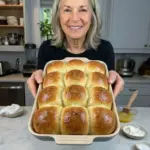
Soft & Buttery Homemade Potato Rolls
Description
Yield: 12 rolls
Pan: 9 × 13-inch baking pan
Preparation: Approximately 25 minutes with prepared potato
Rising: Approximately 95–150 minutes
Baking: Approximately 22–28 minutes
Cooling: 10–15 minutes
Total: Approximately 2¾–3¾ hours; longer if cooking potatoes or proofing in a cool kitchen
Ingredients
- ¾ cup plain smooth mashed potato, cooled
- ½ cup lukewarm whole milk
- 1 large egg, at room temperature
- 3 tablespoons sugar
- 2¼ teaspoons instant yeast
- 1¼ teaspoons fine salt
- 4 tablespoons unsalted butter, melted and cooled slightly
- 3 cups all-purpose flour, spooned and leveled
- Up to approximately ¼ cup additional flour, only if needed
- Butter for greasing the pan
- 2 tablespoons melted butter for finishing
Instructions
- Prepare plain mashed potato if necessary. Measure ¾ cup and cool to room temperature or barely lukewarm.
- Combine potato, milk, egg, sugar, and melted butter.
- Stir the 3 cups flour, yeast, and salt together, then add to the wet mixture. Mix thoroughly and rest for 10 minutes.
- Knead until smoother and elastic, approximately 8–10 minutes by hand or 5–7 minutes with a suitable mixer. Adjust with very small flour or milk additions only if needed. Keep soft and slightly tacky.
- Cover in a lightly greased bowl and rise until roughly doubled, approximately 60–90 minutes.
- Grease the pan. Divide into 12 equal portions, shape into balls, and arrange in three rows of four.
- Cover and rise until puffy, approximately 35–60 minutes. Preheat the oven to 375°F.
- Bake for approximately 22–28 minutes, until golden and set in the center. Tent with foil if needed. A center temperature around 190–200°F is a useful guide.
- Brush with finishing butter and rest for 10–15 minutes before serving.