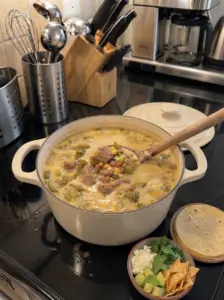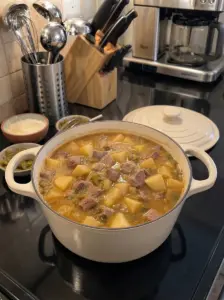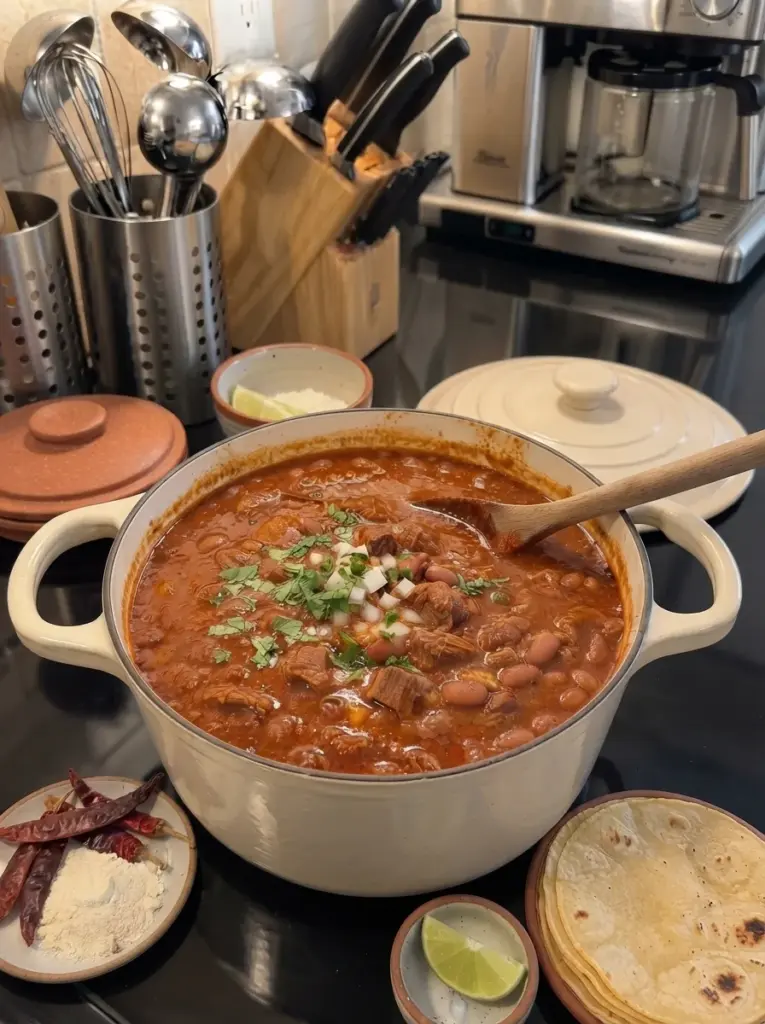
Tender pork shoulder, creamy pinto beans, and an earthy dried-chile sauce make this a warming stew with plenty of substance. A small amount of masa harina gives the broth body and a gentle corn flavor, while lime and fresh toppings brighten the finished bowl.
The cooking is straightforward, but it rewards patience. Soften and blend the dried chiles, brown the pork in batches, then let the shoulder simmer until it yields easily to a fork. Add the already-cooked beans later and finish with a smooth masa slurry.
This is a New Mexican-inspired variation built around dried New Mexico red chiles. The beans and masa thickening create a hearty meal, while the chile sauce remains the main flavor. Dried red chiles are earthy and fruity; they are not necessarily smoky unless a smoked ingredient is added.
The directions below expand the supplied recipe and have not been independently kitchen-tested. Chile size and heat vary, as does the time required to tenderize pork shoulder, so use the texture and flavor cues alongside the estimates.
What to Expect
The stew should be rich enough to coat a spoon lightly while remaining easy to ladle. Pinto beans offer a creamy contrast to the pork, and the blended chile sauce provides depth without needing a large quantity of tomato.
Masa harina thickens differently from a flour roux. It contributes a recognizable corn flavor as well as body, and the stew can thicken further as it stands. Keep extra broth available for adjustment.
Heat depends primarily on the dried chiles. Five mild pods may create a gentle sauce, while a smaller number of hotter pods can produce a much stronger bowl. Removing seeds does not guarantee a mild result.
Recipe Overview
| Detail | Guide |
|---|---|
| Yield | 6 generous or 8 smaller servings |
| Preparation | Approximately 25–35 minutes, with soaking overlapping other work |
| Cooking | Approximately 2–2¾ hours, allowing longer for pork if needed |
| Total | About 2½–3¼ hours |
| Main ingredients | Pork shoulder, dried red chiles, pinto beans, broth, masa harina |
| Texture | Hearty stew with a lightly thickened chile broth |
| Make-ahead suitability | Good; loosen with broth when reheating |
The original shorter schedule may work with some pork, but shoulder should be judged by tenderness rather than a fixed deadline. Batch browning also adds time before the simmer begins.
Ingredients
Stew
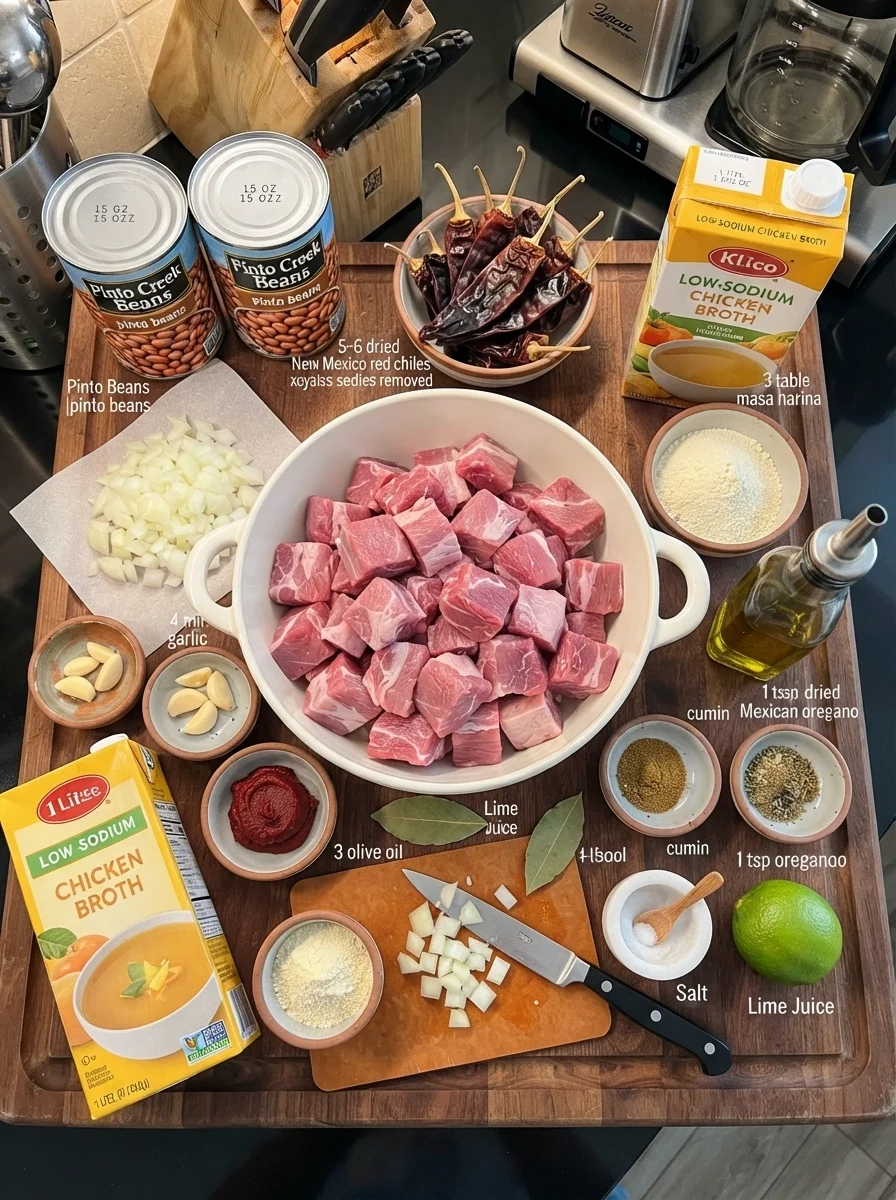
- 2 pounds boneless pork shoulder, trimmed and cut into 1-inch cubes
- 2 cans pinto beans, 15 ounces each, drained and rinsed
- 5–6 medium dried New Mexico red chiles, stems and loose seeds removed
- 1 medium yellow onion, diced
- 4 garlic cloves, minced
- 1 tablespoon tomato paste
- 6 cups lower-sodium chicken broth, divided, plus more as needed
- 3 tablespoons masa harina
- ½ cup cool water, for the masa slurry
- 2 tablespoons olive oil
- 1 teaspoon ground cumin
- 1 teaspoon dried Mexican oregano
- Up to 1 teaspoon salt, to taste
- ½ teaspoon black pepper
- 1 bay leaf
- 1 tablespoon fresh lime juice, or to taste
Optional serving ingredients
- Chopped cilantro
- Finely diced white onion
- Lime wedges
- Warm corn tortillas
- Sliced jalapeños
Use additional hot water for soaking the dried chiles. Discard it by default and blend with the measured broth; soaking liquid is not necessary for the recipe.
Ingredient Notes
Pork shoulder
Choose shoulder with some marbling and trim large exterior deposits of fat. Cut fairly evenly so the pieces soften at a similar rate.
Shoulder is suited to a gentle, extended simmer. Lean pork loin is not a direct replacement for this cooking schedule and may become dry before the sauce has developed.
Fork-tender means a piece yields with little resistance. Fully cooked meat can still be chewy if connective tissue has not softened, so continue simmering when necessary before adding beans and thickener.
Dried New Mexico red chiles
Choose clean pods with a fresh chile aroma, avoiding mold, damp patches, or a musty smell. Some flexibility is useful, although older dried pods can be brittle.
Remove stems and shake out loose seeds. You can also remove some inner ribs, but heat still varies by variety and batch.
A pod count is approximate because sizes differ. For unfamiliar hot chiles, begin with fewer and add more prepared sauce if needed. Use mild pods when cooking for mixed heat preferences.
Substituting guajillo, ancho, or another dried chile creates a different flavor profile. Such variations can be enjoyable, but they are not identical to the named ingredient.
Pinto beans
The recipe uses already-cooked canned beans. Drain and rinse before adding.
Dry beans require separate preparation, additional time, and a different liquid plan. Do not put uncooked beans into this pot and assume they will finish on the pork schedule.
Adding canned beans late helps retain their shape. If you want a thicker stew, mash a small spoonful after they have warmed rather than cooking the entire batch until it breaks down.
Tomato paste and seasonings
A tablespoon of tomato paste supports the savory base without making this a tomato-dominant stew. Cook it briefly with the aromatics, stirring to avoid scorching.
Cumin and Mexican oregano complement the chile sauce. Start with the listed quantities rather than covering the red chile flavor with a large spice mixture.
Masa harina
Use masa harina, the nixtamalized corn product used for tortillas and related preparations. Cornmeal, cornstarch, and ordinary corn flour are not equal-volume substitutes.
The cool-water slurry helps disperse it without clumps. After adding it, maintain a gentle simmer long enough for the mixture to hydrate and lose a raw masa character.
Broth and salt
Lower-sodium broth gives more room to adjust seasoning after reduction. Salted canned beans and broth can contribute enough that the full teaspoon of salt is unnecessary.
The ½ cup used to blend the chiles comes from the total 6 cups. The separate slurry water is additional.
Equipment
Use a large heavy Dutch oven or soup pot with a lid, a blender, a heatproof soaking bowl, tongs, a fine-mesh sieve if desired, and a small whisk for the slurry.
A wide pot makes batch browning easier. A heavy base also helps prevent the chile sauce and masa from catching as the stew thickens.
Keep a clean plate available for finished food and separate raw pork utensils from toppings and serving tools.
Prepare the Red Chile Sauce
1. Clean and open the pods
Wipe away surface dust with a damp towel. Remove stems and loose seeds. Open the pods enough to check their interiors and discard any that appear spoiled.
Wash hands after handling chiles, or use gloves if your skin is sensitive. Avoid touching your eyes.
2. Toast briefly, if desired
Warm a dry skillet over medium-low heat. Press the opened chiles against the surface for only a few seconds per side, turning and removing them as soon as fragrant.
This is optional. Do not wait for darkened, smoking pods. Burning the chiles can make the sauce unpleasantly bitter, and sweetness or extra spices will not reliably correct that.
Keep the kitchen ventilated and avoid leaning over heated chiles.
3. Soften in hot water
Place the chiles in a heatproof bowl and cover with hot water. Let stand approximately 15–20 minutes, until softened enough to blend.
Use a heat-safe small plate to keep them submerged if needed. Drain when softened.
The supplied recipe mentions reserving soaking liquid, but it is not required. Using broth avoids introducing a bitter soaking liquid into the sauce.
4. Blend and optionally strain
Blend the softened chiles with ½ cup of the measured broth until smooth. Stop and scrape as needed. Add a little more measured broth only if the machine cannot process the mixture.
Strain through a fine-mesh sieve for a smoother finish, pressing gently and discarding tough skins or seed fragments that remain.
Follow the blender’s hot-liquid guidance if the chiles are still warm. Do not seal a container that is not designed for hot blending.
How to Make the Stew
1. Season and brown the pork
Pat pork dry and season with black pepper and some of the salt. Heat olive oil over medium-high heat.
Brown in uncrowded batches, approximately 5–7 minutes per batch, turning to color several sides. Transfer to a plate. The pork finishes cooking later in the broth.
Adjust heat if the browned residue begins turning black. A little additional oil may help between batches, but a burnt base should not be incorporated simply for the sake of keeping every browned bit.
2. Cook onion and garlic
Reduce heat to medium. Add onion and cook 4–5 minutes until softened, stirring regularly.
Add garlic, tomato paste, cumin, and oregano. Cook about 1 minute, stirring continuously so the paste and garlic do not scorch.
3. Add red chile sauce
Pour the prepared sauce into the pot carefully. Stir over moderate heat for 1–2 minutes, loosening the browned base.
If it catches immediately or splatters heavily, reduce heat and add a splash of broth. There is no need to fry it aggressively.
4. Add pork and broth
Return pork and accumulated juices. Add the remaining measured broth and bay leaf.
Bring just to a boil, then reduce to a quiet simmer and partially cover. Check that the liquid surrounds the pork comfortably.
5. Simmer until nearly tender
Cook approximately 1½–2 hours, stirring occasionally and allowing longer if needed. Test a piece before proceeding.
The pork should already be close to fork-tender when the beans are added. If it remains firm or rubbery, continue cooking rather than relying on the bean stage to make a large difference.
Add broth if the liquid reduces too much. A rapid boil can concentrate salt and chile intensity while making the liquid level harder to manage.
6. Add the beans
Stir in drained pinto beans and simmer gently for approximately 15–20 minutes, until warmed through and the pork is tender.
Taste the broth. Adjust salt cautiously, keeping in mind that the masa stage may reduce the liquid a little further.
7. Whisk and add the slurry
Whisk 3 tablespoons masa harina with ½ cup cool water until smooth. Re-whisk if it has been standing.
Pour slowly into the gently simmering stew while stirring. Simmer uncovered for 8–10 minutes, stirring regularly along the bottom so the thickened sauce does not catch.
The texture should become a little fuller, not stiff. Add broth if needed. If you prefer a lighter result, add part of the slurry first and assess after cooking before using the rest.
8. Finish with lime
Remove the bay leaf. Add lime juice gradually and taste before using the full amount.
Adjust salt and pepper if needed. Avoid adding more cumin automatically when the stew tastes unbalanced; it may need a small acidity or salt adjustment instead.
9. Serve warm
Ladle into bowls with a good share of pork and beans. Add cilantro, diced onion, or lime as desired.
Serve warm tortillas on the side. Fresh jalapeños are optional and may be unnecessary if the dried chiles are already hot.
Tips for Better Results
Do not burn the dried chiles
Brief toasting can add depth, but darkening them aggressively creates bitterness. Skip toasting if you cannot monitor it closely.
Use tenderness as the pork cue
An extra 20 minutes of gentle simmering can matter more than another spoonful of seasoning when shoulder is still chewy.
Add canned beans late
They are already cooked. Their job is to warm and take on the sauce without losing all their shape.
Mix masa with cool water
A smooth slurry is easier to distribute than powder sprinkled into a hot pot.
Save finishing adjustments for the end
Salt, lime, and consistency should be judged after the pork is tender and the masa has cooked.
Troubleshooting
| Problem | Possible cause | Adjustment |
|---|---|---|
| Sauce is bitter | Burnt or poor-quality chiles | Use sound pods, toast briefly or not at all, and use broth for blending |
| Pork is chewy | Shoulder needs more simmering | Continue gently before adding beans and masa |
| Stew is too thick | Reduction or masa hydration | Add broth gradually and taste again |
| Masa forms lumps | Dry powder or poorly mixed slurry | Whisk with cool water and add slowly |
| Beans turn mushy | Added early, boiled hard, or stirred roughly | Add late and maintain gentle heat |
| Broth is too salty | Full seasoning before reduction | Use lower-sodium broth and reserve some salt |
| Heat is excessive | Dried chiles hotter than expected | Start with mild pods; dilute with additional unseasoned base if necessary |
| Chile texture is coarse | Insufficient blending or tough skins | Blend thoroughly and strain if desired |
A splash of broth can reduce the concentration of an intense sauce, but it cannot remove a burnt flavor. Distinguish strong chile character from actual scorching before attempting corrections.
Variations
More bean body
Mash a small spoonful of beans into the broth before adding masa. Start with less slurry afterward, since the beans provide extra thickening.
Smoky accent
Add a small amount of smoked paprika if you specifically want smoke flavor. This is an optional addition; ordinary dried New Mexico chiles are not necessarily smoked.
Milder batch
Use mild red chiles and offer hotter garnishes separately. Different diners can add heat without changing the whole pot.
Brothier stew
Use less masa slurry and add broth as needed. The pork and beans remain hearty even with a looser consistency.
Roasted vegetable side
Serve roasted squash or another vegetable alongside rather than adding a large quantity to the pot. This keeps the red chile flavor clear and preserves the original balance.
Serving and Make-Ahead Ideas
Warm corn tortillas are a natural accompaniment. A crisp cabbage salad or cucumber side gives contrast to the soft pork and beans.
Prepare the stew a day ahead if convenient. Cool promptly and refrigerate, then reheat gently with additional broth. The masa may make chilled leftovers look much thicker than the freshly finished pot.
You can also prepare the pork and chile base ahead and add beans and slurry during reheating. This gives more control over the final texture when serving guests.
Keep fresh toppings separate and add them at the table. Use an insulated cooler for transporting chilled portions rather than leaving the stew at room temperature during a long trip.
Storage and Reheating
Refrigerator
Divide into shallow containers and refrigerate within 2 hours of cooking, or within 1 hour when temperatures exceed 90°F. Keep at 40°F or below and use within 3–4 days.
Do not leave a large pot on the counter until completely cold. Smaller portions cool more efficiently.
Freezer
Freeze in meal-sized freezer-safe containers for up to 3 months for best quality. Leave headspace and label with the date.
Thaw overnight in the refrigerator. Beans may soften, and the sauce may need liquid and stirring to restore a looser consistency.
Reheating
Warm over medium-low heat, stirring along the bottom and adding broth or water as needed. Heat throughout to 165°F.
For microwave portions, use a vented microwave-safe cover and stir partway through. Check several spots because thick sauce and pork pieces can heat unevenly.
Reheating does not restart the original storage period. Warm only the portions needed when practical.
Nutrition Notes
Pork shoulder fat content and portion count make precise estimates difficult without product details. A sixth of the pot is a larger serving than an eighth, even before toppings.
A broad estimate is approximately 400–550 calories per serving when divided into six, or around 300–415 when divided into eight, before tortillas and toppings. Use your actual ingredient labels and portion count for a closer calculation.
Pinto beans and masa provide carbohydrates, while pork and beans contribute protein. This is a hearty mixed meal rather than a low-carbohydrate stew as written.
Check broth, masa, and seasonings if gluten-free suitability matters, including preparation cross-contact.
Frequently Asked Questions
Can I use red chile powder instead of pods?
Not as a direct swap by count. Powder strength and texture differ, and a powder-based sauce needs its own proportions. Use pods for this method.
Do I have to strain the sauce?
No. Straining is helpful when skins remain coarse or you want a smoother broth, but a powerful blender may produce a texture you enjoy without it.
Can I use the soaking liquid?
The recipe does not need it. Broth is a straightforward choice, particularly if the soaking liquid tastes bitter. Do not add it automatically.
Can I replace masa with cornmeal?
Not directly. Cornmeal has a different texture and hydration behavior. Use masa harina for the intended finish.
Can I use uncooked pinto beans?
Cook them separately first. Dry beans do not fit the same liquid quantity and schedule as the canned-bean method.
Why is the pork not tender after 75 minutes?
Shoulder varies and may need substantially longer. Maintain a gentle simmer and check with a fork before moving to the final stages.
Does the stew contain dumplings?
No. The masa is mixed with water and stirred into the broth as a thickener.
Recipe Card
New Mexico Red Chile Pork & Pinto Bean Masa Stew
A pork shoulder and pinto bean stew in a dried red chile sauce, lightly thickened with masa harina.
Servings: 6 generous or 8 smaller
Prep: 25–35 minutes
Cook: Approximately 2–2¾ hours, allowing longer for pork if needed
Total: About 2½–3¼ hours
Ingredients
- 2 pounds boneless pork shoulder, trimmed, 1-inch cubes
- 2 cans pinto beans, 15 ounces each, drained and rinsed
- 5–6 medium dried New Mexico red chiles, stems and loose seeds removed
- 1 diced onion
- 4 minced garlic cloves
- 1 tablespoon tomato paste
- 6 cups lower-sodium chicken broth, divided, plus more as needed
- 3 tablespoons masa harina
- ½ cup cool water
- 2 tablespoons olive oil
- 1 teaspoon cumin
- 1 teaspoon Mexican oregano
- Up to 1 teaspoon salt, to taste
- ½ teaspoon black pepper
- 1 bay leaf
- 1 tablespoon lime juice, to taste
Instructions
- Optionally toast chiles briefly over medium-low heat until fragrant, without burning. Cover with hot water and soak 15–20 minutes. Drain.
- Blend softened chiles with ½ cup of the measured broth until smooth. Strain if desired.
- Pat pork dry and season with some salt and pepper. Brown in oil in uncrowded batches, approximately 5–7 minutes each. Transfer to a plate.
- Cook onion over medium heat 4–5 minutes. Add garlic, tomato paste, cumin, and oregano; stir 1 minute.
- Add red chile sauce and stir 1–2 minutes. Return pork and juices, add remaining measured broth and bay leaf, and bring just to a boil.
- Simmer gently, partially covered, approximately 1½–2 hours or longer until nearly fork-tender. Add broth as needed.
- Add beans and simmer 15–20 minutes until pork is tender.
- Whisk masa with cool water. Stir gradually into the gently simmering stew and cook 8–10 minutes, stirring along the bottom. Adjust consistency with broth.
- Remove bay leaf, add lime gradually, and adjust seasoning. Serve with optional cilantro, onion, lime, and warm tortillas.
Storage: Refrigerate promptly and use within 3–4 days. Freeze up to 3 months for quality. Reheat to 165°F, adding liquid as needed.
Little tip: Protect the chile flavor by avoiding burnt pods and a scorched pot. Gentle heat and enough pork-simmering time do more for this stew than piling on extra spices.
Print
New Mexico Red Chile Pork & Pinto Bean Masa Stew
Description
A pork shoulder and pinto bean stew in a dried red chile sauce, lightly thickened with masa harina.
Servings: 6 generous or 8 smaller
Prep: 25–35 minutes
Cook: Approximately 2–2¾ hours, allowing longer for pork if needed
Total: About 2½–3¼ hours
Ingredients
- 2 pounds boneless pork shoulder, trimmed, 1-inch cubes
- 2 cans pinto beans, 15 ounces each, drained and rinsed
- 5–6 medium dried New Mexico red chiles, stems and loose seeds removed
- 1 diced onion
- 4 minced garlic cloves
- 1 tablespoon tomato paste
- 6 cups lower-sodium chicken broth, divided, plus more as needed
- 3 tablespoons masa harina
- ½ cup cool water
- 2 tablespoons olive oil
- 1 teaspoon cumin
- 1 teaspoon Mexican oregano
- Up to 1 teaspoon salt, to taste
- ½ teaspoon black pepper
- 1 bay leaf
- 1 tablespoon lime juice, to taste
Instructions
- Optionally toast chiles briefly over medium-low heat until fragrant, without burning. Cover with hot water and soak 15–20 minutes. Drain.
- Blend softened chiles with ½ cup of the measured broth until smooth. Strain if desired.
- Pat pork dry and season with some salt and pepper. Brown in oil in uncrowded batches, approximately 5–7 minutes each. Transfer to a plate.
- Cook onion over medium heat 4–5 minutes. Add garlic, tomato paste, cumin, and oregano; stir 1 minute.
- Add red chile sauce and stir 1–2 minutes. Return pork and juices, add remaining measured broth and bay leaf, and bring just to a boil.
- Simmer gently, partially covered, approximately 1½–2 hours or longer until nearly fork-tender. Add broth as needed.
- Add beans and simmer 15–20 minutes until pork is tender.
- Whisk masa with cool water. Stir gradually into the gently simmering stew and cook 8–10 minutes, stirring along the bottom. Adjust consistency with broth.
- Remove bay leaf, add lime gradually, and adjust seasoning. Serve with optional cilantro, onion, lime, and warm tortillas.
Storage: Refrigerate promptly and use within 3–4 days. Freeze up to 3 months for quality. Reheat to 165°F, adding liquid as needed.
Little tip: Protect the chile flavor by avoiding burnt pods and a scorched pot. Gentle heat and enough pork-simmering time do more for this stew than piling on extra spices.