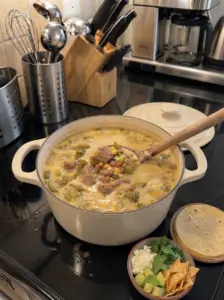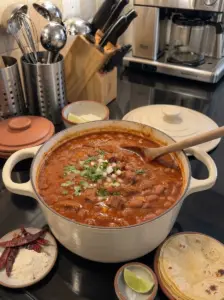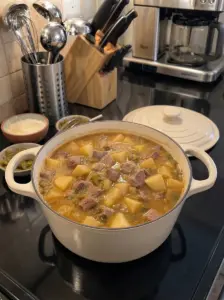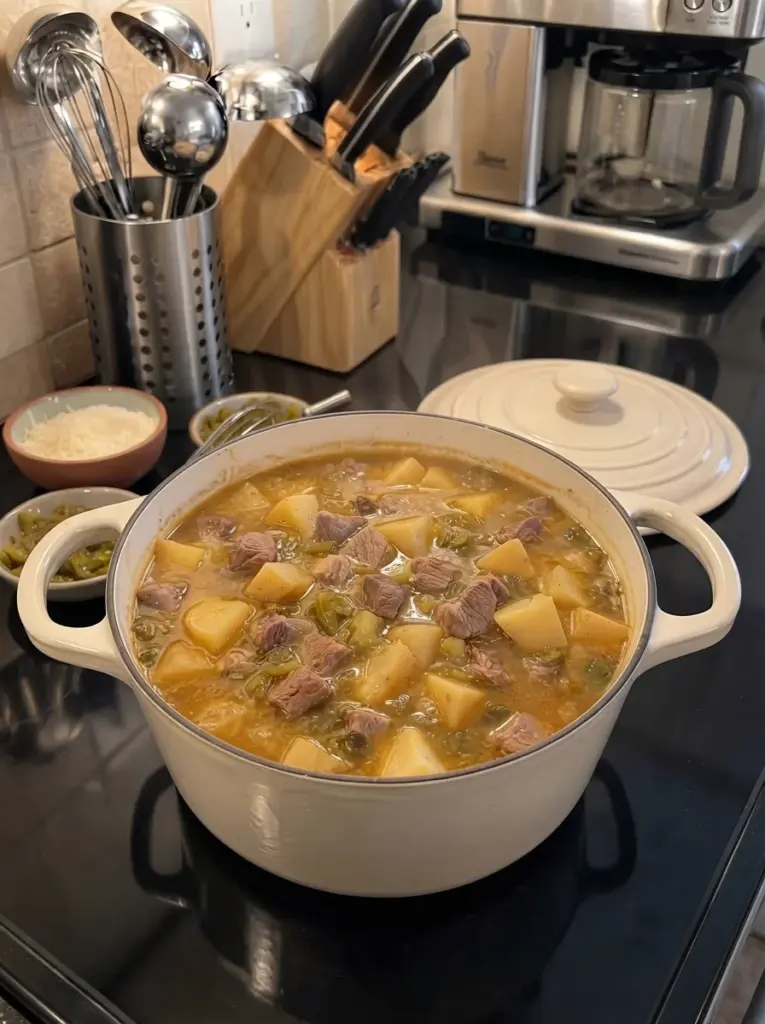
Tender pork shoulder, buttery Yukon Gold potatoes, and roasted green chiles make this caldo a comforting main-course soup. Masa harina gives the broth a gentle corn flavor and a little body, while lime adds brightness just before serving.
This New Mexico-inspired recipe keeps the ingredients straightforward. Browning the pork builds a savory foundation, a gentle simmer softens the shoulder, and the potatoes go in later so they do not fall apart during the long cooking stage. The masa is mixed with cool water before being stirred into the broth to help prevent lumps.
There are no masa dumplings or whole corn kernels in the supplied formula. The corn component is masa harina used as a thickener. The finished texture should remain spoonable and brothy rather than becoming a stiff stew.
The directions below expand the supplied recipe and have not been independently kitchen-tested. Allow the pork to become nearly tender before adding potatoes, even if that takes longer than the original estimate.
Flavor and Texture
Roasted green chiles contribute earthy, savory flavor with a sweetness and heat that vary by product. Some have distinctly charred notes, while others are milder in both aroma and heat.
Pork shoulder becomes tender through a long, gentle simmer. Yukon Gold potatoes provide a creamy bite and hold their shape reasonably well when handled gently. Masa harina thickens the liquid and adds its distinctive corn character without cream or cheese in the base.
The lime is a finishing adjustment. Add it gradually and taste, especially if the chiles or broth already have a tangy character.
Recipe Overview
| Detail | Guide |
|---|---|
| Yield | 6 generous or 8 smaller servings |
| Preparation | About 25 minutes with prepared roasted chiles |
| Cooking | Approximately 2–2¾ hours, depending on pork tenderness and browning |
| Total | Approximately 2½–3¼ hours |
| Main ingredients | Pork shoulder, roasted green chiles, potatoes, masa harina |
| Texture | Hearty soup with a lightly thickened broth |
| Best pot | Large heavy Dutch oven or soup pot |
The timing assumes the chiles are already roasted, peeled, seeded, and chopped. Fresh chile preparation adds time. Browning several batches also takes longer than browning one small batch.
Ingredients
Caldo
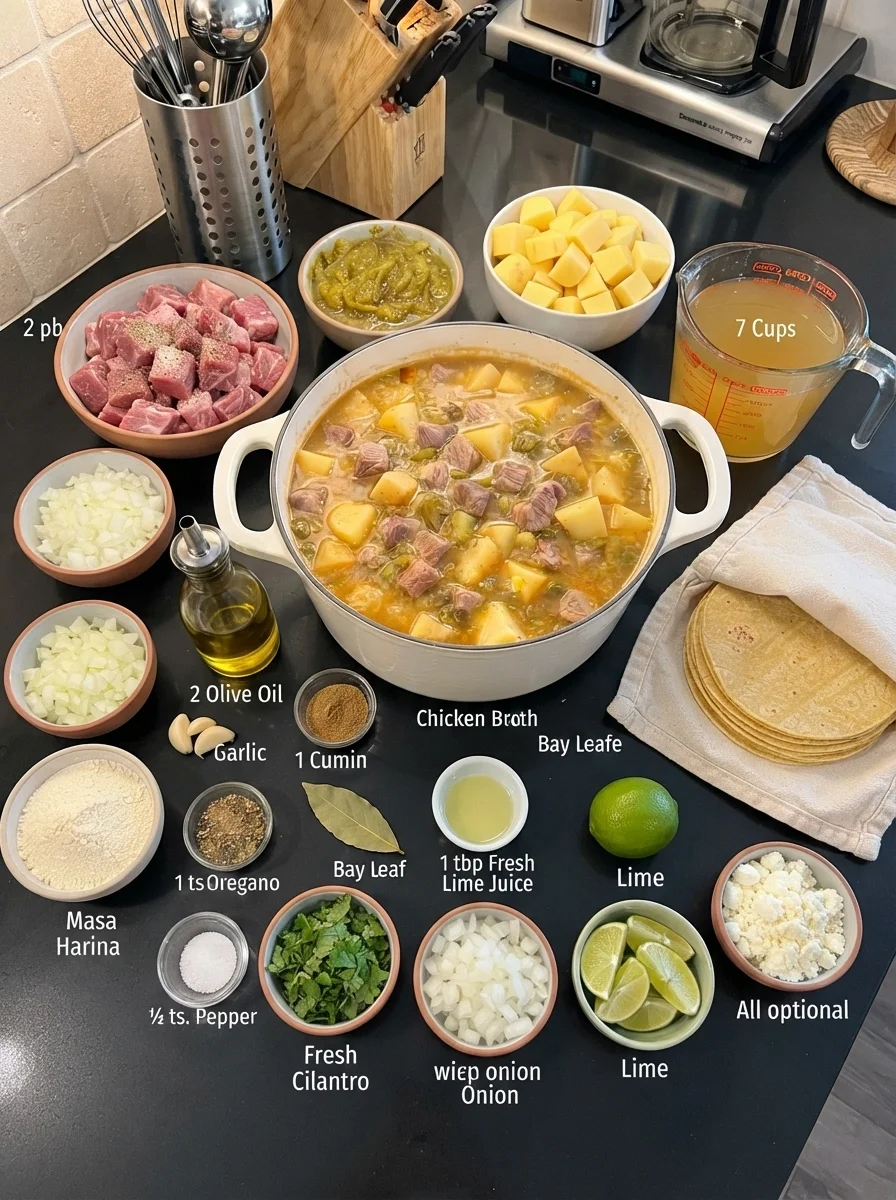
- 2 pounds boneless pork shoulder, cut into 1-inch cubes
- Up to 2 cups roasted mild New Mexico green chiles, peeled, seeded, and chopped; use less for hotter chiles
- 1½ pounds Yukon Gold potatoes, peeled and cut into 1-inch cubes
- 1 medium yellow onion, diced
- 4 garlic cloves, minced
- 7 cups chicken broth, plus more as needed
- ⅓ cup masa harina
- ¾ cup cool water, for the masa slurry
- 2 tablespoons olive oil
- 1 teaspoon ground cumin
- 1 teaspoon dried Mexican oregano
- Up to 1 teaspoon salt, to taste
- ½ teaspoon black pepper
- 1 bay leaf
- 1 tablespoon fresh lime juice, or to taste
Optional accompaniments
- Chopped cilantro
- Finely diced white onion
- Lime wedges
- Warm corn tortillas
- Crumbled queso fresco
The slurry water is additional to the 7 cups of broth. Toppings and tortillas are not included in estimates for the plain soup.
Ingredient Notes
Pork shoulder
Use boneless pork shoulder with some marbling, trimming large exterior fat deposits. Even cubes make it easier to judge tenderness across the batch.
Shoulder is appropriate for this slow-simmered method. Lean pork loin will not behave the same way during a long cook and can become dry.
Being fully cooked is not the same as being fork-tender. If the shoulder remains chewy after the suggested time, continue simmering before adding the potatoes. A fork should enter with little resistance, and the meat should begin yielding rather than springing back.
Green chiles
Use roasted Hatch or another New Mexico green chile product if available. Prepared canned or frozen chiles can be convenient, provided you know their heat level.
Two cups of mild chiles and two cups of hot chiles can produce very different meals. For unfamiliar or hot products, start with ½–1 cup and increase gradually. The regional name does not guarantee mildness.
More of a mild chile adds more chile flavor, not necessarily substantial heat. If you want more heat, choose a hotter chile product deliberately rather than expecting an unlimited amount of mild chile to achieve the same effect.
Potatoes
Yukon Gold potatoes have a naturally creamy texture. Cut them into similar 1-inch pieces so they cook at a similar rate.
Add them only when the pork is nearly tender. If they spend the entire pork-cooking period in the broth, they can break down and thicken the soup before the meat is ready.
Russet potatoes are a possible adaptation but may crumble more readily. Stir carefully and begin checking tenderness early.
Masa harina
Use masa harina rather than cornmeal, cornstarch, or ordinary corn flour. These products do not behave identically and should not be substituted by equal volume without adjusting the method.
Masa harina gives both body and flavor. A cool-water slurry helps distribute it, while a short simmer hydrates and cooks it into the broth.
The amount listed gives a noticeable corn contribution. If you prefer a lighter broth, add only part of the slurry initially and assess after simmering before adding more.
Broth and seasoning
Lower-sodium broth gives more control because the liquid reduces as it cooks. Begin with some of the salt and make the final adjustment near serving.
Cumin and Mexican oregano support the chiles without requiring a long spice list. Use a fresh-smelling oregano and crumble it lightly between your fingers if the leaves are large.
Equipment
Use a large heavy pot with a lid, tongs, a spoon, a small bowl and whisk for the slurry, and a clean plate for browned pork. A wide cooking surface makes batch browning easier.
The pot should have enough room for the potatoes and slurry water later. Do not fill it to the rim during the initial broth stage.
How to Make the Caldo
1. Prepare the ingredients
Dice onion, mince garlic, and measure the prepared chiles. Pat the pork dry and season with black pepper and part of the salt.
Keep raw pork and its utensils separate from ready-to-eat garnishes. Use clean hands and equipment when handling the finished soup.
You can cut potatoes closer to their cooking stage. If preparing them earlier, hold briefly in cold water in the refrigerator, then drain before adding.
2. Brown the pork
Heat olive oil over medium-high heat. Add pork in a single uncrowded layer and brown on several sides, approximately 5–7 minutes per batch.
Transfer to a plate and repeat. The meat does not need to cook through now; the simmer finishes it.
If the bottom residue begins turning black rather than brown, lower the heat and avoid incorporating burnt material into the broth. Browning adds flavor, but scorching can make the soup bitter.
3. Soften the onion
Reduce heat to medium. Add onion and cook for 4–5 minutes, stirring and loosening browned bits as moisture releases.
Add garlic, cumin, and oregano. Stir for 30–60 seconds until fragrant, avoiding browned garlic.
4. Add the chiles and broth
Stir in the green chiles and cook for 2–3 minutes. Add a small splash of broth if needed to loosen the base without scorching.
Return pork and collected juices. Pour in the measured broth and add the bay leaf. Stir gently, scraping up remaining browned bits.
5. Simmer the pork first
Bring just to a boil, then reduce to a quiet simmer and partially cover. Cook until the pork is nearly fork-tender, often approximately 1½–2 hours, but allow longer if necessary.
Check periodically and add broth if the liquid reduces excessively. A rolling boil is not needed and can make evaporation difficult to manage.
Test a piece before adding potatoes. It should already be close to the tenderness you want, because the potatoes need only a comparatively short cooking stage.
6. Add potatoes
Drain the prepared potatoes if held in water and stir into the pot. Simmer gently for approximately 20–25 minutes, or until a knife enters easily without the cubes disintegrating.
Check the pork again as well. If the potatoes finish but the meat still needs substantial time, lift the potatoes out temporarily and return them later rather than boiling them to pieces.
7. Make the slurry
Whisk ⅓ cup masa harina with ¾ cup cool water until smooth. Scrape the bottom of the bowl so no dry pocket remains.
If the mixture stands while you finish another task, stir again before pouring. Do not sprinkle all the dry masa directly into the hot pot, where clumps are harder to disperse.
8. Thicken gently
Keep the soup at a gentle simmer. Pour in the slurry slowly while stirring, using broad movements that do not crush the potatoes.
For a lighter result, start with about two-thirds of the slurry. Simmer uncovered for 8–10 minutes, stirring occasionally, then decide whether to add the rest and cook further.
The broth should develop body while remaining easy to ladle. Add hot broth or water in small amounts if it becomes too thick. The masa may thicken further as the soup stands and cools.
9. Finish and serve
Remove the bay leaf. Add lime juice gradually and adjust salt and pepper after tasting.
Ladle into bowls, distributing pork and potatoes evenly. Add cilantro, onion, queso fresco, or lime wedges as desired. Serve tortillas separately for dipping.
Tips for Good Texture
Let tenderness set the schedule
The shoulder may not be ready after 60–75 minutes. Waiting before adding potatoes protects both components from mismatched cooking times.
Keep the simmer quiet
Gentle heat makes the liquid level easier to control and helps potatoes stay intact. More vigorous bubbling is not a shortcut to a better result.
Whisk before pouring
A smooth slurry is easier to distribute than dry masa. Re-whisk if it settles in the bowl.
Add thickener gradually
You can add more after seeing its effect. A very thick pot is harder to correct without diluting the seasoning.
Taste after reduction
Seasoning changes as water evaporates. Hold some salt back until the end, especially with salted broth.
Troubleshooting
| Problem | Likely cause | Adjustment |
|---|---|---|
| Pork is chewy | Shoulder needs more time | Continue simmering before adding potatoes |
| Potatoes fall apart | Added too early or boiled hard | Add when pork is nearly tender and stir gently |
| Masa clumps | Dry powder added directly or slurry not mixed | Whisk with cool water and pour gradually |
| Broth becomes too thick | Full slurry, reduction, or cooling | Add broth gradually and reassess seasoning |
| Corn flavor seems raw | Slurry insufficiently cooked | Continue a gentle simmer, stirring carefully |
| Soup is too salty | Broth reduced after full seasoning | Use lower-sodium broth and season late |
| Heat is excessive | Hot chiles used at full volume | Start with less; dilute with unseasoned base if needed |
| Flavor lacks brightness | Rich broth needs finishing adjustment | Add lime gradually rather than automatically adding more salt |
If the potatoes have already begun breaking down, avoid aggressive stirring. Their starch contributes additional thickening, so you may need less masa than planned.
Variations
Roasted poblano addition
A prepared roasted poblano adds another layer of pepper flavor. It changes the ingredient list and may not be as hot as your New Mexico chiles, so taste before adjusting the overall amount.
Corn kernel addition
If you want whole corn as well as masa flavor, add a modest amount of frozen or cooked corn near the end of the potato stage and heat through. This is optional; the base recipe does not contain kernels.
Brothier caldo
Use less slurry and add broth as needed. Keep enough corn flavor to suit your preference without forcing a stew-like consistency.
Hotter bowls individually
Serve a small dish of hotter prepared chiles at the table. This lets different diners adjust heat without making the entire pot intense.
Cheese finish
Queso fresco is a topping rather than an ingredient melted into the broth. Add it to individual bowls and keep it separate for storage.
Serving Suggestions
Serve with warm corn tortillas and lime wedges. The soup already contains potatoes and masa, so a small fresh salad or crisp vegetable side offers a useful contrast.
Cilantro and finely diced onion bring freshness. Avocado is another optional addition if you want a richer bowl, but it is not necessary for the supplied recipe.
For a family meal, set garnishes out separately and keep the base simple. Smaller topping portions let the green chile flavor remain noticeable.
Make-Ahead Plan
Prepare the pork and chile base a day ahead if convenient. Cool promptly in shallow containers and refrigerate. The next day, reheat fully and add freshly cut potatoes, followed by the slurry after the potatoes become tender.
This gives more control over potato texture than storing a fully finished batch, though completed leftovers are still useful. If chilling the base overnight, you can remove some firm surface fat before reheating if desired.
For a fully assembled make-ahead meal, expect the masa to thicken during storage. Keep extra broth available and loosen each portion gently when warming.
Storage and Reheating
Refrigerator
Refrigerate within 2 hours of cooking, or within 1 hour if temperatures exceed 90°F. Divide large batches into shallow containers rather than leaving a deep pot on the counter until completely cold.
Keep at 40°F or below and use within 3–4 days. Store toppings separately and use clean utensils when portioning.
Freezer
Freeze in meal-sized freezer-safe containers for up to 3 months for best quality. Leave room for expansion and label with the date.
Potatoes may soften after thawing, and the masa-thickened broth may need stirring and extra liquid. For the best planned texture, freeze the pork base before adding potatoes and masa, then finish those fresh after thawing.
Reheating
Thaw frozen portions in the refrigerator. Reheat gently on the stove, stirring carefully and adding broth or water as needed, until the soup reaches 165°F throughout.
In the microwave, use a vented microwave-safe cover and stir partway through. Check multiple spots because pork and potato pieces can heat unevenly.
Reheating does not restart the original refrigerator storage period. Warm only the amount needed when practical.
Nutrition Notes
Pork shoulder fat content and portion count have a substantial effect on the estimate. Six large bowls contain more per serving than eight smaller ones, even though the pot is unchanged.
A broad estimate is approximately 400–550 calories for one-sixth of the base recipe, or approximately 300–410 for one-eighth, before tortillas, cheese, and other toppings. Use product labels and actual portions for a closer calculation.
Potatoes and masa provide carbohydrates. This is a hearty pork-and-potato meal rather than a low-carbohydrate soup. The base does not contain dairy, but optional queso fresco does.
Check masa, broth, and seasoning labels and preparation surfaces if gluten-free suitability matters.
Frequently Asked Questions
Does this contain corn kernels?
Not as written. The corn component is masa harina thickening the broth. Kernels are an optional variation.
Is this a dumpling soup?
No. The masa is whisked into a slurry, not shaped into dumplings.
Can I use pork loin?
Not with the same long simmer and expectations. Shoulder is intended for slow tenderizing; leaner loin needs an adapted method.
Can I use russet potatoes?
Yes as an adaptation, but they may break down more and add starch to the broth. Handle gently and consider using less masa.
Can I substitute cornmeal?
It is not a direct replacement for masa harina. Texture and flavor differ, so use masa for this method.
Why add the lime last?
Finishing near serving preserves a fresh citrus character and lets you adjust after the broth has reduced.
How can I make it less spicy?
Choose mild chiles and start with less. Removing some garnish does not correct an already intensely hot broth.
Can I double the recipe?
Use a pot with enough capacity and allow additional browning time. Cool leftovers in multiple shallow containers and do not assume the larger batch finishes on exactly the same schedule.
Recipe Card
New Mexico Pork & Green Chile Corn Masa Potato Caldo
A hearty pork-and-potato soup with roasted green chiles and a lightly masa-thickened broth.
Servings: 6 generous or 8 smaller
Prep: 25 minutes with prepared chiles
Cook: Approximately 2–2¾ hours
Total: Approximately 2½–3¼ hours
Ingredients
- 2 pounds boneless pork shoulder, 1-inch cubes
- Up to 2 cups prepared roasted mild New Mexico green chiles; less if hot
- 1½ pounds Yukon Gold potatoes, peeled, 1-inch cubes
- 1 diced yellow onion
- 4 minced garlic cloves
- 7 cups chicken broth, plus more as needed
- ⅓ cup masa harina
- ¾ cup cool water
- 2 tablespoons olive oil
- 1 teaspoon cumin
- 1 teaspoon Mexican oregano
- Up to 1 teaspoon salt, to taste
- ½ teaspoon black pepper
- 1 bay leaf
- 1 tablespoon lime juice, to taste
Optional serving: Cilantro, diced onion, lime, queso fresco, and warm corn tortillas.
Instructions
- Pat pork dry and season with some salt and black pepper. Brown in oil in uncrowded batches, about 5–7 minutes each. Transfer to a plate.
- Reduce heat to medium. Cook onion 4–5 minutes. Add garlic, cumin, and oregano; stir 30–60 seconds.
- Add chiles and cook 2–3 minutes. Return pork and juices, add broth and bay leaf, and bring just to a boil.
- Reduce to a gentle simmer, partially cover, and cook approximately 1½–2 hours or longer until pork is nearly fork-tender. Add broth as needed.
- Add potatoes and simmer approximately 20–25 minutes until tender and pork yields easily.
- Whisk masa with cool water until smooth. Stir gradually into gently simmering soup, using part initially if you prefer a lighter result.
- Cook 8–10 minutes, stirring gently, until the masa is hydrated and the broth lightly thickened. Add liquid if needed.
- Discard bay leaf, add lime gradually, adjust seasoning, and serve with optional garnishes.
Storage: Refrigerate promptly and use within 3–4 days. Freeze for up to 3 months for quality, expecting softer potatoes. Reheat to 165°F and loosen with broth.
Little tip: Get the pork nearly tender before adding potatoes, and whisk masa with cool water before adding it to the pot. Those two steps protect the potato texture and keep the broth smooth.
New Mexico Pork & Green Chile Corn Masa Potato Caldo
Description
A hearty pork-and-potato soup with roasted green chiles and a lightly masa-thickened broth.
Servings: 6 generous or 8 smaller
Prep: 25 minutes with prepared chiles
Cook: Approximately 2–2¾ hours
Total: Approximately 2½–3¼ hours
Ingredients
- 2 pounds boneless pork shoulder, 1-inch cubes
- Up to 2 cups prepared roasted mild New Mexico green chiles; less if hot
- 1½ pounds Yukon Gold potatoes, peeled, 1-inch cubes
- 1 diced yellow onion
- 4 minced garlic cloves
- 7 cups chicken broth, plus more as needed
- ⅓ cup masa harina
- ¾ cup cool water
- 2 tablespoons olive oil
- 1 teaspoon cumin
- 1 teaspoon Mexican oregano
- Up to 1 teaspoon salt, to taste
- ½ teaspoon black pepper
- 1 bay leaf
- 1 tablespoon lime juice, to taste
Optional serving: Cilantro, diced onion, lime, queso fresco, and warm corn tortillas.
Instructions
- Pat pork dry and season with some salt and black pepper. Brown in oil in uncrowded batches, about 5–7 minutes each. Transfer to a plate.
- Reduce heat to medium. Cook onion 4–5 minutes. Add garlic, cumin, and oregano; stir 30–60 seconds.
- Add chiles and cook 2–3 minutes. Return pork and juices, add broth and bay leaf, and bring just to a boil.
- Reduce to a gentle simmer, partially cover, and cook approximately 1½–2 hours or longer until pork is nearly fork-tender. Add broth as needed.
- Add potatoes and simmer approximately 20–25 minutes until tender and pork yields easily.
- Whisk masa with cool water until smooth. Stir gradually into gently simmering soup, using part initially if you prefer a lighter result.
- Cook 8–10 minutes, stirring gently, until the masa is hydrated and the broth lightly thickened. Add liquid if needed.
- Discard bay leaf, add lime gradually, adjust seasoning, and serve with optional garnishes.
Storage: Refrigerate promptly and use within 3–4 days. Freeze for up to 3 months for quality, expecting softer potatoes. Reheat to 165°F and loosen with broth.
Little tip: Get the pork nearly tender before adding potatoes, and whisk masa with cool water before adding it to the pot. Those two steps protect the potato texture and keep the broth smooth.