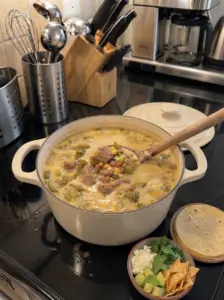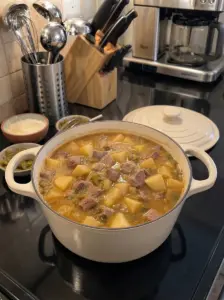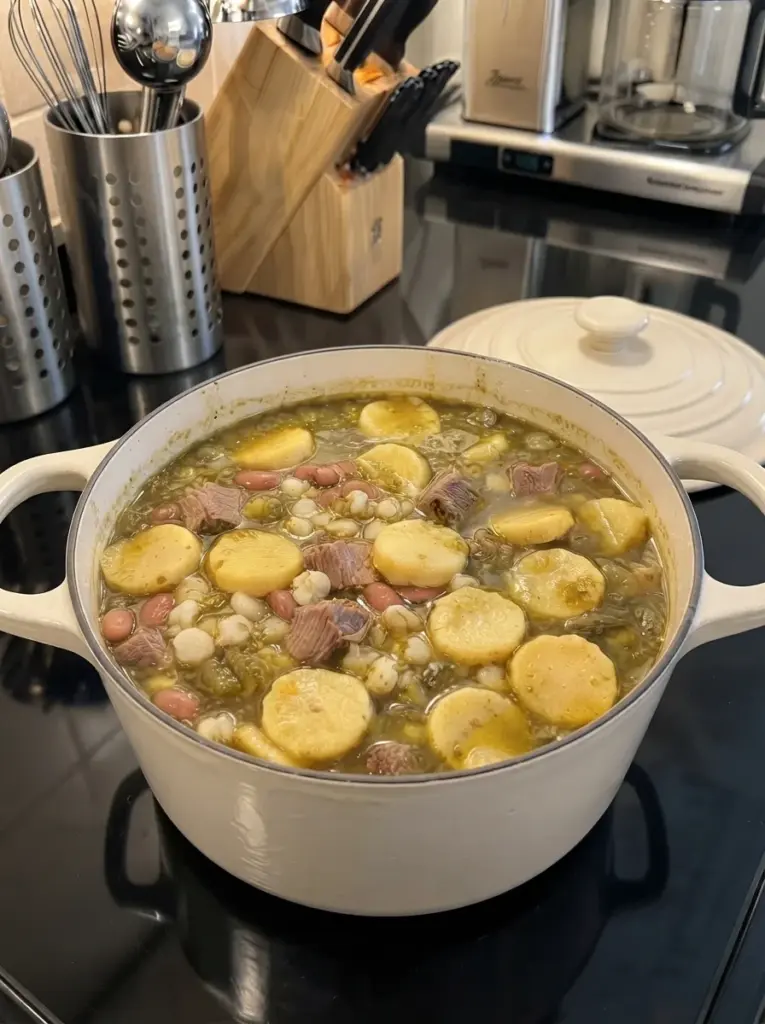
Tender pork shoulder, tangy tomatillos, roasted green chiles, and hominy make a hearty base for this green pozole-inspired soup. Pinto beans add a creamy bite, while small masa dumplings give each bowl a soft corn-flavored center. Radishes, onion, cilantro, and lime bring freshness and crunch at the table.
The hominy connects the soup to pozole, while the pinto beans and masa dumplings make this a substantial variation rather than a claim to one traditional regional recipe. It combines chile verde flavors with a slow-simmered pork broth and a separate, brief dumpling-cooking stage.
The most useful rule is to finish tenderizing the pork before adding dumplings. Shoulder can need longer than an hour, and the dumplings should not remain in the pot while you wait for tough meat to soften.
The method below expands the supplied recipe and has not been independently kitchen-tested. Follow the pork tenderness, masa consistency, and cut-open dumpling check alongside the approximate times.
Flavor and Texture
Tomatillos contribute acidity and a fresh green flavor. Roasted chiles add earthy depth, while cumin and Mexican oregano support the pork without overpowering the broth.
Hominy has a pleasantly chewy texture that differs from sweet corn. Pinto beans are softer and creamier, providing contrast. The dumplings are tender but compact; without wheat flour or a leavener, they should not resemble fluffy biscuit dumplings.
The finished dish should remain loose enough to ladle. Hominy, beans, and dumplings make the pot crowded, so extra broth may be needed toward the end.
Recipe Overview
| Detail | Guide |
|---|---|
| Yield | 6 generous or 8 smaller servings |
| Preparation | Approximately 30 minutes |
| Pork simmer | Usually 1½–2 hours, or longer until tender |
| Beans and hominy | About 15 minutes |
| Dumpling cooking | Approximately 15–25 minutes |
| Total time | Approximately 2¾–3½ hours, depending on browning and tenderness |
| Main texture | Brothy pork soup with chewy hominy and tender masa discs |
| Best make-ahead method | Prepare the base ahead; cook fresh dumplings before serving |
Some preparation overlaps with simmering. The time range is more realistic for shoulder than assuming every batch will be tender after 60–75 minutes.
Ingredients
Chile verde pork pozole
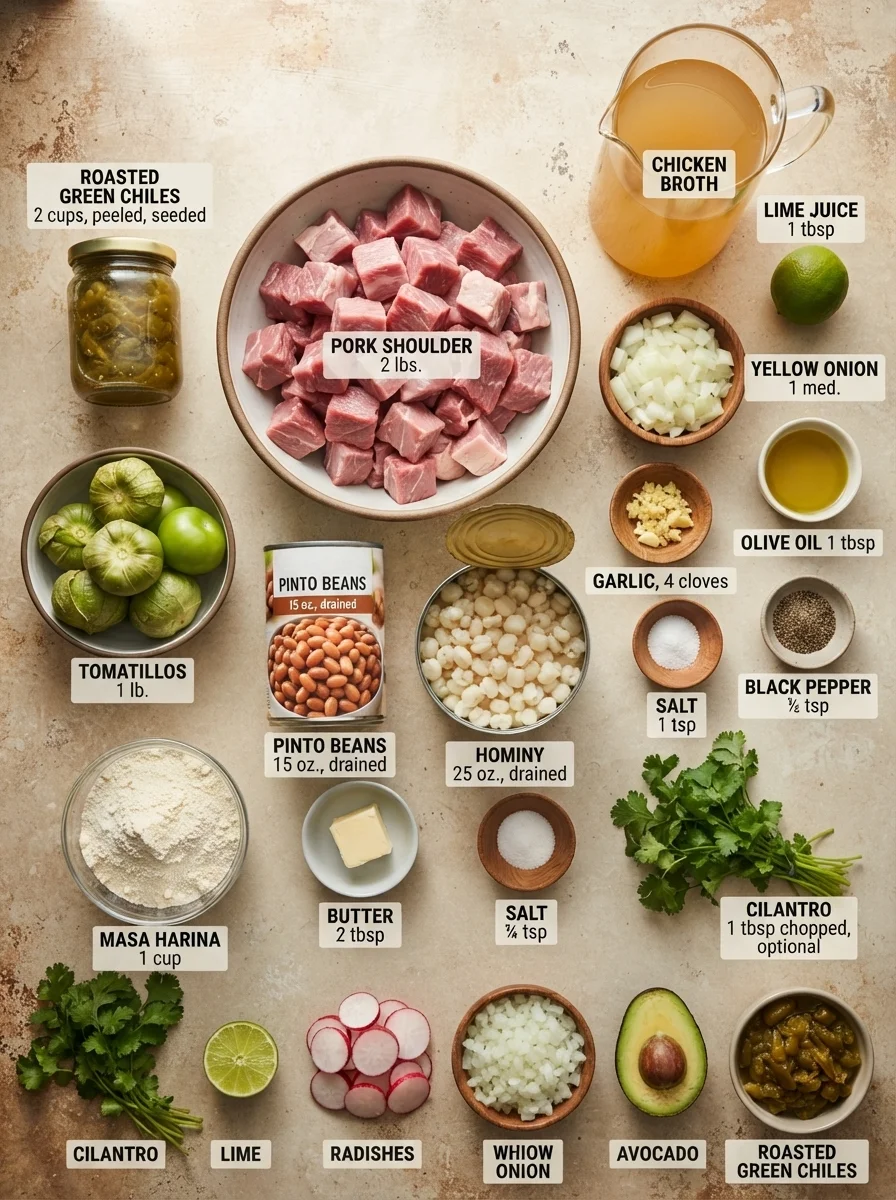
- 2 pounds boneless pork shoulder, cut into 1-inch cubes
- 1 can pinto beans, 15 ounces, drained and rinsed
- 1 can hominy, 25 ounces, drained and rinsed
- Up to 2 cups roasted mild green chiles, peeled, seeded, and chopped; use less for hotter chiles
- 1 pound tomatillos, husked, rinsed, and quartered
- 1 medium yellow onion, chopped
- 4 garlic cloves, minced
- 6 cups chicken broth, divided, plus extra as needed
- 1 teaspoon ground cumin
- 1 teaspoon dried Mexican oregano
- 1 tablespoon olive oil, plus a little more if needed for browning
- Up to 1 teaspoon salt, to taste
- ½ teaspoon black pepper
- 1 tablespoon fresh lime juice, or to taste
Masa dumplings
- 1 cup masa harina
- 2 tablespoons softened butter or vegetable shortening
- Approximately ½–¾ cup warm chicken broth or water, plus small adjustments as needed
- ¼ teaspoon salt
- 1 tablespoon finely chopped fresh cilantro, optional
The dumpling liquid is additional to the soup’s 6 cups. Start with ½ cup and add gradually rather than assuming every brand of masa needs the full ¾ cup.
Optional toppings
- Chopped fresh cilantro
- Lime wedges
- Thinly sliced radishes
- Finely diced white onion
- Diced avocado
- Additional roasted green chiles
Ingredient Notes
Pork shoulder
Choose boneless shoulder with some marbling. Trim large exterior fat deposits but do not expect a completely lean cut to give the same result.
Cut evenly so the pieces become tender at a similar rate. Small pieces can disappear into shreds while large ones remain resistant if their sizes vary substantially.
Shoulder needs time for connective tissue to soften. A fork should enter easily and the meat should yield without rubbery resistance. If it is still chewy at the estimated time, continue the gentle simmer before proceeding.
Pork loin is not a direct replacement for the same long schedule. Its leaner texture makes it easier to dry out.
Tomatillos
Remove the papery husks and rinse away the sticky coating. Choose firm tomatillos without soft spoiled areas.
This version blends them raw before simmering. Roasting them first would produce a different flavor and add preparation time; it is an optional adaptation rather than a required step.
Tomatillos can vary in tartness. Taste the finished broth before adding all the lime juice, since the base may already be bright enough.
Roasted green chiles
Two cups is a substantial amount. Use mild chiles unless you know the heat of the product and want a stronger bowl.
For medium or hot chiles, begin with ½–1 cup and increase gradually. The same volume can create very different heat levels, so the word green does not establish mildness.
Prepared frozen or canned roasted chiles are convenient. Thaw frozen chiles in the refrigerator and account for excessive loose liquid when adjusting broth.
Hominy and beans
Use cooked canned hominy and pinto beans. Rinse and drain to control the packing liquid and seasoning.
Hominy is not the same as canned sweet corn. It has a different texture and is central to the pozole character of the dish.
Dry beans or dry hominy need their own preparation and cooking method. They cannot be added directly using this timing and liquid quantity.
Masa harina
Use masa harina intended for tortillas or comparable masa preparations. Cornmeal, cornstarch, and ordinary corn flour do not form the same dough.
Masa brands absorb water differently. Resting after hydration gives you a clearer idea of the final consistency before shaping.
There is no baking powder in the supplied dumpling formula. Expect small tender, close-textured dumplings rather than a large airy rise.
Broth and salt
Lower-sodium broth provides more control because canned ingredients and evaporation contribute to the final seasoning.
Begin with only part of the salt and adjust after the pork simmer. Extra broth may be needed to keep the dumplings surrounded by liquid, so have some available before their cooking stage.
Equipment
Use a large, wide Dutch oven or heavy soup pot with a lid, a blender, a mixing bowl, tongs, and a slotted spoon. A wide pot is helpful because the dumplings need room around them.
A narrow pot packed with pork, beans, and hominy makes gentle handling difficult. If needed, cook dumplings in batches or in a separate saucepan of gently simmering broth.
Keep a clean plate for cooked food and follow ordinary separation between raw pork, ready-to-eat toppings, utensils, and work surfaces.
How to Make the Chile Verde Base
1. Blend the tomatillos and chiles
Place the quartered tomatillos in a blender with the prepared green chiles and ½ cup of the measured chicken broth. Blend until mostly smooth.
Use less chile initially if the product is hot or unfamiliar. You can blend or stir in additional prepared chile later.
Set the mixture aside. The remaining 5½ cups of the measured broth go into the soup during the next stages.
2. Brown the pork
Pat pork dry and season with some salt and the black pepper. Heat the olive oil over medium-high heat.
Brown in batches, leaving space between pieces. Cook for approximately 5–7 minutes per batch, turning to color several sides, then transfer to a plate.
The pork does not need to cook through now. Crowding can make it steam rather than brown, and turning every few seconds prevents a useful crust from forming.
3. Cook the aromatics
Reduce the heat to medium. Add onion and cook 4–5 minutes until softened. Add garlic, cumin, and oregano and stir for 30–60 seconds until fragrant.
If the base is dry, add a little oil or a small splash of broth. Avoid burning the garlic or the browned residue.
4. Add the green mixture
Pour in the blended tomatillo mixture carefully. Stir for 2–3 minutes, scraping the bottom to release browned bits.
Return pork and collected juices. Add the remaining measured broth and stir.
5. Simmer until fork-tender
Bring just to a boil, then reduce to a quiet simmer and partially cover. Cook approximately 1½–2 hours, checking periodically and allowing longer if needed.
The liquid should bubble gently rather than churn. Add broth if reduction leaves the meat insufficiently surrounded or makes the flavor too concentrated.
Test a piece before moving on. Tenderness, rather than the shortest listed time, determines when this stage is complete.
6. Add hominy and beans
Stir in the drained hominy and pinto beans. Simmer about 15 minutes to heat through and blend flavors.
Taste for salt and chile intensity. Keep the broth a little looser than the final consistency you want because the dumplings will absorb liquid.
Make the Masa Dumplings
1. Mix masa and salt
Combine the masa harina and salt in a bowl. Rub in the softened butter or shortening until distributed through the dry masa.
The mixture may look slightly crumbly, but it does not need to resemble a perfectly even pastry mixture.
2. Add liquid gradually
Add ½ cup warm broth or water and mix. Continue adding liquid a tablespoon at a time until a soft, moist dough forms.
It should hold together when pressed and roll without deep cracks, while remaining firm enough to shape. If using salty broth, consider its contribution before adding extra salt.
3. Rest and reassess
Let the dough rest 5–10 minutes. Fold in optional cilantro.
After resting, roll a small piece. If it crumbles, add liquid by the teaspoon. If it smears heavily and cannot hold shape, add masa by the teaspoon and rest briefly again.
Avoid a cycle of large additions in both directions. Small adjustments preserve the intended balance.
4. Shape small discs
With lightly damp hands, roll balls about 1 inch across, then flatten to approximately ⅜–½ inch thick. Aim for about 18–24 small dumplings, depending on portion size.
Even thickness matters more than a perfectly round shape. A very thick center can remain chalky while thin edges are cooked.
Keep shaped pieces under a lightly damp towel so they do not dry while you finish.
Cook the Dumplings and Finish
Test one first
Bring the finished pork base to a gentle simmer. Lower one dumpling into the liquid before adding the whole batch.
Watch whether it holds together. If it breaks apart, first check the heat: a vigorous boil can damage even workable dough. Adjust the remaining dough if necessary before continuing.
Add with room to spare
Lower the remaining pieces carefully into the soup, leaving space where possible. Add hot broth if the pot is too thick or crowded.
Cover and cook gently for approximately 15–25 minutes. Avoid repeated stirring. If you must move the contents, nudge around the edges rather than dragging a spoon through the dumplings.
Check the center
Lift one dumpling out, let it cool enough to handle, and cut through the thickest part. The center should be cooked and cohesive, without dry chalky masa or raw dough paste.
Floating alone does not prove doneness. Continue cooking and test again if necessary.
Finish with lime
Turn off the heat and add lime gradually, tasting as you go. Adjust broth and seasoning without rough stirring.
Ladle pork, hominy, beans, and dumplings into bowls. Garnish with cilantro, radishes, onion, and avocado as desired. Serve promptly while the dumplings are freshly cooked.
Tips for Reliable Results
Give shoulder enough time
Do not add dumplings to a pot of still-tough pork. The base can wait for dumplings, but dumplings should not endure another long tenderizing simmer.
Keep dough covered
Dry edges can crack and become more fragile. A lightly damp towel is useful during shaping.
Cook small, even pieces
A broad range of dumpling sizes makes timing difficult. Flatten the centers and use the largest piece for your doneness check.
Maintain a gentle simmer
A hard boil is unnecessary and increases breakage. The liquid should move quietly around the ingredients.
Garnish at the table
Radishes and onion provide a fresh contrast, while avocado softens the heat. Keep toppings separate for storage and individual preferences.
Troubleshooting
| Problem | Possible cause | Adjustment |
|---|---|---|
| Pork is chewy | Shoulder needs more time | Continue simmering before adding dumplings |
| Dumpling dough cracks | Too dry or insufficient rest | Rest, then add liquid gradually |
| Dumplings dissolve | Wet dough, strong boiling, or rough handling | Test one, lower heat, and adjust dough cautiously |
| Center is chalky | Dumplings too thick or undercooked | Flatten evenly and continue cooking |
| Soup is too thick | Reduction, crowded solids, or masa released into broth | Add hot broth gradually |
| Broth is overly tart | Tomatillos plus too much lime | Taste before adding lime and use it sparingly |
| Soup is very spicy | Hot chiles added in full volume | Start with less; dilute with additional unseasoned base if needed |
| Beans break down | Strong boiling or excessive stirring | Simmer quietly and handle gently |
Variations
Milder green broth
Use mild roasted chiles and offer hotter chiles at the table. This preserves the roasted pepper flavor without forcing every bowl to the same heat level.
Roasted tomatillo version
Roast the husked, rinsed tomatillos until softened and lightly charred before blending. Catch their juices and include them. This changes the flavor and requires extra preparation time.
Dumplings cooked separately
Cook in gently simmering broth in a separate saucepan when the main pot is crowded. Check one open before transferring carefully to bowls. They will exchange less flavor with the main base but can be easier to manage.
More vegetables
A modest amount of diced zucchini can simmer in the base until tender before adding dumplings. Avoid overfilling the pot, and adjust broth accordingly.
Optional cheese finish
A little shredded Monterey Jack on individual bowls adds richness, but it is not part of the supplied recipe. Count it separately in nutrition estimates.
Serving and Make-Ahead Ideas
Serve the soup as a main course with a crisp salad. Warm tortillas are optional; hominy and masa dumplings already provide substantial corn components.
For a gathering, arrange toppings in small bowls and keep perishable items chilled until needed. A few radish slices and a squeeze of lime can be enough to finish the bowl.
Prepare the pork base a day ahead for easier serving. Cool and refrigerate promptly, then reheat thoroughly, loosen with broth, and bring to a gentle simmer before cooking fresh dumplings.
This approach also makes it easier to remove excess firm fat from the chilled base if desired. Do not prepare the dough and leave it warm on the counter for hours while the base cooks.
Storage and Reheating
Refrigerator
Divide into shallow containers and refrigerate within 2 hours, or within 1 hour when temperatures exceed 90°F. Store at 40°F or below and use within 3–4 days.
The dumplings will soften and absorb broth during storage. That is why fresh dumplings are preferable for planned make-ahead meals.
Freezer
Freeze the cooked pork, hominy, bean, and broth base without dumplings for up to 3 months for best quality. Leave headspace and label with the date.
Thaw in the refrigerator, reheat, and make fresh dumplings. Freezing cooked dumplings is possible as a texture experiment, but they may become softer or more fragile after thawing.
Reheating
Warm gently on the stove, adding broth as needed and moving the dumplings carefully. Heat leftovers throughout to 165°F.
For microwave portions, cover with a vented microwave-safe lid, stir carefully partway through, and check several spots. Dense pieces can heat unevenly.
Keep fresh toppings separate and add after reheating. Reheating does not restart the storage period.
Nutrition Notes
Pork shoulder varies considerably in fat content, and dividing the pot into six versus eight bowls changes the numbers substantially. Hominy, beans, masa, fat, and optional avocado all contribute to the total.
As a broad estimate, the soup may provide approximately 450–600 calories per serving when divided into six, or roughly 340–450 when divided into eight, before optional toppings. Use your actual ingredient labels and portions for a closer calculation.
This is a hearty meal with carbohydrates from hominy, beans, and masa. It is not a low-carbohydrate soup simply because the base includes pork and green chiles.
Check broth, masa, and seasoning labels if gluten-free suitability matters, and consider cross-contact during preparation.
Frequently Asked Questions
Does pozole need hominy?
Hominy is central to the pozole character here. The recipe includes it; replacing it with sweet corn produces a different soup.
Can I use pork loin?
Not with the same long cooking method and expectations. Shoulder is the intended cut for tender slow-simmered pieces.
Can I use cornmeal for dumplings?
No, not directly. Masa harina hydrates and binds differently from ordinary cornmeal.
Do these dumplings rise?
There is no leavener in the formula. They should be tender but compact rather than fluffy like biscuit dumplings.
Why not add the hominy and beans at the start?
They are already cooked. Adding them after the long pork simmer helps preserve their texture.
How do I know the dumplings are done?
Cut one through the thickest part. It should have a cooked, cohesive center without dry masa or raw paste. Floating is not enough.
Can I omit lime?
Taste first. Tomatillos may provide enough acidity for your preference, so use lime as a finishing adjustment rather than an obligation.
Recipe Card
Chile Verde Pork & Pinto Bean Pozole with Masa Dumplings
A green pork pozole-inspired soup with hominy, pinto beans, and tender, compact masa dumplings.
Yield: 6 generous or 8 smaller servings
Prep: 30 minutes
Cook: Approximately 2¼–3 hours, depending on pork and batch browning
Total: Approximately 2¾–3½ hours
Soup Ingredients
- 2 pounds boneless pork shoulder, 1-inch cubes
- 1 can pinto beans, 15 ounces, drained and rinsed
- 1 can hominy, 25 ounces, drained and rinsed
- Up to 2 cups roasted mild green chiles, prepared and chopped; less if hot
- 1 pound tomatillos, husked, rinsed, quartered
- 1 chopped onion
- 4 minced garlic cloves
- 6 cups chicken broth, divided, plus extra as needed
- 1 teaspoon cumin
- 1 teaspoon Mexican oregano
- 1 tablespoon olive oil
- Up to 1 teaspoon salt, to taste
- ½ teaspoon black pepper
- 1 tablespoon lime juice, to taste
Dumpling Ingredients
- 1 cup masa harina
- 2 tablespoons softened butter or vegetable shortening
- Approximately ½–¾ cup warm broth or water, added gradually
- ¼ teaspoon salt
- 1 tablespoon chopped cilantro, optional
Instructions
- Blend tomatillos and prepared chiles with ½ cup of the measured broth until mostly smooth.
- Pat pork dry, season with some salt and pepper, and brown in oil in batches for approximately 5–7 minutes each. Transfer to a plate.
- Cook onion 4–5 minutes over medium heat. Add garlic, cumin, and oregano; stir 30–60 seconds.
- Add green mixture and stir 2–3 minutes, scraping browned bits. Return pork and juices; add remaining measured broth.
- Bring just to a boil, then simmer gently, partially covered, approximately 1½–2 hours or longer until fork-tender. Add broth as needed.
- Add hominy and beans; simmer 15 minutes.
- Mix masa and salt, rub in fat, and add warm liquid gradually, starting with ½ cup. Rest 5–10 minutes and adjust to a moist, cohesive dough. Add optional cilantro.
- Shape approximately 18–24 small discs, about 1 inch wide and ⅜–½ inch thick. Keep covered.
- Test one in gently simmering soup, then add remaining dumplings with space. Cover and cook 15–25 minutes, without vigorous boiling or rough stirring.
- Cut one open to confirm a cooked center. Add lime and seasoning to taste and serve with fresh toppings.
Storage: Refrigerate promptly and use within 3–4 days. Reheat to 165°F. Freeze the base without dumplings for up to 3 months for quality.
Little tip: Let the masa rest before adding more liquid, and let the pork become tender before adding dumplings. Those two pauses make the cooking sequence easier to control.
Print
Chile Verde Pork & Pinto Bean Pozole with Masa Dumplings
Description
A green pork pozole-inspired soup with hominy, pinto beans, and tender, compact masa dumplings.
Yield: 6 generous or 8 smaller servings
Prep: 30 minutes
Cook: Approximately 2¼–3 hours, depending on pork and batch browning
Total: Approximately 2¾–3½ hours
Ingredients
Soup Ingredients
- 2 pounds boneless pork shoulder, 1-inch cubes
- 1 can pinto beans, 15 ounces, drained and rinsed
- 1 can hominy, 25 ounces, drained and rinsed
- Up to 2 cups roasted mild green chiles, prepared and chopped; less if hot
- 1 pound tomatillos, husked, rinsed, quartered
- 1 chopped onion
- 4 minced garlic cloves
- 6 cups chicken broth, divided, plus extra as needed
- 1 teaspoon cumin
- 1 teaspoon Mexican oregano
- 1 tablespoon olive oil
- Up to 1 teaspoon salt, to taste
- ½ teaspoon black pepper
- 1 tablespoon lime juice, to taste
Dumpling Ingredients
- 1 cup masa harina
- 2 tablespoons softened butter or vegetable shortening
- Approximately ½–¾ cup warm broth or water, added gradually
- ¼ teaspoon salt
- 1 tablespoon chopped cilantro, optional
Instructions
- Blend tomatillos and prepared chiles with ½ cup of the measured broth until mostly smooth.
- Pat pork dry, season with some salt and pepper, and brown in oil in batches for approximately 5–7 minutes each. Transfer to a plate.
- Cook onion 4–5 minutes over medium heat. Add garlic, cumin, and oregano; stir 30–60 seconds.
- Add green mixture and stir 2–3 minutes, scraping browned bits. Return pork and juices; add remaining measured broth.
- Bring just to a boil, then simmer gently, partially covered, approximately 1½–2 hours or longer until fork-tender. Add broth as needed.
- Add hominy and beans; simmer 15 minutes.
- Mix masa and salt, rub in fat, and add warm liquid gradually, starting with ½ cup. Rest 5–10 minutes and adjust to a moist, cohesive dough. Add optional cilantro.
- Shape approximately 18–24 small discs, about 1 inch wide and ⅜–½ inch thick. Keep covered.
- Test one in gently simmering soup, then add remaining dumplings with space. Cover and cook 15–25 minutes, without vigorous boiling or rough stirring.
- Cut one open to confirm a cooked center. Add lime and seasoning to taste and serve with fresh toppings.
Storage: Refrigerate promptly and use within 3–4 days. Reheat to 165°F. Freeze the base without dumplings for up to 3 months for quality.
Little tip: Let the masa rest before adding more liquid, and let the pork become tender before adding dumplings. Those two pauses make the cooking sequence easier to control.