
Introduction
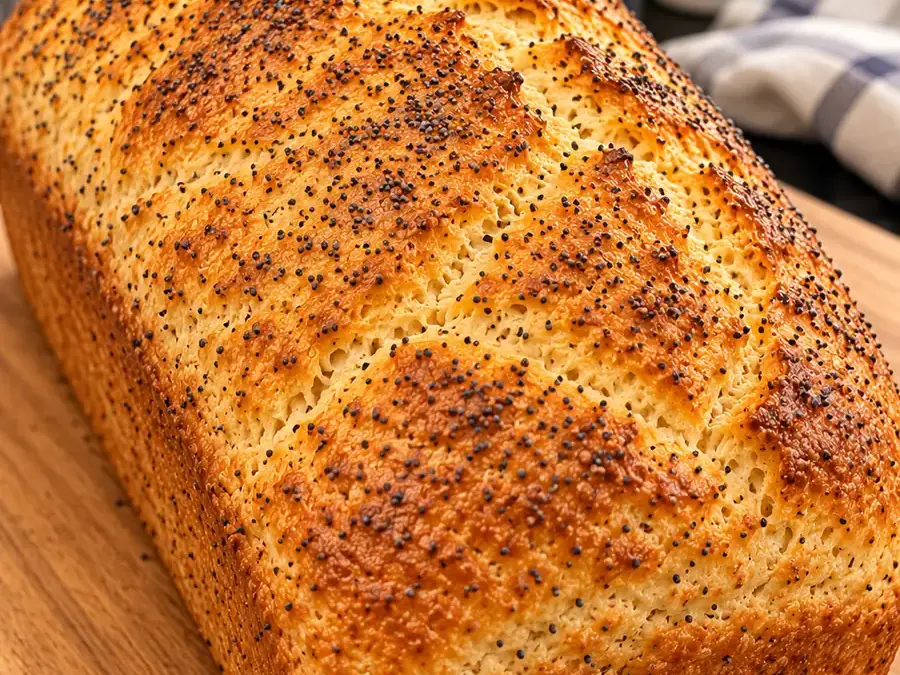
High-Protein Cottage Cheese Poppy Seed Bagel Bread brings a seeded breakfast favorite into a convenient sliceable loaf. Poppy seeds run through the crumb and cover the crown, while blended cottage cheese adds moisture and a gentle dairy tang. Bread flour gives the slices some chew, but baking powder keeps the preparation short and straightforward.
Expect a substantial quick bread with a tender, close crumb and a lightly crisp crust when freshly cooled. Its texture differs from the elastic interior and boiled shell of a traditional bagel. Its appeal is sturdy slices that toast well and make an easy foundation for breakfast or a small sandwich.
Allow about 2 hours 45 minutes overall, including 20 minutes of active preparation, a 55-minute bake, and 90 minutes of cooling. Preheating overlaps preparation; oven performance can lengthen that schedule.
Why You'll Love This Recipe
There is no yeast schedule to manage. Once the oven and pan are ready, the dough comes together with a blender, a bowl, and a sturdy spatula.
Poppy seeds appear inside and outside the loaf. The incorporated seeds distribute their flavor, while the topping adds a more noticeable texture to each slice.
Cottage cheese and eggs contribute protein as well as moisture and structure. Blending them first keeps large curds from interrupting the finished crumb.
The loaf divides into 7 practical servings of two slices each. Freeze those pairs separately and you can toast exactly what you need without thawing the whole bread.
Ingredients
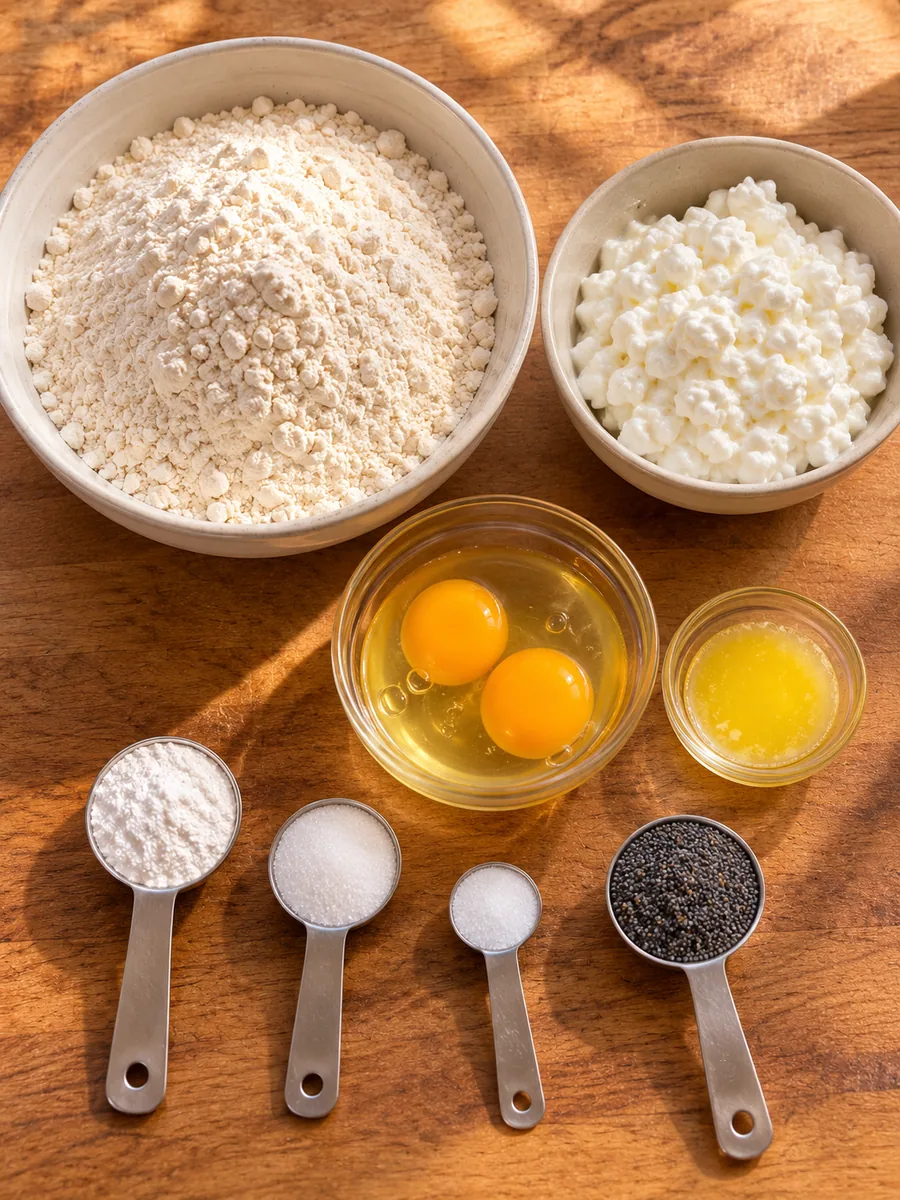
Weigh the flour and undrained cheese for dependable proportions. Divide the seeds before mixing so the topping portion stays separate. The melted butter should be fluid but no longer hot.
Smell the poppy seeds before using them; discard any with a sharp, rancid odor. Fresh seeds give this loaf its clean, lightly nutty finish.
- 3 cups bread flour, spooned and leveled (360 g)
- About 1 cup plain, undrained 4% milkfat cottage cheese (250 g)
- 2 large eggs, without shells (100 g)
- 1 tablespoon unsalted butter, melted and cooled (14 g)
- 1 tablespoon plus 1/2 teaspoon double-acting baking powder (14 g)
- 1 tablespoon granulated sugar (12 g)
- 1/2 teaspoon fine table salt (3 g)
- 1 tablespoon plus 2 teaspoons poppy seeds (15 g), divided
Ingredient Notes and Substitutions
Plain 4% milkfat cottage cheese is the intended choice. Lower-fat versions differ in moisture, protein, and texture; treat either 1% or 2% as a cautious substitution that may change the crumb. Do not drain the cheese or substitute a dry curd product.
Bread flour provides more chew than all-purpose flour. An equal weight of all-purpose flour is a cautious alternative, with a potentially softer, more fragile result. Keep the eggs at the listed weight; adding another egg changes both moisture and structure.
Estimated protein is 11.9 g per serving from documented ingredients, excluding poppy seeds. Makes 7 servings; one serving is two slices. Brands and moisture vary, and this ingredient-based estimate has no laboratory analysis. Complete poppy seed nutrient data were not supplied, so the high-protein claim in the requested title remains unverified and requires human nutritional review. The documented subtotal meets the editorial screening allowance; it does not establish a certified nutrient-content claim.
How to Make High-Protein Cottage Cheese Poppy Seed Bagel Bread
- Preheat the oven to 375°F with a rack in the middle. Line a 9-by-5-inch metal loaf pan with parchment rated for this temperature, leaving lifting handles. Blend the undrained cottage cheese, eggs, and melted, cooled unsalted butter until mostly smooth. Scrape the blender thoroughly to retain the measured moisture.
- Whisk the bread flour, baking powder, granulated sugar, fine table salt, and 9 g poppy seeds thoroughly in a large bowl. Break up visible baking powder lumps before adding the wet mixture so the loaf rises evenly and avoids concentrated bitter spots.
- Add the blended mixture and gently fold just until combined, scraping the bottom until no dry flour remains. Expect a heavy, sticky, scoopable dough that holds ridges rather than a pourable batter. Stop mixing at that endpoint; do not knead or proof. Do not taste raw dough. Wash hands and food-contact equipment after handling raw eggs.
- Allow 0 minutes of bench rest; transfer immediately to the prepared pan. Press gently into the corners and smooth the crown with the spatula. Scatter the remaining 6 g poppy seeds over the moist surface and press lightly to attach. This bagel-inspired quick loaf uses baking powder and is baked without boiling or fermentation.
- Bake for 55 minutes at 375°F, until the crown is browned and the center reaches 205°F on an instant-read thermometer. Insert the probe into the middle without touching the pan. Tent loosely with foil if the top darkens early; continue baking if necessary to reach the center temperature.
- Cool in the pan for 10 minutes, then lift onto a wire rack for another 80 minutes before slicing. Cut into 14 even slices. Makes 7 servings; one serving is two slices. Follow the hot-room refrigeration guidance in the storage section.
Expert Baking Tips
Blend the dairy mixture before opening the flour bowl. Smooth cottage cheese distributes its moisture more evenly, and having it ready helps you move directly from mixing to baking. Spread the divided poppy topping evenly rather than building a thick stripe down the center. A dense stripe can hide the color of the crust beneath it. Check doneness through the side of the loaf so the thermometer reaches the center without pushing the seed coating into the crumb.
Whisk the leavener through the flour thoroughly. Thick dough does not redistribute a pocket of baking powder as easily as a thin batter does.
Use a flexible spatula to scrape the blender and bowl. Leaving a noticeable amount of wet mixture behind can make the dough disproportionately dry.
Look for a rough, sticky mass with visible ridges. It should need help spreading into the pan. Slight surface irregularities are fine; aggressive smoothing can drag dough away from the corners.
Check the center temperature rather than relying on the browned crown. Cottage cheese creates a moist interior that can lag behind the surface, especially in an oven that runs hot.
Slice only after the full cooling period. Use a serrated knife with light sawing strokes, wiping the blade if damp crumbs collect. Compressing the loaf with downward pressure makes uneven slices.
Common Mistakes to Avoid
Adding flour until the dough stops sticking can produce a dry, heavy loaf. This formula is meant to be sticky. Use the spatula and parchment to handle it, and resist dusting the work surface or your hands with extra flour.
Overmixing in search of bagel-like elasticity works against this quick loaf. Once no loose flour remains, transfer it to the pan. A prolonged rest also delays baking after the leavener has been moistened.
A dark exterior does not prove the center is baked. If the crown browns early, cover it loosely with foil and use the thermometer to decide when to remove the loaf.
Warm slicing can leave a smeared, compressed interior even when the bread has reached its baking temperature. If slices seem damp, let the remaining loaf cool completely before cutting more.
Variations and Serving Ideas
For a savory variation, replace the 9 g incorporated poppy seeds with 9 g finely chopped fresh chives, keeping the poppy topping. This changes the base formula and adds fresh herb flavor without making the loaf heavily seasoned.
Serve toasted slices with cream cheese and cucumber, or with scrambled eggs for breakfast. These additions are serving suggestions and are not included in the protein estimate. Keep sandwich fillings modest so the close crumb remains easy to bite through.
For a simple lunch, toast both cut faces and add sliced turkey and mustard. Toasting also refreshes refrigerated slices and makes the seed topping more aromatic.
Storage and Freezing
Once cool, wrap the loaf or place slices in an airtight container. Refrigerate within 2 hours of baking at 40°F or below and use within 3–4 days. Above 90°F, refrigerate within 1 hour, finishing the cooling period in the refrigerator before wrapping tightly.
For longer storage, separate two-slice servings with parchment, wrap tightly, and freeze for up to 2 months for best quality. Press excess air from the outer freezer bag to limit drying.
Toast frozen slices directly, using an additional cycle if necessary. Alternatively, thaw a wrapped serving in the refrigerator. Avoid repeatedly warming and rechilling the entire loaf when you only need one portion. Slice before freezing so portions separate easily.
Frequently Asked Questions
Does this taste like a traditional bagel?
It has mild dairy tang, poppy seeds, and some chew, but a tender quick-bread crumb. Baking powder and the absence of boiling create a different texture.
Can I leave the cottage cheese chunky?
Blending is preferable here. Large curds can leave uneven moist pockets, making the dense center harder to assess and the slices less uniform.
Why is there no added water?
Undrained cottage cheese and eggs supply the formula's moisture. Adding water by habit could make the center wetter and extend the necessary baking time.
Can I use a smaller pan?
A narrower pan changes loaf depth and baking behavior. The stated timing is intended for a 9-by-5-inch metal loaf pan; use that size for this version.
Why did some topping fall off?
Loose seeds shed during slicing. Pressing the topping gently into the freshly smoothed, moist dough helps it attach without requiring an additional egg wash.
Can I mix the dough ahead?
Keep wet and dry mixtures separate in advance, refrigerating the wet mixture. Combine only when the oven is ready, then shape and bake promptly.
How should I divide the loaf?
Cut 14 similar slices and serve two per person, making 7 servings. The estimated 11.9 g protein applies to that pair, not to one slice.
WP Tasty Recipe Card
PrintHigh-Protein Cottage Cheese Poppy Seed Bagel Bread
- Total Time: 165 minutes
Ingredients
3 cups bread flour, spooned and leveled (360 g)
About 1 cup plain, undrained 4% milkfat cottage cheese (250 g)
2 large eggs, without shells (100 g)
1 tablespoon unsalted butter, melted and cooled (14 g)
1 tablespoon plus 1/2 teaspoon double-acting baking powder (14 g)
1 tablespoon granulated sugar (12 g)
1/2 teaspoon fine table salt (3 g)
1 tablespoon plus 2 teaspoons poppy seeds (15 g), divided
Instructions
Preheat the oven to 375°F with a rack in the middle. Line a 9-by-5-inch metal loaf pan with parchment rated for this temperature, leaving lifting handles. Blend the undrained cottage cheese, eggs, and melted, cooled unsalted butter until mostly smooth. Scrape the blender thoroughly to retain the measured moisture.
Whisk the bread flour, baking powder, granulated sugar, fine table salt, and 9 g poppy seeds thoroughly in a large bowl. Break up visible baking powder lumps before adding the wet mixture so the loaf rises evenly and avoids concentrated bitter spots.
Add the blended mixture and gently fold just until combined, scraping the bottom until no dry flour remains. Expect a heavy, sticky, scoopable dough that holds ridges rather than a pourable batter. Stop mixing at that endpoint; do not knead or proof. Do not taste raw dough. Wash hands and food-contact equipment after handling raw eggs.
Allow 0 minutes of bench rest; transfer immediately to the prepared pan. Press gently into the corners and smooth the crown with the spatula. Scatter the remaining 6 g poppy seeds over the moist surface and press lightly to attach. This bagel-inspired quick loaf uses baking powder and is baked without boiling or fermentation.
Bake for 55 minutes at 375°F, until the crown is browned and the center reaches 205°F on an instant-read thermometer. Insert the probe into the middle without touching the pan. Tent loosely with foil if the top darkens early; continue baking if necessary to reach the center temperature.
Cool in the pan for 10 minutes, then lift onto a wire rack for another 80 minutes before slicing. Cut into 14 even slices. Makes 7 servings; one serving is two slices. Follow the hot-room refrigeration guidance in the storage section.
- Prep Time: 20 minutes
- Cook Time: 55 minutes