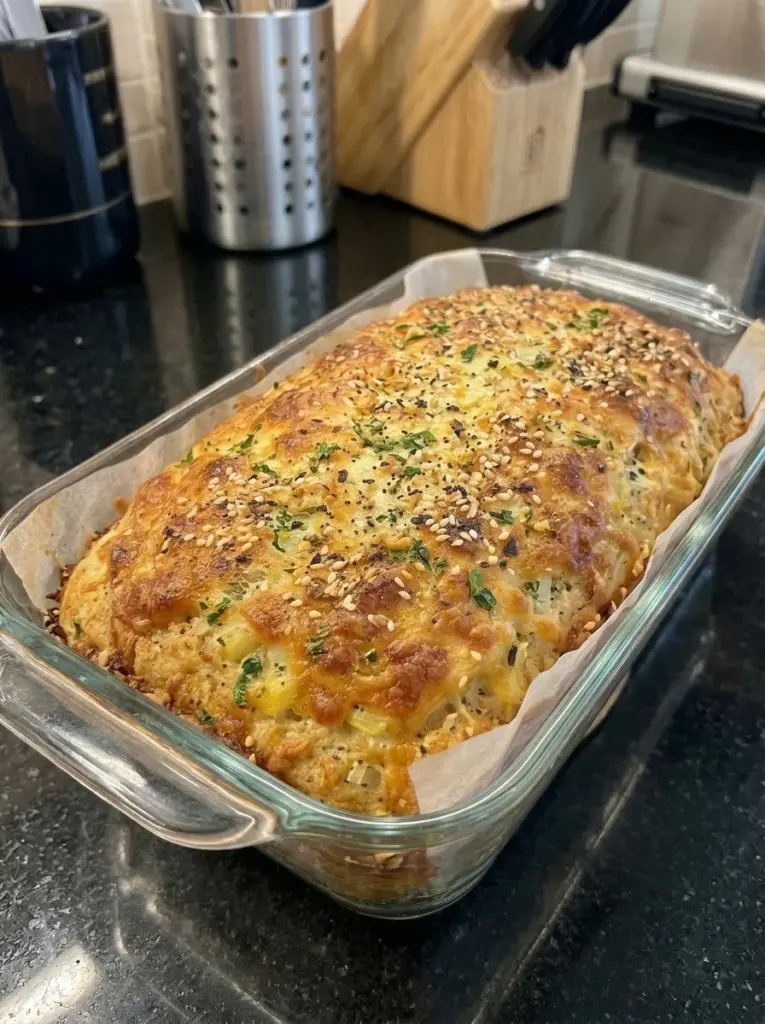
Cottage cheese, garlic, and herbs turn a short list of baking ingredients into a savory bread that is easy to mix and pleasant to toast. This High-Protein Cottage Cheese Garlic Herb Bagel Bread has a tender, close-textured crumb and a golden surface, with an optional sesame or everything-seasoned finish.
The cottage cheese supplies moisture and protein, while a mixture of all-purpose and whole-wheat flour gives the bread substance. Garlic powder, onion powder, and dried herbs season the dough throughout. A fresh garlic topping adds a fragrant finishing layer after baking.
The name is bagel-inspired: this is a baking-powder quick bread, without yeast fermentation or a boiling step. Expect a softer, more tender interior than a traditional chewy bagel. Toasting slices or split rounds brings out the savory flavor and helps the surface become firmer.
The ingredient list below follows the supplied cottage cheese dough. Although Greek yogurt appeared in the original introduction, it was not included in the measured ingredients, so it is not added here. Adding it without adjusting the flour would make the dough wetter.
Recipe at a Glance
- Preparation: About 15 minutes
- Dough rest: 5–10 minutes
- Baking: About 20–28 minutes for six rounds, or 30–45 minutes for a shallow round loaf
- Cooling: About 20–30 minutes for rounds; 45–60 minutes for a loaf
- Yield: 6 rounds or 1 small loaf, cut into 6 portions
- Total: About 1–1½ hours for rounds, or 1½–2¼ hours for a loaf
- Method: Baking-powder quick bread
The timing is a guide rather than a tested guarantee. The supplied formula has not been kitchen-tested here, and cottage cheese moisture and loaf thickness can change the result. Six shallow rounds are the more manageable starting format because their centers bake more readily than a thick loaf.
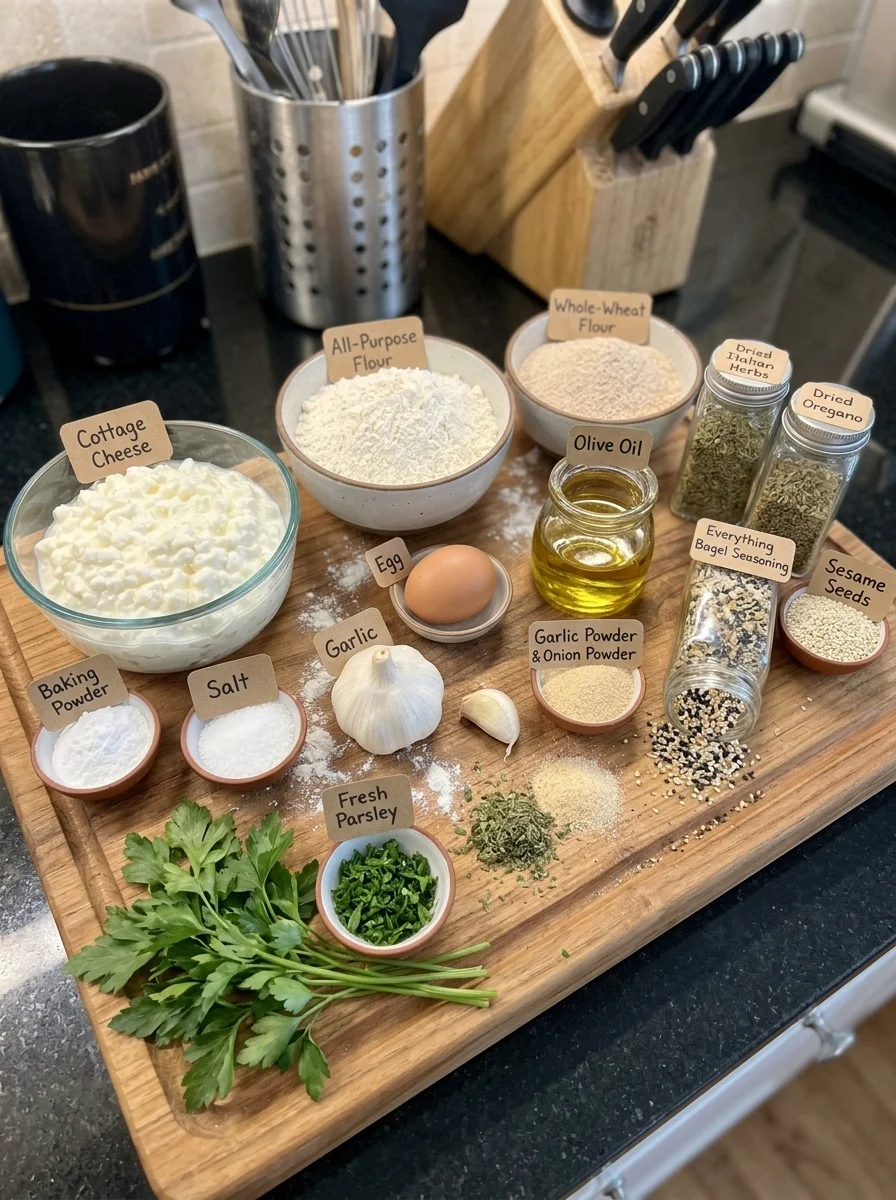
Ingredients
For the Bread
- 1 cup low-fat cottage cheese, thick rather than watery
- 1 cup all-purpose flour, spooned and leveled, plus a little for handling if needed
- ½ cup whole-wheat flour, spooned and leveled
- 2 teaspoons baking powder
- ½ teaspoon fine table salt
- 1 teaspoon garlic powder
- 1 teaspoon onion powder
- 1 teaspoon dried Italian herbs
- 1 tablespoon finely chopped fresh parsley, or 1 teaspoon dried parsley
- 1 large egg
- 1 tablespoon olive oil
For the Garlic Herb Finish
- 1 tablespoon olive oil or butter
- 1 small garlic clove, finely minced
- 1 teaspoon chopped fresh parsley
- ½ teaspoon dried oregano
Optional Surface Topping
- 1 tablespoon sesame seeds or everything bagel seasoning
The garlic mixture is prepared while the bread bakes and brushed on afterward. This reduces the risk of small fresh garlic pieces scorching during the full baking time. Seeds can be added before baking.
What Texture Should You Expect?
This bread has a compact but tender crumb, with some chew from wheat flour. It does not have the elastic interior or shiny boiled crust of a traditional bagel.
Baking powder lifts the dough in the oven, while the egg helps the structure set. Cottage cheese keeps the crumb moist, which also means it needs adequate baking and cooling.
The whole-wheat flour gives a slightly hearty flavor and absorbs moisture during the short rest. A thickly shaped loaf may take considerably longer to bake than the same dough divided into rounds.
For a sandwich, use a split round or a moderately thick toasted slice. Thin, warm slices are more fragile and may compress under heavy fillings.
Ingredient Notes
Cottage Cheese
Use cottage cheese with a thick consistency. Pour off a pool of loose surface whey before measuring, but do not squeeze the curds completely dry.
Blend until smooth for an even crumb. A food processor works as well as a blender. If the cottage cheese will not move through the blades, add the measured egg rather than extra milk or yogurt.
Brand differences matter. Products vary in moisture, salt, and added stabilizers, so a dough made with one brand may feel softer than another.
Flour
The all-purpose flour provides a relatively tender base, while whole-wheat flour adds a nutty flavor and hearty texture. Spoon and level both rather than packing the cups.
Do not add a large amount of extra flour immediately because the dough feels sticky. Let it rest first so the whole-wheat flour can absorb moisture.
Gluten-free flour is not a guaranteed direct substitute. An almond-flour version would also need a different formula because its binding behavior and fat content differ from wheat flour.
Egg and Olive Oil
The egg helps bind the dough and set the crumb. Olive oil contributes richness and makes the dough easier to handle.
A mild olive oil keeps the garlic and herbs central. A more peppery oil is noticeable in such a small loaf but can work if you enjoy that flavor.
Seasonings
Garlic powder and onion powder distribute evenly without adding the moisture of raw onion. Italian herb blends differ, so start with the listed teaspoon and adjust in a future batch if desired.
Use either fresh or dried parsley in the listed quantities, not both at full strength. Finely chop fresh parsley so there are no long stems in the dough.
Everything seasoning often contains salt. If using a particularly salty blend, reduce the dough’s added salt modestly or use sesame seeds instead. Taste preferences and cottage cheese saltiness also influence the result.
Garlic Finish
Fresh garlic gives a stronger aroma than powder. Warming it gently in the measured oil or butter mellows the raw edge before it goes onto the baked bread.
Do not let it turn dark brown. Small garlic pieces burn quickly and can become bitter. Parsley is added off the heat so it retains a fresher flavor.
Equipment
Use a mixing bowl, spatula, measuring cups and spoons, baking sheet, parchment, and wire rack. A blender or food processor smooths the cottage cheese.
A small saucepan or skillet is useful for the finishing mixture. A thermometer can support the doneness check, but the center’s condition matters more than chasing a single number.
For this method, use either shallow rounds or a shallow round loaf on a baking sheet. A deep loaf pan changes the shape and timing and is not treated as interchangeable here.
How to Make the Bread
1. Prepare the Oven and Sheet
Heat the oven to 375°F with a rack near the center. Line a baking sheet with parchment rated for that temperature.
Have the flour measured before beginning. The dough does not need a long room-temperature rise because it contains baking powder rather than yeast.
2. Blend the Cottage Cheese
Blend cottage cheese until smooth, scraping as needed. Add the measured egg if necessary to help the blades move.
Combine the blended cheese with the egg, if not already added, and the tablespoon of olive oil. No Greek yogurt or other liquid is needed in the supplied formula.
3. Mix the Dry Ingredients
In a bowl, stir together both flours, baking powder, salt, garlic powder, onion powder, Italian herbs, and parsley.
Distributing the leavener now helps avoid concentrated pockets. Add the blended mixture and stir until no large dry areas remain.
4. Rest Briefly
Let the dough rest for 5–10 minutes. The whole-wheat flour will absorb some moisture and the mixture may become easier to handle.
Expect a soft, tacky dough rather than a dry kneaded bagel dough. If it is still excessively sticky, add flour one tablespoon at a time, using only enough to gather and portion it. More flour makes the dough easier to handle but can also make the bread heavy.
If the mixture is closer to a thick batter than a shapeable dough, use lightly oiled spoons to portion shallow mounds rather than adding flour indefinitely. That texture signals ingredient variation, so note it for the next batch.
5. Shape Six Rounds
Divide into six portions with lightly floured or oiled hands. Gently gather each portion and flatten to a round approximately ¾ inch thick.
If you want bagel-style rings, make a generous opening in the center because it will narrow during baking. The hole is decorative and does not turn the quick bread into a boiled bagel.
Arrange with space between portions. There is no need to knead for several minutes; a few gentle folds to gather the dough are sufficient.
Alternative: Shape a Shallow Loaf
Gather the dough into a round approximately 6 inches across and no more than about 1½ inches thick. Place on the lined sheet.
A tall, thick mound is harder to bake through before the exterior darkens. Keep the shape shallow and allow a longer baking window than for the rounds.
6. Add Optional Seeds
Press the sesame seeds or everything seasoning lightly onto the surface. If needed, use slightly damp fingertips to help them adhere without adding another ingredient.
Do not apply the fresh garlic finish yet. It is reserved until the bread is baked.
7. Bake Until Set
Bake rounds for about 20–28 minutes, checking from 20 minutes. A shallow loaf may need about 30–45 minutes or longer depending on thickness and moisture.
The surface should be golden, and the center should not look wet or doughy. Test a discreet spot with a thin skewer. A few moist crumbs are acceptable; a smear of uncooked dough means it needs more time.
A center reading around 195–205°F can be a supporting guide, particularly for the loaf. Consider that together with texture and appearance rather than using temperature alone.
If the surface has enough color before the center is ready, tent loosely with foil and continue in short intervals.
8. Prepare the Garlic Finish
Near the end of baking, warm the tablespoon of oil or butter in a small pan over low heat. Add the minced garlic and stir just until fragrant, about 30–60 seconds, without browning.
Remove from the heat and stir in parsley and oregano. Use the mixture for this batch rather than saving fresh garlic in oil for extended storage.
9. Brush and Cool
Brush the warm baked bread lightly with the garlic mixture. Use the full tablespoon across the batch rather than repeatedly adding more fat.
Transfer to a rack. Let rounds cool about 20–30 minutes and a loaf about 45–60 minutes, or until the center is no longer hot and fragile.
Split or slice with a serrated knife. Warm the cut portions afterward if you want hot bread without compressing the crumb.
Tips for Better Results
Match the format to the dough. Six shallow rounds are easier to manage than an untested deep loaf.
Rest before adding extra flour. Whole-wheat flour needs a little time to absorb moisture.
Keep shaping gentle. Prolonged kneading can make this quick bread tougher without creating traditional bagel texture.
Apply fresh garlic after baking. Gentle warming plus a finishing brush gives better control over scorching.
Let the center cool. A brief pan rest is not enough for a thick loaf to become easy to slice.
Troubleshooting
| Problem | Possible cause | Helpful adjustment |
|---|---|---|
| Dough is very sticky | Wet cottage cheese or incomplete hydration | Rest first, then use modest flour additions or spoon shallow portions. |
| Bread is dense | Too much extra flour or a thick shape | Handle gently, limit additions, and use shallow rounds. |
| Center is gummy | Underbaking or slicing hot | Bake until set and cool through before cutting. |
| Garlic tastes bitter | It browned or burned | Warm briefly over low heat and apply after baking. |
| Crust darkens early | Shape too thick or rapid oven browning | Tent with foil and allow the middle to finish. |
| Bread tastes salty | Cottage cheese plus seasoning blend | Use sesame or a less salty blend and reassess added salt next time. |
Flavor Variations
Parmesan Garlic
Fold in ¼ cup finely grated Parmesan as an optional addition. It increases salt, protein, and calories and may make the crumb richer. Avoid adding extra salt automatically.
Sesame Herb
Choose sesame seeds for a simpler topping without the salt and dried garlic found in many everything blends.
Mild Herb Bread
Reduce the garlic powder and use a little extra parsley if you prefer a gentler flavor for breakfast sandwiches.
Spicy Herb Rounds
Add a small pinch of red pepper flakes to the dry ingredients. Keep the amount modest so it complements rather than overwhelms the herbs.
These additions change the supplied formula and have not been kitchen-tested here. Record the amounts you use if you want to repeat a result.
Serving Ideas
Split a cooled round and toast the cut sides before filling with egg, turkey, or a thin layer of cream cheese. Toasting provides a firmer surface for moist fillings.
Serve loaf slices beside tomato soup, a chopped salad, or scrambled eggs. The garlic finish is savory enough that the bread needs little extra seasoning at the table.
For a breakfast plate, pair with eggs and fresh fruit. The bread contributes protein but does not need to carry the entire meal on its own.
Assemble sandwiches shortly before eating. Wet tomatoes, sauces, or large amounts of filling can overwhelm a tender quick-bread crumb.
Storage and Reheating
For this moist cottage cheese bread with a fresh garlic finish, refrigerate after cooling and within 2 hours of baking. Store in a covered container at 40°F or below for up to 4 days, considering the freshness of the ingredients.
Avoid wrapping tightly while steam is still rising. Cool on a rack, then refrigerate promptly rather than leaving it out overnight.
Freeze cooled rounds or slices with parchment between them in a freezer-safe bag. Use within 2 months for best quality.
Toast chilled portions or warm in a 325°F oven until heated through. Watch the garlic topping so it does not scorch during reheating. Split rounds before warming if you want crisp cut surfaces.
Do not save leftover garlic-oil mixture at room temperature. The method makes only enough to brush the bread.
Protein and Nutrition Notes
With the listed dough and the tablespoon of finishing oil or butter divided among six portions, a practical estimate is approximately 210–240 calories and 9–11 grams of protein per portion, before optional Parmesan or additional serving ingredients.
The total depends on cottage cheese labels, flour measurement, and how much finishing mixture is used. Greek yogurt is not included because it is not part of the measured recipe.
This is a wheat-based bread and contains a meaningful amount of carbohydrate. Cottage cheese does not make it low-carb or keto. The recipe also contains dairy and egg, with sesame present if that topping is chosen.
For a closer calculation, add the values for your measured ingredients and divide by the actual number of portions. Calling a slice smaller does not change the batch’s total protein; it changes how that protein is distributed.
Frequently Asked Questions
Where is the Greek yogurt?
It was mentioned in the supplied introduction but not in the ingredient list. This version follows the measured cottage cheese dough and does not add yogurt.
Is this a traditional bagel?
No. It is a bagel-inspired quick bread. Traditional bagels usually involve yeast fermentation, shaping, and boiling before baking, producing a different crust and chew.
Can I use only all-purpose flour?
That changes absorption and flavor. You can explore the substitution, but expect a different dough and assess it after the short rest rather than adding extra liquid immediately.
Can I make it without an egg?
An egg substitute would alter binding and moisture. The supplied formula includes the egg, and an egg-free version needs separate development.
Can I use cottage cheese without blending?
You can mash it well, but remaining curds create a less uniform texture. Blending with the egg is the smoother option.
Why move the garlic topping to the end?
Finely minced fresh garlic can scorch during a full bake. Gentle warming and a finishing brush preserve the garlic flavor with better control.
Can I double it?
Yes. Make twelve rounds or two shallow loaves rather than one oversized thick loaf. Check each tray or loaf independently.
Recipe Card
High-Protein Cottage Cheese Garlic Herb Bagel Bread
A savory cottage cheese quick bread with a bagel-inspired seasoning and fresh garlic finish. Suggested adaptation; not kitchen-tested here.
Prep: 15 minutes | Rest: 5–10 minutes | Bake: 20–28 minutes for rounds or 30–45 minutes for a shallow loaf
Yield: 6 rounds or 1 small loaf divided into 6 portions
Bread Ingredients
- 1 cup thick low-fat cottage cheese
- 1 cup all-purpose flour, plus a little for handling
- ½ cup whole-wheat flour
- 2 teaspoons baking powder
- ½ teaspoon fine table salt
- 1 teaspoon garlic powder
- 1 teaspoon onion powder
- 1 teaspoon Italian herbs
- 1 tablespoon chopped fresh parsley or 1 teaspoon dried parsley
- 1 large egg
- 1 tablespoon olive oil
Finish
- 1 tablespoon olive oil or butter
- 1 small garlic clove, minced
- 1 teaspoon chopped parsley
- ½ teaspoon oregano
- Optional: 1 tablespoon sesame seeds or everything seasoning for the surface
Instructions
- Heat the oven to 375°F. Line a baking sheet with parchment.
- Blend cottage cheese with the egg until smooth, then mix in the oil.
- Combine flours, baking powder, salt, and dry seasonings. Add the blended mixture and stir until combined.
- Rest 5–10 minutes. Use minimal extra flour only if necessary.
- Shape six shallow rounds about ¾ inch thick, or a shallow round loaf about 6 inches across and no more than about 1½ inches thick.
- Add optional seeds. Bake rounds about 20–28 minutes or the loaf about 30–45 minutes, until golden and set in the center. Tent if needed.
- Warm finishing oil or butter with garlic over low heat just until fragrant. Remove from heat and add parsley and oregano.
- Brush onto baked bread. Cool rounds 20–30 minutes or the loaf 45–60 minutes before cutting, adjusting until the center is no longer hot.
Storage: Refrigerate within 2 hours of baking; keep covered for up to 4 days. Freeze for up to 2 months for best quality.
Estimated nutrition: Approximately 210–240 calories and 9–11 grams protein per one-sixth batch before optional additions. Not a low-carb bread.

High-Protein Cottage Cheese Garlic Herb Bagel Bread
Description
A savory cottage cheese quick bread with a bagel-inspired seasoning and fresh garlic finish. Suggested adaptation; not kitchen-tested here.
Prep: 15 minutes | Rest: 5–10 minutes | Bake: 20–28 minutes for rounds or 30–45 minutes for a shallow loaf
Yield: 6 rounds or 1 small loaf divided into 6 portions
Ingredients
- 1 cup thick low-fat cottage cheese
- 1 cup all-purpose flour, plus a little for handling
- ½ cup whole-wheat flour
- 2 teaspoons baking powder
- ½ teaspoon fine table salt
- 1 teaspoon garlic powder
- 1 teaspoon onion powder
- 1 teaspoon Italian herbs
- 1 tablespoon chopped fresh parsley or 1 teaspoon dried parsley
- 1 large egg
- 1 tablespoon olive oil
Finish
- 1 tablespoon olive oil or butter
- 1 small garlic clove, minced
- 1 teaspoon chopped parsley
- ½ teaspoon oregano
- Optional: 1 tablespoon sesame seeds or everything seasoning for the surface
Instructions
- Heat the oven to 375°F. Line a baking sheet with parchment.
- Blend cottage cheese with the egg until smooth, then mix in the oil.
- Combine flours, baking powder, salt, and dry seasonings. Add the blended mixture and stir until combined.
- Rest 5–10 minutes. Use minimal extra flour only if necessary.
- Shape six shallow rounds about ¾ inch thick, or a shallow round loaf about 6 inches across and no more than about 1½ inches thick.
- Add optional seeds. Bake rounds about 20–28 minutes or the loaf about 30–45 minutes, until golden and set in the center. Tent if needed.
- Warm finishing oil or butter with garlic over low heat just until fragrant. Remove from heat and add parsley and oregano.
- Brush onto baked bread. Cool rounds 20–30 minutes or the loaf 45–60 minutes before cutting, adjusting until the center is no longer hot.
Storage: Refrigerate within 2 hours of baking; keep covered for up to 4 days. Freeze for up to 2 months for best quality.
Estimated nutrition: Approximately 210–240 calories and 9–11 grams protein per one-sixth batch before optional additions. Not a low-carb bread.