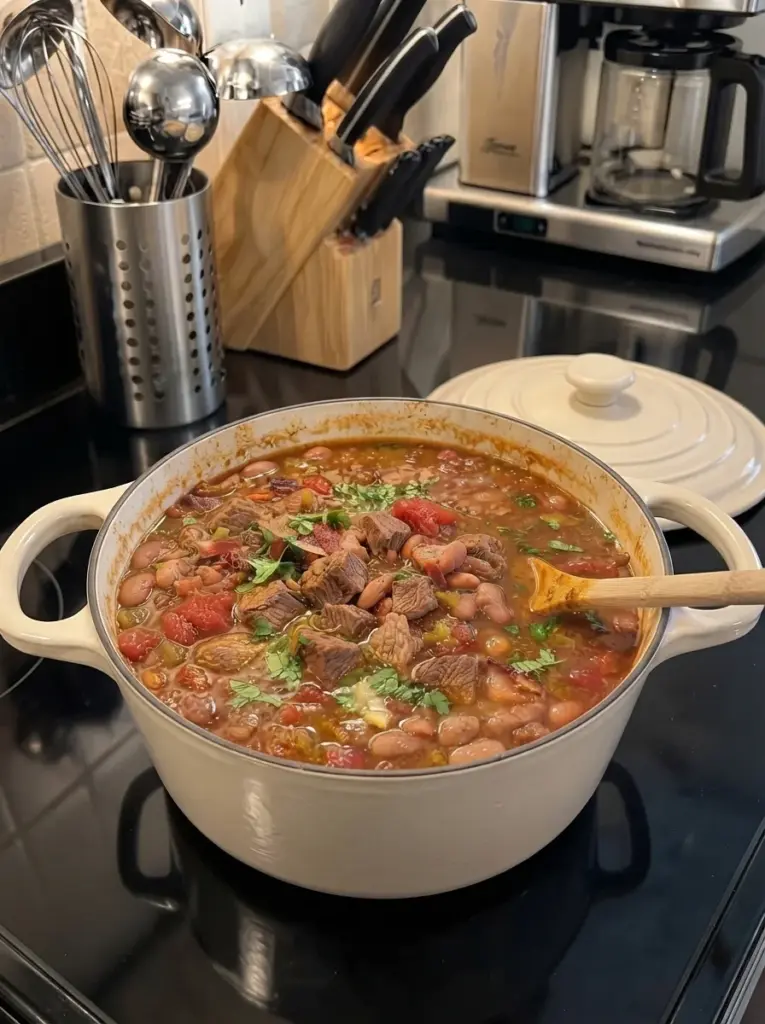
Tender pork, roasted green chiles, pinto beans, and a little smoky bacon make this caldo a hearty bowl of comfort. Fire-roasted tomatoes give the broth body, while cumin, oregano, garlic, and lime bring the flavors into focus. It is a satisfying soup for a family dinner, especially with warm tortillas alongside.
This New Mexico Green Chile Pork & Charro Bean Caldo takes inspiration from New Mexico green chile cooking and the savory combination of beans, bacon, and aromatics associated with charro beans. It is a Southwestern-inspired hybrid rather than a claim to one traditional regional recipe.
Pork shoulder is the key to the texture. It needs a gentle simmer and enough time for its connective tissue to soften. The canned pinto beans are already cooked, so they go in later, after the pork is nearly tender. That keeps them from spending the whole pork-cooking period breaking down in the broth.
The finished caldo should be brothy enough to eat with a spoon, with plenty of pork and beans in each bowl. A final squeeze of lime balances the richness without turning the soup sharply acidic.
Recipe at a Glance
- Preparation: About 20 minutes
- Cooking: Approximately 2–2½ hours, sometimes longer for the pork
- Total: About 2 hours 20 minutes to 2 hours 50 minutes
- Yield: 6 generous servings
- Method: Stovetop simmer in a Dutch oven or soup pot
- Texture: Tender pork, intact beans, and a savory, moderately brothy base
Pork tenderness determines the finish time. Small cubes can cook more quickly than large ones, but a fixed 75–90-minute simmer does not guarantee fork-tender shoulder.
Ingredients
For the Caldo
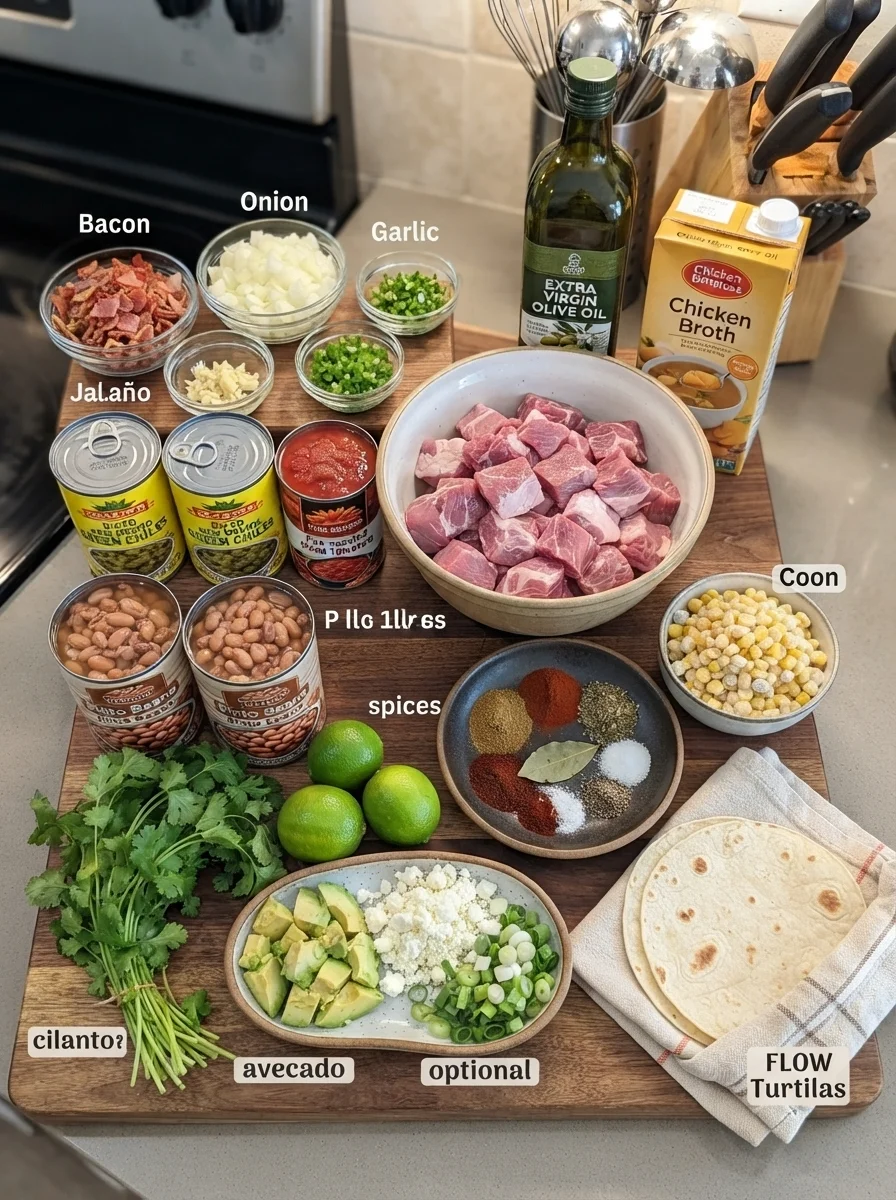
- 1½ pounds boneless pork shoulder, cut into approximately ¾-inch cubes
- 4 slices bacon, chopped
- Up to 2 tablespoons olive oil, only as needed for browning
- 1 medium yellow onion, diced
- 3 garlic cloves, minced
- 2 cans diced New Mexico green chiles, 4 ounces each
- 1 jalapeño, seeded and finely diced, optional
- 1 can fire-roasted diced tomatoes, 14.5 ounces, with juices
- 2 cans pinto beans, 15 ounces each, drained and rinsed
- 6 cups low-sodium chicken broth
- 1 teaspoon ground cumin
- 1 teaspoon smoked paprika
- ½ teaspoon dried oregano
- ½ teaspoon chili powder
- 1 bay leaf
- Up to ¾ teaspoon salt, to taste
- ½ teaspoon black pepper
- ½ cup frozen corn, optional
- 2 tablespoons chopped fresh cilantro
- 1 tablespoon fresh lime juice, plus more at the table if desired
Optional Toppings and Accompaniments
- Diced avocado
- Chopped cilantro
- Sliced green onions or diced white onion
- Crumbled queso fresco
- Lime wedges
- Warm flour or corn tortillas
- Cornbread
The olive oil is an allowance rather than a required addition of the full amount. Bacon fat may supply enough for some of the browning. Salt is also adjusted at the end because broth, bacon, and canned chiles vary.
Ingredient Notes
Pork Shoulder
Use boneless pork shoulder rather than lean loin or tenderloin. Shoulder becomes tender with a longer moist cook, while lean cuts can become dry under the same treatment.
Trim away very thick exterior fat and any tough membrane, but do not remove every small streak of fat. Cut the pieces to a similar size so they cook more evenly.
The goal is a cube that yields easily to a fork. Reaching a minimum safe temperature alone does not produce that texture; shoulder needs additional cooking time for tenderness.
Bacon
Four slices contribute smoky flavor without making this primarily a bacon soup. Slice thickness affects how much fat renders, so keep only about a tablespoon in the pot after cooking.
Cook the bacon until crisp, then reserve it separately. Stirring it in near the end preserves more flavor contrast, although it will soften once immersed in broth.
New Mexico Green Chiles
Use roasted diced green chiles labeled with the origin or variety you prefer. Hatch refers to a growing region, and products vary in both heat and flavor.
Eight ounces gives a moderate green chile presence in a large pot. If you prefer a more chile-forward soup, add extra roasted chopped chiles as a variation and reassess the broth consistency.
Do not assume every can is mild. Read the heat label, particularly if also using jalapeño.
Pinto Beans
Canned pinto beans are already cooked. Drain and rinse them, then add once the pork is nearly tender so the beans can warm through and absorb flavor without disintegrating.
Cooked homemade beans can replace canned ones. Use roughly 3 cups drained cooked beans as a starting point. Dry beans cannot be added directly with the same timing and liquid assumptions.
Tomatoes and Broth
Fire-roasted tomatoes contribute flavor and a little acidity. Their smoky note complements the bacon, but regular diced tomatoes can work if that is what you have.
Low-sodium broth makes seasoning easier to control. Begin with less salt than the maximum amount and taste again after the bacon returns to the pot.
Spices
Cumin provides a warm background, while oregano adds an herbal note. Mexican oregano is an option if available, though it tastes different from Mediterranean oregano.
The chili powder here means a chili seasoning powder, not a full teaspoon of cayenne. Check the product if the name is ambiguous. Since green chiles are central to the soup, keep added chile heat measured.
Lime and Cilantro
Add lime juice at the end so its brightness remains noticeable. Serve extra wedges at the table rather than making the entire pot very acidic.
Cilantro is optional if you dislike it. Green onions or a little parsley can give freshness, though the flavor will differ.
Equipment
A heavy Dutch oven or soup pot with a lid is useful for browning and gentle simmering. Use a slotted spoon for bacon, a plate for browned pork, and a wooden spoon or spatula for scraping the pot.
Choose a pot with enough room for the broth and additions without filling it to the rim. A broad bottom makes browning easier and reduces crowding.
How to Make Green Chile Pork and Bean Caldo
1. Prepare the Pork and Vegetables
Cut the pork into even cubes and pat dry. Dice the onion, mince the garlic, and prepare the optional jalapeño.
Drain and rinse the beans, keeping them separate until later. Open the tomatoes and green chiles so they are ready when the aromatics finish cooking.
2. Cook the Bacon
Place the chopped bacon in the pot over medium heat. Cook, stirring as needed, until the fat has rendered and the pieces are crisp, about 5–8 minutes depending on thickness.
Transfer to a plate. Leave about one tablespoon of drippings in the pot and remove excess fat.
3. Brown the Pork in Batches
Increase the heat to medium-high. Add a little olive oil only if the pot needs it.
Brown the pork in uncrowded batches, turning to color several sides. Allow roughly 5–7 minutes per batch, adjusting the heat so the browned bits do not burn.
Transfer browned pork to a plate. It will finish cooking in the broth, so it does not need to be tender at this stage.
4. Soften the Onion
Reduce the heat to medium. Add the onion and cook for about 4–5 minutes, stirring and scraping up loose browned pieces.
If the pot is very dry, add a small amount of the remaining oil. Stir in garlic and optional jalapeño and cook briefly, about 30 seconds, without scorching the garlic.
5. Add Chiles and Spices
Stir in green chiles, cumin, smoked paprika, oregano, and chili powder. Cook for about a minute, stirring.
Add the tomatoes with their juices. Scrape the bottom to loosen the flavorful brown coating. If anything on the bottom is black and bitter rather than brown, avoid incorporating burnt material into the soup.
6. Build the Broth
Return the pork and its accumulated juices to the pot. Add chicken broth, bay leaf, black pepper, and a modest initial amount of salt.
Bring just to a gentle boil, then reduce to a low simmer. Cover partially so some steam can escape without reducing the broth too rapidly.
7. Simmer Until Nearly Tender
Cook gently for about 1½–2 hours, checking and stirring occasionally. Begin testing sooner if the cubes are small, but allow longer if they remain firm.
A fork should enter readily and the meat should begin to yield when pressed. If the pork still feels springy or resistant, continue simmering before adding the beans.
Keep the pork mostly surrounded by broth. Add a little hot broth or water if evaporation is excessive. Avoid a vigorous boil, which can make the pot reduce too quickly and break the meat into ragged pieces.
8. Add Beans, Bacon, and Optional Corn
Once the pork is nearly tender, stir in the drained beans, cooked bacon, and corn if using.
Simmer for another 15–25 minutes, until the pork is tender and the beans are hot. This final period lets the flavors come together without requiring the canned beans to endure the entire shoulder-cooking time.
9. Adjust the Consistency
For a slightly thicker broth, mash a small spoonful of beans against the side and stir them back in. Repeat modestly until you like the body.
For a thinner caldo, add a little broth. Do not reduce aggressively at the end merely to thicken; that can concentrate salt and overwhelm the green chile flavor.
10. Finish and Serve
Remove the bay leaf. Stir in lime juice and cilantro, then taste for salt, pepper, and heat.
Ladle into bowls and add toppings as desired. Serve tortillas or cornbread alongside, keeping avocado, cheese, and extra lime separate so each person can adjust their bowl.
Tips for a Better Pot
Brown in batches. Crowded pork releases moisture and steams rather than developing a browned surface.
Use tenderness as the finish line. Shoulder can need longer than the initial time estimate.
Add cooked beans later. Their role is to warm and absorb flavor, not to cook from dry.
Season gradually. Bacon and broth may contribute enough salt that the full listed amount is unnecessary.
Keep the simmer gentle. Low, steady bubbling gives you more control than a rolling boil.
Add lime at the end. A small bright finish is useful against pork and bacon richness.
Troubleshooting
| Issue | Possible cause | Helpful adjustment |
|---|---|---|
| Pork is chewy | Shoulder needs more time | Continue a gentle simmer with enough liquid. |
| Beans fall apart | Added too early or stirred roughly | Add near the end and stir gently. |
| Broth is too thin | Personal preference for a thicker stew | Mash a few beans into the liquid. |
| Soup is too salty | Salty broth, bacon, or heavy reduction | Add unsalted liquid and extra unsalted ingredients if needed. |
| Heat is stronger than expected | Hot canned chiles plus jalapeño | Serve with rice, avocado, or a creamy topping and use milder chiles next time. |
| Flavor tastes flat | Needs seasoning or brightness | Taste for salt and add a little lime, rather than adding more of every spice. |
Variations
More Roasted Chile Flavor
Roast a fresh poblano or Anaheim pepper, steam briefly in a covered bowl, peel, seed, and chop. Add with the canned chiles. Prepare it separately and account for the extra time.
Corn-Free Caldo
Leave out the optional corn. The pork and beans already provide plenty of substance.
Thicker Bean Stew
Use a little less broth initially or mash more beans at the end. Retain enough liquid to cook the pork gently without scorching.
Homemade Bean Version
Use fully cooked pinto beans in place of canned ones. If adding some cooking liquid, make sure it tastes pleasant and account for its salt when seasoning.
Additional Vegetables
Small diced carrots or potatoes can be added during the latter portion of the pork simmer, allowing enough time for them to soften before serving. They change the liquid balance and nutrition, so assess the pot as you go.
Serving Ideas
Warm corn or flour tortillas are convenient for dipping into the broth. Cornbread gives a sweeter contrast if that suits your meal.
Avocado adds a cool, creamy element. Queso fresco contributes salt and dairy richness, so use a modest amount before deciding the soup needs additional seasoning.
For a lighter side, offer a crisp cabbage slaw or a simple salad. Rice can make the meal more substantial, but it is an accompaniment rather than part of the base caldo.
Make-Ahead, Storage, and Reheating
The soup can be made a day ahead. The flavor may become more integrated during refrigeration, while the beans may absorb liquid and soften further.
Transfer leftovers to shallow containers and refrigerate within 2 hours of cooking. Do not leave a large covered pot on the counter until fully cold. Store at 40°F or below for 3–4 days.
Freeze in meal-size containers for up to 3 months for best quality, leaving room for expansion. Freeze without avocado, cheese, tortillas, or other fresh toppings.
Thaw in the refrigerator. Reheat gently, stirring to distribute heat, until the soup reaches 165°F. Add broth or water if needed to restore the consistency.
For meal preparation, divide into containers before adding individual toppings. Label with the date and keep the original cooking date when reheating portions; warming does not restart storage time.
Nutrition Notes
For six portions, a reasonable planning range is approximately 350–450 calories per bowl before optional toppings and bread, depending on the pork’s fat content, bacon size, broth, and oil actually used.
The full two tablespoons of added oil are not necessarily needed after rendering bacon. That difference alone affects the total. Avocado, cheese, tortillas, and cornbread also change the meal’s calories substantially.
Pork and beans both contribute protein, while beans, tomatoes, and optional corn contribute carbohydrate. This is a hearty mixed meal rather than a low-carb soup.
For a closer calculation, use the labels and actual amounts, account for discarded fat as realistically as possible, and divide by the number of portions served. These figures are estimates rather than a verified nutrient analysis.
Frequently Asked Questions
Can I use pork loin?
It is not an equivalent substitute for this long simmer. Loin is leaner and can become dry. Shoulder is the intended cut for the tender stew-like texture.
Can I add dry beans directly?
No, not with the supplied timing and liquid assumptions. Cook dry beans separately until tender, then use them as the cooked-bean substitution.
Can I make it without bacon?
Yes. Use a little oil for browning and expect less smoky richness. Smoked paprika contributes some smoky flavor but does not duplicate bacon.
How spicy is it?
That depends on the canned chiles and optional jalapeño. Start with mild chiles and omit jalapeño for a gentler batch.
Can I use beef broth?
Yes, but it gives a different background flavor. Choose a lower-sodium option and season after simmering.
Why do the beans go in later?
Canned beans are cooked already. Adding them near the end helps preserve their shape while the pork gets the longer cook it needs.
Can I adapt it to a slow cooker?
A slow cooker changes evaporation, timing, and handling. This article supplies a stovetop method; use a separately developed slow-cooker schedule rather than transferring the stovetop time directly.
Is this traditional charro bean soup?
It is a hybrid inspired by charro bean ingredients and New Mexico green chile cooking. The pork shoulder and brothy format make it a distinct home-style caldo.
Recipe Card
New Mexico Green Chile Pork & Charro Bean Caldo
A brothy pork shoulder and pinto bean soup with bacon, roasted green chiles, tomatoes, and lime.
Prep: 20 minutes | Cook: About 2–2½ hours, or until tender | Servings: 6
Ingredients
- 1½ pounds boneless pork shoulder, cut into ¾-inch cubes
- 4 slices bacon, chopped
- Up to 2 tablespoons olive oil, as needed
- 1 yellow onion, diced
- 3 garlic cloves, minced
- 2 cans diced New Mexico green chiles, 4 ounces each
- 1 diced jalapeño, optional
- 1 can fire-roasted diced tomatoes, 14.5 ounces, with juices
- 2 cans pinto beans, 15 ounces each, drained and rinsed
- 6 cups low-sodium chicken broth
- 1 teaspoon cumin
- 1 teaspoon smoked paprika
- ½ teaspoon oregano
- ½ teaspoon chili powder
- 1 bay leaf
- Salt to taste, up to about ¾ teaspoon
- ½ teaspoon black pepper
- ½ cup frozen corn, optional
- 2 tablespoons chopped cilantro
- 1 tablespoon lime juice
Instructions
- Cook bacon until crisp. Remove, leaving about one tablespoon drippings.
- Brown pork in batches, adding oil only as needed. Transfer to a plate.
- Cook onion until softened. Add garlic and optional jalapeño briefly.
- Stir in chiles and dry spices for about a minute. Add tomatoes and scrape up browned bits.
- Return pork and juices. Add broth, bay leaf, pepper, and a modest amount of salt.
- Partially cover and simmer gently for about 1½–2 hours, or until nearly tender, allowing longer as needed.
- Add beans, bacon, and optional corn. Simmer another 15–25 minutes until pork is fork-tender and beans are hot.
- Mash a few beans for body if desired. Remove bay leaf and add lime and cilantro.
- Adjust seasoning and serve with optional toppings.
Storage: Refrigerate in shallow containers within 2 hours; keep for 3–4 days. Freeze for up to 3 months for quality. Reheat to 165°F.
Estimated calories: Approximately 350–450 per one-sixth batch before toppings and accompaniments; actual ingredients and oil use determine the total.

New Mexico Green Chile Pork & Charro Bean Caldo
Description
New Mexico Green Chile Pork & Charro Bean Caldo
A brothy pork shoulder and pinto bean soup with bacon, roasted green chiles, tomatoes, and lime.
Prep: 20 minutes | Cook: About 2–2½ hours, or until tender | Servings: 6
Ingredients
- 1½ pounds boneless pork shoulder, cut into ¾-inch cubes
- 4 slices bacon, chopped
- Up to 2 tablespoons olive oil, as needed
- 1 yellow onion, diced
- 3 garlic cloves, minced
- 2 cans diced New Mexico green chiles, 4 ounces each
- 1 diced jalapeño, optional
- 1 can fire-roasted diced tomatoes, 14.5 ounces, with juices
- 2 cans pinto beans, 15 ounces each, drained and rinsed
- 6 cups low-sodium chicken broth
- 1 teaspoon cumin
- 1 teaspoon smoked paprika
- ½ teaspoon oregano
- ½ teaspoon chili powder
- 1 bay leaf
- Salt to taste, up to about ¾ teaspoon
- ½ teaspoon black pepper
- ½ cup frozen corn, optional
- 2 tablespoons chopped cilantro
- 1 tablespoon lime juice
Instructions
- Cook bacon until crisp. Remove, leaving about one tablespoon drippings.
- Brown pork in batches, adding oil only as needed. Transfer to a plate.
- Cook onion until softened. Add garlic and optional jalapeño briefly.
- Stir in chiles and dry spices for about a minute. Add tomatoes and scrape up browned bits.
- Return pork and juices. Add broth, bay leaf, pepper, and a modest amount of salt.
- Partially cover and simmer gently for about 1½–2 hours, or until nearly tender, allowing longer as needed.
- Add beans, bacon, and optional corn. Simmer another 15–25 minutes until pork is fork-tender and beans are hot.
- Mash a few beans for body if desired. Remove bay leaf and add lime and cilantro.
- Adjust seasoning and serve with optional toppings.
Storage: Refrigerate in shallow containers within 2 hours; keep for 3–4 days. Freeze for up to 3 months for quality. Reheat to 165°F.
Estimated calories: Approximately 350–450 per one-sixth batch before toppings and accompaniments; actual ingredients and oil use determine the total.