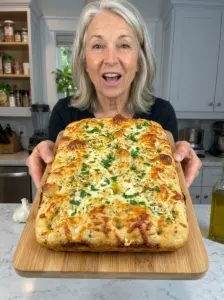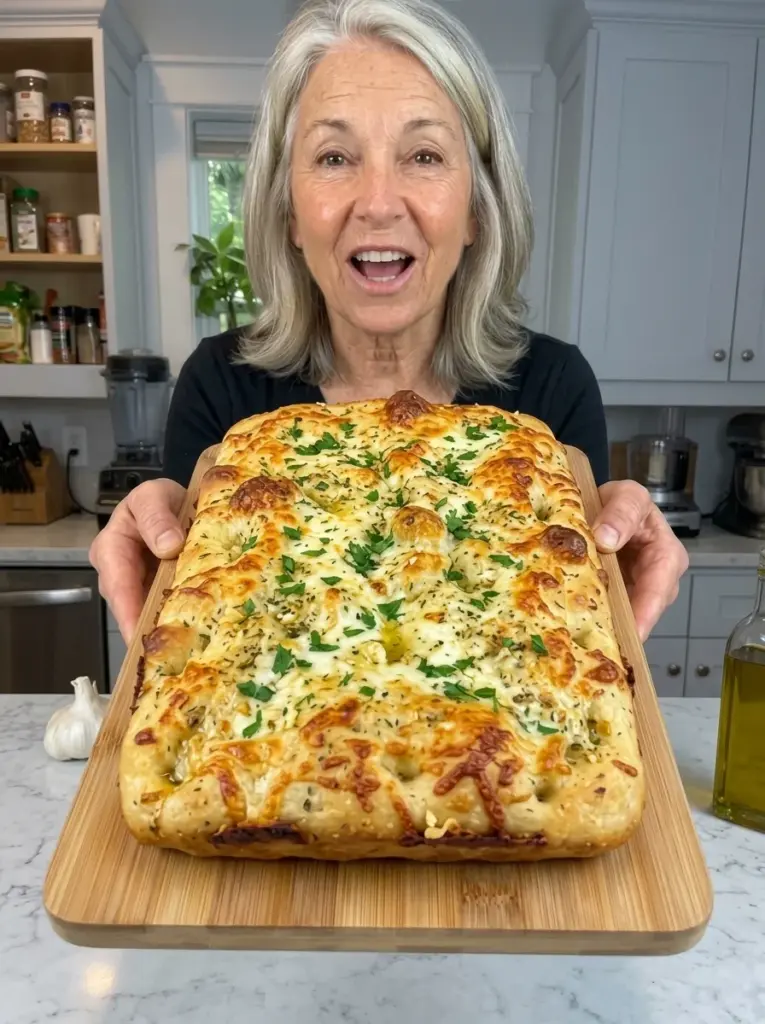
Golden edges, a soft interior, and melted cheese make this Garlic Cheese Focaccia a savory bread for sharing. Olive oil gives the crust its richness, mozzarella creates a creamy topping, and Parmesan adds a salty finish. Fresh garlic goes on near the end of baking so its small pieces do not spend the entire bake exposed to high heat.
The dough is mixed in a bowl and strengthened with a few folds. After rising, it spreads into an oiled pan, rests until puffy, and gets pressed with fingertips to form the familiar dimples. There is no need for a stand mixer.
Serve squares beside soup, pasta, or a salad, or split cooled pieces for sandwiches. The cheese makes this a rich bread, so a simple meal alongside is often enough.
This is a suggested home-baking formula rather than a kitchen-tested recipe. Flour absorption, room temperature, and pan material affect the result. Use the dough and baking cues below to guide timing.
Recipe at a Glance
- Yield: One 9 × 13-inch pan, about 12 pieces
- Hands-on preparation: About 25 minutes, spread across the process
- First rise: About 1½–2½ hours, including folding time
- Pan rise: About 45–90 minutes
- Baking: About 25–35 minutes
- Cooling: At least 20–30 minutes
- Total: About 3½–5 hours, depending on fermentation
- Oven: 425°F
Ingredients
For the Dough
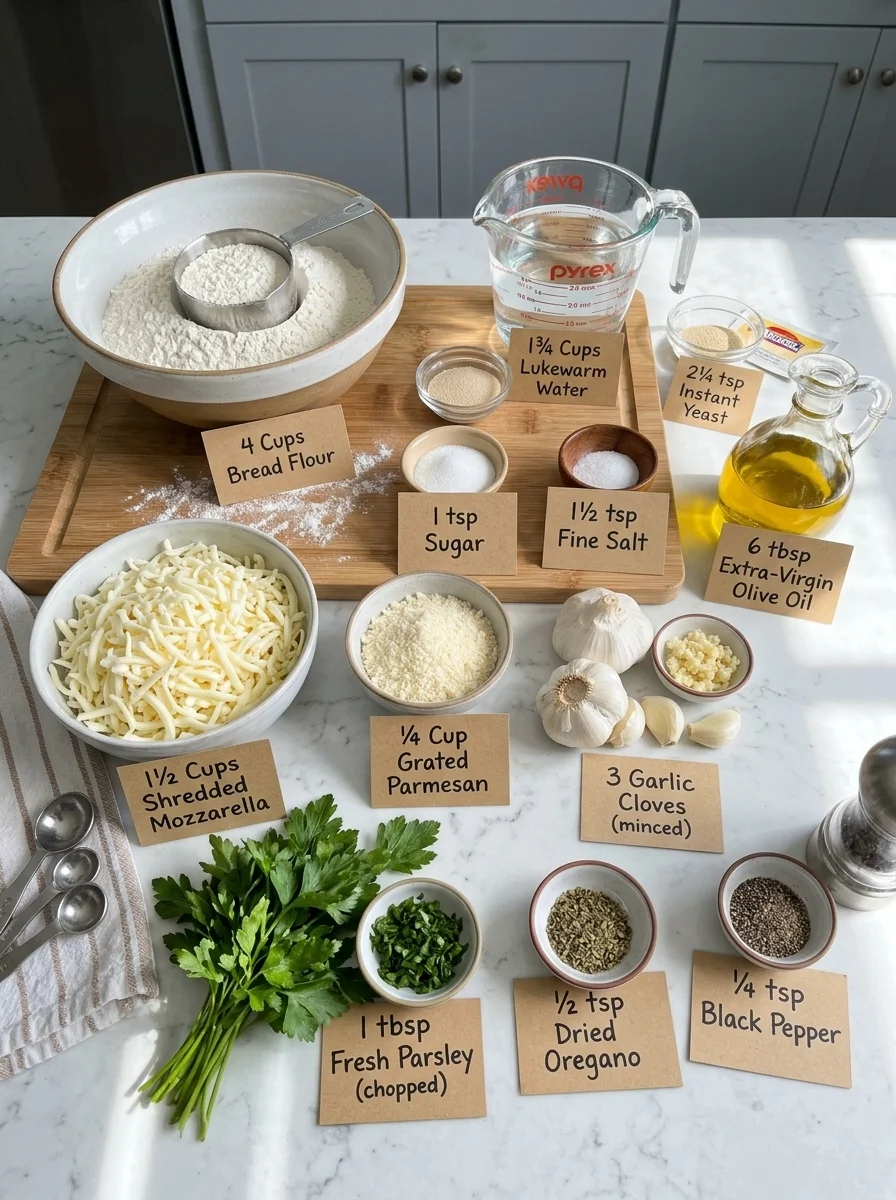
- 4 cups bread flour or all-purpose flour, spooned and leveled
- 1¾ cups lukewarm water
- 2¼ teaspoons instant yeast
- 1 teaspoon granulated sugar
- 1½ teaspoons fine table salt
- 2 tablespoons extra-virgin olive oil
For the Pan and Surface
- 2 tablespoons olive oil for the pan
- 1 tablespoon olive oil for dimpling
For the Cheese Topping
- 1½ cups shredded low-moisture mozzarella
- ¼ cup finely grated Parmesan
- ¼ teaspoon black pepper
For the Garlic Finish
- 1 tablespoon olive oil
- 3 garlic cloves, finely minced
- 1 tablespoon chopped fresh parsley
- ½ teaspoon dried oregano, optional
There are six tablespoons of olive oil across the complete recipe: two in the dough, two in the pan, one for dimpling, and one for the garlic finish. Keeping those amounts separate makes the method easier to follow.
What Makes Focaccia Different from Pizza?
Focaccia is bread first: a thicker, aerated dough with olive oil in the pan and across its surface. The dimples create uneven pockets and help distribute oil rather than flattening the dough into a thin pizza base.
Cheese adds a topping here, but there is no tomato sauce. The dough should remain the main part of each bite, with a soft, slightly chewy center and golden lower edges.
Avoid loading it with a heavy layer of cheese before the dough has begun to set. Baking the bread briefly before adding the topping gives the base time to expand and reduces the topping’s exposure to heat.
Ingredient Notes
Flour
Bread flour can give a stronger, chewier dough, while all-purpose flour can produce a softer crumb. Brands vary, so the dough may feel slightly different even with the same cup measurements.
Spoon flour into the cup and level it. Packed flour can make the dough too stiff, reducing its ability to spread and rise.
The intended dough is sticky and soft. It should not be a dry ball that is easy to roll on an unfloured counter. A spatula and oiled hands make handling easier without repeated flour additions.
Water and Yeast
Use water that feels gently warm, around 95–105°F. Very hot water can damage yeast, while cooler water slows fermentation.
Instant yeast mixes directly with the flour. If using active dry yeast, follow its package directions, using some of the measured water for any activation step rather than adding extra liquid.
The small amount of sugar is optional in flavor terms but is part of this starting formula. The bread is savory, not sweet.
Salt
Fine table salt is specified because coarse kosher salts differ in density. Use an appropriate product conversion if substituting.
Parmesan also contributes salt, so no heavy surface sprinkling is needed. You can taste the baked bread before deciding whether you want any additional finishing salt.
Olive Oil
Use an oil whose flavor you enjoy. Oil in the dough contributes richness, while oil in the pan helps brown the bottom and release the bread.
Avoid reducing the pan oil drastically on the first attempt. It has a practical role in the crust and release, not just flavor.
Cheese
Low-moisture mozzarella melts without releasing as much water as fresh mozzarella. Shred it yourself if convenient, or use a packaged product that melts well.
Parmesan gives a more pronounced savory note. Finely grate it so it distributes across the mozzarella rather than collecting in a few large pieces.
Fresh mozzarella can create wet spots and requires a different approach to draining and topping. The low-moisture product is the more predictable starting point.
Garlic
Minced fresh garlic is aromatic but can burn during a long, hot bake. This method warms it gently in oil and applies it after the bread leaves the oven.
The result is a noticeable garlic flavor without relying on dark, potentially bitter pieces baked onto the surface. Use less garlic if you prefer a gentler finish.
Equipment
Use a large bowl, sturdy spoon, flexible spatula, 9 × 13-inch metal baking pan, small saucepan, and wire rack. A dough scraper is helpful but not essential.
A suitable metal pan is a practical choice at 425°F. Dark pans can brown the bottom quickly, so check carefully. Follow the manufacturer’s limits for nonstick coatings and any parchment used.
A very shallow sheet pan is not equivalent to the specified pan. It may not contain the oil and rising dough as comfortably.
How to Make Garlic Cheese Focaccia
1. Mix the Dough
Stir flour, instant yeast, sugar, and salt together in a large bowl. Add the water and the two tablespoons of dough oil.
Mix until every dry patch is incorporated. Continue stirring firmly for about a minute so the dough is evenly hydrated. It should be sticky and shaggy rather than smooth and dry.
Cover and let stand for 20 minutes. This rest is part of the first rise.
2. Fold for Strength
With damp or lightly oiled hands, lift one edge until you feel resistance and fold it over the middle. Turn the bowl and repeat around the dough.
Cover and repeat a second set after about 20 minutes. A third set 20 minutes later can help if the dough still feels loose and tears easily.
Do not force long stretches that rip the dough. The goal is to help it become more cohesive, not to squeeze out every bubble.
3. Complete the First Rise
Keep covered until visibly expanded, airy, and approximately doubled, usually about 1½–2½ hours from mixing in a comfortably warm room.
Cool conditions can extend the rise. Look for bubbles around the sides and a lighter, puffier appearance rather than following the clock alone.
4. Oil the Pan
Spread two tablespoons olive oil across the bottom and into the corners of the 9 × 13-inch pan. Make sure the edges are coated.
If using parchment for release, choose paper rated for the oven temperature and oil its surface. Leave only manageable overhang so it cannot touch an element.
5. Transfer and Stretch Gently
Scrape the dough into the pan with lightly oiled hands or a spatula. Turn it gently to coat, then ease it toward the corners.
If it pulls back, cover and rest for 10–15 minutes before continuing. Forcing resistant dough can tear it and remove more gas than necessary.
It does not need to reach every corner immediately. It will relax as the pan rise progresses.
6. Let the Dough Become Puffy
Cover without pressing on the surface. Let rise about 45–90 minutes, until noticeably puffy, aerated, and relaxed in the pan.
Near the end, preheat the oven to 425°F with a rack near the center. Give the oven time to stabilize.
A gentle touch should leave an impression that fills slowly. This is one cue alongside visible expansion; do not repeatedly poke the dough until it deflates.
7. Dimple
Drizzle the tablespoon of surface oil over the dough. With oiled fingertips, press straight down to make deep dimples across the pan.
Work gently and avoid dragging through the dough. You want pockets and an uneven surface, not a flattened sheet with all its gas removed.
8. Begin Baking Without Cheese
Bake for about 12–15 minutes, until the surface begins to set and shows a little color. It will not be fully baked yet.
This initial stage allows the bread to rise before receiving the cheese. Remove the pan carefully and close the oven door while topping.
9. Add Cheese and Finish Baking
Scatter mozzarella, Parmesan, and black pepper over the surface, leaving a little exposed bread around the edges.
Return to the oven for approximately 12–20 minutes, until the cheese is melted with golden spots and the bread is baked through. Total baking time is usually about 25–35 minutes, depending on the pan and oven.
The edges and bottom should be golden, not blackened. A center temperature near 200–210°F can be a supporting check if the probe reaches bread rather than only topping. Use it alongside color and structure.
If the topping has enough color before the bread is ready, cover loosely with foil and continue baking. Broiling is not necessary for the basic method.
10. Prepare the Garlic Finish
While the bread finishes, warm the remaining tablespoon olive oil in a small saucepan over low heat. Add garlic and stir for about 30–60 seconds, just until fragrant without browning.
Remove from the heat and stir in parsley and optional oregano. Do not leave the small amount of oil unattended, since minced garlic can scorch quickly.
11. Finish and Cool
Brush or spoon the garlic oil evenly over the hot baked focaccia. Rest in the pan for about 5–10 minutes, then carefully transfer to a rack if the bread releases readily.
Cool at least 20–30 minutes before cutting, longer if you want tidy sandwich pieces. Air circulation helps keep the bottom from becoming damp.
The cheese will be softer while warm. Use a sharp serrated knife and avoid pressing hard enough to compress the crumb.
Tips for a Better Pan of Focaccia
Keep the dough soft. Repeated flour additions can make shaping easier but the finished bread heavier.
Let resting do some work. Resistant dough often needs time rather than force.
Look for a puffy final rise. Baking an underproofed pan can produce a tight interior despite a browned top.
Delay the cheese. A short initial bake helps the dough expand before the topping sets.
Finish with garlic. Gentle warming and an after-bake application give control over flavor and scorching.
Use a rack after the initial rest. Trapped steam softens the bottom when the bread stays in its pan too long.
Troubleshooting
| Problem | Possible cause | Helpful adjustment |
|---|---|---|
| Dough resists stretching | Gluten is tight | Cover and rest before trying again. |
| Interior is dense | Insufficient rise or excess flour | Follow expansion cues and measure flour lightly. |
| Bottom is too dark | Dark pan or intense lower heat | Check earlier and adjust rack position for the next batch. |
| Center is gummy | Underbaking or cutting too hot | Bake through and cool before slicing. |
| Topping is watery | Moist cheese or excessive topping | Use low-moisture mozzarella and measured amounts. |
| Garlic is bitter | Garlic browned or burned | Warm over low heat briefly and remove promptly. |
Flavor Variations
Rosemary Garlic
Add a small amount of finely chopped rosemary to the dough or finishing oil. Rosemary is assertive, so begin modestly.
Cheddar Mozzarella
Replace part of the mozzarella with sharp cheddar. It gives a stronger flavor and may release more oil as it melts.
Pepper Flake Finish
Add a small pinch of red pepper flakes to the warm garlic oil. This changes heat without introducing extra moisture.
Olive Focaccia
Press a modest amount of well-drained, halved olives into the dimples before the initial bake. They add salt, so avoid additional surface salt and keep the cheese layer restrained.
Plain Garlic Focaccia
Omit the cheese for a simpler garlic bread. The timing and browning will differ without the topping, so watch the surface and center rather than waiting for melted cheese cues.
These variations change the starting formula and have not been kitchen-tested here.
Serving Ideas
Cut into twelve squares for a bread basket beside tomato soup or pasta. A crisp salad helps balance the rich cheese and oil.
For sandwiches, let the bread cool longer, split a square horizontally, and add fillings shortly before serving. Wet fillings can soften the crumb, so use a moderate amount.
A warmed leftover piece also works beside eggs. The garlic and cheese are already flavorful, so extra butter is optional rather than necessary.
Storage and Reheating
Because this version includes melted cheese and a fresh garlic finish, refrigerate after cooling and within 2 hours of baking. Store covered at 40°F or below for up to 3–4 days.
Do not seal while heavy steam is still rising. Cool on a rack, then cover and refrigerate promptly rather than leaving the pan out overnight.
Freeze cooled portions in a well-sealed container or freezer bag for up to 2 months for best quality. Separate pieces with parchment if needed.
Reheat on a tray in a 350°F oven until hot and the edges begin to crisp, approximately 8–12 minutes for a refrigerated piece depending on thickness. Check the cheese and garlic so they do not scorch.
Microwaving is convenient but softens the crust. Short intervals help avoid making the crumb rubbery.
Use the garlic finish for this batch rather than holding leftover fresh garlic in oil at room temperature.
Nutrition Notes
With the listed dough, six tablespoons olive oil, mozzarella, and Parmesan divided into twelve portions, a reasonable estimate is approximately 250–290 calories per piece, before sandwich fillings or other accompaniments.
The amount of oil left in the pan and cheese product choices affect the total. A larger piece contains a larger share of the batch.
This is a wheat-and-cheese bread, not a low-carbohydrate recipe. For a closer calculation, use the labels for your actual measured ingredients and divide by the number of portions.
Frequently Asked Questions
Can I make this without a mixer?
Yes. Spoon mixing and a few folds are the intended method.
Can I use active dry yeast?
Follow its package instructions. Any water used for dissolving should come from the measured total, not be added separately.
Can I leave the dough on the counter overnight?
Not with this same-day yeast amount and schedule. An overnight version needs a planned reduction in yeast or a refrigerated method that accounts for continued fermentation.
Why does the cheese go on later?
The initial bake lets the dough begin expanding and setting before the topping is applied, while limiting the cheese’s exposure to prolonged heat.
Can I use fresh mozzarella?
It releases more moisture and is less predictable here. Low-moisture mozzarella is the recommended starting point.
Can I double it?
Use two pans rather than one much thicker loaf. Check each pan independently and rotate only when appropriate for your oven.
Does it need to cool completely?
It can be served warm after the stated rest, but fully cooled bread cuts more neatly for sandwiches. Avoid cutting immediately after baking.
Recipe Card
Garlic Cheese Focaccia
A soft, olive-oil-rich yeast bread topped with mozzarella, Parmesan, and a fresh garlic finish. Suggested formula; not kitchen-tested here.
Yield: One 9 × 13-inch pan, 12 pieces | Total: Approximately 3½–5 hours
Dough
- 4 cups bread flour or all-purpose flour, spooned and leveled
- 1¾ cups lukewarm water
- 2¼ teaspoons instant yeast
- 1 teaspoon sugar
- 1½ teaspoons fine table salt
- 2 tablespoons olive oil
Pan, Topping, and Finish
- 2 tablespoons olive oil for the pan
- 1 tablespoon olive oil for dimpling
- 1½ cups shredded low-moisture mozzarella
- ¼ cup grated Parmesan
- ¼ teaspoon black pepper
- 1 tablespoon olive oil for finishing
- 3 garlic cloves, minced
- 1 tablespoon chopped parsley
- ½ teaspoon oregano, optional
Instructions
- Mix dough ingredients until no dry flour remains. Cover for 20 minutes.
- Perform two or three gentle fold sets at 20-minute intervals.
- Continue rising until expanded and aerated, about 1½–2½ hours total from mixing.
- Oil the pan with the measured two tablespoons. Transfer dough and stretch gently, resting briefly if it resists.
- Cover and let rise 45–90 minutes until puffy. Preheat to 425°F near the end.
- Drizzle with the dimpling oil and press deep fingertip dimples across the surface.
- Bake 12–15 minutes, then add cheeses and pepper. Bake another 12–20 minutes until golden and baked through, about 25–35 minutes total.
- Warm finishing oil and garlic over low heat briefly without browning. Remove from heat and add herbs.
- Brush onto baked focaccia. Rest in the pan briefly, transfer to a rack, and cool at least 20–30 minutes before cutting.
Storage: Refrigerate within 2 hours of baking and use within 3–4 days. Freeze for up to 2 months for best quality.
Estimated calories: Approximately 250–290 per one-twelfth pan, depending on ingredients and oil retained.
Print
Garlic Cheese Focaccia
Description
A soft, olive-oil-rich yeast bread topped with mozzarella, Parmesan, and a fresh garlic finish. Suggested formula; not kitchen-tested here.
Yield: One 9 × 13-inch pan, 12 pieces | Total: Approximately 3½–5 hours
Ingredients
Dough
- 4 cups bread flour or all-purpose flour, spooned and leveled
- 1¾ cups lukewarm water
- 2¼ teaspoons instant yeast
- 1 teaspoon sugar
- 1½ teaspoons fine table salt
- 2 tablespoons olive oil
Pan, Topping, and Finish
- 2 tablespoons olive oil for the pan
- 1 tablespoon olive oil for dimpling
- 1½ cups shredded low-moisture mozzarella
- ¼ cup grated Parmesan
- ¼ teaspoon black pepper
- 1 tablespoon olive oil for finishing
- 3 garlic cloves, minced
- 1 tablespoon chopped parsley
- ½ teaspoon oregano, optional
Instructions
- Mix dough ingredients until no dry flour remains. Cover for 20 minutes.
- Perform two or three gentle fold sets at 20-minute intervals.
- Continue rising until expanded and aerated, about 1½–2½ hours total from mixing.
- Oil the pan with the measured two tablespoons. Transfer dough and stretch gently, resting briefly if it resists.
- Cover and let rise 45–90 minutes until puffy. Preheat to 425°F near the end.
- Drizzle with the dimpling oil and press deep fingertip dimples across the surface.
- Bake 12–15 minutes, then add cheeses and pepper. Bake another 12–20 minutes until golden and baked through, about 25–35 minutes total.
- Warm finishing oil and garlic over low heat briefly without browning. Remove from heat and add herbs.
- Brush onto baked focaccia. Rest in the pan briefly, transfer to a rack, and cool at least 20–30 minutes before cutting.
Storage: Refrigerate within 2 hours of baking and use within 3–4 days. Freeze for up to 2 months for best quality.
Estimated calories: Approximately 250–290 per one-twelfth pan, depending on ingredients and oil retained.