
Introduction
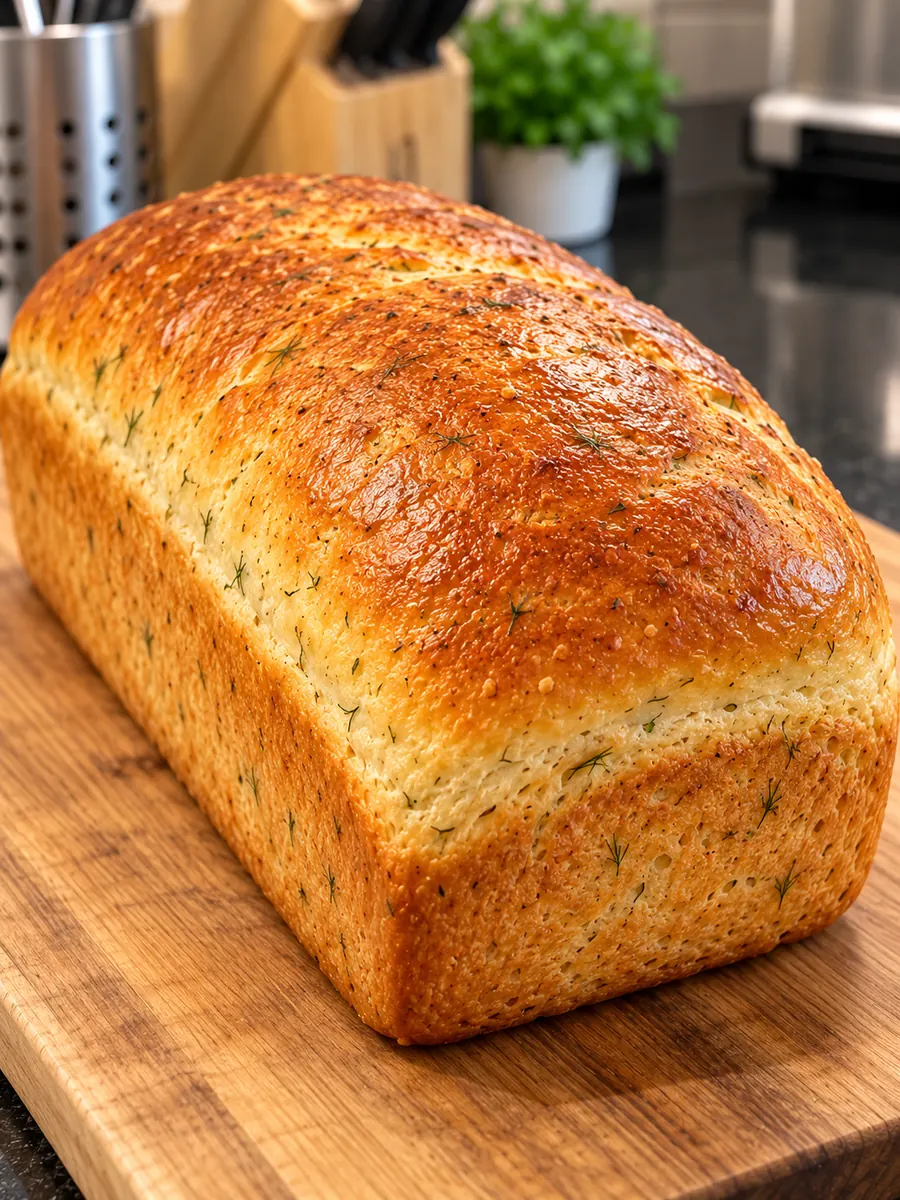
High-Protein Cottage Cheese Garlic Dill Sandwich Bread brings a savory, herb-speckled crumb to everyday sandwiches. Blended cottage cheese supplies much of the dough’s moisture, while a little butter keeps the crust comfortable to bite through. Garlic powder spreads evenly through the loaf, and fresh dill gives each slice a distinct herbal aroma.
This is a wheat yeast bread with a soft, close crumb suitable for slicing. Parmesan adds savory depth without turning the loaf into a heavy cheese bread. Plan on about 30 minutes of active preparation and approximately 5 hours 25 minutes overall, including both rises and complete cooling. Those are planning estimates: dough temperature and room conditions determine when the loaf is ready. The long cooling period helps the moist interior settle before you make thin, even slices.
Why You’ll Love This Recipe
The dough gets its moisture primarily from cottage cheese and egg, so there is no separate liquid to warm or measure. Blending distributes the curds throughout the dough.
Fresh dill and garlic powder season the entire crumb. The flavor works especially well with turkey, cucumbers, eggs or a simple toasted cheese sandwich.
A modest butter addition keeps the loaf tender while leaving enough structure for sandwiches. The dough is shaped as one straightforward pan loaf.
Makes 10 servings. Each serving is 2 slices from a 20-slice loaf. Estimated 11.7 g protein per serving is a modeled subtotal excluding unmodeled dill. Brands and moisture vary; no laboratory analysis was performed, and human nutrition review is required.
Ingredients
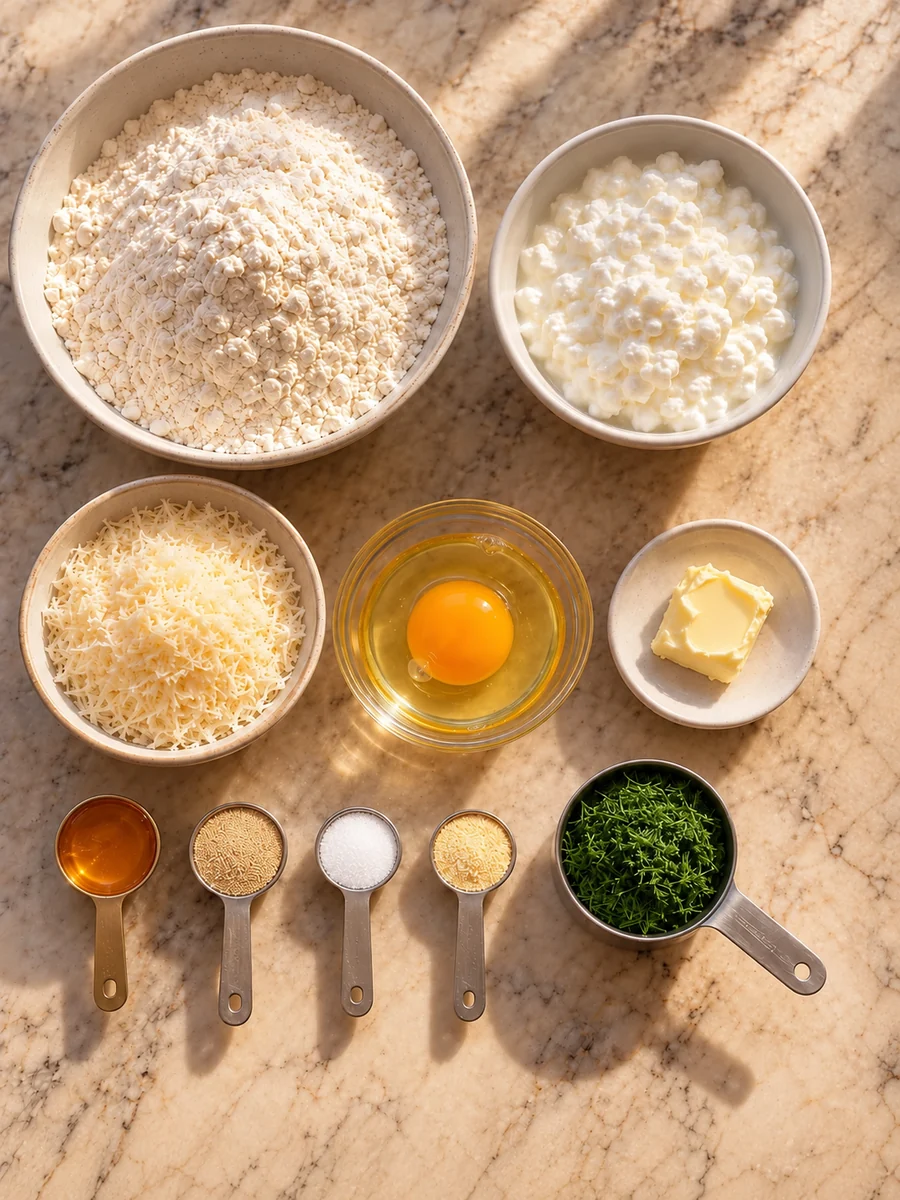
Weigh the flour and undrained cottage cheese for consistent proportions. The list includes both dough butter and finishing butter. Choose plain dairy, finely grated Parmesan, and fresh dill with coarse stems removed. Parchment lines the pan without a greasing ingredient; leave overhang for lifting.
- 3 1/2 cups bread flour (420 g), spooned and leveled
- About 1 1/4 cups plain, undrained 1% milkfat cottage cheese (280 g)
- 1 large egg, out of its shell (50 g)
- About 2/3 cup finely grated Parmesan cheese (60 g)
- 2 tablespoons unsalted butter, softened (28 g), divided
- 2 teaspoons honey (14 g)
- 2 1/4 teaspoons instant yeast (7 g)
- 2/3 teaspoon fine table salt (4 g)
- 1 2/3 teaspoons garlic powder (5 g)
- About 1/4 cup finely chopped fresh dill fronds (10 g)
Ingredient Notes and Substitutions
Plain, undrained 1% milkfat cottage cheese is the specified dairy ingredient. Stir the container before weighing so the curds and liquid are represented together. Small or large curds are suitable because they are blended. Draining changes the moisture balance and is not recommended.
Bread flour supports the moist dough and gives sandwich slices some resilience. All-purpose flour is a cautious substitution: its lower protein may produce a softer dough and less height. Keep the original flour weight and assess the dough after kneading before considering further changes.
Garlic powder gives predictable distribution without raw garlic chunks. Garlic salt is unsuitable as a direct replacement because it adds salt. Fresh garlic would change both flavor and dough behavior, so it needs separate development.
Fresh dill is central to this loaf’s flavor. Dried dill is more concentrated and is not a cup-for-cup replacement. Parmesan also contributes moisture, salt and protein; replacing it with another cheese changes more than taste and requires reassessing the formula.
How to Make High-Protein Cottage Cheese Garlic Dill Sandwich Bread
- Line a 9-by-5-inch loaf pan with parchment rated for 350°F. Blend the cottage cheese, egg and honey until mostly smooth, scraping the container thoroughly. Finely chop the fresh dill and grate the Parmesan. Use room-temperature ingredients when practical; do not heat the blended mixture until hot.
- Whisk the bread flour, instant yeast, fine table salt and garlic powder in a mixer bowl. Add the blended mixture, prepared herbs and cheese, and 21 g softened unsalted butter. Mix with a dough hook on low until no dry patches remain, scraping the bowl as needed.
- Knead on medium-low for 8–10 minutes, until elastic and cohesive. Expect soft, tacky dough that clears portions of the bowl but may cling underneath. A small stretched piece should form a thin membrane with herb flecks. Do not taste raw dough; wash hands and equipment after handling the raw egg mixture.
- Allow 90 minutes for bulk proofing, covered, at a comfortably warm room temperature. Finish when the dough is noticeably puffy and approximately doubled; a cooler kitchen may need longer. Keep the bowl away from direct heat.
- Rest the gently deflated dough for 10 minutes, covered, on a clean, unfloured surface. Pat into an 8-by-10-inch rectangle, roll from a short edge into a snug log, and pinch the seam. Place seam-side down in the prepared pan.
- Allow 60 minutes for final proofing, loosely covered, until the center crowns about 1 inch above the rim and a gentle fingertip indentation returns slowly. Preheat the oven to 350°F during this rise, with a rack in the lower-middle position.
- Bake for 45 minutes at 350°F, until deeply golden and the center registers 200°F. Tent loosely with foil if browning quickly. Check the center with an instant-read thermometer rather than judging doneness from the cheese-colored crust alone.
- Cool in the pan for 10 minutes. Lift out, brush the top with the remaining 7 g unsalted butter, and cool on a wire rack for 80 minutes before slicing into 20 slices. Makes 10 servings; each serving is 2 slices.
Expert Baking Tips
Scrape the blender thoroughly. Leaving a thick coating behind removes part of the measured liquid and dairy solids, which can make the dough feel unexpectedly firm despite accurate flour weighing.
Judge tackiness with a brief touch. Soft dough may cling to a stationary finger yet release during a quick tap. That alone does not mean it needs more flour.
Check gluten with a small piece stretched gently between your fingers. Dill flecks may interrupt the membrane, but the surrounding dough should stretch before tearing rather than breaking immediately.
Use a straight-sided container for bulk proofing if you find volume changes difficult to judge. Mark the starting level so you can distinguish real expansion from a rounded surface.
Keep the shaping surface free of loose flour. A clean bench scraper helps move sticky dough, and a snug roll gives the loaf a more even interior.
Insert the thermometer into the center, avoiding the pan. Cheese can darken the crust early, so color alone is an unreliable guide to whether the moist crumb has finished baking.
Common Mistakes to Avoid
Adding flour until the dough feels dry is a common route to a tight loaf. Cottage cheese creates a soft dough, and kneading develops its structure gradually. Scrape the bowl and give the gluten time to develop before deciding the mixture is too sticky.
Treating the proofing schedule as a deadline can also cause trouble. A chilled dairy mixture may rise slowly, while a warm room can move things along faster. Look for the stated volume and indentation cues. An overexpanded loaf may sag when moved into the oven.
Cutting the bread while warm compresses the moist crumb and can leave a gummy-looking stripe under the knife. Let the full cooling period finish. If the loaf seems difficult to slice even then, check whether it reached the specified center temperature and whether your knife is sharp enough.
Variations and Serving Ideas
For a variation, replace 2 g of the dill with 2 g finely chopped fresh chives. This changes the herb profile slightly without adding a large amount of wet material. Keep the total herb weight unchanged and expect a mild onion note.
Use the base loaf for cucumber and cream cheese sandwiches, turkey with mustard, or scrambled eggs tucked between lightly toasted slices. These fillings are serving additions and are not included in the loaf’s protein estimate.
For open-faced sandwiches, toast slices until the surfaces are crisp but the centers remain tender. The garlic and Parmesan also make small cubes useful for savory croutons.
Storage and Freezing
Let the loaf cool completely before wrapping. Trapped steam softens the crust and leaves moisture inside the bag. Keep the bread well wrapped at cool room temperature for up to 2 days, or refrigerate for up to 5 days if your kitchen is warm. Refrigerated slices benefit from toasting.
For longer storage, freeze the sliced loaf in a freezer bag for up to 2 months. Place parchment between pairs if you want to remove one serving at a time. Press out excess air without crushing the crumb. Toast slices directly from frozen, or thaw a wrapped portion at room temperature. Discard bread showing mold rather than trimming away a visible patch.
Frequently Asked Questions
Will the bread have cottage cheese lumps?
Blending the cottage cheese with the egg and honey breaks down most curds. Tiny remaining pieces are acceptable, but large curds can create uneven pockets in the crumb.
Can I use 2% cottage cheese?
Possibly, but treat it as a cautious substitution. Its moisture, fat and protein differ from the specified 1% version, affecting dough feel and the modeled protein estimate.
Why is there no added water?
Undrained cottage cheese supplies substantial water, with additional moisture from the egg, Parmesan, butter and honey. Adding water automatically could make this already soft dough difficult to shape.
Can I knead it by hand?
Yes. Use a bench scraper and short lift-and-fold motions on a clean surface. It may take longer than mixer kneading; aim for the same elastic, cohesive consistency.
Does this make 20 servings?
No. The loaf makes 10 servings. Each serving is 2 slices, giving 20 slices altogether. The modeled protein subtotal, excluding dill, is approximately 5.8 g per individual slice.
Can I leave out the Parmesan?
That would remove protein, moisture and seasoning, so it is not a direct omission. The resulting loaf would need separate formula development and a revised protein calculation.
WP Tasty Recipe Card
PrintHigh-Protein Cottage Cheese Garlic Dill Sandwich Bread
- Total Time: 325 minutes
Ingredients
3 1/2 cups bread flour (420 g), spooned and leveled
About 1 1/4 cups plain, undrained 1% milkfat cottage cheese (280 g)
1 large egg, out of its shell (50 g)
About 2/3 cup finely grated Parmesan cheese (60 g)
2 tablespoons unsalted butter, softened (28 g), divided
2 teaspoons honey (14 g)
2 1/4 teaspoons instant yeast (7 g)
2/3 teaspoon fine table salt (4 g)
1 2/3 teaspoons garlic powder (5 g)
About 1/4 cup finely chopped fresh dill fronds (10 g)
Instructions
Line a 9-by-5-inch loaf pan with parchment rated for 350°F. Blend the cottage cheese, egg and honey until mostly smooth, scraping the container thoroughly. Finely chop the fresh dill and grate the Parmesan. Use room-temperature ingredients when practical; do not heat the blended mixture until hot.
Whisk the bread flour, instant yeast, fine table salt and garlic powder in a mixer bowl. Add the blended mixture, prepared herbs and cheese, and 21 g softened unsalted butter. Mix with a dough hook on low until no dry patches remain, scraping the bowl as needed.
Knead on medium-low for 8–10 minutes, until elastic and cohesive. Expect soft, tacky dough that clears portions of the bowl but may cling underneath. A small stretched piece should form a thin membrane with herb flecks. Do not taste raw dough; wash hands and equipment after handling the raw egg mixture.
Allow 90 minutes for bulk proofing, covered, at a comfortably warm room temperature. Finish when the dough is noticeably puffy and approximately doubled; a cooler kitchen may need longer. Keep the bowl away from direct heat.
Rest the gently deflated dough for 10 minutes, covered, on a clean, unfloured surface. Pat into an 8-by-10-inch rectangle, roll from a short edge into a snug log, and pinch the seam. Place seam-side down in the prepared pan.
Allow 60 minutes for final proofing, loosely covered, until the center crowns about 1 inch above the rim and a gentle fingertip indentation returns slowly. Preheat the oven to 350°F during this rise, with a rack in the lower-middle position.
Bake for 45 minutes at 350°F, until deeply golden and the center registers 200°F. Tent loosely with foil if browning quickly. Check the center with an instant-read thermometer rather than judging doneness from the cheese-colored crust alone.
Cool in the pan for 10 minutes. Lift out, brush the top with the remaining 7 g unsalted butter, and cool on a wire rack for 80 minutes before slicing into 20 slices. Makes 10 servings; each serving is 2 slices.
- Prep Time: 30 minutes
- Cook Time: 45 minutes