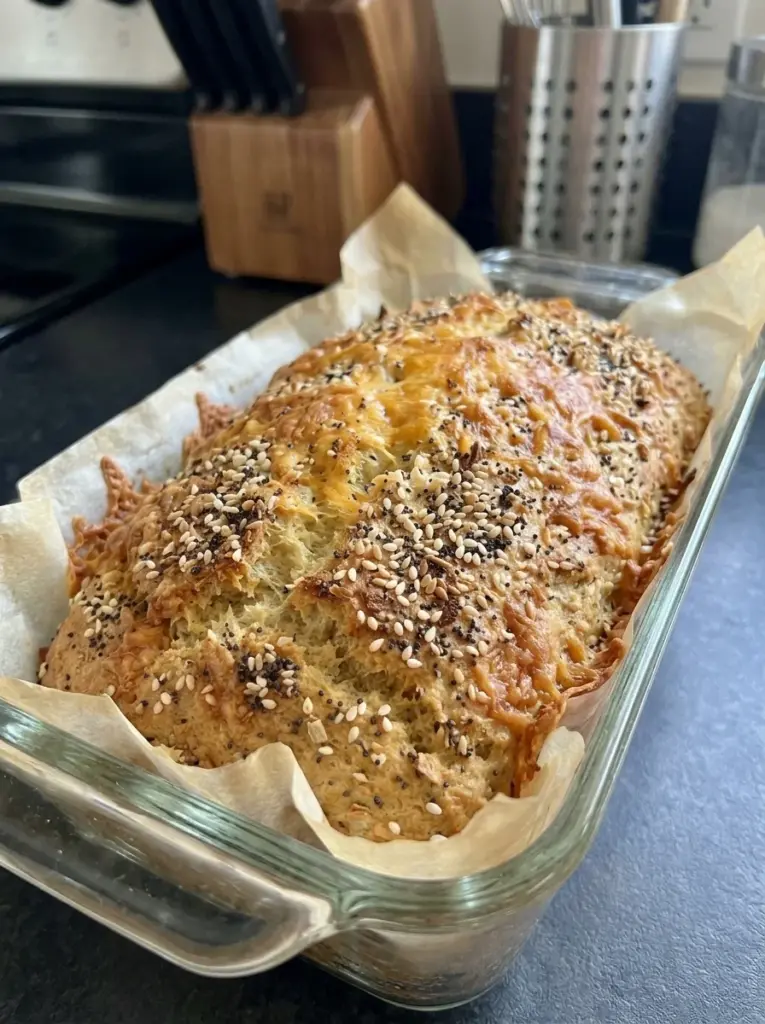
High-Protein Cottage Cheese Everything Bagel Bread brings the savory flavor of an everything bagel to a simple, sliceable quick loaf. Cottage cheese and eggs blend into a creamy base, self-rising flour supplies structure and lift, and an everything-seasoning topping adds sesame, poppy seed, garlic, and onion flavor.
There is no yeast, kneading, or rising period. Mix the batter, bake, and let the loaf cool before slicing. Toasted slices are particularly good with cream cheese, eggs, avocado, or smoked salmon.
This is a moist quick bread with a tender, fairly close crumb, not a chewy boiled bagel or an airy yeast loaf. Cottage cheese and eggs contribute protein, but the amount per slice depends on the labels and how you divide the loaf.
Recipe at a glance: One small 8-by-4-inch loaf · about 8 slices · 10 minutes prep · approximately 35–45 minutes baking, sometimes longer · cooling time additional.
Why You’ll Love This Bread
- Everything-bagel flavor: A savory seed-and-spice topping makes plain toast more interesting.
- No yeast or proofing: Self-rising flour makes this a mix-and-bake recipe.
- Smooth cottage cheese base: Blending distributes the curds through the loaf.
- Small batch: Eight moderate slices are convenient for breakfast preparation.
- Freezer-friendly portions: Separate slices so you can take out only what you need.
What Is Cottage Cheese Bagel Bread?
This recipe is a baked batter loaf flavored like an everything bagel. Cottage cheese supplies moisture and dairy protein; eggs help the batter bind and set. Self-rising flour contains leavening and salt, eliminating the need for a separate rising stage.
It is not boiled before baking, so it does not develop a traditional bagel crust. Its strength is convenience and a toasted, savory finish rather than an exact match to deli bagels.
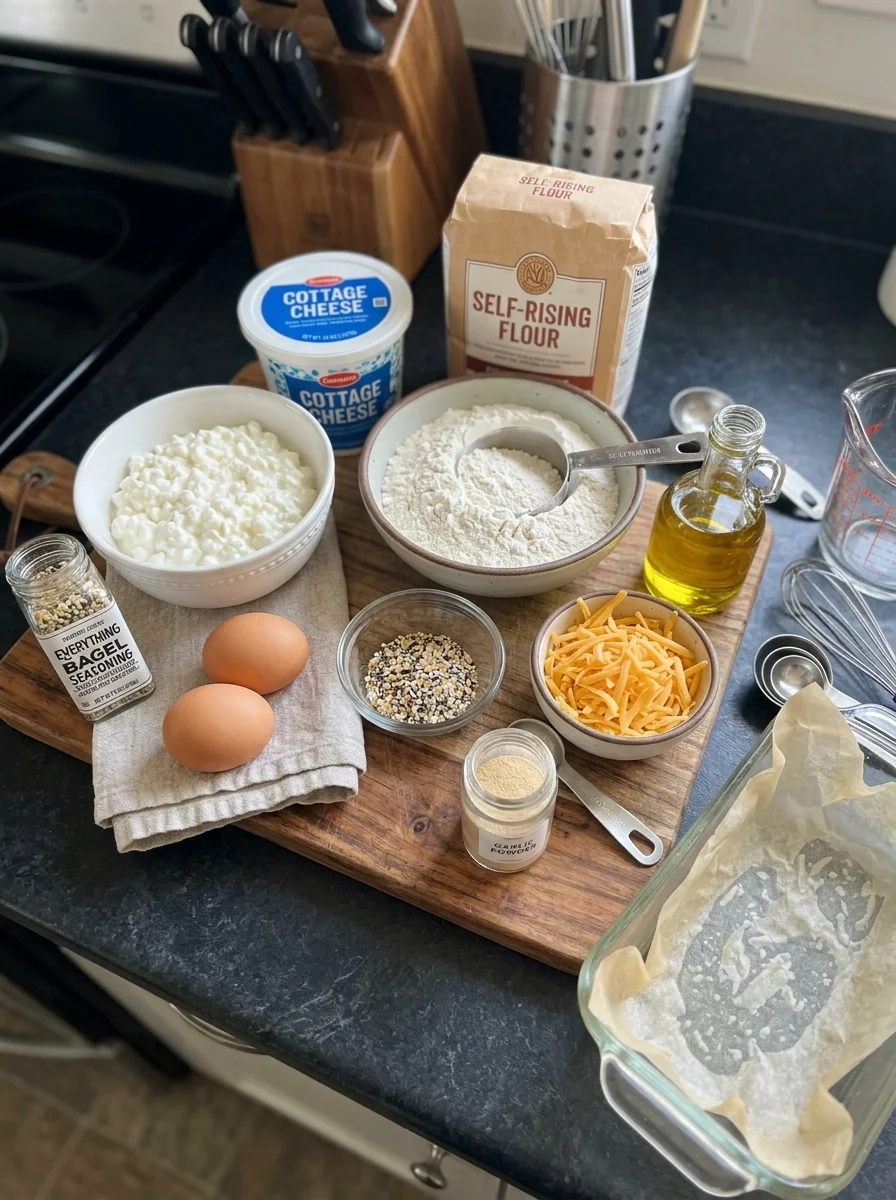
Ingredients
- 1 cup cottage cheese
- 2 large eggs
- 1½ cups self-rising flour, spooned and leveled
- 2 tablespoons everything bagel seasoning, or less if the blend is very salty
- 1 teaspoon olive oil or melted butter, for greasing the pan
Optional Additions
- 2 tablespoons shredded cheddar cheese
- 1 teaspoon garlic powder
Ingredient Notes
Cottage cheese: Use plain cottage cheese. Full-fat and reduced-fat varieties differ in richness and moisture. Stir the container before measuring, but drain any unusually large amount of loose liquid so it does not make the batter watery. Avoid flavored cottage cheese.
Eggs: Use two large eggs. They help the moist loaf set and hold together. Omitting them or using an egg substitute changes the structure and needs separate testing.
Self-rising flour: Spoon into measuring cups and level rather than packing. Too much flour makes the crumb dry and dense. Do not replace it with plain flour without also supplying leavening and salt.
Everything seasoning: Many blends contain coarse salt, and cottage cheese and self-rising flour also contribute salt. Taste the seasoning separately and reduce the topping if it is particularly salty. Garlic and onion pieces can scorch, so monitor the surface while baking and toasting.
Cheddar: The optional two tablespoons add a little extra savory flavor. They also change nutrition and salt content.
Garlic powder: Optional and fairly assertive at a full teaspoon. Use less if your topping already has a strong garlic flavor.
Homemade Self-Rising Flour Option
To replace the listed 1½ cups self-rising flour, whisk together:
- 1½ cups all-purpose flour
- 2¼ teaspoons baking powder
- ⅜ teaspoon fine salt
This creates an expanded ingredient list and may behave differently from commercial self-rising flour. Do not add these leavening ingredients to flour that is already self-rising. If you want easier salt measurement, ⅜ teaspoon is ¼ teaspoon plus ⅛ teaspoon.
Equipment and Pan Size
Use an approximately 8-by-4-inch metal loaf pan, a blender or food processor, a mixing bowl, and a spatula. Line the pan with parchment extending above the sides, or grease thoroughly with the listed oil or butter.
This makes a small loaf. A larger pan spreads the batter thinner and gives lower slices; a deeper, narrower pan can require a longer bake. Pan material and oven performance also affect timing.
How to Make It
1. Prepare the oven and pan
Preheat the oven to 350°F. Line or grease the loaf pan. If using parchment, check its temperature rating and fit it into the corners so the batter sits evenly.
2. Blend the cottage cheese and eggs
Blend the measured cottage cheese and eggs until smooth. Pause and scrape down the sides with the machine stopped if necessary.
Blending before adding flour avoids processing the flour excessively and helps prevent visible pockets of cottage cheese in the loaf.
3. Mix gently
Transfer the mixture to a bowl. Add self-rising flour and stir until no dry patches remain. Fold in optional cheddar or garlic powder.
Expect a thick, sticky batter that can be spooned into the pan, not a kneadable dough. Avoid prolonged stirring or repeated flour additions to make it dry. If the mixture is unusually fluid, check your flour measurement and whether the cottage cheese contained excess liquid.
4. Add the topping
Spoon batter into the pan and smooth the surface. Scatter the everything seasoning evenly, using less than two tablespoons if your blend is heavily salted. Press lightly so it adheres without pushing the topping deep into the loaf.
5. Bake until the center sets
Bake for approximately 35–45 minutes. The top should be golden and a toothpick inserted in the center should come out without wet batter. A few moist crumbs can remain, but the center should not be pasty.
If needed, continue in 5-minute increments. The seeds and dried garlic may darken before the loaf is done; tent loosely with foil once the surface has enough color. Do not remove an underbaked loaf just because the topping looks brown.
6. Cool before slicing
Let rest in the pan for 10 minutes, then lift or turn out onto a wire rack. Cool fully before slicing to allow the moist crumb to set.
Manage cooling so the bread is refrigerated within 2 hours of baking. If it is still slightly warm near that point, refrigerate rather than leaving it out for hours waiting for a perfectly cold center.
7. Toast and serve
Cut into about eight slices and toast to your preference. Because seed toppings can fall into a slot toaster, a toaster oven on a suitable tray can be convenient. Watch closely so exposed garlic and onion do not burn.
Add extra seasoning sparingly, especially if it contains salt. Sprinkling it after toasting is another option that avoids scorching the dried spices.
Tips for Better Texture
Measure flour lightly. Packed cups can turn a moist quick loaf heavy and dry.
Blend the dairy base first. This smooths the curds without overworking the flour.
Mix only until combined. A slightly uneven batter is preferable to prolonged stirring.
Protect the topping. Use foil if it browns early while the center still needs baking.
Cool before cutting. Warm slices are more fragile and can appear gummy.
Toast for structure. Toasting firms the surface, making moist toppings easier to support.
Troubleshooting
| Problem | What to check |
|---|---|
| Center is gummy | Bake longer if wet batter remains and cool fully before slicing. |
| Loaf is dense | Some density is normal. Check flour measuring, leavening freshness, and mixing time. |
| Seasoning tastes burned | Tent during baking and toast more gently. Add extra seasoning after toasting instead. |
| Bread is too salty | Reduce the topping and check cottage cheese and seasoning labels. |
| Slices crumble | Cool completely, use moderate slice thickness, and confirm the egg quantity. |
| Loaf sticks | Grease thoroughly or use a parchment sling. |
| Loaf is low | This is a small batter batch; a larger pan makes shorter slices. |
Variations
Cheddar garlic: Use the optional cheddar and garlic powder, reducing garlic if the seasoning is already strong.
Plain cottage cheese loaf: Omit the everything topping for a more neutral flavor.
Herb version: Add ½ teaspoon dried dill or Italian seasoning to the batter.
Sesame topping: Replace the everything blend with sesame seeds if you want a simpler surface without the garlic, onion, or extra salt.
Whole-wheat flour, gluten-free blends, and egg substitutes are not assumed direct replacements; each changes absorption and structure and needs an adjusted formula.
Serving Suggestions
Spread toast with cream cheese, add scrambled or fried eggs, or top with avocado. Smoked salmon, cucumber, and a little dill create another savory option.
For sandwiches, cool and lightly toast the bread before adding fillings. Use moderately thick slices and drain wet ingredients to avoid saturating the crumb.
Toppings contribute their own protein, calories, salt, and carbohydrates. Calculate them separately if tracking the complete breakfast.
Protein and Nutrition
Cottage cheese and eggs contribute protein, and flour also adds some. The supplied estimate of 7–10 grams per slice should not be treated as verified without calculating the actual brands and quantities.
Add the nutrition values for the cup of cottage cheese, two eggs, flour, seasoning, any pan fat retained, and optional additions. Divide by eight for eight equal slices. Larger or uneven slices have different values.
The original calorie range is likewise not confirmed. This bread contains wheat flour, so a protein-focused name does not make it automatically low-carb or keto. Use label-based totals if you need a particular dietary target.
Storage and Reheating
Refrigerate within 2 hours of baking, or within 1 hour if the surrounding temperature is above 90°F. Store covered at 40°F or below and use within 3–4 days. Let excess steam escape briefly before covering tightly.
Freeze cooled slices with parchment between them for up to 2 months for best quality. Pack in a freezer-safe bag or container, removing excess air.
Thaw slices in the refrigerator or toast directly from frozen, allowing enough time for the center to warm. Avoid scorching the topping while the interior remains cold. A toaster oven offers more visual control than a slot toaster when the seeds are loose.
Do not store this moist egg-and-cottage-cheese loaf on the counter for several days.
Frequently Asked Questions
Does it taste like a bagel?
The topping gives familiar everything-bagel flavor, but the crumb is different. It is a tender quick loaf rather than chewy boiled bagel dough.
Do I need a blender?
A blender or food processor is recommended for a smooth base. Mixing by hand leaves curds visible and gives a different texture.
Can I use all-purpose flour alone?
No. Use the replacement blend above so the batter has leavening and salt.
Can I use low-fat cottage cheese?
Yes, with possible differences in moisture and richness. Check the batter consistency and bake until the center sets.
Can I double the recipe?
Use two similar small pans for more predictable baking. Doubling into one large, deep loaf changes the time needed for the center to cook.
Is it gluten-free?
Not as written. Self-rising wheat flour contains gluten, and a gluten-free version needs an appropriately adjusted formula.
Recipe Card
High-Protein Cottage Cheese Everything Bagel Bread
A small savory quick loaf with blended cottage cheese, eggs, and an everything-seasoning topping.
Prep: 10 minutes
Bake: Approximately 35–45 minutes, longer if needed
Pan rest: 10 minutes
Total before full cooling: Approximately 55–65 minutes
Yield: One small loaf, about 8 slices
Ingredients
- 1 cup plain cottage cheese
- 2 large eggs
- 1½ cups self-rising flour, spooned and leveled
- Up to 2 tablespoons everything bagel seasoning, according to saltiness
- 1 teaspoon olive oil or melted butter for the pan
- 2 tablespoons shredded cheddar, optional
- 1 teaspoon garlic powder, optional
Instructions
- Preheat oven to 350°F. Grease or line an approximately 8-by-4-inch loaf pan.
- Blend cottage cheese and eggs until smooth.
- Transfer to a bowl and stir in self-rising flour just until combined. Fold in optional additions.
- Spoon into the pan and smooth. Sprinkle with seasoning and press lightly to adhere.
- Bake 35–45 minutes until set and a toothpick comes out without wet batter. Continue in short increments if needed; tent with foil if the topping darkens early.
- Rest in the pan 10 minutes, then cool on a rack before slicing. Refrigerate within 2 hours of baking.
- Divide into about eight slices and toast as desired, watching the topping closely.
Notes
- This is a moist quick loaf, not traditional bagel dough.
- Seasoning blends vary in salt content; reduce the amount if necessary.
- Homemade self-rising replacement: 1½ cups all-purpose flour, 2¼ teaspoons baking powder, and ⅜ teaspoon fine salt.
- Protein and calories require calculation using actual products and portions.
- Contains milk, eggs, and wheat; everything seasoning commonly contains sesame.
Final Thoughts
Blend the cottage cheese base, mix gently, and give the loaf enough baking and cooling time before slicing. Toast adds a firm surface and brings out the savory topping, making this small loaf a useful base for breakfast and lunch.

High-Protein Cottage Cheese Everything Bagel Bread
Ingredients
Ingredients
- 1 cup cottage cheese
- 2 large eggs
- 1½ cups self-rising flour, spooned and leveled
- 2 tablespoons everything bagel seasoning, or less if the blend is very salty
- 1 teaspoon olive oil or melted butter, for greasing the pan
Optional Additions
- 2 tablespoons shredded cheddar cheese
- 1 teaspoon garlic powder
Instructions
- Preheat oven to 350°F. Grease or line an approximately 8-by-4-inch loaf pan.
- Blend cottage cheese and eggs until smooth.
- Transfer to a bowl and stir in self-rising flour just until combined. Fold in optional additions.
- Spoon into the pan and smooth. Sprinkle with seasoning and press lightly to adhere.
- Bake 35–45 minutes until set and a toothpick comes out without wet batter. Continue in short increments if needed; tent with foil if the topping darkens early.
- Rest in the pan 10 minutes, then cool on a rack before slicing. Refrigerate within 2 hours of baking.
- Divide into about eight slices and toast as desired, watching the topping closely.