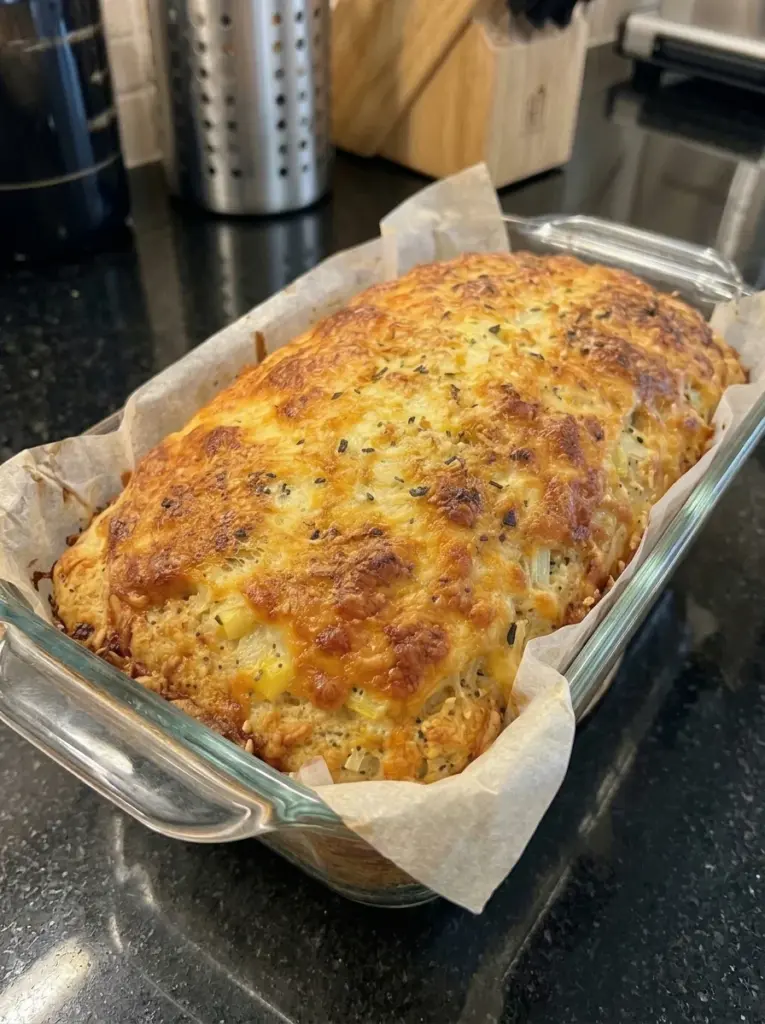
Easy Cottage Cheese Cheddar Bread is a savory quick loaf with a moist crumb and sharp cheddar throughout. Cottage cheese and eggs form the base, while baking powder gives the batter lift without yeast or a rising period.
Mix it in two bowls, spoon it into a loaf pan, and bake until the center is set. A slice pairs well with tomato soup, breakfast eggs, or a simple salad. Toasting gives the cut surface a firmer texture and brings out the cheddar flavor.
Expect a tender, relatively close crumb rather than fluffy yeast bread. The most important details are measuring flour lightly, avoiding prolonged stirring, and giving the baked loaf enough time to cool before slicing.
Recipe at a glance: One small loaf · about 8 slices · 10 minutes prep · approximately 35–45 minutes baking, longer if needed · 10 minutes pan rest, plus further cooling.
Why You’ll Love This Bread
- No yeast or kneading: Baking powder provides the lift.
- Savory cheese flavor: Sharp cheddar makes the loaf suitable for meals and snacks.
- A moist dairy base: Cottage cheese adds richness and protein without a separate milk ingredient.
- Simple preparation: Combine wet and dry mixtures, fold in cheese, and bake.
- Convenient portions: Slice and freeze what you will not use promptly.
What Is Cottage Cheese Cheddar Bread?
This is a quick bread, meaning it uses chemical leavening instead of yeast. Eggs help the moist batter set, flour supplies structure, and cheddar adds flavor and fat.
It is not a traditional sandwich loaf or a melted-cheese flatbread. It should be sliceable once cooled, but the crumb will remain moist and more compact than an airy wheat loaf. A little tang from cottage cheese complements the cheddar.
Ingredients
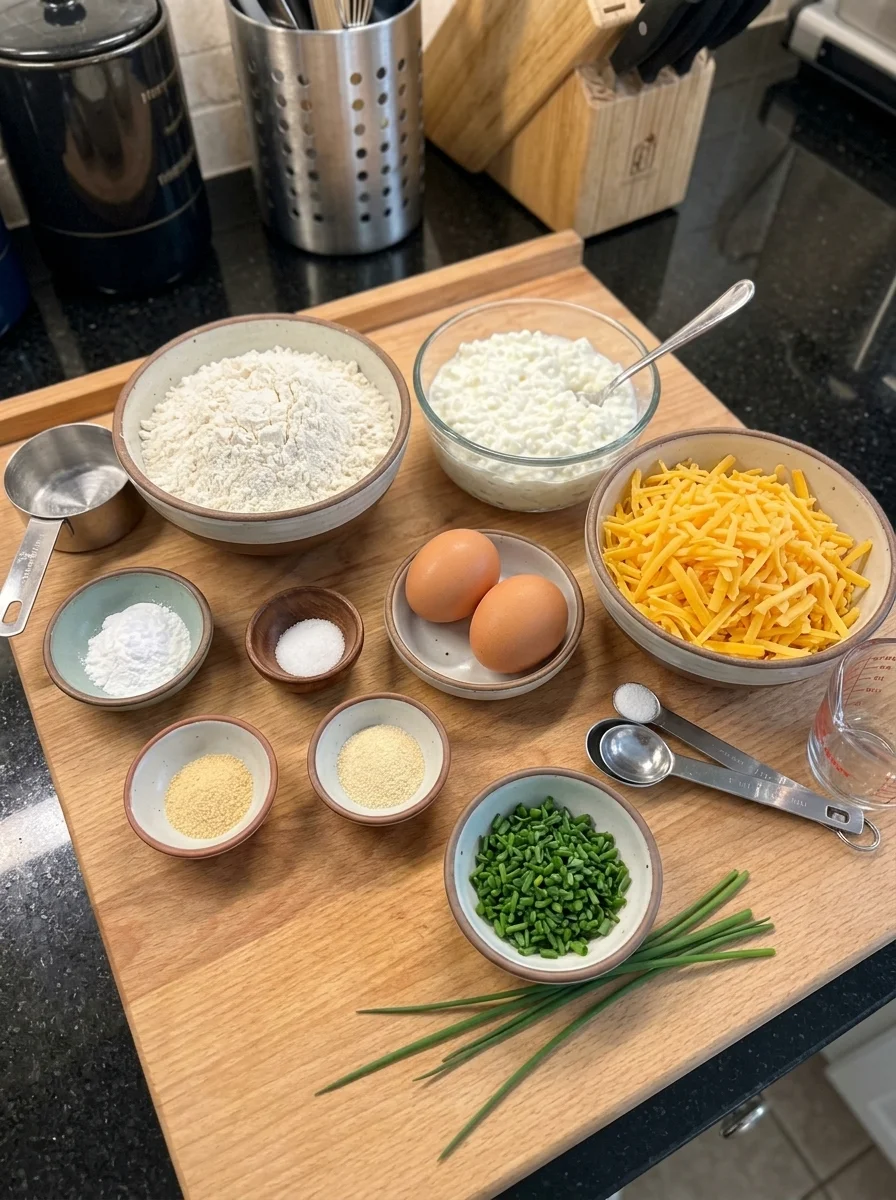
- 1 cup plain cottage cheese
- 2 large eggs
- 1½ cups all-purpose flour, spooned and leveled
- 1 cup shredded sharp cheddar
- 2 teaspoons baking powder
- ½ teaspoon fine salt
Optional Flavor Additions
- ½ teaspoon garlic powder
- ½ teaspoon onion powder
- 1 tablespoon chopped fresh chives
- A small extra sprinkle of cheddar for the top
- Oil or butter for greasing the pan, if not using parchment
Ingredient Notes
Cottage cheese: Use plain cottage cheese and drain excessive loose liquid before measuring. Full-fat and reduced-fat products differ in moisture and richness. Do not press it completely dry; the recipe relies on its moisture.
Eggs: Two large eggs help bind and set the loaf. Using a different size changes the amount of liquid. An egg-free adaptation requires separate development.
All-purpose flour: Spoon into the measuring cup and level. Packed flour can make this already-thick batter dry. Do not use self-rising flour with the full baking powder and salt amounts; it contains its own leavening and seasoning.
Cheddar: Freshly shredded sharp cheddar offers good flavor and melt. Packaged shredded cheese is convenient and can also work. Measure a normal cup rather than compressing it tightly.
Baking powder: Use fresh baking powder, not baking soda. It does not require a yeast-style proofing stage.
Salt: Fine salt measures differently from coarse kosher salt. Cottage cheese and cheddar also contribute salt; choose the stated moderate amount rather than automatically adding more.
Optional seasonings: Garlic, onion, and chives provide a savory accent but are not necessary for the basic loaf. Keep additions modest so they do not change the moisture balance substantially.
Pan and Equipment
Use an 8½-by-4½-inch metal loaf pan, two mixing bowls, a spoon or spatula, and a cooling rack. A blender is optional for smoothing the cottage cheese base.
Line with baking parchment extending above the sides for easy lifting, or grease thoroughly. A larger pan gives a shallower loaf and may bake faster; a smaller or deeper pan may need longer. Do not judge doneness solely by the original time range.
How to Make It
1. Prepare the oven and pan
Preheat the oven to 350°F and prepare the loaf pan. Place a rack near the middle of the oven.
2. Combine the wet ingredients
Whisk cottage cheese and eggs together. For a smoother interior, blend them briefly until the curds are mostly smooth, then transfer to the mixing bowl.
Whisking leaves small curds visible, while blending creates a more uniform base. Either method can work; do not blend the flour extensively afterward.
3. Whisk the dry ingredients
In a separate bowl, whisk flour, baking powder, fine salt, and optional garlic and onion powders. Distribute the leavening evenly so there are no pockets of baking powder in the batter.
4. Mix gently and fold in cheese
Add the dry mixture to the wet mixture. Stir just until no dry flour remains, then fold in cheddar and optional chives.
The batter should be thick and spoonable, not a pourable cake batter or dry kneading dough. Scrape the bottom of the bowl so you do not mistake unmixed flour for a need to stir much longer.
If it will not come together and dry flour remains, reassess measuring and cottage cheese moisture. A small extra spoonful of cottage cheese can help, but additional ingredients alter the formula. Avoid large unmeasured liquid additions.
5. Fill the pan
Spoon into the prepared pan and level the surface without packing it forcefully. Add a modest extra sprinkle of cheddar if desired. Bake promptly after mixing; there is no required rise.
6. Bake until the center is set
Bake for approximately 35–45 minutes. The top should be golden and the center should feel set. Insert a toothpick into a few central spots: melted cheese can coat it, but there should not be wet batter.
If necessary, continue in 5-minute increments. A moist dairy loaf may need longer depending on the pan and oven. Tent loosely with foil when the top has enough color so it does not burn while the center finishes.
7. Cool before slicing
Rest in the pan for 10 minutes, then transfer to a rack. Allow further cooling before slicing so the crumb can firm up. The supplied 10–15 minutes is not a reliable full-cooling estimate; a small loaf may need about an hour or longer depending on conditions.
Do not leave the loaf out for hours waiting for a perfectly cold center. Refrigerate within 2 hours of baking, even if it is still slightly warm near that point. For a warm serving, let it settle enough to cut without compressing, and expect softer slices.
Tips for a Tender Loaf
Measure flour lightly. This is the easiest way to avoid a dry, heavy batter.
Smooth the base if desired. Blending cottage cheese and eggs helps distribute moisture and curds.
Limit mixing after flour goes in. Stir to combine rather than repeatedly working the batter.
Use several doneness checks. A browned cheese topping can hide a wet center.
Give the crumb time to set. Cutting straight from the oven can make properly baked bread look gummy.
Toast for sturdier slices. A lightly crisp cut surface supports toppings better.
Troubleshooting
| Problem | What to check |
|---|---|
| Center is wet or pasty | Continue baking with foil over a dark top. Check several spots rather than a melted-cheese pocket. |
| Loaf is dense | Some density is normal. Check flour measuring, baking powder freshness, and mixing time. |
| Batter is dry and crumbly | Flour may be overmeasured or cottage cheese unusually dry. Reassess quantities before adding large amounts of liquid. |
| Top darkens early | Tent loosely with foil and verify oven temperature. |
| Slices crumble | Cool longer and use moderate slice thickness. |
| Loaf sticks | Use a parchment sling or grease corners and sides thoroughly. |
| Flavor is overly salty | Check cheese and cottage cheese labels and avoid a heavy salty topping. |
Variations
Jalapeño cheddar: Fold in one or two tablespoons finely chopped jalapeño, patted dry. Large wet additions change the batter.
Bacon cheddar: Add a small amount of cooked, crumbled bacon. Drain it well and remember that it contributes salt.
Herb loaf: Use the optional chives or a small amount of dried Italian seasoning.
Different cheese: Substitute a suitable shredded melting cheese for some of the cheddar, expecting changes in flavor, browning, and saltiness.
Whole-wheat flour, gluten-free blends, and egg replacements require adjusted formulas rather than assumed direct substitutions.
Serving Suggestions
Serve beside tomato soup, vegetable soup, or a stew. A lightly toasted slice also works with scrambled eggs or a simple salad.
For a savory snack, warm a slice and add a little butter if desired. For sandwiches, let the loaf cool fully, cut moderately thick slices, and avoid very wet or heavy fillings.
The bread contains cheese already, so rich toppings are optional rather than necessary. Fresh cucumber or tomato adds contrast; drain excess tomato juice before assembling.
Storage and Reheating
Refrigerate within 2 hours of baking, or within 1 hour if the surrounding temperature is above 90°F. Store covered at 40°F or below and use within 3–4 days. Let excess steam escape briefly before tightly packing.
Freeze cooled slices individually or with parchment between them for up to 2 months for best quality. Use a freezer-safe bag or container and remove excess air.
Thaw in the refrigerator or warm slices from frozen in a toaster oven, checking the centers. Cheese can soften and release fat, so a tray or appropriate support is useful. Avoid relying on a slot toaster if slices are fragile or have loose cheese toppings.
Microwave briefly for a softer slice, using short intervals to avoid a chewy texture. Reheat only what you plan to serve.
Nutrition and Dietary Notes
Cottage cheese, eggs, and cheddar contribute protein, but exact protein and calories require calculation from actual labels. The supplied calorie range has not been verified and is not included as a fixed value.
Add ingredient totals, including any extra topping and pan fat retained, then divide by eight for eight equal slices. Slice sizes and cheese brands can change the result considerably.
All-purpose flour contributes carbohydrates, so this bread is not automatically low-carb or keto. The recipe contains wheat, milk, and eggs.
Frequently Asked Questions
Do I need yeast?
No. Baking powder provides the lift, and the batter does not need a proofing period.
Must the cottage cheese be blended?
No. Whisking gives visible curds and a more textured crumb; blending the wet ingredients gives a smoother base.
Can I use self-rising flour?
Not with the same added baking powder and salt. Self-rising flour needs a separately adjusted formula, so all-purpose flour is recommended here.
Can I use low-fat cottage cheese?
Yes, with differences in richness and moisture. Assess the batter and bake until the center is set.
Can I double it?
Use two similar pans rather than one much deeper loaf. Check each loaf separately for doneness.
Why does it seem gummy when warm?
Moist quick bread needs cooling time to set. Wet batter also indicates underbaking, so distinguish a hot, soft crumb from a raw center.
Recipe Card
Easy Cottage Cheese Cheddar Bread
A small savory quick loaf with cottage cheese, eggs, and sharp cheddar.
Prep: 10 minutes
Bake: Approximately 35–45 minutes, longer if needed
Pan rest: 10 minutes
Total before further cooling: Approximately 55–65 minutes
Yield: One small loaf, about 8 slices
Ingredients
- 1 cup plain cottage cheese
- 2 large eggs
- 1½ cups all-purpose flour, spooned and leveled
- 1 cup shredded sharp cheddar
- 2 teaspoons baking powder
- ½ teaspoon fine salt
- ½ teaspoon garlic powder, optional
- ½ teaspoon onion powder, optional
- 1 tablespoon chopped chives, optional
- Extra cheddar for the top, optional
- Oil or butter for greasing if needed
Instructions
- Heat oven to 350°F. Grease or line an 8½-by-4½-inch loaf pan.
- Whisk cottage cheese and eggs together, or blend them for a smoother texture.
- Separately whisk flour, baking powder, salt, and optional powdered seasonings.
- Stir dry mixture into wet just until combined. Fold in cheddar and optional chives.
- Spoon into the pan and level. Add a little extra cheddar if desired.
- Bake 35–45 minutes until golden and set, with no wet batter on a central toothpick check. Continue in short increments if needed and shield a dark top with foil.
- Rest 10 minutes in the pan, then cool on a rack before slicing. Refrigerate within 2 hours of baking.
Notes
- Full cooling takes longer than the pan rest and is not included in the listed total.
- Expect a moist, close quick-bread crumb rather than fluffy yeast bread.
- Extra toppings and flavor additions change nutrition and ingredient totals.
- Exact calories and protein have not been calculated.
Final Thoughts
Keep the flour measurement light, mix gently, and check the center before removing the loaf. Once cooled, cheddar bread makes a convenient savory slice for soup, breakfast, or a simple toasted snack.

Easy Cottage Cheese Cheddar Bread
Ingredients
- 1 cup plain cottage cheese
- 2 large eggs
- 1½ cups all-purpose flour, spooned and leveled
- 1 cup shredded sharp cheddar
- 2 teaspoons baking powder
- ½ teaspoon fine salt
Optional Flavor Additions
- ½ teaspoon garlic powder
- ½ teaspoon onion powder
- 1 tablespoon chopped fresh chives
- A small extra sprinkle of cheddar for the top
- Oil or butter for greasing the pan, if not using parchment
Instructions
- Heat oven to 350°F. Grease or line an 8½-by-4½-inch loaf pan.
- Whisk cottage cheese and eggs together, or blend them for a smoother texture.
- Separately whisk flour, baking powder, salt, and optional powdered seasonings.
- Stir dry mixture into wet just until combined. Fold in cheddar and optional chives.
- Spoon into the pan and level. Add a little extra cheddar if desired.
- Bake 35–45 minutes until golden and set, with no wet batter on a central toothpick check. Continue in short increments if needed and shield a dark top with foil.
- Rest 10 minutes in the pan, then cool on a rack before slicing. Refrigerate within 2 hours of baking.
Notes
- Full cooling takes longer than the pan rest and is not included in the listed total.
- Expect a moist, close quick-bread crumb rather than fluffy yeast bread.
- Extra toppings and flavor additions change nutrition and ingredient totals.
- Exact calories and protein have not been calculated.