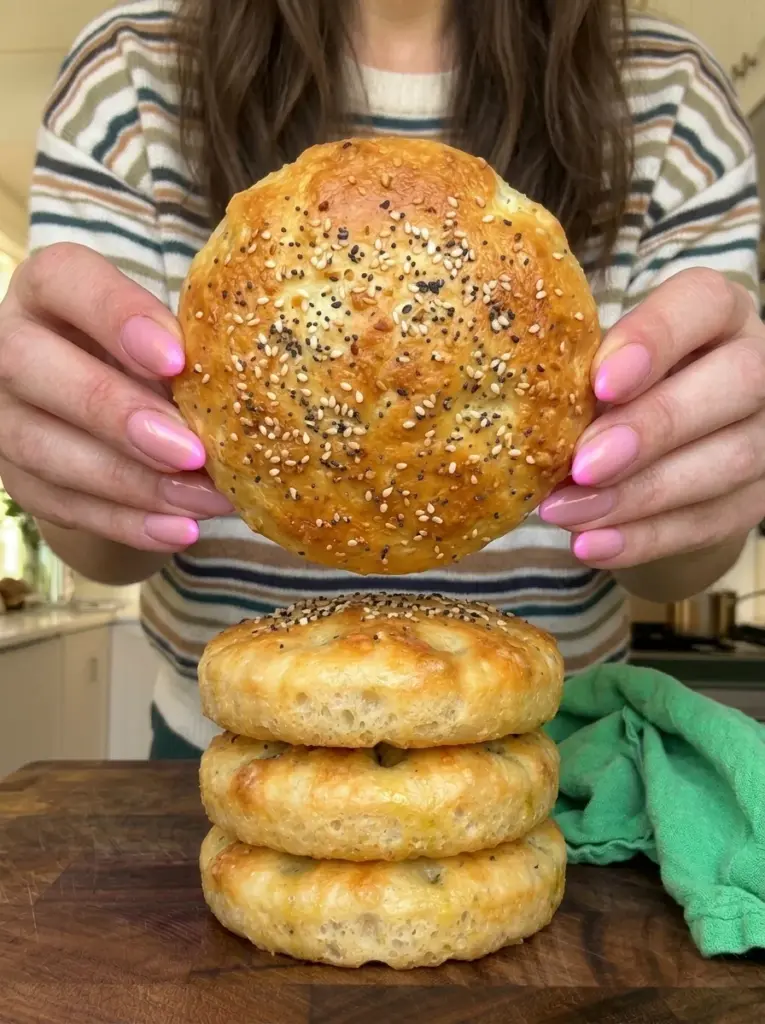
High-Protein Cottage Cheese Sandwich Rolls make a simple homemade base for breakfast sandwiches, turkey sandwiches, or small burgers. Cottage cheese and eggs blend into a smooth mixture, then self-rising flour brings it together for six small, savory rolls.
There is no yeast or lengthy rising period. A short rest lets the flour absorb moisture before portioning, and the rolls bake with tender centers and lightly golden surfaces. Add sesame seeds or everything seasoning if you like, or leave them plain for a more neutral flavor.
These are quick rolls, with a closer, slightly denser crumb than traditional yeast bread. Their moisture level depends on your cottage cheese and flour, so use the consistency cues rather than adding flour until the mixture feels completely dry.
Recipe at a glance: 6 small rolls · 10 minutes active prep · 5 minutes dough rest · approximately 22–28 minutes baking · 5 minutes tray rest · additional cooling before slicing.
Why You’ll Love This Recipe
- Three main ingredients: Cottage cheese, eggs, and self-rising flour.
- No proofing: The leavening works during baking rather than a yeast rise.
- Small-batch convenience: Six rolls are easy to portion and freeze.
- Savory flexibility: Use for breakfast, lunch, or a dinner side.
- Optional toppings: Keep plain or add seeds, cheese, or everything seasoning.
What Are Cottage Cheese Sandwich Rolls?
These are individually baked quick breads made with a blended dairy-and-egg base. Cottage cheese supplies moisture and protein, eggs help the mixture set, and self-rising flour provides structure, salt, and leavening.
They are not guaranteed to behave like an elastic, kneadable yeast dough. With the supplied quantities, some cottage cheese brands produce a very soft dough or thick batter. Spooned mounds or supported baking molds are useful alternatives to forcing the mixture into hand-shaped balls with excessive flour.
The finished rolls are small. They work particularly well for modest sandwiches or open-faced servings rather than oversized burgers with heavy fillings.
Ingredients
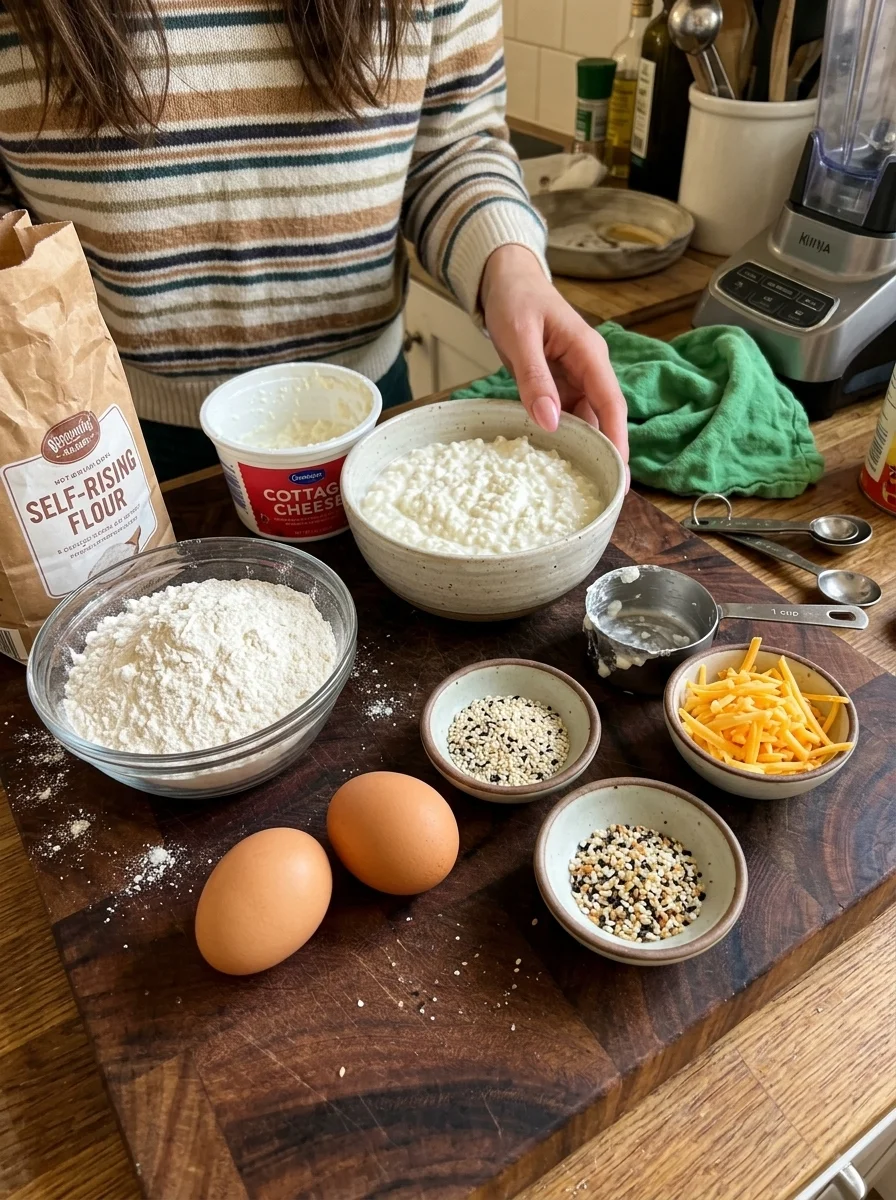
- 1 cup plain cottage cheese
- 2 large eggs
- 1½ cups self-rising flour, spooned and leveled, plus a little extra only if needed
Optional Toppings
- Sesame seeds
- Everything bagel seasoning
- A small amount of shredded cheddar
Ingredient Notes
Cottage cheese: Choose a thick, plain product. Full-fat and reduced-fat varieties differ in richness and moisture. Drain excess loose liquid before measuring, without pressing the curds completely dry. Very watery cottage cheese can make free-standing rolls difficult to shape.
Eggs: Use two large eggs. Extra-large eggs add more liquid and can change the dough’s consistency. The eggs are mixed into the recipe, not used as a wash.
Self-rising flour: Measure by spooning flour into the cup and leveling. Packing it in can make the rolls heavy. Brands vary in flour strength and leavening formulation, so the mixture may not feel identical every time.
Toppings: Use light amounts. Everything seasoning often contains salt, while cottage cheese and self-rising flour are already salted. Cheese adds flavor but can darken at the edges during baking.
Homemade Self-Rising Flour Option
For the listed 1½ cups, whisk together:
- 1½ cups all-purpose flour
- 2¼ teaspoons baking powder
- ⅜ teaspoon fine salt
Use this blend instead of commercial self-rising flour, not in addition to it. This expands the ingredient list and may produce a somewhat different dough. Plain flour alone is not an appropriate replacement because the rolls need leavening.
Equipment and Shaping Options
Use a blender or food processor, a mixing bowl, spoon or scoop, baking sheet, and baking parchment rated for 375°F. A wire rack is useful for cooling.
If the mixture remains too soft for free-standing rolls, lightly greased oven-safe roll molds or jumbo muffin wells can provide support. The shape and baking time may differ; check the centers individually. Do not assume a very wet mixture must be corrected with a large unmeasured quantity of flour.
How to Make Them
1. Preheat and prepare the tray
Heat the oven to 375°F with a rack near the middle. Line a baking sheet with parchment. Have a small amount of extra flour ready for your hands or a spoon ready for portioning.
2. Blend the cottage cheese and eggs
Blend until smooth, pausing to scrape the container with the machine stopped if necessary. This distributes the curds through the mixture and gives a more even interior.
Do not add the flour to the blender and process it extensively; stir it in separately to limit mixing.
3. Add flour and rest briefly
Transfer to a bowl and stir in self-rising flour until no dry patches remain. Let rest for 5 minutes.
Assess the mixture after resting. It should be soft and sticky, able to hold a rough mound. If just too sticky for your hands, add flour one tablespoon at a time, stopping as soon as manageable. Alternatively, use a scoop and a dampened spoon to form mounds without adding more flour.
If it flows like a pourable batter, the supplied formula may not suit your particular wet cottage cheese. Use supporting molds or reassess the ingredients rather than claiming it is a conventional roll dough. Substantial flour additions change both the recipe and its nutrition.
4. Portion gently
Divide into six equal portions. Lightly flour your hands and gently round them if possible, or scoop six similar mounds onto the tray. Leave about 2 inches between them.
Avoid kneading repeatedly to create perfectly smooth balls. A slightly rough surface is fine. If using molds, do not overfill and leave room for expansion.
5. Add optional toppings
Sprinkle lightly with sesame seeds, everything seasoning, or cheddar. Press gently into the moist surface. There is no extra egg wash required.
6. Bake until cooked through
Bake for approximately 22–28 minutes, until lightly golden and the centers are set. A skewer should come out without wet batter, and an opened test roll should not contain a raw, pasty center.
An internal temperature around 190°F is a useful supporting bread-texture cue for this recipe, not a universal safety threshold or a substitute for checking the crumb. If centers remain wet, continue in short increments. Tent loosely with foil if toppings brown before the rolls are ready.
7. Cool before slicing
Rest on the tray for 5 minutes, then transfer to a rack. Let cool enough for the crumb to set before cutting horizontally. A very hot roll can tear or look gummy when opened.
Refrigerate within 2 hours of baking; do not leave the egg-and-dairy rolls on the counter overnight.
Tips for Tender Rolls
Start with thick cottage cheese. Loose liquid changes the dough considerably.
Rest before judging stickiness. The flour needs a few minutes to absorb moisture.
Use a scoop if needed. Spoon-shaped rolls are preferable to dense ones made with excessive extra flour.
Handle gently. No extended kneading is required.
Make similar portions. Uneven sizes finish at different times.
Cool before splitting. The crumb gains structure as it rests.
Troubleshooting
| Problem | Practical adjustment |
|---|---|
| Mixture is too wet to shape | Drain loose cottage cheese liquid before measuring next time; use a scoop or supporting molds for the current batch. |
| Rolls spread flat | The mixture may be too moist for free-standing baking. Use suitable molds and verify ingredient quantities. |
| Rolls are dense | Some density is normal. Avoid excessive flour and prolonged mixing. |
| Centers are gummy | Bake longer if wet inside, then allow adequate cooling. |
| Toppings burn | Tent with foil and monitor dried garlic and onion especially closely. |
| Rolls seem salty | Reduce everything seasoning and check cottage cheese labels. |
| Slices break apart | Allow more cooling and use modest fillings rather than heavy stacks. |
Variations
Everything rolls: Add a light coating of everything seasoning, accounting for its saltiness.
Sesame rolls: Sesame seeds give a simple topping without the garlic-and-onion pieces that can scorch.
Cheddar tops: Add a small sprinkle of shredded cheddar before baking.
Herb version: Stir ½ teaspoon dried Italian seasoning into the flour.
Egg-free, gluten-free, and whole-wheat versions need separately adjusted formulas. They are not assumed direct substitutions.
Serving Suggestions
Split and fill with turkey, chicken, eggs, cheese, or tuna salad. A light toast gives the cut surfaces extra structure. Drain tomatoes and other wet fillings to avoid soaking the crumb.
For breakfast, use one roll with a cooked egg and a slice of cheese. For lunch, pair a modest sandwich with a salad. The rolls also work as a side for soup or stew.
If a batch is flatter than expected, use it open-faced rather than forcing a deep horizontal cut through a thin roll.
Protein and Nutrition
Cottage cheese and eggs contribute protein, but the supplied estimates of 9–12 grams protein and 170–210 calories per roll are not verified for every product combination.
Add the label values for the measured cup of cottage cheese, two eggs, flour, any additional shaping flour that becomes part of the dough, and toppings. Divide by six for six equal rolls. Include sandwich fillings separately.
Self-rising flour contributes carbohydrates. A protein-focused recipe name does not make the rolls automatically low-carb or keto. Use the actual ingredients and portion size to assess dietary targets.
Storage and Reheating
Refrigerate within 2 hours of baking, or within 1 hour if the surrounding temperature is above 90°F. Store covered at 40°F or below and use within 3–4 days. Let excess steam escape briefly before packing tightly.
Freeze cooled rolls individually for up to 2 months for best quality. Use a freezer-safe bag or container and separate with parchment if necessary. Thaw in the refrigerator.
Warm in a 300°F oven, beginning to check after 5–8 minutes. Larger or frozen rolls need longer. Alternatively, slice and toast, watching loose seeds and cheese. These short times are quality estimates, so check the center rather than assuming the exterior warmth is enough.
Reheat only the portion you plan to serve, and add fresh fillings afterward.
Frequently Asked Questions
Is this a yeast-bread texture?
No. Expect a tender, relatively compact quick-roll crumb rather than an airy yeast bun.
Can I use low-fat cottage cheese?
Yes, but moisture differs by brand. Thick consistency matters more than fat percentage alone for shaping.
Why is my mixture closer to batter?
Cottage cheese moisture, egg size, and flour measuring vary. The supplied ratio can be very soft; scoop it or use molds instead of adding large amounts of flour without reassessing the formula.
Can I use all-purpose flour alone?
No. Use the self-rising replacement blend so the mixture includes leavening and salt.
Can I make larger burger buns?
Larger portions need longer baking and may require support. The stated recipe and timing are for six small rolls.
Can I double it?
Yes. Make twelve similar-sized rolls with enough tray space and check each batch for doneness. Rotate trays if your oven heats unevenly.
Recipe Card
High-Protein Cottage Cheese Sandwich Rolls
Six small yeast-free rolls made with blended cottage cheese, eggs, and self-rising flour.
Active prep: 10 minutes
Dough rest: 5 minutes
Bake: Approximately 22–28 minutes
Tray rest: 5 minutes
Total before further cooling: Approximately 42–48 minutes
Yield: 6 small rolls
Ingredients
- 1 cup thick plain cottage cheese, with excess loose liquid drained
- 2 large eggs
- 1½ cups self-rising flour, spooned and leveled, plus a little extra only if needed
- Sesame seeds, everything seasoning, or shredded cheddar, optional
Instructions
- Preheat oven to 375°F. Line a baking sheet with parchment.
- Blend cottage cheese and eggs until smooth.
- Transfer to a bowl and stir in flour until combined. Rest 5 minutes.
- Divide into six portions. Shape gently with lightly floured hands or scoop mounds onto the sheet. Use suitable molds if too soft to stand. Add extra flour sparingly rather than forcing a dry dough.
- Apply optional toppings lightly.
- Bake 22–28 minutes until golden and set, with no wet center. An approximately 190°F internal reading is a supporting texture cue. Continue if needed and tent dark toppings with foil.
- Rest 5 minutes on the tray, transfer to a rack, and cool before slicing. Refrigerate within 2 hours of baking.
Notes
- Moisture varies; this formula can be softer than a conventional roll dough.
- Extra flour and toppings change nutrition and texture.
- Homemade self-rising replacement: 1½ cups all-purpose flour, 2¼ teaspoons baking powder, and ⅜ teaspoon fine salt.
- Contains milk, eggs, and wheat; some toppings contain sesame.
- Exact protein and calorie values require label-based calculation.
Final Thoughts
Use thick cottage cheese, allow the short flour-absorption rest, and choose gentle shaping or supported molds according to the mixture you have. Once baked and cooled, the rolls make a convenient base for a modest savory sandwich.

High-Protein Cottage Cheese Sandwich Rolls
Ingredients
- 1 cup plain cottage cheese
- 2 large eggs
- 1½ cups self-rising flour, spooned and leveled, plus a little extra only if needed
Optional Toppings
- Sesame seeds
- Everything bagel seasoning
- A small amount of shredded cheddar
Instructions
- Preheat oven to 375°F. Line a baking sheet with parchment.
- Blend cottage cheese and eggs until smooth.
- Transfer to a bowl and stir in flour until combined. Rest 5 minutes.
- Divide into six portions. Shape gently with lightly floured hands or scoop mounds onto the sheet. Use suitable molds if too soft to stand. Add extra flour sparingly rather than forcing a dry dough.
- Apply optional toppings lightly.
- Bake 22–28 minutes until golden and set, with no wet center. An approximately 190°F internal reading is a supporting texture cue. Continue if needed and tent dark toppings with foil.
- Rest 5 minutes on the tray, transfer to a rack, and cool before slicing. Refrigerate within 2 hours of baking.
Notes
- Moisture varies; this formula can be softer than a conventional roll dough.
- Extra flour and toppings change nutrition and texture.
- Homemade self-rising replacement: 1½ cups all-purpose flour, 2¼ teaspoons baking powder, and ⅜ teaspoon fine salt.
- Contains milk, eggs, and wheat; some toppings contain sesame.
- Exact protein and calorie values require label-based calculation.