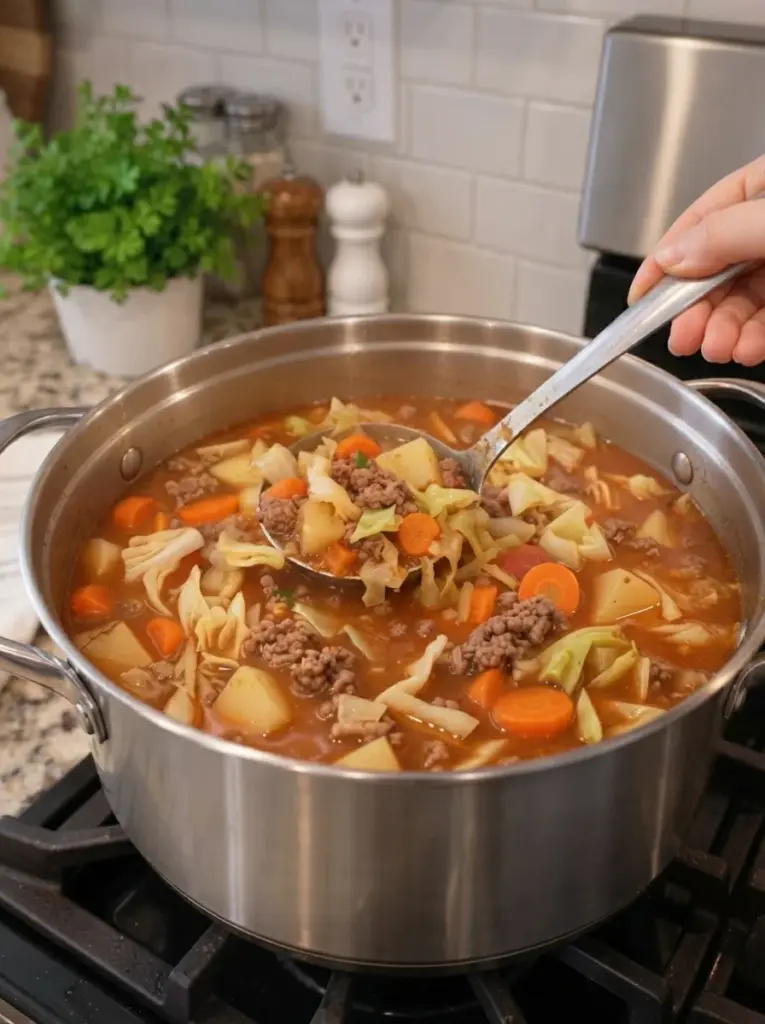
Warm, hearty, and packed with classic comfort-food flavor, this Hamburger Cabbage Soup is an easy one-pot dinner made with savory ground beef, tender cabbage, carrots, potatoes, and tomatoes simmered in a rich beef broth.
It has everything you want from a cozy homemade soup: plenty of vegetables, satisfying bites of browned beef, tender potatoes, and a flavorful tomato broth seasoned with garlic, herbs, Worcestershire sauce, and paprika.
Best of all, everything comes together in one pot in about 50 minutes, making this an excellent recipe for busy weeknights, chilly evenings, or meal-prep lunches.
Serve a steaming bowl with crusty bread, crackers, cornbread, or a simple green salad for an easy and satisfying meal.
Why You’ll Love This Hamburger Cabbage Soup
Hearty enough for dinner. Ground beef and potatoes turn a simple cabbage soup into a substantial meal.
Made in one pot. Brown the beef, sauté the aromatics, and simmer everything together in the same Dutch oven.
Budget-friendly ingredients. Cabbage, carrots, potatoes, canned tomatoes, and ground beef create a generous pot without requiring complicated ingredients.
Loaded with vegetables. Every bowl contains cabbage, carrots, potatoes, onion, garlic, and tomatoes.
Rich tomato-beef broth. Beef broth, diced tomatoes, tomato paste, and Worcestershire sauce create a deeply savory base.
Great for meal prep. The soup stores well and reheats easily.
Freezer-friendly. Freeze individual portions for convenient future meals.
Easy to customize. You can adjust the vegetables, spices, and heat level to suit your family.
What Is Hamburger Cabbage Soup?
Hamburger cabbage soup is a rustic ground-beef soup built around inexpensive, filling ingredients.
Instead of making meatballs or using chunks of stew meat, ground beef—or “hamburger”—is browned directly in the soup pot.
The beef is then combined with cabbage and vegetables and simmered in a savory broth.
This version uses Yukon Gold potatoes and carrots for extra heartiness, while tomatoes and tomato paste provide body and acidity.
Worcestershire sauce adds another layer of savory flavor, and Italian seasoning, paprika, thyme, garlic, and bay leaf round everything out.
The result falls somewhere between a vegetable-beef soup and a rustic cabbage stew while remaining brothy enough to serve by the bowlful.
Ingredients
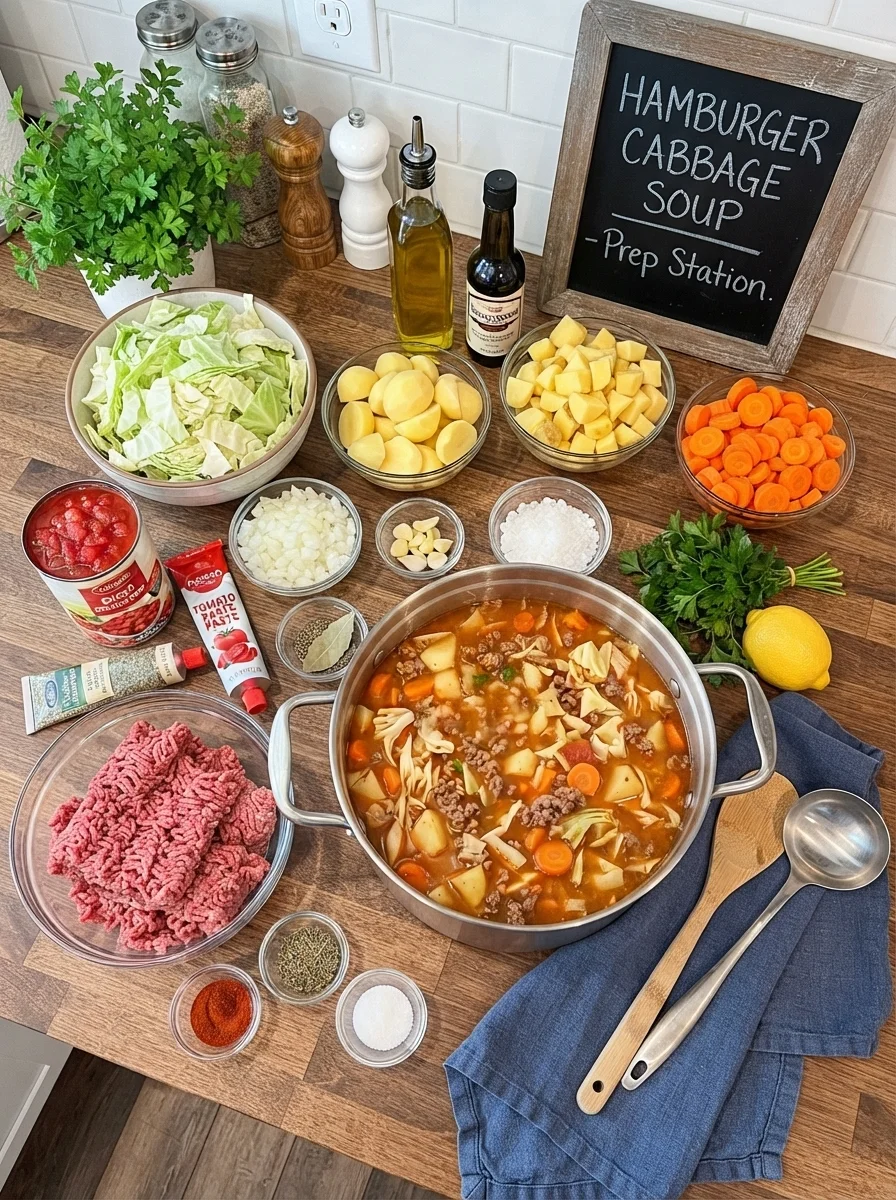
- 1 1/2 lbs lean ground beef
- 1 tbsp olive oil
- 1 medium yellow onion, diced
- 3 garlic cloves, minced
- 4 cups chopped green cabbage
- 2 medium carrots, sliced
- 2 medium Yukon Gold potatoes, peeled and diced
- 1 can (14.5 oz) diced tomatoes
- 2 tbsp tomato paste
- 6 cups low-sodium beef broth
- 1 tsp Italian seasoning
- 1 tsp paprika
- 1/2 tsp dried thyme
- 1/2 tsp black pepper
- 1 1/2 tsp kosher salt, or to taste
- 1 bay leaf
- 1 tbsp Worcestershire sauce
- 1 tsp sugar, optional, to balance the tomatoes
- 2 tbsp fresh parsley, chopped
- 1 tbsp fresh lemon juice, optional
Ingredient Notes
Ground Beef 🥩
Lean ground beef gives the soup its hearty, savory character.
Using lean beef reduces the amount of grease that needs to be drained after browning while still providing plenty of beef flavor.
Green Cabbage 🥬
Green cabbage becomes tender and slightly sweet as it simmers.
Four cups may look like a lot when raw, but cabbage loses volume considerably during cooking.
Yukon Gold Potatoes 🥔
Yukon Gold potatoes have a naturally buttery flavor and creamy texture while holding their shape reasonably well in soup.
Dice them into similar-size pieces so they cook evenly.
Carrots 🥕
Carrots contribute color, texture, and subtle natural sweetness.
Yellow Onion
Cooking the onion in the browned beef mixture creates a savory aromatic foundation for the broth.
Garlic 🧄
Fresh minced garlic adds another layer of flavor. It only needs about 30 seconds after the onions soften.
Diced Tomatoes 🍅
One 14.5-ounce can provides tomato flavor, acidity, and texture without turning this into a thick tomato soup.
Add the tomatoes with their liquid.
Tomato Paste
Tomato paste provides concentrated tomato flavor and helps give the broth more body.
Cooking it briefly before adding the broth helps develop its flavor.
Beef Broth
Six cups of low-sodium beef broth form the main liquid base.
Starting with low-sodium broth gives you more control over the final seasoning.
Worcestershire Sauce
A tablespoon adds savory depth that complements both the beef and tomatoes.
Italian Seasoning
This provides an easy combination of dried herbs without requiring several separate seasonings.
Paprika
Paprika contributes warmth and complements the beef and tomato flavors.
Dried Thyme
Thyme works particularly well with cabbage, potatoes, carrots, and beef.
Bay Leaf
The bay leaf gently infuses the broth while the soup simmers.
Remember to remove it before serving.
Sugar
One teaspoon is optional.
Its purpose isn’t to make the soup sweet—it can simply soften the sharper acidity of the tomatoes if necessary.
Fresh Parsley 🌿
Parsley adds color and fresh herbal flavor immediately before serving.
Lemon Juice 🍋
A tablespoon of fresh lemon juice is optional but useful if the finished soup tastes rich or heavy.
A little acidity can brighten the entire pot.
How to Make Hamburger Cabbage Soup
Step 1: Brown the Ground Beef
Place a large Dutch oven or heavy soup pot over medium-high heat.
Add 1 tablespoon olive oil.
Once hot, add 1 1/2 pounds lean ground beef.
Cook for approximately 6–8 minutes, breaking the meat into bite-size crumbles with a wooden spoon.
Continue cooking until the beef is browned and no longer pink.
If there’s a significant amount of grease in the pot, carefully drain the excess.
Leave a small amount behind for flavor.
Why Browning the Beef Matters
Don’t rush this first step.
Browning creates more complex savory flavor than simply simmering raw ground beef directly in broth.
For better browning, give the beef enough contact with the hot surface instead of constantly stirring it.
Allow portions of the meat to develop browned edges before breaking and turning them.
Those browned bits become part of the flavor foundation for the entire soup.
Step 2: Cook the Onion
Add the diced yellow onion directly to the browned beef.
Cook for 3–4 minutes, stirring occasionally, until the onion begins to soften.
As the onion releases moisture, use your spoon to scrape any flavorful browned bits from the bottom of the pot.
Step 3: Add the Garlic 🧄
Stir in the minced garlic.
Cook for approximately 30 seconds, just until fragrant.
Avoid cooking the garlic for several minutes at high heat because it can burn and become bitter.
Step 4: Build the Flavor Base
Add:
- 2 tablespoons tomato paste
- 1 teaspoon Italian seasoning
- 1 teaspoon paprika
- 1/2 teaspoon dried thyme
- 1/2 teaspoon black pepper
- 1 1/2 teaspoons kosher salt, or to taste
Stir everything into the beef and onion mixture.
Cook for approximately 1 minute.
This brief cooking period gives the tomato paste and dried seasonings direct contact with the heat before the liquid is added.
Step 5: Add the Broth and Tomatoes 🍅
Pour in:
- 6 cups low-sodium beef broth
- 1 can (14.5 ounces) diced tomatoes
Stir well, scraping the bottom of the pot to loosen any remaining browned bits.
Step 6: Add the Vegetables
Add:
- 4 cups chopped green cabbage
- 2 sliced carrots
- 2 peeled and diced Yukon Gold potatoes
The cabbage may initially make the pot look extremely full.
That’s normal.
It will soften and reduce in volume as the soup cooks.
Step 7: Add the Remaining Seasonings
Add:
- 1 bay leaf
- 1 tablespoon Worcestershire sauce
- 1 teaspoon sugar, if using
Stir everything together.
Make sure most of the vegetables are in contact with the broth.
Step 8: Bring to a Gentle Boil
Increase the heat as needed and bring the soup to a gentle boil.
Once bubbling, reduce the heat to medium-low.
You want a steady simmer rather than a vigorous rolling boil.
Step 9: Simmer 🍲
Partially cover the pot.
Simmer for approximately 25–30 minutes, stirring occasionally.
The soup is ready when:
- The potatoes are fork-tender
- The carrots are tender
- The cabbage has softened
- The broth tastes well developed
Cooking time can vary slightly depending on the size of your vegetable pieces.
How to Know When the Potatoes Are Done
Test one of the larger potato pieces with a fork or small knife.
It should pierce easily without the potato completely falling apart.
If the carrots and potatoes are still firm after 25 minutes, continue simmering and check again every few minutes.
Don’t rely entirely on the clock—vegetable size makes a significant difference.
Step 10: Finish the Soup
Remove and discard the bay leaf.
Taste the broth.
Adjust the salt and black pepper if necessary.
Stir in:
- 2 tablespoons chopped fresh parsley
- 1 tablespoon fresh lemon juice, if using
The lemon juice is especially useful if you feel the broth needs a little brightness.
Step 11: Serve
Ladle the hot soup into bowls.
Garnish with additional parsley if desired.
Serve immediately with crusty bread, crackers, cornbread, or a simple side salad.
Recipe Information ⏱️
Prep Time: 15 minutes
Cook Time: 35 minutes
Total Time: approximately 50 minutes
Servings: 6
Estimated Calories: approximately 390 calories per serving
Estimated Protein: approximately 31g per serving
Calories and protein are estimates and can vary depending on the ground beef, broth, exact vegetable sizes, serving size, and specific brands used.
Tips for the Best Hamburger Cabbage Soup
Brown the beef well. Those browned edges provide important flavor.
Drain only excess grease. A little fat can add flavor, but too much will leave an oily layer on the soup.
Cut vegetables evenly. Similar-size potatoes and carrots cook at approximately the same rate.
Cook the tomato paste briefly. Don’t immediately cover it with broth.
Use low-sodium broth. You can always add more salt later.
Don’t worry about the cabbage looking bulky. It wilts significantly during simmering.
Keep the soup at a gentle simmer. Aggressive boiling can break the potatoes apart.
Taste at the end. Broth, Worcestershire sauce, and canned tomatoes all contribute seasoning.
Use the lemon strategically. If the soup tastes flat or heavy, a little fresh lemon can brighten it.
Don’t forget the bay leaf. Remove it before serving.
How to Keep Cabbage from Becoming Mushy
Cabbage becomes softer the longer it cooks.
For tender cabbage that still has some texture, begin checking the soup around the 25-minute mark.
If you prefer firmer cabbage, you can also add it slightly later than the carrots and potatoes.
For very soft, stew-like cabbage, allow it to simmer longer.
Remember that cabbage continues softening somewhat when leftovers are reheated.
How Thick Should Hamburger Cabbage Soup Be?
This recipe is intended to be a hearty but still brothy soup.
It shouldn’t have the thickness of chili or stew.
The potatoes release a small amount of starch as they cook, and tomato paste gives the broth some body, but you should still have plenty of flavorful liquid in each bowl.
If your soup becomes thicker than desired, stir in a little additional beef broth while reheating.
Serving Ideas 🍞
Crusty Bread
A thick slice of crusty bread is excellent for soaking up the tomato-beef broth.
Garlic Bread 🧄
Garlic bread turns the soup into an especially comforting dinner.
Cornbread
Slightly sweet cornbread provides a delicious contrast to the savory broth.
Crackers
For a quick lunch, serve with saltines, oyster crackers, or your favorite soup crackers.
Grilled Cheese 🧀
Pair smaller bowls of soup with grilled cheese sandwiches for an extra-hearty meal.
Green Salad 🥗
A crisp salad with a tangy vinaigrette balances the warm, savory soup.
Dinner Rolls
Soft rolls are perfect for dipping into the broth.
Easy Variations
Spicy Hamburger Cabbage Soup 🌶️
Add crushed red pepper flakes or a small amount of cayenne with the dried seasonings.
Cheesy Hamburger Cabbage Soup 🧀
Sprinkle shredded cheddar over individual bowls just before serving.
Extra-Vegetable Cabbage Soup
Add celery, green beans, zucchini, or bell peppers.
Consider when each vegetable should be added so softer vegetables don’t overcook.
Bean & Hamburger Cabbage Soup
Add drained beans for another hearty variation.
Kidney beans, cannellini beans, or pinto beans can all complement the tomato-beef broth.
Ground Turkey Cabbage Soup
Replace the beef with ground turkey for a different flavor profile.
Because turkey is generally milder, taste carefully and adjust the seasonings as necessary.
Italian-Style Cabbage Soup
Increase the Italian seasoning and add extra garlic, then finish each bowl with grated Parmesan.
Smoky Cabbage Soup
Use smoked paprika instead of regular paprika for a more pronounced smoky flavor.
Low-Carb Variation
Omit the potatoes and increase the cabbage or add another lower-starch vegetable.
This changes the original recipe and nutritional profile but keeps the basic beef-and-cabbage soup concept.
Can I Add Beans?
Yes.
Beans are a natural addition because they pair well with beef, tomatoes, and cabbage.
Drain and rinse canned beans before adding them.
Since canned beans are already cooked, add them toward the latter portion of the simmer so they heat through without becoming overly soft.
Pinto, kidney, cannellini, or great northern beans can all work.
Can I Make It Without Potatoes?
Yes.
The potatoes add heartiness and help make the soup a complete, satisfying meal, but they aren’t required for the broth itself.
You can omit them and increase the cabbage or other vegetables.
Keep in mind that removing potatoes changes both the texture and nutritional estimates.
Make-Ahead Instructions
Hamburger cabbage soup is well suited to meal prep.
You can make the entire pot ahead, cool it properly, and refrigerate it in airtight containers.
The flavors often become even more integrated after the soup rests.
Because the vegetables continue absorbing broth during storage, leftovers may be somewhat thicker than the freshly cooked soup.
Simply add a splash of beef broth when reheating if necessary.
Storage Information 🧊
Allow leftover soup to cool before transferring it to airtight containers.
Refrigerate for up to 4 days.
For convenient lunches, divide the soup into individual portions before refrigerating.
Keep refrigerated leftovers cold until you’re ready to reheat them.
How to Reheat Hamburger Cabbage Soup
Stovetop
Transfer the desired amount to a saucepan.
Heat over medium-low to medium heat, stirring occasionally, until thoroughly heated.
If the broth has thickened during refrigeration, add a splash of beef broth.
Microwave
Place an individual portion in a microwave-safe bowl.
Cover loosely and heat in intervals, stirring between each one, until hot throughout.
Be careful when handling the bowl and removing the cover because trapped steam can be very hot.
How to Freeze Hamburger Cabbage Soup ❄️
Cool the soup and portion it into freezer-safe containers.
Leave appropriate room for expansion.
Freeze for up to 3 months.
Individual portions are particularly convenient because you can thaw only what you need.
The potatoes may become slightly softer after freezing and thawing, but the soup will still be suitable for reheating.
For best results, thaw frozen soup overnight in the refrigerator before reheating.
Troubleshooting
Why is my soup too watery?
Continue simmering uncovered for several minutes to allow some liquid to evaporate.
Keep in mind that this recipe is designed to remain relatively brothy.
Why is my soup too thick?
Add additional beef broth until it reaches your preferred consistency.
Why are my potatoes still hard?
They may have been cut too large or the soup may not have maintained a sufficient simmer.
Continue cooking until they’re fork-tender.
Why did my potatoes fall apart?
They were probably simmered too long or boiled too aggressively.
Maintain a gentle simmer and begin testing them around the 25-minute mark.
Why is my cabbage mushy?
The cabbage cooked longer than necessary for your preferred texture.
For firmer cabbage, add it later or reduce the simmering time.
Why does the broth taste flat?
First check the salt.
Then consider a little more Worcestershire sauce, black pepper, fresh parsley, or the optional lemon juice.
Acidity from lemon can make a surprisingly large difference when a rich soup tastes dull.
Why is my soup greasy?
The ground beef released more fat than expected.
After browning, drain excess grease before adding the remaining ingredients.
If the soup is already finished, some fat can be carefully skimmed from the surface.
Why is the tomato flavor too acidic?
Add the optional teaspoon of sugar and taste again.
The goal isn’t sweetness—just balance.
Why is my soup too salty?
Salt levels vary significantly between broth and Worcestershire sauce brands.
Using low-sodium broth gives you better control.
If the finished soup is too salty, adding unsalted broth can help dilute it.
Frequently Asked Questions
What is Hamburger Cabbage Soup made of?
This version combines ground beef, cabbage, carrots, potatoes, onion, garlic, diced tomatoes, tomato paste, beef broth, Worcestershire sauce, herbs, and seasonings.
What kind of ground beef should I use?
Lean ground beef works particularly well because it provides plenty of beef flavor without leaving excessive grease in the soup.
Can I use ground turkey instead?
Yes. Ground turkey can replace the beef, although the finished flavor will be lighter.
What cabbage is best for this soup?
Regular green cabbage works perfectly.
Do I need to peel the potatoes?
The recipe calls for peeled Yukon Gold potatoes, but well-scrubbed Yukon Gold skins are relatively thin if you prefer leaving them on.
How long does cabbage take to soften in soup?
Chopped cabbage becomes tender during the approximately 25–30 minute simmer in this recipe.
Can I make this soup spicy?
Yes. Add red pepper flakes or cayenne with the dried spices.
Can I add beans?
Yes. Drained canned beans can be added for an even heartier soup.
Can I make this soup ahead?
Yes. It’s an excellent make-ahead and meal-prep recipe.
How long does Hamburger Cabbage Soup last in the refrigerator?
Store it in an airtight container for up to 4 days.
Can Hamburger Cabbage Soup be frozen?
Yes. Freeze individual portions for up to 3 months.
How do I reheat frozen cabbage soup?
For best results, thaw overnight in the refrigerator and reheat gently on the stovetop or in the microwave until hot throughout.
What should I serve with it?
Crusty bread, garlic bread, cornbread, crackers, dinner rolls, grilled cheese, or a simple green salad all pair well with the soup.
Does the soup taste strongly of cabbage?
Cabbage is an important part of the recipe, but as it simmers it becomes milder and absorbs flavors from the beef, tomatoes, broth, garlic, and seasonings.
Why add lemon juice at the end?
The optional lemon juice adds acidity and brightness, which can balance the rich beef and tomato broth.
Final Thoughts
This Hamburger Cabbage Soup is simple comfort food built from everyday ingredients.
Savory browned ground beef, tender cabbage, carrots, and Yukon Gold potatoes simmer together in a rich tomato-beef broth flavored with garlic, Worcestershire sauce, paprika, thyme, Italian seasoning, and bay leaf.
The key is to brown the beef well before building the broth, cut the vegetables evenly, and simmer everything gently until the potatoes and carrots are tender without falling apart.
Finish the pot with fresh parsley and, if desired, a squeeze of lemon juice to brighten all those hearty flavors.
Serve it steaming hot with crusty bread, crackers, cornbread, or a simple salad for an easy one-pot dinner that’s equally useful for a chilly evening, family meal, or make-ahead lunch.
Print
Hamburger Cabbage Soup
- Total Time: approximately 50 minutes
Ingredients
- 1 1/2 lbs lean ground beef
- 1 tbsp olive oil
- 1 medium yellow onion, diced
- 3 garlic cloves, minced
- 4 cups chopped green cabbage
- 2 medium carrots, sliced
- 2 medium Yukon Gold potatoes, peeled and diced
- 1 can (14.5 oz) diced tomatoes
- 2 tbsp tomato paste
- 6 cups low-sodium beef broth
- 1 tsp Italian seasoning
- 1 tsp paprika
- 1/2 tsp dried thyme
- 1/2 tsp black pepper
- 1 1/2 tsp kosher salt, or to taste
- 1 bay leaf
- 1 tbsp Worcestershire sauce
- 1 tsp sugar, optional, to balance the tomatoes
- 2 tbsp fresh parsley, chopped
- 1 tbsp fresh lemon juice, optional
Instructions
Step 1: Brown the Ground Beef
Place a large Dutch oven or heavy soup pot over medium-high heat.
Add 1 tablespoon olive oil.
Once hot, add 1 1/2 pounds lean ground beef.
Cook for approximately 6–8 minutes, breaking the meat into bite-size crumbles with a wooden spoon.
Continue cooking until the beef is browned and no longer pink.
If there’s a significant amount of grease in the pot, carefully drain the excess.
Leave a small amount behind for flavor.
Why Browning the Beef Matters
Don’t rush this first step.
Browning creates more complex savory flavor than simply simmering raw ground beef directly in broth.
For better browning, give the beef enough contact with the hot surface instead of constantly stirring it.
Allow portions of the meat to develop browned edges before breaking and turning them.
Those browned bits become part of the flavor foundation for the entire soup.
Step 2: Cook the Onion
Add the diced yellow onion directly to the browned beef.
Cook for 3–4 minutes, stirring occasionally, until the onion begins to soften.
As the onion releases moisture, use your spoon to scrape any flavorful browned bits from the bottom of the pot.
Step 3: Add the Garlic 🧄
Stir in the minced garlic.
Cook for approximately 30 seconds, just until fragrant.
Avoid cooking the garlic for several minutes at high heat because it can burn and become bitter.
Step 4: Build the Flavor Base
Add:
- 2 tablespoons tomato paste
- 1 teaspoon Italian seasoning
- 1 teaspoon paprika
- 1/2 teaspoon dried thyme
- 1/2 teaspoon black pepper
- 1 1/2 teaspoons kosher salt, or to taste
Stir everything into the beef and onion mixture.
Cook for approximately 1 minute.
This brief cooking period gives the tomato paste and dried seasonings direct contact with the heat before the liquid is added.
Step 5: Add the Broth and Tomatoes 🍅
Pour in:
- 6 cups low-sodium beef broth
- 1 can (14.5 ounces) diced tomatoes
Stir well, scraping the bottom of the pot to loosen any remaining browned bits.
Step 6: Add the Vegetables
Add:
- 4 cups chopped green cabbage
- 2 sliced carrots
- 2 peeled and diced Yukon Gold potatoes
The cabbage may initially make the pot look extremely full.
That’s normal.
It will soften and reduce in volume as the soup cooks.
Step 7: Add the Remaining Seasonings
Add:
- 1 bay leaf
- 1 tablespoon Worcestershire sauce
- 1 teaspoon sugar, if using
Stir everything together.
Make sure most of the vegetables are in contact with the broth.
Step 8: Bring to a Gentle Boil
Increase the heat as needed and bring the soup to a gentle boil.
Once bubbling, reduce the heat to medium-low.
You want a steady simmer rather than a vigorous rolling boil.
Step 9: Simmer 🍲
Partially cover the pot.
Simmer for approximately 25–30 minutes, stirring occasionally.
The soup is ready when:
- The potatoes are fork-tender
- The carrots are tender
- The cabbage has softened
- The broth tastes well developed
Cooking time can vary slightly depending on the size of your vegetable pieces.
How to Know When the Potatoes Are Done
Test one of the larger potato pieces with a fork or small knife.
It should pierce easily without the potato completely falling apart.
If the carrots and potatoes are still firm after 25 minutes, continue simmering and check again every few minutes.
Don’t rely entirely on the clock—vegetable size makes a significant difference.
Step 10: Finish the Soup
Remove and discard the bay leaf.
Taste the broth.
Adjust the salt and black pepper if necessary.
Stir in:
- 2 tablespoons chopped fresh parsley
- 1 tablespoon fresh lemon juice, if using
The lemon juice is especially useful if you feel the broth needs a little brightness.
Step 11: Serve
Ladle the hot soup into bowls.
Garnish with additional parsley if desired.
Serve immediately with crusty bread, crackers, cornbread, or a simple side salad.
- Prep Time: 15 minutes
- Cook Time: 35 minutes
Nutrition
- Serving Size: 6
- Calories: approximately 390 calories per serving
- Protein: approximately 31g per serving