
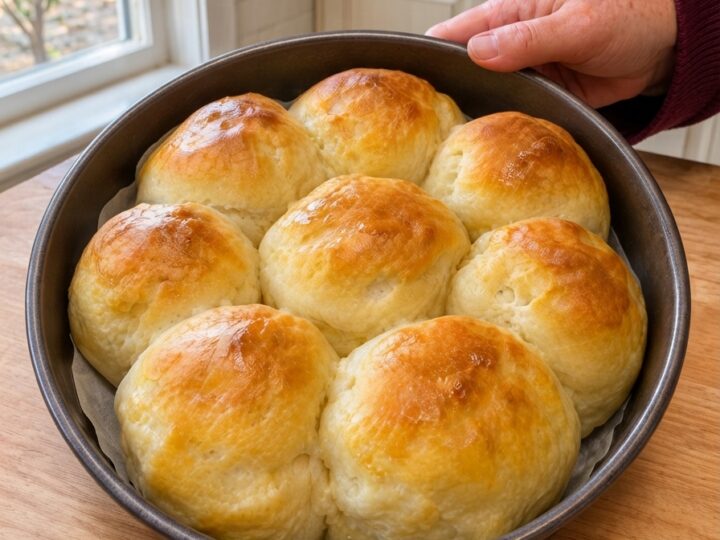
These Grandma’s Easy No Yeast Dinner Rolls have buttery golden tops, soft sides, and a tender crumb with a little tang from Greek yogurt. Baking powder gives them their lift, so you can mix, shape, and bake all eight rolls in about 40 minutes. They’re an easy addition to chicken soup, a roast dinner, or any meal that could use warm bread.
The rolls bake together in a round cake pan, with seven rolls surrounding one in the center. As they expand, their sides meet and stay soft enough to pull apart. A brush of melted butter as soon as the pan comes out of the oven settles into the warm crust and gives each roll a light sheen.
The texture is close and tender, a little like a soft biscuit. Split one while it’s warm, add a pat of salted butter, and use the other half to soak up the gravy.
Yield 8 dinner rolls
Prep time 15 minutes
Bake time 20–24 minutes
Rest time 5 minutes
Total time 40–44 minutes
Why These No Yeast Dinner Rolls Work
Baking powder supplies the lift as the rolls bake, so the shaped dough can go straight into the hot oven. Greek yogurt adds moisture and a gentle tang, and a small amount of milk lets you adjust the dough if your yogurt is particularly thick. Melted butter goes into the dough for flavor, with the final tablespoon saved for the tops.
The dough needs just enough stirring to bring it together. A slightly rough surface is fine. Once the dough holds its shape and only feels a little tacky, it’s ready to divide. The round pan does the rest, keeping the rolls close enough for soft sides while their exposed tops turn golden.
Ingredients 🛒
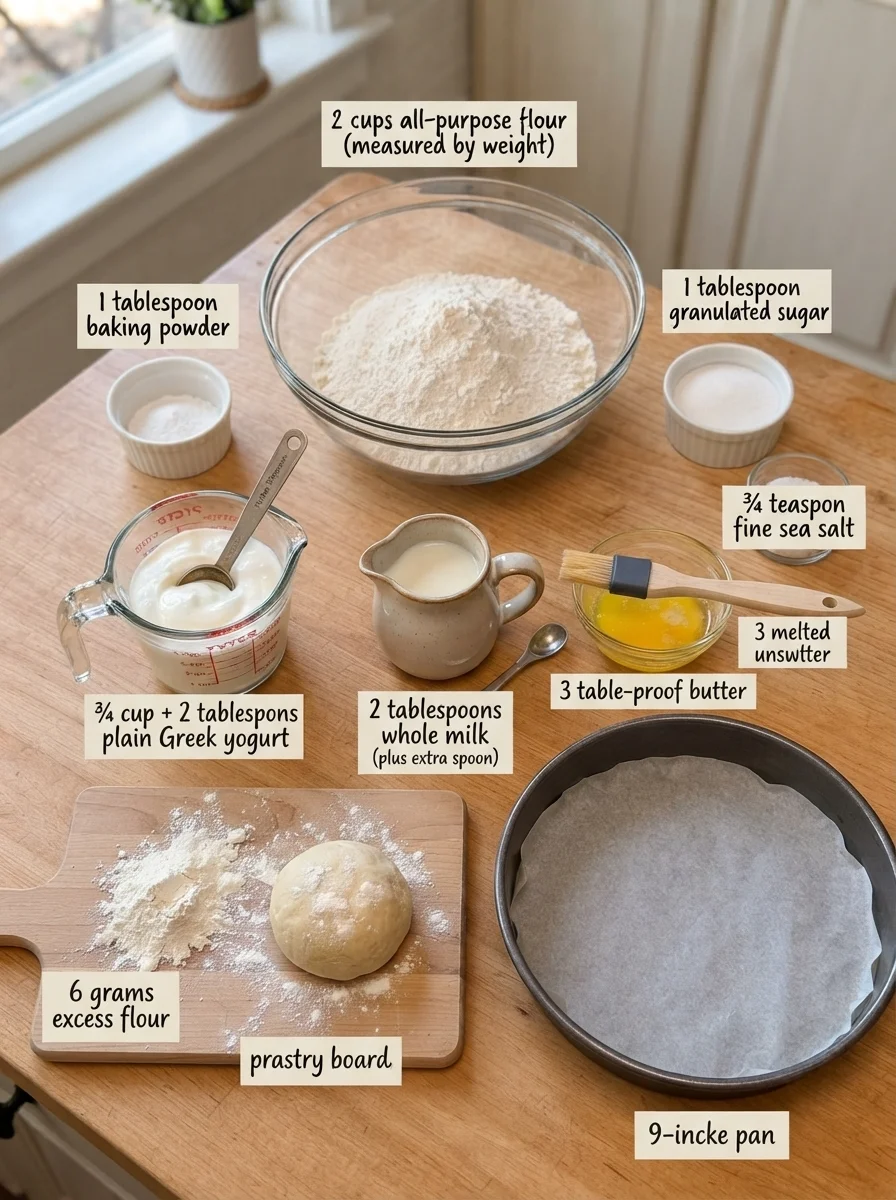
- 2 cups (240 g) all-purpose flour, spooned and leveled, plus a little for shaping
- 1 tablespoon baking powder
- 1 tablespoon granulated sugar
- ¾ teaspoon fine sea salt
- ¾ cup plus 2 tablespoons (about 200 g) plain Greek yogurt
- 2 tablespoons whole milk, plus up to 1 tablespoon if needed
- 3 tablespoons (42 g) unsalted butter, melted and divided
Equipment A 9-inch round metal cake pan, parchment paper, two mixing bowls, a whisk, a sturdy spoon or spatula, and a pastry brush.
Ingredient Notes
All-purpose flour. Weigh it if you have a scale. To measure by volume, spoon the flour into the cup and sweep off the excess. Packing the cup can add enough flour to make the dough stiff, especially if you also dust your hands generously while shaping.
Baking powder. Use the full tablespoon and whisk it thoroughly into the flour before adding the wet ingredients. Even distribution helps the rolls rise evenly. Preheat the oven first so the pan can go in as soon as the rolls are shaped.
Plain Greek yogurt. A thick, plain yogurt makes the dough easy to portion and gives the rolls their mild tang. If liquid has pooled at the top of the container, stir the yogurt until uniform before measuring. Yogurts vary in thickness, which is why the recipe leaves a little milk in reserve.
Whole milk. Start with 2 tablespoons. If the dough still has loose flour after a few folds, add more 1 teaspoon at a time, using up to 1 additional tablespoon. The dough should feel soft and slightly tacky when you pinch off a piece.
Unsalted butter. Use 2 tablespoons in the dough and save 1 tablespoon for brushing. Let the melted butter cool slightly before stirring it into the yogurt mixture. The final brushing goes on while the rolls are still hot.
How to Make Grandma’s Easy No Yeast Dinner Rolls 👩🍳
1. Preheat the oven and line the pan
Heat the oven to 400°F (205°C) with a rack in the middle. Cut a circle of parchment to fit the bottom of a 9-inch round metal cake pan. Set the pan aside and keep the last tablespoon of melted butter separate so it’s ready for brushing.
2. Mix the dry and wet ingredients separately
Whisk the flour, baking powder, sugar, and fine sea salt in a large bowl. In a second bowl, stir together the Greek yogurt, 2 tablespoons whole milk, and 2 tablespoons melted butter. Scrape the bottom of the wet bowl so the yogurt and butter are evenly mixed.
3. Bring the dough together
Pour the yogurt mixture into the flour mixture. Stir with a sturdy spoon or spatula, scraping along the bottom of the bowl until the dough comes together. Fold it over itself a few times if necessary to incorporate loose flour.
If dry flour still collects at the bottom, drizzle in 1 teaspoon milk and fold again. Add another teaspoon only if needed, up to 1 tablespoon extra milk total. Stop once you have a soft dough that holds together with a slightly tacky feel. A few rough patches will smooth out as the rolls bake.
4. Shape and arrange eight rolls
Divide the dough into 8 equal portions, roughly 60–63 g each, depending on how much milk you added. With lightly floured hands, tuck the edges of each piece underneath to make a round with a smooth top. Set it seam-side down in the pan.
Place one roll in the center and arrange the other seven around it. Leave whatever small gaps the pan allows. The rolls will expand toward one another in the oven.
5. Bake until the center roll is set
Bake for 20–24 minutes, until the tops are golden. Check the center roll since it’s surrounded by the others and can take a little longer to set. It should spring back when lightly pressed, and a skewer inserted into its center should come out without wet dough.
If the outside rolls are already well browned and the center needs more time, loosely tent the pan with foil and bake for another few minutes.
6. Brush with butter and rest
Brush the hot tops with the remaining 1 tablespoon melted butter, dividing it evenly over the rolls. Let them rest in the pan for 5 minutes before pulling them apart. If you’re saving the batch for later, transfer the rolls to a wire rack to cool completely before packing them.
Tips for Soft, Evenly Baked Rolls 💡
- Keep the dough a little tacky. Dust your hands lightly so you can shape each round without working much extra flour into the dough.
- Use a scale for even portions. If you’re dividing by eye, start by cutting the dough in half, then divide each half into four pieces. Similar sizes bake at a similar pace.
- Shape with a light touch. Tuck the edges under a few times and move on to the next roll. Pressing and rolling repeatedly can make the dough tighter and the baked crumb firmer.
- Use the center roll as your guide. The tops can look ready while the middle roll is still catching up. Check it before taking the pan from the oven.
- Brush the tops while they’re hot. The melted butter spreads easily and settles into the crust during the short rest.
Serving Ideas and Variations
Set the pan on a trivet and let everyone pull off a roll at the table. The soft sides are especially good with chicken soup, beef stew, or pot roast. For a holiday dinner, tuck the warm rolls into a cloth-lined basket with a dish of salted butter alongside.
Garlic butter rolls. Stir ¼ teaspoon garlic powder into the tablespoon of melted finishing butter. Brush it over the hot rolls and sprinkle them with chopped parsley.
Chive rolls. Stir 1 tablespoon finely chopped chives into the yogurt mixture before adding it to the flour. The mild onion flavor goes well with creamy soups and roast chicken.
Honey butter rolls. Mix 1 teaspoon honey into the melted finishing butter for a lightly sweet glaze. Serve warm with ham or split the cooled rolls and toast them for breakfast.
Storage, Freezing, and Reheating 🧊
Room temperature. Cool the rolls completely, then store them in an airtight container at room temperature for up to 2 days. Packing them while still warm traps steam and can make the tops damp.
Freezer. Freeze the cooled rolls in a sealed freezer bag for up to 2 months. Pull the rolls apart before freezing if you want to thaw a few at a time.
Reheating. Wrap room-temperature rolls loosely in foil and warm at 300°F (150°C) for 8–10 minutes. Thaw frozen rolls while wrapped before reheating. For a single roll, split it and toast the cut sides.
Make ahead. Whisk together the dry ingredients in advance and keep them covered. Mix in the wet ingredients when the oven is ready. For a fully prepared batch, bake the rolls ahead and warm them in foil before dinner.
Frequently Asked Questions ❓
Can I use regular plain yogurt?
Thick Greek yogurt is the easiest to work with. If you have regular plain yogurt, strain it until it holds a soft mound on a spoon, then measure out about 200 g.
Can I use nonfat Greek yogurt?
Yes. Choose a thick, plain variety. The rolls may taste slightly less rich. Judge the dough after mixing before deciding whether to add the reserved milk.
Does the dough need to rest before baking?
Bake the rolls as soon as they’re shaped. The five-minute rest happens after baking so the warm crumb has time to settle.
Why are my rolls dense?
Check the flour measurement first. Too much flour, including what you add while shaping, can make the rolls heavy. Stir just until the dough holds together and check that your baking powder is fresh.
Can I bake them separately on a sheet pan?
Yes. Leave space between the rolls and start checking a few minutes early. They’ll develop more crust on the sides because they aren’t touching.
Can I use salted butter?
Yes. If using it in the dough, reduce the fine sea salt to ½ teaspoon. You can also keep the dough as written and use salted butter just for brushing the tops.
Can I double the recipe?
Yes. Use two 9-inch round pans, with eight rolls in each. Keeping the same arrangement gives the center roll in each pan room to bake through.
Grandma’s Easy No Yeast Dinner Rolls
Description
Yield 8 rolls
Prep 15 minutes | Bake 20–24 minutes | Rest 5 minutes
Total 40–44 minutes
Ingredients
Ingredients
- 2 cups (240 g) all-purpose flour, spooned and leveled, plus a little for shaping
- 1 tablespoon baking powder
- 1 tablespoon granulated sugar
- ¾ teaspoon fine sea salt
- ¾ cup plus 2 tablespoons (about 200 g) plain Greek yogurt
- 2 tablespoons whole milk, plus up to 1 tablespoon if needed
- 3 tablespoons (42 g) unsalted butter, melted and divided
Instructions
- Heat the oven to 400°F (205°C). Line the bottom of a 9-inch round metal cake pan with parchment.
- Whisk the flour, baking powder, sugar, and salt in a large bowl. In a second bowl, stir together the yogurt, 2 tablespoons milk, and 2 tablespoons melted butter.
- Stir the wet ingredients into the dry just until a soft, slightly tacky dough forms. If dry flour remains, add extra milk 1 teaspoon at a time, up to 1 tablespoon.
- Divide into 8 equal pieces. With lightly floured hands, tuck the edges underneath to make rounds. Place one roll in the center of the pan and arrange the other seven around it.
- Bake for 20–24 minutes, until golden and the center roll springs back when lightly pressed. A skewer inserted into that roll should come out without wet dough.
- Brush the warm tops with the remaining 1 tablespoon melted butter. Rest in the pan for 5 minutes before pulling apart.