
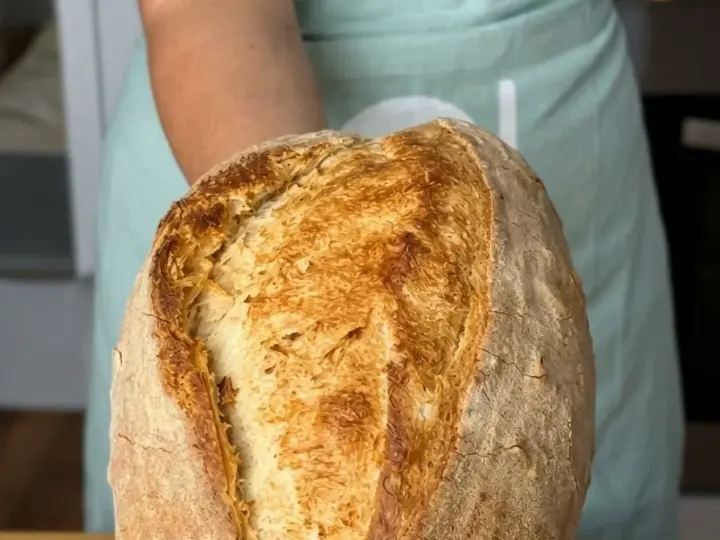
This 4-Ingredient Artisan Bread has a deeply golden crust, a soft, chewy interior, and a long split down the top. All you need is bread flour, water, salt, and yeast. Stir the dough together the night before, let it rise on the counter, and bake it in a covered Dutch oven the next day. The dough comes together with a spoon, and there’s no kneading or mixer needed.
The overnight rise does most of the work. By morning, the dough should look puffy and bubbly, and you’ll be able to see strands stretching from the bowl as you turn it out. A few folds give it enough shape to stand tall, and a single cut down the top gives it room to open in the oven.
Keep the loaf whole until it cools. The crust will be crisp and the interior will slice much more cleanly once the steam has had time to escape. Serve thick slices with salted butter, tear off pieces to dip in soup, or toast what’s left the next morning.
What Is 4-Ingredient Artisan Bread?
It’s a rustic yeast loaf made with a wet dough and a long first rise. The dough starts out shaggy and sticky. As it rests, it develops enough strength to hold the bubbles produced by the yeast. A small amount of instant yeast gives the dough time to rise slowly overnight. King Arthur Baking
A lidded Dutch oven traps steam released by the dough. That steam keeps the surface flexible early in the bake so the loaf can expand. Once the lid comes off, the crust browns and turns crisp. For an oval loaf like the one in the photo, shape the dough into a short oval and score it lengthwise just before baking. King Arthur Baking
Why You’ll Love This Recipe
The hands-on work takes about 15 minutes. Mix the dough in one bowl, then come back the next day to shape it. Most of the recipe time is spent waiting for the dough to rise and the loaf to cool.
The ingredients are simple. Bread flour, water, fine salt, and a little instant yeast give you one full loaf. A dusting of the same flour keeps the dough from sticking as you shape it.
The crust has a real crunch. The covered bake gives the loaf room to expand, and the uncovered bake finishes the crust. You can take it a little darker if you like a toastier flavor.
It works for dinner and breakfast. Cut thick slices for soup or an appetizer board on the first day. The next day, toast the bread for eggs or make a crisp grilled cheese.
Ingredient Breakdown
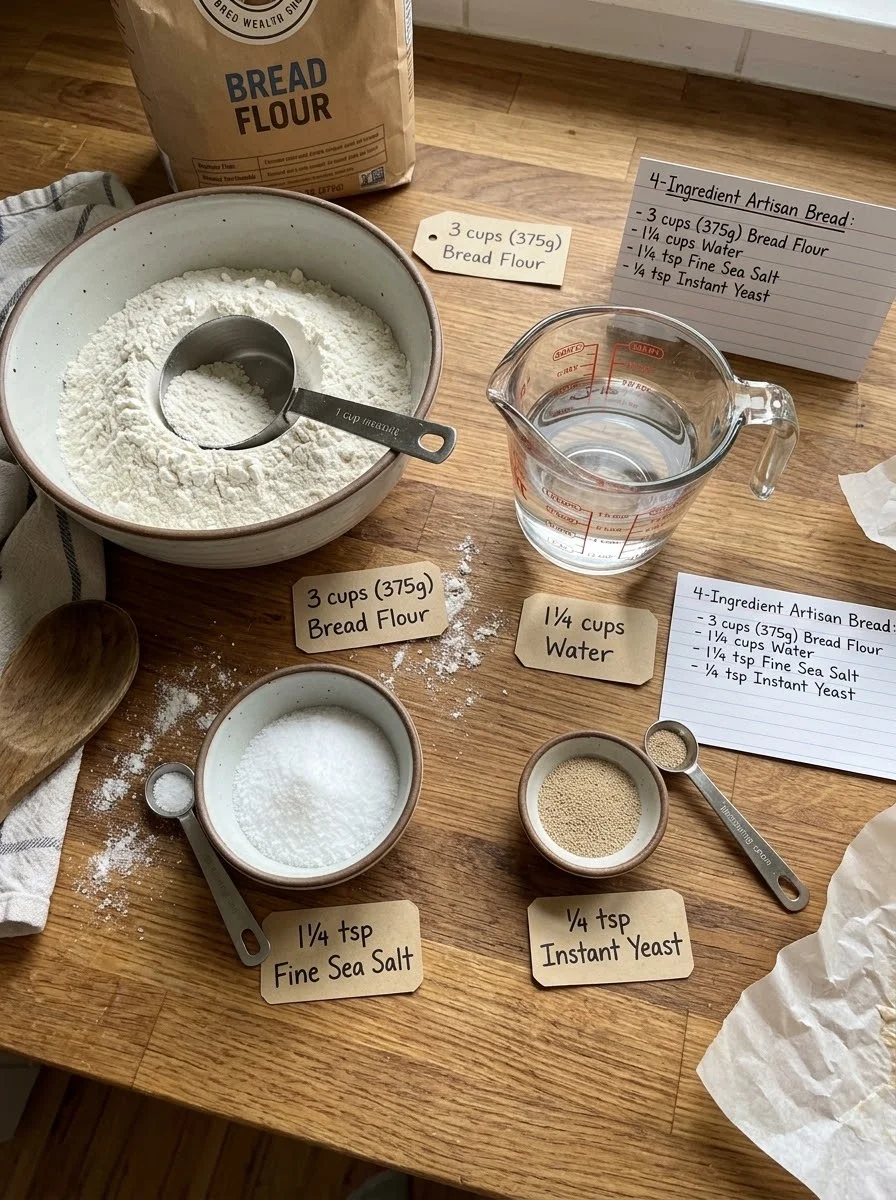
Bread flour. Use 3 cups, or 375 grams. Bread flour gives this loaf a pleasantly chewy texture and helps the sticky dough hold its shape. If you’re measuring with cups, spoon the flour in and level the top. Scooping straight from the bag can pack in extra flour and leave the dough drier than intended.
Water. Use 1¼ cups of room-temperature water. The dough should look rough and sticky once mixed. If you still see dry flour after stirring and scraping the bottom of the bowl, add water a teaspoon at a time until it’s incorporated.
Fine sea salt. Use 1¼ teaspoons. Salt seasons the loaf throughout. Fine salt disperses easily when you stir it into the flour, and it measures more consistently by volume than coarse salt.
Instant yeast. Use ¼ teaspoon. Stir it right into the flour. The small amount is deliberate because the dough has 12 to 18 hours to rise. A full packet would make the dough move much faster than this overnight schedule calls for.
How to Make 4-Ingredient Artisan Bread
Step 1. Stir together the dough. In a large bowl, mix the bread flour, salt, and instant yeast. Pour in the water and stir with a sturdy spoon until no dry flour remains. Scrape the bottom and sides of the bowl as you stir. The dough will be sticky and uneven at this point.
Step 2. Let it rise overnight. Cover the bowl and leave it at room temperature for 12 to 18 hours. Begin checking around 12 hours if your kitchen is warm. The dough is ready to shape when it has expanded noticeably, bubbles dot the surface, and the whole mass jiggles a little when you move the bowl. A cool kitchen may put you closer to the longer end of the range.
Step 3. Shape the loaf. Lightly flour your work surface and turn the dough out with a bowl scraper or flexible spatula. Fold the edges toward the middle, then turn the dough seam-side down. With lightly floured hands, gently tuck the sides underneath to make a short oval. Set it seam-side down on a sheet of parchment rated for 450°F.
Step 4. Let it rise again and preheat the pot. Cover the shaped dough with an inverted bowl and let it rest for 60 to 90 minutes, until it looks puffy. During the last 30 minutes of the rise, preheat the oven and a covered 5- to 6-quart Dutch oven to 450°F. Check that your Dutch oven and lid are rated for that temperature and that the manufacturer allows empty preheating. King Arthur Baking
Step 5. Score and transfer. With a bread lame or very sharp knife, make one lengthwise slash about ¼ inch deep, slightly off center. Use oven mitts to move the hot Dutch oven to a heatproof surface. Take off the lid and use the parchment as a sling to lower the dough into the pot. Replace the lid.
Step 6. Bake until deeply golden. Bake covered for 30 minutes. Remove the lid with oven mitts and continue baking for 12 to 18 minutes, until the crust is deeply golden and the edges of the score are a shade darker. If your loaf still looks pale around the sides, give it another few minutes and check again.
Step 7. Cool on a rack. Lift the bread out of the pot and transfer it to a wire rack. Let it cool for at least 1 hour before slicing. Air circulating underneath helps the bottom stay crisp.
Tips for the Best Artisan Bread
Use the dough as your guide. The rise times are a window. If the dough is still dense and shows only a few bubbles, give it more time. If it’s puffy and covered in bubbles, go ahead and shape it.
Use a scraper to handle sticky dough. Slide the scraper under the edges to lift them inward. A light dusting of flour on your hands and counter makes shaping easier without changing the dough.
Create a little tension on the outside. Once the seam is underneath, gently pull the oval toward you an inch or two on a lightly floured counter. This tightens the surface and helps the loaf keep its shape during the final rise.
Score immediately before baking. Make one clean pass with the blade so the dough has a clear place to open. Keep the cut slightly off center for the raised edge shown in the photo.
Give the loaf time to brown after uncovering. The crust may still be pale when the lid comes off. Use the color around the sides and the raised edges of the slash to judge when it’s ready.
Variations to Try
Rosemary artisan bread. Stir 1 tablespoon of finely chopped fresh rosemary into the flour before adding the water. It’s especially good with roast chicken or tomato soup.
Cracked black pepper bread. Add ½ teaspoon of coarsely ground black pepper to the dry ingredients for a loaf that pairs well with sharp cheddar.
Sesame-crusted bread. Lightly mist the shaped dough with water and sprinkle it with sesame seeds before scoring. The seeds toast as the crust browns.
Round artisan loaf. Tuck the dough into a round boule instead of an oval. Use a single curved slash or a simple cross across the top.
What to Serve with Artisan Bread
- Salted butter and jam. Toast a thick slice and spread it with butter and your favorite preserves.
- Tomato soup or beef stew. The chewy crust holds up well when dipped into a hot bowl.
- Olive oil and balsamic vinegar. Serve torn pieces alongside olives, roasted peppers, and feta.
- Grilled cheese. Use slices of similar thickness so both sides brown evenly.
- Bruschetta. Toast slices and top them with chopped tomatoes and basil, or spread them with ricotta and roasted peppers.
Storage and Reheating
Room temperature. Let the loaf cool completely before storing it. A paper bag or bread box works well if you plan to finish it within a day or two. Once you’ve sliced it, rest the cut side down on a clean board for short-term storage.
Freezing. Slice the cooled loaf and freeze the slices in a freezer bag for up to 2 months for best quality. Put small pieces of parchment between slices if you want to pull out just one or two at a time.
Refreshing the crust. Warm a room-temperature loaf in a 350°F oven for 8 to 10 minutes to crisp the outside. Individual slices can go straight from the freezer to the toaster.
Frequently Asked Questions
Can I use all-purpose flour? Yes. Use 375 grams and start with 1 cup plus 3 tablespoons of water. Add the remaining tablespoon if needed to moisten all the flour. The loaf may spread a little more and have a softer chew.
Can I use active dry yeast? Yes. Use the same ¼ teaspoon and follow the package directions if your brand calls for dissolving it first. Use water from the measured amount for that step, then look for bubbles and visible expansion before shaping. Lodge Cast Iron
Why did my loaf spread out? The dough may have gone past its first rise, or it may have needed a little more tension during shaping. If the surface looks sunken and the dough feels loose when you turn it out, check it earlier next time. Weighing the flour also helps keep the dough consistent from batch to batch.
Why is the inside gummy? The loaf may have needed a few more minutes in the oven or more time on the rack. Let it turn deeply golden all around and give it at least an hour to cool before cutting.
Do I have to score the loaf? The bread will still bake without scoring, but it may split along the side or wherever the surface gives way first. A lengthwise slash helps the top open where you want it to.
Final Thoughts
Mix the dough after dinner and look for bubbles the next morning. A gentle shape, one long slash, and a few extra minutes uncovered for a deep golden crust will get you close to the loaf in the photo. Let it cool whole, then cut a thick slice and start with salted butter.

4-Ingredient Artisan Bread
Description
- Prep time — 15 minutes
- First rise — 12 to 18 hours
- Second rise — 60 to 90 minutes
- Bake time — 42 to 48 minutes
- Cooling time — At least 1 hour
- Total time — About 15 to 22 hours
- Yield — 1 loaf, about 10 slices
Ingredients
Ingredients
- 3 cups bread flour (375 grams), plus a little more for shaping
- 1¼ teaspoons fine sea salt
- ¼ teaspoon instant yeast
- 1¼ cups room-temperature water
Instructions
Instructions
- Stir together the flour, salt, and yeast. Add the water and mix until no dry flour remains. Cover and let rise at room temperature for 12 to 18 hours, until noticeably expanded and bubbly.
- Turn the dough onto a lightly floured surface. Fold the edges into the center, flip seam-side down, and gently shape into a short oval. Transfer to parchment rated for 450°F.
- Cover and let rise for 60 to 90 minutes, until puffy. During the last 30 minutes, preheat the oven and a covered Dutch oven approved for empty preheating to 450°F.
- Score the dough lengthwise about ¼ inch deep. Use the parchment to lower the loaf into the hot Dutch oven and cover it.
- Bake covered for 30 minutes. Uncover and bake for 12 to 18 minutes more, until deeply golden.
- Transfer to a wire rack and cool for at least 1 hour before slicing.