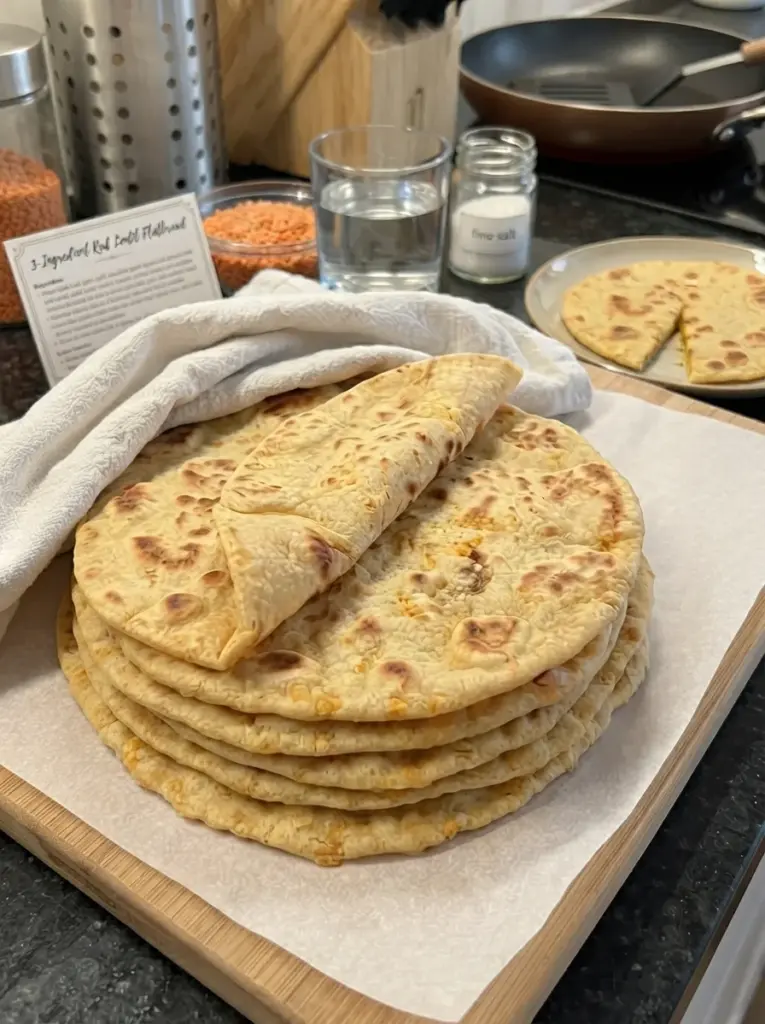
Red lentils, water, and salt make a simple skillet flatbread with a mild, earthy flavor and a tender center. Soak the lentils, blend them with fresh water, then spread the batter into thin rounds in a nonstick skillet. There is no flour, yeast, or kneading involved.
These flatbreads are useful for folding around modest fillings, serving alongside soup, or dipping into hummus. They cook more like thick savory crepes than conventional rolled bread: the batter sets in the pan, the underside develops light brown spots, and the center cooks through before you flip.
Because the title did not include a formula, the recipe below is a suggested starting method rather than an independently kitchen-tested reproduction. Lentil absorption, blender strength, and skillet performance will affect the water adjustment and cooking time. Use the first small flatbread as a test before cooking the whole batch.
What to Expect
The finished flatbreads should be thin, tender, and lightly browned, with a subtle lentil flavor. They are most flexible when warm and kept covered briefly after cooking. Thick rounds can be more fragile and may retain a pasty center, so spreading the batter evenly matters.
These are not puffed pita pockets or stretchy wheat tortillas. Red lentils supply body and some binding as they cook, but they do not create a gluten network. Gentle handling and an appropriate filling amount make them more useful as wraps.
A little browning improves the flavor. However, a dark exterior does not prove the inside is cooked: moderate heat gives the batter time to set before it burns.
Recipe at a Glance
| Detail | Suggested guide |
|---|---|
| Main ingredients | Split red lentils, fresh water, salt |
| Yield | Approximately 6 flatbreads, about 6 inches across |
| Soaking | 6–8 hours in the refrigerator |
| Active preparation | About 10–15 minutes |
| Cooking | Approximately 25–35 minutes in batches |
| Texture | Tender, thin, and flexible while warm |
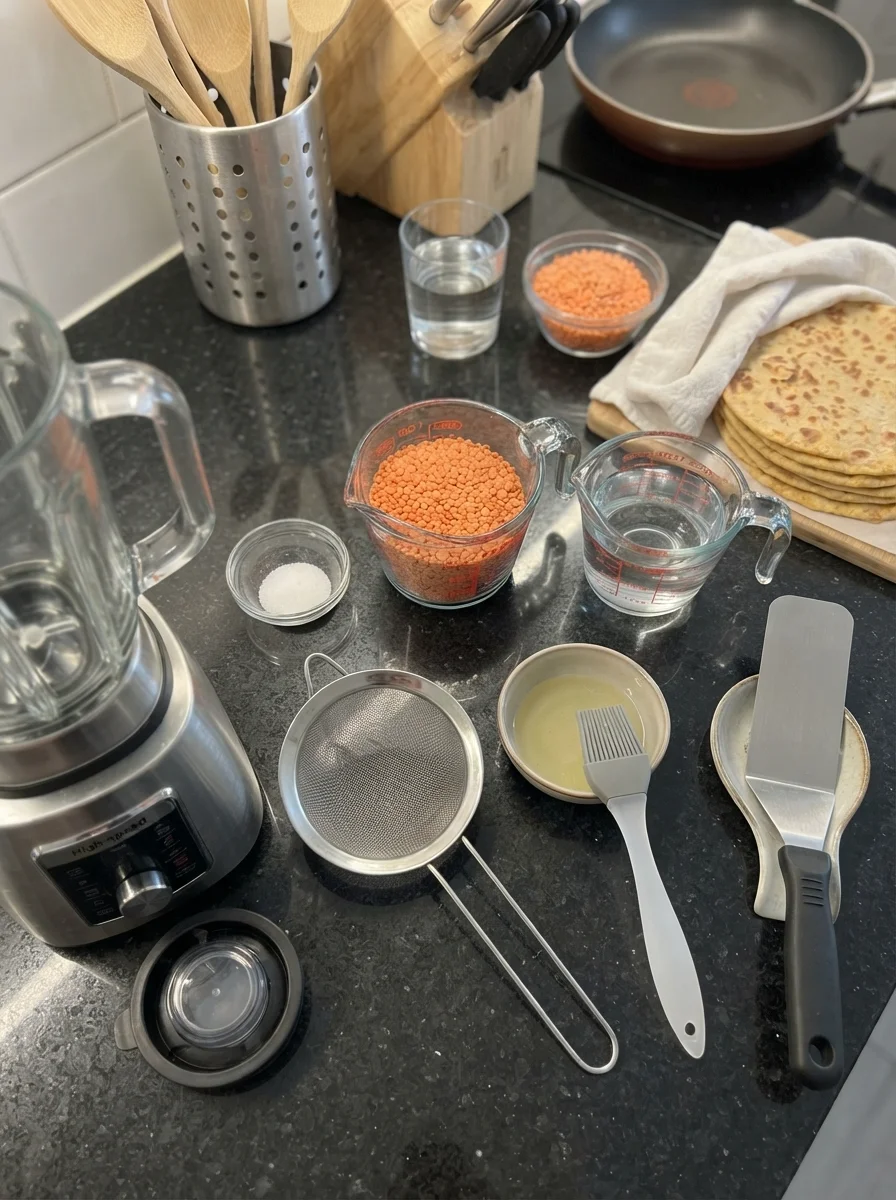
| Equipment | Blender, strainer, nonstick skillet, wide spatula |
| Best use | Small wraps, dipping, or serving with soup |
The title counts water as one of the three ingredients. A small amount of oil may be needed as a pan-release aid, depending on the skillet. If oil is required, include it when listing everything used in preparation rather than presenting the method as strictly oil-free.
Ingredients
- 1 cup dry split red lentils
- ¾ cup fresh water, plus approximately 2–4 tablespoons more as needed for blending and spreading
- ½ teaspoon fine salt
Use additional water for soaking and rinsing; discard that water before blending. A very light film of oil for the pan is optional but may be necessary for reliable release.
Ingredient Notes
Split red lentils
Use dry split red lentils, measured before soaking. They often appear orange or coral in the package and become paler as they hydrate.
Split lentils soften readily and blend more easily than many whole varieties. Green, brown, and black lentils have different skins and textures and are not direct substitutes for this method.
Soaking makes the lentils easier to puree, but it does not cook them. The batter must cook fully in the skillet before eating. Do not taste the uncooked mixture to judge seasoning.
Fresh water
The blending water is separate from the soaking water. Drain and rinse the soaked lentils, then add the measured fresh water.
Begin with ¾ cup and adjust gradually. The batter should pour steadily and spread with the back of a spoon, rather than sitting in a stiff mound. It should not be so watery that it runs into a thin puddle with separate bits of lentil.
Different lentils and draining methods retain different amounts of water. That is why the final few tablespoons are an adjustment rather than an automatic addition.
Salt
Fine salt distributes evenly through the batter. The suggested amount provides mild seasoning, leaving room for savory fillings and dips.
Coarse salts vary by volume. If using one, adjust thoughtfully rather than assuming every ½ teaspoon contains the same amount of salt.
Equipment
A capable blender is particularly helpful. Smooth batter gives a more cohesive flatbread, while coarse pieces can create weak spots and a gritty texture. A food processor may work, but it can leave the mixture less fine.
Use a reliably nonstick skillet with a flat cooking surface. A well-seasoned pan may also work, but release can be less predictable. A wide, thin spatula helps support the flatbread when flipping.
Have a plate and a clean kitchen towel ready for the cooked rounds. Covering a short stack traps a little warmth and moisture, which helps keep the flatbreads pliable.
How to Make Red Lentil Flatbread
1. Sort and rinse
Check the dry lentils for small stones or debris, then rinse them in a fine-mesh strainer under cool running water.
Transfer them to a bowl and cover generously with cool water. Leave room for expansion rather than filling a small bowl to its rim.
2. Soak in the refrigerator
Cover and refrigerate for 6–8 hours. The lentils should soften enough to crush more easily between your fingers.
A refrigerated soak is a practical way to prepare them overnight without leaving them at room temperature for many hours. This recipe is a soaking method, not an intentional fermentation process.
Discard lentils with signs of spoilage rather than trying to rescue them by adding seasoning or extending cooking.
3. Drain and rinse again
Drain the lentils, rinse, and let excess water run off for several minutes. You do not need to pat each lentil dry, but avoid transferring a pool of soaking liquid into the blender.
Consistent draining makes the water adjustment more predictable. Always start the batter with fresh measured water.
4. Blend until very smooth
Add the soaked lentils, ¾ cup fresh water, and salt to the blender. Process until smooth, stopping to scrape down the sides as needed.
Blend in intervals according to your appliance’s guidance. The batter should have no obvious lentil pieces and should feel fine when spread between two clean utensils.
If the blender cannot circulate, stop and scrape before adding more water. Then add fresh water 1 tablespoon at a time until the mixture moves and becomes pourable.
Avoid adding a large splash at once. Excess water can make the first side slow to set and increase tearing during flipping.
5. Rest briefly and check consistency
Let the blended batter rest for about 10 minutes. Stir it again before cooking.
It may thicken as the lentils continue absorbing water. Add a small amount of fresh water if it no longer pours or spreads easily. The ideal texture is a smooth savory crepe batter with enough body to coat the spoon.
You will make the final adjustment after cooking a small test round.
6. Heat the skillet
Warm a nonstick skillet over medium heat, then adjust toward medium-low if it runs hot. Apply a very light film of oil if needed and wipe away excess.
The pan should be evenly warm rather than smoking. Too much heat can brown the surface while leaving the center uncooked.
Do not use a cold pan and wait for the batter to heat with it. The initial set helps the flatbread release more cleanly.
7. Cook a small test flatbread
Pour a few tablespoons of batter into the skillet and spread gently into a thin round. Let it cook undisturbed until the surface looks mostly set, the edges begin to dry, and a spatula can slide underneath without smearing the batter.
Flip carefully and cook the second side. Cut the test piece and check that the center is cooked rather than wet or pasty.
If it tears, let the next one set longer before flipping and consider a slightly smaller round. If it is thick and pasty, spread thinner or loosen the batter with a small amount of water. If it runs too thin and takes a long time to set, give the batter another short rest before making further changes.
8. Cook the remaining batter
Stir the batter before each portion. Pour approximately ¼–⅓ cup into the skillet and use the back of a spoon or ladle to spread it into a round about 6 inches across. Aim for a thin, even layer, roughly ⅛ inch thick or less.
Cook the first side for approximately 2–3 minutes, sometimes longer depending on thickness and heat. The top should lose its wet appearance and the edges should become easier to lift.
Slide the spatula underneath, supporting the center, and flip. Cook the second side for another 1–2 minutes, or until the flatbread is set throughout and lightly browned.
Use the visual cues rather than forcing every round into the same time. If the pan gets hotter during successive batches, lower the heat slightly.
9. Stack and cover
Transfer cooked flatbreads to the plate and cover with the towel. Stack the next ones on top as they finish.
The brief covered rest softens dry edges and helps the rounds bend. Do not assume covering will cook raw batter inside a thick flatbread; that needs to happen in the skillet.
10. Serve warm
Use the flatbreads while warm for the best flexibility. Add a moderate amount of filling and fold gently rather than stretching or tightly rolling them like elastic wheat tortillas.
If a round cracks at the fold, use it open-faced or serve in pieces with a dip. That is still a useful way to enjoy the batch while adjusting thickness and cooking for the next attempt.
Tips for Flexible Flatbreads
Blend finely
A fine puree is the foundation of the method. Large pieces interrupt the sheet of batter and can cause tearing.
Spread evenly
A thin edge around a thick center cooks unevenly. Spread from the middle outward with light pressure, stopping before you scrape a hole in the setting batter.
Wait before flipping
The first side needs time to establish structure. If the spatula meets wet resistance, give it longer rather than forcing it underneath.
Keep portions manageable
A 6-inch round is easier to flip than a large wrap. Make smaller flatbreads until you know how the batter behaves in your pan.
Cover after cooking
A towel-covered stack stays warmer and more pliable than separate rounds left exposed. Uncovered edges dry more quickly.
Avoid overfilling
These flatbreads can support modest fillings but have limited stretch. Use a small amount of moist filling and serve promptly.
Troubleshooting
| Problem | Possible reason | Adjustment |
|---|---|---|
| Batter sticks | Pan release is poor, heat is wrong, or first side is not set | Use a reliable nonstick pan, a light oil film if needed, and wait longer |
| Flatbread tears when flipped | Flipped too soon, made too large, or batter too coarse | Let it set, make smaller rounds, and blend finely |
| Center is pasty | Layer too thick or heat too high | Spread thinner and cook longer at moderate heat |
| Edges crack | Overcooking, exposure, or overly thick batter | Cover finished rounds and adjust batter with small amounts of water |
| Surface browns immediately | Skillet too hot | Lower heat and allow the pan to cool slightly |
| Batter is hard to spread | Too thick after resting | Stir in water by the tablespoon |
| Texture feels gritty | Incomplete soaking or blending | Soak fully and process until smooth |
| Wrap splits around fillings | Too much filling or bread cooled and dried | Warm gently, fill modestly, and fold without stretching |
Changing one variable at a time makes the test round more useful. If you simultaneously change the water, heat, and portion size, it becomes harder to identify the cause of the problem.
Optional Flavor Variations
These additions increase the ingredient count. Begin with the plain recipe if you are trying the method for the first time.
Garlic and herb
Blend in ¼ teaspoon garlic powder and ½ teaspoon dried mixed herbs. Dry seasonings are easier to incorporate without changing moisture substantially.
Cumin and coriander
Add a small pinch of ground cumin and coriander for a warm savory flavor. Serve with hummus, roasted vegetables, or yogurt sauce.
Mild chile
A pinch of mild ground chile adds warmth and color. Use a small amount initially and choose a powder whose heat you know.
Chopped fresh herbs
Fold in a little finely chopped parsley or cilantro after blending. Keep pieces small and quantities modest so the batter remains easy to spread.
Avoid large quantities of grated vegetables, cheese, or seeds in the first batch. They can interrupt the thin structure and make flipping more difficult.
Serving Ideas
Spread a warm flatbread with hummus and add cucumber, shredded carrots, and a few herbs. Fold in half for a light lunch or serve open-faced.
For breakfast, pair a flatbread with a cooked egg and a small spoonful of plain yogurt. A little cheese or avocado adds richness without needing a complicated filling.
Serve alongside tomato soup, vegetable stew, or a bean dish. The lentil flavor works especially well with savory dips and roasted vegetables.
For a filled wrap, choose ingredients that are not excessively watery. Drain cooked vegetables and use sauces sparingly. Assemble shortly before eating so the bread does not absorb liquid for a long period.
Make-Ahead Guidance
Soak the lentils overnight in the refrigerator, then blend and cook the next day. The active steps are short, but the soaking time belongs in the schedule.
For the most predictable results, cook the full batch rather than holding batter for several days. If you need to pause briefly, cover and refrigerate the batter and use within 24 hours; stir well and reassess thickness before cooking.
Cooked flatbreads are convenient to portion and freeze. Separating them with parchment makes it easier to remove one or two without thawing the whole stack.
Storage and Reheating
Refrigerator
Cool the flatbreads briefly, then place in a covered container with parchment between layers. Refrigerate within 2 hours and use within 3–4 days. Keep the refrigerator at 40°F or below.
Do not seal a steaming stack tightly, which can create excessive condensation. Let heavy steam escape first while keeping the cooling period short.
Freezer
Freeze separated flatbreads in a freezer-safe bag or container for up to 2 months for best quality. Press out excess air where practical without crushing them.
Thaw the amount needed in the refrigerator. Their flexibility may change after freezing, so warm before folding.
Reheating
Warm in a skillet over moderate-low heat, turning until heated through. A few drops of water beside the flatbread and a brief cover can help soften a refrigerated round; avoid adding enough water to soak it.
A short microwave warm-up under a lightly damp paper towel can also improve flexibility. Heat in brief intervals, since long microwaving can make the texture tough as it cools.
Reheat plain flatbreads separately from cold toppings, and handle filled leftovers according to the ingredients inside them.
Nutrition Notes
Most calories and nutrients come from the dry lentils. Water and salt do not add calories, while any cooking oil and fillings should be counted separately.
For a batch of approximately six flatbreads, a broad estimate is about 105–125 calories and 7–9 grams protein per plain flatbread. Actual figures depend on the lentil label, portion count, and oil used.
Lentils also contribute carbohydrates and fiber. These flatbreads are flourless but are not carbohydrate-free or automatically suitable for a keto eating pattern.
The base recipe uses plant ingredients only. If gluten-free preparation matters, check the lentil packaging and avoid cross-contact from shared equipment and surfaces.
Frequently Asked Questions
Are these made with cooked lentils?
No. The recipe starts with dry split red lentils that are soaked, drained, and blended. They cook in the skillet as part of the batter.
Can I skip soaking?
Not for this method. Soaking helps the lentils blend into a smooth batter. Dry lentils will not behave the same way during the short blending step.
Is water really counted as an ingredient?
Yes. The three listed ingredients are lentils, fresh water, and salt. Any oil needed for pan release should be disclosed separately.
Do I need baking powder?
No. This version is intended to be thin and does not depend on leavening. It will not puff into a thick bread pocket.
Can I make larger wraps?
You can experiment once the smaller rounds work reliably, but large lentil flatbreads are more difficult to flip and may tear. Start with approximately 6-inch rounds.
Why does the first one often need adjustment?
The first portion reveals the actual skillet heat, batter thickness, and release. A small test limits waste while you adjust those details.
Can I use canned lentils?
They contain different amounts of moisture and are already cooked. They are not a direct replacement for soaked dry lentils in this formula.
Can I bake them instead?
A baking-sheet method would need its own thickness and timing guidance. This article describes skillet cooking rather than assuming the same batter behaves identically in an oven.
Will they stay flexible when cold?
They may firm and become more fragile in the refrigerator. Warm gently before folding and avoid stretching the bread around a large filling.
Recipe Card
3-Ingredient Red Lentil Flatbread
A suggested flourless skillet flatbread made with soaked split red lentils, water, and salt. Thin, tender, and best served warm.
Yield: Approximately 6 flatbreads, about 6 inches across
Soak: 6–8 hours in the refrigerator
Prep: 10–15 minutes, plus 10 minutes batter rest
Cook: Approximately 25–35 minutes in batches
Total: Approximately 7–9 hours, including soaking and resting
Ingredients
- 1 cup dry split red lentils
- ¾ cup fresh water, plus approximately 2–4 tablespoons as needed
- ½ teaspoon fine salt
Additional water is needed for soaking and rinsing. A very light film of cooking oil may be necessary for pan release.
Instructions
- Sort and rinse lentils. Cover generously with cool water and refrigerate for 6–8 hours.
- Drain, rinse again, and let excess water run off. Discard soaking liquid.
- Blend soaked lentils, ¾ cup fresh water, and salt until very smooth. Scrape as needed. Add more water by the tablespoon only if necessary for blending and spreading.
- Rest batter 10 minutes, then stir and reassess thickness.
- Heat a nonstick skillet over medium to medium-low heat. Use a thin film of oil if needed.
- Cook a small test round, letting the first side set fully before flipping. Check that the center cooks through and adjust heat or batter thickness as needed.
- For each flatbread, spread approximately ¼–⅓ cup batter into a thin 6-inch round. Cook about 2–3 minutes on the first side and 1–2 minutes on the second, or longer as needed until fully set with no wet center.
- Stack cooked rounds under a clean towel and serve warm with modest fillings or dips.
Storage: Refrigerate within 2 hours and use within 3–4 days. Freeze separated rounds for up to 2 months for best quality.
Estimated nutrition: Approximately 105–125 calories and 7–9 grams protein per flatbread when making six, excluding oil and toppings.
Little tip: Let the first side finish setting before sliding in the spatula. Patience at the flip is often more helpful than adding ingredients to the batter.

3-Ingredient Red Lentil Flatbread
Description
A suggested flourless skillet flatbread made with soaked split red lentils, water, and salt. Thin, tender, and best served warm.
Yield: Approximately 6 flatbreads, about 6 inches across
Soak: 6–8 hours in the refrigerator
Prep: 10–15 minutes, plus 10 minutes batter rest
Cook: Approximately 25–35 minutes in batches
Total: Approximately 7–9 hours, including soaking and resting
Ingredients
- 1 cup dry split red lentils
- ¾ cup fresh water, plus approximately 2–4 tablespoons as needed
- ½ teaspoon fine salt
Additional water is needed for soaking and rinsing. A very light film of cooking oil may be necessary for pan release.
Instructions
Instructions
- Sort and rinse lentils. Cover generously with cool water and refrigerate for 6–8 hours.
- Drain, rinse again, and let excess water run off. Discard soaking liquid.
- Blend soaked lentils, ¾ cup fresh water, and salt until very smooth. Scrape as needed. Add more water by the tablespoon only if necessary for blending and spreading.
- Rest batter 10 minutes, then stir and reassess thickness.
- Heat a nonstick skillet over medium to medium-low heat. Use a thin film of oil if needed.
- Cook a small test round, letting the first side set fully before flipping. Check that the center cooks through and adjust heat or batter thickness as needed.
- For each flatbread, spread approximately ¼–⅓ cup batter into a thin 6-inch round. Cook about 2–3 minutes on the first side and 1–2 minutes on the second, or longer as needed until fully set with no wet center.
- Stack cooked rounds under a clean towel and serve warm with modest fillings or dips.
Storage: Refrigerate within 2 hours and use within 3–4 days. Freeze separated rounds for up to 2 months for best quality.
Estimated nutrition: Approximately 105–125 calories and 7–9 grams protein per flatbread when making six, excluding oil and toppings.
Little tip: Let the first side finish setting before sliding in the spatula. Patience at the flip is often more helpful than adding ingredients to the batter.