Soft Chicken Dog Treats Recipe: A Complete Veterinary Nutrition Guide
1. Introduction: The Homemade Dog Treat Revolution
If you are searching for the ultimate Soft Chicken Dog Treats Recipe, you have found the perfect vet-approved guide for your canine companion. Pet parents across the globe are increasingly turning away from commercial factory-processed dog snacks in favor of fresh, wholesome, home-cooked treats. Commercial treats often contain mysterious meat by-products, artificial food dyes, chemical preservatives like BHA and BHT, and excess sodium. By taking full control of what goes into your dog’s treat jar, you ensure your beloved pet receives clean, nutrient-dense nourishment made from human-grade ingredients.
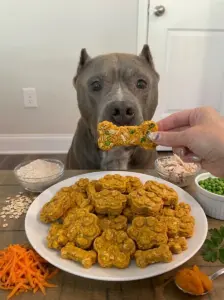
This Soft Chicken Dog Treats Recipe combines real plain chicken breast, soothing pumpkin puree, wholesome oat flour, rich egg protein, and healthy olive oil into tender, bite-sized baked morsels. The resulting texture is soft, chewy, and easily manageable for dogs of all life stages. Whether you have an energetic puppy undergoing reward-based obedience training, an adult dog with a picky appetite, or a senior dog with sensitive teeth or missing dental structure, these treats offer an irresistible aroma and superior digestibility. In this comprehensive guide, we will explore the canine nutritional science behind every ingredient, safety protocols, detailed cooking steps, portion charts, and storage methods to ensure your dog thrives.
2. In-Depth Canine Nutritional Science Breakdown
Understanding canine nutrition empowers dog owners to make optimal choices for long-term vitality. Each component in this recipe was selected for its specific physiological benefits and safety profile.
Lean Cooked Chicken Breast:
Chicken breast serves as the stellar protein foundation of this recipe. Dogs require protein for muscle synthesis, cellular repair, enzyme production, and immune function. Skinless white meat chicken is low in fat, making it ideal for dogs that require lean diets. Protein is rich in essential amino acids such as leucine, lysine, and arginine, which support athletic performance and energetic cellular repair.
Whole Fresh Egg:
Eggs are widely regarded in veterinary nutrition as the gold standard of natural protein bioavailability. A single egg delivers a full spectrum of essential amino acids alongside vital micronutrients. The yolk contains choline, which supports cognitive development and liver health, as well as biotin, vitamin A, and B-complex vitamins that foster a radiant, glossy coat and resilient skin barriers.
Pure Plain Pumpkin Puree:
Pumpkin is a dietary superpower for the canine gastrointestinal tract. Packed with soluble fiber, pumpkin absorbs excess fluid in the intestines while adding gentle bulk to stools, helping to regulate both loose stools and constipation. Furthermore, pumpkin is abundant in beta-carotene, an antioxidant precursor to vitamin A that promotes vision health and cellular longevity.
Gluten-Free Oat Flour:
Oat flour is a gentle, low-glycemic complex carbohydrate option for dogs. Unlike wheat or corn flour, which can trigger inflammatory responses in allergy-prone dogs, oats provide easily digestible energy without spiking blood glucose levels. Oat flour contains beta-glucans, a type of soluble fiber known to support heart health and maintain balanced gut microflora.
Extra Virgin Olive Oil:
Olive oil provides wholesome monounsaturated fats, specifically oleic acid, alongside vitamin E and polyphenols. These healthy fats assist in the absorption of fat-soluble vitamins (A, D, E, K) while nourishing the skin, minimizing dry dander, and imparting a brilliant shine to your dog’s fur.
3. Veterinarian Safety Standards & Critical Ingredient Checklist
Safety is paramount when baking for pets. While dogs can thrive on fresh whole foods, certain common kitchen ingredients are highly toxic to dogs and must be strictly avoided.
Critical Safety Exclusions:
Never include garlic, onions, chives, or leeks in any form, whether fresh, cooked, or powdered. All members of the Allium family contain thiosulfates that cause oxidative damage to red blood cells, leading to hemolytic anemia. Avoid seasonings containing excessive salt, poultry rub mixes, or commercial broths containing hidden onion powder.
Check Labels for Xylitol:
When buying canned pumpkin, always inspect the ingredient label thoroughly. Ensure the label reads 100 percent pure pumpkin puree and not pumpkin pie filling. Pumpkin pie mix contains toxic nutmeg, added sugars, and potentially xylitol, a birch bark extract sweetener that triggers severe insulin release, hypoglycemia, and liver failure in dogs.
Proper Chicken Preparation:
Always ensure chicken breast is cooked thoroughly to an internal temperature of 165 degrees Fahrenheit. Never serve cooked chicken bones, as cooked bones splinter easily and can cause intestinal punctures or choke hazards. Ensure skin and visible excess fats are removed to keep the treat light and easily digestible.
4. Kitchen Equipment & Meal Prep Essentials
Preparing homemade dog treats requires minimal equipment, making batch cooking quick and clean. Here is what you will need in your kitchen:
• Sharp chef knife or food processor for shredding cooked chicken
• Medium mixing bowl and balloon whisk
• Sturdy wooden spoon or silicone spatula
• Large baking sheet lined with unbleached parchment paper or a food-grade silicone baking mat
• Pizza cutter or sharp pairing knife for pre-scoring grid lines
• Wire cooling rack for moisture release
• Glass airtight storage container
5. Complete Master Recipe: Ingredients & Step-by-Step Directions
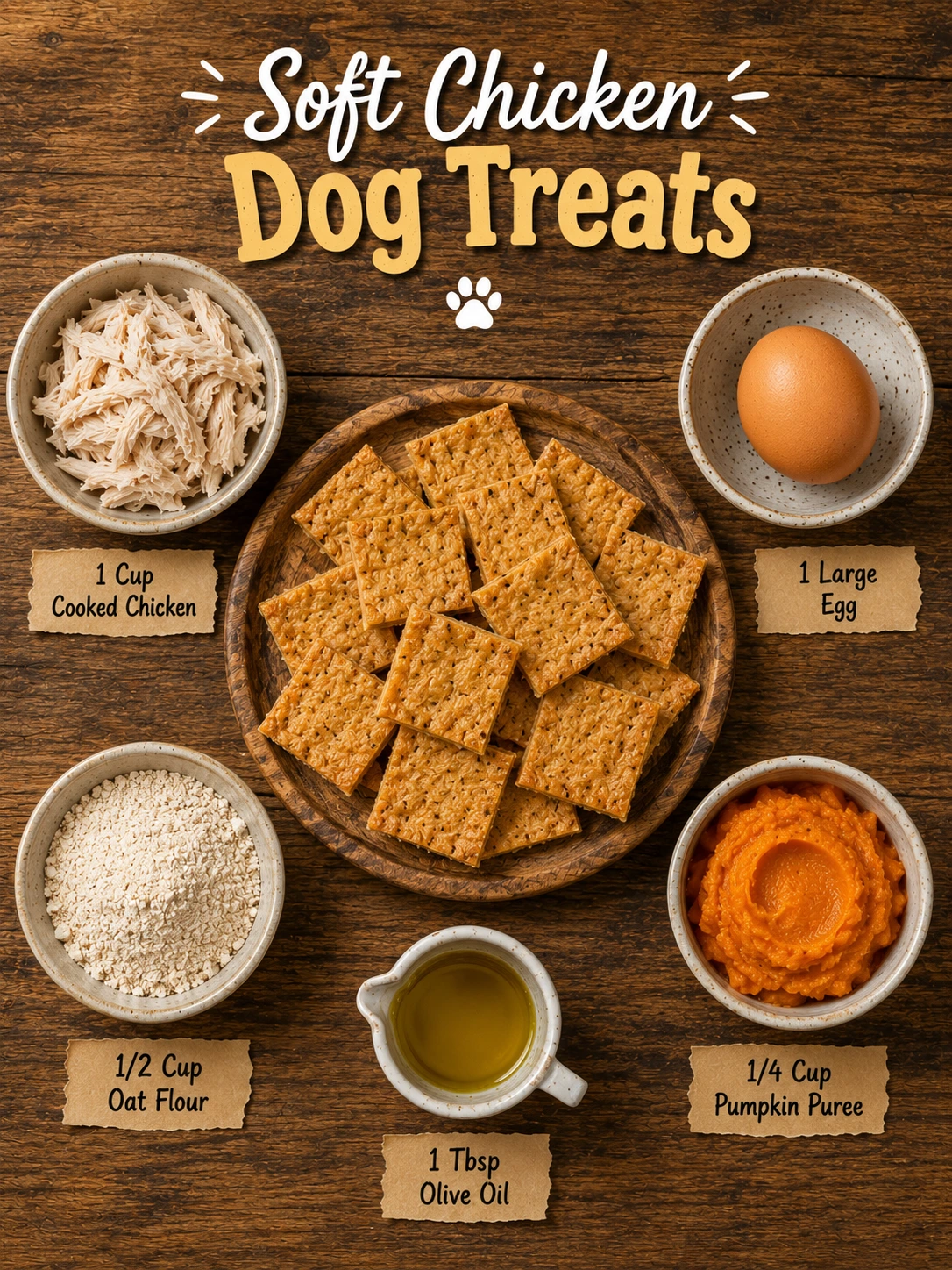
Ingredients List:
• 1 cup cooked chicken breast, finely shredded or minced
• 1 large egg
• 1/2 cup oat flour
• 1/4 cup plain pumpkin puree
• 1 tablespoon olive oil
• 2 to 3 tablespoons water (as needed for dough moisture)
Step-by-Step Directions:
1. Oven and Sheet Preparation:
Preheat your kitchen oven to 350 degrees Fahrenheit (175 degrees Celsius). Line a standard rimmed baking sheet with unbleached parchment paper. Set aside.
2. Whisk Wet Base:
In a medium bowl, combine the egg, plain pumpkin puree, olive oil, and 2 tablespoons of warm water. Whisk vigorously for 60 seconds until the liquid mixture is completely smooth and uniform in color.
3. Fold in Chicken and Oat Flour:
Add the finely shredded chicken breast and oat flour into the wet mixture. Stir thoroughly using a spatula until a coherent, soft dough forms. If the dough feels too crumbly or sticky dry, add the remaining tablespoon of water gradually until the dough holds together easily.
4. Press and Score Dough:
Transfer the dough ball onto the center of your parchment-lined baking sheet. Using wet fingertips or a piece of parchment paper placed over top, press the dough flat into a rectangular shape approximately 1/4-inch to 1/2-inch thick. Take a pizza cutter and gently score grid lines into 24 uniform squares without cutting completely through the parchment.
5. Bake to Tender Perfection:
Place the tray into the preheated oven and bake for 18 to 20 minutes. The treats are done when the edges are set and lightly golden, while the centers remain soft to the touch. Do not overbake if you want to preserve a soft texture.
6. Cooling Phase:
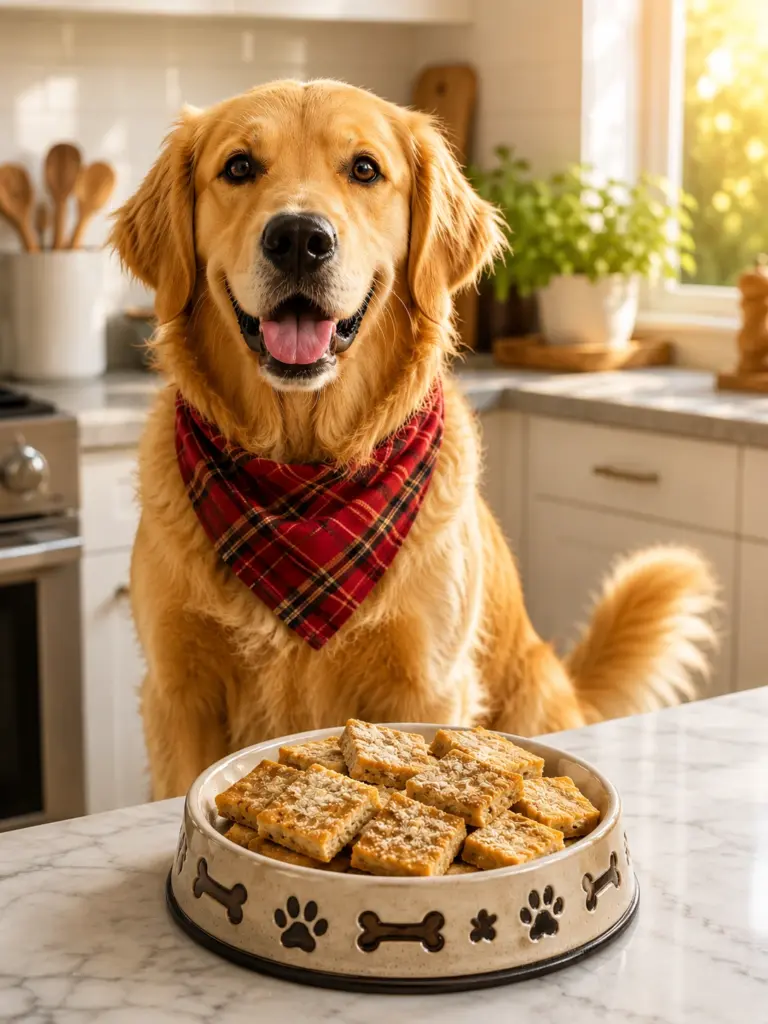
Remove the baking sheet from the oven. Allow the treat sheet to cool on the pan for 10 minutes, then transfer to a wire cooling rack to cool completely to room temperature. Once cool, break or cut along the pre-scored lines into individual bite-sized treats.
6. Dietary Customizations & Allergy Substitutions
Every dog is unique, and dietary restrictions or sensitivities may require custom recipe tweaks:
• Grain-Free Adjustment: If your dog has an absolute grain allergy, replace oat flour with coconut flour or chickpea flour. Note that coconut flour absorbs significantly more liquid, so add an additional 2 tablespoons of pumpkin or water.
• Pancreatitis / Low-Fat Adjustment: Reduce olive oil to 1 teaspoon and use strictly boiled white chicken breast meat to keep total crude fat under 5 percent.
• Alternative Protein Swap: If your dog is sensitive to chicken, substitute equal amounts of cooked ground turkey, lean grass-fed beef, or cooked salmon fillet.
• Texture Modification: For senior dogs with very few teeth, steam the treats for 3 minutes before serving to make them ultra-soft and moist.
7. Dog Weight & Breed-Specific Daily Portion Guide
Treats must always be fed responsibly as part of a balanced lifestyle. The 10 Percent Caloric Rule states that treats should never exceed 10 percent of a dog’s daily caloric requirement.
• Toy Breeds (Under 10 lbs, e.g., Chihuahua, Yorkie):
1/2 treat square per day. Caloric allowance is small; break treats into tiny training crumbs.
• Small Breeds (10 to 25 lbs, e.g., French Bulldog, Pug, Beagle):
1 treat square per day.
• Medium Breeds (25 to 55 lbs, e.g., Border Collie, Australian Shepherd):
1 to 2 treat squares per day.
• Large Breeds (55 to 85 lbs, e.g., Golden Retriever, Labrador, German Shepherd):
2 to 3 treat squares per day.
• Giant Breeds (85+ lbs, e.g., Great Dane, Mastiff, Saint Bernard):
3 to 4 treat squares per day.
8. Optimal Storage, Freezing & Shelf-Life Maximization
Because these homemade treats contain real meat and zero artificial preservatives, proper storage protocols are vital to maintain freshness.
• Refrigeration Protocol: Store cooled treats in a clean glass airtight container lined with a paper towel to absorb excess condensation. Keep refrigerated for up to 7 days.
• Freezer Protocol: For long-term storage, arrange treat squares in a single layer on a parchment sheet and flash freeze for 1 hour. Transfer frozen treats into a heavy-duty freezer bag. Store frozen for up to 3 months. Thaw individual portions overnight in the refrigerator before feeding.
9. Frequently Asked Questions (FAQ)
Question 1: Can I use canned chicken instead of fresh cooked chicken breast?
Answer: Yes, you can use canned chicken breast provided it is packed in plain water with no added sodium, seasonings, or chemical preservatives. Drain the water completely before flaking the meat into the recipe.
Question 2: Why are soft dog treats better for senior dogs?
Answer: Senior dogs frequently suffer from dental disease, periodontal sensitivity, or missing teeth. Hard crunchy biscuits can cause pain or fractures, whereas soft-baked chicken treats provide comfortable chewing without stress on gums and teeth.
Question 3: Can I use brown rice flour instead of oat flour?
Answer: Absolutely. Brown rice flour is a great hypoallergenic, gluten-free option that provides a smooth dough texture and gentle fiber.
Question 4: Can puppies eat these soft chicken dog treats?
Answer: Yes, puppies over 8 weeks old who are eating solid foods can enjoy these treats. Cut them into tiny, fingernail-sized training bits so they serve as safe high-value reward pieces.
Question 5: What if my dog eats too many treats at once?
Answer: Because these treats are made from plain chicken, pumpkin, and oats, minor overindulgence may cause mild transient upset stomach or soft stool due to rich protein and fiber, but no toxicity. Monitor your dog and ensure fresh water is available.
Question 6: How do I know when the treats are completely done baking?
Answer: The treats are ready when the edges feel golden and firm, but the middle yields slightly when pressed gently with a fingertip. Overbaking will turn them into hard biscuits.
Question 7: Can I air fry these chicken dog treats?
Answer: Yes! Air fry at 320 degrees Fahrenheit for 10 to 12 minutes until soft-set. Watch closely to prevent over-browning.
Question 8: Is pumpkin puree safe for dogs with kidney issues?
Answer: Pumpkin is naturally rich in potassium. If your dog has advanced stage kidney disease, consult your veterinarian prior to introducing high-potassium foods.
10. Conclusion & Final Pet Parenting Takeaways
Creating home-cooked treats for your dog is one of the most fulfilling ways to show love while safeguarding their health. This Soft Chicken Dog Treats Recipe delivers real protein, gut-friendly fiber, and irresistible flavor without dangerous additives. By following the veterinary safety protocols, proper portion guides, and simple storage tips outline in this guide, you can confidently treat your furry companion to wholesome, soft-baked goodness every day. Bon appetit to your spoiled pup!
Summary Checklist:
• Plain cooked chicken breast only
• 100 percent pure pumpkin puree
• Always pre-score dough before baking
• Refrigerate for up to 7 days or freeze for 3 months
• Feed in moderation following the 10 percent rule float guidance
Soft Chicken Dog Treats
Ingredients
1. **1 cup, finely shredded or minced** Cooked Chicken Breast — *(Must be plain, unseasoned, boneless, skinless, and fully cooked without onion or garlic.)* — 🐾 *Benefit: Provides high-quality lean protein for muscle maintenance and tissue repair without added fats.*
2. **1 whole egg** Large Egg — *(Acts as a natural binder while adding rich nutritional density.)* — 🐾 *Benefit: Delivers complete essential amino acids, choline, and biotin for skin and coat shine.*
3. **1/2 cup** Oat Flour — *(Can be easily made by blitzing rolled oats in a food processor until fine.)* — 🐾 *Benefit: Offers gluten-free, easily digestible complex carbohydrates and soluble fiber.*
4. **1/4 cup** Plain Pumpkin Puree — *(Use 100% pure pumpkin, never pumpkin pie mix containing spices or sugars.)* — 🐾 *Benefit: Loaded with soluble fiber, beta-carotene, and potassium to aid gut motility.*
5. **1 tablespoon** Olive Oil — *(Extra virgin olive oil preferred.)* — 🐾 *Benefit: Rich in healthy monounsaturated fats and antioxidants to support skin health.*
6. **2 to 3 tablespoons (as needed)** Water — *(Adjust slightly to achieve workable consistency.)* — 🐾 *Benefit: Hydrates the dough to achieve the perfect pliable, soft-baked texture.*
Instructions
Step 1: Oven and Pan Preparation
Preheat your oven to 350 degrees Fahrenheit (175 degrees Celsius). Line a baking sheet with parchment paper or a silicone baking mat to prevent sticking.
> 💡 **Pro Tip:** Parchment paper helps keep the treat bottoms tender without needing extra oil greasing.
Step 2: Blend Wet Base
In a medium mixing bowl, whisk together the egg, plain pumpkin puree, olive oil, and 2 tablespoons of water until completely smooth and emulsified.
> 💡 **Pro Tip:** Whisking thoroughly ensures moisture is distributed evenly, yielding a uniform soft crumb.
Step 3: Combine Shredded Chicken and Flour
Add the finely shredded cooked chicken breast and oat flour to the liquid mixture. Stir with a spatula until a thick dough forms. If dough seems dry, add the remaining tablespoon of water.
> 💡 **Pro Tip:** Ensure the chicken is finely minced or shredded so treats cut cleanly into bite-sized squares.
Step 4: Shape and Score
Transfer the dough onto the prepared baking sheet. Press it down into a flat rectangle about 1/4-inch to 1/2-inch thick. Use a pizza cutter or knife to lightly score grid lines into 24 bite-sized squares.
> 💡 **Pro Tip:** Scoring prior to baking makes breaking or cutting the finished soft treats effortless.
Step 5: Bake to Soft Perfection
Bake for 18 to 20 minutes until set and light golden around the edges, while remaining soft and tender in the middle. Remove from oven and cool completely on a wire rack.
> 💡 **Pro Tip:** Avoid overbaking to preserve the signature soft chewiness that dogs love.
Notes
Daily Weight & Breed Portion Guidelines
– **Toy & Small Dogs (< 20 lbs):** 1/2 to 1 treat square per day.
– **Medium Dogs (20 – 50 lbs):** 1 to 2 treat squares per day.
– **Large & Giant Dogs (50+ lbs):** 2 to 3 treat squares per day.
– 🩺 *Veterinary Note: Treats should comprise no more than 10% of your dog’s total daily caloric intake. Always consult your veterinarian regarding dietary changes or allergies.*
Storage & Shelf-Life
– **Refrigerator:** Store in an airtight glass container for up to 7 days.
– **Freezer:** Freeze individual treat squares in a freezer-safe bag for up to 3 months.
– **Shelf-Life:** Best served fresh within 1 week from fridge, or thaw frozen portions overnight.