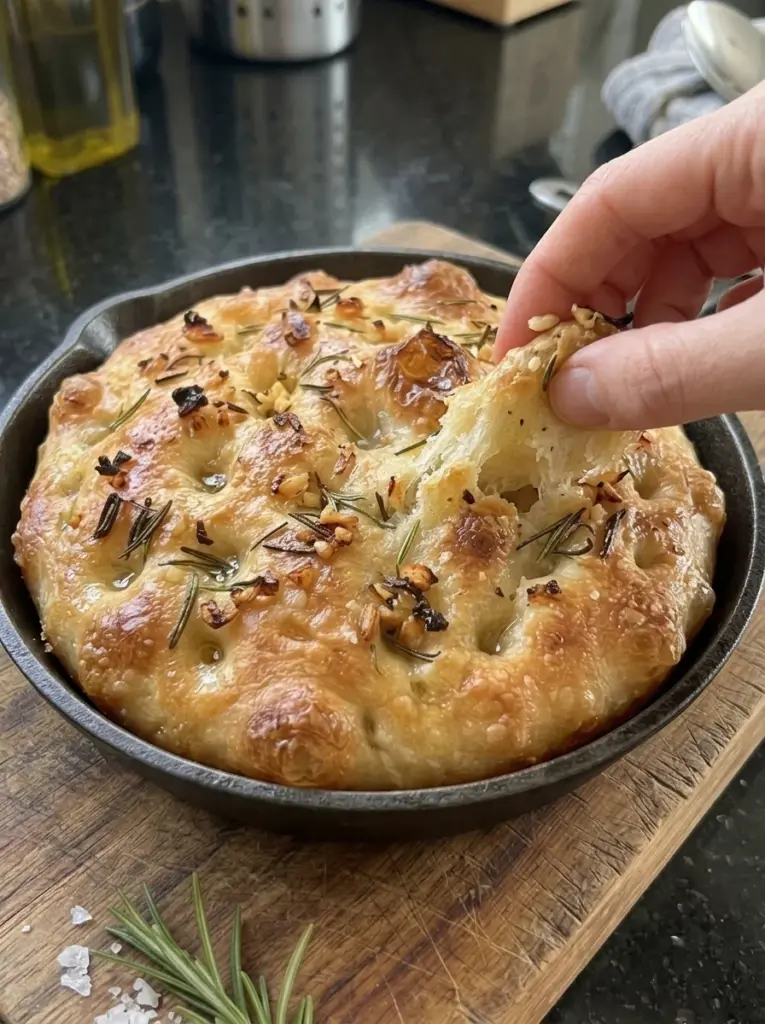
This Single-Serve Garlic Rosemary Focaccia turns a handful of pantry ingredients into a small, golden loaf with crisp edges and a soft, chewy center. Olive oil coats the dough and baking pan, fresh rosemary adds a fragrant finish, and gently cooked garlic brings savory flavor without scattering raw garlic over a hot oven bake.
The dough is mixed with a spoon and left to rise, so there is no mixer or kneading required. Bake it in a small oven-safe skillet or metal pan, then enjoy it alongside soup, with a salad, or as the bread for a personal sandwich.
At a glance: One small focaccia · about 10 minutes active preparation · 1½–2½ hours rising · 18–24 minutes baking · approximately 2–3 hours total, including a brief cooling period.
Why You’ll Love This Recipe
- A small batch: Makes one personal-sized bread without a full tray of leftovers.
- No kneading: Mix the sticky dough, let it rise, and handle it gently.
- Crisp edges: Olive oil and a small metal pan help create a golden bottom and sides.
- Garlic without burned bits: Cook the chopped garlic separately and add it after baking.
- Flexible serving: Enjoy as a snack, a substantial side, or a sandwich base.
What Is Single-Serve Focaccia?
Focaccia is an olive-oil-enriched yeast bread known for its dimpled surface. Those dimples collect oil and seasoning, while a moist dough gives the interior a chewy texture.
This small-batch version uses the same basic approach in a 6-inch pan. It is thicker than a cracker and softer than a crusty baguette, with a lightly crisp exterior. “Single-serve” describes the size of the batch: it makes one generous portion or two smaller side portions.
The garlic topping in this version is gently cooked in a skillet, rather than oven-roasted. That gives a mellow garlic flavor while keeping the recipe practical for one small bread.
Ingredients
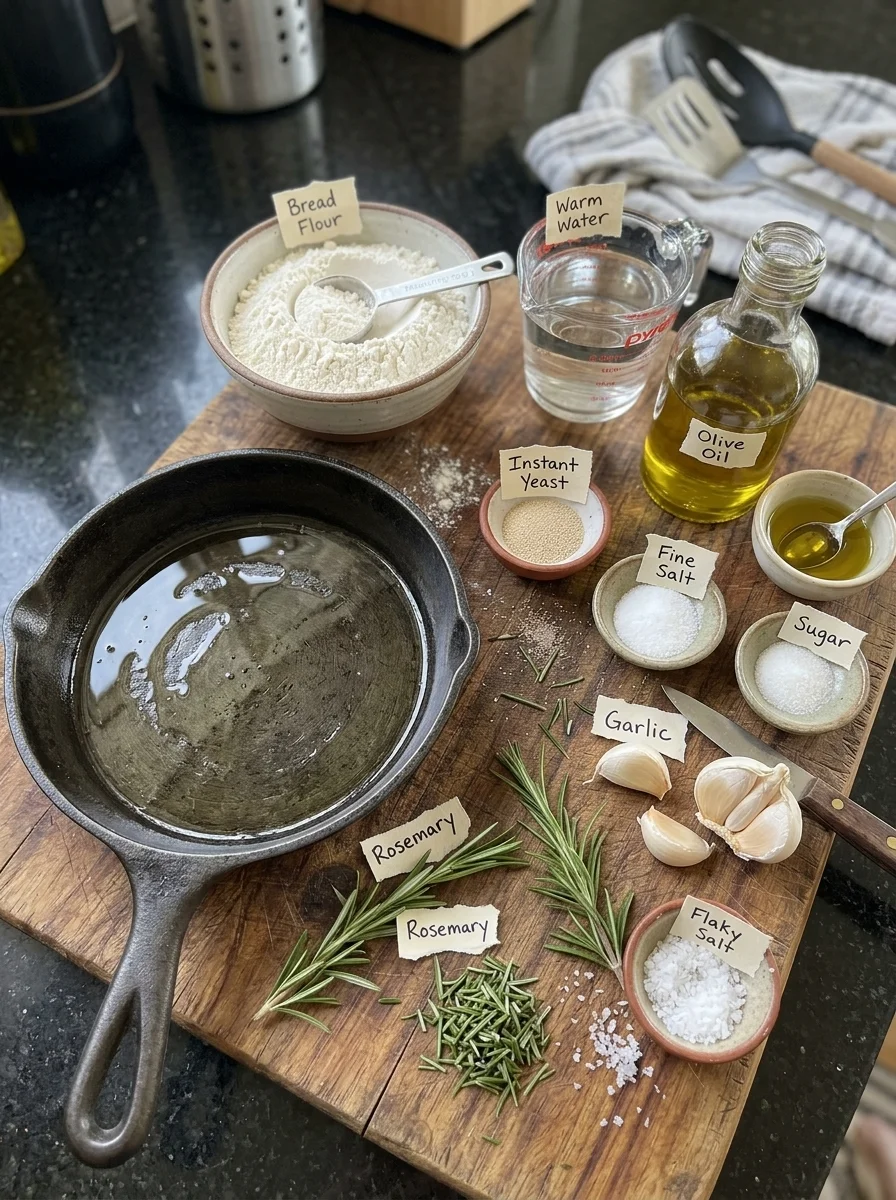
For the Dough
- ¾ cup bread flour, spooned and leveled
- ¼ teaspoon instant yeast
- ¼ teaspoon fine salt
- ¼ teaspoon granulated sugar
- ¼ cup plus 1 tablespoon warm water, approximately 100–110°F
- 1 teaspoon olive oil
For the Pan and Topping
- 1 tablespoon olive oil, for the pan
- 1 teaspoon olive oil, for dimpling
- ½ teaspoon finely chopped fresh rosemary
- A small pinch of flaky sea salt
- 2 small garlic cloves, finely chopped
- 1 teaspoon olive oil, for cooking the garlic
Ingredient Notes
Bread flour: Helps the moist dough hold its shape and gives a chewy crumb. All-purpose flour can be used, although its absorption and strength vary by brand. Measure lightly; packed flour can turn this small batch stiff.
Instant yeast: Mix it directly with the flour. Because the amount is small, measure with a level ¼-teaspoon measure. If using active dry yeast, follow its package directions for dissolving it in the measured warm water first; rising may take longer.
Warm water: Use comfortably warm water, not hot. The dough should be sticky and soft rather than dry enough to knead. Flour brands and measuring technique affect how much water is needed.
Olive oil: The recipe uses oil in the dough, under the dough, and on top. The pan oil is especially useful for the crisp edges and release. Use an oil whose flavor you enjoy.
Fresh rosemary: Chop it finely so the small bread does not have tough, needle-like pieces. For dried rosemary, start with ¼ teaspoon and crush it before adding.
Garlic: Finely chopped garlic cooks quickly. Add it after baking to avoid burning it in the oven. If you already have freshly roasted garlic, mash one or two cloves with the finishing oil and spread that over the baked bread instead.
Salt: Fine salt seasons the dough evenly. Flaky salt is an optional finishing touch; a little goes a long way on a small loaf.
Choose the Right Pan
Use a 6-inch oven-safe skillet or a similar-sized round metal baking pan. Grease the base and sides with the measured tablespoon of olive oil. Check that the skillet handle and any coatings are rated for 425°F.
A much larger pan spreads the dough thin and shortens baking time. A much smaller pan makes a thicker loaf that needs longer to cook through. Avoid placing a cold glass dish in a hot oven; this recipe is written for metal cookware.
How to Make It
1. Mix the dough
Stir the flour, yeast, fine salt, and sugar in a bowl. Add the warm water and one teaspoon olive oil. Mix firmly for about 1 minute, scraping the sides, until no dry flour remains.
The dough should be sticky, shaggy, and soft. If dry patches remain after mixing, add water a teaspoon at a time. If it flows like a thin batter, add flour a teaspoon at a time until it forms a loose, sticky mass. Do not add flour simply to eliminate stickiness.
2. Let it rise
Cover the bowl and leave in a comfortably warm place until the dough roughly doubles and looks puffy, about 60–90 minutes. Allow longer in a cool kitchen.
The dough may show bubbles around the edges. Because this is a small quantity, use a bowl that makes the increase in volume easy to judge.
3. Transfer to the pan
Coat a 6-inch metal pan with one tablespoon olive oil. Scrape the dough into it and turn gently so the underside is coated. With lightly oiled fingertips, ease the dough outward.
If it springs back, wait 10 minutes before trying again. The dough does not have to reach every edge immediately; it will relax and spread during the second rise. Keep the handling brief rather than kneading it in the pan.
4. Let it become puffy again
Cover loosely and leave for another 30–60 minutes, until visibly expanded and airy. Meanwhile, preheat the oven to 425°F with a rack in the middle.
Do not cover the dough with a towel that touches its surface, because sticky dough can attach to the fabric. Use a cover with clearance above the pan.
5. Dimple and season
Drizzle one teaspoon olive oil over the risen dough. Oil your fingertips and press several dimples down toward the base of the pan. Work gently so you leave small pockets instead of flattening the entire loaf.
Scatter with the chopped rosemary and a small pinch of flaky salt. Keep the rosemary in contact with the oiled dough so it is less exposed to the oven heat.
6. Bake
Bake for approximately 18–24 minutes, until the top is golden and the edges are crisp. Lift an edge carefully with a spatula to check that the bottom has browned and the bread releases from the pan.
If the top darkens before the center appears set, cover loosely with foil and continue baking. The finished center should be cooked through, not wet or doughy. Oven performance and pan material affect timing.
7. Cook the garlic and finish
While the bread bakes, combine the chopped garlic and the remaining teaspoon olive oil in a small skillet over low heat. Stir for about 1–2 minutes, just until fragrant and softened. Remove from the heat before the garlic turns dark; if the pan is heating too quickly, take it off the burner.
Spread the garlic and its oil over the baked focaccia. Let the bread rest in the pan for about 5 minutes, then move to a rack for another 5–10 minutes before slicing. The rack prevents the bottom from becoming soggy in trapped steam.
Tips for Crisp Edges and a Soft Center
Keep the dough moist. A sticky dough is expected. Excess flour makes a small loaf dense quickly.
Wait for visible expansion. A short rise in a cold room may not be enough. Look for a puffy dough rather than stopping at a fixed time.
Use oil beneath the dough. This is important for browning and pan release. The bread may feel oily when transferred, but the pan oil contributes to its characteristic crust.
Dimple after the second rise. This gives the surface pockets for oil and helps create the familiar focaccia shape.
Finish with garlic after baking. Small garlic pieces can burn at 425°F, especially on an exposed surface.
Troubleshooting
| Problem | What to check |
|---|---|
| Dough is stiff | Flour may have been packed into the cup. Add water a teaspoon at a time during mixing. |
| Dough barely rises | Allow more time in a gently warm location and check that the yeast is active. |
| Dough resists stretching | Let it relax for 10 minutes, then ease it outward with oiled fingers. |
| Bread is dense | It may have had too much flour, insufficient rising, or excessive handling. |
| Bottom is pale | Bake a little longer and check the oven temperature. Different metal pans brown at different rates. |
| Bread sticks | Oil the pan thoroughly, especially around the sides. Use a thin spatula to loosen the baked edges. |
| Garlic tastes bitter | It probably browned too far. Remake the small garlic topping rather than spreading burned garlic on the loaf. |
| Center is wet | Continue baking with foil over the top if needed. Let the loaf rest briefly before cutting. |
Variations
Roasted garlic finish: Replace the chopped garlic topping with one or two freshly roasted garlic cloves mashed into a teaspoon of olive oil. Spread over the baked loaf.
Parmesan topping: Add a tablespoon of finely grated Parmesan during the last few minutes of baking. Watch closely so it does not burn.
Olive focaccia: Press one tablespoon of well-drained chopped olives into the dimples. Reduce or omit the flaky salt.
Plain rosemary focaccia: Leave off the garlic finish and keep the rosemary and sea salt.
A little heat: Sprinkle a small pinch of red pepper flakes over the baked bread with the garlic oil.
Keep toppings modest. A small dough cannot support a heavy layer of wet ingredients without changing how it bakes.
Serving Suggestions
Serve the focaccia with tomato soup, a vegetable soup, or a simple salad. It also works beside pasta when you want a small amount of fresh bread rather than an entire loaf.
For a sandwich, let it cool enough to slice horizontally, then fill with turkey, mozzarella and tomato, or roasted vegetables. Avoid loading the bread with very wet fillings if you want the bottom to stay crisp.
For a simple snack, tear into pieces and enjoy the garlic and rosemary topping as it is. Extra dipping oil is optional because the bread already contains a generous coating.
Storage and Reheating
This bread is best on the day it is baked. Because it has a fresh cooked-garlic topping, refrigerate leftovers in an airtight container within 2 hours and use within 3–4 days. Let steam escape briefly before packing, without leaving it out for hours.
For longer storage, wrap the cooled focaccia and freeze for up to 2 months for best quality. Thaw in the refrigerator.
Reheat in a 350°F oven until hot throughout, checking after about 8–10 minutes. Cover loosely with foil at first if the top is already dark, then uncover briefly to refresh the edges. Follow safe reheating guidance for refrigerated leftovers; the center should reach 165°F.
Microwaving can warm the bread, but it softens the crust and can make it chewy. An oven is preferable when you want to restore crispness.
Frequently Asked Questions
Can I use all-purpose flour?
Yes, although the dough may be softer or less chewy depending on the flour. Start with the listed quantity and adjust only if dry flour remains or the mixture is genuinely batter-like.
Can I skip the second rise?
The second rise helps the dough become airy after transferring it. Skipping it can give a flatter, denser bread.
Is this made entirely on the stovetop?
No. The skillet is the baking pan, but the focaccia bakes in the oven. Only the garlic topping is cooked on the stovetop.
Can I double the recipe?
Yes. Divide the dough between two 6-inch pans for similar thickness. Baking it all in one pan of another size changes the thickness and may require a different baking time.
Can I make it without yeast?
Not by simply omitting the yeast or replacing it with baking powder. A yeast-free flatbread requires a different formula and produces a different texture.
Why add garlic after baking?
Finely chopped garlic can scorch on the surface during a hot bake. Cooking it gently and adding it at the end gives better control over its color and flavor.
Recipe Card
Single-Serve Garlic Rosemary Focaccia
A personal-sized no-knead focaccia with an olive-oil crust, fresh rosemary, and a gently cooked garlic finish.
Active prep: About 10 minutes
Rise: Approximately 1½–2½ hours
Bake: Approximately 18–24 minutes
Garlic topping: About 1–2 minutes, during baking
Rest: About 10–15 minutes
Total: Approximately 2–3 hours
Yield: One 6-inch focaccia; one generous serving or two side servings
Ingredients
- ¾ cup bread flour, spooned and leveled
- ¼ teaspoon instant yeast
- ¼ teaspoon fine salt
- ¼ teaspoon granulated sugar
- ¼ cup plus 1 tablespoon warm water, approximately 100–110°F
- 1 teaspoon olive oil, for the dough
- 1 tablespoon olive oil, for the pan
- 1 teaspoon olive oil, for dimpling
- ½ teaspoon finely chopped fresh rosemary
- Small pinch of flaky sea salt
- 2 small garlic cloves, finely chopped
- 1 teaspoon olive oil, for the garlic
Instructions
- Mix flour, yeast, fine salt, and sugar. Add warm water and the dough oil. Stir firmly until no dry flour remains and the dough forms a soft, sticky mass.
- Cover and let rise until roughly doubled, about 60–90 minutes, or longer in a cool kitchen.
- Coat a 6-inch oven-safe metal skillet or pan with the tablespoon of oil. Transfer the dough and gently ease it toward the edges with oiled fingertips. Rest 10 minutes if it springs back.
- Cover loosely and rise another 30–60 minutes, until puffy. Preheat the oven to 425°F.
- Drizzle with the dimpling oil. Press gentle fingertip dimples into the dough, then add rosemary and flaky salt.
- Bake for approximately 18–24 minutes, until golden, crisp at the edges, and cooked through. Tent with foil if browning too quickly.
- During baking, gently cook chopped garlic in its teaspoon of oil over low heat for about 1–2 minutes. Remove from heat before it darkens.
- Spread the garlic and oil over the baked bread. Rest 5 minutes in the pan, then transfer to a rack for another 5–10 minutes before serving.
Recipe Notes
- Pan size and dough consistency are especially important for this small batch.
- Rising and baking times are estimates; use the visual cues in the directions.
- The bread contains wheat. No nutrition values are included because the formula has not been nutritionally calculated.
- Refrigerate leftovers with the fresh garlic topping promptly; freeze for longer storage.
Final Thoughts
A small pan of focaccia gives you fresh bread without committing to a large batch. Keep the dough sticky, let it become puffy, and give the bottom time to brown. The final spoonful of warm garlic oil and rosemary makes it ready to serve with very little else.
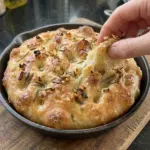
Single-Serve Garlic Rosemary Focaccia
Ingredients
- ¾ cup bread flour, spooned and leveled
- ¼ teaspoon instant yeast
- ¼ teaspoon fine salt
- ¼ teaspoon granulated sugar
- ¼ cup plus 1 tablespoon warm water, approximately 100–110°F
- 1 teaspoon olive oil, for the dough
- 1 tablespoon olive oil, for the pan
- 1 teaspoon olive oil, for dimpling
- ½ teaspoon finely chopped fresh rosemary
- Small pinch of flaky sea salt
- 2 small garlic cloves, finely chopped
- 1 teaspoon olive oil, for the garlic
Instructions
- Mix flour, yeast, fine salt, and sugar. Add warm water and the dough oil. Stir firmly until no dry flour remains and the dough forms a soft, sticky mass.
- Cover and let rise until roughly doubled, about 60–90 minutes, or longer in a cool kitchen.
- Coat a 6-inch oven-safe metal skillet or pan with the tablespoon of oil. Transfer the dough and gently ease it toward the edges with oiled fingertips. Rest 10 minutes if it springs back.
- Cover loosely and rise another 30–60 minutes, until puffy. Preheat the oven to 425°F.
- Drizzle with the dimpling oil. Press gentle fingertip dimples into the dough, then add rosemary and flaky salt.
- Bake for approximately 18–24 minutes, until golden, crisp at the edges, and cooked through. Tent with foil if browning too quickly.
- During baking, gently cook chopped garlic in its teaspoon of oil over low heat for about 1–2 minutes. Remove from heat before it darkens.
- Spread the garlic and oil over the baked bread. Rest 5 minutes in the pan, then transfer to a rack for another 5–10 minutes before serving.
Notes
- Pan size and dough consistency are especially important for this small batch.
- Rising and baking times are estimates; use the visual cues in the directions.
- The bread contains wheat. No nutrition values are included because the formula has not been nutritionally calculated.
- Refrigerate leftovers with the fresh garlic topping promptly; freeze for longer storage.