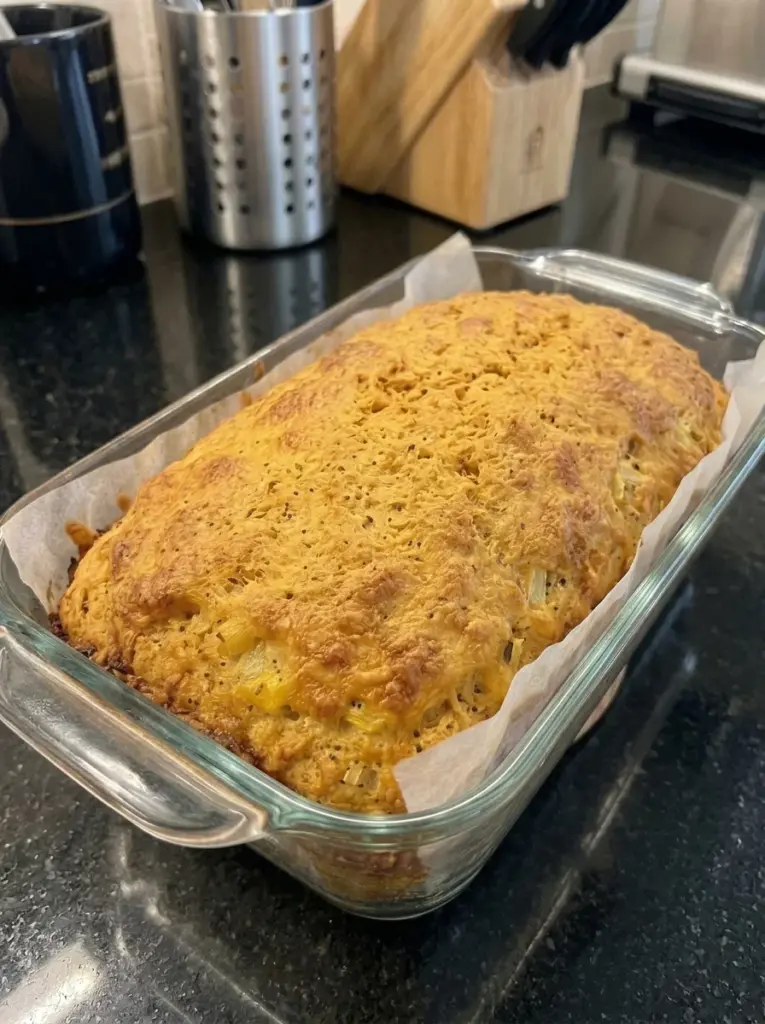
This 3-Ingredient Red Lentil Sandwich Bread turns soaked red lentils, eggs, and baking powder into a small, savory loaf without wheat flour, yeast, or kneading. Blend the ingredients into a thick batter, bake until set, and let the bread cool before cutting it into slices for toast or sandwiches.
It is a useful recipe when you want something different from a traditional flour-based loaf. The texture is moist and substantial, with a mild lentil flavor and a lightly golden exterior. Toasting gives the slices a firmer surface that works well with eggs, avocado, cheese, or other savory toppings.
The main thing to know before starting: this is not a fluffy replacement for wheat sandwich bread. Eggs and baking powder help the batter set and rise slightly, but the finished loaf is naturally denser. Thorough blending and complete cooling make it easier to slice.
Recipe at a glance: One small, relatively low loaf · about 8 slices · 10 minutes active prep · 3–4 hours soaking · 35–45 minutes baking · approximately 3 hours 55 minutes–4 hours 55 minutes total, plus cooling.
Why You’ll Love This Recipe
- Only three ingredients: Dry red lentils, eggs, and baking powder.
- No yeast or kneading: A blender prepares the batter, with no dough proofing.
- A small batch: Makes enough for several servings without a large loaf to finish.
- Good for savory toast: The dense slices become firmer when toasted.
- Easy to freeze in portions: Separate slices so you can take out just what you need.
What Is Red Lentil Sandwich Bread?
This is a baked lentil-and-egg batter rather than a traditional yeast dough. Soaking softens the lentils for blending; baking cooks the batter and sets the egg-supported structure. Baking powder supplies a little lift.
The crumb is closer to a firm, moist savory loaf than airy sandwich bread. With only this amount of batter in an 8-by-4-inch pan, expect modest-height slices rather than a tall bakery loaf. Smaller sandwiches, open-faced toast, or slices cut into halves suit it well.
There is no added salt in the basic three-ingredient formula. Its flavor is therefore mild and fairly plain, making well-seasoned toppings especially useful.
Ingredients
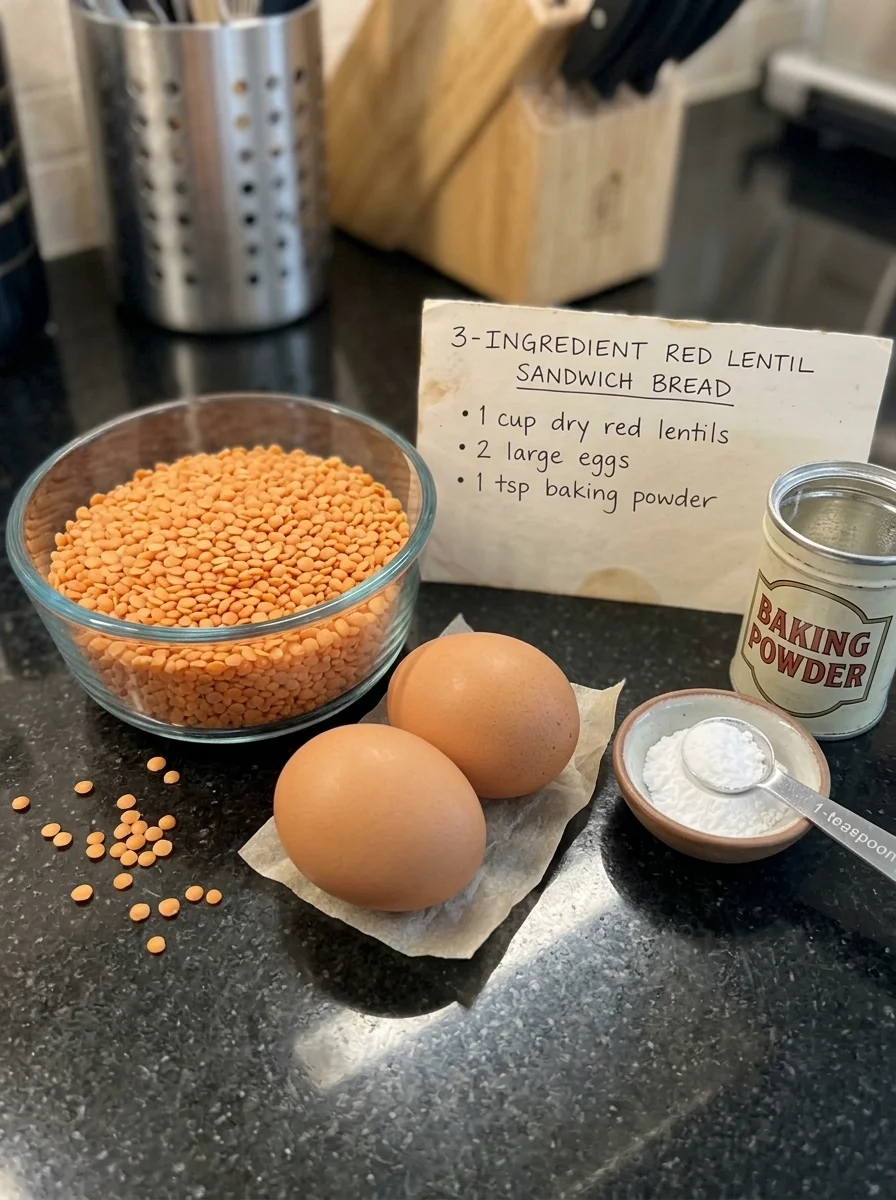
- 1 cup dry red lentils
- 2 large eggs
- 1 teaspoon baking powder
Water for rinsing and soaking is discarded and is not an ingredient in the finished batter.
Ingredient Notes
Dry Red Lentils
Use dry split red lentils, which are commonly sold without their skins. Rinse thoroughly and check for any small debris before soaking. Measure the lentils before soaking, not afterward.
Do not substitute a cup of already cooked lentils. Their water content and structure differ substantially. Green, brown, and whole lentils also soften and blend differently, so they are not direct substitutes for this method.
Large Eggs
The eggs bind the blended lentils and help the loaf hold together. Use two large eggs as written. Omitting them or replacing them with a flax mixture is a separate adaptation that would need testing.
Baking Powder
Use baking powder, not baking soda. Check that it is within its recommended use period; stale baking powder may provide little lift. If gluten avoidance is important, check the baking powder label and choose lentils handled without gluten cross-contact.
Equipment and Pan Size
A high-speed blender gives the smoothest batter. A food processor can work, but it may leave more visible lentil particles, producing a coarser loaf.
Use a small metal loaf pan approximately 8 by 4 inches, lined with parchment that extends over the sides for lifting. This batch will not fill it like a standard wheat bread recipe. A substantially larger pan spreads the batter thinner and may shorten baking time.
Avoid changing to a very deep, narrow pan without adjusting the bake. A thicker layer can remain wet inside even when the outside looks done.
How to Make It
1. Rinse and soak the lentils
Rinse the dry lentils under cool running water. Put them in a bowl and cover with plenty of water, leaving room for expansion. Soak for 3–4 hours, until softened enough to blend smoothly. Refrigerate during soaking, especially in a warm kitchen; chilled lentils may need a little longer to soften.
Drain in a fine-mesh strainer and discard the soaking water. Let the lentils drain for several minutes, shaking the strainer gently to release trapped water. Do not pour the soaking liquid into the blender.
2. Prepare the oven and pan
Preheat the oven to 350°F. Line the pan with parchment and smooth it into the corners. Having the oven ready before blending means the batter can go straight into the pan and bake promptly.
3. Blend thoroughly
Place the drained lentils, eggs, and baking powder in the blender. Blend until the mixture is as smooth as your equipment allows, pausing to scrape down the sides with the blender switched off.
The batter should be thick but pourable, without obvious hard pieces. A visible grainy texture usually means it needs more blending or the lentils were not sufficiently softened. Avoid adding water simply to make the blades turn: extra moisture changes this small formula and can leave the center gummy. A smaller blender container may process the batch more effectively.
Do not taste raw batter containing eggs and uncooked lentils.
4. Fill the pan
Pour or scrape the batter into the prepared pan and level the top. Tap the pan gently once or twice to release large air pockets. Bake immediately rather than leaving the blended batter on the counter.
5. Bake until the center is set
Bake for approximately 35–45 minutes, until lightly golden and firm in the center. A toothpick should come out without wet batter, although a few moist crumbs are reasonable for this loaf.
Because the recipe contains eggs, check that the center reaches at least 160°F with a food thermometer. That is a minimum egg-dish safety check, not proof that the crumb is fully baked; also use the set-center and toothpick cues. If wet batter remains, continue in 5-minute increments. Cover loosely with foil if the top browns early.
6. Cool completely
Rest in the pan for about 10 minutes, then lift out carefully using the parchment and transfer to a wire rack. Allow the loaf to cool fully before slicing so its moist structure can firm up.
Start checking after about an hour; a thicker loaf may take longer. Keep the cooling and packing process within the recommended 2-hour window before refrigeration. Do not leave this egg-and-lentil bread out overnight.
7. Slice and toast
Cut into about eight slices with a sharp knife, supporting the loaf rather than squeezing it. Toast if you want a firmer surface. Very thin slices may break, so start with moderately thick pieces and adjust after seeing the texture.
Tips for Better Texture
Drain well. Water trapped among soaked lentils is a common cause of a wet batter and slow-setting center.
Blend until smooth. Small hard particles affect both mouthfeel and slicing. Pause and scrape rather than assuming a short blend is enough.
Expect modest lift. Baking powder does not create the elastic structure of wheat dough. A lower, denser loaf is normal.
Do not slice hot. Warm slices are more fragile and can seem gummy before the loaf has finished setting.
Toast for sandwiches. A lightly toasted surface gives better support for moist fillings. Drain tomatoes, pickles, or other wet toppings before adding them.
Troubleshooting
| Problem | What to check |
|---|---|
| Center is wet | Lentils may have retained too much water, the pan may be too deep, or baking time may be too short. Continue baking while shielding the top if necessary. |
| Loaf is short | This is a small batter batch. A modest-height loaf in an 8-by-4-inch pan is expected. |
| Bread tastes grainy | Soak until softened and blend more thoroughly. Avoid using whole or cooked lentils as a direct replacement. |
| Slices crumble | Cool completely, use thicker slices, and verify that the eggs were included in the stated amount. |
| Top browns before the middle sets | Cover loosely with foil and continue baking. Check the oven temperature. |
| Texture is dense | Some density is inherent to the formula. Check baking powder freshness and avoid expecting wheat-bread fluffiness. |
| Flavor seems bland | The basic loaf has no added salt. Use flavorful toppings or the optional seasonings below. |
Optional Flavor Variations
These additions make an expanded version rather than the strict three-ingredient loaf.
Garlic and oregano: Blend in ¼ teaspoon garlic powder, ½ teaspoon dried oregano, and a small pinch of salt.
Sesame topping: Sprinkle one teaspoon sesame seeds over the batter before baking.
Pepper and herbs: Add a little black pepper and ½ teaspoon dried Italian seasoning.
Keep extras small and relatively dry. Cheese, vegetable purees, or large amounts of wet ingredients change the moisture and binding balance and need further recipe adjustment.
Serving Suggestions
Toast a slice and add avocado with a cooked egg, or top it with cottage cheese and sliced cucumber. For lunch, use cooled, toasted slices for turkey and cheese or an open-faced tuna sandwich.
The mild lentil flavor works especially well with savory fillings. A little mustard, a spoonful of hummus, or well-drained pickles can add contrast without saturating the bread.
If the slices are too small for a conventional sandwich, serve two open-faced pieces rather than forcing the loaf into the shape of a tall wheat bread.
Storage and Reheating
Refrigerate within 2 hours of baking, or within 1 hour if the surrounding temperature is above 90°F. Cool on a rack briefly, then pack in a clean covered container. Store at 40°F or below and use within 3–4 days.
For freezing, separate cooled slices with parchment, place in a freezer-safe bag or container, and freeze for up to 2 months for best quality. Remove only the slices you need.
Thaw in the refrigerator or reheat directly from frozen if your appliance handles the slice thickness well. Toasting may require more than one cycle. If reheating as a hot leftover, heat the center to 165°F; do not judge by browned edges alone. A skillet over moderate heat can warm and firm the surface, but avoid burning the outside before the center is hot.
This loaf should not be stored on the counter for several days like some conventional breads, because it contains eggs and moist cooked lentils.
Frequently Asked Questions
Is this gluten-free?
The basic ingredients do not require wheat flour. For a gluten-free diet, choose appropriate labeled ingredients and avoid gluten cross-contact in the blender, pan, and toaster.
Is it vegan?
No. The recipe contains eggs. An egg-free version needs a separately developed formula.
Can I use canned lentils?
Not as a direct substitution. This recipe begins with dry lentils that are soaked and drained, not fully cooked lentils.
Can I skip soaking?
No. Soaking softens the dry lentils for blending. Blending unsoaked lentils with only eggs would not produce the same batter.
Does it taste like regular bread?
It has a different crumb and a mild lentil flavor. Think of it as a savory sliceable alternative, especially good toasted, rather than a fluffy wheat loaf.
Is this low-carb?
Lentils contain carbohydrates, so flour-free does not automatically mean low-carb or keto. Assess the recipe against your own dietary targets using calculated nutrition and a defined portion size.
Can I double the recipe?
Yes, but baking two separate small loaves is easier to control than putting all the batter into one much deeper pan. Check each loaf independently for doneness.
Recipe Card
3-Ingredient Red Lentil Sandwich Bread
A small, moist, savory loaf made from soaked red lentils, eggs, and baking powder, with no flour, yeast, or kneading.
Active prep: 10 minutes
Soak: Approximately 3–4 hours
Bake: Approximately 35–45 minutes
Pan rest: 10 minutes
Total before full cooling: Approximately 3 hours 55 minutes–4 hours 55 minutes
Yield: One small loaf, about 8 slices
Equipment: Fine-mesh strainer, high-speed blender, small 8-by-4-inch loaf pan, parchment, and wire rack
Ingredients
- 1 cup dry split red lentils
- 2 large eggs
- 1 teaspoon baking powder
Instructions
- Rinse the lentils, cover generously with water, and soak for 3–4 hours until softened. Refrigerate during soaking; allow more time if needed. Drain thoroughly and discard the soaking water.
- Preheat the oven to 350°F. Line an approximately 8-by-4-inch loaf pan with parchment.
- Blend the drained lentils, eggs, and baking powder until smooth, scraping down the sides as needed. The batter should be thick but pourable.
- Transfer to the pan, smooth the top, and tap gently to release large bubbles.
- Bake for approximately 35–45 minutes, until the center is set and a toothpick comes out without wet batter. Check that the center also reaches at least 160°F. Continue in 5-minute increments if needed; shield the top with foil if browning early.
- Rest in the pan for 10 minutes, then transfer to a rack. Cool fully before slicing, and refrigerate within 2 hours of baking.
- Cut into about eight slices and toast if desired for a firmer texture.
Recipe Notes
- This batch makes a modest-height loaf, not a tall wheat-style sandwich bread.
- Timing varies with lentil softness, pan size, and oven performance.
- The basic loaf has no added salt; optional seasonings increase the ingredient count.
- The original calorie estimate has not been retained because nutritional values have not been calculated for this version.
Final Thoughts
Good draining, thorough blending, and complete cooling are the most useful steps for this simple loaf. Enjoy its naturally dense texture with savory toppings, and toast the slices when you want extra firmness for a sandwich or breakfast plate.

3-Ingredient Red Lentil Sandwich Bread
Ingredients
- 1 cup dry red lentils
- 2 large eggs
- 1 teaspoon baking powder
Water for rinsing and soaking is discarded and is not an ingredient in the finished batter.
Instructions
- Rinse the lentils, cover generously with water, and soak for 3–4 hours until softened. Refrigerate during soaking; allow more time if needed. Drain thoroughly and discard the soaking water.
- Preheat the oven to 350°F. Line an approximately 8-by-4-inch loaf pan with parchment.
- Blend the drained lentils, eggs, and baking powder until smooth, scraping down the sides as needed. The batter should be thick but pourable.
- Transfer to the pan, smooth the top, and tap gently to release large bubbles.
- Bake for approximately 35–45 minutes, until the center is set and a toothpick comes out without wet batter. Check that the center also reaches at least 160°F. Continue in 5-minute increments if needed; shield the top with foil if browning early.
- Rest in the pan for 10 minutes, then transfer to a rack. Cool fully before slicing, and refrigerate within 2 hours of baking.
- Cut into about eight slices and toast if desired for a firmer texture.