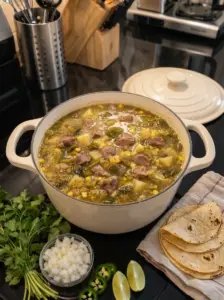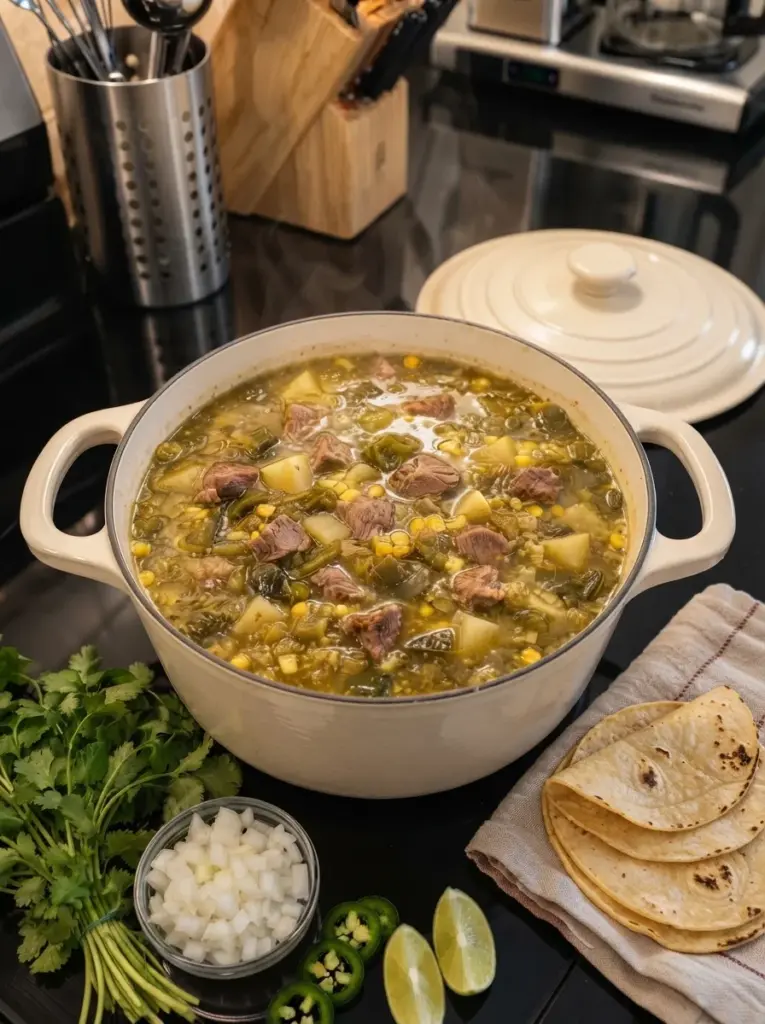
New Mexico Green Chile Pork & Roasted Tomatillo Caldo brings tender pork shoulder together with earthy green chiles, roasted poblanos, and a tangy tomatillo broth. It is warming and savory, with a bright finish that keeps the rich pork from feeling heavy.
Roasting the tomatillos gives their tart flavor a deeper, rounder character. The softened fruit and its juices become part of the broth, while blistered poblanos add a gentle roasted pepper flavor. New Mexico green chiles supply the defining chile character, with a heat level you can choose to suit your table.
This is a slow-simmered soup rather than a quick chicken-style caldo. Pork shoulder needs time for its connective tissue to soften, so tenderness is the guide. Once the pork is nearly ready, optional potatoes go in, followed by corn near the end. That sequence keeps the vegetables from breaking down while the meat finishes.
Serve generous bowls with cilantro, diced onion, and warm tortillas. Taste before adding lime: tomatillos already bring plenty of acidity, and some batches need only a small squeeze at the table.
Recipe Overview
- Servings: 6
- Preparation and roasting: About 25–35 minutes
- Browning and building the broth: About 20 minutes
- Simmering: About 1½–2¼ hours, sometimes longer for firm pork shoulder
- Total: Approximately 2 hours 15 minutes to 3 hours, with some preparation overlapping
- Texture: Brothy, with tender pork and a lightly textured roasted green base
- Style: New Mexico- and Mexican-inspired
The supplied recipe has been expanded with a more flexible cooking window and clearer chile preparation. It has not been independently kitchen-tested for this article. Pot size, pork tenderness, chile size, and how vigorously the soup simmers will affect the timing and final yield.
What Makes This Caldo Different
Tomatillos contribute a bright, tart flavor rather than the sweetness of ripe red tomatoes. Roasting softens them and adds lightly browned notes, but it does not remove their acidity.
Poblanos and New Mexico green chiles play different roles. Poblanos add body and an earthy pepper flavor, while the New Mexico chiles provide the particular green chile character named in the dish. Their heat is variable, so a mild label is more useful than assuming every pepper of a certain shape will be mild.
The pork is browned before simmering to develop savory flavor. A gentle simmer then gives the shoulder time to become tender. The broth remains fairly light unless you choose the potato option and mash some into the liquid.
This version is an inspired home recipe rather than a claim that every New Mexico household prepares this exact combination of tomatillos, poblanos, and seasonings.
Ingredients
Pork and Roasted Green Broth
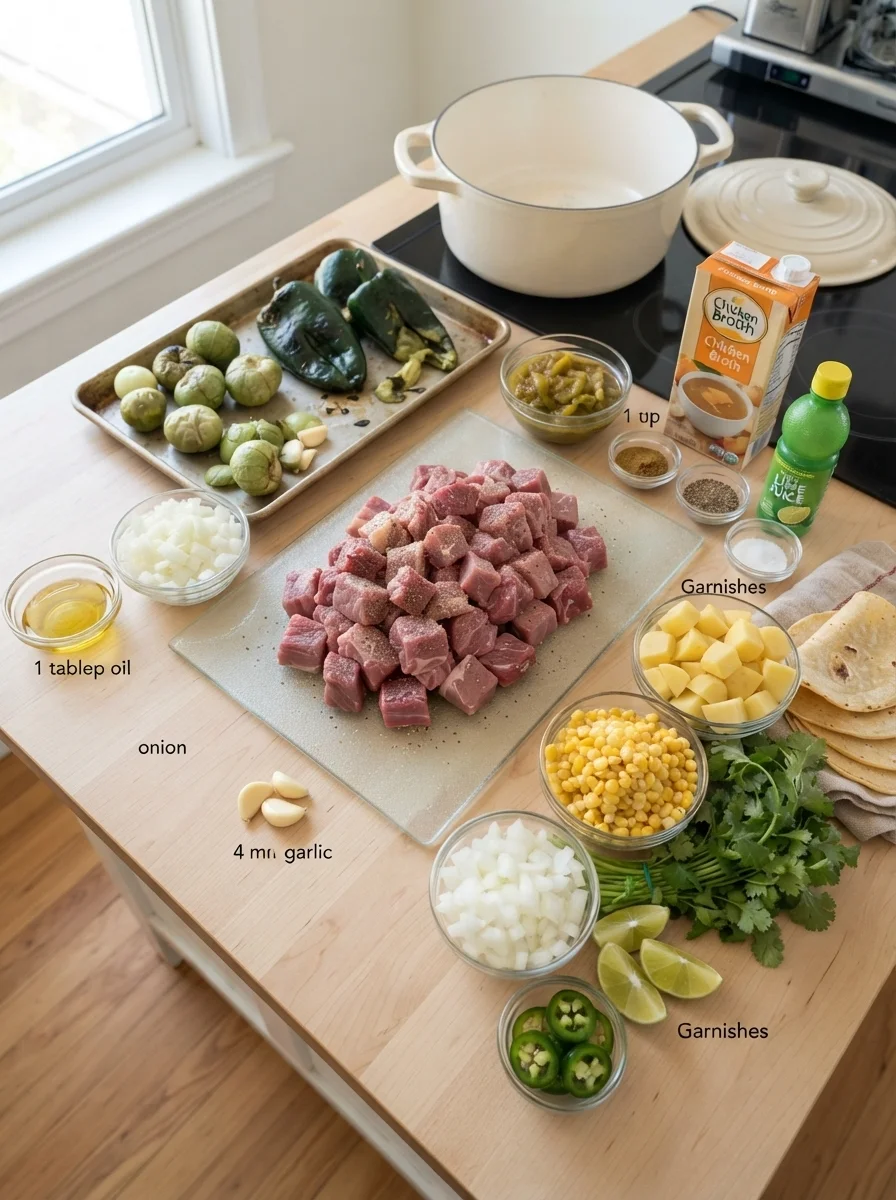
- 2 pounds boneless pork shoulder, cut into approximately 1-inch cubes
- 1 tablespoon olive oil, plus a little more only if the pot needs it
- 1 medium yellow onion, diced
- 4 garlic cloves, minced
- 2 poblano peppers
- 2–3 New Mexico green chiles, roasted, peeled, seeded as desired, and chopped
- 1 pound tomatillos, husked and rinsed
- 6 cups low-sodium chicken broth, plus more if needed
- 1 teaspoon ground cumin
- 1 teaspoon dried Mexican oregano
- ½ teaspoon ground coriander
- Up to 1 teaspoon fine salt, divided and adjusted to taste
- ½ teaspoon black pepper
- Up to 1 tablespoon fresh lime juice, optional and added to taste
Optional Vegetables
- 2 medium Yukon Gold potatoes, cut into approximately ¾-inch cubes
- 1 cup corn kernels, frozen or cooked, or canned and drained
For Serving
- ¼ cup chopped fresh cilantro
- ¼ cup finely diced white onion
- Lime wedges
- Thin jalapeño slices, optional
- Warm tortillas
The potatoes and corn are optional additions. The base recipe is a pork and roasted green chile broth, so leaving them out does not require replacing their volume with another ingredient.
Ingredient Notes
Pork Shoulder
Use boneless shoulder rather than tenderloin. Shoulder contains connective tissue that responds well to moist, extended cooking. Tenderloin and very lean loin cuts need a different approach and can become dry during a long simmer.
Trim thick exterior fat and any tough, obvious pieces, but leave some marbling. Cut the pork fairly evenly so one group of pieces is not ready far ahead of the rest.
The soup is ready when the pork gives easily under a fork. A safe minimum temperature is not the same thing as the tenderness needed for this cut; shoulder usually needs considerably more cooking than it takes simply to stop being raw.
Tomatillos
Remove the papery husks and rinse the sticky coating from the fruit. Choose firm tomatillos without mold or soft, damaged areas. Their color can range from lighter green to yellow-green, depending on ripeness.
Keep all the usable roasted juices. They contain flavor and form part of the broth. Lightly charred spots are welcome, but deeply blackened, bitter areas can overwhelm the soup.
New Mexico Green Chiles
The ingredient quantity refers to chiles that have been roasted and peeled before entering the soup. If starting with raw chiles, roast them alongside the poblanos, removing each pepper when ready rather than waiting for the entire tray to finish at once.
Pepper size varies substantially. Two or three medium chiles commonly provide roughly ½–¾ cup chopped, but this is only a practical guide. Start with less if using a hot batch and add more to taste during cooking.
Prepared frozen roasted New Mexico chiles are convenient; thaw them in the refrigerator. Canned roasted green chiles are another option, although their flavor and heat may differ. About ½ cup drained chopped chiles is a reasonable starting substitution, with more added to taste.
Poblanos
Poblanos are often relatively mild, but they are not guaranteed to be heat-free. Remove stems and seeds after roasting and steaming. Use gloves when handling chiles if your skin is sensitive.
The blending step uses half the roasted poblanos. Keep the New Mexico chiles separate so their quantity and heat are easy to control when building the pot.
Broth and Salt
Low-sodium broth gives more control as the liquid reduces. Begin with part of the measured salt on the pork, then adjust the finished broth after simmering.
Water can replace a little broth if the soup becomes too salty, but it will also dilute the flavor. Avoid reducing a salty broth aggressively in an attempt to thicken it.
Equipment
Use a 6-quart Dutch oven or a similarly sized heavy soup pot, a rimmed metal baking sheet suitable for the broiler, tongs, a heat-safe bowl with a cover, and a blender or food processor.
A slotted spoon helps remove pork for tenderness checks. An instant-read thermometer is useful for reheating leftovers, while a fork gives the most direct indication of whether the shoulder has softened enough to serve.
If blending warm tomatillos, follow the appliance’s hot-liquid instructions. Never seal hot ingredients inside a personal blender cup that is not designed for them. Let the ingredients cool as needed and work in small batches.
How to Make the Caldo
1. Roast the Tomatillos and Poblanos
Heat the broiler and position the rack according to your oven’s instructions. Arrange the rinsed tomatillos and poblanos on a rimmed metal sheet. If using raw New Mexico chiles, add them too, allowing space around the vegetables.
Broil for about 8–15 minutes, turning the peppers as their skins blister. Remove individual items as they finish. The tomatillos should soften and develop browned spots; the peppers should blister on several sides.
Oven strength and distance from the element vary, so watch the tray closely. The goal is roasted flavor, not a uniformly blackened tomatillo surface. Keep the juices on the sheet for the blender.
2. Steam, Peel, and Chop the Peppers
Transfer the peppers to a heat-safe bowl and cover for about 10 minutes. When cool enough to handle, rub off the loose skins, remove the stems, and discard seeds and membranes as desired.
Do not spend excessive time removing every last speck of skin. Remove the loose, papery charred portions, then chop the flesh. Keep the poblanos and New Mexico chiles in separate groups.
3. Prepare the Tomatillo Base
Place the roasted tomatillos and their juices in the blender with half the chopped poblanos. Blend or pulse until mostly smooth but still slightly textured.
If the appliance needs liquid, use a little of the measured broth. Do not add unmeasured water merely to make the base pour freely.
For a rustic alternative, finely chop the roasted tomatillos and add all the poblanos directly to the pot. The broth will be chunkier rather than blended, which is a serving preference rather than a failure.
4. Brown the Pork in Batches
Pat the pork dry. Season with about ½ teaspoon of the salt and the black pepper.
Heat the oil in the soup pot over medium-high heat. Brown the pork in two or three batches, allowing space between pieces. Cook about 5–7 minutes per batch, turning to color a few sides, then transfer to a plate.
You are building a browned surface, not cooking the pork through at this stage. If the pot looks dry, add a little more oil. If browned bits begin burning, lower the heat before continuing.
5. Cook the Aromatics
Reduce the heat to medium. Add the yellow onion and cook for about 4–5 minutes, stirring, until softened. Use a splash of the measured broth if needed to loosen stuck browned bits.
Stir in the garlic, cumin, Mexican oregano, and coriander. Cook for about 30 seconds until fragrant, keeping the garlic moving so it does not scorch.
6. Build the Broth
Return the pork and its collected juices to the pot. Add the blended tomatillo base, remaining chopped poblanos, roasted New Mexico chiles, and the rest of the measured broth.
Scrape the bottom to release browned bits. Bring just to a gentle boil, then lower the heat to maintain a quiet simmer. Cover partially so some steam can escape without reducing the liquid too quickly.
7. Simmer Until the Pork Is Nearly Tender
Simmer gently, stirring occasionally, for about 75–105 minutes before judging whether the pork is close to ready. Some batches need longer. Keep checking the liquid level and add broth or water as needed to maintain the soup’s consistency.
A fork should begin entering a piece easily, but the meat can still have a little resistance before the potatoes are added. If the pork remains firm or rubbery, continue simmering before starting the vegetable stage.
Do not add potatoes simply because the clock says 20 minutes remain. The pork determines the schedule; potatoes added too early may break down while you wait for the meat.
8. Add Optional Potatoes and Corn
When the pork is nearly tender, add the cubed potatoes if using. Simmer for about 20–30 minutes, or until the potatoes are fork-tender and the pork yields easily.
Acidic broth can slow potato softening, and larger cubes take longer. If the potatoes are taking much longer than expected, keep simmering gently rather than raising the soup to a hard boil. For more predictable timing, cook the potatoes separately in water until nearly tender, then finish them in the broth.
Add corn during the final 5–10 minutes, allowing it to heat through. If not using vegetables, simply continue cooking the pork until tender.
9. Adjust the Broth
Taste the caldo before adding more salt or lime. The tomatillos may already provide all the tartness you want.
If lime would improve it, add a teaspoon, stir, and taste again, using up to a tablespoon. If the broth is already sharp, leave out the lime and offer wedges at the table.
For a thicker texture, mash a few cooked potato pieces against the side of the pot. For a brothier bowl, add a little warm broth. More simmering can deepen the cooked flavor, but it does not guarantee that a very tart batch will lose its acidity.
10. Garnish and Serve
Ladle the caldo into bowls, distributing pork and vegetables evenly. Finish with cilantro, diced white onion, and optional jalapeño.
Serve tortillas alongside and keep extra lime separate. This lets each person adjust the finish without making the entire pot more acidic.
Tips for Tender Pork and a Balanced Broth
Keep the simmer gentle. Rapid boiling evaporates liquid quickly and can leave the pork with a less pleasant texture before its connective tissue has softened.
Brown in batches rather than crowding the pot. A crowded surface traps steam and gives less browning. You do not need to darken every side of every cube, but several browned surfaces add depth.
Use the pork’s texture to decide when vegetables go in. This is the most useful adjustment when shoulder takes longer than expected.
Taste the green chiles before committing to an especially hot batch. Start with less and add more during simmering if needed. Potatoes and tortillas can balance a serving, but they do not remove capsaicin from the pot.
Keep the lime optional. Tomatillos, lime wedges, and a generous lime addition can become too sharp together, especially if the broth has reduced.
Troubleshooting
| Problem | Likely reason | What to do |
|---|---|---|
| Pork is tough | Shoulder needs more simmering | Continue gently and check periodically before adding vegetables. |
| Potatoes are firm | Large cubes or acidic broth | Allow more time; next time par-cook them separately. |
| Broth is too tart | Tart tomatillos or too much lime | Omit additional lime and balance the serving with potatoes or tortillas. A tiny pinch of sugar may soften perception, but does not remove acidity. |
| Soup tastes bitter | Burned tomatillos, pepper skin, garlic, or spices | Avoid adding heavily scorched pieces; severe bitterness is difficult to fix. |
| Broth is too salty | Salty broth reduced during cooking | Add unsalted liquid modestly and reassess. |
| Caldo is too thin | More liquid than desired | Mash some cooked potatoes or simmer uncovered briefly if salt and acidity allow. |
| Surface is oily | Shoulder released fat | Skim gently; chilled leftovers are particularly easy to skim. |
| Chiles are too hot | Heat varied between peppers | Serve smaller portions with mild sides; use milder chiles next time. |
Variations
Brothy pork and chile caldo: Omit potatoes and corn. Keep the same pork cooking cues and adjust the liquid toward the end for the consistency you like.
Hearty potato version: Add the two potatoes once the pork is nearly tender. Mash a few pieces for a slightly thicker broth without adding flour or cream.
Corn finish: Add corn late so it retains its texture and sweetness. The sweetness can complement tart tomatillos, but this remains a savory soup.
Extra roasted chile flavor: Add a little more prepared New Mexico green chile after tasting the pot. Consider both heat and flavor rather than increasing the amount automatically.
Creamy serving: Add a small spoonful of sour cream to individual bowls rather than changing the entire pot. This creates a different finish and adds dairy and calories.
Pinto bean addition: For a heartier variation, add a drained can of cooked pinto beans near the end and heat through. This changes the yield and nutrition, so portion accordingly.
Serving Suggestions
Warm corn or flour tortillas are useful for scooping tender pork and soaking up broth. A simple cabbage slaw offers crunch alongside the soft meat.
For a garnish tray, offer cilantro, diced white onion, lime wedges, and sliced jalapeños in separate bowls. Guests can choose more freshness or heat without changing the whole batch.
The potato version is substantial on its own. For the lighter broth-only version, rice or beans can be served alongside. Keep toppings modest at first so you can enjoy the roasted chile flavor before adding extras.
Make-Ahead Options
Roast, peel, and chop the peppers the day before cooking, then refrigerate in covered containers. The tomatillo base can also be blended ahead and refrigerated promptly.
Cooked caldo is convenient for next-day meals because the flavors have time to mingle. Cool it safely in shallow containers rather than leaving a large pot on the counter until cold.
If you plan to freeze much of the batch, consider leaving potatoes out of that portion. Frozen and thawed potatoes can become softer or slightly grainy. Add freshly cooked potatoes when reheating if you prefer a firmer texture.
Keep fresh garnishes and tortillas separate until serving. Cilantro and raw onion lose their fresh character when repeatedly heated with the broth.
Storage and Reheating
Refrigerate leftovers within 2 hours, or within 1 hour when temperatures exceed 90°F. Divide the soup into shallow containers to help it cool efficiently. Keep at 40°F or below and use within 3–4 days.
Freeze in meal-size airtight containers for up to 3 months for best quality. Leave expansion space and label with the preparation date. Thaw in the refrigerator before reheating.
Reheat on the stove over medium-low heat, stirring and bringing all portions to 165°F. Add a splash of broth or water if it has thickened. For microwave reheating, use a covered microwave-safe bowl, stir partway through, and check multiple spots.
Do not rely on a slow cooker’s warm setting to reheat cold leftovers. Reheat thoroughly first, then transfer to suitable hot-holding equipment if needed. Add fresh cilantro, onion, and lime after reheating.
Nutrition Notes
For six portions, a broad estimate is approximately 330–430 calories per serving without potatoes, corn, tortillas, or other toppings. Adding the stated potatoes and corn may contribute roughly another 70–100 calories per serving, depending on their size.
Pork shoulder varies substantially in fat content, and trimming and skimming affect what remains in the dish. These figures are illustrative estimates rather than a calculated nutrition label.
The brothier version contains fewer carbohydrates than the potato-and-corn variation, but it is not carbohydrate-free. Verify broth, seasonings, and accompaniments if you need a gluten-free meal.
Frequently Asked Questions
Can I use pork loin instead of shoulder?
It is not a direct substitution for the same long simmer. Loin is leaner and may dry out before the recipe’s shoulder timing is complete. Shoulder is the preferred cut for this method.
Are tomatillos the same as green tomatoes?
No. Tomatillos have papery husks and a different flavor and texture. Green tomatoes will not produce an identical broth and are not treated as an equivalent substitution here.
Do I have to peel the tomatillos after roasting?
No. Remove their papery husks before roasting, but keep the fruit’s skin and usable juices. The peppers, rather than the tomatillos, are steamed and peeled after roasting.
Can I use jarred salsa verde?
Jarred salsa varies in acidity, salt, heat, and ingredients. It can be useful in a different shortcut soup, but replacing the pound of tomatillos with an arbitrary amount will change this formula substantially.
Can I use canned green chiles?
Yes, as a convenience variation. Begin with about ½ cup drained chopped roasted green chiles and adjust to taste. The flavor may be milder or different from freshly roasted New Mexico chiles.
Why are the potatoes taking longer than expected?
The tangy broth can slow softening, especially with large chunks. Cut evenly and allow time, or cook potatoes separately until nearly tender before adding them to the soup.
Can I make it in a slow cooker?
The stovetop method is the specified recipe. A slow cooker requires different timing and liquid management, so the stovetop schedule should not be transferred directly. Brown the meat and roast the vegetables first if developing a separate slow-cooker version.
Does longer cooking always make it less sour?
No. Roasting and simmering change the flavor, but reduction can concentrate acidity. Taste before adding lime and avoid assuming an extra hour will correct an overly tart broth.
Recipe Card
New Mexico Green Chile Pork & Roasted Tomatillo Caldo
Tender pork shoulder in a roasted tomatillo and green chile broth, with optional potatoes and corn.
Servings: 6
Prep and roasting: 25–35 minutes
Browning and broth preparation: About 20 minutes
Simmer: About 1½–2¼ hours, or until tender
Total: About 2¼–3 hours with some overlap
Ingredients
- 2 pounds boneless pork shoulder, in 1-inch cubes
- 1 tablespoon olive oil, plus more only if needed
- 1 medium yellow onion, diced
- 4 garlic cloves, minced
- 2 poblano peppers
- 2–3 roasted, peeled New Mexico green chiles, chopped
- 1 pound tomatillos, husked and rinsed
- 6 cups low-sodium chicken broth, plus more as needed
- 1 teaspoon cumin
- 1 teaspoon dried Mexican oregano
- ½ teaspoon ground coriander
- Up to 1 teaspoon fine salt, divided, to taste
- ½ teaspoon black pepper
- Up to 1 tablespoon lime juice, optional, to taste
- 2 medium Yukon Gold potatoes, cubed, optional
- 1 cup corn kernels, optional
- Cilantro, diced white onion, lime wedges, optional jalapeño, and tortillas, for serving
Instructions
- Broil tomatillos and poblanos on a suitable rimmed metal sheet for about 8–15 minutes, turning peppers and removing vegetables as they finish. Roast raw New Mexico chiles too, if needed. Keep tomatillo juices.
- Steam peppers in a covered bowl for 10 minutes. Peel, stem, seed as desired, and chop. Keep New Mexico chiles separate.
- Blend roasted tomatillos and their juices with half the poblanos. Follow blender instructions for warm ingredients and use a little measured broth if necessary.
- Pat pork dry and season with about half the salt and the pepper. Brown in oil in batches, about 5–7 minutes per batch. Transfer to a plate.
- Sauté onion in the pot for 4–5 minutes. Add garlic, cumin, oregano, and coriander for 30 seconds.
- Return pork and juices. Add tomatillo base, remaining poblanos, New Mexico chiles, and broth. Bring just to a boil, then simmer gently, partially covered.
- Cook about 75–105 minutes before checking for near-tender pork; continue longer if firm. Add broth as needed.
- When pork is nearly tender, add optional potatoes and simmer about 20–30 minutes, allowing longer if needed. Add corn in the final 5–10 minutes. Pork should yield easily to a fork.
- Taste and adjust salt. Add lime only if the broth needs it, starting with a teaspoon. Serve with fresh garnishes and tortillas.
Storage: Refrigerate promptly in shallow containers for 3–4 days. Freeze up to 3 months for best quality. Reheat leftovers to 165°F.
Nutrition: Roughly 330–430 calories per serving before optional vegetables and accompaniments; ingredients and trimming vary.
Timing note: Tenderness determines the pork’s cooking time. Add potatoes late so they do not disintegrate while the meat finishes.
Print
New Mexico Green Chile Pork & Roasted Tomatillo Caldo
Description
Tender pork shoulder in a roasted tomatillo and green chile broth, with optional potatoes and corn.
Servings: 6
Prep and roasting: 25–35 minutes
Browning and broth preparation: About 20 minutes
Simmer: About 1½–2¼ hours, or until tender
Total: About 2¼–3 hours with some overlap
Ingredients
- 2 pounds boneless pork shoulder, in 1-inch cubes
- 1 tablespoon olive oil, plus more only if needed
- 1 medium yellow onion, diced
- 4 garlic cloves, minced
- 2 poblano peppers
- 2–3 roasted, peeled New Mexico green chiles, chopped
- 1 pound tomatillos, husked and rinsed
- 6 cups low-sodium chicken broth, plus more as needed
- 1 teaspoon cumin
- 1 teaspoon dried Mexican oregano
- ½ teaspoon ground coriander
- Up to 1 teaspoon fine salt, divided, to taste
- ½ teaspoon black pepper
- Up to 1 tablespoon lime juice, optional, to taste
- 2 medium Yukon Gold potatoes, cubed, optional
- 1 cup corn kernels, optional
- Cilantro, diced white onion, lime wedges, optional jalapeño, and tortillas, for serving
Instructions
- Broil tomatillos and poblanos on a suitable rimmed metal sheet for about 8–15 minutes, turning peppers and removing vegetables as they finish. Roast raw New Mexico chiles too, if needed. Keep tomatillo juices.
- Steam peppers in a covered bowl for 10 minutes. Peel, stem, seed as desired, and chop. Keep New Mexico chiles separate.
- Blend roasted tomatillos and their juices with half the poblanos. Follow blender instructions for warm ingredients and use a little measured broth if necessary.
- Pat pork dry and season with about half the salt and the pepper. Brown in oil in batches, about 5–7 minutes per batch. Transfer to a plate.
- Sauté onion in the pot for 4–5 minutes. Add garlic, cumin, oregano, and coriander for 30 seconds.
- Return pork and juices. Add tomatillo base, remaining poblanos, New Mexico chiles, and broth. Bring just to a boil, then simmer gently, partially covered.
- Cook about 75–105 minutes before checking for near-tender pork; continue longer if firm. Add broth as needed.
- When pork is nearly tender, add optional potatoes and simmer about 20–30 minutes, allowing longer if needed. Add corn in the final 5–10 minutes. Pork should yield easily to a fork.
- Taste and adjust salt. Add lime only if the broth needs it, starting with a teaspoon. Serve with fresh garnishes and tortillas.
Storage: Refrigerate promptly in shallow containers for 3–4 days. Freeze up to 3 months for best quality. Reheat leftovers to 165°F.
Nutrition: Roughly 330–430 calories per serving before optional vegetables and accompaniments; ingredients and trimming vary.
Timing note: Tenderness determines the pork’s cooking time. Add potatoes late so they do not disintegrate while the meat finishes.