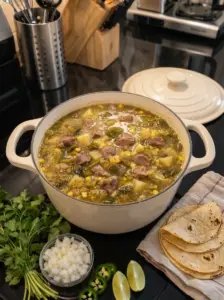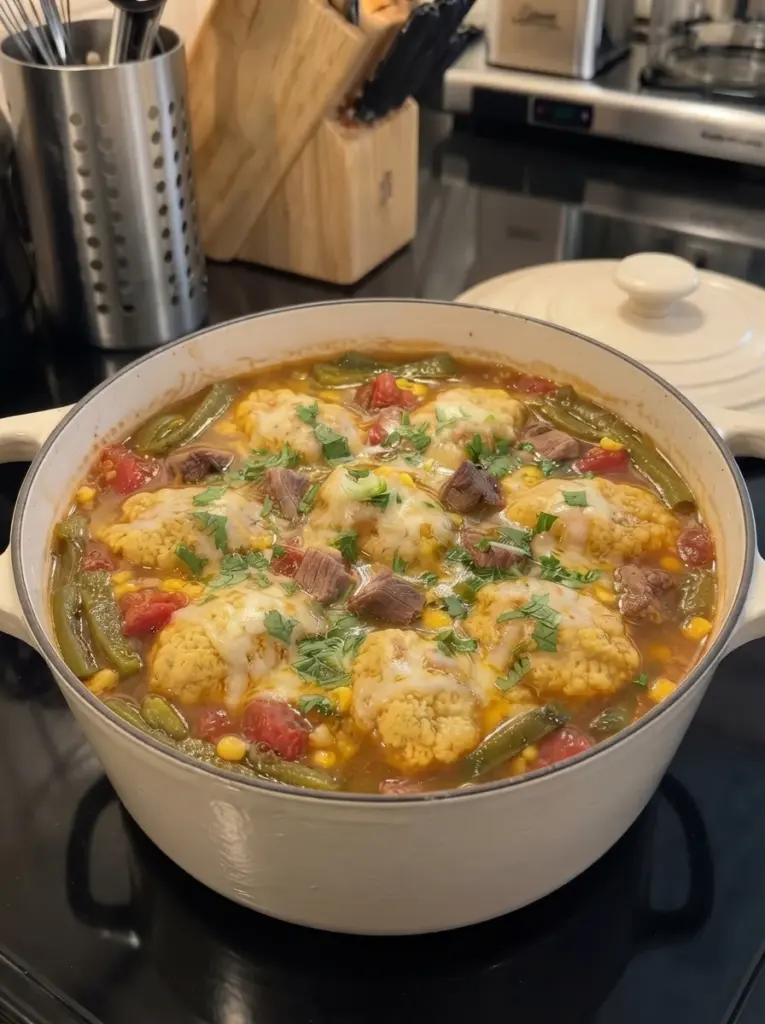
Chile Relleno Pork & Green Chile Tamale Soup brings together tender pork shoulder, roasted poblanos, green chiles, and small cheese-filled masa dumplings in a savory tomato broth. Sweet corn adds texture, while Monterey Jack melts into each bowl for a creamy, chile relleno-inspired finish.
The masa dumplings give this soup its tamale-inspired character. They are shaped from masa harina, butter, cheese, and warm broth, then gently simmered until their centers are set. They are not wrapped or steamed tamales, so expect a compact, tender corn dumpling rather than a fluffy piece of tamale dough.
This is a weekend-style soup with a straightforward rhythm: roast the peppers, brown the pork, simmer until tender, and add the dumplings near the end. Most of the cooking time is hands-off, but the final stage needs gentle heat and minimal stirring so the dumplings keep their shape.
Serve the cheese in individual bowls for an easy finish that avoids stirring a large amount of melted cheese through delicate dumplings. Optional cream can enrich the broth, but the soup is flavorful without it.
Recipe Overview
- Yield: About 6 generous servings or 8 smaller servings
- Dumplings: Approximately 20–24 small dumplings, depending on size
- Active preparation: About 35–45 minutes, partly overlapping with simmering
- Pork simmering: Usually 1½–2 hours, sometimes longer
- Dumpling cooking: About 15–25 minutes
- Total: Plan on about 2½–3 hours, allowing extra time if the pork remains firm
The supplied recipe is expanded here with more flexible timing and a test-dumpling step. It has not been independently kitchen-tested for this article. Masa brands, dumpling size, pork tenderness, and pot width can change the cooking time and final yield.
What to Expect
The broth is savory and gently tangy from the tomatoes, with roasted pepper flavor rather than a heavy cream base. Pork shoulder becomes tender through slow cooking, and corn gives small bursts of sweetness.
The dumplings are moist, slightly dense, and corn-forward. They should hold together when lifted with a spoon and have no dry or powdery center. Cheese inside the dough adds flavor but does not guarantee a dramatic cheese pull.
The name refers to chile relleno and tamale-inspired flavors. This soup does not contain traditional egg-battered stuffed peppers or individually wrapped tamales, and it is best described as a Southwestern-inspired home recipe rather than a claim of regional authenticity.
Ingredients
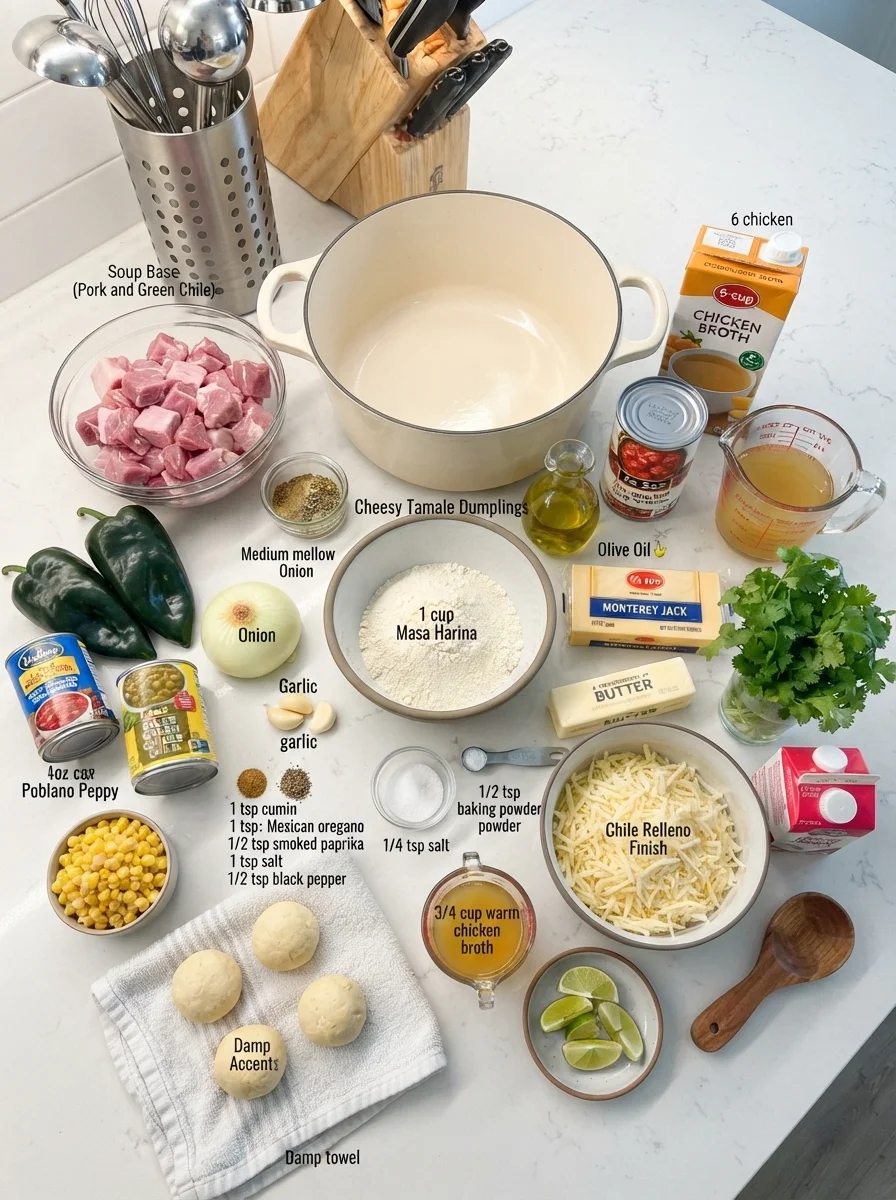
Pork and Green Chile Soup
- 1½ pounds boneless pork shoulder, cut into approximately ¾–1-inch cubes
- 2 poblano peppers
- 1 can diced green chiles, 4 ounces
- 1 medium yellow onion, diced
- 3 garlic cloves, minced
- 1 can fire-roasted diced tomatoes, 14.5 ounces, drained slightly
- 6 cups low-sodium chicken broth, plus more if needed
- 1 cup fresh or frozen corn kernels
- 1 teaspoon ground cumin
- 1 teaspoon dried Mexican oregano
- ½ teaspoon smoked paprika
- Up to 1 teaspoon fine salt, divided and adjusted to taste
- ½ teaspoon black pepper
- 1 tablespoon olive oil, plus a little more if needed for browning
Cheesy Masa Dumplings
- 1 cup masa harina, spooned and leveled
- ½ cup finely shredded Monterey Jack cheese
- 2 tablespoons softened unsalted butter
- ½ teaspoon baking powder
- ¼ teaspoon fine salt
- ½–¾ cup warm chicken broth or water, plus a little more only if needed
Cheese Finish and Garnishes
- 1 cup shredded Monterey Jack or Oaxaca cheese, divided among serving bowls
- ½ cup heavy cream, optional
- 2 tablespoons chopped fresh cilantro
- Lime wedges, for serving
The dumpling liquid is separate from the 6 cups used in the soup. Keep extra broth available because the soup reduces during the pork stage and the dumplings absorb some liquid.
Ingredient Notes
Pork Shoulder
Shoulder is suited to this long, moist cooking method. Trim large exterior fat deposits and cut the meat evenly, but leave some marbling for a tender result.
Pork loin and tenderloin do not behave the same way and can dry out during a long simmer. Use shoulder for the method described here.
Do not use the clock alone to decide whether it is ready. A fork should enter easily and the pieces should yield without a rubbery resistance before the dumplings go in. Once dumplings are cooking, you cannot conveniently extend the pork stage by another hour.
Poblanos and Green Chiles
Poblanos add a roasted, earthy flavor. Their heat varies, so removing the pale inner membranes helps reduce heat but does not guarantee a completely mild soup.
Choose mild or hot canned green chiles according to your preference. Roasted New Mexico green chiles can replace the canned chiles in a similar chopped amount, but heat and flavor will differ between batches.
Masa Harina
Use masa harina intended for making tortillas or tamales. It is not interchangeable with ordinary cornmeal, cornstarch, or precooked corn flour intended for other preparations.
Masa absorbs liquid gradually, and brands differ. Begin with the lower amount of warm liquid, let the dough rest, and then adjust. A soft dough that holds together is more useful than a fixed liquid amount.
The raw dough must be cooked before tasting. The test-dumpling step is for checking cooked structure and doneness, not for sampling raw masa.
Cheese
Finely shred the cheese for the dumplings so it distributes evenly through the dough. Large chunks can create weak spots or pockets that make shaping more difficult.
Monterey Jack is easy to portion and gives a mild flavor. Oaxaca cheese works particularly well as a melted topping, although it can form longer strands in the bowl. Freshly shredded cheese generally melts more smoothly than heavily coated pre-shredded cheese.
Optional Cream
Cream gives a richer broth but is not required for the masa dumplings to cook. Add it only after the dumplings are done, over low heat, with minimal movement of the pot.
A tomato-based broth and dairy can separate under harsh boiling. Keep the finish gentle, or add a small spoonful of cream to individual bowls if you prefer more control.
Equipment
Use a 6-quart heavy soup pot or Dutch oven with a lid, a broiler-safe rimmed metal sheet, tongs, a heat-safe covered bowl, and a small mixing bowl for the masa.
A wide pot gives the dumplings more room at the surface. If your pot is narrow and crowded, cook the dumplings in a separate saucepan of gently simmering broth instead of forcing them into a tight layer.
A slotted spoon or small ladle helps lift dumplings without breaking them. Use an instant-read thermometer for reheated leftovers, and cut a dumpling open to check its center rather than relying on floating alone.
How to Make the Soup
1. Roast and Peel the Poblanos
Heat the broiler and arrange the peppers on a suitable rimmed metal baking sheet. Broil for about 8–15 minutes, turning as the skins blister. Oven intensity and distance from the element affect the time, so watch closely.
Transfer the peppers to a covered heat-safe bowl and let them steam for about 10 minutes. When cool enough to handle, remove the loose skins, stems, seeds, and membranes as desired. Chop the pepper flesh.
Use gloves if needed, and avoid rubbing your eyes after handling peppers. Lightly charred skins provide roasted aroma, but heavily burned material can taste bitter.
2. Brown the Pork
Pat the pork dry and season with about half the salt and the black pepper. Heat the oil in the soup pot over medium-high heat.
Brown the pork in batches for about 5–7 minutes per batch, turning to color several sides. Leave space between pieces so they brown rather than steam. Transfer each batch to a plate.
The meat is not expected to be cooked through yet. If the browned residue starts turning black, lower the heat and add a small splash of measured broth before it burns.
3. Sauté the Aromatics
Reduce the heat to medium. Add the onion and cook for about 4–5 minutes until softened, stirring to loosen browned bits.
Add the garlic, cumin, oregano, and smoked paprika. Stir for about 30 seconds, just until fragrant. Do not let the garlic sit against a dry, very hot surface.
4. Build the Soup Base
Return the pork and collected juices to the pot. Add the roasted poblanos, canned green chiles, tomatoes, and 6 cups broth.
Bring just to a boil, then reduce to a gentle simmer. Cover partially and cook, stirring occasionally, until the pork is tender. Begin checking around 75 minutes, but allow 1½–2 hours or longer as needed.
Keep enough liquid in the pot for a brothy soup. Add warm broth or water if reduction is excessive, then reassess seasoning near the end.
5. Make the Dumpling Dough Near the End of Simmering
When the pork is approaching tenderness, stir together masa harina, baking powder, and salt in a bowl. Rub in the softened butter with a fork or clean fingertips until evenly dispersed, then mix in the finely shredded cheese.
Add ½ cup warm broth or water and mix. Cover and rest for about 10 minutes so the masa hydrates.
Press a little dough between your fingers. It should hold together without crumbling and feel soft enough to shape. Add more liquid one tablespoon at a time if the edges crack badly. If it is sticky and slack, let it rest a few more minutes before adding a small amount of masa harina.
Keep the dough covered so its surface does not dry out.
6. Shape Small, Even Dumplings
With lightly dampened hands, roll the dough into balls about ¾–1 inch across. Aim for approximately 20–24, but size and dough hydration will affect the count.
Smaller dumplings are easier to cook through. Do not make them much larger simply to finish shaping faster.
For a traditional masa-dumpling-inspired shape, you can press a shallow indentation into the center with a fingertip. This reduces the thickness of the center and gives broth a place to collect. Keep the dough thick enough that it does not tear.
7. Test One Dumpling
Before adding the full batch, lower one dumpling into gently simmering broth. Cook until it holds together and the center is evenly moist and set, checking by cutting it open. A small dumpling may take about 15–20 minutes, but use the interior as the guide.
If it breaks apart, reassess the dough before adding the others. Crumbly dough may need a little more liquid and resting time; sticky, weak dough may need a small amount of masa. Also check that the broth is not boiling hard.
If you want to keep this check from extending the soup’s cooking time, test the dumpling in a small separate saucepan of broth while the pork finishes. Do not return a partially eaten test piece to the pot.
8. Add Corn and Cook the Dumplings
Once the pork is tender, add the corn and bring the soup back to a gentle simmer. Taste and adjust salt before the dumplings make stirring more difficult.
Lower the dumplings into open areas of broth, spacing them as evenly as possible. Cover and maintain a quiet simmer for about 15–25 minutes. Avoid stirring through the pot; gently shake the pot or nudge a dumpling only if necessary.
Cut open one of the larger dumplings. The center should be uniformly hydrated and set, with no dry floury core. Floating is not a reliable doneness test on its own.
If the pot is crowded or the dumplings are fragile, cook them separately in broth and add them to serving bowls. This is also a useful option for make-ahead meals.
9. Add Optional Cream Gently
Reduce the heat to low. If using cream, warm it slightly with a few spoonfuls of hot broth, then pour it slowly around the pot’s edges. Gently move the broth with a ladle rather than vigorously stirring through the dumplings.
Heat until hot, without a hard boil. If you prefer, leave the cream out of the main pot and add a little to each serving.
10. Finish with Cheese in the Bowls
Divide the finishing cheese among six to eight bowls. Ladle hot soup and dumplings over it, then allow a moment for the cheese to soften and melt.
This gives a cheesy finish without requiring the entire cup of cheese to be stirred through the soup. It also helps avoid clumps or long strands collecting around the dumplings in the pot.
Add cilantro and offer lime wedges separately. Start with a small squeeze because tomatoes already provide some acidity.
Dumpling Success Tips
Rest the dough before deciding whether it needs more liquid. Freshly mixed masa can feel wetter than it does after hydration, so immediate flour additions may make the final dumplings dry.
Keep the pieces small and consistent. A larger ball can look cooked on the surface while retaining a dry center.
Cook gently. Vigorous bubbling can knock dumplings against one another and loosen their surfaces, especially before they have set.
Give them room. A very full pot is harder to manage without stirring, and dumplings can absorb enough broth to make the soup thicker than expected. Keep extra broth available.
Check the center. The desired texture is moist and cohesive, not airy like a biscuit. Adding more baking powder is not a dependable way to turn masa dumplings into fluffy wheat dumplings.
Troubleshooting
| Problem | Likely cause | Adjustment |
|---|---|---|
| Pork is tough | Shoulder needs longer simmering | Continue the pork stage before adding dumplings. |
| Dough cracks while rolling | Too little moisture or insufficient rest | Add liquid gradually and let it hydrate. |
| Dough is sticky and slumps | Excess liquid | Rest, then add a small amount of masa if needed. |
| Dumplings break apart | Hard boiling, weak dough, or excessive stirring | Use a quiet simmer and test one before the full batch. |
| Center is dry or powdery | Dumplings are too large or need more cooking | Continue gently and check a cut dumpling. |
| Soup becomes too thick | Dumplings absorbed broth or liquid reduced | Add hot broth a little at a time. |
| Cheese forms clumps | Too much stirred in at once or excessive heat | Melt finishing cheese in individual bowls. |
| Broth tastes too salty | Broth reduced or cheese added salt | Season late and use low-sodium broth. |
Flavor Variations
More green chile: Add extra roasted chopped green chiles during the pork simmer, tasting for heat. Heat varies, so use a smaller amount of hot chiles than mild ones.
Milder soup: Choose mild canned green chiles and remove poblano membranes. Poblanos can still have heat, so this reduces rather than guarantees its absence.
Without cream: Omit it and keep the cheesy bowl finish. The broth will be lighter while still carrying the pork, chile, and masa flavors.
Brothier version: Cook dumplings separately and add them to bowls. This helps control how much starch and liquid absorption changes the main pot.
Pinto bean addition: Add a drained can of cooked pinto beans near the end of the pork stage and warm through before the dumplings. This increases the yield and changes nutrition.
Extra toppings: Offer diced avocado, a spoonful of sour cream, or sliced green onions. These are optional additions, not required ingredients in the base recipe.
What to Serve Alongside
A crisp green salad or cabbage slaw contrasts well with the tender pork and masa. Warm tortillas are optional because the soup already contains a substantial corn-based component.
For a topping tray, set out cilantro, lime wedges, and extra green chiles in separate bowls. Let guests control their own heat rather than making the whole pot hotter at the end.
Serve a few dumplings in each bowl and distribute the pork evenly. For eight smaller servings, about two or three dumplings per person is a useful starting point, depending on the actual count.
Make-Ahead Options
The pork base is the best part to prepare ahead. Cook it without dumplings, cream, or finishing cheese, then refrigerate promptly in shallow containers. The next day, reheat the base to 165°F and bring to a gentle simmer before adding freshly prepared dumplings.
Roasted peppers can also be prepared a day ahead and refrigerated in a covered container. Keep them chilled until they go into the pot.
For the most dependable dumpling texture, mix and shape them close to cooking time. Dough held in the refrigerator may firm up and need a little extra liquid or gentle reshaping. Do not assume a long hold will improve it.
If you expect leftovers, cook dumplings separately and store them apart from the broth. They will still soften somewhat, but keeping them separate limits further absorption.
Storage and Reheating
Refrigerate leftovers within 2 hours of cooking, or within 1 hour when the temperature exceeds 90°F. Divide into shallow containers so the soup can cool efficiently rather than leaving a large pot out until completely cold.
Keep at 40°F or below and use within 3–4 days. Store fresh garnishes separately. If possible, separate dumplings from the liquid before refrigeration using a clean slotted spoon.
Reheat gently on the stovetop, adding broth as needed. Use minimal stirring and check that the soup, pork, and dumpling centers reach 165°F. A hot surface or steaming liquid does not necessarily mean a cold dumpling center has warmed through.
For microwave reheating, use a covered microwave-safe bowl, rotate or stir the liquid carefully, and check more than one location. Add fresh cheese and cilantro after heating.
Freeze the pork base for up to 3 months for best quality, leaving room for expansion. Thaw in the refrigerator and prepare fresh dumplings when serving. Freezing assembled soup can make the dumplings softer or grainier and may change the cream’s texture.
Nutrition Estimate
At six servings, a broad estimate is approximately 390–480 calories and 27–34 grams of protein per serving without optional cream. Dividing ½ cup heavy cream across six bowls adds roughly 65–70 calories per serving. Eight smaller servings contain proportionally less.
These figures are illustrative rather than a calculated nutrition label. Pork fat content, trimming, cheese amounts, masa brand, and serving size affect the result. Tortillas and additional toppings are extra.
The recipe contains milk ingredients. It can be made with gluten-free masa harina and other suitable ingredients, but check broth, baking powder, chiles, and seasonings rather than assuming every packaged product is gluten-free.
Frequently Asked Questions
Is this made with actual tamales?
No. It uses small masa dumplings inspired by tamale flavors. Wrapped steamed tamales have a different preparation and texture.
Can I use cornmeal instead of masa harina?
Not as a direct substitution. Masa harina absorbs liquid and forms dough differently. Ordinary cornmeal may produce a gritty mixture that does not hold together as intended.
Can I use prepared tamales instead?
That would be a different shortcut variation. Heat prepared tamales according to their directions, then add cut portions to individual bowls rather than simmering them vigorously in the pot.
Why do I need to test a dumpling?
Masa brands and measuring methods vary. Testing one lets you adjust hydration and heat before risking the entire batch.
Do the dumplings float when done?
They may, but floating alone is not dependable. Cut one open and check for an evenly hydrated, cooked center.
Can I add cheese directly to the pot?
You can melt small amounts over low heat, but stirring can break dumplings and cheese may become stringy. Adding the finishing cheese to bowls is the simpler method here.
Can I substitute pork tenderloin?
Not with the same long cooking schedule. Shoulder is chosen for slow simmering. Lean tenderloin needs a different method to avoid drying out.
Can I double the recipe?
Use a larger suitable pot or two pots, and consider cooking dumplings separately. A crowded surface makes them difficult to cook without sticking or breaking.
Recipe Card
Chile Relleno Pork & Green Chile Tamale Soup
Roasted poblano and pork soup with small cheesy masa dumplings and a melted cheese finish.
Servings: 6 generous or 8 smaller
Prep: 35–45 minutes, partly overlapping
Pork simmer: About 1½–2 hours or longer until tender
Dumplings: 15–25 minutes
Total: Plan on about 2½–3 hours
Ingredients
Soup
- 1½ pounds boneless pork shoulder, cubed
- 2 poblano peppers
- 1 can diced green chiles, 4 ounces
- 1 medium onion, diced
- 3 garlic cloves, minced
- 1 can fire-roasted diced tomatoes, 14.5 ounces, slightly drained
- 6 cups low-sodium chicken broth, plus more as needed
- 1 cup corn kernels
- 1 teaspoon cumin
- 1 teaspoon dried Mexican oregano
- ½ teaspoon smoked paprika
- Up to 1 teaspoon fine salt, divided, to taste
- ½ teaspoon black pepper
- 1 tablespoon olive oil, plus more only if needed
Dumplings
- 1 cup masa harina, spooned and leveled
- ½ cup finely shredded Monterey Jack
- 2 tablespoons softened unsalted butter
- ½ teaspoon baking powder
- ¼ teaspoon salt
- ½–¾ cup warm broth or water, plus a little more if needed
Finish
- 1 cup shredded Monterey Jack or Oaxaca cheese
- ½ cup heavy cream, optional
- 2 tablespoons chopped cilantro
- Lime wedges
Instructions
- Broil poblanos until blistered, about 8–15 minutes, turning as needed. Steam covered for 10 minutes, then peel, stem, seed as desired, and chop.
- Pat pork dry and season with part of the salt and the pepper. Brown in oil in batches, about 5–7 minutes per batch. Remove to a plate.
- Sauté onion for 4–5 minutes. Add garlic, cumin, oregano, and paprika for 30 seconds.
- Return pork and juices. Add poblanos, green chiles, tomatoes, and 6 cups broth. Simmer gently, partially covered, until pork is tender, usually 1½–2 hours or longer. Add liquid as needed.
- Near the end, mix masa, baking powder, and salt. Rub in butter and add finely shredded cheese. Mix in ½ cup warm liquid. Rest covered for 10 minutes, then add liquid gradually until soft and shapeable.
- Shape approximately 20–24 small ¾–1-inch dumplings. Test one in gently simmering broth and adjust dough if it breaks apart.
- Once pork is tender, add corn. Lower dumplings into gently simmering soup, cover, and cook about 15–25 minutes without vigorous stirring. Cut one open to verify a set, moist center with no dry core. Cook separately in broth if the pot is crowded.
- Over low heat, gently add optional cream without boiling hard.
- Divide finishing cheese among bowls and ladle hot soup over it. Garnish with cilantro and offer lime separately.
Storage: Refrigerate promptly for 3–4 days. Reheat all components to 165°F. Freeze the base without dumplings and dairy for up to 3 months for best quality.
Estimated nutrition: About 390–480 calories per serving at six servings without cream; optional cream adds roughly 65–70 calories per serving. Ingredients and portions vary.
Texture note: Masa dumplings are compact and tender, not fluffy biscuits. Gentle simmering and a test dumpling help manage differences between brands.
Print
Chile Relleno Pork & Green Chile Tamale Soup
Description
Roasted poblano and pork soup with small cheesy masa dumplings and a melted cheese finish.
Servings: 6 generous or 8 smaller
Prep: 35–45 minutes, partly overlapping
Pork simmer: About 1½–2 hours or longer until tender
Dumplings: 15–25 minutes
Total: Plan on about 2½–3 hours
Ingredients
Soup
- 1½ pounds boneless pork shoulder, cubed
- 2 poblano peppers
- 1 can diced green chiles, 4 ounces
- 1 medium onion, diced
- 3 garlic cloves, minced
- 1 can fire-roasted diced tomatoes, 14.5 ounces, slightly drained
- 6 cups low-sodium chicken broth, plus more as needed
- 1 cup corn kernels
- 1 teaspoon cumin
- 1 teaspoon dried Mexican oregano
- ½ teaspoon smoked paprika
- Up to 1 teaspoon fine salt, divided, to taste
- ½ teaspoon black pepper
- 1 tablespoon olive oil, plus more only if needed
Dumplings
- 1 cup masa harina, spooned and leveled
- ½ cup finely shredded Monterey Jack
- 2 tablespoons softened unsalted butter
- ½ teaspoon baking powder
- ¼ teaspoon salt
- ½–¾ cup warm broth or water, plus a little more if needed
Finish
- 1 cup shredded Monterey Jack or Oaxaca cheese
- ½ cup heavy cream, optional
- 2 tablespoons chopped cilantro
- Lime wedges
Instructions
- Broil poblanos until blistered, about 8–15 minutes, turning as needed. Steam covered for 10 minutes, then peel, stem, seed as desired, and chop.
- Pat pork dry and season with part of the salt and the pepper. Brown in oil in batches, about 5–7 minutes per batch. Remove to a plate.
- Sauté onion for 4–5 minutes. Add garlic, cumin, oregano, and paprika for 30 seconds.
- Return pork and juices. Add poblanos, green chiles, tomatoes, and 6 cups broth. Simmer gently, partially covered, until pork is tender, usually 1½–2 hours or longer. Add liquid as needed.
- Near the end, mix masa, baking powder, and salt. Rub in butter and add finely shredded cheese. Mix in ½ cup warm liquid. Rest covered for 10 minutes, then add liquid gradually until soft and shapeable.
- Shape approximately 20–24 small ¾–1-inch dumplings. Test one in gently simmering broth and adjust dough if it breaks apart.
- Once pork is tender, add corn. Lower dumplings into gently simmering soup, cover, and cook about 15–25 minutes without vigorous stirring. Cut one open to verify a set, moist center with no dry core. Cook separately in broth if the pot is crowded.
- Over low heat, gently add optional cream without boiling hard.
- Divide finishing cheese among bowls and ladle hot soup over it. Garnish with cilantro and offer lime separately.
Storage: Refrigerate promptly for 3–4 days. Reheat all components to 165°F. Freeze the base without dumplings and dairy for up to 3 months for best quality.
Estimated nutrition: About 390–480 calories per serving at six servings without cream; optional cream adds roughly 65–70 calories per serving. Ingredients and portions vary.
Texture note: Masa dumplings are compact and tender, not fluffy biscuits. Gentle simmering and a test dumpling help manage differences between brands.