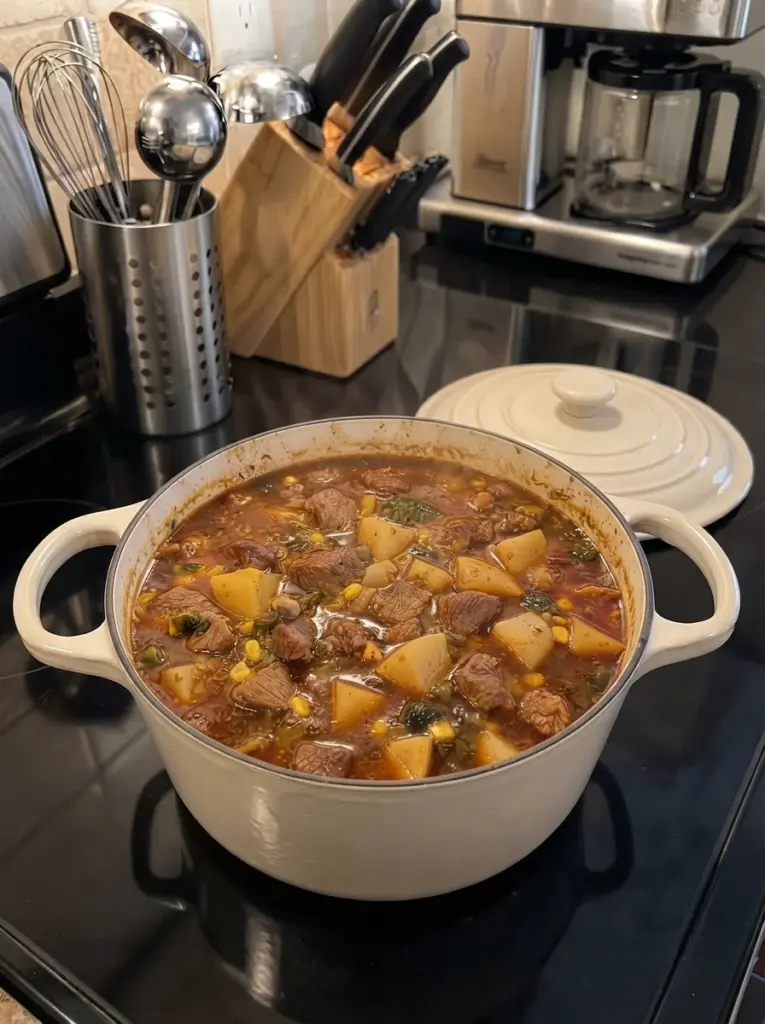
Smoky roasted poblanos, tender pork, buttery Yukon Gold potatoes, tomatoes, corn, and warm Mexican spices come together in this hearty Mexican Pork, Potato & Roasted Poblano Stew. 🌶️🐖🥔
This is the kind of cozy one-pot dinner that’s packed with flavor without needing complicated ingredients. The pork is browned first for extra savory depth, while the poblanos are roasted until blistered and smoky before being simmered with potatoes in a tomato-chicken broth.
Finish the pot with fresh lime juice and cilantro, then load each bowl with avocado, queso fresco, onion, jalapeño, or even more cilantro.
Serve it with warm corn or flour tortillas for a satisfying dinner built around pork, potatoes, and roasted green chile flavor.
Why You’ll Love This Mexican Pork Stew
Loaded with roasted poblano flavor. Three roasted poblanos give the stew a smoky, earthy chile character.
Tender chunks of pork. Browning the pork before simmering adds another layer of savory flavor.
Hearty potatoes. Yukon Gold potatoes make the stew filling and naturally thicken the broth slightly as they cook.
One-pot comfort food. Once the poblanos are roasted, most of the cooking happens in one Dutch oven.
Warm Mexican-inspired spices. Cumin, Mexican oregano, chili powder, coriander, and smoked paprika complement the pork and peppers.
Fresh finish. Lime and cilantro keep the rich stew from tasting heavy.
Easy to customize. Add more chile heat, beans, cheese, or extra vegetables depending on what you like.
Great for leftovers. The flavors continue mingling as the stew sits in the refrigerator.
What Is Mexican Pork, Potato & Roasted Poblano Stew?
This is a hearty Mexican-inspired pork stew built around three main ingredients:
Pork + potatoes + roasted poblano peppers.
The poblanos are charred before going into the pot, which softens their flesh and gives them a deeper roasted chile flavor.
Meanwhile, chunks of pork are browned in olive oil to develop a savory crust.
Onion, garlic, tomato paste, cumin, Mexican oregano, chili powder, smoked paprika, and coriander form the aromatic base.
Chicken broth and diced tomatoes turn everything into a rich but still spoonable broth.
Yukon Gold potatoes simmer directly in that broth, absorbing the pork, tomato, and chile flavors as they become tender.
Corn brings a subtle sweetness, while lime and cilantro brighten everything just before serving.
Ingredients
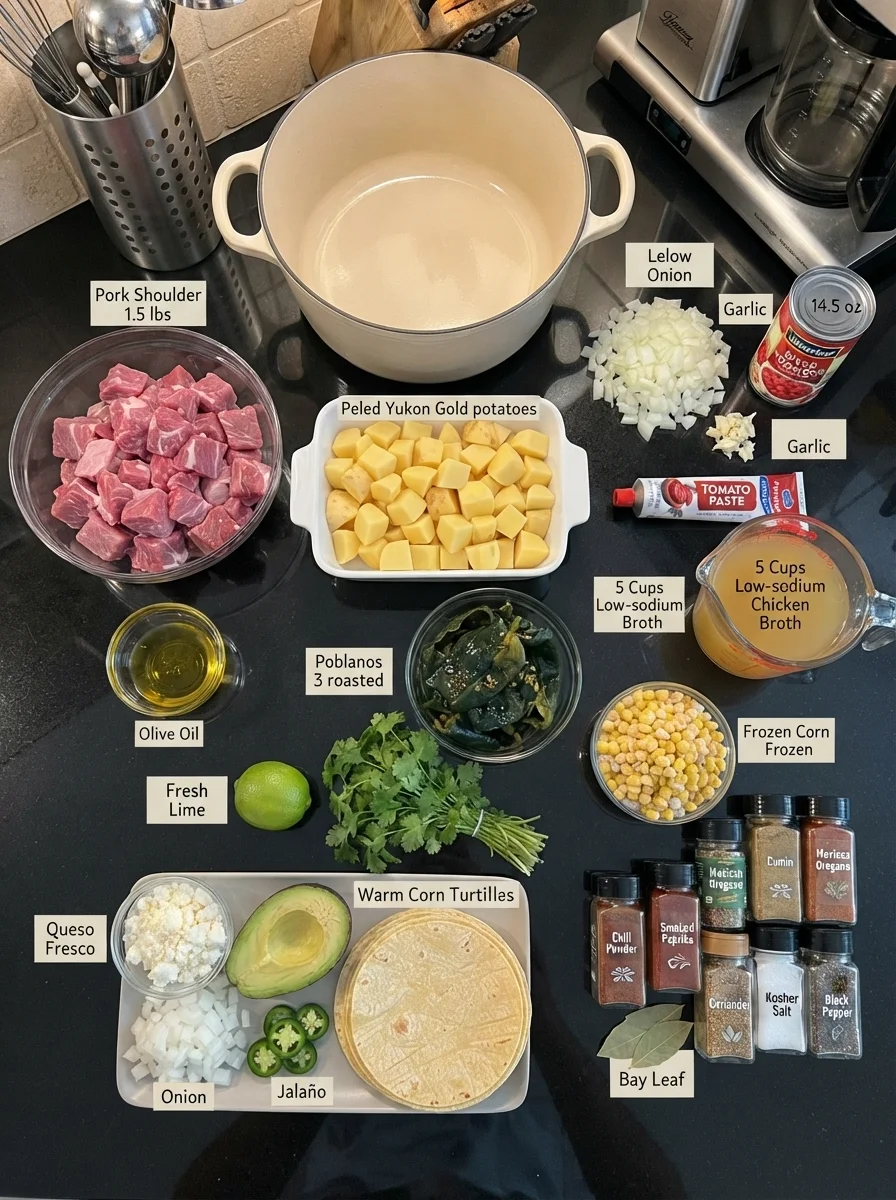
For the Stew
- 1 1/2 lbs boneless pork shoulder or pork loin, cut into 1-inch pieces
- 2 tbsp olive oil
- 1 medium yellow onion, diced
- 4 garlic cloves, minced
- 3 medium Yukon Gold potatoes, peeled and cut into 1-inch cubes
- 3 large poblano peppers, roasted, peeled, seeded, and chopped
- 1 can (14.5 oz) diced tomatoes
- 2 tbsp tomato paste
- 5 cups low-sodium chicken broth
- 1 cup corn, fresh or frozen
- 1 tsp ground cumin
- 1 tsp Mexican oregano
- 1 tsp chili powder
- 1/2 tsp smoked paprika
- 1/2 tsp ground coriander
- 1 bay leaf
- 1 1/2 tsp kosher salt, or to taste
- 1/2 tsp black pepper
- 1 tbsp fresh lime juice
- 2 tbsp chopped fresh cilantro
Optional Toppings 🌿
- Chopped cilantro
- Diced white onion
- Sliced avocado
- Crumbled queso fresco
- Fresh lime wedges
- Sliced jalapeño
- Warm corn or flour tortillas
Ingredient Notes
Pork 🐖
You can make this stew with either boneless pork shoulder or pork loin, but they don’t behave exactly the same way.
Pork Shoulder
Pork shoulder contains more fat and connective tissue.
It’s the better choice if you want a richer stew and especially tender pork after simmering.
It also tolerates longer cooking more easily.
Pork Loin
Pork loin is considerably leaner.
It works when you want a lighter stew, but avoid unnecessary overcooking because lean pork can become dry.
For the richest, most forgiving version of this recipe, pork shoulder is the preferred choice.
Yukon Gold Potatoes 🥔
Yukon Gold potatoes are ideal because they have a naturally creamy texture while holding their shape reasonably well during simmering.
Cut them into approximately 1-inch cubes so they cook at roughly the same rate as the pork.
Poblano Peppers 🌶️
Poblanos provide the defining flavor.
They’re generally milder than jalapeños but have a deeper, earthier chile flavor.
Roasting transforms them.
The skin becomes charred and blistered while the flesh underneath softens and develops a smoky-sweet quality.
Because natural heat varies from pepper to pepper, one batch of poblanos may be noticeably hotter than another.
Diced Tomatoes 🍅
One 14.5-ounce can adds acidity, color, and body to the broth.
Add the tomatoes with their juices.
Tomato Paste
Tomato paste concentrates the tomato flavor and helps give the broth more depth.
Cooking it briefly with the spices before adding the liquid improves the overall flavor.
Chicken Broth
Low-sodium chicken broth provides the main liquid.
Using low-sodium broth gives you better control over the final salt level, especially as the stew reduces slightly during cooking.
Corn 🌽
Corn adds sweetness that works particularly well against smoky poblano peppers.
Fresh or frozen corn both work.
Because corn cooks quickly, it goes into the pot near the end rather than simmering for the entire cooking time.
Mexican Oregano
Mexican oregano has a different aromatic profile from Mediterranean oregano and pairs especially well with chile peppers, cumin, tomato, and pork.
Use Mexican oregano when available.
Ground Cumin
Cumin contributes warm, earthy flavor and works naturally with pork and roasted peppers.
Smoked Paprika
A small amount reinforces the smoky quality of the roasted poblanos without completely taking over the stew.
Ground Coriander
Coriander adds a subtle citrusy warmth that complements the lime added at the end.
Fresh Lime Juice 🍋🟩
Don’t overlook the final tablespoon of lime juice.
The stew contains pork, potatoes, and a rich savory broth, so a little acidity at the end makes the finished flavor brighter and more balanced.
Cilantro
Fresh cilantro should be added toward the end so its fresh flavor isn’t lost during a long simmer.
How to Make Mexican Pork, Potato & Roasted Poblano Stew
Step 1: Roast the Poblanos
Place the poblano peppers under a hot broiler or carefully roast them directly over a gas flame.
Turn them frequently.
Continue until the outer skins are blistered and charred on all sides.
You want the skin blackened while the pepper flesh underneath becomes tender.
Step 2: Steam the Peppers
Transfer the hot roasted poblanos to a bowl.
Cover the bowl and allow them to steam for approximately 10 minutes.
This resting period loosens the charred skin, making the peppers much easier to peel.
Step 3: Peel, Seed, and Chop
Once they’re cool enough to handle, peel away the loosened skins.
Remove the stems and seeds.
Chop the roasted poblano flesh into bite-size pieces.
Don’t worry about removing every tiny speck of char.
A little char can contribute additional roasted flavor.
Don’t Rinse Away the Roasted Flavor
It can be tempting to rinse roasted peppers under running water to remove stubborn pieces of skin.
Try to avoid that.
Water can wash away some of the flavorful juices coating the peppers.
Instead, use your fingers or gently scrape the skin away with a knife.
Step 4: Prepare the Pork
Cut the pork into approximately 1-inch pieces.
Pat the pieces dry with paper towels.
Removing excess surface moisture is important because wet pork tends to steam instead of developing a good brown crust.
Season lightly with salt and black pepper.
Remember that additional salt will be added to the stew later.
Step 5: Brown the Pork
Heat 2 tablespoons olive oil in a large Dutch oven or heavy-bottomed soup pot over medium-high heat.
Add the pork in batches.
Don’t crowd the pot.
Cook each batch for approximately 5–7 minutes, turning occasionally, until several sides are nicely browned.
The pork doesn’t need to be completely cooked through.
Transfer the browned pieces to a plate.
Repeat with the remaining pork.
Why Brown the Pork?
This step adds flavor through browning.
The pork develops a savory crust, while browned bits accumulate on the bottom of the Dutch oven.
Those browned bits eventually dissolve into the broth and become part of the stew’s flavor.
If you crowd the pot, however, moisture accumulates and the meat begins steaming.
That’s why working in batches matters.
Step 6: Sauté the Onion
Reduce the heat to medium.
Add the diced yellow onion to the same pot.
Cook for approximately 3–4 minutes, stirring occasionally, until softened.
As the onion releases moisture, use your spoon to begin loosening the browned bits from the bottom.
Step 7: Add the Garlic
Add the minced garlic.
Cook for approximately 30 seconds, stirring constantly.
The garlic should become fragrant without browning excessively.
Step 8: Add the Tomato Paste and Spices
Stir in:
- 2 tablespoons tomato paste
- 1 teaspoon ground cumin
- 1 teaspoon Mexican oregano
- 1 teaspoon chili powder
- 1/2 teaspoon smoked paprika
- 1/2 teaspoon ground coriander
Cook for approximately 1 minute.
Stir constantly so the tomato paste and spices don’t burn.
This brief cooking step helps wake up the dried spices and removes some of the raw taste from the tomato paste.
Step 9: Return the Pork
Return the browned pork and any accumulated juices from the plate to the pot.
Stir everything together.
Step 10: Build the Stew
Add:
- 1 can diced tomatoes with juices
- 5 cups low-sodium chicken broth
- Cubed Yukon Gold potatoes
- Chopped roasted poblanos
- 1 bay leaf
- 1 1/2 teaspoons kosher salt
- 1/2 teaspoon black pepper
Stir well.
Scrape the bottom of the pot to release any remaining browned bits.
Step 11: Bring to a Gentle Boil
Increase the heat and bring the stew just to a gentle boil.
Once bubbling, reduce the heat to low.
Partially cover the pot.
You want some steam to escape while still preventing excessive evaporation.
Step 12: Simmer Until Tender
Simmer for approximately 35–45 minutes, stirring occasionally.
The stew is ready for the next step when:
- The pork is tender
- The potatoes are fork-tender
- The broth has developed a rich flavor
- The roasted poblanos have melded into the stew
If you’re using pork shoulder, tenderness is a particularly useful indicator because shoulder may benefit from a little extra simmering.
If you’re using lean pork loin, begin checking earlier to avoid unnecessary overcooking.
Step 13: Add the Corn
Stir in 1 cup fresh or frozen corn.
Simmer uncovered for another 5–7 minutes.
Frozen corn doesn’t need to be thawed first.
Step 14: Remove the Bay Leaf
Find and discard the bay leaf before serving.
Step 15: Finish with Lime and Cilantro
Turn the heat down or remove the pot from the heat.
Stir in:
- 1 tablespoon fresh lime juice
- 2 tablespoons chopped cilantro
Taste the broth.
Adjust the salt, black pepper, or lime juice as needed.
Step 16: Serve
Ladle the hot pork and poblano stew into bowls.
Finish each bowl with your favorite toppings.
Excellent choices include:
- Chopped cilantro
- Diced white onion
- Avocado
- Queso fresco
- Jalapeño
- Fresh lime
Serve with warm corn or flour tortillas.
Recipe Information ⏱️
Prep Time: 25 minutes
Cook Time: 55 minutes
Total Time: 1 hour 20 minutes
Servings: 6
Estimated Calories: approximately 465 calories per serving
Nutrition is an estimate and will vary depending on the cut and fat content of the pork, amount of oil retained after browning, broth, toppings, and exact serving size.
What Does Mexican Pork & Poblano Stew Taste Like?
This is a deeply savory stew with several layers of flavor.
The pork provides richness.
The roasted poblanos bring smoky, earthy green chile character.
The potatoes absorb the seasoned broth and give each bowl a hearty texture.
The tomatoes add acidity and sweetness.
The corn contributes small bursts of sweetness that contrast with the roasted chile.
Cumin, oregano, coriander, and smoked paprika give the broth warm aromatic depth.
Finally, fresh lime and cilantro provide a brighter finish.
The overall profile is:
Smoky + savory + chile-forward + hearty + slightly tangy.
Is Poblano Pork Stew Spicy?
It doesn’t have to be.
Poblano peppers are usually chosen more for their rich green chile flavor than intense heat.
However, poblano heat naturally varies.
One pepper can be extremely mild while another has a noticeable kick.
For a mild stew, remove the seeds and membranes thoroughly and skip the jalapeño topping.
For a hotter version, there are several easy options.
How to Make the Stew Spicier 🔥
Try adding:
- 1 diced jalapeño
- 1 diced serrano pepper
- Hot green chiles
- Extra chili powder
- Cayenne pepper
- Crushed red pepper
- Hot sauce
You can sauté fresh jalapeño or serrano with the onion for heat throughout the stew.
Alternatively, serve sliced jalapeños at the table so everyone controls their own spice level.
How to Make It Milder
Remove the poblano seeds and membranes.
Don’t add jalapeños or serranos.
Use a mild chili powder.
Serve the stew with avocado or queso fresco for a creamy contrast.
Pork Shoulder vs. Pork Loin
This choice makes a noticeable difference.
Pork Shoulder
Choose shoulder when you want:
- Richer flavor
- More tender texture
- More forgiving cooking
- A traditional stew-like result
Pork shoulder contains connective tissue that benefits from moist cooking.
Pork Loin
Choose loin when you want:
- Leaner meat
- Less fat
- A somewhat lighter stew
But don’t treat loin exactly like shoulder.
Because it’s lean, prolonged cooking can eventually dry it out.
For the most tender and forgiving stew, pork shoulder is the stronger choice.
Why Yukon Gold Potatoes Work So Well
Yukon Golds strike a nice balance between creamy and firm.
They soften during simmering but generally don’t disintegrate as quickly as very starchy potatoes can.
They also absorb the pork-and-poblano broth beautifully.
Cutting them into consistent 1-inch cubes helps them finish at approximately the same time.
Can I Use Russet Potatoes?
Yes.
Russets contain more starch and tend to break down more easily.
That can actually be useful if you prefer a thicker stew because some of the potato can dissolve into the broth.
However, the pieces may not hold their shape as neatly.
Can I Leave the Potato Skins On?
Yes.
Yukon Gold skins are relatively thin.
If you enjoy the texture, scrub the potatoes thoroughly and leave them unpeeled.
Peeling simply gives the finished stew a slightly smoother texture.
The Secret to Better Poblano Flavor
Roast the peppers aggressively enough to blister and blacken the skin.
Simply sautéing raw poblano pieces doesn’t produce quite the same flavor.
Roasting does several things:
- Softens the pepper
- Develops smoky flavor
- Concentrates sweetness
- Removes the tougher outer skin
- Creates the distinctive roasted green chile character
For this recipe, the poblano preparation is worth the extra step.
Can I Roast the Poblanos Ahead of Time?
Absolutely.
Roast, steam, peel, seed, and chop them ahead of time.
Store them covered in the refrigerator until you’re ready to make the stew.
This can turn the recipe into a much faster weeknight dinner.
You could also cut the pork and vegetables ahead of time and refrigerate them separately.
Tips for the Best Pork Poblano Stew
Use pork shoulder for maximum tenderness. It’s particularly well suited to simmered stews.
Pat the pork dry. Dry meat browns more effectively.
Brown in batches. Crowding causes steaming.
Don’t burn the garlic. Thirty seconds is usually enough.
Cook the tomato paste. Briefly sautéing it develops deeper flavor.
Toast the spices. Adding them before the liquid makes them more aromatic.
Roast the poblanos properly. This is central to the recipe.
Cut potatoes evenly. Uniform cubes cook more consistently.
Keep the simmer gentle. Aggressive boiling isn’t necessary.
Add corn near the end. This preserves its sweetness and texture.
Add lime at the end. Fresh lime loses some of its brightness during prolonged cooking.
Taste before serving. Salt and acidity often need a final adjustment.
How to Naturally Thicken the Stew
This recipe is intended to have a hearty but still spoonable broth.
If you want it thicker, you don’t necessarily need flour or cornstarch.
Once the potatoes are tender, use the back of a spoon to mash several potato pieces against the side of the pot.
Stir them back into the broth.
Their natural starch will help thicken the stew.
You can also simmer the finished stew uncovered for several additional minutes.
What to Serve with Mexican Pork & Poblano Stew
Warm Corn Tortillas 🌽
One of the best options.
Use them to scoop up pieces of pork, potato, and poblano.
Flour Tortillas
Soft flour tortillas work equally well if that’s what your family prefers.
Mexican Rice 🍚
Serve a smaller portion of stew alongside rice for an especially substantial meal.
Refried Beans
Beans turn the stew into an even heartier Mexican-inspired dinner.
Simple Avocado Salad 🥑
Avocado, tomato, onion, cilantro, and lime provide a fresh contrast.
Tortilla Chips
Crunchy tortilla chips are excellent alongside the broth.
Crusty Bread
Not traditional, but very effective for soaking up the flavorful broth.
Best Toppings
Queso Fresco 🧀
Its salty, crumbly texture contrasts beautifully with the rich broth.
Avocado 🥑
Adds cool creaminess.
White Onion
Fresh diced onion provides sharpness and crunch.
Cilantro 🌿
Adds a fresh herbal finish.
Jalapeño 🌶️
Perfect for anyone who wants additional heat.
Lime 🍋🟩
An extra squeeze immediately before eating brightens the entire bowl.
Easy Variations
Green Chile Pork & Potato Stew
Add a can of diced green chiles along with the roasted poblanos for even stronger green chile flavor.
Spicy Pork Poblano Stew 🔥
Add a serrano or jalapeño with the onion.
Pork, Poblano & Pinto Bean Stew
Add one drained and rinsed can of pinto beans during the final 10–15 minutes.
This makes the stew even heartier.
Pork & Hominy Poblano Stew
Replace some of the potatoes or corn with drained hominy for a posole-inspired variation.
Extra Poblano Stew 🌶️
Roast a fourth poblano for a stronger chile-forward flavor.
Cheesy Pork Poblano Stew 🧀
Top each serving generously with Monterey Jack, Oaxaca, or queso fresco.
Creamy Poblano Pork Stew
Stir in a small amount of heavy cream near the end.
Don’t boil aggressively after adding the cream.
Pork, Potato & Green Chile Stew
Add roasted Hatch or New Mexico green chile if available.
This pushes the stew toward an even stronger Southwestern green chile profile.
No-Corn Version
Simply omit the corn.
The pork, potatoes, and poblanos provide plenty of substance on their own.
Can I Add Beans?
Yes.
Pinto beans are an especially natural addition.
Drain and rinse a 15-ounce can and stir the beans into the stew during the final 10–15 minutes.
Black beans can also work, although pinto beans fit the flavor profile especially well.
Can I Add Hominy?
Absolutely.
Pork, chile, and hominy are a classic combination.
Add drained canned hominy during the later part of cooking so it has enough time to absorb the broth’s flavor.
For a more posole-inspired version, you could even replace the corn with hominy.
Can I Make It Without Tomatoes?
You can, but the result will have a different flavor.
For a more purely green chile-focused stew, omit the diced tomatoes and tomato paste and rely more heavily on roasted poblanos, green chile, broth, onion, and garlic.
You may want to reduce the broth slightly to compensate for the missing tomato body.
The original recipe, however, is designed around a light tomato-chile broth.
Can I Make This in a Slow Cooker?
Yes.
For the best flavor, still brown the pork and sauté the onion, garlic, tomato paste, and spices first.
Then transfer everything except the corn, lime juice, and cilantro to the slow cooker.
Cook until the pork and potatoes are tender.
Add the corn near the end.
Finish with lime and cilantro immediately before serving.
Cooking time will depend on your slow cooker and whether you use pork shoulder or leaner pork loin, so check for tenderness rather than relying only on the clock.
Can I Make It in an Instant Pot?
A pressure cooker can also work, particularly with pork shoulder.
Brown the pork using the sauté function, then cook the aromatics, tomato paste, and spices.
Add the broth and remaining stew ingredients according to your pressure cooker’s capacity and operating instructions.
Because potatoes can soften quickly under pressure, cut them consistently and avoid excessively long pressure-cooking times.
Make-Ahead Instructions
This stew is an excellent make-ahead meal.
You can prepare the entire pot, cool it promptly, and refrigerate it.
The flavors often taste even more integrated the following day.
For the freshest flavor, consider reserving the lime juice and cilantro and adding them after reheating.
Keep fresh toppings separately.
Storage Information 🥡
Allow the stew to cool and transfer it to airtight containers.
Refrigerate for up to 4 days.
Store toppings such as avocado, fresh onion, cilantro, queso fresco, jalapeños, and lime separately.
The potatoes will continue absorbing some broth during refrigeration, so the stew may be noticeably thicker the following day.
That’s normal.
How to Reheat Pork Poblano Stew
Stovetop
Transfer the desired amount to a saucepan or pot.
Warm over medium-low heat, stirring occasionally.
If the broth has thickened considerably, add a splash of chicken broth.
Heat until the pork and vegetables are hot throughout.
Microwave
Place an individual serving in a microwave-safe bowl.
Cover loosely.
Heat in intervals, stirring between each interval until thoroughly heated.
Finish with fresh cilantro, lime, avocado, or queso fresco after reheating.
Can You Freeze Mexican Pork Stew?
Yes.
Allow the stew to cool before transferring it to freezer-safe containers.
Freeze in individual or family-size portions for up to approximately 3 months for best quality.
Leave a little room at the top of the container for expansion.
Thaw overnight in the refrigerator before reheating.
Keep in mind that potatoes can become somewhat softer or grainier after freezing and thawing.
The flavor will still be good, but the texture may not be identical to freshly made stew.
Meal Prep Tips
Divide the finished stew into individual containers after cooling.
Keep fresh toppings in separate containers.
When you’re ready to eat:
- Reheat the stew.
- Add a splash of broth if necessary.
- Stir in or squeeze over fresh lime.
- Add cilantro.
- Finish with avocado, onion, queso fresco, or jalapeño.
This keeps the reheated stew tasting much fresher.
Troubleshooting
Why Is My Pork Tough?
If you’re using pork shoulder, it may simply need more time.
Pork shoulder becomes tender as its connective tissue breaks down during moist cooking.
Continue simmering gently and check again.
If you’re using pork loin, however, prolonged cooking can make it dry rather than more tender.
Knowing which cut you’re using matters.
Why Are My Potatoes Still Hard?
They need more cooking time.
Make sure the stew maintains a steady gentle simmer.
Very large potato cubes also take longer to soften.
Why Are My Potatoes Falling Apart?
They were probably cooked too long or cut too small.
Next time, keep them close to 1-inch cubes and begin checking them earlier.
Why Does My Stew Taste Flat?
It may need more salt or acidity.
Try adding a small pinch of salt and another squeeze of fresh lime.
Taste again before adding more.
Why Isn’t the Poblano Flavor Strong Enough?
Roasting is important.
Make sure the skins become properly charred and blistered before steaming and peeling.
For even more chile flavor, use a fourth poblano or add diced green chile.
Why Is My Stew Too Spicy?
Poblano heat can occasionally surprise you.
Serve with avocado, queso fresco, or a little sour cream to soften the heat.
Why Isn’t It Spicy Enough?
Add jalapeño, serrano, hot sauce, cayenne, or additional chile powder.
Why Is My Stew Too Thin?
Simmer it uncovered to reduce the broth.
You can also mash a few potato pieces and stir them back into the stew.
Why Is My Stew Too Thick?
The potatoes may have absorbed more broth than expected.
Simply stir in additional chicken broth until you reach your preferred consistency.
This is especially common with leftovers.
Frequently Asked Questions
What kind of pork is best for this stew?
Boneless pork shoulder is the most forgiving choice and produces a rich, tender stew. Pork loin can also be used but should be monitored more carefully because it’s leaner.
Do I have to roast the poblanos?
Roasting is highly recommended. It’s what gives the peppers their smoky, chile-forward flavor and tender texture.
Are poblano peppers spicy?
They’re generally mild to moderately spicy, although heat varies naturally from pepper to pepper.
Can I roast the poblanos ahead?
Yes. Roast, steam, peel, seed, and chop them ahead and keep them refrigerated until needed.
What potatoes are best?
Yukon Gold potatoes are ideal because they’re creamy while still holding their shape reasonably well.
Can I use Russet potatoes?
Yes, but they’ll break down more easily and may make the stew thicker.
Can I leave the skins on the potatoes?
Yes. Scrub them thoroughly first.
Can I use frozen corn?
Yes. Add it directly to the pot during the final 5–7 minutes.
Can I add beans?
Yes. Pinto beans are particularly good in this stew.
Can I add hominy?
Yes. Hominy works extremely well with pork and roasted chile.
How do I make the stew hotter?
Add jalapeño, serrano, hot green chile, cayenne, or hot sauce.
How do I make it thicker?
Simmer uncovered or mash a few cooked potato pieces into the broth.
Can I make it ahead?
Yes. The stew reheats well and can be made a day ahead.
How long does it keep?
Store cooled leftovers in an airtight container in the refrigerator for up to 4 days.
Can I freeze it?
Yes. Freeze for up to approximately 3 months for best quality, keeping in mind that the potato texture may soften after thawing.
What should I serve with it?
Warm corn or flour tortillas, Mexican rice, avocado salad, refried beans, or tortilla chips are all excellent choices.
Final Thoughts
This Mexican Pork, Potato & Roasted Poblano Stew is all about layers of comforting flavor. 🌶️🐖🥔
First, the poblanos are roasted until smoky and tender. Then chunks of pork are browned until deeply savory. Onion, garlic, tomato paste, cumin, Mexican oregano, coriander, and smoked paprika create the aromatic base before everything slowly simmers with Yukon Gold potatoes and tomatoes.
Corn adds sweetness, while fresh lime and cilantro brighten the entire pot at the end.
For an especially satisfying bowl, finish it with queso fresco, avocado, diced white onion, cilantro, sliced jalapeño, and an extra squeeze of lime.
Add a stack of warm tortillas on the side and you’ve got a hearty pork-and-green-chile dinner that’s smoky, savory, filling, and perfect for a cozy meal.
Print
Mexican Pork, Potato & Roasted Poblano Stew
- Total Time: 1 hour 20 minutes
Ingredients
For the Stew
- 1 1/2 lbs boneless pork shoulder or pork loin, cut into 1-inch pieces
- 2 tbsp olive oil
- 1 medium yellow onion, diced
- 4 garlic cloves, minced
- 3 medium Yukon Gold potatoes, peeled and cut into 1-inch cubes
- 3 large poblano peppers, roasted, peeled, seeded, and chopped
- 1 can (14.5 oz) diced tomatoes
- 2 tbsp tomato paste
- 5 cups low-sodium chicken broth
- 1 cup corn, fresh or frozen
- 1 tsp ground cumin
- 1 tsp Mexican oregano
- 1 tsp chili powder
- 1/2 tsp smoked paprika
- 1/2 tsp ground coriander
- 1 bay leaf
- 1 1/2 tsp kosher salt, or to taste
- 1/2 tsp black pepper
- 1 tbsp fresh lime juice
- 2 tbsp chopped fresh cilantro
Optional Toppings 🌿
- Chopped cilantro
- Diced white onion
- Sliced avocado
- Crumbled queso fresco
- Fresh lime wedges
- Sliced jalapeño
- Warm corn or flour tortillas
Instructions
Step 1: Roast the Poblanos
Place the poblano peppers under a hot broiler or carefully roast them directly over a gas flame.
Turn them frequently.
Continue until the outer skins are blistered and charred on all sides.
You want the skin blackened while the pepper flesh underneath becomes tender.
Step 2: Steam the Peppers
Transfer the hot roasted poblanos to a bowl.
Cover the bowl and allow them to steam for approximately 10 minutes.
This resting period loosens the charred skin, making the peppers much easier to peel.
Step 3: Peel, Seed, and Chop
Once they’re cool enough to handle, peel away the loosened skins.
Remove the stems and seeds.
Chop the roasted poblano flesh into bite-size pieces.
Don’t worry about removing every tiny speck of char.
A little char can contribute additional roasted flavor.
Don’t Rinse Away the Roasted Flavor
It can be tempting to rinse roasted peppers under running water to remove stubborn pieces of skin.
Try to avoid that.
Water can wash away some of the flavorful juices coating the peppers.
Instead, use your fingers or gently scrape the skin away with a knife.
Step 4: Prepare the Pork
Cut the pork into approximately 1-inch pieces.
Pat the pieces dry with paper towels.
Removing excess surface moisture is important because wet pork tends to steam instead of developing a good brown crust.
Season lightly with salt and black pepper.
Remember that additional salt will be added to the stew later.
Step 5: Brown the Pork
Heat 2 tablespoons olive oil in a large Dutch oven or heavy-bottomed soup pot over medium-high heat.
Add the pork in batches.
Don’t crowd the pot.
Cook each batch for approximately 5–7 minutes, turning occasionally, until several sides are nicely browned.
The pork doesn’t need to be completely cooked through.
Transfer the browned pieces to a plate.
Repeat with the remaining pork.
Why Brown the Pork?
This step adds flavor through browning.
The pork develops a savory crust, while browned bits accumulate on the bottom of the Dutch oven.
Those browned bits eventually dissolve into the broth and become part of the stew’s flavor.
If you crowd the pot, however, moisture accumulates and the meat begins steaming.
That’s why working in batches matters.
Step 6: Sauté the Onion
Reduce the heat to medium.
Add the diced yellow onion to the same pot.
Cook for approximately 3–4 minutes, stirring occasionally, until softened.
As the onion releases moisture, use your spoon to begin loosening the browned bits from the bottom.
Step 7: Add the Garlic
Add the minced garlic.
Cook for approximately 30 seconds, stirring constantly.
The garlic should become fragrant without browning excessively.
Step 8: Add the Tomato Paste and Spices
Stir in:
- 2 tablespoons tomato paste
- 1 teaspoon ground cumin
- 1 teaspoon Mexican oregano
- 1 teaspoon chili powder
- 1/2 teaspoon smoked paprika
- 1/2 teaspoon ground coriander
Cook for approximately 1 minute.
Stir constantly so the tomato paste and spices don’t burn.
This brief cooking step helps wake up the dried spices and removes some of the raw taste from the tomato paste.
Step 9: Return the Pork
Return the browned pork and any accumulated juices from the plate to the pot.
Stir everything together.
Step 10: Build the Stew
Add:
- 1 can diced tomatoes with juices
- 5 cups low-sodium chicken broth
- Cubed Yukon Gold potatoes
- Chopped roasted poblanos
- 1 bay leaf
- 1 1/2 teaspoons kosher salt
- 1/2 teaspoon black pepper
Stir well.
Scrape the bottom of the pot to release any remaining browned bits.
Step 11: Bring to a Gentle Boil
Increase the heat and bring the stew just to a gentle boil.
Once bubbling, reduce the heat to low.
Partially cover the pot.
You want some steam to escape while still preventing excessive evaporation.
Step 12: Simmer Until Tender
Simmer for approximately 35–45 minutes, stirring occasionally.
The stew is ready for the next step when:
- The pork is tender
- The potatoes are fork-tender
- The broth has developed a rich flavor
- The roasted poblanos have melded into the stew
If you’re using pork shoulder, tenderness is a particularly useful indicator because shoulder may benefit from a little extra simmering.
If you’re using lean pork loin, begin checking earlier to avoid unnecessary overcooking.
Step 13: Add the Corn
Stir in 1 cup fresh or frozen corn.
Simmer uncovered for another 5–7 minutes.
Frozen corn doesn’t need to be thawed first.
Step 14: Remove the Bay Leaf
Find and discard the bay leaf before serving.
Step 15: Finish with Lime and Cilantro
Turn the heat down or remove the pot from the heat.
Stir in:
- 1 tablespoon fresh lime juice
- 2 tablespoons chopped cilantro
Taste the broth.
Adjust the salt, black pepper, or lime juice as needed.
Step 16: Serve
Ladle the hot pork and poblano stew into bowls.
Finish each bowl with your favorite toppings.
Excellent choices include:
- Chopped cilantro
- Diced white onion
- Avocado
- Queso fresco
- Jalapeño
- Fresh lime
Serve with warm corn or flour tortillas.
- Prep Time: 25 minutes
- Cook Time: 55 minutes
Nutrition
- Serving Size: 6
- Calories: approximately 465 calories per serving