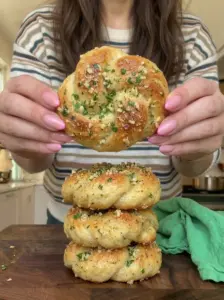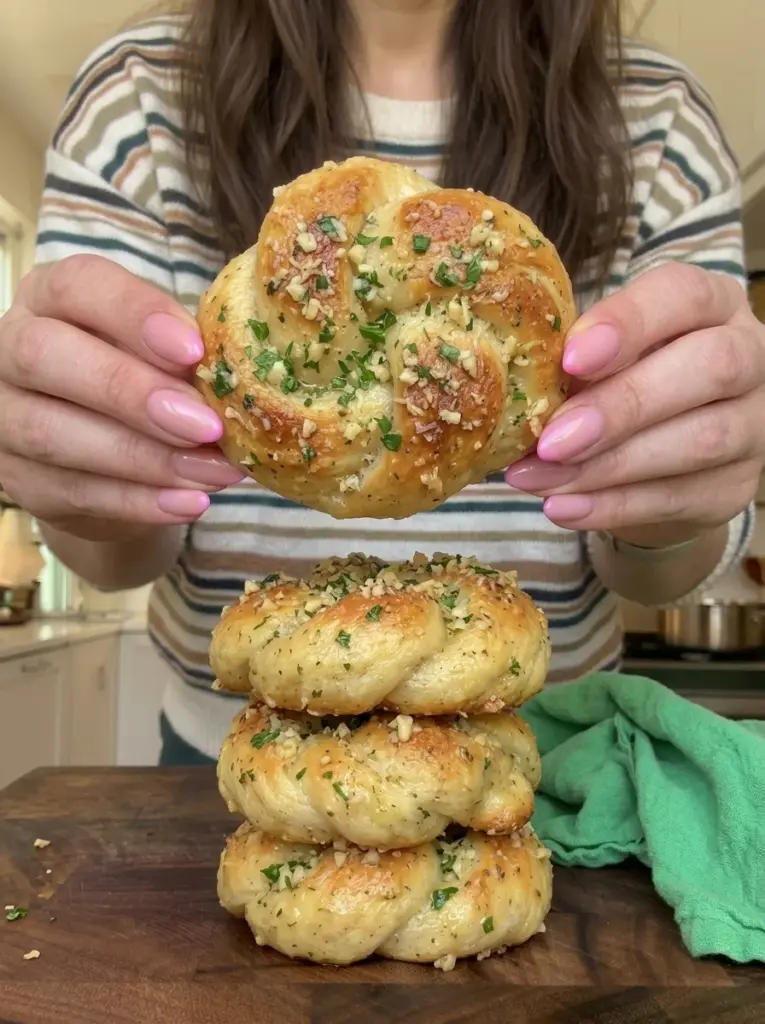
High-Protein Cottage Cheese Garlic Knots combine a simple yeast-free dough with a warm garlic butter finish. Blended cottage cheese adds moisture and dairy protein, while self-rising flour supplies structure and lift. Parmesan and parsley finish the baked knots with savory flavor.
Serve two small knots alongside soup or pasta, offer marinara for dipping, or enjoy them as a warm snack. There is no lengthy rising period, but the dough needs gentle handling so it stays tender rather than becoming heavy with extra flour.
Expect a relatively close quick-bread texture, not the airy stretch of yeast-raised pizza-dough knots. Cottage cheese moisture varies, so a short rest and a lightly floured surface help you judge whether the dough is ready for shaping.
Recipe at a glance: 8 small knots · 4 side servings · about 15 minutes active prep · 5 minutes dough rest · 18–24 minutes baking · a brief serving rest.
Why You’ll Love This Recipe
- No yeast proofing: Self-rising flour works during baking.
- Simple dairy base: Cottage cheese blends smoothly into the dough.
- Garlic butter finish: Add flavor after baking rather than scorching garlic on the tray.
- Small portions: Eight knots are easy to serve or freeze individually.
- Flexible accompaniments: Marinara, soup, or a salad work alongside them.
What Are Cottage Cheese Garlic Knots?
These are shaped quick rolls made with cottage cheese, egg, and self-rising flour. Rolling each portion into a short rope and tying loosely creates the familiar knot shape.
They do not use yeast or develop the same elastic structure as pizza dough. If your mixture is very soft, simple twisted or rounded portions are more practical than forcing intricate knots with excessive added flour.
Ingredients
Dough
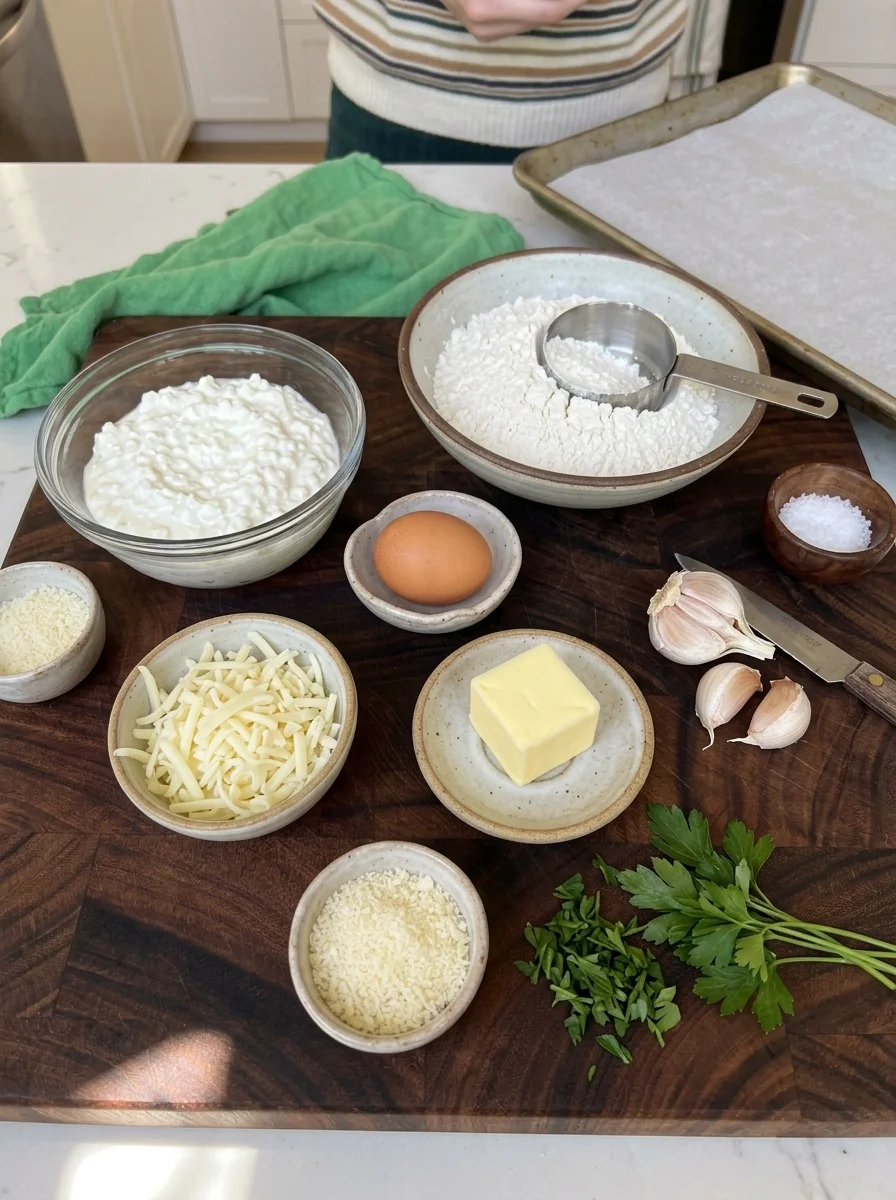
- 1 cup plain cottage cheese
- 1 large egg
- 1½ cups self-rising flour, spooned and leveled, plus a little for shaping if needed
- ¼ cup shredded low-moisture mozzarella, optional
Garlic Butter Finish
- 2 tablespoons butter
- 3 garlic cloves, finely minced
- 2 tablespoons grated Parmesan
- 1 tablespoon chopped parsley
- A small pinch of salt, only if needed
Ingredient Notes
Cottage cheese: Choose a thick product and drain excessive loose liquid before measuring. Do not press the curds completely dry. Fat level and brand affect richness and moisture.
Egg: One large egg supplies binding. Larger eggs contribute extra liquid and can make shaping harder.
Self-rising flour: Spoon into the measuring cup and level. Packing flour or adding large amounts during shaping can make dense knots. The dough should remain soft and a little tacky.
Mozzarella: Optional low-moisture shredded mozzarella adds cheese flavor. Fresh mozzarella packed in liquid is not the intended substitute because it adds moisture.
Garlic: Finely mince and warm gently in butter for a mellower finish. Mixing raw garlic into melted butter without heating produces a sharper flavor, so this article uses a brief low-heat step.
Parmesan and salt: Parmesan and self-rising flour already contain salt. Taste the butter mixture before adding a pinch, especially with salted butter.
Homemade Self-Rising Flour Option
Whisk together 1½ cups all-purpose flour, 2¼ teaspoons baking powder, and ¼ teaspoon fine salt, following the supplied substitution. This is a lightly salted homemade blend and may differ from commercial self-rising flour in salt level and flour strength.
Do not add the baking powder and salt to flour that is already self-rising. The substitution also expands the individual ingredient count.
How to Make It
1. Prepare the oven and tray
Heat the oven to 375°F. Line a rimmed baking sheet with baking parchment rated for the temperature.
2. Blend the cottage cheese
Blend until smooth, stopping to scrape if needed. Transfer to a bowl and stir in the egg. Keeping flour out of the blender limits unnecessary mixing of the final dough.
3. Mix and rest
Stir in the self-rising flour and optional mozzarella until no dry patches remain. Rest for about 5 minutes to let the flour absorb moisture.
Briefly gather and fold the mixture until cohesive, rather than kneading vigorously. If just too sticky to handle, add flour a tablespoon at a time, stopping as soon as manageable. Do not aim for a stiff, dry dough.
If it is too wet to hold a rope even after resting, reassess cottage cheese moisture and measurements. Shape simpler mounds or use suitable supported molds rather than adding a large unmeasured quantity of flour and pretending the formula is unchanged.
4. Form loose knots
Divide into eight similar portions. On a lightly floured surface, roll each into a rope about 6 inches long. Tie one loose knot and tuck the ends gently underneath if they reach comfortably.
Avoid pulling tightly or repeatedly stretching a rope that tears. Let it rest briefly if resistant, or form a simple twist. Leave space between portions on the tray.
5. Bake until set
Bake approximately 18–24 minutes, until lightly golden and the thick centers are cooked through. Open one if uncertain; there should not be wet, pasty dough in the middle.
Continue in short increments if needed and shield dark tops loosely with foil. Portion size, flour, and oven performance affect the timing.
6. Prepare the garlic butter
While baking, melt butter in a small saucepan over low heat. Add garlic and stir for about 1–2 minutes until fragrant and gently softened, without deep browning.
Remove from heat, then stir in Parmesan and parsley. The mixture may be thick and slightly grainy from cheese; it need not become a perfectly smooth sauce. Add salt only if needed.
7. Finish and serve
Brush or spoon the garlic butter over warm knots, dividing it evenly. Rest a few minutes before serving so the centers settle and the butter does not feel excessively hot.
Offer marinara separately. Applying a large amount of sauce over the whole tray softens the surfaces quickly.
Tips for Shaping Soft Dough
Use thick cottage cheese. Loose liquid makes rope shaping difficult.
Rest before adding more flour. Absorption can improve handling without changing the formula.
Keep knots loose. Tight pulling can tear quick dough.
Choose tenderness over perfect appearance. A simple twist or round is better than a dry knot overloaded with shaping flour.
Make similar sizes. Large centers need longer to bake than tiny ends.
Troubleshooting
| Problem | Practical adjustment |
|---|---|
| Dough sticks excessively | Rest first, use a light flour dusting, and check cottage cheese moisture. |
| Ropes tear | Handle more gently, avoid tight pulling, or use a simple twist shape. |
| Knots spread | The mixture may be too wet; supported molds or simpler portions can help. |
| Centers are gummy | Continue baking if raw inside and allow a brief rest before opening. |
| Texture is dense | Some density is normal; avoid excessive flour and prolonged kneading. |
| Garlic tastes bitter | Lower heat and stop before deep browning. Remake burned butter rather than coating the batch. |
| Finish is salty | Skip extra salt and check butter and Parmesan brands. |
Variations
Spicy finish: Add a small pinch of red pepper flakes to the warm butter.
Extra Parmesan: Sprinkle a little additional cheese after brushing, counting it separately for nutrition.
Plain rolls: Shape rounds rather than knots and use the same doneness checks, adjusting time as needed.
Herb accent: Add a little dried Italian seasoning to the flour or use chives for part of the parsley.
Gluten-free flour, egg omission, and major dairy substitutions need separate formula adjustments and testing.
Serving Suggestions
Serve two knots per person as a side for pasta, soup, or a salad. Marinara works as a dipping sauce; warm it separately rather than baking the knots under a wet sauce.
For a snack platter, bring small portions out as needed and keep extras stored appropriately. These are best warm, but not so hot that the moist centers compress immediately.
Storage and Reheating
Refrigerate within 2 hours of baking and topping, or within 1 hour if the surrounding temperature exceeds 90°F. Store covered at 40°F or below and use within 3–4 days. The fresh garlic butter finish also belongs in refrigerated storage.
Freeze cooled knots for up to 2 months for best quality in a freezer-safe bag or container. Thaw in the refrigerator.
Warm in a 325°F oven, beginning to check after 5–8 minutes and allowing longer if needed. If reheating as hot leftovers, check that the centers reach 165°F. Protect dark edges with foil if necessary.
Any fresh garlic butter made for reheating should be prepared and handled separately, not kept on the counter for extended periods. Reheat only the portion you intend to serve.
Protein and Nutrition
Cottage cheese, eggs, and cheese contribute protein, but the supplied 7–10 grams per knot and calorie range are not verified for the actual ingredients. Flour quantities and eight equal portions are important to the calculation.
Add the label values for the dough, any extra shaping flour incorporated, the complete butter topping, and optional additions. Divide by eight for equal knots, or by four for two-knot servings. Count dipping sauce separately.
The recipe contains wheat, dairy, and egg. A protein-focused title does not establish a low-carb or keto profile.
Frequently Asked Questions
Are these traditional yeast garlic knots?
No. They are yeast-free quick rolls shaped into knots, with a more compact crumb.
Can I skip mozzarella?
Yes. It is optional; Parmesan and garlic butter still provide a savory finish.
Must I knead for two minutes?
No fixed kneading duration is necessary. Gather briefly until cohesive and avoid working in excessive flour.
Can I shape rolls instead?
Yes. Similar-sized rounds are a useful alternative when the mixture is too soft for neat ropes. Check centers for doneness.
Can I use all-purpose flour alone?
No. Use the supplied baking powder-and-salt blend so the dough has leavening.
Can I double it?
Yes. Use enough tray space and make sixteen similarly sized pieces. Check baking independently if using multiple trays.
Recipe Card
High-Protein Cottage Cheese Garlic Knots
Eight small yeast-free knots finished with gently cooked garlic butter, Parmesan, and parsley.
Active prep: About 15 minutes
Dough rest: 5 minutes
Bake: Approximately 18–24 minutes
Serving rest: About 3 minutes
Total: Approximately 41–47 minutes
Yield: 8 knots, 4 side servings
Ingredients
Dough
- 1 cup thick plain cottage cheese
- 1 large egg
- 1½ cups self-rising flour, spooned and leveled, plus a little if needed
- ¼ cup shredded low-moisture mozzarella, optional
Finish
- 2 tablespoons butter
- 3 garlic cloves, finely minced
- 2 tablespoons grated Parmesan
- 1 tablespoon chopped parsley
- Pinch of salt, only if needed
Instructions
- Heat oven to 375°F and line a baking sheet with parchment.
- Blend cottage cheese smooth, then combine with egg in a bowl.
- Stir in flour and optional mozzarella. Rest 5 minutes, then gather gently. Add flour sparingly only if needed.
- Divide into eight portions. Roll 6-inch ropes and tie loose knots, or use simpler shapes if too soft. Arrange with space between.
- Bake 18–24 minutes until lightly golden and centers are set without wet dough.
- Melt butter over low heat, add garlic for 1–2 minutes without deep browning, then remove from heat and stir in Parmesan and parsley. Salt only if needed.
- Brush or spoon over warm knots, rest briefly, and serve.
Notes
- Homemade flour blend: 1½ cups all-purpose flour, 2¼ teaspoons baking powder, and ¼ teaspoon fine salt.
- Cottage cheese moisture affects shaping; do not force a very wet mixture into knots by adding excessive flour.
- Timing includes a short dough rest and serving rest.
- Exact protein and calories require calculation from actual labels.
Final Thoughts
Keep the dough soft, shape gently, and finish with garlic warmed just enough to mellow its raw bite. Serve with a little marinara for a straightforward savory side that does not require yeast proofing.
Print
High-Protein Cottage Cheese Garlic Knots
Ingredients
Dough
- 1 cup plain cottage cheese
- 1 large egg
- 1½ cups self-rising flour, spooned and leveled, plus a little for shaping if needed
- ¼ cup shredded low-moisture mozzarella, optional
Garlic Butter Finish
- 2 tablespoons butter
- 3 garlic cloves, finely minced
- 2 tablespoons grated Parmesan
- 1 tablespoon chopped parsley
- A small pinch of salt, only if needed
Instructions
- Heat oven to 375°F and line a baking sheet with parchment.
- Blend cottage cheese smooth, then combine with egg in a bowl.
- Stir in flour and optional mozzarella. Rest 5 minutes, then gather gently. Add flour sparingly only if needed.
- Divide into eight portions. Roll 6-inch ropes and tie loose knots, or use simpler shapes if too soft. Arrange with space between.
- Bake 18–24 minutes until lightly golden and centers are set without wet dough.
- Melt butter over low heat, add garlic for 1–2 minutes without deep browning, then remove from heat and stir in Parmesan and parsley. Salt only if needed.
- Brush or spoon over warm knots, rest briefly, and serve.