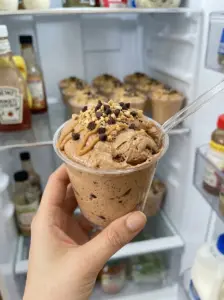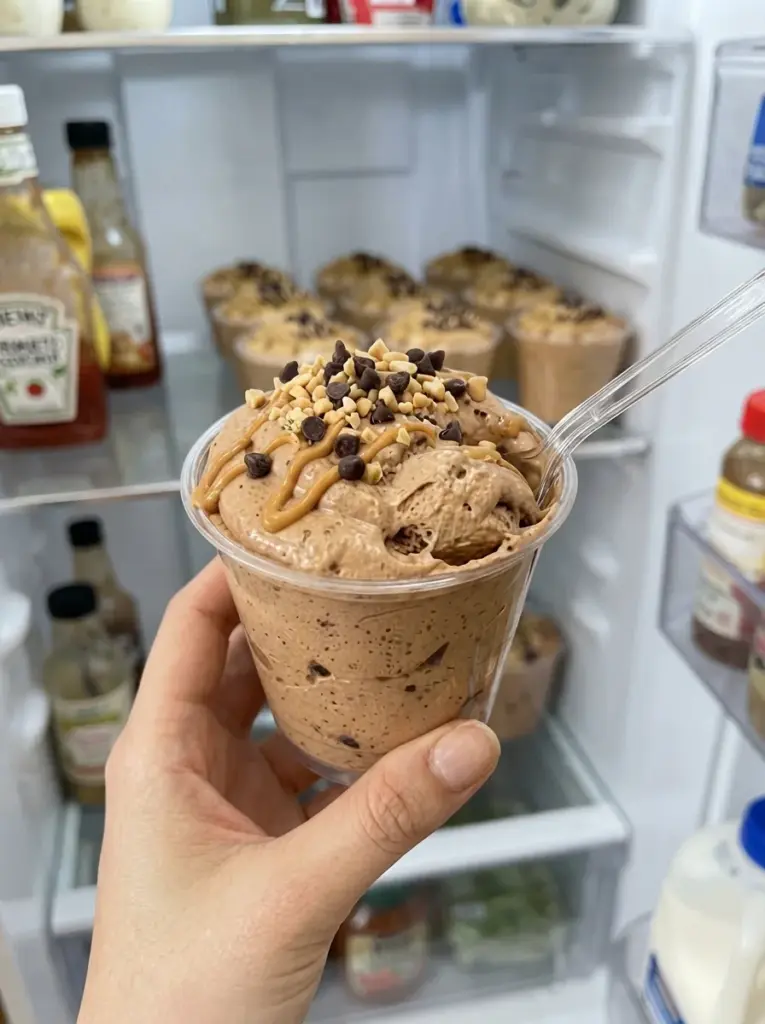
High-Protein Chocolate Peanut Butter Fluff combines rich cocoa, creamy peanut butter, and a thick Greek yogurt base in a quick, no-bake dessert. Chocolate protein powder adds sweetness and body, while a little vanilla rounds out the flavor.
Mix everything in a bowl, fold in optional whipped topping, and refrigerate briefly. The result is a cool, spoonable treat with chocolate throughout and a distinct peanut butter finish. Divide it into two dessert cups or enjoy one larger portion, accounting for the full batch’s nutrition.
Without whipped topping, the mixture is closer to a thick chocolate-peanut butter yogurt pudding. A small amount of topping lightens it modestly; whisking the base alone will not create the volume or texture of a traditional whipped-cream mousse.
This is a suggested recipe formula and has not been kitchen-tested. Protein powders and yogurts vary, so add liquid gradually and assess the texture after a short rest.
Recipe at a Glance
- Preparation: Approximately 5–10 minutes
- Chilling: 20–30 minutes
- Cooking: None
- Total: Approximately 25–40 minutes
- Servings: 2 small dessert portions
- Equipment: Bowl, whisk, spatula, and serving cups
Why You’ll Love This Dessert
- No oven or blender needed: A bowl and whisk are enough.
- Chocolate and peanut butter together: Cocoa adds depth without needing melted chocolate.
- Protein from yogurt and powder: Both contribute to the finished portion.
- Adjustable sweetness: Taste before adding extra sweetener.
- Easy preparation ahead: Chill individual portions and garnish when ready.
What Makes It Protein Fluff?
The name describes a style of protein-containing dessert rather than a specific preparation technique. This version uses thick Greek yogurt, chocolate protein powder, cocoa, and peanut butter, with optional whipped topping for a little aeration.
There is no instant pudding mix in the base formula. That keeps the ingredient list straightforward and avoids depending on a particular brand’s thickening ingredients. The yogurt and powder supply most of the body.
Expect a creamy, substantial dessert. Its texture will differ from ice cream, whipped cream, or a set cheesecake, even though the chocolate and peanut butter combination makes it feel dessert-like.
Ingredients
For the Base
- 1 cup thick plain nonfat Greek yogurt
- 1 labeled serving chocolate protein powder, typically about 1 scoop
- 1 tablespoon smooth peanut butter, well stirred
- 1 tablespoon unsweetened cocoa powder
- ½ teaspoon vanilla extract
- 1–3 tablespoons unsweetened almond milk, only as needed
- 1–2 teaspoons powdered sugar-equivalent sweetener, optional, to taste
- A tiny pinch of salt, optional, after tasting
Optional Lightening and Toppings
- ¼ cup thawed light whipped topping, for folding
- 1 tablespoon chopped peanuts or mini chocolate chips, divided between servings
Topping quantities are for the entire batch, not each cup. Extra peanut butter drizzles, chocolate sauce, and additional garnish change the nutrition.
Ingredient Notes
Greek Yogurt
Use a thick, plain, unsweetened Greek yogurt you enjoy. Nonfat yogurt is the starting point for the lighter base, while higher-fat versions add richness and calories.
Pour off obvious pooled liquid and stir before measuring. Regular yogurt is usually thinner and may not support the same spoonable consistency.
A tangy yogurt will remain noticeable. Sweetener can soften that impression, but it does not remove the yogurt flavor entirely.
Chocolate Protein Powder
Use the product’s labeled serving rather than assuming every scoop is identical. Powders vary in serving size, protein, sweetness, and absorption.
Whey powders may make a softer mixture than some casein or plant-based products. Give the base a few minutes to hydrate before deciding whether it needs milk.
Choose a powder you already like drinking. Strong aftertastes are noticeable in a small dessert with relatively few ingredients.
Peanut Butter
Use smooth peanut butter for an even base. Stir natural peanut butter thoroughly before measuring so the oil and solids are combined.
A very firm peanut butter may need a few seconds of gentle warming to loosen it. Let it cool again before mixing with the yogurt; do not add a hot spoonful to the cold base.
Sweetened and salted peanut butters change the flavor. Taste before adding sweetener or salt.
Cocoa Powder
Unsweetened cocoa deepens the chocolate flavor. Break up lumps or sift it if necessary so it incorporates evenly.
Dutch-process cocoa tends to taste mellow, while natural cocoa can be sharper. Either can work here because this is not a baked recipe relying on cocoa acidity for leavening.
Milk
Milk is a consistency adjustment, not an automatic addition. Start with less, then add by the teaspoon as needed.
Dairy milk or another unsweetened alternative can replace almond milk, but the flavor and nutrition change. Do not pour in a large splash just because the powder initially looks dry.
Sweetener
The powder and peanut butter may already make the mixture sweet enough. Taste the combined base first.
The teaspoon amount assumes a powdered blend designed to measure similarly to sugar. Pure stevia or monk fruit extracts need much smaller quantities according to their labels. Some sweeteners have a cooling sensation, so choose one you enjoy in cold foods.
Whipped Topping
The optional ¼ cup provides a more noticeable lightening than a tiny spoonful, but still does not turn the entire base into a high-volume mousse. Thaw according to the package and fold rather than beat.
Separately whipped cream is another possibility, with a different calorie and sweetness contribution.
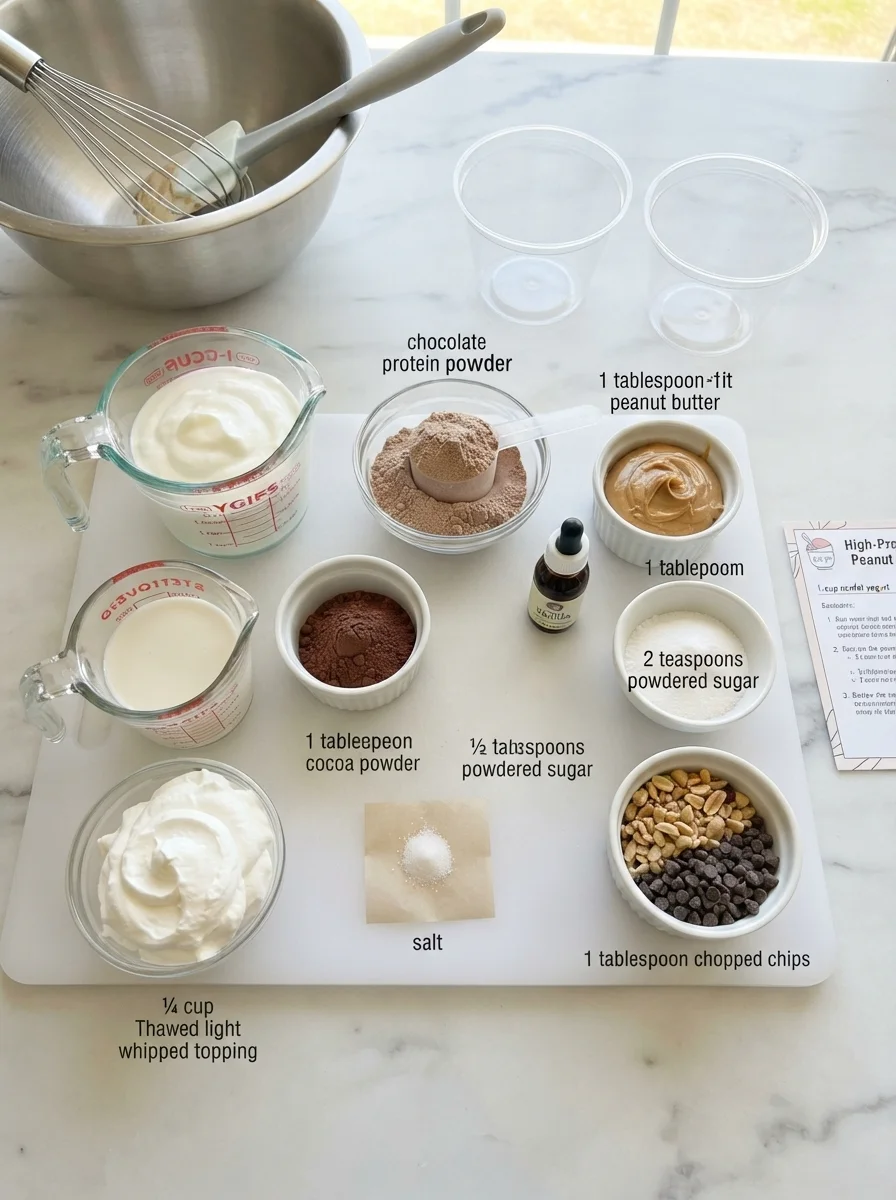
How to Make Chocolate Peanut Butter Fluff
1. Smooth the Yogurt and Peanut Butter
Place yogurt and peanut butter in a medium bowl. Stir until the peanut butter is distributed without thick streaks.
If the peanut butter is firm, work a spoonful of yogurt into it first, then gradually mix in the rest. This is easier than trying to disperse a stiff lump after adding all the powder.
2. Add Chocolate and Vanilla
Add protein powder, cocoa, and vanilla. Stir slowly at first to keep dry powder in the bowl, then whisk until incorporated.
Scrape the bottom and sides so no dry pockets remain.
3. Rest Briefly
Let stand for approximately 2–3 minutes. The protein powder may absorb more moisture during this pause.
Check whether the mixture is creamy and spoonable before adding milk. A thick mixture should fall slowly from a spoon, not pour like a drink.
4. Adjust in Small Amounts
If too stiff, add almond milk a teaspoon at a time. You may need less than 1 tablespoon or up to the suggested range, depending on the powder.
Taste and add optional sweetener gradually. Add a tiny pinch of salt only if the peanut butter and powder have not already supplied enough.
5. Fold in Optional Whipped Topping
Use a flexible spatula to fold the topping into the chocolate base. Lift from the bottom and turn the mixture over itself until pale streaks disappear.
Avoid vigorous whisking after this step, which reduces the air you are trying to preserve.
6. Portion and Chill
Divide evenly into two cups. Cover and refrigerate for 20–30 minutes.
The dessert will become colder and may thicken further. It remains a spoonable dairy dessert rather than a firm gel.
7. Garnish and Serve
Divide the optional tablespoon of chopped peanuts or mini chips between the two portions just before serving.
If the chilled base is too firm, stir a teaspoon of milk into an individual cup. This softens the consistency but may reduce some of the lightness.
Tips for Creamy Fluff
Stir peanut butter before measuring. Separated natural peanut butter gives uneven oil and solids.
Hydrate before thinning. Powder can change the consistency after the first mixing.
Keep liquid controlled. Small additions are easier to repeat than a loose pour.
Taste before salting. Salted peanut butter and flavored powder may supply enough.
Fold gently. Whipped topping should be incorporated after smoothing the base.
Garnish at serving. Chopped nuts keep more crunch when stored separately.
Troubleshooting
| Problem | Possible cause | What to try |
|---|---|---|
| Peanut butter remains in lumps | Firm or poorly stirred peanut butter | Loosen with a little yogurt before adding the rest. |
| Texture is chalky | Strong powder flavor or too much powder | Use a milder product; add a little yogurt if available. |
| Base becomes very thick | Absorbent powder | Rest, then add milk in teaspoons. |
| Base is too loose | Thin yogurt or excessive liquid | Chill fully and use less liquid next time. |
| Dessert tastes too sweet | Sweetened powder plus added sweetener | Omit extra sweetener and choose a less sweet powder next batch. |
| Texture is dense | Normal yogurt structure or omitted topping | Enjoy as pudding or use the optional folded topping. |
| Peanut flavor is weak | Mild peanut butter or dominant chocolate powder | Add a small amount more, accounting for the nutrition change. |
Variations
Stronger Peanut Butter Flavor
Add another teaspoon or two of peanut butter after tasting. It increases richness and calories; do not assume the original nutrition still applies.
Powdered Peanut Butter
Powdered peanut butter has a different fat and moisture balance. Add a small amount as a separate flavor variation and adjust milk after hydration rather than replacing the smooth peanut butter spoon for spoon automatically.
Mocha Chocolate
Dissolve a small pinch of instant espresso powder in a teaspoon of water, cool, and mix into the base. Keep it subtle so it complements the peanut butter.
Chocolate Shell
Drizzle a small amount of melted chocolate over a chilled portion and allow it to firm briefly. This adds an ingredient and changes calories and texture.
Without Protein Powder
Omit the powder for a different yogurt dessert. Start without milk and adjust sweetness, recognizing that protein and thickness will be lower.
Almond Butter
Smooth almond butter gives a different nut flavor. It does not make the recipe suitable for someone avoiding all tree nuts or peanuts without considering labels and cross-contact.
These variations are suggestions and have not been separately kitchen-tested.
Serving Suggestions
Serve as two small desserts, or pair a portion with fresh strawberries for a snack. A small amount of chopped peanuts gives texture without covering the chocolate base completely.
For a breakfast plate, serve alongside fruit or another food that suits your appetite. The dessert’s protein content does not mean it automatically represents a complete meal.
If you choose to eat the whole batch in one bowl, use the full batch’s nutrition rather than the per-cup estimate.
Make-Ahead and Storage
Refrigerator
Store covered at 40°F or below and enjoy within 2 days, or sooner if the yogurt or other ingredients’ package guidance requires it. Combining opened ingredients does not restart their storage life.
The powder may continue thickening the base. Add milk to individual portions only if needed, and stir gently if a little moisture separates.
Toppings
Keep nuts, chips, or other crunchy additions separate until serving. This also makes portion adjustments easier.
Freezer
Freezing is not recommended for preserving the original creamy texture. Yogurt can become grainy or separate after thawing, and the dessert becomes firm rather than remaining like soft serve.
Serving Time
Keep chilled until needed. Limit time outside refrigeration to 2 hours, or 1 hour above 90°F. For a gathering, keep reserve portions chilled.
Frequently Asked Questions
Do I need instant pudding mix?
No. This suggested formula uses yogurt, peanut butter, and protein powder for body without pudding mix.
Can I use chocolate Greek yogurt?
It changes sweetness, flavor, and nutrition. Begin without extra sweetener and reassess the cocoa amount.
Can I use a blender?
You can, but it is unnecessary for a smooth yogurt base. A blender may require extra liquid to circulate a small, thick batch, making a bowl easier to control.
Is it sugar-free?
Not automatically. Yogurt contains naturally occurring sugar, and powder, peanut butter, topping, or chips may contain added sugar. Check the full ingredient list.
Is it low-carb?
That depends on the brands and serving size. A noncaloric sweetener alone does not establish a specific carbohydrate total.
Can I make it dairy-free?
That requires suitable yogurt and powder substitutions, which vary in thickness and protein. It is not an identical swap for the listed formula.
How much protein is in the recipe?
Use your yogurt and powder labels. A typical batch may contain around 45–50 grams before optional topping, but product differences matter.
Why does mine thicken overnight?
Protein powder can continue absorbing moisture. Adjust an individual portion with a teaspoon of milk if needed.
Recipe Card: High-Protein Chocolate Peanut Butter Fluff
Servings: 2 small portions
Preparation: 5–10 minutes
Chilling: 20–30 minutes
Total: 25–40 minutes
Cooking: None
Ingredients
- 1 cup thick plain nonfat Greek yogurt
- 1 labeled serving chocolate protein powder
- 1 tablespoon smooth, well-stirred peanut butter
- 1 tablespoon unsweetened cocoa powder
- ½ teaspoon vanilla
- 1–3 tablespoons unsweetened almond milk, only if needed
- 1–2 teaspoons powdered sugar-equivalent sweetener, optional
- Tiny pinch salt, optional
- ¼ cup thawed light whipped topping, optional
- 1 tablespoon chopped peanuts or mini chips for the batch, optional
Instructions
- Stir yogurt and peanut butter smooth.
- Add protein powder, cocoa, and vanilla. Mix thoroughly and rest 2–3 minutes.
- Add milk by the teaspoon only if needed. Taste before adding optional sweetener or salt.
- Gently fold in optional whipped topping.
- Divide into two cups, cover, and refrigerate for 20–30 minutes.
- Add optional garnish immediately before serving.
Approximate Nutrition
Using yogurt providing approximately 130 calories and 23 grams protein per cup, powder providing approximately 120 calories and 24 grams protein per labeled serving, and ordinary peanut butter and cocoa, estimate 175–195 calories and 24–26 grams of protein per portion, before optional topping and garnish.
Whipped topping and chopped nuts or chips add according to their labels. These are illustrative ingredient-based estimates, not verified nutrition data; brands, actual powder serving, and portions change the result.
Notes
- This suggested formula has not been kitchen-tested.
- A scoop is not a universal measure; check the powder label.
- Milk is optional and should be added gradually.
- Expect a thick cream with modest aeration, not a traditional whipped mousse.
- Store covered and refrigerated for up to 2 days, subject to ingredient guidance.
Final Thoughts
Chocolate, peanut butter, and a thick yogurt base make this an easy dessert to prepare in small portions. Let the powder hydrate, keep liquid additions small, and fold the optional topping gently. A short chill brings everything together before the final crunchy garnish.
High-Protein Chocolate Peanut Butter Fluff
Description
Servings: 2 small portions
Preparation: 5–10 minutes
Chilling: 20–30 minutes
Total: 25–40 minutes
Cooking: None
Ingredients
- 1 cup thick plain nonfat Greek yogurt
- 1 labeled serving chocolate protein powder
- 1 tablespoon smooth, well-stirred peanut butter
- 1 tablespoon unsweetened cocoa powder
- ½ teaspoon vanilla
- 1–3 tablespoons unsweetened almond milk, only if needed
- 1–2 teaspoons powdered sugar-equivalent sweetener, optional
- Tiny pinch salt, optional
- ¼ cup thawed light whipped topping, optional
- 1 tablespoon chopped peanuts or mini chips for the batch, optional
Instructions
- Stir yogurt and peanut butter smooth.
- Add protein powder, cocoa, and vanilla. Mix thoroughly and rest 2–3 minutes.
- Add milk by the teaspoon only if needed. Taste before adding optional sweetener or salt.
- Gently fold in optional whipped topping.
- Divide into two cups, cover, and refrigerate for 20–30 minutes.
- Add optional garnish immediately before serving.