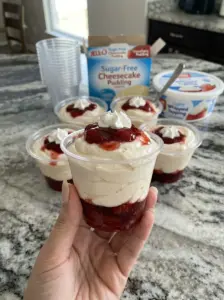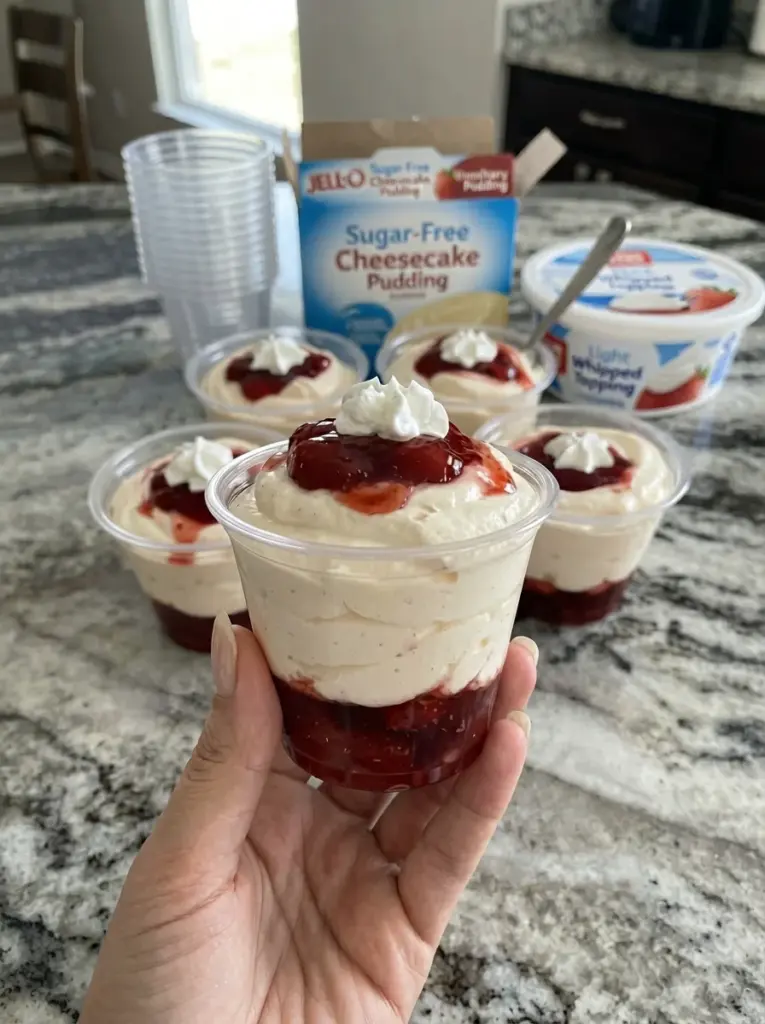
90-Calorie Strawberry Cheesecake Cups bring together a smooth, tangy dairy cream and fresh strawberries in small, chilled dessert portions. A little reduced-fat cream cheese gives the filling a recognizable cheesecake note, while Greek yogurt and cottage cheese provide body without a large quantity of cream.
There is no baking or crust preparation. Blend the filling until smooth, spoon it into six small cups, and add chopped strawberries. Chill before serving for a cool, creamy dessert that is easy to portion ahead.
The 90-calorie figure is an approximate target, not a guaranteed value for every brand. The ingredient example below calculates close to 90 calories per cup when divided into six portions and made with a noncaloric sweetener. Check your labels and include any toppings in the total.
This is a suggested recipe formula and has not been kitchen-tested.
Recipe at a Glance
- Yield: 6 small dessert cups
- Preparation: Approximately 15 minutes
- Chilling: At least 1 hour
- Cooking: None
- Total: Approximately 1 hour 15 minutes, plus cream cheese softening if needed
- Portion size: Approximately ⅓–½ cup, depending on final volume
- Texture: Soft, spoonable cheesecake-style cream
These are small dessert portions, not full-sized cheesecake slices. There is no gelatin, so the filling will not set into a firm, sliceable cheesecake.
Why You’ll Love These Cups
- No baking required: Blend, portion, and refrigerate.
- Fresh fruit: Strawberries add sweetness and a bright contrast.
- A genuine cream cheese component: A small amount gives flavor without making the entire base cream cheese.
- Convenient portions: Six individual containers make serving straightforward.
- A transparent calorie target: The estimate is tied to ingredients and portion count rather than an unqualified promise.
What Makes These Cheesecake Cups?
Reduced-fat cream cheese supplies the familiar tang and richness. Greek yogurt and cottage cheese make up most of the filling, so the result is lighter in texture and flavor than a traditional cheesecake.
Blending removes noticeable cottage cheese curds. It does not remove saltiness, so choose a mild product. The finished mixture should taste gently sweet and tangy, with vanilla complementing the strawberries.
The basic version has no cookie crust or whipped topping. Those can be added as variations, but their calories are additional and may take a serving beyond the title’s target.
Ingredients
For the Filling
- 1 cup low-fat cottage cheese, preferably 1% milkfat
- ¾ cup plain nonfat Greek yogurt
- 3 ounces reduced-fat cream cheese, softened until pliable but still cool
- 2–3 tablespoons powdered noncaloric sugar-equivalent sweetener, or to taste
- 1 teaspoon vanilla extract
- ½ teaspoon finely grated lemon zest, optional
For the Fruit Layer
- 1 cup fresh strawberries, hulled and finely chopped
Optional Garnish
- A few thin strawberry slices reserved from the measured cup
- A small pinch of additional lemon zest
Do not add powdered sugar, syrup, cookie crumbs, or whipped topping without recalculating the nutrition if the calorie target matters to you.
How the Calorie Estimate Works
The following is an illustrative calculation using representative label values. It is not a substitute for your actual products.
| Ingredient | Example amount | Approximate calories |
|---|---|---|
| Low-fat cottage cheese | 1 cup | 160 |
| Nonfat Greek yogurt | ¾ cup | 100 |
| Reduced-fat cream cheese | 3 ounces | 210 |
| Strawberries | 1 cup chopped | 50 |
| Vanilla | 1 teaspoon | 12 |
| Noncaloric sweetener and optional zest | Recipe amount | Approximately 0–5 |
| Full batch | 6 portions | Approximately 532–537 |
| Each cup | One-sixth of batch | Approximately 89–90 |
Some cottage cheeses provide more calories per cup, and reduced-fat cream cheese labels differ. Sweetener blends may also contribute calories at the amount used. Add the actual batch values and divide by six.
If you divide the same batch into four cups, each portion is closer to 135 calories using this example. Container size does not change the calories; the amount inside does.
Ingredient Notes
Cottage Cheese
Choose a mild low-fat product. Pour off an obvious pool of watery liquid before measuring, without squeezing away the creamy dressing.
Brands vary in salt, moisture, protein, and calories. A full-fat version can be delicious, but it changes the calculation and may move the recipe above the target.
Greek Yogurt
Use thick plain nonfat Greek yogurt. Sweetened vanilla yogurt adds sugar and changes the flavor and nutrition.
Regular yogurt is generally thinner and may produce a looser filling. Do not add milk simply to help a large blender circulate if a smaller processor is available.
Reduced-Fat Cream Cheese
Use reduced-fat cream cheese with a label near the example value of 70 calories per ounce if you want a similar calculation. A different product is not wrong, but the arithmetic must change.
Soften enough to blend smoothly. Hard pieces can leave lumps, while melted cream cheese is unnecessary. Keep preparation efficient and refrigerate promptly after mixing.
Sweetener
The tablespoon guidance assumes a powdered blend designed to measure similarly to sugar. Pure stevia and monk fruit extracts are much more concentrated and require smaller amounts according to their labels.
Powdered products distribute more readily than coarse granules. Some have a cooling sensation or aftertaste, so use one you already enjoy in chilled foods.
Strawberries
Use ripe, firm berries without spoilage. Wash, dry thoroughly, hull, and chop into small pieces.
Frozen berries become softer and release liquid after thawing. Fresh fruit is the intended choice for neat layers and the stated texture.
Vanilla and Lemon Zest
Vanilla adds a dessert-style aroma. Lemon zest is optional and supplies brightness without much liquid. Use only the colored peel, avoiding bitter white pith.
Equipment
A compact blender or food processor works well for this small, thick batch. You will also need a spatula and six small serving glasses or lidded containers.
For even portions, place the filling in a bowl, weigh the finished mixture if you have a kitchen scale, and divide into six equal amounts. Divide the berries equally as well. This is more reliable than judging by container height when glasses have different shapes.
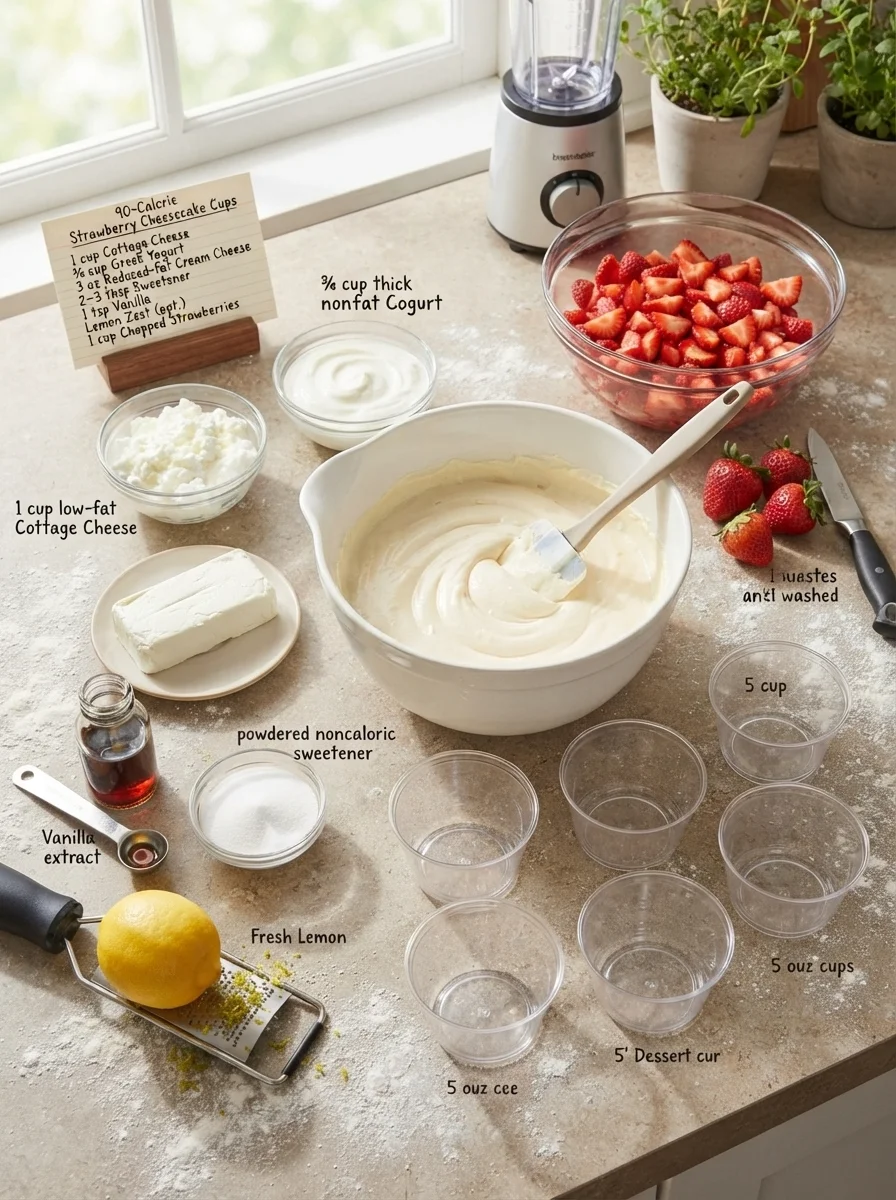
How to Make Strawberry Cheesecake Cups
1. Prepare the Fruit
Wash and dry the strawberries before hulling. Chop finely and reserve a few thin pieces from the measured cup for garnish if desired.
Keep the fruit separate while blending the filling so you can preserve distinct layers and avoid extra juice in the base.
2. Smooth the Cream Cheese
Place softened cream cheese and a few spoonfuls of the measured yogurt in the processor. Blend briefly, scraping as needed, until smooth.
This small first step helps prevent cream cheese lumps from remaining in the finished filling.
3. Blend the Dairy Base
Add cottage cheese, remaining yogurt, vanilla, optional zest, and an initial amount of sweetener. Start with less sweetener, particularly if using a concentrated product.
Process until completely smooth. Stop and scrape the bottom and sides before continuing. Check a small spoonful for curds rather than judging only the surface.
4. Taste and Adjust
Taste and add more sweetener gradually if needed. The berries contribute sweetness too, so the filling does not need to taste intensely sweet on its own.
Do not add salt automatically. Cottage cheese and cream cheese usually supply enough.
5. Divide into Six Portions
Spoon a little filling into each cup, add part of the strawberries, then distribute the remaining filling and fruit evenly.
You can also keep all berries on top for the simplest assembly. Avoid adding unmeasured extra fruit if you want the example calorie target to stay close.
6. Chill
Cover and refrigerate for at least 1 hour. The mixture becomes colder and may firm modestly, but it remains spoonable.
If the filling is too thin to hold defined layers, serve as a soft cream with berries on top rather than adding unmeasured thickeners.
7. Garnish and Serve
Add reserved strawberry slices or a little zest just before serving. Enjoy cold with a spoon.
For the freshest preparation ahead, store chopped fruit separately and add it when ready to eat.
Tips for Smooth Filling and Clear Portions
Blend thoroughly before portioning. Smoothness comes from processing the curds, not simply stirring them.
Avoid extra liquid. The dairy contains enough moisture for the intended texture.
Use the same number of servings. The title depends on dividing the batch into six.
Measure toppings. A small cookie crumble or whipped topping adds up across a small dessert.
Taste before sweetening heavily. Different dairy brands have different tang and salt levels.
Keep expectations realistic. These are small, creamy cups rather than firm slices of traditional cheesecake.
Troubleshooting
| Problem | Possible cause | What to try |
|---|---|---|
| Small cream cheese lumps | Cheese too cold | Smooth with a little yogurt first. |
| Cottage cheese curds remain | Incomplete processing | Stop, scrape, and blend again before portioning. |
| Filling is too loose | Thin dairy or added liquid | Chill fully and serve as a soft dessert; choose thicker products next time. |
| Flavor is salty | Cottage cheese or cream cheese brand | Use milder products next batch and skip added salt. |
| Fruit releases liquid | Wet or very soft berries | Dry well and add near serving. |
| Calories exceed the title | Different brands, toppings, or larger portions | Recalculate the actual batch and divide by the number served. |
Variations
Graham Cracker Finish
Add a measured sprinkle of graham crumbs just before serving. Check the label and add those calories; the cups no longer automatically match the 90-calorie example.
Strawberry Swirl
Mash a small portion of the measured berries and swirl into the filling. This adds a pink streak but also juice, so keep the amount modest.
Lemon Cheesecake Flavor
Use the optional zest. Avoid adding a large quantity of lemon juice, which loosens the dairy and changes the balance.
Another Fresh Berry
Use chopped raspberries or blueberries as a variation, recalculating the fruit contribution if precision matters. Texture differs by fruit.
Larger Dessert Cups
Divide into four portions for a more generous serving and label them according to their actual nutrition rather than keeping the 90-calorie claim.
These variations have not been separately kitchen-tested.
Serving Suggestions
Serve after dinner, as part of a small dessert spread, or with coffee for a snack. Clear glasses show the layers, while lidded containers are easier for preparing ahead.
If you want a more substantial snack, add fruit or nuts alongside and count them separately. The small portion size is part of the recipe’s calorie target, not a claim that it will suit every appetite.
For a gathering, keep the cups chilled until serving and garnish only the number being put out.
Make-Ahead and Storage
Refrigerator
Store covered at 40°F or below and enjoy within 2–3 days, or sooner if ingredient guidance or existing storage time requires it. Combining opened dairy does not restart its storage life.
For the best texture, refrigerate filling and strawberries separately and assemble near serving. If already layered, expect some fruit juice to develop over time.
Freezer
Freezing is not recommended for preserving the original texture. Yogurt, cottage cheese, and cream cheese can separate or become grainy after thawing, while strawberries soften.
Serving Time
Keep refrigerated until needed. Limit time outside refrigeration to 2 hours, or 1 hour above 90°F. Include the cream cheese softening period when considering its time outside refrigeration.
Frequently Asked Questions
Are the cups exactly 90 calories?
Only a calculation using specific labels and evenly divided portions can establish your number. The example batch comes close; the title is an approximate target.
Can I use ordinary full-fat cream cheese?
Yes, but it generally adds calories. Recalculate rather than retaining the original claim.
Can I use sugar instead of noncaloric sweetener?
Yes, as a sweeter variation with added calories. Powdered sugar combines more readily than coarse granules, but the amount should be included in the batch calculation.
Do I need gelatin or pudding mix?
No. This formula is a soft dairy cream rather than a stabilized cheesecake. Adding thickeners changes the ingredient list and texture.
Can I use a hand mixer instead of a blender?
A mixer combines ingredients but generally leaves cottage cheese curds. Blend or process for a smoother result.
Are these high-protein?
The example provides approximately 7–9 grams per small cup, depending on brands. They contain protein, but the primary aim here is a small cheesecake-style dessert near the calorie target.
Are they sugar-free?
No. Dairy and strawberries contain natural sugars even when a noncaloric sweetener is used. Check labels for added sugars too.
Can I double the recipe?
Yes. Divide the doubled batch into twelve equal portions if preserving the same serving size, and use a processor with adequate capacity or blend in batches.
Recipe Card: Approximately 90-Calorie Strawberry Cheesecake Cups
Yield: 6 small cups
Preparation: 15 minutes
Chill: At least 1 hour
Total: Approximately 1 hour 15 minutes, plus softening if needed
Cooking: None
Ingredients
- 1 cup low-fat cottage cheese, preferably 1%
- ¾ cup plain nonfat Greek yogurt
- 3 ounces reduced-fat cream cheese, softened
- 2–3 tablespoons powdered noncaloric sugar-equivalent sweetener, or to taste
- 1 teaspoon vanilla
- ½ teaspoon lemon zest, optional
- 1 cup fresh strawberries, hulled, dried, and chopped
Instructions
- Prepare strawberries and keep separate.
- Blend cream cheese with a few spoonfuls of yogurt until smooth.
- Add cottage cheese, remaining yogurt, vanilla, optional zest, and some sweetener. Blend thoroughly, scraping as needed.
- Taste and adjust sweetness gradually.
- Divide filling and fruit equally among six cups, layering or topping as preferred.
- Cover and refrigerate for at least 1 hour. Serve cold.
Approximate Nutrition
Using the example labels in the article, estimate about 90 calories and 7–9 grams of protein per cup, with no additional toppings. Actual values depend on products and equal portioning. These are ingredient-based estimates, not verified nutrition data.
Notes
- This suggested formula has not been kitchen-tested.
- The calorie title is an approximate target tied to six portions and specific label values.
- Use thick dairy and avoid added milk.
- Sweetener strength varies; concentrated extracts need much less than a sugar-equivalent blend.
- Keep chilled and add fruit near serving for the freshest texture.
Final Thoughts
A little reduced-fat cream cheese gives these small cups their cheesecake flavor, while blended yogurt and cottage cheese provide the base. Portion evenly, keep toppings measured, and use your labels to check the calorie target. Fresh strawberries complete a simple, creamy dessert without baking.
90-Calorie Strawberry Cheesecake Cups
Description
Yield: 6 small cups
Preparation: 15 minutes
Chill: At least 1 hour
Total: Approximately 1 hour 15 minutes, plus softening if needed
Cooking: None
Ingredients
- 1 cup low-fat cottage cheese, preferably 1%
- ¾ cup plain nonfat Greek yogurt
- 3 ounces reduced-fat cream cheese, softened
- 2–3 tablespoons powdered noncaloric sugar-equivalent sweetener, or to taste
- 1 teaspoon vanilla
- ½ teaspoon lemon zest, optional
- 1 cup fresh strawberries, hulled, dried, and chopped
Instructions
- Prepare strawberries and keep separate.
- Blend cream cheese with a few spoonfuls of yogurt until smooth.
- Add cottage cheese, remaining yogurt, vanilla, optional zest, and some sweetener. Blend thoroughly, scraping as needed.
- Taste and adjust sweetness gradually.
- Divide filling and fruit equally among six cups, layering or topping as preferred.
- Cover and refrigerate for at least 1 hour. Serve cold.