
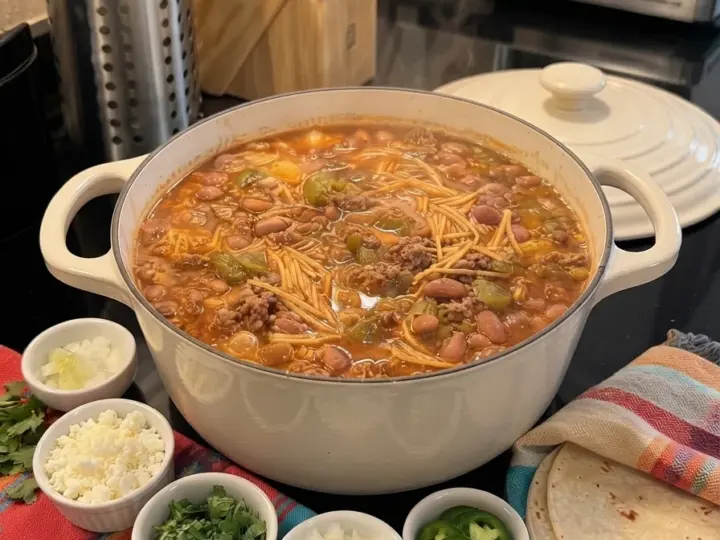
Hatch Green Chile Ground Beef & Pinto Bean Fideo Caldo combines browned beef, creamy pinto beans, roasted chiles, and short toasted noodles in a savory tomato broth. The fideo gives the soup a satisfying body, while lime and cilantro brighten the beef and chile flavors just before serving.
It is a practical dinner built from familiar ingredients: ground beef, canned beans, broth, tomatoes, and a modest amount of pasta. Roasted Hatch chiles add depth, and a small can of diced green chiles makes the pepper flavor easy to distribute throughout the pot.
The extra step of toasting the noodles is worth paying attention to. Fideo browns quickly, so gentle heat and frequent stirring help develop a lightly toasted flavor without bitterness. Once the noodles enter the broth, their package directions and the texture you prefer should determine the final cooking time.
This article expands the supplied recipe with preparation and storage guidance. It has not been independently kitchen-tested. Chile heat, pasta thickness, beef leanness, and broth salt levels all affect the finished soup.
What to Expect
The caldo should be brothy enough to ladle, with ground beef and beans distributed among short strands of tender pasta. It becomes thicker as the noodles absorb liquid, especially if the pot stands after cooking.
The roasted green chiles provide a peppery, earthy flavor. They are not guaranteed to be mild: heat varies among varieties and individual peppers. Choose a labeled mild product if you want a gentler soup and offer jalapeños separately.
This is a Southwestern and New Mexican-inspired combination, rather than a claim to represent a single traditional regional recipe. The toasted noodle technique draws on fideo-style soups, while the beef, beans, and Hatch chiles make the bowl hearty.
The soup base is prepared in one pot, with a separate skillet used to toast the fideo in the primary method. A true single-pot variation is included below if reducing cookware matters to you.
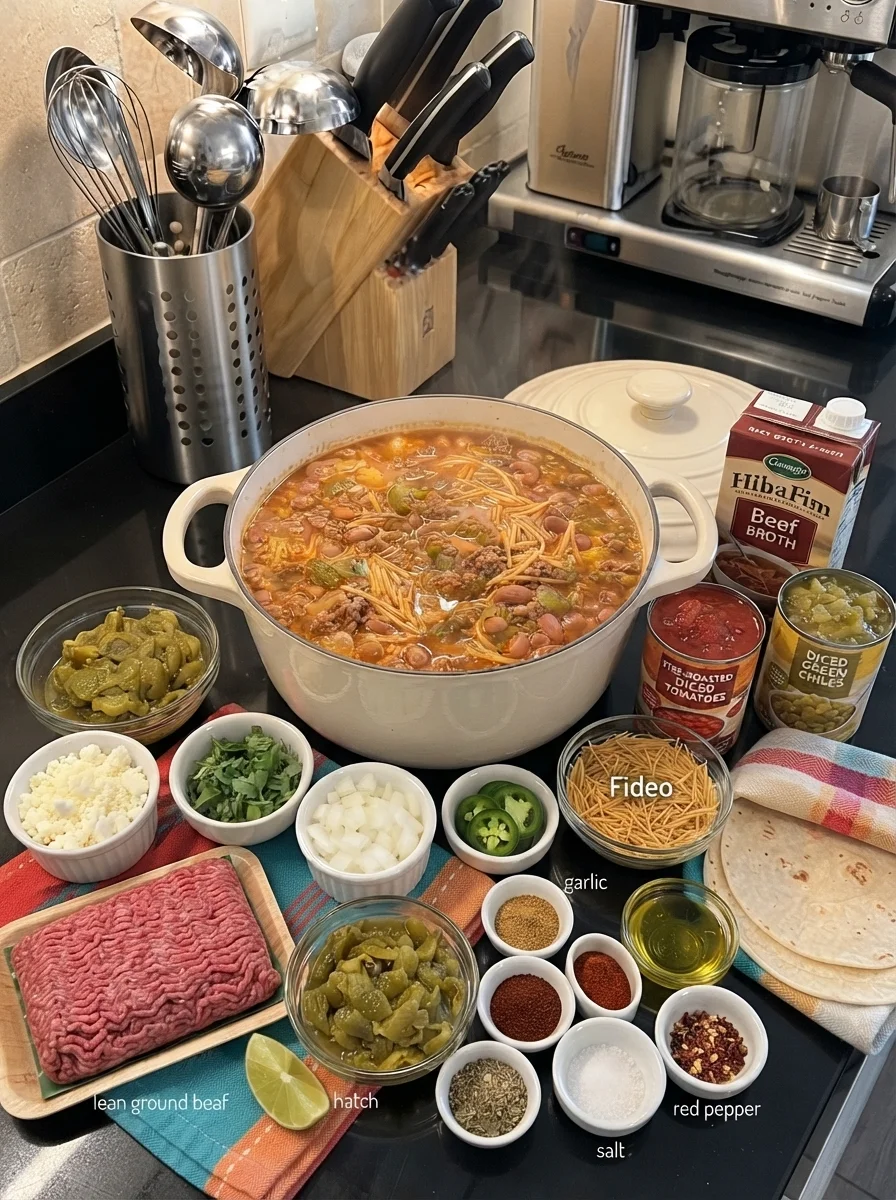
Ingredients
Beef and Aromatics
- 1 pound lean ground beef
- Up to 1 tablespoon olive oil, only if needed
- 1 small yellow onion, finely diced
- 3 garlic cloves, minced
- 1 teaspoon ground cumin
- 1 teaspoon chili powder
- 1/2 teaspoon smoked paprika
- 1/2 teaspoon dried oregano
- 1/2 teaspoon salt, adjusted to taste
- 1/4 teaspoon black pepper
Green Chile Broth
- 2–3 roasted Hatch green chiles, peeled, seeded, and chopped, approximately 3/4 cup
- 1 can pinto beans, 15 ounces, drained and rinsed
- 1 can fire-roasted diced tomatoes, 14.5 ounces, with their juices
- 1 can diced green chiles, 4 ounces
- 6 cups low-sodium beef broth, plus extra as needed
- 1 tablespoon tomato paste
- 1 additional teaspoon ground cumin
- 1/2 additional teaspoon dried oregano
- 1/4 teaspoon crushed red pepper flakes, optional
Fideo and Finish
- 6 ounces dry fideo noodles or thin wheat vermicelli broken into short pieces
- 1 tablespoon olive oil, for toasting
- 1 tablespoon chopped fresh cilantro
- 1 tablespoon fresh lime juice
Optional Garnishes
- Crumbled queso fresco made with pasteurized milk
- Additional cilantro
- Finely diced white onion
- Sliced jalapeños
- Lime wedges
- Warm flour or corn tortillas
Seasoning totals: The whole recipe contains two teaspoons cumin and one teaspoon dried oregano, divided between the beef and broth stages. The second additions are intentional, not separate alternatives.
Oil total: One tablespoon is used for the fideo. Up to one additional tablespoon may be used with the beef and onion if the pot is dry.
Ingredient Notes
Lean ground beef keeps the broth manageable
Lean ground beef provides savory flavor without leaving an excessive layer of fat on the soup. The exact fat percentage changes both calories and the amount of draining needed.
Break the beef into small crumbles as it cooks. Very large clumps can make it harder to distribute the meat evenly among six bowls.
If excess fat collects, spoon or drain some away carefully before continuing. Leave enough in the pot to soften the onion, adding olive oil only if needed.
Measure the roasted chiles
Two or three peppers can vary greatly in size. The approximate three-quarter-cup measure is more useful for repeating the flavor than relying on pepper count alone.
Use peeled, seeded roasted chiles. A few small char flecks are fine, but loose heavily burnt skin can add bitterness.
Frozen roasted Hatch chiles are a practical option when fresh ones are unavailable. Thaw safely in the refrigerator, drain excessive thawing liquid if necessary, and measure the chopped peppers.
The canned chiles are additional
The four-ounce can is used along with the roasted Hatch chiles. Choose mild or hot according to your preference and the heat of the fresh-roasted batch.
If substituting another roasted green chile product for the canned portion, keep the quantity similar rather than adding an unmeasured large amount. Taste the broth before increasing heat further.
Pinto beans are already cooked
The recipe uses canned, drained beans. Dried pinto beans cannot be added directly under the same short cooking schedule.
If using home-cooked beans, use tender, fully cooked beans in an amount comparable to the drained can. Their cooking liquid and salt content may differ, so adjust broth and seasoning thoughtfully.
Fideo is dry pasta
Use six ounces weighed dry. Fideo is short, thin pasta; thin wheat vermicelli broken into manageable lengths is a useful alternative.
Rice vermicelli is a different product and should not be treated as an identical substitution for dry toasting and soup cooking. Its hydration and cooking behavior can differ substantially.
Read the package directions before starting. Some thin pastas cook in only a few minutes, and the supplied five-to-seven-minute window is not universal.
Broth and tomatoes control the base
Low-sodium broth gives you more room to season after the chiles, beef, and beans are combined. Regular broth may require less added salt.
Keep the tomato juices in the pot. They contribute liquid and flavor, while tomato paste adds concentration.
Have extra broth available. The initial six cups are the measured starting amount, but pasta absorption and simmering can make a small additional amount useful.
Equipment
Use a large Dutch oven or soup pot, a skillet for the noodles, a wooden spoon or spatula, a ladle, and a food thermometer. A broiler-safe tray and tongs are useful if roasting the peppers yourself.
A broad skillet makes it easier to see the pasta color while toasting. A dark pan can make light browning harder to judge, so stir and inspect frequently.
Choose a pot with room for stirring after the noodles are added. A crowded pot can make it difficult to keep pasta from settling on the bottom.
How to Make the Caldo
1. Roast and prepare the chiles
If starting with fresh Hatch peppers, roast under a broiler or over a suitable gas flame, turning with tongs until blistered and charred on all sides.
Transfer to a bowl and cover for about ten minutes to loosen the skins. When cool enough to handle, peel away loose skin, remove stems and seed clusters, and chop.
Use the measured three-quarter cup for the soup. Keep any extra refrigerated for another dish. Wash hands after handling chiles and avoid touching your eyes.
2. Brown the beef
Heat the soup pot over medium-high heat. Add the ground beef and cook for about six to eight minutes, breaking it apart as it cooks.
The meat should be cooked through to 160°F. Browning contributes flavor, but color alone is not a reliable temperature check.
Drain excess grease if necessary. If the pot is very dry, add a little of the optional olive oil before cooking the onion.
3. Soften the onion and garlic
Add the diced onion to the beef and cook for about three to four minutes, stirring, until softened. Add the minced garlic and cook about another 30 seconds.
Keep the heat moderate enough that the garlic does not scorch. Scrape the bottom as you stir so the onion picks up the flavorful beef residue.
4. Season and cook the tomato paste
Add the first teaspoon cumin, chili powder, smoked paprika, first half teaspoon oregano, salt, and black pepper. Stir for about 30 seconds.
Add the tomato paste and fire-roasted tomatoes with their juices. Cook for about two minutes, stirring to distribute the paste.
The mixture should smell savory and fragrant rather than burnt. Reduce the heat if thick tomato paste begins sticking aggressively before the liquid is added.
5. Build the broth
Add the roasted Hatch chiles, canned diced green chiles, drained pinto beans, six cups broth, remaining teaspoon cumin, remaining half teaspoon oregano, and optional red pepper flakes.
Stir thoroughly so the paste blends into the liquid and the seasonings are evenly distributed.
Bring to a gentle boil, then reduce the heat to maintain a steady simmer. Partially cover and cook for about fifteen to twenty minutes.
6. Toast the fideo
While the broth simmers, heat one tablespoon olive oil in the separate skillet over medium heat. Add the dry fideo and stir frequently.
Cook for about three to five minutes, watching for a light golden color. Thin pasta can move from golden to scorched quickly, so adjust the heat and keep it moving.
A few strands may color faster than others. Stop when the overall mixture smells lightly toasted rather than waiting for every piece to become equally dark.
Toasting adds flavor; it does not make the pasta immune to overcooking or liquid absorption later.
7. Cook the noodles in the broth
Add the toasted pasta carefully to the simmering caldo. Stir gently to separate the strands and keep them from settling into a clump.
Cook according to the pasta package, beginning to check early. Stop when tender but still intact. The noodles continue softening in the hot liquid after the burner is turned off.
Avoid a vigorous boil that breaks the pasta and makes the broth reduce too quickly.
8. Adjust the liquid
Check consistency as the noodles cook. Add extra warm broth in small amounts if the soup becomes thicker than you prefer.
An additional half to one cup may be enough, but the actual amount depends on the pasta and how much the broth reduced. Add gradually rather than pouring in a large quantity at once.
Taste again after adding liquid because it changes the seasoning concentration.
9. Finish and serve
Stir in the cilantro and tablespoon of lime juice just before serving. Taste and adjust salt, pepper, or heat if needed.
Ladle promptly into bowls, distributing beef, beans, and noodles evenly. Add optional queso fresco, cilantro, onion, jalapeño, or lime at the table.
Keep tortillas separate rather than soaking them in the pot. They are an optional accompaniment, not part of the soup’s measured liquid balance.
A True Single-Pot Variation
To avoid a separate skillet, toast the fideo in the tablespoon of oil in the empty soup pot first. Transfer the golden noodles to a dry bowl, then brown the beef in the same pot and continue with the recipe.
Return the reserved noodles after the broth has simmered. This keeps the noodle cooking late in the process while using one cooking vessel.
Watch for leftover pasta fragments before browning the beef. Remove any that could scorch during the longer meat-cooking stage.
The primary skillet method allows the broth simmer and pasta toast to overlap, which may save a few minutes. Both approaches still require close attention during toasting.
Keeping Noodles from Becoming Too Soft
Follow the pasta package rather than assuming every fideo needs the same time. Thin strands can soften quickly.
Serve soon after the noodles finish. A pot left on low heat for a long period will continue cooking them even if it is not bubbling vigorously.
For meal prep, keep the soup base separate from the noodles. Cook only the amount of pasta needed for the servings you plan to eat immediately.
If you want separate cooked noodles, toast and prepare them in a measured amount of broth in another saucepan, following the pasta’s cooking directions. Store the cooked noodles chilled separately and combine with reheated soup when serving.
Do not add dry toasted noodles directly to individual bowls and expect them to soften instantly in hot soup. They still need a proper cooking stage.
Make-Ahead Planning
Prepare the beef, beans, and green chile broth a day ahead, cool promptly, and refrigerate. Toast and cook fresh fideo when reheating for service.
If only half the batch will be eaten immediately, divide the base before adding pasta. Add a proportional amount of noodles to the portion being served and keep the rest noodle-free.
Roast the chiles ahead if convenient. Store covered in the refrigerator and use clean utensils when measuring them.
Set out garnishes just before serving. This keeps fresh onion and cilantro separate from the simmering broth and lets each person choose the amount of additional heat.
Serving Ideas
A bowl of this caldo already contains meat, beans, and pasta. Simple accompaniments such as a green salad, sliced avocado, or warm tortillas are enough.
Queso fresco adds a crumbly, salty finish. Use a modest amount and taste before adding more salt to the pot.
A squeeze of lime can brighten a rich bowl, but each diner may prefer a different level of acidity. Offer extra wedges rather than adding a large amount to the entire batch.
For a milder family meal, use mild chiles and leave jalapeños and red pepper flakes as table options. The chile label is more helpful than assuming roasting removes heat.
Storage, Reheating, and Freezing
Refrigerate leftovers promptly in shallow covered containers at 40°F or below and use within three days. Divide a large pot into smaller containers rather than leaving it on the counter to cool completely.
Keep room-temperature exposure within two hours, or one hour if the surroundings exceed 90°F. Follow USDA leftover handling guidance.
Reheat on the stovetop, stirring, until the soup reaches 165°F throughout, following USDA reheating guidance. Add broth gradually to compensate for liquid absorbed by the pasta.
Stored fideo will soften even if the soup is reheated gently. Additional broth restores a soup-like consistency but cannot reverse overcooked noodles.
For the best freezing result, freeze the base without pasta for up to two months for quality. Thaw overnight in the refrigerator, reheat thoroughly, and add newly toasted fideo for the final cooking stage.
Freeze in portions so you can prepare only the amount needed. Keep garnishes fresh and separate.
Variations
Ground turkey: A leaner meat can be tried, but ground turkey should reach 165°F. The broth flavor and nutrition change, and the pot may need a little oil for the onion.
Extra beans: Another small quantity of fully cooked beans makes a heartier soup, but add broth as needed and recognize that the serving yield changes.
More heat: Choose hot Hatch chiles or add a little red pepper at the table. Increase gradually so the base flavor remains balanced.
Milder bowl: Use mild roasted and canned chiles and omit the optional flakes and jalapeños.
Different pasta: Small shells or another short pasta can be tried, but their cooking and absorption differ. Follow package guidance and do not assume they need the same toasting or time as thin fideo.
Troubleshooting
The soup became thick almost immediately
The pasta may be absorbing more than expected or the broth may have reduced during simmering. Add warm broth gradually and serve promptly. Keep noodles separate next time if leftovers are a priority.
The fideo tastes bitter
It may have scorched during toasting. Burnt pasta is not repaired by adding more seasoning. Toast over moderate heat, stir frequently, and stop at light gold.
The beef is in large clumps
Break it apart more thoroughly during browning. Smaller crumbles distribute more evenly and are easier to eat with short noodles.
The caldo is too salty
Broth, canned ingredients, and garnishes may already contain salt. Use low-sodium broth and add salt conservatively. Extra lime changes perceived flavor but does not remove sodium.
The noodles broke apart
They may have boiled too vigorously, cooked too long, or been stirred aggressively. Use a gentle simmer and stop when just tender.
Frequently Asked Questions
Is the second cumin addition intentional?
Yes. The supplied recipe uses two teaspoons total, divided between the beef seasoning and broth. Oregano totals one teaspoon.
Do I drain the tomatoes?
No. Use the can with its juices for this version. The liquid contributes to the tomato broth.
Can I use dried pinto beans?
Cook them fully before adding. The short soup simmer is intended for already-cooked canned beans.
Is fideo gluten-free?
Standard wheat fideo is not gluten-free. A substitute needs its own cooking guidance and may not tolerate dry toasting in the same way. Check all labels if gluten avoidance matters.
Is this a one-pot recipe?
The supplied method uses a soup pot and a separate skillet. Toasting the noodles first in the soup pot, removing them, and returning them later is a practical single-pot variation.
What is the estimated nutrition?
Without generous cheese or tortillas, a one-sixth portion may be closer to roughly 300–380 calories and 22–27 grams protein with typical lean beef and canned beans. The supplied 425 calories may apply with richer beef, more oil, or toppings. These are illustrative ranges; use the actual labels, beef fat percentage, and final portion count for precision.
Print
Hatch Green Chile Ground Beef & Pinto Bean Fideo Caldo
Description
- Prep: About 20 minutes, including handling already-roasted chiles; allow more if roasting from raw
- Cooking: Approximately 35–45 minutes, with noodle toasting overlapping the broth simmer
- Total: Approximately 55–65 minutes, longer if roasting requires it
- Servings: About 6
- Method: Stovetop soup with toasted pasta
Ingredients
Beef and Aromatics
- 1 pound lean ground beef
- Up to 1 tablespoon olive oil, only if needed
- 1 small yellow onion, finely diced
- 3 garlic cloves, minced
- 1 teaspoon ground cumin
- 1 teaspoon chili powder
- 1/2 teaspoon smoked paprika
- 1/2 teaspoon dried oregano
- 1/2 teaspoon salt, adjusted to taste
- 1/4 teaspoon black pepper
Green Chile Broth
- 2–3 roasted Hatch green chiles, peeled, seeded, and chopped, approximately 3/4 cup
- 1 can pinto beans, 15 ounces, drained and rinsed
- 1 can fire-roasted diced tomatoes, 14.5 ounces, with their juices
- 1 can diced green chiles, 4 ounces
- 6 cups low-sodium beef broth, plus extra as needed
- 1 tablespoon tomato paste
- 1 additional teaspoon ground cumin
- 1/2 additional teaspoon dried oregano
- 1/4 teaspoon crushed red pepper flakes, optional
Fideo and Finish
- 6 ounces dry fideo noodles or thin wheat vermicelli broken into short pieces
- 1 tablespoon olive oil, for toasting
- 1 tablespoon chopped fresh cilantro
- 1 tablespoon fresh lime juice
Optional Garnishes
- Crumbled queso fresco made with pasteurized milk
- Additional cilantro
- Finely diced white onion
- Sliced jalapeños
- Lime wedges
- Warm flour or corn tortillas
Seasoning totals: The whole recipe contains two teaspoons cumin and one teaspoon dried oregano, divided between the beef and broth stages. The second additions are intentional, not separate alternatives.
Oil total: One tablespoon is used for the fideo. Up to one additional tablespoon may be used with the beef and onion if the pot is dry.
Instructions
1. Roast and prepare the chiles
If starting with fresh Hatch peppers, roast under a broiler or over a suitable gas flame, turning with tongs until blistered and charred on all sides.
Transfer to a bowl and cover for about ten minutes to loosen the skins. When cool enough to handle, peel away loose skin, remove stems and seed clusters, and chop.
Use the measured three-quarter cup for the soup. Keep any extra refrigerated for another dish. Wash hands after handling chiles and avoid touching your eyes.
2. Brown the beef
Heat the soup pot over medium-high heat. Add the ground beef and cook for about six to eight minutes, breaking it apart as it cooks.
The meat should be cooked through to 160°F. Browning contributes flavor, but color alone is not a reliable temperature check.
Drain excess grease if necessary. If the pot is very dry, add a little of the optional olive oil before cooking the onion.
3. Soften the onion and garlic
Add the diced onion to the beef and cook for about three to four minutes, stirring, until softened. Add the minced garlic and cook about another 30 seconds.
Keep the heat moderate enough that the garlic does not scorch. Scrape the bottom as you stir so the onion picks up the flavorful beef residue.
4. Season and cook the tomato paste
Add the first teaspoon cumin, chili powder, smoked paprika, first half teaspoon oregano, salt, and black pepper. Stir for about 30 seconds.
Add the tomato paste and fire-roasted tomatoes with their juices. Cook for about two minutes, stirring to distribute the paste.
The mixture should smell savory and fragrant rather than burnt. Reduce the heat if thick tomato paste begins sticking aggressively before the liquid is added.
5. Build the broth
Add the roasted Hatch chiles, canned diced green chiles, drained pinto beans, six cups broth, remaining teaspoon cumin, remaining half teaspoon oregano, and optional red pepper flakes.
Stir thoroughly so the paste blends into the liquid and the seasonings are evenly distributed.
Bring to a gentle boil, then reduce the heat to maintain a steady simmer. Partially cover and cook for about fifteen to twenty minutes.
6. Toast the fideo
While the broth simmers, heat one tablespoon olive oil in the separate skillet over medium heat. Add the dry fideo and stir frequently.
Cook for about three to five minutes, watching for a light golden color. Thin pasta can move from golden to scorched quickly, so adjust the heat and keep it moving.
A few strands may color faster than others. Stop when the overall mixture smells lightly toasted rather than waiting for every piece to become equally dark.
Toasting adds flavor; it does not make the pasta immune to overcooking or liquid absorption later.
7. Cook the noodles in the broth
Add the toasted pasta carefully to the simmering caldo. Stir gently to separate the strands and keep them from settling into a clump.
Cook according to the pasta package, beginning to check early. Stop when tender but still intact. The noodles continue softening in the hot liquid after the burner is turned off.
Avoid a vigorous boil that breaks the pasta and makes the broth reduce too quickly.
8. Adjust the liquid
Check consistency as the noodles cook. Add extra warm broth in small amounts if the soup becomes thicker than you prefer.
An additional half to one cup may be enough, but the actual amount depends on the pasta and how much the broth reduced. Add gradually rather than pouring in a large quantity at once.
Taste again after adding liquid because it changes the seasoning concentration.
9. Finish and serve
Stir in the cilantro and tablespoon of lime juice just before serving. Taste and adjust salt, pepper, or heat if needed.
Ladle promptly into bowls, distributing beef, beans, and noodles evenly. Add optional queso fresco, cilantro, onion, jalapeño, or lime at the table.
Keep tortillas separate rather than soaking them in the pot. They are an optional accompaniment, not part of the soup’s measured liquid balance.