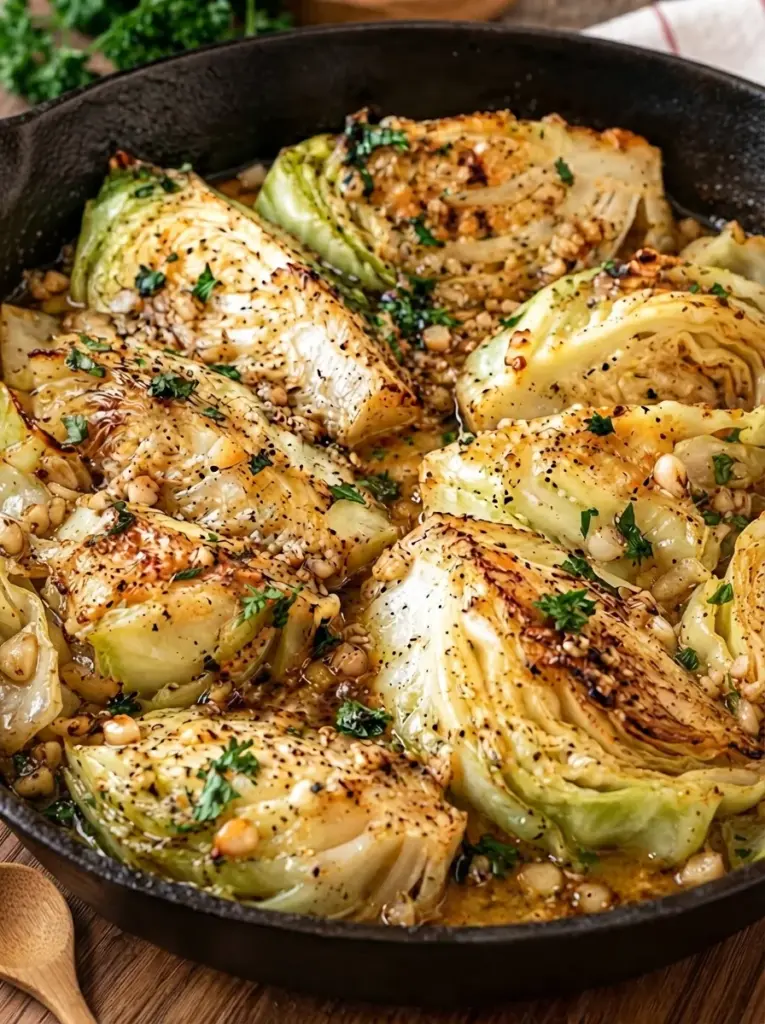
Garlic butter cabbage turns a simple head of cabbage into a warm, savory side dish with tender leaves and a buttery finish. Fresh garlic, a little smoked paprika, and a splash of broth give it plenty of flavor without a long ingredient list. Chopped parsley and an optional squeeze of lemon brighten the dish just before serving.
The cooking happens in two stages. First, the cabbage cooks covered with a small amount of broth so the thicker pieces soften. Then the lid comes off so excess moisture can evaporate and some of the cabbage can develop light golden edges. The result is tender and juicy, with a few browned pieces rather than a uniformly crisp texture.
Serve it alongside roasted chicken, pork chops, steak, or sausage. It is an easy way to use a large cabbage, and leftovers reheat well for another meal.
Recipe at a Glance
- Prep time: About 10 minutes
- Cook time: About 25 minutes, with extra time possible for a very large cabbage
- Total time: About 35 minutes
- Servings: 6 side-dish portions
- Cooking method: Stovetop
- Equipment: Large deep skillet with a lid or a wide Dutch oven, cutting board, knife, and spatula
Why You’ll Love This Recipe
- Simple ingredients: Cabbage, butter, garlic, broth, and a few seasonings do most of the work.
- Two-stage cooking: Covered cooking softens the leaves, while an uncovered finish reduces excess liquid.
- Flexible seasoning: Keep it mild or add a little extra pepper or heat.
- Useful leftovers: Reheat portions in a skillet and pair them with another main dish.
- Easy to adapt: Vegetable broth makes a meat-free version; other variations can add herbs or smoky bacon.
- A generous side dish: One large head makes enough for several servings.
What Is Garlic Butter Cabbage?
This version is chopped green cabbage cooked in garlic butter with a modest amount of broth. It is part sautéed cabbage and part quick braise: the lid traps steam during the tenderizing stage, then the pan is uncovered to let moisture escape.
It differs from deeply browned fried cabbage because the broth and covered cooking produce a softer, juicier result. You can get light browning at the end, but the pan must be nearly dry and wide enough for the cabbage to contact the hot surface.
These instructions are written for bite-size pieces. Cabbage wedges need different handling and cooking time, so they should not be treated as an interchangeable shape within the same method.
Ingredients
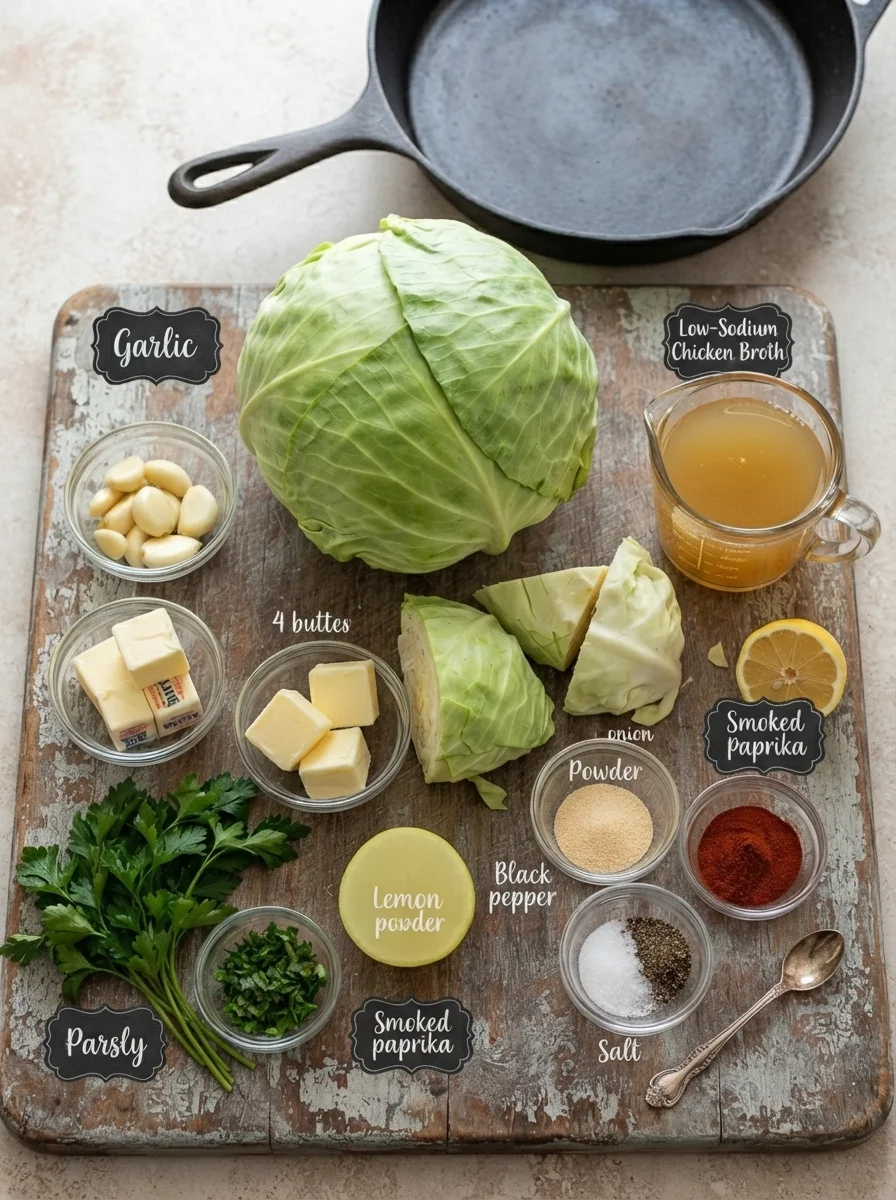
- 1 large head green cabbage, cored and chopped into bite-size pieces
- 4 tablespoons unsalted butter
- 5 garlic cloves, minced
- ½ cup low-sodium chicken broth
- ½ teaspoon onion powder
- ½ teaspoon smoked paprika
- ½ teaspoon salt, or less initially if the broth is salty
- ¼ teaspoon black pepper
- 1 tablespoon chopped fresh parsley
- 1 teaspoon fresh lemon juice, optional
Ingredient Notes
Green cabbage: Choose a firm head and remove any damaged outer leaves. Large heads vary substantially in size, which affects pan capacity, cooking time, yield, and nutrition. Chop into reasonably even pieces, around 1–1½ inches, so the thicker sections do not lag too far behind the tender leaves.
Butter: Unsalted butter lets you control the final seasoning. If using salted butter, reduce the added salt initially and taste near the end. Keep the heat moderate so the milk solids in the butter do not scorch while you cook the garlic.
Garlic: Five cloves make the flavor noticeable without requiring garlic powder. Mince evenly and have the cabbage ready before the garlic enters the pan. The garlic needs only a brief cook before the cabbage is added.
Broth: Low-sodium chicken broth adds savory flavor. Vegetable broth is a suitable substitution for a meat-free side dish. Water also works, though the flavor will be simpler. The half cup is intended to support steaming, not turn the dish into soup.
Onion powder: This distributes a mild onion flavor throughout the cabbage without adding a separate onion-cooking step.
Smoked paprika: A small amount adds warmth and a subtle smoky note. Regular sweet paprika works if you prefer less smoke, but the flavor will differ.
Parsley and lemon: Parsley adds freshness and color after cooking. The optional lemon juice is especially useful if the finished cabbage tastes rich or flat. Add it near the end and taste before adding more.
Choosing the Right Pan
A large head of chopped cabbage takes up considerable room before it wilts. Use a deep 12-inch skillet if it holds the cabbage comfortably, or a wide Dutch oven. If the pan is crowded, add the cabbage in several handfuls, turning as the lower leaves soften.
Pan width matters most during the uncovered finish. A narrow pot holds the cabbage in a deep pile, trapping moisture and limiting browning. It can still produce delicious tender cabbage, but it may take longer to reduce the liquid and will develop less color.
If browned edges are a priority and your pot is narrow, finish portions in a wide skillet after the covered stage. Avoid increasing the heat aggressively while garlic and butter are concentrated on the bottom.
How to Make Garlic Butter Cabbage
1. Prepare the Cabbage
Remove tough or damaged outer leaves. Cut the cabbage into quarters, then slice away the dense core. Chop the leaves into bite-size pieces and separate tightly packed layers with your fingers.
Rinse if needed and drain well. Excess water clinging to the cabbage will add to the cooking liquid and lengthen the uncovered stage.
Prepare the garlic, broth, and seasonings before turning on the heat. Once the garlic is in the pan, the next step comes quickly.
2. Melt the Butter
Place the butter in a large skillet or wide Dutch oven over medium heat. Let it melt and become lightly foamy without turning dark brown.
If the pan gets too hot, lower the heat before adding garlic. Butter should smell pleasant and buttery, not scorched.
3. Briefly Cook the Garlic
Add the minced garlic and stir for about 30–45 seconds, just until fragrant. Do not wait for deep browning. Small garlic pieces can burn quickly, and burnt garlic will carry bitterness through the cabbage.
4. Add the Cabbage and Seasonings
Add the cabbage, onion powder, smoked paprika, salt, and black pepper. Toss from the bottom of the pan to distribute the garlic butter.
If the cabbage does not fit at once, add it in batches over a minute or two, turning as it begins to wilt. Keep the heat moderate and avoid leaving the garlic exposed on the pan bottom for long.
5. Cover and Tenderize
Pour in the broth and stir. Cover, reduce the heat to medium-low, and cook for about 12–15 minutes, stirring occasionally.
Check a thicker piece of cabbage rather than judging only the thin leaves. It should be tender enough to bite comfortably but still hold its shape. If it remains too firm, cover and cook a little longer. If the pan becomes dry before the cabbage softens, add a tablespoon or two of water or broth.
6. Uncover and Reduce the Liquid
Remove the lid and increase the heat to medium. Cook for another 5–8 minutes, or longer as necessary, until most of the visible liquid has evaporated.
Stir occasionally while the liquid reduces. Once the pan is nearly dry, spread the cabbage into an even layer and let it sit undisturbed for a minute or two before turning. That contact with the pan is what allows some golden edges to develop.
Watch carefully during this stage. If the garlic starts to darken or the butter smells toasted too quickly, reduce the heat. A little color is enough; tender cabbage with flavorful butter is the main goal.
7. Finish and Serve
Stir in the parsley and optional lemon juice. Taste and adjust salt and black pepper as needed.
Serve hot, spooning any remaining buttery juices over the cabbage. There should not be a large pool of broth, but a little moisture keeps the dish pleasant and tender.
Tips for Tender Cabbage with Golden Edges
Cut evenly. Similar-sized pieces cook more consistently. Large sections of thick rib take longer than delicate leaf edges.
Do not add extra broth automatically. Cabbage releases moisture as it cooks. Use more only if the pan dries before the cabbage becomes tender.
Let moisture escape before expecting color. Cabbage sitting in liquid will steam rather than brown. The final stage may take longer than eight minutes in a crowded pan.
Stir less once the pan is nearly dry. Brief undisturbed contact encourages color. Constant stirring keeps exposing new wet surfaces and makes browning slower.
Protect the garlic. Moderate heat and frequent checks are more useful than a very hot finish. If necessary, accept less browning to avoid scorched garlic.
Finish with freshness. Parsley and a little lemon help balance the butter without requiring more seasoning.
Troubleshooting
| Problem | Likely cause | Helpful adjustment |
|---|---|---|
| Cabbage is watery | Moisture from the cabbage has not evaporated | Continue uncovered, stirring occasionally, or use a wider pan. |
| Edges will not brown | Pan is crowded or liquid remains | Reduce moisture first, then allow brief undisturbed contact with the pan. |
| Thick pieces are still firm | Uneven chopping or insufficient covered cooking | Add a small splash of broth, cover, and cook a little longer. |
| Garlic tastes bitter | It browned too deeply | Keep the initial garlic cook brief and the final heat moderate. |
| Cabbage is too soft | Covered cooking went too long | Stop cooking and serve; shorten the tenderizing stage next time. |
| Dish tastes flat | Seasoning or acidity is lacking | Taste for salt, then try a little lemon juice or black pepper. |
| Pan dries before cabbage softens | Heat too high or lid does not fit well | Lower the heat and add broth a tablespoon or two at a time. |
Variations
Vegetarian Garlic Butter Cabbage
Use vegetable broth instead of chicken broth. Check the broth’s salt level before adding the full measured salt.
Dairy-Free Version
Replace butter with a suitable dairy-free butter alternative and use vegetable broth. Different products brown differently, so watch the pan and season to taste.
Bacon Garlic Cabbage
Cook a few chopped bacon slices separately and stir them into the finished cabbage. If using rendered bacon fat in the pan, replace part of the butter rather than adding all the fat on top of the original quantity. Reduce added salt initially.
Lemon Herb Cabbage
Use the optional lemon juice and add a little finely grated lemon zest with the parsley. Chives or a small amount of fresh dill also work, though they change the flavor.
Spicy Garlic Cabbage
Add a small pinch of red pepper flakes with the seasonings. Start lightly, especially if serving alongside a spicy main dish.
Cabbage and Sausage
Fold in separately browned, fully cooked sausage near the end and heat through. This makes a more substantial dish and changes the nutrition and serving yield. Follow the sausage package’s cooking instructions rather than assuming every variety is ready to eat.
What to Serve with Garlic Butter Cabbage
Pair it with roasted chicken, grilled steak, pork chops, or sausage. The buttery garlic flavor also works with simply seasoned fish or a bean-based main dish.
For a comfort-food plate, add mashed potatoes or roasted potatoes. For a lighter combination, serve the cabbage with your main protein and a crisp salad.
Leftovers can be added to a rice bowl or served beside eggs. Use a small amount of additional seasoning after reheating, since the cabbage is already flavored with garlic, paprika, and broth.
Make-Ahead and Storage
You can chop the cabbage and mince the garlic ahead, keeping them covered separately in the refrigerator. Cooking closer to serving gives the best contrast between tender leaves and the lightly browned finish.
Refrigerate cooked leftovers in shallow airtight containers within 2 hours and use within 3–4 days. Do not leave a large pot on the counter waiting for it to become completely cold before refrigerating portions.
For longer storage, freeze cooled portions in freezer-safe containers for up to 2 months for best quality. Thaw overnight in the refrigerator. The cabbage will be softer after freezing, so expect a tender reheated side rather than the original edge texture.
How to Reheat
Warm leftovers in a skillet over medium-low heat, stirring occasionally. Add a small splash of broth or water only if needed to prevent sticking. Once hot, uncover and let excess moisture evaporate.
For a single portion, microwave in a covered microwave-safe dish with a small vent. Stir partway through so the center heats evenly. Reheat leftovers to 165°F, and add a little fresh parsley or lemon after warming if desired.
Heat only the portion you intend to eat rather than repeatedly warming the entire batch.
Frequently Asked Questions
Can I use wedges instead of chopped cabbage?
Wedges need a different method because the thick center takes longer to soften and the pieces are harder to toss without breaking. Follow the chopped-cabbage preparation for the timing and liquid amounts given here.
Can I use red cabbage?
Red cabbage can be cooked in a similar way, but its texture is often firmer and its flavor differs. Allow more time if necessary and judge tenderness by tasting. The finished color will also be different.
Is this fried cabbage?
It combines a brief sauté with covered cooking and an uncovered finish. It is softer and more moist than a deeply browned, dry-pan fried cabbage dish.
Can I leave out the broth?
The broth supports the covered tenderizing stage. Water is a simple replacement. Omitting liquid entirely changes the method and may cause the garlic and butter to scorch before a large batch of cabbage softens.
Can I use garlic powder instead of fresh garlic?
Garlic powder gives a different flavor. If substituting, start with a modest amount added with the other seasonings rather than cooking it alone in the butter. Taste and adjust toward the end.
Can I double the recipe?
Yes, but use two pans or a suitably large, wide pot. A deep pile of cabbage takes longer to wilt and loses moisture more slowly. Expect the cooking time to increase if pan space is limited.
Does the cabbage need to be crispy?
No. This recipe is intended to be tender, with some light browning. The broth and lid soften the leaves; the uncovered finish concentrates flavor and can color the exposed surfaces.
How many calories are in a serving?
The amount depends heavily on cabbage size. The four tablespoons of butter contribute about 400 calories to the whole batch, while cabbage and other ingredients add to that total. The supplied 155-calorie estimate may fit some large heads, but it is not fixed. For a precise estimate, calculate the ingredients actually used and divide by six.
Recipe Card
Garlic Butter Cabbage
Tender chopped cabbage cooked with fresh garlic, butter, broth, and smoky seasoning, then finished uncovered for lightly golden edges.
Prep: 10 minutes | Cook: About 25 minutes | Total: About 35 minutes
Servings: 6 side-dish portions
Ingredients
- 1 large head green cabbage, cored and chopped into bite-size pieces
- 4 tablespoons unsalted butter
- 5 garlic cloves, minced
- ½ cup low-sodium chicken broth
- ½ teaspoon onion powder
- ½ teaspoon smoked paprika
- ½ teaspoon salt, or to taste
- ¼ teaspoon black pepper
- 1 tablespoon chopped fresh parsley
- 1 teaspoon lemon juice, optional
Instructions
- Remove damaged outer leaves, quarter the cabbage, remove the core, and chop into even pieces. Drain well if rinsed.
- Melt the butter in a large deep skillet or wide Dutch oven over medium heat.
- Add garlic and cook for 30–45 seconds, stirring, just until fragrant.
- Add cabbage, onion powder, paprika, salt, and pepper. Toss to coat, adding cabbage in batches if needed.
- Pour in broth, cover, and cook over medium-low heat for 12–15 minutes, stirring occasionally, until tender. Allow more time if needed.
- Uncover and cook over medium heat for 5–8 minutes, or until excess liquid evaporates. Allow brief undisturbed contact with the pan for some golden edges, watching the garlic carefully.
- Stir in parsley and optional lemon juice. Taste, adjust seasoning, and serve hot.
Notes
- Cooking time varies with cabbage size, pan width, and preferred tenderness.
- Use vegetable broth for a vegetarian version.
- Browned edges require a nearly dry pan; expect tender cabbage rather than a crisp texture.
- Refrigerate leftovers promptly and use within 3–4 days. Freeze for up to 2 months for best quality.
- Reheat leftovers to 165°F.
- Nutrition varies with cabbage size and serving portions; calculate from the ingredients used for a reliable estimate.
Final Thoughts
This simple side dish gets its flavor from gentle garlic cooking, enough covered time to soften the cabbage, and a patient uncovered finish. Use a wide pan when possible, keep the garlic from scorching, and add parsley and lemon at the end. The result is buttery, tender cabbage ready to serve with an everyday dinner.
Garlic Butter Cabbage
- Total Time: About 35 minutes
Ingredients
- 1 large head green cabbage, cored and chopped into bite-size pieces
- 4 tablespoons unsalted butter
- 5 garlic cloves, minced
- ½ cup low-sodium chicken broth
- ½ teaspoon onion powder
- ½ teaspoon smoked paprika
- ½ teaspoon salt, or to taste
- ¼ teaspoon black pepper
- 1 tablespoon chopped fresh parsley
- 1 teaspoon lemon juice, optional
Instructions
- Remove damaged outer leaves, quarter the cabbage, remove the core, and chop into even pieces. Drain well if rinsed.
- Melt the butter in a large deep skillet or wide Dutch oven over medium heat.
- Add garlic and cook for 30–45 seconds, stirring, just until fragrant.
- Add cabbage, onion powder, paprika, salt, and pepper. Toss to coat, adding cabbage in batches if needed.
- Pour in broth, cover, and cook over medium-low heat for 12–15 minutes, stirring occasionally, until tender. Allow more time if needed.
- Uncover and cook over medium heat for 5–8 minutes, or until excess liquid evaporates. Allow brief undisturbed contact with the pan for some golden edges, watching the garlic carefully.
- Stir in parsley and optional lemon juice. Taste, adjust seasoning, and serve hot.
- Prep Time: 10 minutes
- Cook Time: About 25 minutes
Nutrition
- Serving Size: 6 side-dish portions