Smoky bacon, seasoned ground beef, tangy ranch, and melted cheese make these cabbage cups a hearty dinner with plenty of familiar comfort-food flavor. Softened cabbage leaves hold the creamy filling, while sharp cheddar and Monterey Jack melt over the top. A scattering of green onions adds a fresh finish to the rich, savory mixture.
These cups are a useful change from a traditional burger or stuffed cabbage roll. There is no tomato sauce, rice, or tightly wrapped parcel. Instead, the leaves form open cups that nestle together in a baking dish and hold generous spoonfuls of beef and bacon filling.
The cabbage becomes tender rather than crisp in this covered-baking method. The cheese can develop a little color during the uncovered finish, but the main appeal is the contrast between soft cabbage, creamy beef, and smoky bacon. Serve two generous cups per person, or divide the mixture among ten smaller leaves for lighter portions.
Recipe at a Glance
- Prep time: About 20 minutes
- Stovetop cooking: About 15–20 minutes
- Bake time: 23–25 minutes
- Total time: About 60–65 minutes, depending on preparation overlap
- Yield: 8–10 cabbage cups
- Servings: 4
- Equipment: Large pot, skillet, baking dish, colander, and optional food thermometer
Why You’ll Love This Recipe
- Bold, familiar flavors: Beef, bacon, ranch, and cheese create a satisfying filling.
- A practical cabbage meal: Large outer leaves become edible containers for the beef mixture.
- Two cheeses: Cheddar brings a sharper flavor, while Monterey Jack melts smoothly.
- Flexible portions: Make eight large cups or ten smaller ones.
- Useful for meal preparation: Cook the filling ahead, then assemble and bake later.
- Easy finishing options: Add green onions, diced pickles, or a small drizzle of ranch at the table.
What Are Bacon Ranch Cabbage Cups?
These are open cabbage leaves filled with cooked ground beef, bacon, cream cheese, sour cream, ranch seasoning, and shredded cheese. Unlike tightly rolled stuffed cabbage, they do not need to be folded shut. The leaves simply support the filling and bake together in a dish.
Cabbage replaces the bun or tortilla component, so the dish generally contains fewer carbohydrates than a comparable version served on bread. Exact carbohydrate amounts depend on the cabbage used, ranch seasoning, dairy products, and toppings. It is best to calculate from your ingredients before attaching a specific low-carb or net-carb number.
Ranch seasoning contributes herbs, garlic, onion, and salt. It provides the flavor; the cream cheese and sour cream provide the creamy texture.
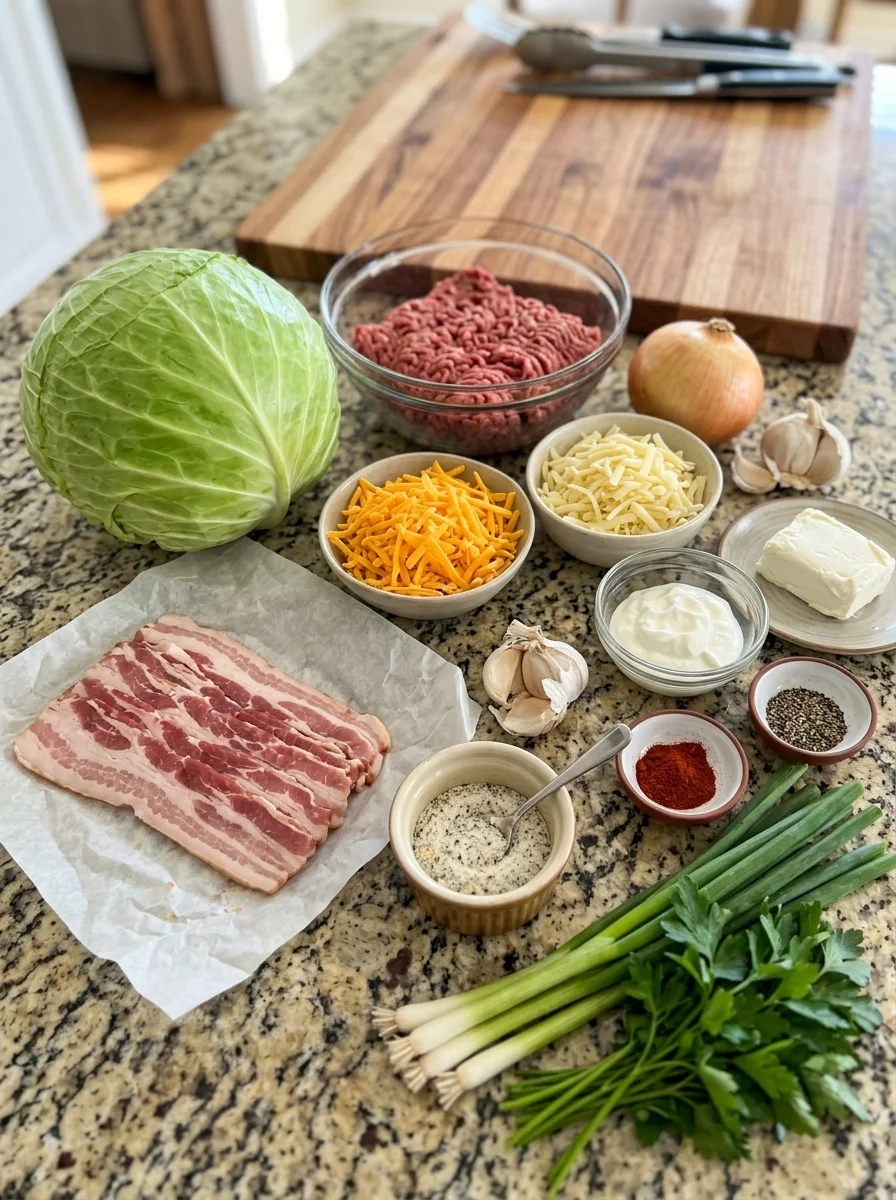
Ingredients
For the Cabbage and Filling
- 1 large head green cabbage, using 8–10 large outer leaves
- 1 pound ground beef
- 6 slices bacon, chopped
- 1 cup shredded sharp cheddar cheese, divided
- ½ cup shredded Monterey Jack cheese, divided
- ½ small yellow onion, finely diced
- 2 garlic cloves, minced
- 2 tablespoons ranch seasoning mix, or less to taste
- 2 tablespoons cream cheese, softened
- ¼ cup sour cream
- ½ teaspoon smoked paprika
- ¼ teaspoon black pepper
- 2 tablespoons chopped fresh parsley or green onions
- A little cooking spray or oil, for greasing the baking dish
Optional Toppings
- Extra shredded cheddar
- Ranch dressing
- Additional cooked, crumbled bacon
- Sliced green onions
- Finely diced dill pickles
Optional extra bacon and cheese are additional to the amounts in the filling.
Ingredient Notes
Cabbage: Green cabbage has sturdy leaves that soften well for shaping. Choose a head with intact outer leaves. You will use only part of the cabbage, so save the inner portion for slaw, soup, or a skillet meal. Leaf size varies; a yield of 8–10 cups is a guide rather than a guarantee.
Ground beef: An 85/15 or 90/10 blend is a practical choice. A fattier blend also works, but draining excess grease becomes more important because the filling already contains bacon, cheese, and dairy.
Bacon: Chop before cooking for convenient pieces, or cook the strips whole and crumble afterward. Reserve only about one tablespoon of fat for browning the beef. Adding all of the rendered fat can make the finished cups greasy.
Cheddar and Monterey Jack: Measure the cheeses separately so the division stays clear. Half goes into the filling—½ cup cheddar and ¼ cup Monterey Jack—and the same amounts go over the cups. Freshly shredded cheese generally melts smoothly, though packaged shredded cheese can also be used.
Ranch seasoning: Use dry seasoning, not prepared ranch dressing, in the filling. Salt levels vary considerably. If your mix is strongly salted, start with one tablespoon and taste the cooked mixture before adding the rest. Additional salt is not listed because bacon, cheese, and seasoning may supply enough.
Cream cheese and sour cream: These bind the filling and add tang. Reduce the heat before adding them and stir just until combined. A gentle heat keeps the mixture creamy without unnecessary bubbling.
Onion and garlic: Finely diced onion distributes through the filling and softens more quickly. Add garlic near the end of browning so it does not burn during the longer beef-cooking step.
Herbs: Green onions add a mild onion bite, while parsley gives a fresher herbal finish. Add them after baking for the best color and texture.
How to Prepare the Cabbage Leaves
Remove any damaged outer leaves. Carefully peel away 8–10 large leaves, working slowly near the base to avoid tearing them.
If the leaves cling tightly, remove a little of the core with a sturdy knife, then lower the cabbage carefully into a large pot of gently boiling water. Once the outer leaves soften enough to release, remove them with tongs. Use care when handling the hot head and water; do not force stiff leaves away from the core.
Blanch separated leaves for about 3–5 minutes, just until flexible. Drain in a colander, then spread them on clean towels and pat dry. Trim the raised portion of the thick center rib with a small knife, shaving it down without cutting through the entire leaf.
Drying matters because wet leaves add liquid to the baking dish. Trimming the rib makes the leaves easier to bend without splitting.
How to Make the Cabbage Cups
1. Prepare the Oven and Dish
Heat the oven to 375°F. Lightly grease a baking dish large enough to hold the cups snugly, using a 9 × 13-inch dish as a starting point. The best size depends on the leaves: they should support one another without being crushed together.
Prepare the cabbage leaves as described above. Set them aside while you cook the filling.
2. Cook the Bacon
Place the chopped bacon in a large skillet over medium heat. Cook, stirring occasionally, for about 5–8 minutes, or until browned and crisp. Thickness and brand will affect the time.
Transfer to a paper towel-lined plate. Carefully drain the skillet, leaving about one tablespoon of bacon fat for the beef and onion.
3. Brown the Beef and Onion
Add the ground beef and finely diced onion to the skillet. Cook over medium-high heat for about 6–8 minutes, breaking the meat into small crumbles.
Continue until the onion is softened and the beef is cooked through. Check that the ground beef reaches 160°F before adding the creamy ingredients. Color alone is not a reliable doneness test. Drain excess grease if needed.
4. Add the Seasoning
Lower the heat to medium. Stir in the garlic, ranch seasoning, smoked paprika, and black pepper. Cook for about 30 seconds, stirring so the garlic does not catch on the pan.
Start with less ranch seasoning if your product is particularly salty. You can adjust the fully cooked mixture after adding the dairy and cheese.
5. Make the Filling Creamy
Reduce the heat to low. Stir in the softened cream cheese and sour cream until the cream cheese has melted into the beef.
Fold in the cooked bacon, ½ cup cheddar, and ¼ cup Monterey Jack. Stir until evenly distributed, then remove from the heat. Taste and add the remaining measured ranch seasoning if needed.
The mixture should be moist and creamy, with no large puddle of grease. If it appears oily, spoon away excess rendered fat rather than adding more cheese to absorb it.
6. Shape and Fill the Cups
Arrange the cabbage leaves in the greased dish. Tuck or fold the sides inward to create shallow bowls, allowing adjacent leaves to support one another. If a leaf has a small tear, overlap it with a piece of another leaf.
Divide the filling evenly among the cups. Avoid pressing it down hard; spoon it in so the leaves retain their shape. With eight cups, plan on two per serving. With ten, divide the finished dish into four portions rather than assuming every serving has the same number of cups.
7. Add the Remaining Cheese
Sprinkle the remaining ½ cup cheddar and ¼ cup Monterey Jack over the filling. Keep most of the cheese on the beef rather than scattering it across the bottom of the dish.
8. Bake
Cover loosely with foil, leaving a little space above the cheese. Bake for 15 minutes, then uncover and bake for another 8–10 minutes, until the filling is hot, the cheese is melted, and the cabbage is tender.
The covered stage steams and softens the cabbage; the uncovered stage allows moisture to escape and the cheese to take on a little color. These are tender cabbage cups, so do not expect the leaves or bacon mixed inside to remain crisp.
9. Garnish and Serve
Let the cups stand for about 5 minutes. Sprinkle with parsley or green onions and add any optional toppings.
Use a wide spatula or serving spoon to lift each cup with its filling. A small drizzle of ranch is usually enough, since the beef mixture is already richly seasoned.
Tips for the Best Results
Do not overblanch. Leaves need to bend, but they should still have enough structure to hold the filling. Very soft leaves can tear during assembly.
Dry the leaves well. Water trapped in the folds can collect in the baking dish and dilute the filling.
Let the cups support one another. A snug arrangement works better than placing broad leaves far apart on a flat sheet pan.
Drain before adding dairy. Removing excess grease after the cream cheese and cheese are mixed in is more difficult.
Taste the cooked filling. Ranch seasoning, bacon, and cheese vary in saltiness. Extra salt is often unnecessary.
Reserve extra bacon separately. If you want a crisp bacon garnish, use additional cooked bacon and add it after baking. Bacon stirred into a creamy filling will soften.
Troubleshooting
| Problem | Likely cause | Helpful adjustment |
|---|---|---|
| Leaves tear while separating | Raw cabbage is too firm | Briefly soften the outer leaves in hot water before removing them. |
| Cups flatten in the dish | Leaves are too large or unsupported | Fold sides inward and arrange cups more snugly. |
| Filling is greasy | Too much bacon fat or undrained beef | Drain well before adding dairy and cheese. |
| Dish is watery | Wet leaves or excess blanching water | Pat leaves thoroughly dry before assembly. |
| Cabbage is still firm | Thick ribs or insufficient softening | Trim ribs and blanch until flexible; allow more covered baking if needed. |
| Filling tastes too salty | Strong ranch mix plus salty bacon and cheese | Use less seasoning next time; dilute the current filling with additional unseasoned cooked beef if available. |
| Bacon is no longer crisp | Moisture from the creamy filling | Add a separate crisp bacon garnish after baking. |
| Chilled filling stays cool in the center | Make-ahead filling needs longer to heat | Extend covered baking and check the center reaches 165°F. |
Variations
Pickle Cheeseburger Cups
Fold a small amount of well-drained, finely diced dill pickle into the cooked filling, or add it as a fresh topping. Taste before adding more ranch seasoning because pickles add salt and acidity.
Spicy Ranch Cups
Add a little minced jalapeño with the onion, or finish with hot sauce. A modest addition gives heat without changing the basic structure of the filling.
Ground Turkey Version
Substitute ground turkey and cook it to 165°F. A leaner meat may need a little cooking oil if there is not enough bacon fat in the skillet. Expect the flavor and nutrition to differ.
Different Cheese Blend
Use all cheddar for a sharper flavor, or replace Monterey Jack with a mild melting cheese. Keep the overall cheese amount similar so the filling does not become overly heavy.
Cabbage Bake
If your leaves are too small or torn for cups, chop the blanched cabbage and layer it with the cooked filling in a greased dish. Bake until hot and melted. This changes the presentation, but it is a practical way to use the same flavors.
Serving Suggestions
Serve the cups with a crisp salad, sliced cucumber, or roasted vegetables for a fresh contrast to the creamy filling. A tangy slaw also works, especially if it uses a lighter vinegar dressing.
If you are not limiting carbohydrates, roasted potatoes or a small dinner roll can round out the meal. Keep ranch dressing, pickles, and extra bacon in small bowls so everyone can choose their own finishing touch.
The unused inner cabbage can become a separate slaw or soup. Store it appropriately rather than trying to fit the entire head into this recipe; the filling quantity is designed for the selected outer leaves.
Make-Ahead Instructions
Cook the filling up to a day ahead and refrigerate it promptly in a shallow, covered container. You can also blanch the cabbage leaves ahead, dry them well, and store them separately in the refrigerator.
Assemble in a suitable baking dish when ready to cook. Cold filling will take longer to heat than freshly cooked filling, so extend the covered baking stage as needed. Check the center reaches 165°F before serving, then uncover to finish melting and coloring the cheese.
Do not assume the original baking time will fully heat a dish assembled with refrigerator-cold filling. If using glass bakeware, follow its manufacturer’s guidance about temperature changes.
Storage, Freezing, and Reheating
Refrigerate leftovers in shallow airtight containers within 2 hours of cooking. Use within 3–4 days. Store toppings separately so you can add them fresh after reheating.
For longer storage, freeze cooled portions in freezer-safe containers for up to 2 months for best quality. The cabbage will soften further, and the creamy filling may change texture slightly after thawing. Thaw overnight in the refrigerator.
Reheat covered in a 350°F oven until the center reaches 165°F. Add a small splash of water to the dish only if needed to prevent drying, then uncover briefly at the end. The time depends on portion size and whether the food is chilled or thawed.
For individual portions, microwave in short intervals, turning or rearranging as needed for even heating. Check the center rather than relying on steam at the edges. Add fresh green onions, pickles, or ranch after reheating.
Frequently Asked Questions
Can I use ranch dressing instead of dry seasoning?
Not as a direct replacement. Dressing adds liquid and fat, while dry seasoning provides concentrated flavor. Use the seasoning in the filling and reserve dressing for a small optional drizzle.
Do I have to blanch the cabbage?
Blanching makes the leaves flexible enough to form cups and helps them become tender during baking. Raw leaves are harder to shape and may remain too firm with the stated bake time.
Can I make these in a muffin pan?
A jumbo muffin pan may support suitably sized leaves, but a standard muffin pan can be too small for this amount of filling. The baking dish method is more forgiving and accommodates different leaf sizes.
Will the cabbage become crispy?
No. Blanching and covered baking create tender leaves. The exposed edges may dry slightly, and the cheese may brown, but this is not a crisp shell recipe.
Can I leave out the cream cheese?
It helps bind and enrich the filling. Omitting it will change the texture; the sour cream and shredded cheese still provide moisture, but the mixture may be less cohesive. Do not replace it with a large amount of ranch dressing.
Are these low-carb?
They use cabbage in place of bread, but the exact carbohydrate count depends on the ingredients and amount of cabbage eaten. Ranch seasoning and toppings can contribute carbohydrates, so calculate from the products you use before publishing a specific number.
Can I double the batch?
Yes. Use two baking dishes if necessary rather than crowding everything into one deep layer. Cook the beef in batches if the skillet is crowded, and check both dishes are heated through.
Recipe Card
Cheesy Bacon Ranch Ground Beef Cabbage Cups
Tender cabbage leaves filled with creamy ranch-seasoned beef, bacon, cheddar, and Monterey Jack, then baked until hot and melted.
Prep: 20 minutes | Stovetop: 15–20 minutes | Bake: 23–25 minutes
Total: About 60–65 minutes | Yield: 8–10 cups | Servings: 4
Ingredients
- 1 large green cabbage, using 8–10 large outer leaves
- 1 pound ground beef
- 6 slices bacon, chopped
- 1 cup shredded sharp cheddar, divided
- ½ cup shredded Monterey Jack, divided
- ½ small yellow onion, finely diced
- 2 garlic cloves, minced
- 2 tablespoons dry ranch seasoning, or less to taste
- 2 tablespoons softened cream cheese
- ¼ cup sour cream
- ½ teaspoon smoked paprika
- ¼ teaspoon black pepper
- 2 tablespoons chopped parsley or green onions
- Cooking spray or a little oil, for the dish
- Optional ranch dressing, extra cooked bacon, green onions, or diced pickles, for serving
Instructions
- Heat the oven to 375°F and lightly grease a baking dish. Separate 8–10 cabbage leaves and blanch for 3–5 minutes, until flexible. Drain, pat dry, and shave down the thick ribs.
- Cook the bacon in a skillet over medium heat until crisp. Transfer to a plate, leaving about one tablespoon of fat in the pan.
- Cook the beef and onion for about 6–8 minutes, breaking the beef into crumbles, until the beef reaches 160°F. Drain excess grease.
- Stir in the garlic, ranch seasoning, paprika, and pepper; cook for about 30 seconds.
- Reduce the heat to low. Stir in cream cheese and sour cream, then fold in bacon, ½ cup cheddar, and ¼ cup Monterey Jack. Remove from the heat.
- Arrange the leaves as cups in the dish and divide the filling among them. Top with the remaining cheese.
- Cover loosely with foil and bake for 15 minutes. Uncover and bake for another 8–10 minutes, until hot, melted, and tender.
- Rest for 5 minutes, garnish with herbs, and serve with optional toppings.
Notes
- Start with less ranch seasoning if your mix is strongly salted.
- The cabbage and bacon inside the filling will be tender rather than crisp.
- If using chilled make-ahead filling, allow longer covered baking and heat the center to 165°F.
- Refrigerate leftovers promptly and use within 3–4 days. Reheat to 165°F.
- Nutrition varies substantially with beef fat percentage, bacon size, cheese, cabbage portions, and toppings. Calculate from the specific ingredient labels before using the supplied calorie or net-carbohydrate estimates as published values.
Final Thoughts
These cabbage cups combine a creamy bacon-ranch filling with tender leaves and a melted cheese topping. Drying the cabbage, draining the beef, and tasting the ranch seasoning before adding more are the small steps that make the finished dish more balanced. Prepare the filling ahead or bake everything fresh, then finish with green onions and a few tangy pickles for a hearty dinner.
Print
Cheesy Bacon Ranch Ground Beef Cabbage Cups
- Total Time: About 60–65 minutes
- Yield: 8–10 cups 1x
Ingredients
- 1 large green cabbage, using 8–10 large outer leaves
- 1 pound ground beef
- 6 slices bacon, chopped
- 1 cup shredded sharp cheddar, divided
- ½ cup shredded Monterey Jack, divided
- ½ small yellow onion, finely diced
- 2 garlic cloves, minced
- 2 tablespoons dry ranch seasoning, or less to taste
- 2 tablespoons softened cream cheese
- ¼ cup sour cream
- ½ teaspoon smoked paprika
- ¼ teaspoon black pepper
- 2 tablespoons chopped parsley or green onions
- Cooking spray or a little oil, for the dish
- Optional ranch dressing, extra cooked bacon, green onions, or diced pickles, for serving
Instructions
- Heat the oven to 375°F and lightly grease a baking dish. Separate 8–10 cabbage leaves and blanch for 3–5 minutes, until flexible. Drain, pat dry, and shave down the thick ribs.
- Cook the bacon in a skillet over medium heat until crisp. Transfer to a plate, leaving about one tablespoon of fat in the pan.
- Cook the beef and onion for about 6–8 minutes, breaking the beef into crumbles, until the beef reaches 160°F. Drain excess grease.
- Stir in the garlic, ranch seasoning, paprika, and pepper; cook for about 30 seconds.
- Reduce the heat to low. Stir in cream cheese and sour cream, then fold in bacon, ½ cup cheddar, and ¼ cup Monterey Jack. Remove from the heat.
- Arrange the leaves as cups in the dish and divide the filling among them. Top with the remaining cheese.
- Cover loosely with foil and bake for 15 minutes. Uncover and bake for another 8–10 minutes, until hot, melted, and tender.
- Rest for 5 minutes, garnish with herbs, and serve with optional toppings.
Notes
- Start with less ranch seasoning if your mix is strongly salted.
- The cabbage and bacon inside the filling will be tender rather than crisp.
- If using chilled make-ahead filling, allow longer covered baking and heat the center to 165°F.
- Refrigerate leftovers promptly and use within 3–4 days. Reheat to 165°F.
- Nutrition varies substantially with beef fat percentage, bacon size, cheese, cabbage portions, and toppings. Calculate from the specific ingredient labels before using the supplied calorie or net-carbohydrate estimates as published values.
- Prep Time: 20 minutes | Stovetop: 15–20 minutes | Bake: 23–25 minutes
Nutrition
- Serving Size: 4