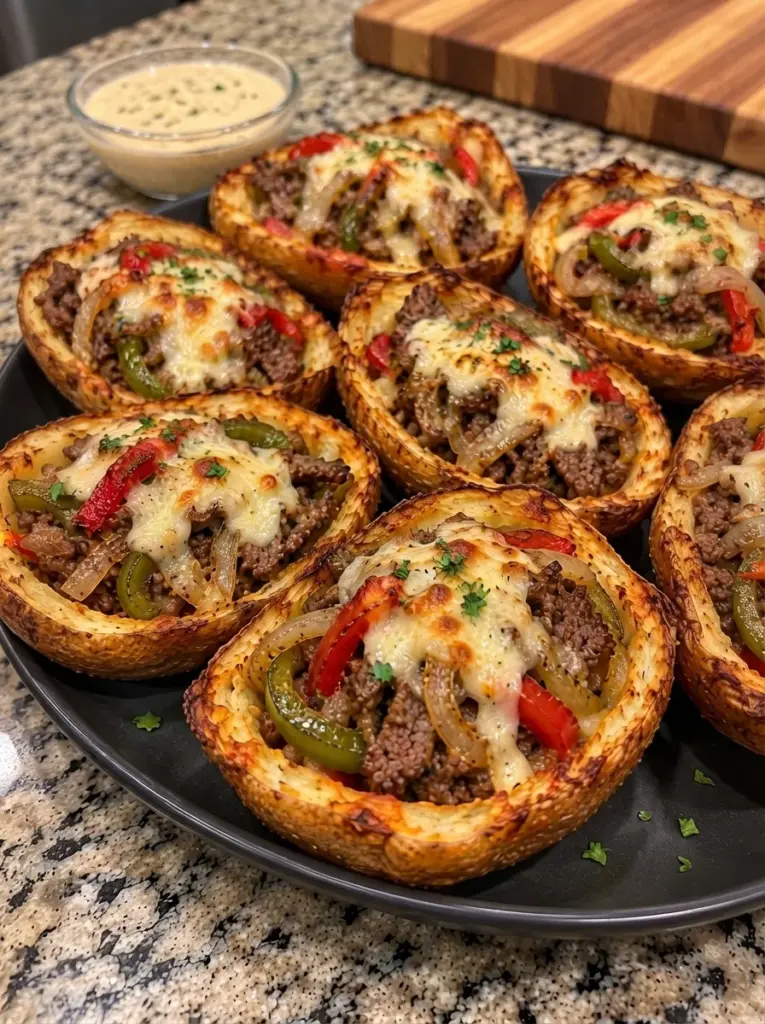
Crispy Philly Cheesesteak Stuffed Potato Skins combine golden potato shells with thinly sliced beef, sautéed onion, sweet bell pepper, and melted provolone. Each half has a crisp edge, a tender potato lining, and a generous filling that turns a familiar appetizer into a hearty dinner.
The potatoes bake until tender before they are scooped and returned to the oven to crisp. Meanwhile, the vegetables soften in a skillet and the steak cooks quickly in batches. A short final bake melts the cheese over the filling without keeping the steak in the oven longer than necessary.
Serve two potato halves per person with a salad for dinner, or offer individual halves as substantial party appetizers. The filling and shells can be prepared separately ahead of time, which makes the final assembly easier when guests arrive.
These are Philly cheesesteak-inspired potato skins. Bell peppers, garlic, and optional smoked paprika reflect this recipe’s interpretation rather than a claim that they are essential to a traditional Philadelphia cheesesteak.
Recipe Overview
- Yield: 8 stuffed potato halves
- Dinner servings: 4, with 2 halves per person
- Appetizer servings: Up to 8, with 1 substantial half per person
- Active preparation: About 25–30 minutes
- Initial potato bake: About 50–70 minutes
- Shell crisping: About 15–20 minutes
- Final cheese bake: About 5–8 minutes
- Total: Plan on approximately 1 hour 35 minutes to 2 hours, with skillet preparation overlapping the shell stage
- Oven: 400°F
Potato size affects the schedule considerably. The supplied recipe has been expanded with practical cues, but it has not been independently kitchen-tested for this article. Use tenderness and browning to guide each stage rather than assuming every potato will finish at the same minute.
What Makes the Skins Crisp
The first bake cooks the potato through. Scooping removes most of the soft interior while leaving a supportive lining, and the second bake dries and browns that lining.
A light coat of oil helps the exposed surfaces color. Too much oil or a wet filling works against the crisp texture, so the shells should be lightly brushed rather than soaked and the skillet mixture should not contain pooled juices.
The filling goes into already-crisp shells shortly before the final bake. Melt the cheese, serve promptly, and keep dipping sauces on the side. A filled potato shell will gradually soften as it absorbs moisture, even when it starts crisp.
Ingredients
Potatoes and Shell Seasoning
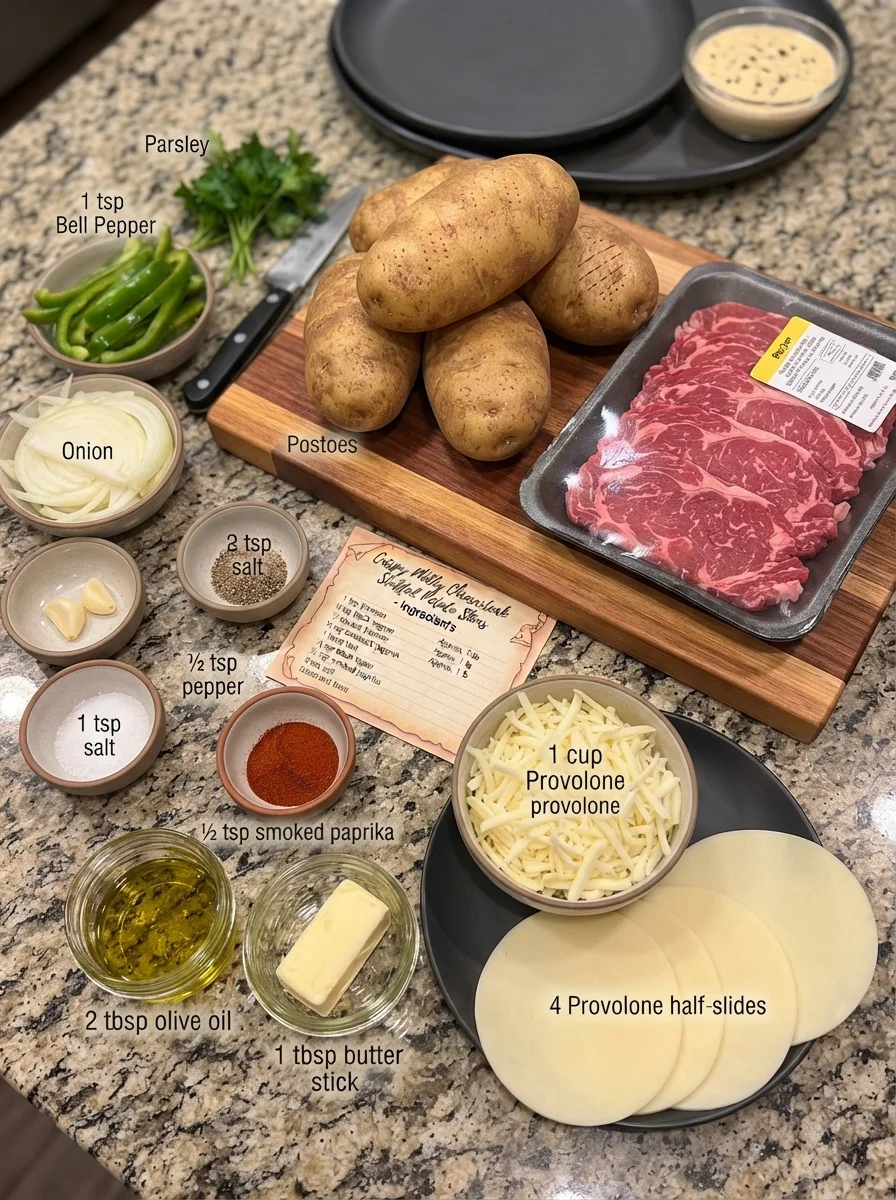
- 4 medium russet potatoes, preferably similar in size
- 2 tablespoons olive oil, divided, plus a little extra only if needed for the skillet
- 1 teaspoon fine salt, divided and adjusted to taste
Cheesesteak Filling
- 1 pound thinly sliced steak, such as ribeye or sirloin
- 1 medium green bell pepper, thinly sliced
- 1 medium yellow onion, thinly sliced
- 2 garlic cloves, minced
- 1 tablespoon butter
- ½ teaspoon black pepper
- ½ teaspoon smoked paprika, optional
Cheese and Finish
- 1 cup shredded provolone cheese
- 4 slices provolone, halved to make 8 pieces
- 1 tablespoon chopped fresh parsley, optional
The cheese quantities are intentionally generous. For a lighter topping, use the shredded cheese or sliced cheese alone, recognizing that this changes the finished amount and nutrition.
Ingredient Notes
Russet Potatoes
Russets have sturdy skins and a relatively fluffy interior, making them useful for this preparation. Choose potatoes without green areas, sprouts, or soft spots, and scrub them thoroughly.
Four similarly sized potatoes cook more evenly than a mixture of small and very large ones. A medium potato around 8 ounces is a useful shopping guide, but potatoes sold as medium vary. Larger potatoes need more time and create larger portions.
Steak
Ribeye gives a rich filling because of its marbling. Sirloin can be a little leaner but still works when sliced thinly across the grain and cooked quickly.
For easier slicing, chill the steak in the freezer briefly until firmer but not frozen solid. Use a sharp knife and keep the slices thin. Buying pre-shaved steak is another option, provided you follow its storage and cooking directions.
Do not substitute a thick steak cut into large cubes and expect the same texture. Thin slices distribute through the filling and are easier to bite through inside a potato shell.
Onion and Bell Pepper
Slice both thinly so they soften in a reasonable time. The stated skillet stage produces softened vegetables with some browned edges, not fully caramelized onions. Deep caramelization requires a longer, separate cooking process.
The green pepper can be replaced with red bell pepper for a sweeter variation, or omitted if you prefer an onion-and-steak filling. Cooked mushrooms are another option, but they should release their moisture before being added to the shells.
Provolone
Shredded provolone distributes through the topping, while a half slice gives each skin a continuous melted layer. Cheese slices vary in weight, so check the package if tracking portions.
Mild provolone melts well and keeps the steak flavor prominent. White American cheese makes a creamier variation. Very aged provolone can taste sharper and melt differently.
Salt
Use part of the salt for the potato exteriors and part for the filling. Begin with less if your cheese is particularly salty or if the steak is preseasoned. Taste only after the beef has been cooked.
Equipment
Use a rimmed metal baking sheet, a large heavy skillet, a sharp knife, a spoon for scooping, and tongs or a spatula. A pastry brush helps distribute a small amount of oil over the shells.
An instant-read thermometer is useful for the beef and reheated leftovers. If you choose to broil the cheese, the baking sheet and any liner must be suitable for broiler use. Do not assume parchment paper is safe under a broiler.
A second sheet can help if the eight potato halves would otherwise be crowded. Space between them allows the hot oven air to reach the sides.
How to Make the Stuffed Potato Skins
1. Bake the Potatoes
Heat the oven to 400°F. Scrub the potatoes, dry them thoroughly, and prick each several times with a fork.
Rub with 1 tablespoon of the olive oil and season lightly with part of the salt. Set on a rimmed baking sheet or directly on the oven rack with a sheet beneath to catch drips.
Bake for about 50–70 minutes, until a knife or fork enters the centers easily. Large potatoes may need longer. The skins should feel set and the inside should be fully tender before scooping.
Do not wrap them in foil for this recipe. Foil traps steam and works against the dry skin you want for crisp shells.
2. Cool Briefly and Scoop
Let the potatoes stand until safe to handle, usually about 10–15 minutes. Use a towel or oven mitt if they are still hot.
Cut lengthwise into halves. Scoop out most of the flesh, leaving about a ¼-inch lining along the sides and base. Keep the lining reasonably even and preserve the skin’s edges.
Do not scrape so aggressively that you create holes or leave a paper-thin shell. A slightly thicker lining is better than a fragile skin that tears when filled.
Reserve the scooped potato for another use and refrigerate it promptly if you are not using it immediately. It works well for mashed potatoes, potato cakes, or thickening another dish.
3. Crisp the Shells
Brush the inside and outside of the shells with the remaining tablespoon of oil. Use a thin coating; the oil does not need to pool inside the potato.
Arrange cut-side down on the baking sheet and bake for about 10 minutes. Turn cut-side up and bake another 5–10 minutes, until the exposed lining feels drier and the edges begin turning golden.
If the shells are still soft, allow a few more minutes before filling. Keep an eye on the narrow tips, which can brown before the thicker base.
4. Sauté the Vegetables
While the shells crisp, melt the butter in the skillet over medium heat. Add the onion and bell pepper and cook for about 8–12 minutes, stirring occasionally, until softened with a few browned edges.
Add the garlic for the final 30 seconds. Transfer the vegetables to a plate so the beef can cook on the hot skillet surface rather than steaming beneath them.
If the vegetables release liquid, let it evaporate before removing them. A dry-looking skillet mixture helps protect the potato shells later.
5. Cook the Steak Quickly
Raise the heat to medium-high. Add a small amount of oil only if the skillet needs it, then cook the steak in batches so the slices contact the hot surface.
Season with black pepper, the remaining salt to taste, and optional smoked paprika. Separate the slices with tongs or a spatula and cook until browned and appropriately cooked, often about 2–4 minutes per batch for very thin slices.
For intact whole-muscle beef, the standard minimum is 145°F with a 3-minute rest. Very thin slices can be difficult to probe accurately; use a suitable thin-tip thermometer and follow any package-specific instructions, especially for processed or mechanically tenderized products. Color alone is not a dependable temperature check.
Transfer cooked batches to a clean plate and allow the rest. Do not add raw beef juices back to finished filling without cooking them. Return the cooked vegetables and steak to the skillet briefly to combine, then remove from the heat.
6. Check the Filling Before Stuffing
The mixture should look moist but not sit in a pool of liquid or grease. Spoon off excess fat or leave pooled liquid in the skillet when transferring the filling.
Taste the cooked mixture and adjust seasoning if necessary. Remember that provolone adds salt, so the filling does not need to taste heavily salted on its own.
7. Fill and Add Cheese
Arrange the crisp shells cut-side up. Divide the steak, onion, and pepper mixture among all eight halves, keeping it within the shells rather than building unstable piles.
Sprinkle each with an equal amount of shredded provolone, then lay a half slice over the top. If your potatoes are smaller and the filling does not fit comfortably, serve the extra separately rather than pressing it down hard.
8. Melt the Cheese
Return the skins to the 400°F oven for about 5–8 minutes, until the cheese melts and the filling is hot. Because the filling has already cooked, this is a short finishing bake.
For additional color, you may broil briefly on a broiler-safe metal sheet, watching continuously. A minute can make a large difference. Skip broiling if your pan or liner is not approved for it; melted cheese is enough for a good result.
9. Rest and Serve
Let the skins stand for about 2–3 minutes before serving. Add parsley if desired.
Serve promptly with sauces on the side. The filling and cheese stay hot inside the shells, so a brief rest also makes them easier to eat.
Tips for Tender Steak and Crisp Shells
Slice against the grain. Shortening the muscle fibers helps the thin beef feel tender when you bite through the finished skin.
Cook in batches. A pound of steak can overwhelm a small skillet, lowering the heat and releasing enough liquid to steam the meat. A little browning in two batches is better than prolonged cooking in a crowded pan.
Prepare the filling during the shell-crisping stage rather than letting cooked steak wait through the entire first potato bake. This keeps the final assembly efficient.
Leave enough potato behind. The thin lining helps the shell hold its shape and gives it a tender contrast to the browned edge.
Drain the filling and avoid early sauce. Even properly crisped shells soften under excessive liquid. Add aioli, ranch, or spicy mayonnaise to individual bites rather than pouring it over the tray well in advance.
Troubleshooting
| Problem | Possible cause | Adjustment |
|---|---|---|
| Shells tear while scooping | Too little lining or potatoes not tender | Leave about ¼ inch and scoop gently after a complete bake. |
| Skins are soft | Wet surfaces, insufficient crisping, or crowded pan | Dry well, brush lightly with oil, and allow space. |
| Bottoms soften after filling | Excess juices or long holding | Drain filling and assemble close to serving. |
| Steak is chewy | Thick slices, slicing with the grain, or overcooking | Slice thinner across the grain and cook quickly in batches. |
| Vegetables remain firm | Thick slices or short cooking | Slice evenly and cook until tender before adding garlic. |
| Cheese is browned but filling is cool | Cold make-ahead filling | Reheat filling before the short finishing bake. |
| Filling tastes salty | Seasoned steak plus cheese and added salt | Season gradually and check packaged ingredients. |
Variations
White American cheese: Replace provolone with white American for a creamier finish. Slice sizes and weights differ, so use an amount that covers the filling without overflowing.
Mushroom cheesesteak skins: Sauté sliced mushrooms separately until their liquid evaporates, then mix them with the vegetables. Do not add raw mushrooms directly to the filled shells and expect them to cook in the short cheese bake.
Spicy version: Add finely sliced jalapeño to the vegetable stage or offer hot sauce at the table. This changes the flavor profile but works well for those who want heat.
Onion-and-steak version: Omit the bell pepper and use the same method. You may have slightly less filling, depending on potato size.
Lighter cheese topping: Use just the cup of shredded provolone or just the four slices rather than both. The dish will still be cheesy, with a different nutrition estimate.
Leftover steak filling: Safely stored cooked steak can be sliced and reheated with the vegetables. Reheat leftovers to 165°F and keep in mind that previously cooked steak may become firmer with additional heating. Its original storage time still applies.
Serving Ideas
For dinner, pair two stuffed halves with a green salad, slaw, or roasted vegetables. The potatoes already provide a substantial starch, so another bread component is optional.
For a party, serve one half per person as a hearty appetizer and provide knives or forks if the potatoes are large. These are more substantial than bite-size snacks.
Garlic aioli, spicy mayonnaise, and ranch can be offered in small bowls. Use a little at a time so the cheese and steak remain the main flavors and the shells retain their texture.
Make-Ahead Preparation
Bake and scoop the potatoes a day ahead, then refrigerate the shells and reserved flesh promptly in covered containers. Prepare the steak filling separately and refrigerate it in a shallow container.
When ready to serve, crisp the chilled shells in the oven, allowing extra time if needed. Reheat the filling separately to 165°F, then assemble with cheese and complete the short finishing bake.
This works better than filling cold shells with cold steak and expecting the cheese-melting stage to warm everything evenly. If cheese browns early, it can hide a filling that is still cool in the center.
For the best fresh texture, you can prepare only the baked potato shells ahead and cook the steak shortly before serving. Avoid stuffing the shells overnight if crispness is your priority.
Storage and Reheating
Refrigerate leftovers within 2 hours of preparation, or within 1 hour when temperatures exceed 90°F. Store at 40°F or below in shallow airtight containers and use within 3–4 days.
If potatoes were baked in foil for another purpose, remove the foil before refrigerating. For this recipe, they are baked unwrapped from the start.
Reheat on a baking sheet at 375°F until the filling reaches 165°F. Begin checking around 12–15 minutes, allowing longer for large or very cold portions. Tent loosely if the cheese colors before the center is ready.
An air fryer can help the shell edges regain crispness, but basket size and appliance heat vary. Start around 350°F, work in a single layer, and check early. Continue until the filling reaches 165°F rather than relying on a universal minute count.
Microwaving is convenient but leaves softer shells. Heat in intervals and check the center. Add fresh parsley or sauces only after reheating.
For freezing, the cooked steak filling is the better component to store separately. Freeze airtight for up to 2 months for best quality, thaw in the refrigerator, and reheat thoroughly. Potato shells can soften or change texture after freezing, so expect a different result if freezing the assembled skins.
Nutrition Estimate
For four dinner servings of two skins each, a broad estimate is approximately 600–780 calories and 35–45 grams of protein per serving, before sauces. At eight appetizer portions, the amount per skin is about half that dinner estimate.
Potato size, ribeye versus sirloin, cheese-slice weight, and the amount of potato flesh removed all affect the result. Ribeye generally produces a richer filling than lean sirloin. These figures are illustrative estimates, not a calculated nutrition label.
The dish contains dairy and is not low-carb. It can be prepared with gluten-free ingredients, but verify cheese additives, seasonings, and sauces if needed. Dips can add substantial calories beyond the base recipe.
Frequently Asked Questions
Can I use a different potato?
Russets are preferred for sturdy skins and a fluffy interior. Thin-skinned waxy potatoes give a different texture and may be harder to scoop into substantial shells.
Can I microwave the potatoes first?
You can use a microwave to cook them as a shortcut, but the skins will not dry in the same way as oven-baked potatoes. They still need a separate oven-crisping stage, and the texture may differ from the full baked method.
Do I need to caramelize the onions completely?
No. The recipe uses softened onions with some browning. Fully caramelized onions are an optional longer preparation and are not achieved by a brief sauté.
Why use both shredded cheese and slices?
The shredded cheese spreads over the filling, while the slice gives a continuous top. You can choose one for a smaller amount of cheese rather than using both.
Can I make them ahead for a party?
Yes. Store the shells and filling separately, then crisp the shells, reheat the filling, and assemble shortly before serving. Avoid holding a filled tray for a long time if you want crisp edges.
What can I do with the scooped potato?
Use it for mashed potatoes, potato cakes, soup thickening, or another cooked dish. Refrigerate promptly and count its storage period from the original potato preparation.
Are these traditional Philly cheesesteaks?
They are an inspired potato-skin variation. The shell, bell pepper, garlic, and optional paprika make this a different dish from a traditional sandwich.
Recipe Card
Crispy Philly Cheesesteak Stuffed Potato Skins
Crisp russet potato shells filled with thin steak, sautéed onion and pepper, and melted provolone.
Yield: 8 halves
Servings: 4 dinners or up to 8 appetizers
Active prep: 25–30 minutes
Total: About 1 hour 35 minutes to 2 hours with overlapping tasks
Oven: 400°F
Ingredients
- 4 medium russet potatoes
- 1 pound thinly sliced ribeye or sirloin
- 1 cup shredded provolone
- 4 slices provolone, halved
- 1 medium green bell pepper, thinly sliced
- 1 medium yellow onion, thinly sliced
- 2 garlic cloves, minced
- 2 tablespoons olive oil, divided, plus a little extra only if needed
- 1 tablespoon butter
- Up to 1 teaspoon fine salt, divided, to taste
- ½ teaspoon black pepper
- ½ teaspoon smoked paprika, optional
- 1 tablespoon chopped parsley, optional
Instructions
- Heat oven to 400°F. Scrub and dry potatoes, prick with a fork, rub with 1 tablespoon oil, and season lightly with some salt. Bake unwrapped for 50–70 minutes or until fully tender.
- Cool about 10–15 minutes until safe to handle. Halve lengthwise and scoop out the flesh, leaving about a ¼-inch lining. Reserve flesh and refrigerate promptly if not using immediately.
- Brush shells lightly with remaining oil. Bake cut-side down for 10 minutes, then turn up and bake 5–10 minutes more until golden and crisp.
- Meanwhile, sauté onion and pepper in butter for 8–12 minutes until tender with browned edges. Add garlic for 30 seconds. Transfer to a plate.
- Cook steak in batches over medium-high heat, about 2–4 minutes per batch depending on thickness, seasoning with pepper, remaining salt to taste, and optional paprika. Cook intact whole-muscle beef to at least 145°F with a 3-minute rest; follow package-specific guidance where applicable.
- Combine cooked steak and vegetables briefly. Leave excess skillet juices behind when dividing filling among shells.
- Top each with shredded provolone and half a slice. Bake 5–8 minutes until melted and hot. Optional: broil briefly only on suitable equipment, watching continuously.
- Rest 2–3 minutes, garnish with parsley, and serve promptly with optional sauces on the side.
Storage: Refrigerate promptly for 3–4 days. Reheat filling to 165°F. Store shells and filling separately for best make-ahead texture.
Estimated nutrition: About 600–780 calories per dinner serving of two skins, before sauces. Ingredients, potato size, and scooping vary.
Recipe note: Cheesesteak-inspired rather than a traditional sandwich. Timing is guided by potato tenderness, crispness, and steak thickness.
Crispy Philly Cheesesteak Stuffed Potato Skins
Description
Crisp russet potato shells filled with thin steak, sautéed onion and pepper, and melted provolone.
Yield: 8 halves
Servings: 4 dinners or up to 8 appetizers
Active prep: 25–30 minutes
Total: About 1 hour 35 minutes to 2 hours with overlapping tasks
Oven: 400°F
Ingredients
- 4 medium russet potatoes
- 1 pound thinly sliced ribeye or sirloin
- 1 cup shredded provolone
- 4 slices provolone, halved
- 1 medium green bell pepper, thinly sliced
- 1 medium yellow onion, thinly sliced
- 2 garlic cloves, minced
- 2 tablespoons olive oil, divided, plus a little extra only if needed
- 1 tablespoon butter
- Up to 1 teaspoon fine salt, divided, to taste
- ½ teaspoon black pepper
- ½ teaspoon smoked paprika, optional
- 1 tablespoon chopped parsley, optional
Instructions
- Heat oven to 400°F. Scrub and dry potatoes, prick with a fork, rub with 1 tablespoon oil, and season lightly with some salt. Bake unwrapped for 50–70 minutes or until fully tender.
- Cool about 10–15 minutes until safe to handle. Halve lengthwise and scoop out the flesh, leaving about a ¼-inch lining. Reserve flesh and refrigerate promptly if not using immediately.
- Brush shells lightly with remaining oil. Bake cut-side down for 10 minutes, then turn up and bake 5–10 minutes more until golden and crisp.
- Meanwhile, sauté onion and pepper in butter for 8–12 minutes until tender with browned edges. Add garlic for 30 seconds. Transfer to a plate.
- Cook steak in batches over medium-high heat, about 2–4 minutes per batch depending on thickness, seasoning with pepper, remaining salt to taste, and optional paprika. Cook intact whole-muscle beef to at least 145°F with a 3-minute rest; follow package-specific guidance where applicable.
- Combine cooked steak and vegetables briefly. Leave excess skillet juices behind when dividing filling among shells.
- Top each with shredded provolone and half a slice. Bake 5–8 minutes until melted and hot. Optional: broil briefly only on suitable equipment, watching continuously.
- Rest 2–3 minutes, garnish with parsley, and serve promptly with optional sauces on the side.
Storage: Refrigerate promptly for 3–4 days. Reheat filling to 165°F. Store shells and filling separately for best make-ahead texture.
Estimated nutrition: About 600–780 calories per dinner serving of two skins, before sauces. Ingredients, potato size, and scooping vary.
Recipe note: Cheesesteak-inspired rather than a traditional sandwich. Timing is guided by potato tenderness, crispness, and steak thickness.